James Holloway writes about military readiness, logistics, and the practical limits of modern forces. His work focuses on how training, sustainment, and organizational decisions shape what militaries can actually do -- not just what they are designed to do on paper.
2026 Update: How Real Combat Data Reshuffled These Rankings
When this article first published in February 2026, its rankings drew on a mixture of manufacturer specifications, military exercises, and limited combat records. Two months later, the picture has sharpened considerably. The Russia-Ukraine war, now grinding past its third year, has generated the largest dataset on armored warfare since the 1973 Yom Kippur War. Western and Russian tanks have fought, burned, and survived in conditions no peacetime evaluation could simulate. The results have forced a reckoning with long-held assumptions about what makes a tank effective in 2026.
The numbers are staggering. According to verified losses tracked by Oryx, Russia has lost over 4,041 tanks since February 2022. The T-72B3, the backbone of Russian armored forces, accounts for the bulk of those losses. Its Kontakt-5 explosive reactive armor, once considered adequate against shaped-charge warheads, has proven repeatedly vulnerable to top-attack munitions like the Javelin, NLAW, and increasingly, improvised FPV drones dropping modified RPG warheads from directly above. The T-72B3 was designed for a world where the primary threat came from the frontal arc. That world no longer exists.
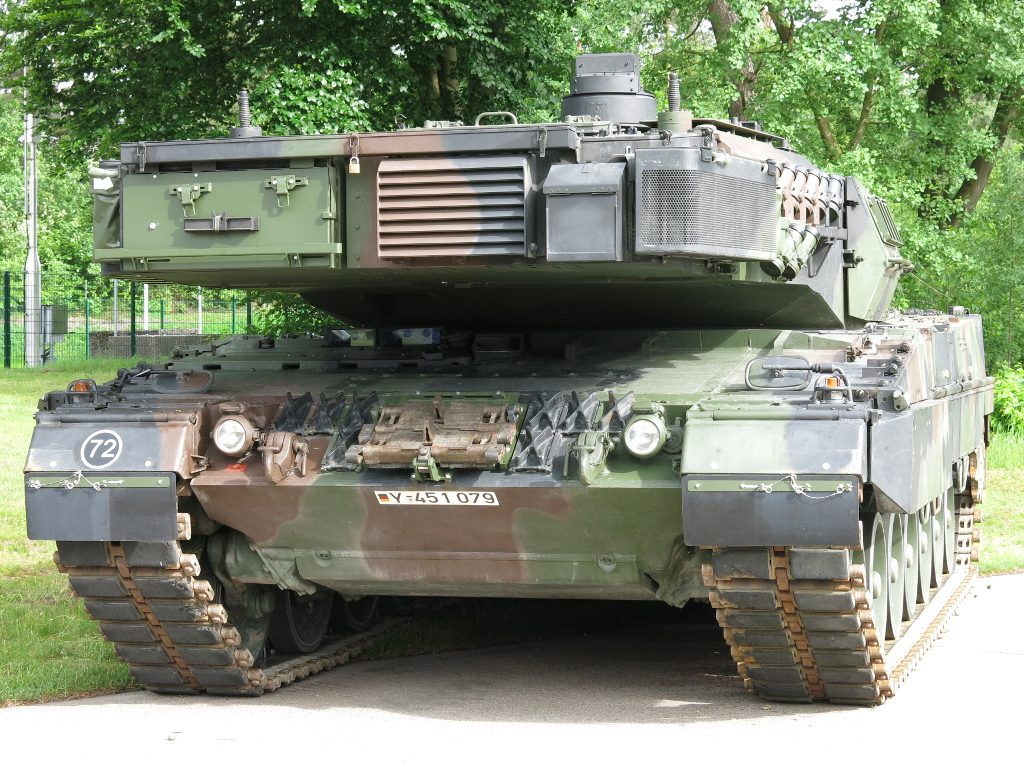
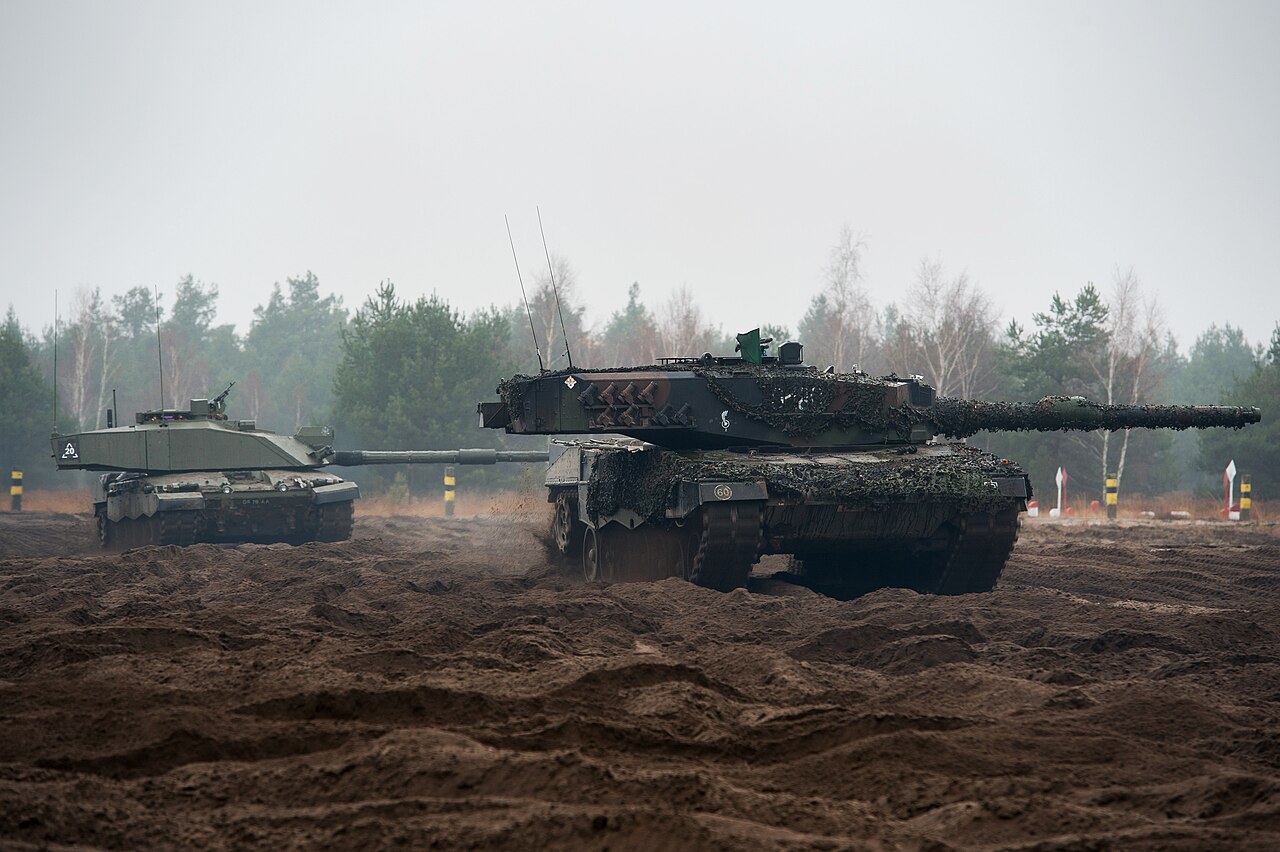
The Leopard 2A7 remains one of the most capable Western MBTs, though combat experience in Ukraine exposed vulnerabilities when operating without combined-arms support.
Russia's more modern T-90M fared better, but not by enough. Oryx has confirmed 137 T-90Ms destroyed, and the tank's Relikt ERA and improved fire control did not prevent catastrophic kills from Western-supplied ATGMs and precision artillery. The T-90M's autoloader carousel, which stores ammunition in a ring beneath the turret, continues to produce the violent turret ejections that have become a grim signature of Russian armor losses. No amount of ERA can compensate for an ammunition storage design that turns every penetrating hit into a potential catastrophic detonation.
Western tanks have not been immune. The Leopard 2A6 variants supplied to Ukraine suffered notable losses to FPV drones, anti-tank guided missiles, and minefields. Ukrainian crews, facing a shortage of infantry and air cover, increasingly used their Leopards as makeshift long-range artillery platforms, firing from semi-static positions at distances of 5-8 kilometers. This kept crews alive but underscored a painful lesson: even the best tank in the world is vulnerable when it operates without the combined-arms support it was designed to fight alongside. Tanks without infantry screening, without engineer mine clearance, and without air defense coverage against drones are targets, not weapons systems.
The roughly 80 M1A1 Abrams tanks sent to Ukraine tell a similar story. Approximately 20 have been destroyed or disabled, a loss rate that prompted Ukrainian commanders to pull the type back from the most intense sectors of the front. The Abrams' turbine engine and heavy logistics tail proved challenging for Ukrainian supply chains, and its lack of an active protection system left it as exposed to top-attack threats as any other unprotected vehicle. The M1A1 variants sent to Ukraine were older models without Trophy APS, a critical distinction from the M1A2 SEPv3 that sits atop this ranking.
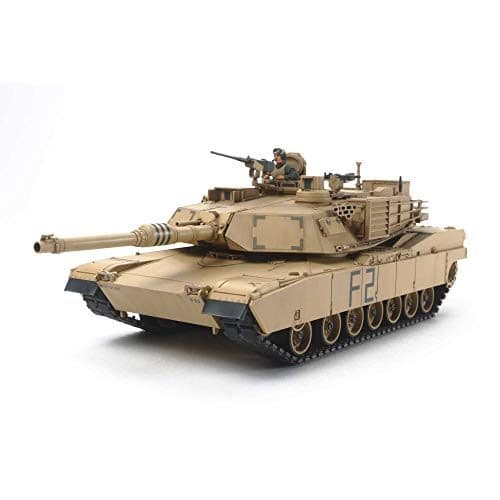
The M1A2 SEPv3 Abrams equipped with Trophy APS represents a generation ahead of the M1A1 variants deployed to Ukraine.
The single clearest lesson from Ukraine is this: Active Protection Systems have become the dividing line between survivable and unsurvivable tanks. Trophy, the Israeli-developed APS now integrated on the M1A2 SEPv3, Merkava Mk 4M, and soon the Leopard 2A8, intercepts incoming ATGMs and RPGs before they reach the hull. In Gaza and in Israeli border operations, Trophy-equipped Merkavas have defeated hundreds of anti-tank threats with a success rate exceeding 90 percent. No tank operating in Ukraine had a comparable system. That gap is no longer theoretical. It is measured in burned-out hulls.
Looking ahead, the next generation is already taking shape. The U.S. Army's M1E3 Abrams prototype is scheduled for testing in summer 2026, featuring an uncrewed turret, an autoloader eliminating the need for a loader, and a three-person crew. Germany's Leopard 2A8 integrates Trophy APS as standard, closing the protection gap that Ukraine exposed. South Korea's K2 Black Panther continues to win export contracts, with Poland ordering nearly 1,000 units. The tank is not dead. But the tank that fights without APS, without drone defense, and without combined-arms integration increasingly will be.
The main battle tank is not dead. Despite years of premature obituaries fueled by drone footage from Ukraine, the MBT remains the most decisive ground combat system on the modern battlefield. What has changed is the definition of "best." After three years of high-intensity armored warfare in Eastern Europe, tank rankings in 2026 are no longer theoretical exercises. They are informed by real combat data, real losses, and real lessons about what keeps crews alive and what gets them killed.
This ranking evaluates the 10 most capable main battle tanks currently in service or entering production worldwide. The methodology weighs six factors: firepower (gun performance, fire control, ammunition), protection (passive armor, reactive armor, active protection systems), mobility (power-to-weight ratio, suspension, strategic transportability), technology (sensors, networking, C4I integration), combat record (verified battlefield performance where applicable), and export success (a proxy for international confidence in the platform). Where specifications remain classified or unconfirmed, that uncertainty is noted. No ranking is definitive, but this one is grounded in the best available open-source data from the IISS Military Balance, Jane's Defence, and official manufacturer disclosures.
2026 Tank Rankings: Quick Reference
Rank
Tank
Country
Main Gun
Weight
APS
Key Strength
1
M1A2 SEPv3 Abrams
USA
120mm L/44
~73t
Trophy
Combat-proven, undefeated record
2
Leopard 2A7+
Germany
120mm L/55
~67t
Trophy (2A8)
Best gun, widest NATO adoption
3
K2 Black Panther
South Korea
120mm L/55
~55t
KAPS
Lightest modern MBT, autoloader
4
Merkava Mk 4M
Israel
120mm L/44
~65t
Trophy
Most combat-tested APS in the world
5
Leclerc XLR
France
120mm L/52
~57t
Planned
Fastest MBT, excellent fire control
6
Type 10
Japan
120mm L/44
~44t
No
Lightest full-spec MBT, modular armor
7
T-90M Proryv
Russia
125mm 2A46M-5
~48t
Relikt ERA
Best-performing Russian tank in Ukraine
8
Altay
Turkey
120mm L/55
~65t
Planned
Newest design, K2-derived
9
Challenger 3
UK
120mm L/55A1
~66t
Trophy
New turret, finally smoothbore
10
Type 99A
China
125mm ZPT-98
~57t
Laser (claimed)
Ambitious tech, unverified claims
10. Type 99A (ZTZ-99A) — China
Manufacturer: Norinco (China North Industries Corporation) Latest variant: Type 99A (ZTZ-99A), fielded circa 2011–present Crew: 3 (commander, gunner, driver; autoloader) Main gun: ZPT-98 125mm smoothbore (compatible with ATGM) Engine: 1,500 hp liquid-cooled turbocharged diesel (reported) Weight: Approximately 55–58 tonnes Top speed: ~80 km/h (road)
The Type 99A is the most capable tank in China's People's Liberation Army and represents a significant leap over its predecessors. It features a domestically developed composite armor array reportedly supplemented by explosive reactive armor (ERA) modules, giving it frontal protection that Chinese state media claims rivals Western designs. The ZPT-98 125mm smoothbore gun can fire standard APFSDS rounds as well as gun-launched anti-tank guided missiles, and the autoloader provides a rate of fire of approximately 8 rounds per minute.
Where the Type 99A stands out is in its integration of modern electronics. The tank features a hunter-killer fire control system, a laser warning receiver, and what is reported to be a laser-based active countermeasure system designed to blind incoming missile seekers. A battlefield management system links the tank into PLA network-centric warfare architecture.
However, significant caveats apply. Nearly all performance specifications are Chinese government claims that have not been independently verified. The Type 99A has never seen combat, and its armor composition remains classified. It has never been exported, which means no foreign military has conducted independent evaluation. The tank's weight, while moderate, limits its strategic deployability across China's varied terrain. Until the Type 99A is tested under fire or evaluated by a neutral party, its true capabilities remain uncertain. It earns its place on this list based on demonstrated technological ambition and the PLA's massive investment in armored modernization, but the lack of verification keeps it at number ten.
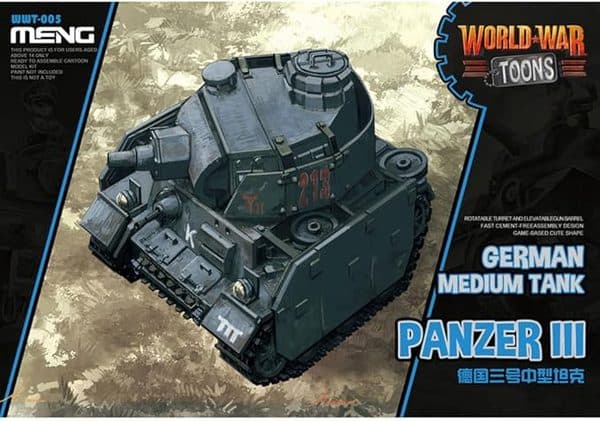
Same snap-fit engineering as the WWT Sherman, now in German gray. The Panzer III's boxy turret and squared-off hull translate well into the cartoon style, and the build is equally fast and frustration-free.
Manufacturer: Rheinmetall BAE Systems Land (RBSL) Latest variant: Challenger 3 (in production; initial operating capability expected ~2027) Crew: 4 (commander, gunner, loader, driver) Main gun: Rheinmetall L55A1 120mm smoothbore Engine: Perkins CV-12 1,200 hp diesel (retained from Challenger 2) Weight: ~66 tonnes (estimated) Top speed: ~60 km/h (road)
The Challenger 3 is not a new tank. It is a comprehensive rebuild of the Challenger 2, centered on replacing the iconic but aging L30A1 120mm rifled gun with Rheinmetall's 120mm L55A1 smoothbore. This single change brings the UK into NATO ammunition commonality for the first time, allowing British tanks to share 120mm rounds with American, German, and allied forces. The new turret, designed by RBSL, also integrates the latest generation of Rheinmetall's fire control optics and a digital architecture that replaces the Challenger 2's analog-era systems.
The Challenger 2's combat record is formidable. During the 2003 Iraq War, one Challenger 2 survived 14 RPG hits and a MILAN missile strike in a single engagement near Basra, with the crew returning to base unharmed. That level of survivability earned the Chobham/Dorchester armor package a near-mythical reputation. The Challenger 3 retains an upgraded version of this armor, supplemented by modular add-on protection.
The weaknesses are real. The Challenger 3 retains the original hull and the 1,200 hp Perkins diesel, which gives it a power-to-weight ratio well below competitors like the Leopard 2A8 or K2. At 66 tonnes, it is heavy but underpowered by modern standards. Production numbers will be modest: the British Army plans to convert only 148 Challenger 2s to the new standard, giving the UK one of the smallest tank fleets of any major NATO power. The tank earns its ranking on the strength of its armor heritage, NATO-standard firepower, and digital modernization, but it loses points for an aging powerpack and limited fleet size.
8. T-14 Armata — Russia
Manufacturer: Uralvagonzavod Latest variant: T-14 (Object 148), first shown 2015 Crew: 3 (all seated in armored capsule in hull) Main gun: 2A82-1M 125mm smoothbore (unmanned turret); 152mm 2A83 reportedly planned Engine: A-85-3A (12N360) 1,500 hp diesel (claimed) Weight: ~55 tonnes (claimed) Top speed: ~80–90 km/h (road, claimed)
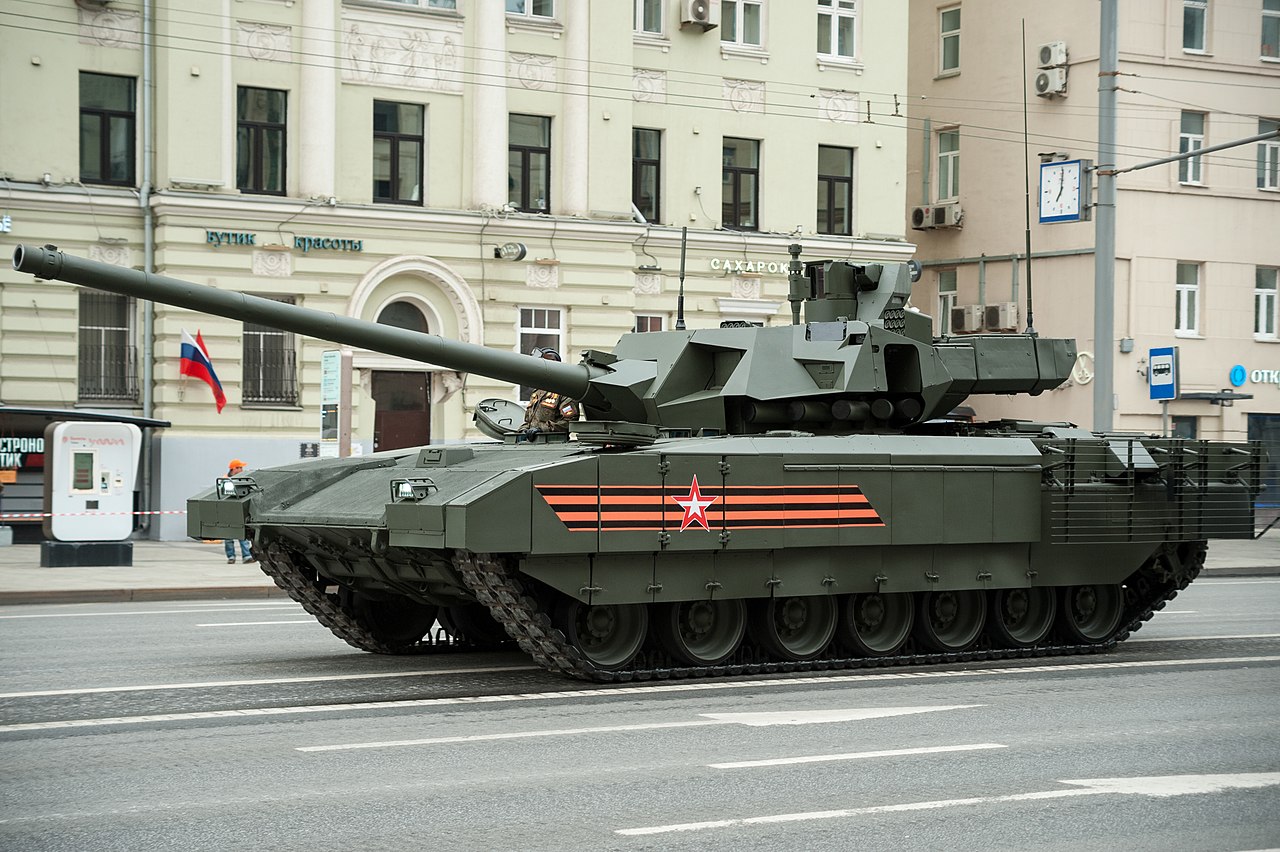
A T-14 Armata during a Moscow parade rehearsal. Despite public showcases since 2015, verified serial production remains extremely limited. (Public domain photo)
The T-14 Armata is the most conceptually ambitious tank on this list. Its fully unmanned turret represents a genuine departure from conventional MBT design: the entire three-person crew sits in an armored capsule in the forward hull, isolated from the ammunition and autoloader in the turret. In theory, this dramatically increases crew survivability, since a turret penetration does not endanger the crew. The Afghanit active protection system (APS) is designed to detect and intercept incoming projectiles, and the tank reportedly features a comprehensive suite of radar, infrared, and ultraviolet sensors.
On paper, the T-14 is revolutionary. In practice, it remains one of the most uncertain entries on this list. Russia announced plans for 2,300 T-14s by 2025. Actual production has been, by all credible Western estimates, fewer than two dozen. The tank has appeared in Moscow parades and reportedly underwent limited "combat testing" in Syria, but there is no verified evidence of the T-14 being deployed in the ongoing war in Ukraine, where Russia has instead relied overwhelmingly on upgraded T-72B3s, T-80BVMs, and T-90Ms. Russia's defense-industrial base, strained by sanctions and wartime attrition, has shown no capacity for serial T-14 production.
The T-14's ranking reflects its genuine design innovation, particularly the crew-isolation concept that other nations are now studying. But an untested tank that barely exists in production cannot rank higher than proven platforms that are in active service. The gap between the Armata's ambition and Russia's ability to actually manufacture it is the defining story of this program. For a deeper look at how active protection systems are reshaping tank design across the board, see our dedicated analysis.
7. Altay — Turkey
Manufacturer: BMC (serial production); original design by Otokar Latest variant: Altay T1 (serial production variant), 2023–present Crew: 4 (commander, gunner, loader, driver) Main gun: MKEK 120mm smoothbore (license-produced Rheinmetall design) Engine: 1,500 hp (initial batches used a South Korean Doosan engine; domestic BATU powerpack in development) Weight: ~65 tonnes Top speed: ~70 km/h (road)
The Altay represents Turkey's determination to field a fully indigenous main battle tank, reducing dependence on foreign suppliers. The program has endured a long and troubled development, with the original MTU engine deal collapsing after Germany imposed export restrictions on Turkey following its 2019 incursion into northern Syria. BMC, the serial production contractor, eventually secured a South Korean Doosan powerpack for initial production batches while Turkish industry works on the domestic BATU engine.
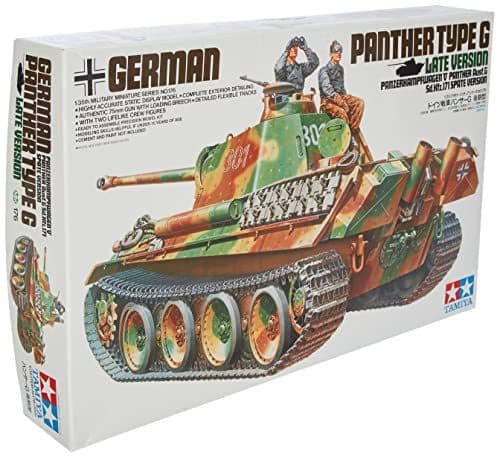
Tamiya's 1/35 Panther Ausf. G is a traditional styrene kit with excellent fit and clear instructions. At this scale, the finished model is roughly 25cm long with good surface detail and working suspension.
The tank itself is a credible modern MBT. It mounts a 120mm smoothbore derived from the Rheinmetall L/55, giving it NATO-standard firepower. The fire control system incorporates thermal imaging, laser rangefinding, and a hunter-killer capability. The composite armor package is supplemented by modular add-on armor and provisions for ERA. Turkish defense firm Aselsan provides the electronic systems, and integration with Turkey's broader C4I network is a stated priority.
The Altay's weakness is maturity. Serial production began only in late 2023, and the Turkish Army has received a small initial batch. The tank has not seen combat. The engine saga, while apparently resolved for near-term production, illustrates the vulnerabilities of a program dependent on foreign components for critical subsystems. Turkey's ambition is admirable, and the Altay fills a genuine capability gap in the Turkish Army, but it needs years of operational service and refinement before it can be compared with established designs on equal terms.
6. Type 10 (TK-X) — Japan
Manufacturer: Mitsubishi Heavy Industries Latest variant: Type 10, in service since 2012 Crew: 3 (commander, gunner, driver; autoloader) Main gun: Japan Steel Works 120mm smoothbore (L/44 class) Engine: Mitsubishi 8VA34WTK 1,200 hp V8 diesel Weight: ~44 tonnes (base configuration); ~48 tonnes with add-on armor Top speed: ~70 km/h (road)
The Type 10 is the lightest modern main battle tank in production, and that is by deliberate design. Japan's defense doctrine requires tanks that can operate across its mountainous, infrastructure-constrained islands, cross bridges with limited weight capacity, and be transported by road and rail without requiring heavy-lift logistics. At 44 tonnes in base configuration, the Type 10 achieves a strategic mobility that heavier Western tanks simply cannot match in the Japanese theater.
What sets the Type 10 apart technologically is its C4I (command, control, communications, computers, and intelligence) networking. The tank is designed from the ground up to operate within Japan Ground Self-Defense Force battle networks, sharing targeting data, position information, and threat warnings in real time. Its modular composite armor, incorporating nano-crystal steel and ceramic elements, can be configured in varying levels depending on the mission. The autoloader and fire control system provide rapid, accurate engagement capability.
The limitations mirror its design priorities. At 44 tonnes, the Type 10 simply cannot carry the level of passive protection found on 60-plus tonne Western MBTs. It has never been exported and has never seen combat. Japan's constitutional constraints and defensive posture mean the Type 10 is optimized for a very specific scenario: defending the Japanese home islands. In that role, it is arguably the best tool for the job. As a general-purpose MBT competing globally, its light weight and limited protection count against it. The Type 10 is a reminder that "best" always depends on context. For a broader perspective on how tank design has evolved to meet these kinds of specialized requirements, see our full history.
5. Merkava V (Mk 5) — Israel
Manufacturer: Israel Defense Forces / Israel Military Industries (now Elbit Systems Land) Latest variant: Merkava Mk 5 "Barak" (Lightning), entering service 2023–present Crew: 4 (commander, gunner, loader, driver) Main gun: IMI 120mm smoothbore (MG253) Engine: ~1,500 hp turbodiesel (estimated) Weight: ~65 tonnes (estimated) Top speed: ~65 km/h (road, estimated)
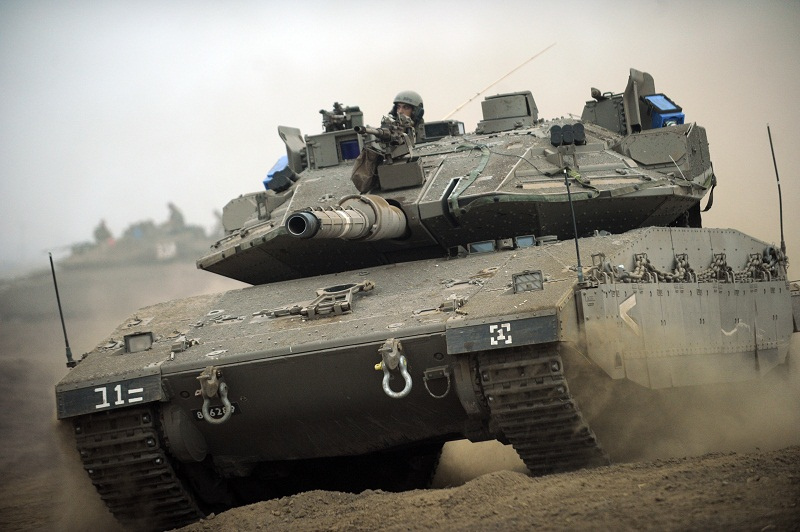
The Merkava Mk 5 "Barak" integrates Trophy APS as standard and features an AI-assisted battle management system. The front-mounted engine is a defining feature of the Merkava line. (IDF photo)
The Merkava is unlike any other tank on this list. Its front-mounted engine, a design choice dating back to the original Mk 1 in 1979, places the powerpack between the crew and incoming fire, providing an additional layer of protection. A rear door allows the tank to carry infantry or evacuate wounded, a feature no other MBT offers. The Merkava was designed by a nation that fights frequent ground wars in dense urban terrain and rugged borderlands, and every design choice reflects that reality.
The Mk 5 "Barak" (Lightning) is the latest evolution. It integrates the Rafael Trophy active protection system as standard equipment. Trophy has been combat-proven since 2011, successfully intercepting anti-tank guided missiles and RPGs in multiple engagements in Gaza. The Mk 5 adds an AI-driven battle management system called the "Iron Vision" helmet-mounted display, which gives the commander and crew a 360-degree augmented-reality view of the battlefield without opening their hatches. The fire control system and sensors are a generation beyond the Mk 4.
The Merkava's combat record is unmatched among current-production MBTs. Every generation of the tank has seen real war, from Lebanon in 1982 to Gaza in 2023–2024. That combat data feeds directly back into the design process in ways that peacetime-only platforms cannot replicate. The experience of facing FPV drones and modern anti-tank threats in recent operations has directly shaped the Mk 5's defensive systems.
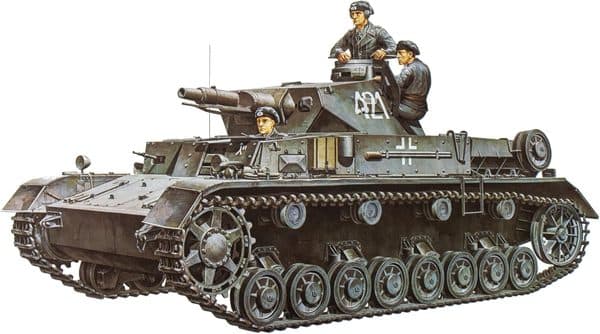
The Panzer IV was the workhorse of the German armored divisions, and Tamiya's 1/35 kit captures the Ausf. H variant with its characteristic Schurzen side skirts and long-barrel 75mm gun.
The Merkava's weaknesses are contextual. It has never been exported, limiting interoperability testing. At roughly 65 tonnes, it is heavy. And its optimization for Israel's specific threat environment means it may be less suited to the open-plains armored warfare scenarios that NATO plans for in Europe. But in the category of battle-tested, continually improved, and technologically cutting-edge, the Merkava V ranks among the very best.
4. K2 Black Panther — South Korea
Manufacturer: Hyundai Rotem Latest variant: K2 PL (Polish export variant), K2 base (ROK Army), 2014–present Crew: 3 (commander, gunner, driver; autoloader) Main gun: Hyundai WIA CN08 120mm/L55 smoothbore Engine: 1,500 hp Doosan Infracore DV27K diesel with S&T Dynamics transmission Weight: ~55 tonnes Top speed: ~70 km/h (road)
The K2 Black Panther may be the most complete modern MBT package on this list. It combines a powerful 120mm L/55 smoothbore gun with an advanced autoloader, a sophisticated hydropneumatic in-arm suspension system (ISU) that allows the tank to "kneel" or adjust its hull angle for improved gun depression or concealment, and a comprehensive suite of sensors and defensive systems. The K2 can fire a top-attack anti-tank missile through its main gun, engage helicopters, and automatically detect and track targets using its hunter-killer fire control system.
The hydropneumatic suspension deserves special mention. It allows the K2 to raise or lower its hull, tilt forward or backward, and lean side to side. This is not a gimmick: it enables the tank to use terrain features for hull-down positions that would be impossible for tanks with conventional suspension, and it allows higher speeds over rough terrain. The system also enables the K2 to ford deeper water obstacles than most competitors.
The K2's export success validates its quality. Poland selected the K2 as the backbone of its armored modernization, ordering an initial batch of 180 K2s (designated K2 PL) with a planned total acquisition of nearly 1,000 tanks. This is the largest export tank order in decades and reflects Poland's judgment, informed by direct observation of the war in Ukraine on its doorstep, that the K2 represents the best available combination of capability and production availability.
The K2's weaknesses are limited. It has not seen combat, so its systems are unproven under fire. The original domestic powerpack experienced reliability issues in early Korean Army service, though these have reportedly been resolved. For a tank that has been in service only since 2014, it has accumulated an impressive track record of technological sophistication and international market success. Its ranking here reflects the best balance of firepower, protection, mobility, and technology at its weight class.
3. Leclerc XLR — France
Manufacturer: Nexter Systems (now KNDS) Latest variant: Leclerc XLR (Scorpion program upgrade), 2022–present Crew: 3 (commander, gunner, driver; autoloader) Main gun: GIAT CN120-26 120mm smoothbore Engine: SACM V8X-1500 Hyperbar 1,500 hp diesel with gas turbine supercharger Weight: ~57 tonnes (XLR configuration) Top speed: ~72 km/h (road)
The Leclerc has always been the tank that experts admired but the public overlooked. It entered service in 1993 as the first production MBT with an autoloader and a fully digital fire control system. The Leclerc was networked when most of the world's tanks still relied on voice radio. It was fast, accurate, and equipped with a unique hybrid powerplant combining a diesel engine with a gas turbine supercharger that provided power on demand without the fuel consumption penalties of a full turbine like the Abrams.
The XLR upgrade, part of France's Scorpion program, brings the Leclerc into the 2020s. The centerpiece is SICS (Système d'Information du Combat Scorpion), a battle management system that integrates the Leclerc into France's joint tactical network alongside Jaguar reconnaissance vehicles, Griffon APCs, and dismounted infantry. The XLR also adds new composite side armor, improved mine protection, an upgraded fire control system, and provisions for a future APS integration.
The Leclerc's combat record, while limited, is genuine. French Leclercs deployed to Lebanon with UNIFIL and saw action in Yemen with the UAE Armed Forces, which operates a modified export variant. UAE Leclercs engaged Houthi forces in direct combat, suffering some losses but also demonstrating the platform's firepower and mobility in a demanding desert environment.
The weaknesses center on numbers and export. France operates only about 200 Leclercs, and the XLR upgrade will apply to roughly 200 tanks. Export orders have been limited to the UAE. The CN120-26 gun, while excellent, uses French-specific ammunition that is not interchangeable with NATO-standard Rheinmetall 120mm rounds, complicating allied logistics. Despite these limitations, the Leclerc XLR's combination of networking, speed, firepower, and proven combat experience places it firmly in the top tier.
2. M1A2 SEPv4 Abrams — United States
Manufacturer: General Dynamics Land Systems Latest variant: M1A2 SEPv4, entering production ~2025–2026 Crew: 4 (commander, gunner, loader, driver) Main gun: M256A1 120mm smoothbore (Rheinmetall L/44 derivative) Engine: Honeywell AGT1500 gas turbine, 1,500 hp Weight: ~73+ tonnes (SEPv4 configuration) Top speed: ~67 km/h (road)
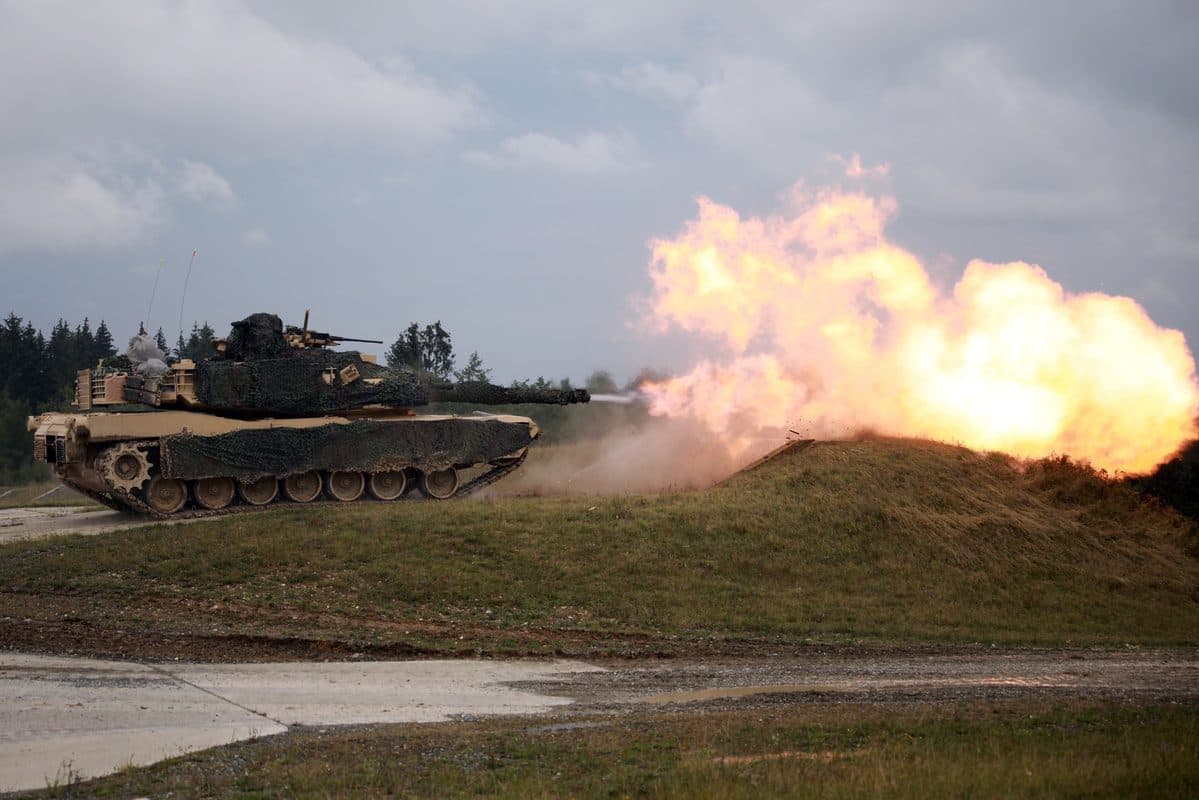
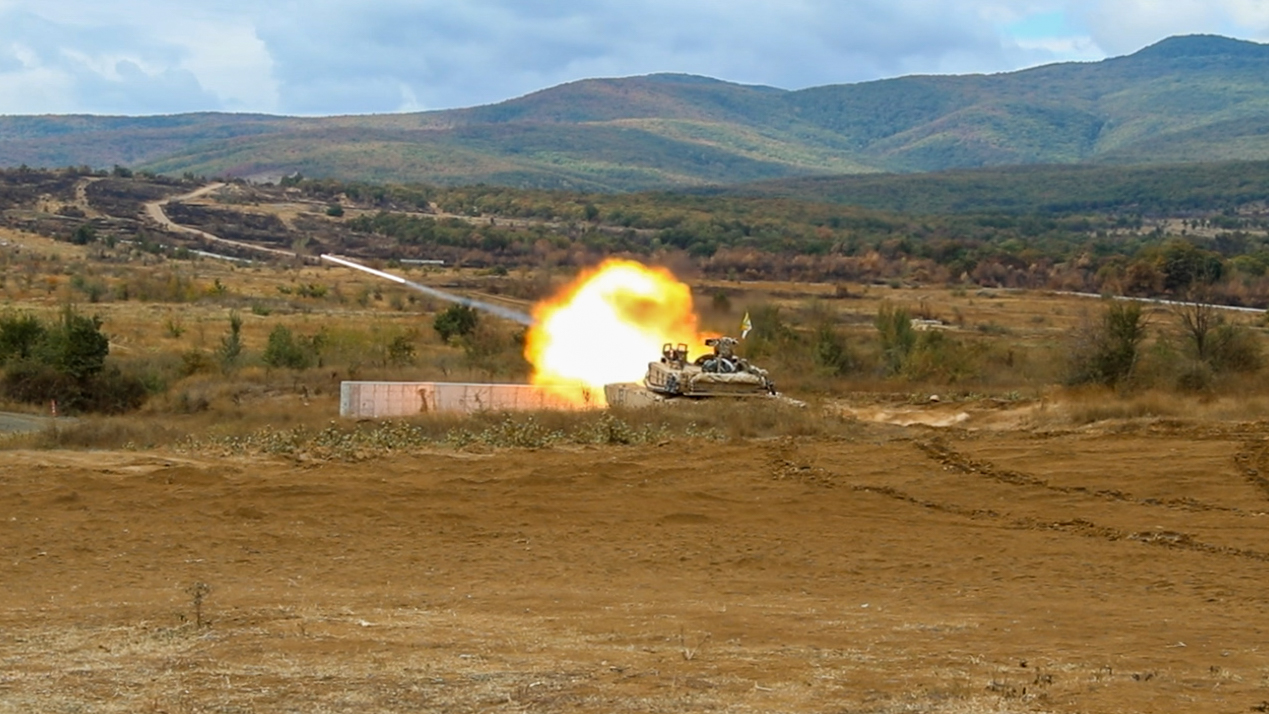
An M1A2 SEPv3 Abrams fires its 120mm main gun during a live-fire exercise. The SEPv4 variant adds Trophy APS integration and further digital upgrades. (U.S. Army photo)
The M1 Abrams is the most combat-proven Western tank in history. Since its devastating debut in the 1991 Gulf War, where Abrams crews destroyed hundreds of Iraqi T-72s in one of the most lopsided armored engagements ever recorded, the Abrams has fought in every major U.S. ground operation. No Abrams crew member has ever been killed by enemy tank fire. That record speaks for itself.
The SEPv4 (System Enhancement Package version 4) represents the latest evolution. It integrates the Rafael/Leonardo DRS Trophy APS, making the Abrams one of the first Western heavy tanks to field a combat-proven hard-kill active protection system as standard. Trophy has been intercepting anti-tank missiles in Israeli service since 2011. The SEPv4 also features improved third-generation FLIR thermal sights, a color display for the commander, enhanced processing power for fire control, and improved electrical generation to support future directed-energy or electronic warfare systems.
The Abrams' protection remains world-leading. Its composite armor incorporates depleted uranium mesh layers in the frontal arc, providing some of the highest kinetic energy protection of any tank in service. The ammunition is stored in an isolated compartment with blowout panels, a design that has saved countless crews when rounds cook off. The Abrams' survivability record is arguably its single greatest advantage over every competitor on this list.
The weaknesses are well-documented. At 73-plus tonnes, the Abrams is the heaviest MBT in widespread service, creating challenges for strategic airlift, bridge classification, and soft-ground operations. The gas turbine engine, while powerful, consumes fuel at roughly twice the rate of a comparable diesel, demanding enormous logistical support. Maintenance is complex and expensive. The lack of an autoloader means a slower sustained rate of fire compared to tanks like the K2 or Leclerc. And the M256A1's L/44 barrel is shorter than the L/55 guns now standard on European competitors, giving it a marginal disadvantage in muzzle velocity with certain ammunition types.
The U.S. Army is aware of these tradeoffs. The upcoming M1E3 Abrams, which will feature a lighter hull, hybrid-electric drive, and an autoloader, may reshape this ranking significantly when it arrives. But for now, the SEPv4's combination of unmatched combat record, world-class protection, Trophy APS integration, and continuous improvement keeps it at number two. To understand the heritage behind the name, see our feature on General Creighton Abrams.
1. Leopard 2A8 — Germany
Manufacturer: Krauss-Maffei Wegmann (now KNDS Deutschland) Latest variant: Leopard 2A8, production commencing 2025–2026 Crew: 4 (commander, gunner, loader, driver) Main gun: Rheinmetall L/55A1 120mm smoothbore Engine: MTU MB 873 Ka-501 1,500 hp twin-turbo diesel Weight: ~65 tonnes (2A8 configuration) Top speed: ~68 km/h (road)
A Leopard 2A7 during NATO exercises. The 2A8 builds on this platform with Trophy APS integration and enhanced fire control derived from combat data. (Bundeswehr photo)
The Leopard 2 has been the benchmark Western main battle tank for four decades, and the 2A8 variant represents the culmination of that lineage. What makes the Leopard 2 so formidable has always been its balance: it combines heavy protection, a superb gun, excellent mobility, and proven reliability in a package that is lighter and more logistically sustainable than the Abrams. The 2A8 adds the one thing the Leopard 2 has long lacked: a combat-proven active protection system.
The Leopard 2A8 integrates the Trophy APS, the same system fitted to the Israeli Merkava and now the American Abrams. This gives the Leopard 2 a hard-kill capability against anti-tank guided missiles and RPGs, addressing one of the most critical lessons of the Ukraine war: that even the best passive armor is insufficient against the volume and variety of modern anti-tank threats. The L/55A1 gun, an upgrade over the earlier L/55, fires the latest generation of DM73 and DM83 APFSDS rounds with improved muzzle velocity and penetration.
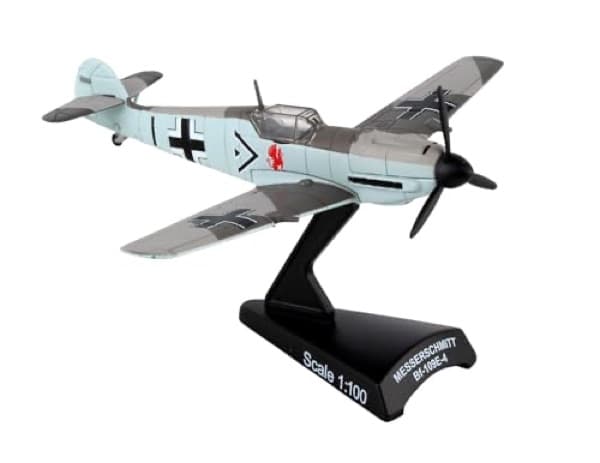
Adolf Galland's Bf 109E in JG 26 markings with the yellow nose and Mickey Mouse nose art. At 1:87 scale, this is the largest Postage Stamp aircraft in this section at roughly 5 inches long.
The Leopard 2's operational footprint is unrivaled. It is in service with 19 nations, making it the de facto NATO standard MBT. This massive user base creates a self-reinforcing ecosystem of logistics, ammunition supply, spare parts, training, and interoperability that no competitor can match. When NATO forces train together, they overwhelmingly train with or alongside Leopard 2s. The Abrams-vs-Leopard debate is perennial, but in terms of alliance-wide standardization, the Leopard 2 has already won.
The Ukraine war has provided the Leopard 2 with something invaluable: real combat data under modern conditions. Leopard 2A4s and 2A6s supplied to Ukraine have seen intense fighting, and while some have been damaged or destroyed (as any tank will be in a high-intensity war), the data from these engagements is feeding directly into the 2A8 program. Lessons about mine protection, drone threats, ERA performance, and APS necessity have been incorporated at an unprecedented speed. Germany and Norway have already ordered the 2A8, and additional NATO customers are expected.
The Leopard 2A8's weaknesses are minor in context. It retains a manual loader, which limits sustained rate of fire compared to autoloaded designs. The MTU diesel, while proven, is a mature engine with less growth potential than newer powerpacks. And at 65 tonnes, it is still a heavy platform with strategic mobility limitations.
But the 2A8 earns the top spot in 2026 because it represents the best overall combination of proven firepower, balanced protection with APS, sustainable logistics, NATO interoperability, and real-world combat feedback. No other tank on this list matches that total package. For a deeper look at how the Leopard 2 compares head-to-head with its closest American rival, see our comprehensive Abrams vs Leopard 2 breakdown.
What Didn't Make the List
Any top-10 ranking requires difficult exclusions. Three tanks deserve mention for narrowly missing the cut.
T-90M "Proryv" (Russia): The T-90M is arguably Russia's most effective tank actually fighting in Ukraine, and its Relikt ERA and Kalina fire control system represent genuine improvements over earlier Russian designs. However, the T-90M has suffered significant losses in Ukraine, including to top-attack munitions, FPV drones, and Western-supplied anti-tank missiles. Its crew survivability remains fundamentally limited by the Soviet-era carousel autoloader design, which stores ammunition in the fighting compartment. The T-90M is a capable tank being asked to fight in a war that has exposed the limitations of its design philosophy.
Arjun Mk 2 (India): India's indigenous MBT has undergone decades of troubled development. The Mk 2 variant incorporates improved armor, a missile-firing capability, and better fire control, but the Indian Army itself has shown limited enthusiasm, ordering only 118 Arjun Mk 1A tanks while continuing to operate hundreds of Russian-designed T-90S tanks as its primary MBT. Until the Arjun demonstrates reliability in large-scale service and earns the confidence of its own army, it remains a promising but unproven platform.
Oplot-M (Ukraine): The Oplot-M, an advanced derivative of the T-80UD, was one of the most capable Soviet-lineage tanks ever built. It featured a welded turret, Duplet ERA, and a modern fire control system. However, Ukraine's Malyshev Factory in Kharkiv has been heavily damaged during the ongoing war, and Oplot-M production has effectively ceased. Ukraine's armored forces now rely primarily on Western-supplied tanks. The Oplot-M's legacy is significant, but it is no longer a viable production platform.
For context on how the next generation of American armor might reshape future rankings, see our profile of the M1E3 Abrams program and the role of the experimental Black Knight unmanned tank in shaping autonomous armor concepts.
Frequently Asked Questions
What is the best tank in the world in 2026?
Based on the combined assessment of firepower, protection, mobility, technology, combat data, and NATO interoperability, the Leopard 2A8 ranks as the best overall main battle tank in 2026. Its integration of Trophy APS, the L/55A1 gun, and real combat feedback from Ukraine give it a decisive edge. The M1A2 SEPv4 Abrams is an extremely close second, with a stronger combat record but greater weight and logistical demands.
What is the best tank in the world in 2026?
Based on the combined assessment of firepower, protection, mobility, technology, combat data, and NATO interoperability, the Leopard 2A8 ranks as the best overall main battle tank in 2026. Its integration of Trophy APS, the L/55A1 gun, and real combat feedback from Ukraine give it a decisive edge. The M1A2 SEPv4 Abrams is an extremely close second, with a stronger combat record but greater weight and logistical demands.
Has the Ukraine war proven that tanks are obsolete?
No. The Ukraine war has proven that tanks are vulnerable when used without combined-arms support, without air cover, and without active protection systems. Tanks that were destroyed by drones and ATGMs were often operating exposed, without infantry or electronic warfare support. The war has accelerated APS adoption and drone countermeasures, not tank retirement. Every major military is investing more in armored modernization, not less.
Why isn't the T-90M on the top 10 list?
The T-90M is a capable tank, but its performance in Ukraine has exposed fundamental survivability limitations inherited from the Soviet T-72 design lineage, particularly the carousel autoloader that stores ammunition in the crew compartment. Heavy losses to top-attack munitions and drones have demonstrated that these design compromises carry real consequences in high-intensity warfare.
Why does the Leopard 2 rank above the Abrams?
The Leopard 2A8 edges out the M1A2 SEPv4 primarily on balance. It offers comparable firepower, strong protection with APS, and better fuel efficiency and logistical sustainability. Its status as the NATO-standard tank across 19 nations provides an interoperability advantage that no other platform matches. The Abrams has a stronger individual combat record, but the Leopard 2's overall ecosystem gives it the top position.
Will active protection systems make tank armor irrelevant?
No. APS systems like Trophy are a critical additional layer of defense, but they have limitations: they carry a finite number of interceptors, they can be overwhelmed by simultaneous attacks, and they are less effective against certain threat types like kinetic energy penetrators fired from other tanks. Passive armor remains essential as the baseline protection that APS supplements. The future of tank protection is layered: passive armor, reactive armor, and APS working together.