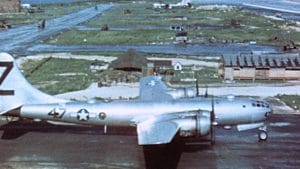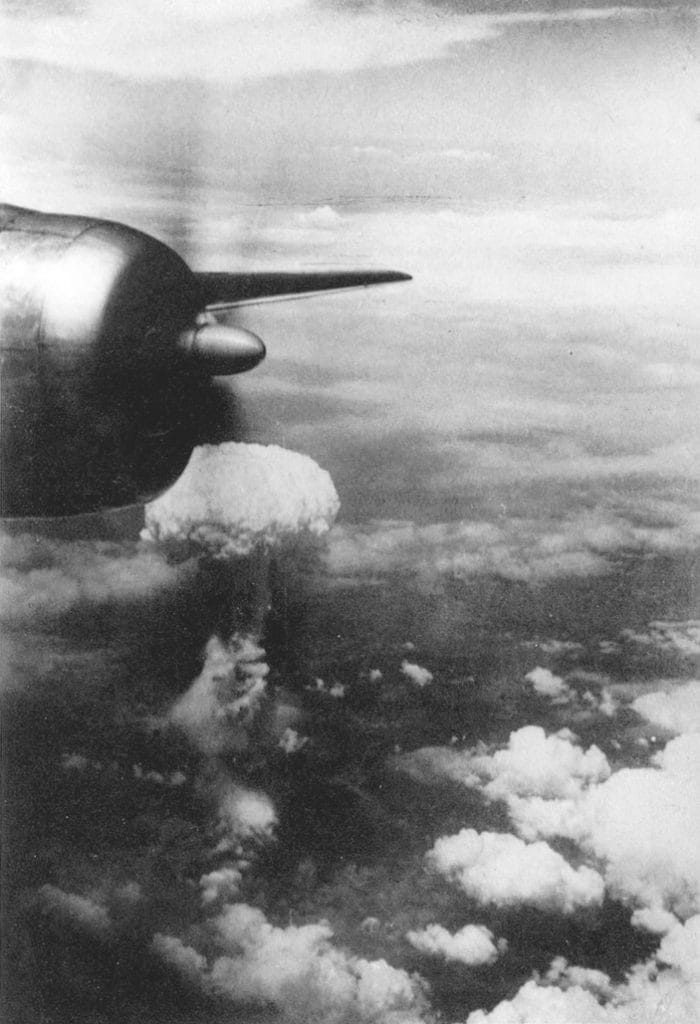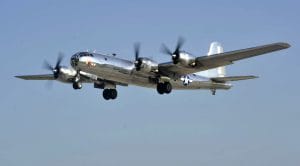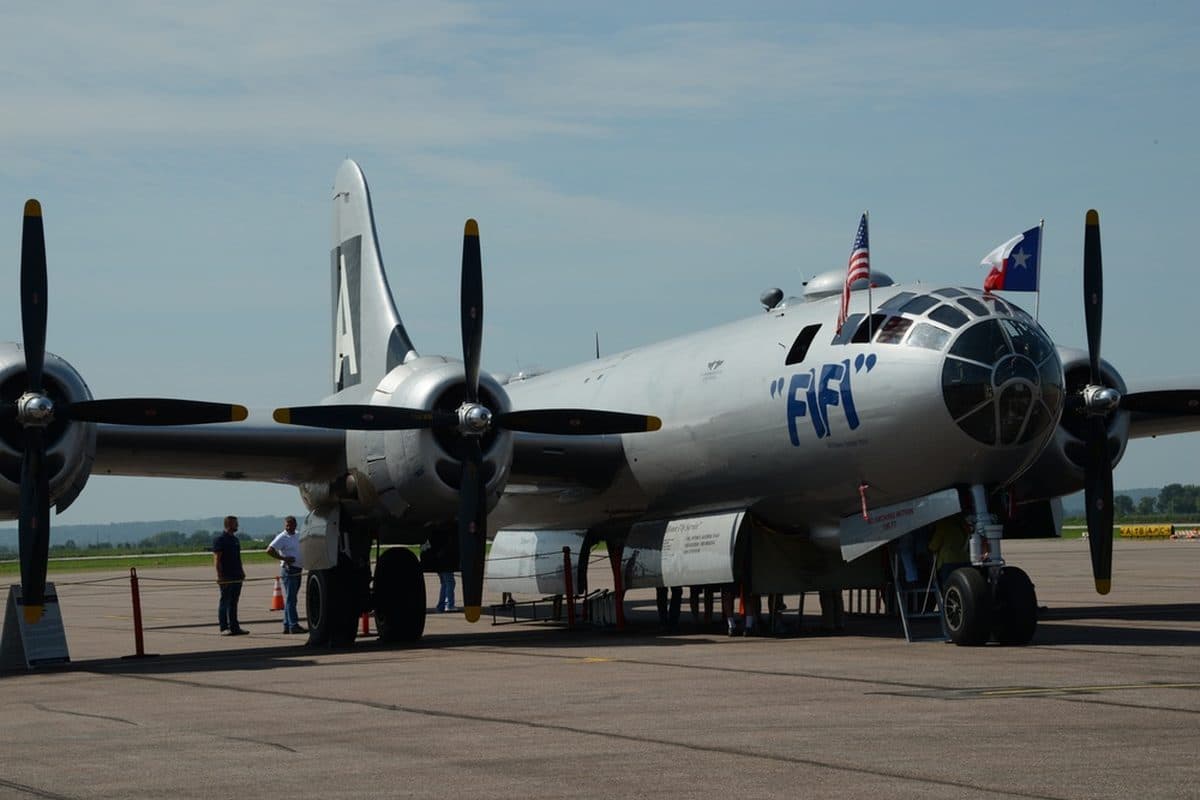

The first flight of the B-29 Superfortress was on the 21st of September, 1942. Produced by Boeing, the Superfortress was considered to be the most advanced bomber aircraft of its time.
Firepower:
Featuring a pressurized cabin, central fire-control system, and remote-controlled machine gun turrets, it could house a crew of up to 11 including the pilot and co-pilot. Its tail gunner position was hermetically sealed from the rest of the aircraft when flying above levels that required pressurization. The B-29 Superfortress’ main designation was as a long range heavy bomber capable of flying up to 5,800 miles. This effectively gave it striking distance over quite a large area in the Pacific Ocean.
 Field Testing Through Combat:

By the start of the war, the B-29 Superfortress was still undergoing massive redesigns to correct for flaws in manufacturing. Initial designs proved difficult to implement with the available technology, and plenty of mishaps occurred in producing the plane itself. Despite issues with the initial Wright Double Cyclone engines undergoing catastrophic failure when overburdened, the B-29 entered the war in full force. It was only after the war that further technological improvements in radial engine design allowed for the Pratt & Whitney R-4360 ‘Wasp Major’. The ‘Wasp Major’ was implemented in the B-29D/B-50 program to much success.
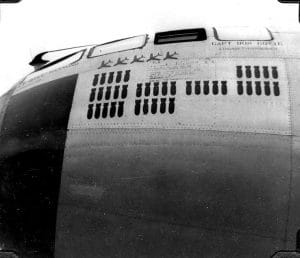
B-29 Superfortress’ Storied Combat History:
Because the B-29 Superfortress was billed as America’s premier long-range heavy bomber, it was implemented in a costly scheme to break the logistical backbone of the Japanese Imperial Army operating in the South Pacific. The Army Air Corps moved approximately 98 B-29 Superfortresses through India, over the Himalayas, and into rural Chinese airfields. By April, 1944, they were in position and on the 5th of June of that same year, the B-29 Superfortresses were launched in an ambitious plan to bomb Bangkok’s railroads and depots. Of the 98 B-29s moved into theater, 77 took off on that momentous occasion. Five were lost to mechanical issues.