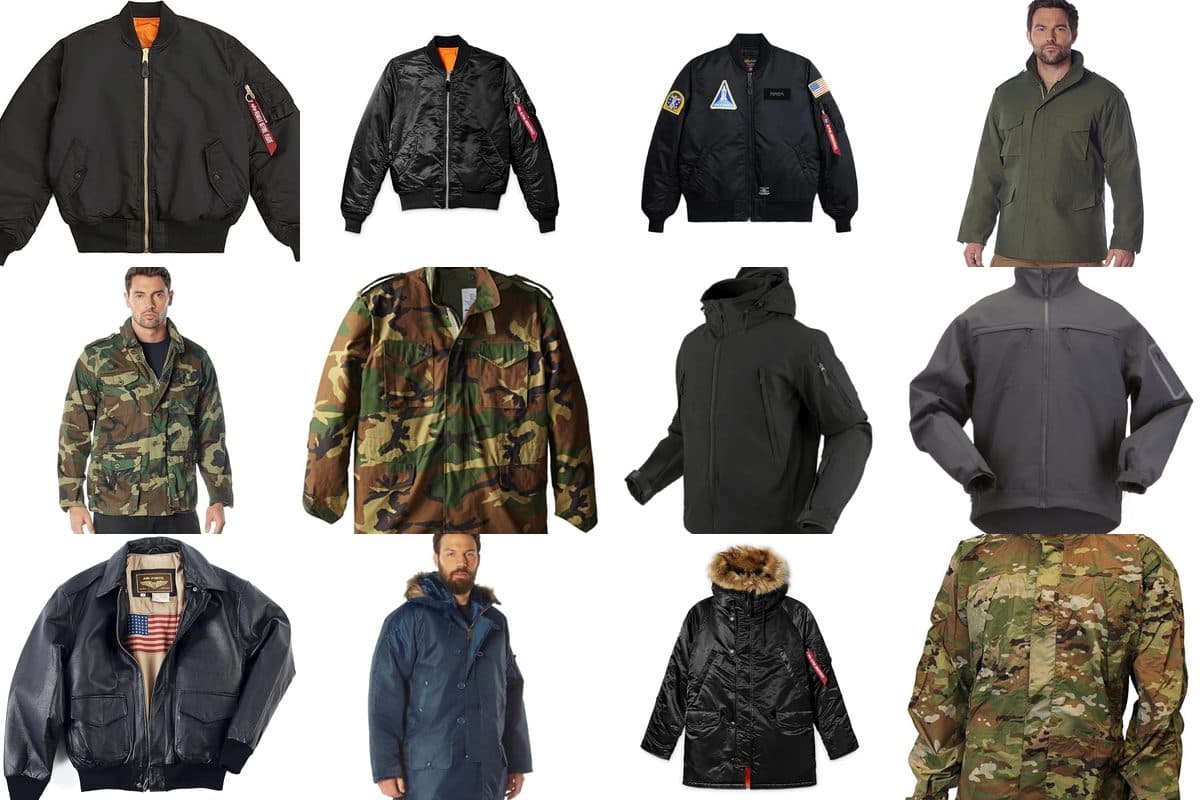

Military jackets have been crossing over into civilian closets for decades, and the reason is simple: they were designed to keep people alive in bad weather, which means they tend to work. The MA-1 bomber started as cold-weather flight gear for jet pilots in the 1950s. The M-65 field jacket carried soldiers through Vietnam and then became a streetwear staple. The N-3B snorkel parka kept Arctic aircrews warm at -60 degrees before it showed up in every winter fashion lineup from New York to Tokyo.
This guide covers 21 military jackets across six categories, from $35 fleece liners to $300 leather flight jackets. Some are genuine military surplus. Others are civilian reproductions built on the same specs. A few are tactical-specific designs that never had a military contract but borrow heavily from the playbook. Every pick includes a weakness, because no jacket does everything well, and knowing the trade-offs matters more than reading marketing copy.
If you are shopping for a gift rather than yourself, check our Father's Day gifts for military enthusiasts guide or the tactical backpacks and EDC gear roundup for more ideas.
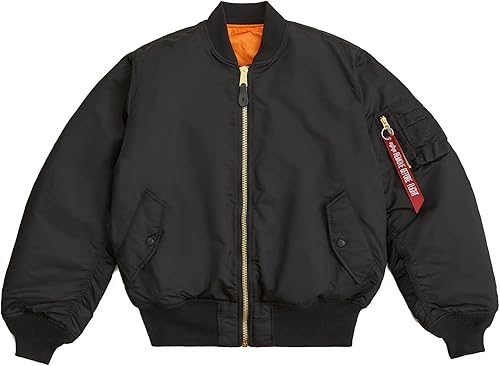
Alpha Industries MA-1
~$170


Landing Leathers A-2 Nappa Leather Jacket
$180 on Amazon
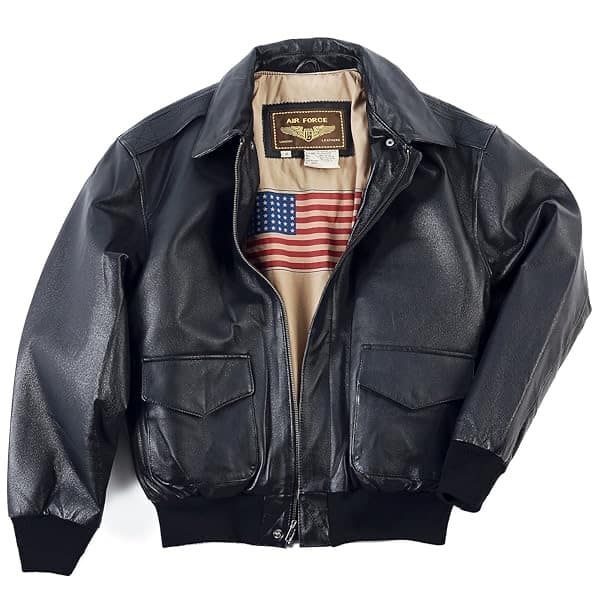
An entry-level A-2 reproduction in soft nappa lambskin. Lighter and more supple than traditional goatskin or cowhide, with a polyester lining and snap-down collar.
Bomber Jackets ($150 - $225)
The MA-1 bomber jacket was developed in the 1950s as a lightweight flight jacket for jet aircraft crews. The original design featured a reversible bright orange lining so downed pilots could be spotted during search and rescue. Alpha Industries held the U.S. military contract for decades, and their civilian versions stick close to the original spec. These jackets work best in the 40-60 degree range. They are not winter coats, and anyone expecting heavy insulation will be disappointed. What they deliver is wind resistance, a clean silhouette, and a construction standard that most fashion brands cannot match at twice the price.
Alpha Industries MA-1 Bomber Jacket
~$170 on Amazon
The standard-bearer for military bombers. Nylon shell, polyester fill, reversible orange lining, and the same basic pattern Alpha has supplied to the U.S. military since the 1960s.
Best for: Anyone who wants the original MA-1 design with legitimate military heritage behind it
Alpha's MA-1 runs with a boxy, relaxed fit that matches the original military cut. The nylon flight satin shell resists wind and light rain, though it will soak through in a sustained downpour. Insulation is moderate, enough for cool weather but not enough for real winter. The reversible orange lining is a nice touch, and the construction quality holds up over years of regular wear. Where the jacket falls short is breathability. The nylon traps heat and moisture during physical activity, so it works better as a casual layer than an active-use piece. Sizing runs large, and most buyers size down one from their normal fit.
Alpha Industries MA-1 Slim Fit
~$170 on Amazon
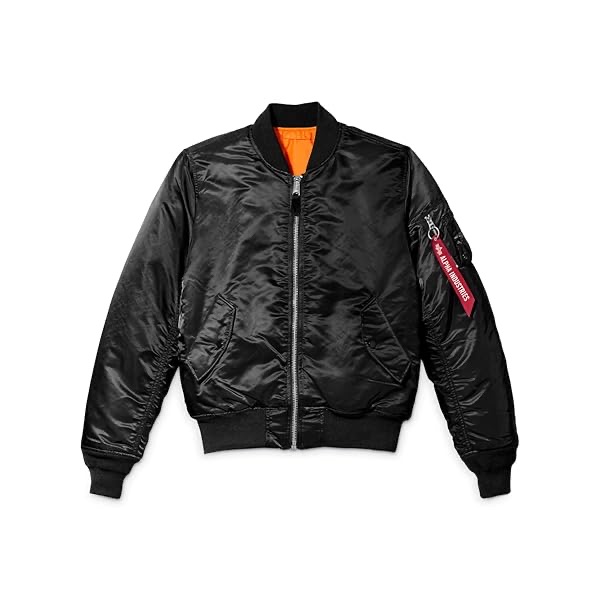
Same MA-1 construction as the heritage version with a tapered body and slimmer sleeves. Designed for a modern silhouette without losing the bomber DNA.
Best for: Buyers who like the MA-1 but find the standard cut too wide through the torso
The slim version addresses the biggest complaint about the original MA-1: the boxy fit that swallows smaller frames. Alpha pulled in the torso by about two inches per size and shortened the sleeves slightly. The result is a cleaner look that layers better under a coat without bunching. On the downside, the tighter cut limits what you can wear underneath. A heavy hoodie or thick sweater will feel restrictive through the shoulders, especially in smaller sizes. If you plan to layer heavily, stick with the standard fit. If you want a cleaner standalone look over a t-shirt or thin flannel, the slim version is the better choice.
Alpha Industries NASA MA-1
~$200 on Amazon
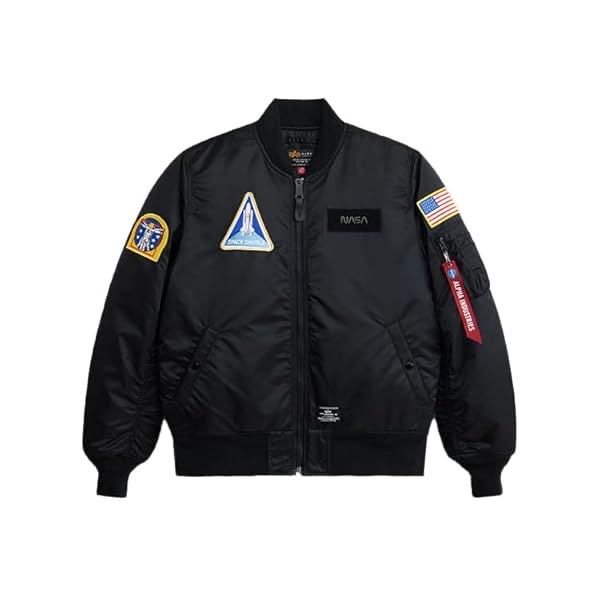
Alpha's MA-1 with embroidered NASA patches on the left chest and right arm. Same nylon shell and construction, with the space agency branding that has turned this into a streetwear crossover.
Best for: Space and aviation enthusiasts who want the bomber look with NASA mission patches
Functionally identical to the standard MA-1 underneath the patches. The NASA embroidery is well done, with clean stitching on the meatball logo and mission patches. Alpha also includes the "Remove Before Flight" keychain tag on the zipper, which is a nice detail that aviation people will appreciate. The trade-off is the $30 premium over the standard version for what amounts to cosmetic additions. The patches also mean you cannot wear the orange-side-out reversible option without looking odd, since the embroidery shows through as raised bumps on the reverse. If you just want a solid bomber and do not care about the NASA branding, the standard MA-1 is a better value at $170.
Field Jackets ($55 - $200)
The M-65 field jacket entered service with the U.S. Army in 1965, replacing the older M-51. It was designed as a four-season combat jacket with a zip-out hood stored in the collar, four front cargo pockets, and a button-in liner for cold weather. The M-65 served through Vietnam, the Gulf War, and beyond. Rothco produces the most popular civilian reproductions at multiple price points, while Alpha Industries offers a premium version closer to the original contract spec. Field jackets run large by design, since the military intended them to fit over combat gear and layering systems.
Rothco Vintage Lightweight M-65 Jacket
~$65 on Amazon
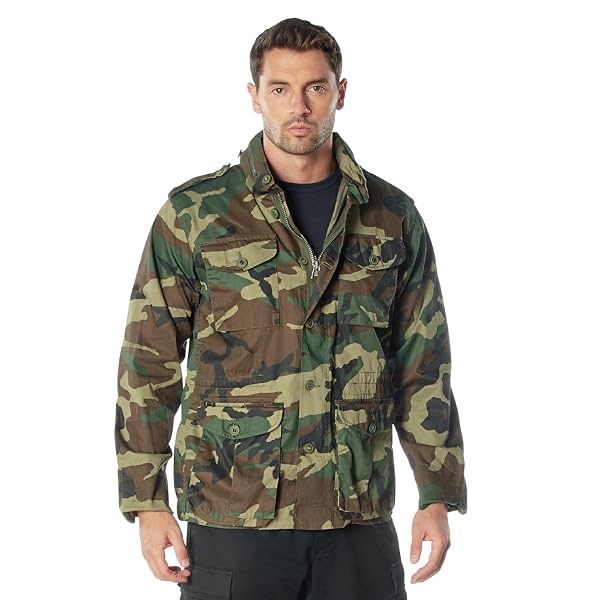
A lighter-weight take on the M-65 pattern with a washed cotton-polyester shell. No liner included. Four front pockets, hidden hood in the collar, and a broken-in vintage feel out of the box.
Best for: Spring and fall wear where heavy insulation would be overkill
Rothco's lightweight version strips the M-65 down to a three-season shell. The pre-washed cotton blend gives it a softer hand feel than the stiff standard version, and it breaks in quickly with regular wear. Pocket placement and overall pattern follow the original M-65 spec. The weakness here is durability. The lighter fabric shows wear faster than the heavier standard M-65, and the stitching around the pocket corners can pull after a year or two of hard use. The zipper is also a step down from the standard version. For casual everyday wear, it holds up fine. For anything resembling field use, spend the extra $25 on the standard Rothco M-65.
Rothco M-65 Field Jacket
~$90 on Amazon
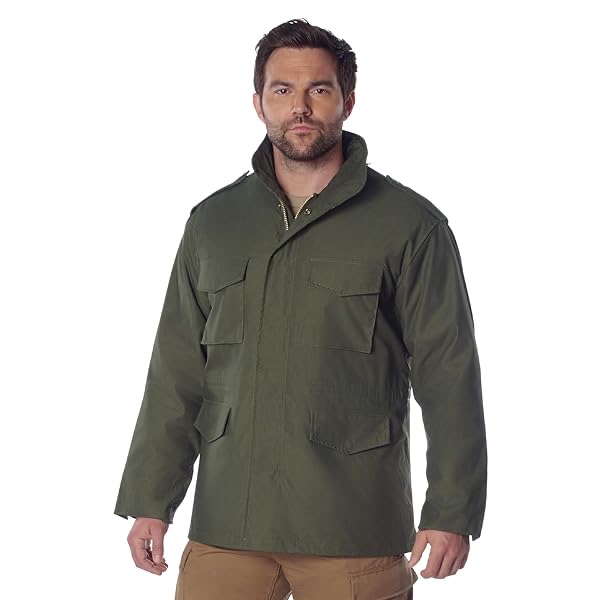
The standard-weight M-65 reproduction with a removable quilted liner, brass zipper with snap-over storm flap, and the full four-pocket layout. Available in over a dozen colors and camo patterns.
Best for: The all-around pick for anyone wanting a classic military field jacket at a fair price
This is the M-65 that most people picture when they think of the field jacket. Rothco has been producing this version for years, and the pattern is well-dialed. The quilted liner buttons in securely and adds meaningful warmth without excessive bulk. Four front cargo pockets hold more than you would expect, and the hidden hood stows neatly in the collar. Sizing runs very large, typically one to two sizes bigger than standard clothing. A medium Rothco M-65 fits more like a large in most brands. The drawback is water resistance. The cotton-poly shell absorbs rain quickly and takes a long time to dry. In sustained wet conditions, you will get soaked through. Treat it with a DWR spray if you plan to wear it in rain.
Alpha Industries M-65 Field Jacket
~$200 on Amazon
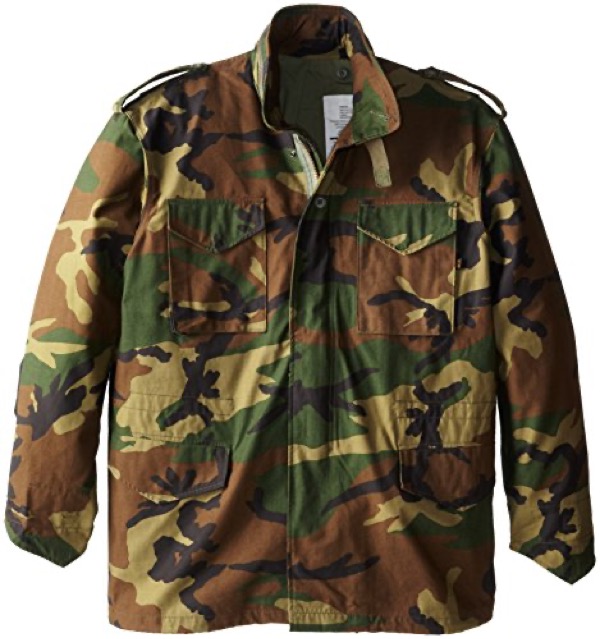
Alpha's take on the M-65, built with a slightly modernized fit and their standard nylon-cotton blend. Includes a removable liner and the same four-pocket layout as the original spec.
Best for: Buyers who want the M-65 pattern with tighter QC and a slightly more tailored fit than Rothco
Alpha's M-65 costs more than double the Rothco, and the question is whether the premium justifies itself. The nylon-cotton shell is noticeably more durable and has better wind resistance. The YKK zipper is smoother and more reliable. Stitching is tighter overall, with better reinforcement at stress points. The fit sits closer to the body than Rothco's oversized cut, which means it layers less easily over bulky gear but looks cleaner worn open over a shirt. The weakness is value. The Rothco M-65 at $90 delivers about 80% of the quality at less than half the cost. Alpha's version is better built, but the $110 gap is hard to justify unless fit and finish are your top priority.
Tactical Softshell Jackets ($40 - $160)
Softshell jackets bridge the gap between fleece and hardshell rain gear. They use a stretchy, water-resistant fabric with a fleece-lined interior, which means they breathe better than waterproof shells while still blocking wind and light precipitation. The military adopted softshells widely in the 2000s as part of layering systems like ECWCS, and tactical brands followed with civilian versions. These jackets excel in the 30-55 degree range when you are moving enough to generate body heat. They are not waterproof, and anyone expecting rain protection will be disappointed. Think of them as active-layer jackets for hiking, range days, or outdoor work.
TACVASEN Tactical Softshell Jacket
~$45 on Amazon
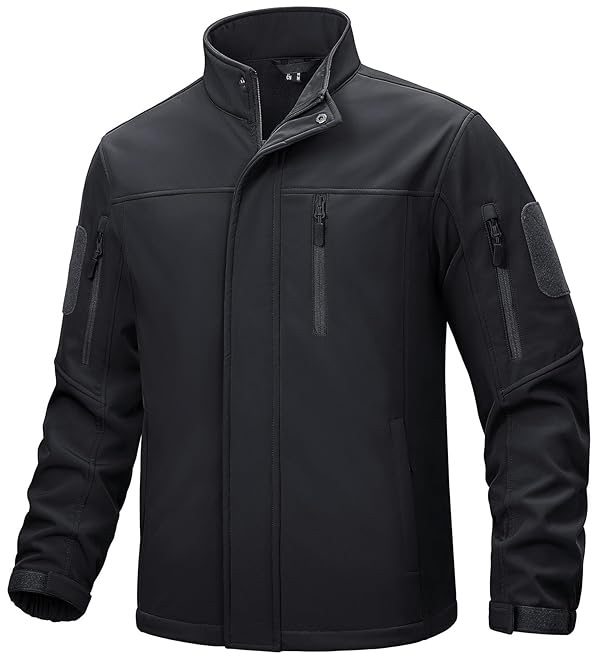
A budget softshell with fleece lining, adjustable cuffs, and multiple zippered pockets. Available in over 20 colors. Polyester-spandex shell with a micro-fleece interior.
Best for: Budget buyers who need a basic wind-resistant layer without spending $100+
At $45, this is one of the cheapest softshells that actually functions as a softshell rather than a dressed-up windbreaker. The fleece lining provides real warmth, and the shell sheds light rain for about 20-30 minutes before wetting through. Zippers work smoothly, and the fit is fairly true to size compared to most tactical brands that run large. Where TACVASEN cuts corners is in the DWR coating, which washes out after a handful of cycles in the laundry. The fabric also pills faster than pricier alternatives, particularly around the cuffs and under a backpack's shoulder straps. For occasional use it is a solid deal. For daily wear, expect visible wear within six months.
FREE SOLDIER Tactical Softshell
~$60 on Amazon
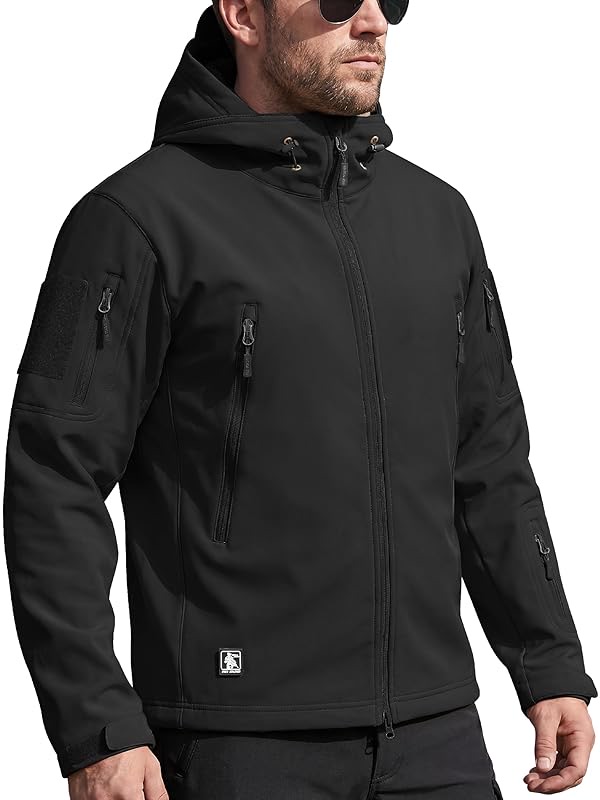
A mid-tier softshell with a fleece lining, detachable hood, and shoulder-area reinforcement panels. Polyester shell with a water-resistant coating and articulated elbows.
Best for: Hikers and outdoor workers who need a hooded softshell under $75
FREE SOLDIER steps up from the pure budget options with articulated elbows and reinforced shoulder patches, which matter if you carry a pack regularly. The detachable hood is a useful feature that most competitors at this price omit. Fleece lining is dense enough to work as a standalone piece in cool weather. The main weakness is the zipper quality. Several buyers report the main front zipper snagging or separating after a few months, and the zipper pulls feel lightweight compared to YKK hardware. The hood attachment system also loosens over time, so it may detach when you do not want it to. Solid jacket for the money, but keep your expectations calibrated to the price point.
Rothco Special Ops Tactical Softshell
~$75 on Amazon
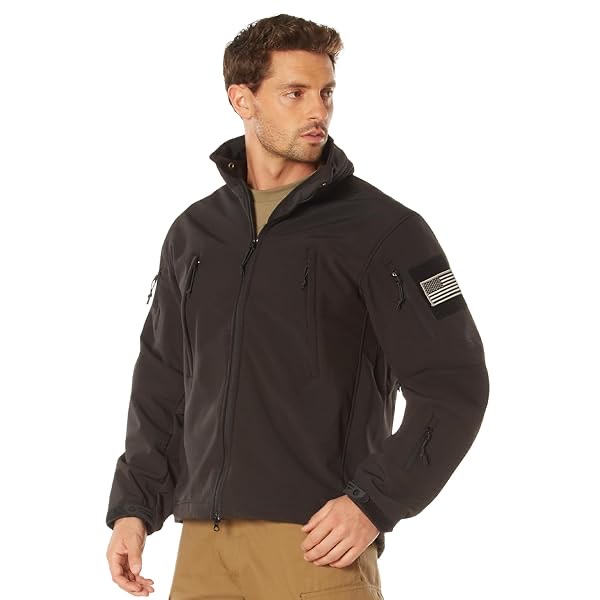
Rothco's three-layer softshell with a waterproof membrane sandwiched between the outer shell and fleece liner. Features a vented back panel for airflow and Velcro loop patches on both shoulders.
Best for: Buyers who want a step up from budget softshells without reaching premium pricing
The three-layer construction sets this apart from cheaper two-layer softshells. Rothco sandwiches a waterproof membrane between the outer face fabric and the inner fleece, which provides noticeably better rain resistance than DWR coatings alone. The back vent panel is a smart addition that reduces the swamp-back effect common in softshells during moderate exertion. Velcro shoulder patches are useful for morale patches or unit identification. The downside is weight. At roughly 2.5 pounds, it is heavier than most softshells in this category, and the three-layer build makes it stiffer out of the box. It breaks in after a week or two of wear, but the initial feel is bulkier than you might expect from a "softshell" label.
Condor Summit Softshell Jacket
~$90 on Amazon
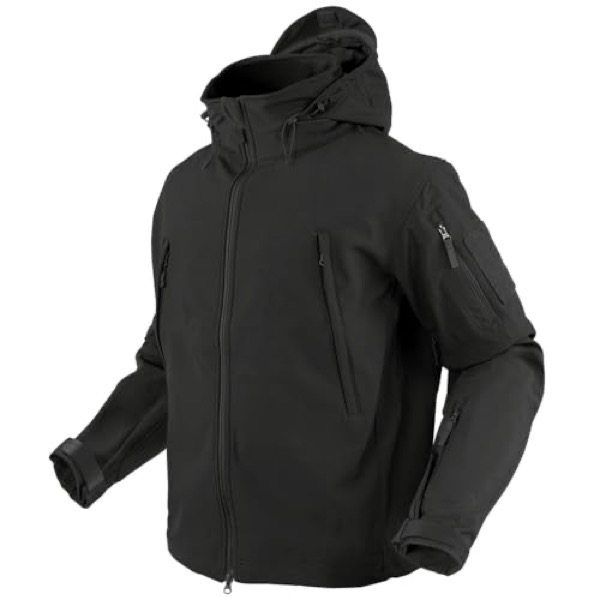
Condor's flagship softshell with three layers, YKK zippers throughout, two chest map pockets, and reinforced elbows. A popular choice among law enforcement and military personnel for off-duty and range use.
Best for: Range days, outdoor work, and anyone who needs a durable mid-weight jacket with serious pocket capacity
Condor built a reputation in the tactical market by delivering mid-range quality at prices below the big names, and the Summit is their best example. YKK zippers throughout is a real differentiator at this price point, since most competitors use no-name hardware. The two chest map pockets are large enough for folded documents or a small tablet, and the reinforced elbows hold up through extended prone shooting positions. Water resistance is better than average for a softshell, handling steady drizzle for about 45 minutes before saturating. The drawback is the fit, which runs noticeably large and boxy in the torso. Size down at least one, possibly two if you prefer a trimmer look. The extra room is intentional for concealed carry and plate carriers, but civilian wearers will find it baggy.
5.11 Chameleon 2.0 Softshell
~$145 on Amazon
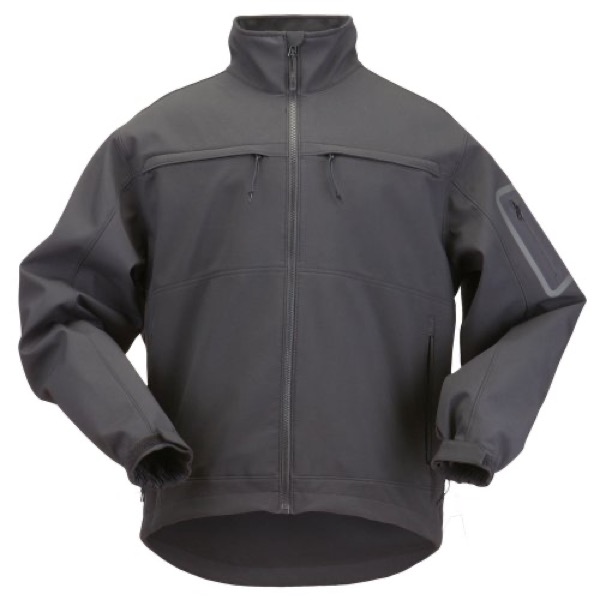
5.11's premium softshell with a clean exterior that conceals the tactical features underneath. Built for plainclothes law enforcement with internal admin pockets and a badge holder.
Best for: Plainclothes professionals and CCW carriers who need a low-profile tactical jacket
5.11 designed this jacket specifically for plainclothes work, and it shows. The exterior is clean enough to wear in a professional setting without screaming "tactical," while the interior hides an internal badge holder, admin pockets, and enough room for a concealed holster. The waterproof membrane outperforms cheaper softshells in sustained rain, and the overall build quality reflects the $145 price tag. The weakness is versatility. Many of the features that justify the premium, like the badge holder and internal pocket layout, are useless to civilian buyers. If you do not need covert carry features, the Condor Summit at $90 delivers comparable weather protection and durability for $55 less. The Chameleon earns its price only if you actually use the professional-grade features.
Flight & Leather Jackets ($150 - $350)
Leather flight jackets trace their lineage to the A-2, which the U.S. Army Air Corps adopted in 1931. The original A-2 used horsehide or goatskin, featured a shirt-style collar, and became the most recognizable piece of military clothing ever issued. Modern reproductions range from budget nappa leather to premium goatskin and cowhide versions. Leather jackets require more care than synthetic options, and they take longer to break in. But a quality leather flight jacket will last decades if maintained, developing a patina that improves with age rather than degrading.
Landing Leathers A-2 Nappa Leather Jacket
~$180 on Amazon
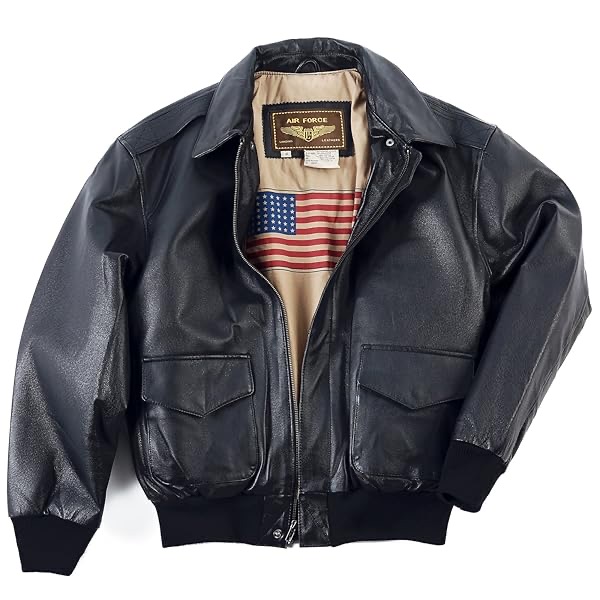
An entry-level A-2 reproduction in soft nappa lambskin. Lighter and more supple than traditional goatskin or cowhide, with a polyester lining and snap-down collar.
Best for: First-time leather jacket buyers who want the A-2 silhouette at a lower entry price
Nappa lambskin is the softest leather you will find on a flight jacket, which cuts the break-in period from months to almost nothing. Out of the box, this jacket drapes well and feels comfortable immediately. The A-2 pattern is accurate, with the correct collar style, pocket placement, and knit cuffs. At $180, it undercuts most leather A-2 options by a significant margin. The trade-off is durability. Nappa is thinner and more delicate than goatskin or cowhide. It scratches and scuffs more easily, and it will not develop the same rugged patina that thicker leathers achieve. For city wear and casual use, the softness is actually an advantage. For anything involving regular abrasion or outdoor use, the goatskin version is worth the upgrade.
Landing Leathers A-2 Goatskin Jacket
~$300 on Amazon
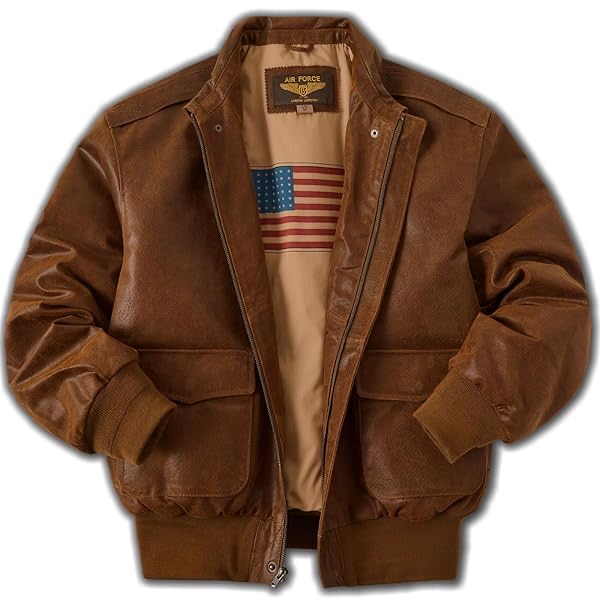
The premium version of Landing Leathers' A-2 line, using genuine goatskin that matches the original USAAF specification. Thicker and more structured than the nappa version, with a satin lining.
Best for: Collectors and enthusiasts who want an authentic-feeling A-2 reproduction in traditional goatskin
Goatskin was the most common leather on original WW2-era A-2 jackets, and this version gets close to that experience. The hide is noticeably thicker and stiffer than the nappa model, which means a longer break-in period but a jacket that ages better over the long haul. After six months of regular wear, goatskin develops creases and patina that look earned rather than manufactured. The satin lining is a step up from the nappa's polyester. The downside is the break-in itself. For the first few weeks, the jacket will feel stiff and restrictive through the shoulders. It also runs slightly smaller than the nappa version due to the thicker hide, so consider sizing up if you are between sizes. At $300, it competes directly with the cowhide option below, and the choice comes down to personal preference on leather grain.
A-2 Cowhide Flight Jacket (Made in USA)
~$300 on Amazon
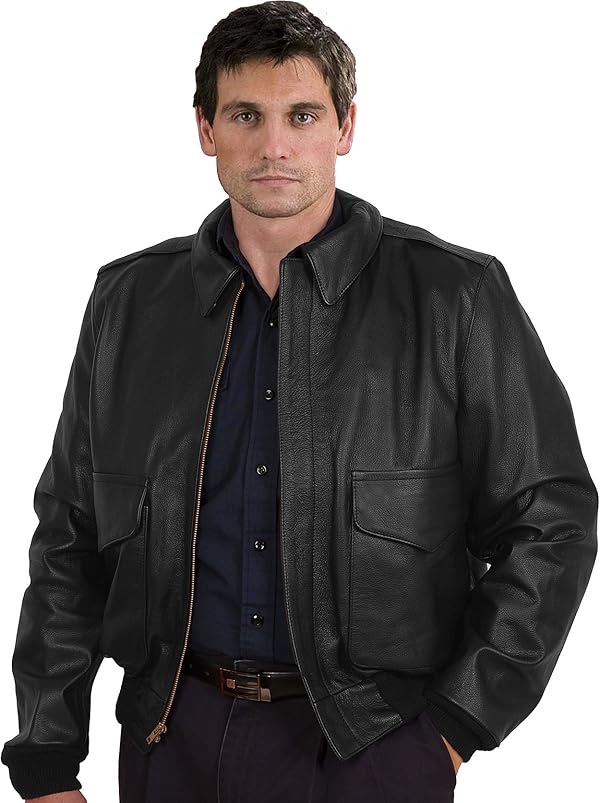
A domestic-made A-2 in thick cowhide leather with a satin lining. Built in the United States with heavier hardware and a more structured fit than imported alternatives.
Best for: Buyers who prioritize American manufacturing and want the heaviest, most durable A-2 option available
Cowhide is the toughest common leather used in flight jackets, and this domestic-made version leans into that. The hide is thick enough that the jacket has noticeable heft when you pick it up, and the hardware is heavier gauge than most imports. Stitching is clean and consistent, which is what you expect from U.S. production at this price. The "Made in USA" tag carries weight for buyers who care about sourcing. The weakness is comfort during the first month. Cowhide is stiffer than goatskin and significantly stiffer than nappa. The break-in period can stretch to two months of regular wear before the jacket conforms to your shoulders and arms. It also runs warm once broken in, making it a poor choice for anything above 60 degrees. This is a cold-weather jacket through and through.
Fleece & Liners ($30 - $75)
Military fleece layers and jacket liners serve as the insulating mid-layer in military clothing systems. The M-65 liner buttons into the field jacket but also works as a standalone vest or light jacket. ECWCS (Extended Cold Weather Clothing System) fleece was developed for the U.S. military's layering approach, where each piece serves a specific thermal role. The woobie, officially the poncho liner, has been a beloved piece of military gear since Vietnam and has recently been adapted into jacket form. These pieces are not designed to be your outer layer. They work best under a shell or field jacket.
Rothco M-65 Field Jacket Liner
~$35 on Amazon
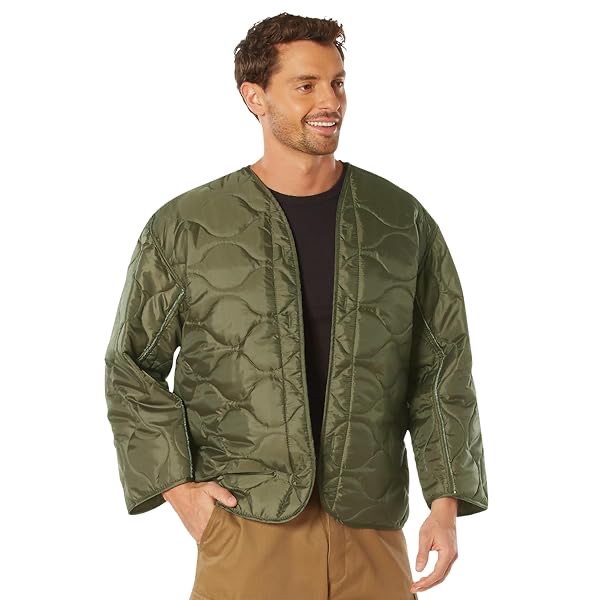
The quilted button-in liner designed for M-65 field jackets. Polyester fill with a nylon shell. Works as a standalone light jacket or buttons directly into any standard M-65.
Best for: M-65 owners who need a replacement liner, or anyone wanting a cheap quilted layer
This is a straightforward quilted liner with no pretensions. It buttons into an M-65 field jacket through the standard attachment points and adds a meaningful layer of warmth in cold weather. Worn standalone, it functions as a light puffer-style jacket for mild cold. The polyester fill compresses easily for packing, and the whole thing weighs almost nothing. The limitation is that it offers zero wind or water resistance on its own. Without an outer shell, wind cuts right through the nylon. It also lacks pockets when worn as a standalone piece, which limits its usefulness outside of the M-65 system. At $35, it is hard to complain. Just understand what it is: a liner, not a jacket.
ECWCS Gen III Polartec Fleece Jacket
~$65 on Amazon
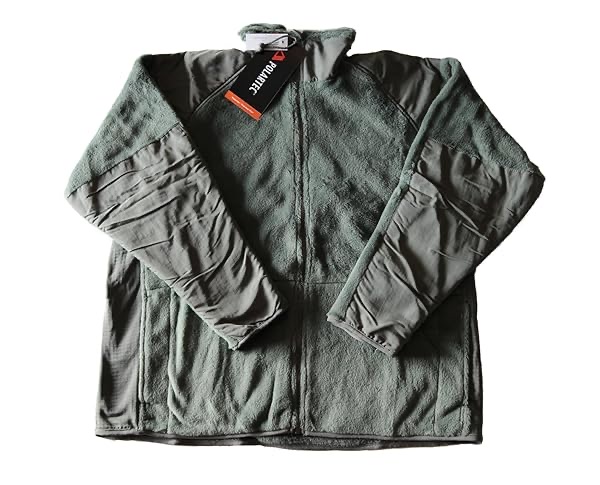
Genuine U.S. military surplus Polartec 300 fleece. Level 3 of the ECWCS layering system, designed as the primary insulating layer under a wind/rain shell.
Best for: Anyone who wants actual military-issue fleece with Polartec 300 warmth at surplus pricing
Polartec 300 is the gold standard for military fleece, and this is the genuine article. As surplus, these jackets have been issued and used, so expect some signs of wear. The fleece itself holds up extremely well even after heavy use, maintaining its loft and warmth through hundreds of wash cycles. At $65 for real Polartec, it undercuts civilian equivalents by a wide margin. The weakness is cosmetic. Surplus condition varies, and you may receive a jacket with faded color, small stains, or a name tape still attached. Sizing follows military standards, which tend to run slightly large in the chest. It also has zero wind protection, as fleece is purely an insulating layer. Under a shell jacket, though, this is one of the warmest mid-layers you can buy at any price.
Rothco Woobie Jacket
~$65 on Amazon
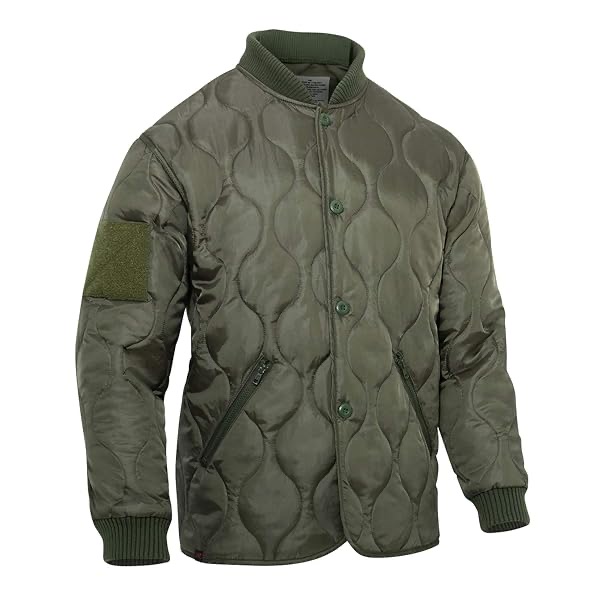
The classic poncho liner (woobie) material built into a hooded jacket. Quilted nylon shell with polyester fill, using the same ripstop nylon and pattern as the standard-issue poncho liner.
Best for: Veterans and military enthusiasts who swear by the woobie and want it in jacket form
Anyone who has served in the U.S. military knows the woobie. The poncho liner has been the most beloved piece of government-issued gear for over 50 years, and Rothco took that material and cut it into a jacket with a hood. The warmth-to-weight ratio is excellent, and the ripstop nylon compresses down small enough to stuff into a cargo pocket. It is the ultimate packable insulating layer. The weakness is the same as any poncho liner: zero wind resistance. A stiff breeze goes straight through the quilted nylon as if it were not there. Paired with a windbreaker or shell, it works beautifully. On its own in any wind, you will feel exposed. The hood is also unstructured and tends to fall into your eyes without cinching it tight.
Rain & Cold Weather Jackets ($80 - $250)
When temperatures drop below freezing or rain becomes the primary concern, you need something heavier than a softshell or bomber. The N-3B snorkel parka was designed for Arctic ground crews working on aircraft in sub-zero conditions. ECWCS Gore-Tex shells are the U.S. military's standard rain and wind protection layer. These jackets prioritize function over style, and most of them look it. They are bulky, heavy, and built for survival rather than fashion. If you need a jacket that will keep you warm and dry in genuinely harsh conditions, this is the category.
Rothco N-3B Snorkel Parka
~$95 on Amazon
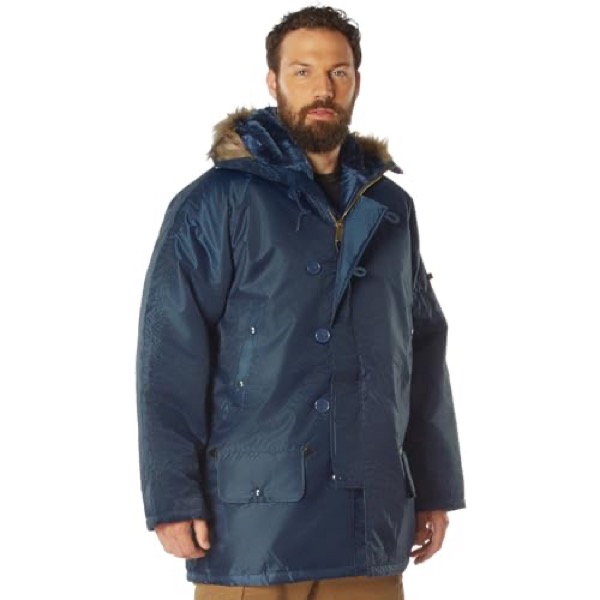
Rothco's reproduction of the USAF N-3B snorkel parka with a synthetic fur-trimmed hood, heavy polyester fill, and a knee-length cut. Designed for extreme cold weather down to -10 degrees.
Best for: Budget cold-weather buyers who need serious insulation without spending $200+
For under $100, the Rothco N-3B delivers a surprising amount of warmth. The snorkel hood design channels the original military concept, where the fur-trimmed tunnel blocks wind from hitting your face. Heavy polyester fill throughout the body and sleeves keeps core temperature up in genuinely cold conditions. The knee-length cut protects your thighs, which shorter jackets leave exposed. The trade-off is bulk and weight. This is not a jacket you throw on for a quick errand. It weighs over three pounds, packs down poorly, and generates too much heat for anything above 30 degrees. The synthetic fur trim also looks cheap compared to Alpha's version, and the zipper hardware is basic. But at $95 for a parka that handles single-digit temperatures, the value is hard to argue with.
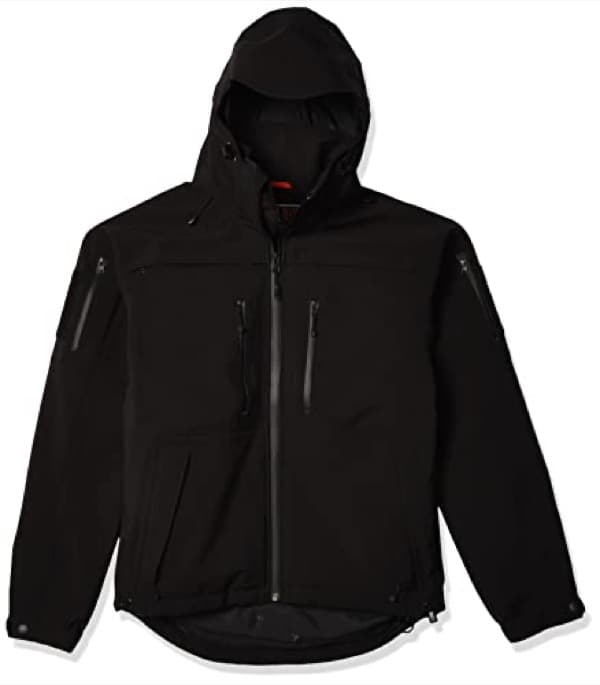
5.11 Sabre 2.0 Jacket
~$175 on Amazon
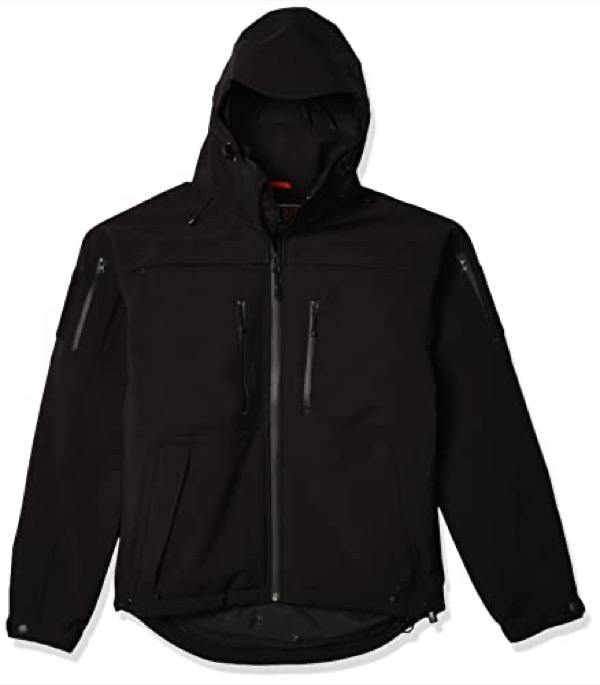
A waterproof tactical jacket with sealed seams, an integrated hood, and 5.11's patrol-ready pocket layout. 100% polyester shell with a DWR finish and mesh-lined interior.
Best for: Law enforcement and security professionals who need waterproof protection with tactical pocket access
5.11 built the Sabre 2.0 for people who spend long hours outside in rain and need their gear accessible. Sealed seams and a waterproof shell keep water out in sustained downpours, which separates it from softshells that merely resist water. The pocket layout includes radio loops, internal document pockets, and zippered hand warmers positioned to clear a duty belt. The integrated hood stows cleanly in the collar. Where the Sabre falls short is insulation. This is a rain shell, not a winter coat. Without a mid-layer underneath, it provides minimal warmth. The mesh lining breathes well during activity but does nothing for warmth at rest. Plan to layer a fleece underneath in cold weather, which adds bulk that the jacket was not entirely designed to accommodate comfortably.
ECWCS Gore-Tex Cold Weather Parka
~$200 on Amazon
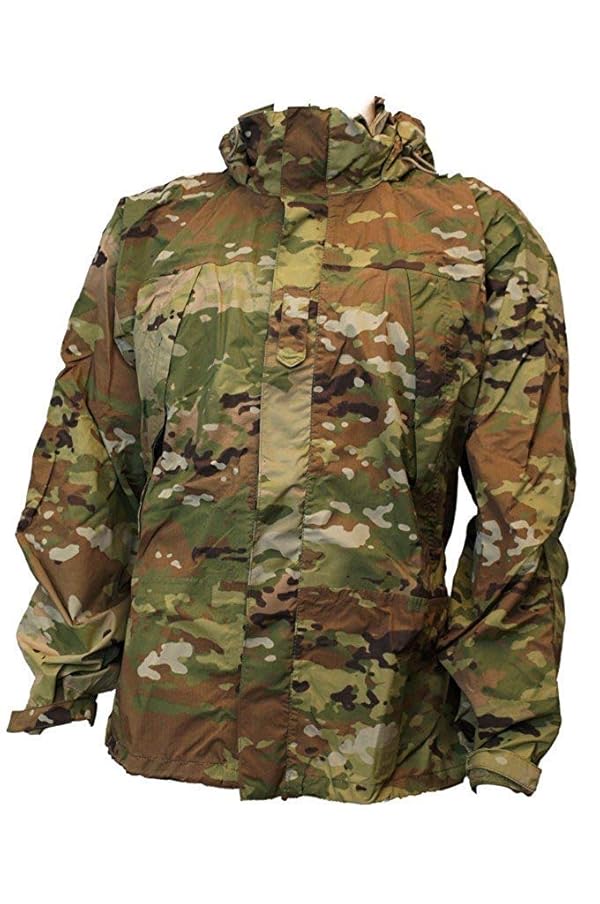
Genuine military-issue Gore-Tex parka from the ECWCS (Extended Cold Weather Clothing System). Fully waterproof and windproof, designed as the outer shell in the military's seven-layer system.
Best for: Serious outdoor users who want proven military waterproof/windproof protection
Gore-Tex needs no introduction in the outdoor world, and the ECWCS parka represents the military's investment in the technology. This is the outer layer in a seven-piece system designed to keep soldiers operational from 40 degrees down to -60 degrees. The Gore-Tex membrane is fully waterproof and breathable, handling sustained rain, sleet, and wet snow without wetting through. As surplus, prices are well below what you would pay for comparable civilian Gore-Tex jackets. The downside is condition and aesthetics. Surplus items vary from nearly new to heavily used, and the military camo patterns are not subtle. The parka is also cut very large to accommodate multiple insulating layers underneath, so it will look oversized if worn as a standalone piece over a t-shirt. Buy this for function in bad weather, not for street style.
Alpha Industries N-3B Slim Parka
~$235 on Amazon
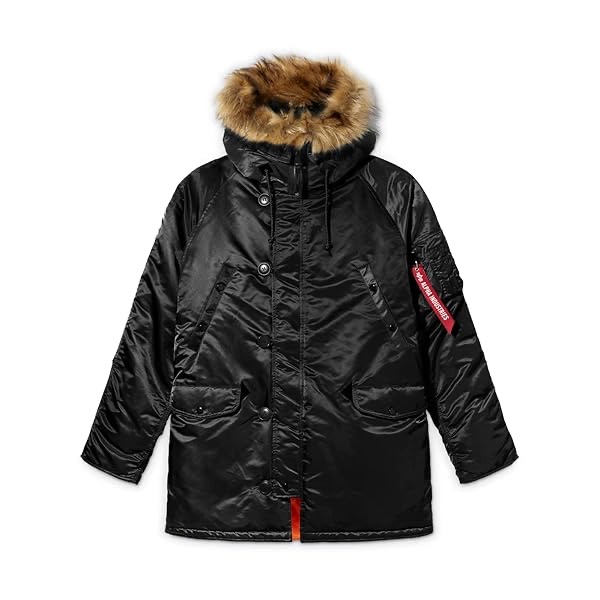
Alpha's modernized take on the N-3B snorkel parka with a slimmer cut, removable faux fur hood trim, and updated polyester fill. Retains the signature snorkel hood design.
Best for: Anyone who wants serious cold-weather protection in a silhouette that works for daily urban wear
Alpha took the bulky N-3B silhouette and trimmed it down to something you can actually wear in a city without looking like you are headed to McMurdo Station. The slim fit sits closer to the body than Rothco's version while still leaving room for a sweater or fleece underneath. The removable fur trim lets you dress it down for milder days. Construction quality is a clear step above the Rothco at every touchpoint, from the zipper to the stitching to the hardware. The weakness is the slim fit itself in extreme cold. The original N-3B was cut large because Arctic conditions demand layering, and Alpha's slimmer cut limits how much you can stack underneath. In temperatures below zero, you may find yourself wishing for the extra room. Above 10 degrees, the slim version looks and performs better than the boxy original pattern.
A Brief History of Military Jackets
Military outerwear has shaped civilian fashion more than almost any other clothing category, and the crossover started earlier than most people realize.
The MA-1 Bomber: From Cockpits to Street Corners
When the U.S. military transitioned from propeller aircraft to jets in the late 1940s, the leather flight jackets that had served pilots since the 1920s became a problem. Jet cockpits were smaller, and bulky leather caught on instruments and ejection seat harnesses. The military needed something thinner and lighter. The MA-1 entered service in 1950 with a nylon shell, knit cuffs and waistband, and the now-famous reversible orange lining. That orange was not a style choice. It was a survival feature, intended to make downed pilots visible to rescue aircraft. Alpha Industries won the U.S. military contract and began producing MA-1 jackets in 1963, a contract they held for decades. The jacket crossed into civilian fashion in the 1970s when surplus stores began selling them, and it has never left.
The M-65 Field Jacket: Vietnam and Beyond
The M-65 replaced the M-51 field jacket in 1965, just as the Vietnam War was escalating. It introduced several design improvements: a zip-in hood stored in the collar, a simplified closure system with both zipper and snap storm flap, and a removable button-in liner for cold weather versatility. Millions were produced for the U.S. military over the next three decades. The M-65 became a cultural icon after Robert De Niro wore one in Taxi Driver (1976), and it has appeared in everything from Rambo to fashion runway shows. The four front cargo pockets, brass hardware, and olive drab color scheme became the template that virtually every "military style" jacket still follows today.
The N-3B Snorkel Parka: Built for the Arctic
The N-3B was developed in the 1950s for USAF ground crews servicing aircraft in Arctic conditions. These crews needed heavy insulation and face protection while working on flight lines where wind chill could drop temperatures well below -50 degrees. The snorkel hood design, with its fur-trimmed tunnel that extends past the face, was the solution. It channels warm exhaled air around the face while blocking direct wind contact. The original N-3B used real coyote or wolf fur trim and down fill, though modern reproductions typically use synthetic alternatives. Like the MA-1, the N-3B crossed into civilian use through military surplus channels and became a winter fashion staple in cold-climate cities.
How to Size Military Jackets
Military jackets were designed to fit over combat gear, layering systems, and body armor. This means they run large compared to civilian clothing. Here is what to expect across different types:
Bombers (MA-1 style): Run 1 size large. If you normally wear a large, try a medium. The boxy cut is intentional. Slim fit versions from Alpha run closer to true size but still lean generous.
Field jackets (M-65 style): Run 1-2 sizes large. Military sizing assumes you will wear the jacket over a combat uniform and possibly a liner. A medium Rothco M-65 fits more like a civilian large or XL. Size down aggressively.
Softshells: Vary by brand. Condor and Rothco run about 1 size large. 5.11 runs closer to true civilian sizing. TACVASEN and FREE SOLDIER tend to run true to their own size charts, which differ from U.S. standards.
Leather flight jackets: Run close to true size initially, then stretch slightly as the leather breaks in. If you are between sizes, go with the smaller option. The leather will conform to your body over time.
Parkas (N-3B style): Run 1 size large. The original military cut accommodates heavy layering. Alpha's slim versions run closer to true size. Rothco's standard versions need to be sized down.
Surplus items: Use the military sizing chart printed on the label, not your civilian size. Military sizes are based on chest measurement and height. A "Medium Regular" in military sizing corresponds to a 37-41 inch chest and 67-71 inch height.
Frequently Asked Questions
What is the warmest military jacket?
The N-3B snorkel parka is the warmest standard military jacket, rated for temperatures well below zero. The Alpha Industries N-3B Slim and Rothco N-3B both handle single-digit and sub-zero temperatures. For extreme cold, the ECWCS layering system with a Gore-Tex outer shell and Polartec fleece mid-layer outperforms any single jacket.
Are military surplus jackets worth buying?
Yes, for certain items. ECWCS Gore-Tex parkas and Polartec fleece jackets are excellent surplus buys because the materials hold up through heavy use. The Gore-Tex membrane and Polartec fabric retain their performance even after years of service. M-65 field jackets in surplus condition can be hit or miss depending on wear. Leather flight jackets are rarely available as genuine surplus and command collector prices when they are.
What is the difference between the MA-1 and the MA-1 Slim?
The MA-1 Slim has a narrower torso (about 2 inches less per size) and slightly shorter sleeves than the standard MA-1. The shell material, insulation, and reversible lining are identical. The standard MA-1 fits better for layering over hoodies or thick sweaters. The Slim version works better as a standalone jacket over thin layers.
Do I need to waterproof my M-65 field jacket?
The cotton-polyester shell on most M-65 reproductions absorbs water quickly. Applying a DWR (Durable Water Repellent) spray like Nikwax TX.Direct will add meaningful water resistance for several weeks between applications. For sustained rain protection, pair the M-65 with a waterproof shell over the top rather than relying on DWR alone.
How do I break in a leather flight jacket?
Wear it. There is no shortcut that matches regular use. The leather needs body heat and movement to soften and conform to your frame. Nappa lambskin breaks in within a week or two. Goatskin takes one to two months. Cowhide can take two months or more. A quality leather conditioner applied once a month during the break-in period helps keep the hide supple. Avoid soaking the jacket in water or using heat to accelerate the process, as both can damage the leather.
What size should I order for a military jacket?
Size down one full size from your normal civilian clothing size for most military-style jackets. M-65 field jackets may require sizing down two sizes. Check the specific brand's size chart and read reviews for fit guidance. When in doubt, order the smaller size. Military jackets almost always run large.
Can I wear a tactical softshell as a rain jacket?
For light rain lasting 30-45 minutes, most softshells with DWR coatings will keep you dry. In sustained or heavy rain, softshells will wet through. They are water-resistant, not waterproof. If rain protection is your primary need, choose a hardshell like the ECWCS Gore-Tex parka or the 5.11 Sabre 2.0 instead.
What is a woobie jacket?
The woobie is the unofficial name for the U.S. military's poncho liner, a quilted nylon blanket with polyester fill that has been standard issue since the Vietnam War. The Rothco Woobie Jacket takes that same material and cuts it into jacket form with a hood. It is lightweight, compressible, and warm for its weight, but it has no wind resistance and must be worn under a shell in windy conditions.