Skip to content
April 28:Execution of Benito Mussolini81yr ago

Why the Marines Chose the ACV Over the AAV After the Deadliest Amphibious Vehicle Accident in Decades

Marcus Webb · · 10 min read
Save
Share:
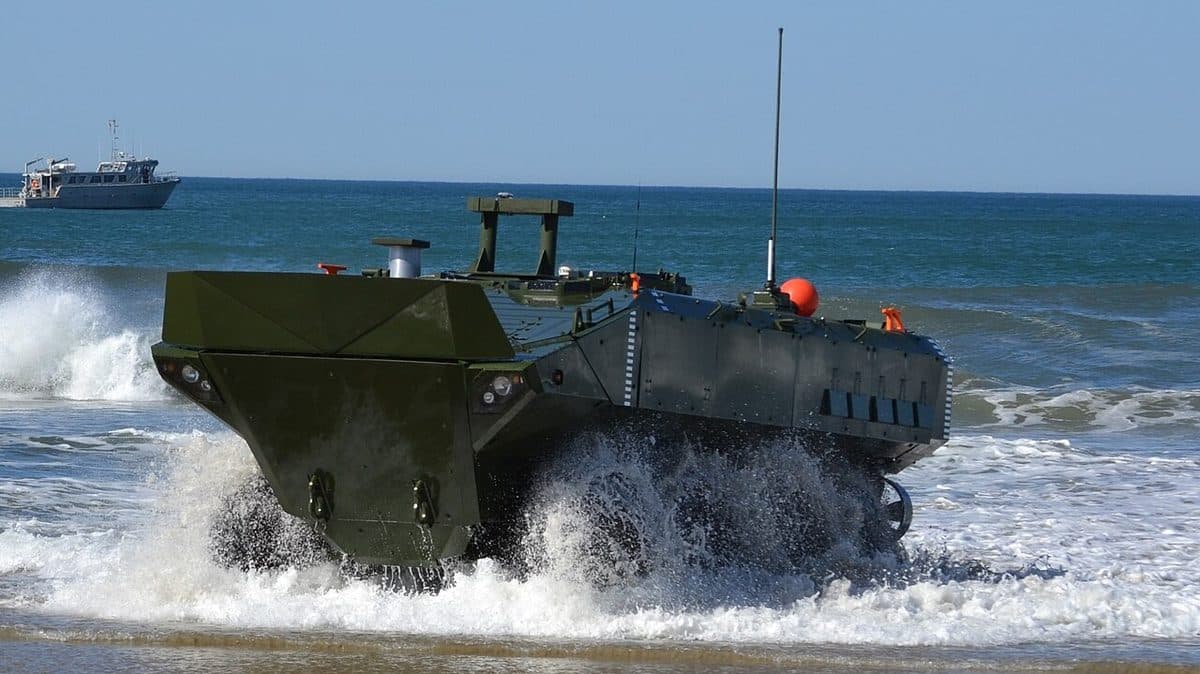
Amphibious Combat Vehicle during testing in open water, the Marine Corps' replacement for the aging AAV-7
Marcus Webb
Marcus Webb

Military Vehicles & Ground Systems Contributor

Marcus Webb writes about military ground vehicles, armored platforms, and the logistics of land warfare. His work covers everything from MRAPs and infantry carriers to the training pipelines that keep ground forces operational in contested environments.

On July 30, 2020, nine Marines and a sailor drowned when their 48-year-old amphibious vehicle sank during a routine training exercise off the coast of San Clemente Island, California. The AAV-7A1, the Assault Amphibious Vehicle, had been in service since 1972. It was older than any of the service members who died inside it. The tragedy was the deadliest training accident in the Marine Corps in decades, and it accelerated a transition that should have happened years earlier: the replacement of the AAV with the Amphibious Combat Vehicle, a machine designed for an ocean that the AAV was never truly built to survive.

The AAV-7 was an engineering compromise from the Vietnam era. It was designed to be good enough in the water to get Marines from ship to shore and good enough on land to keep moving once the beach was secured. But "good enough" in the water meant a vehicle that sat low, took on water through aging seals, and had limited reserve buoyancy. In rough seas, or when maintenance was deferred, as it too often was, the margin between floating and sinking was dangerously thin.

The ACV, built by BAE Systems, was designed from the beginning around a different philosophy: the ocean is not a brief obstacle to cross but an operating environment where the vehicle must be genuinely capable. The difference in approach has produced a vehicle that is faster on land, better protected against mines and IEDs, and, most critically, far more survivable in the water.

The July 30 Tragedy

The accident occurred during a routine shore-to-ship training exercise. Fifteen Marines and a sailor were aboard AAV-7A1 serial number B4, assigned to Bravo Company, Battalion Landing Team 1/4, as part of the 15th Marine Expeditionary Unit. The vehicle was traveling from San Clemente Island to the amphibious assault ship USS Somerset, approximately 2,000 meters offshore.

According to the subsequent investigation, the AAV began taking on water shortly after entering the ocean. The vehicle's bilge pumps could not keep pace with the ingress. The crew reported the flooding, and another AAV attempted to tow the stricken vehicle. But the water level rose faster than the crew could manage. Within minutes, the AAV lost buoyancy and sank in approximately 385 feet of water.

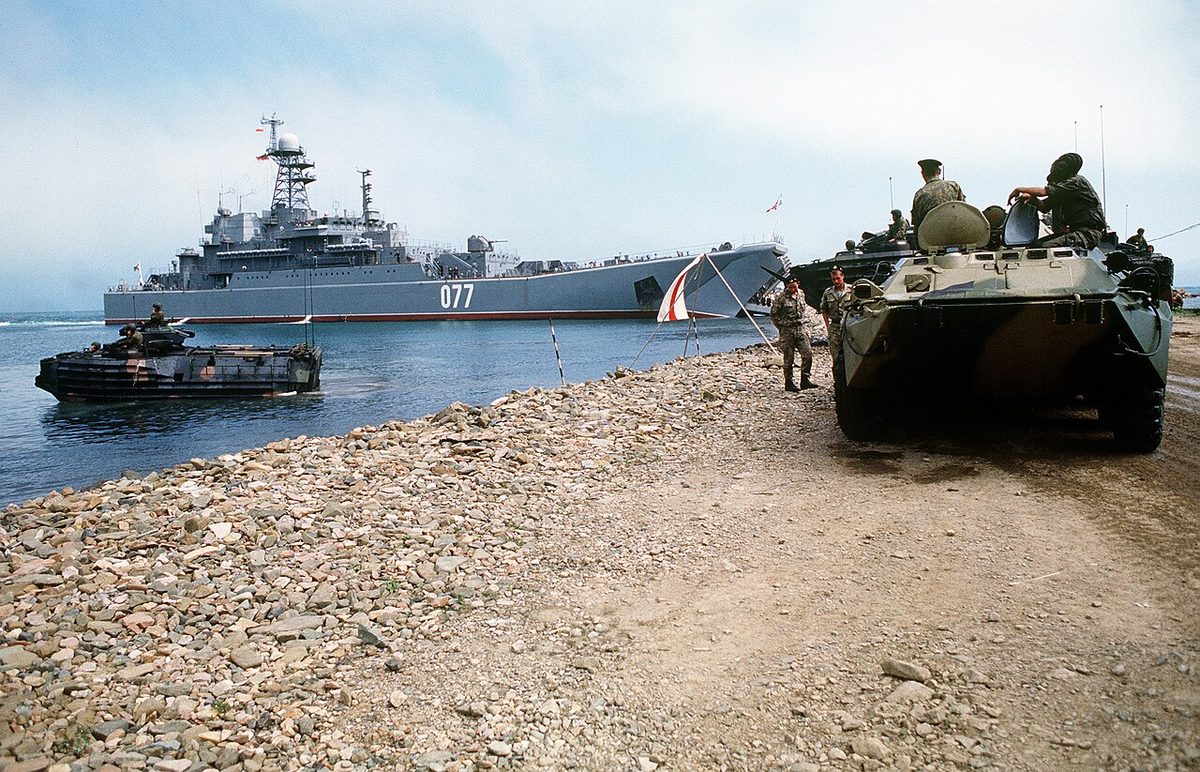
AAV-7A1 amphibious assault vehicles conducting beach landing operations
AAV-7A1 amphibious assault vehicles during landing operations. The vehicle's design dates to 1972, and aging seals and limited reserve buoyancy made it increasingly dangerous in rough water conditions.

Eight Marines were rescued. Nine Marines and one sailor perished: Lance Cpl. Guillermo S. Perez, Pfc. Bryan J. Baltierra, Lance Cpl. Marco A. Barranco, Pfc. Evan A. Bath, U.S. Navy Hospitalman Christopher Gnem, Lance Cpl. Chase D. Sweetwood, Cpl. Wesley A. Rodd, Lance Cpl. Jack-Ryan Ostrovsky, and Cpl. Cesar A. Villanueva.

The investigation identified multiple contributing factors. Maintenance deficiencies had left the vehicle's water-tight integrity compromised. Training on water survival and emergency egress procedures was inadequate. Command oversight of the waterborne operation failed to account for the known limitations of aging AAV hulls. But the root cause was more fundamental: the Marines were operating a vehicle in open ocean whose design was never intended for the conditions it routinely faced.

A Vehicle from the Vietnam Era

The AAV-7A1 (originally designated LVTP-7) was designed in the late 1960s and entered production in 1972. Its basic concept was straightforward: an aluminum-hulled tracked vehicle that could swim from ship to shore, carry 21 combat-equipped Marines, and continue fighting on land once the beach was secured.

The vehicle was powered by a Cummins VT400 diesel engine that drove both its tracks and its two waterjets. In the water, the AAV could manage about 8 miles per hour, barely faster than a person could swim. On land, it could reach 45 miles per hour on roads. Its armor protected against small arms fire and shell fragments but not much else.

The AAV underwent several upgrades over its five decades of service. The engine was replaced. The fire control system was updated. Appliqué armor kits were added for operations in Iraq and Afghanistan. But the fundamental hull design, including the seals, hatches, and bilge pump systems that determined whether the vehicle floated or sank, remained essentially unchanged from the 1970s.

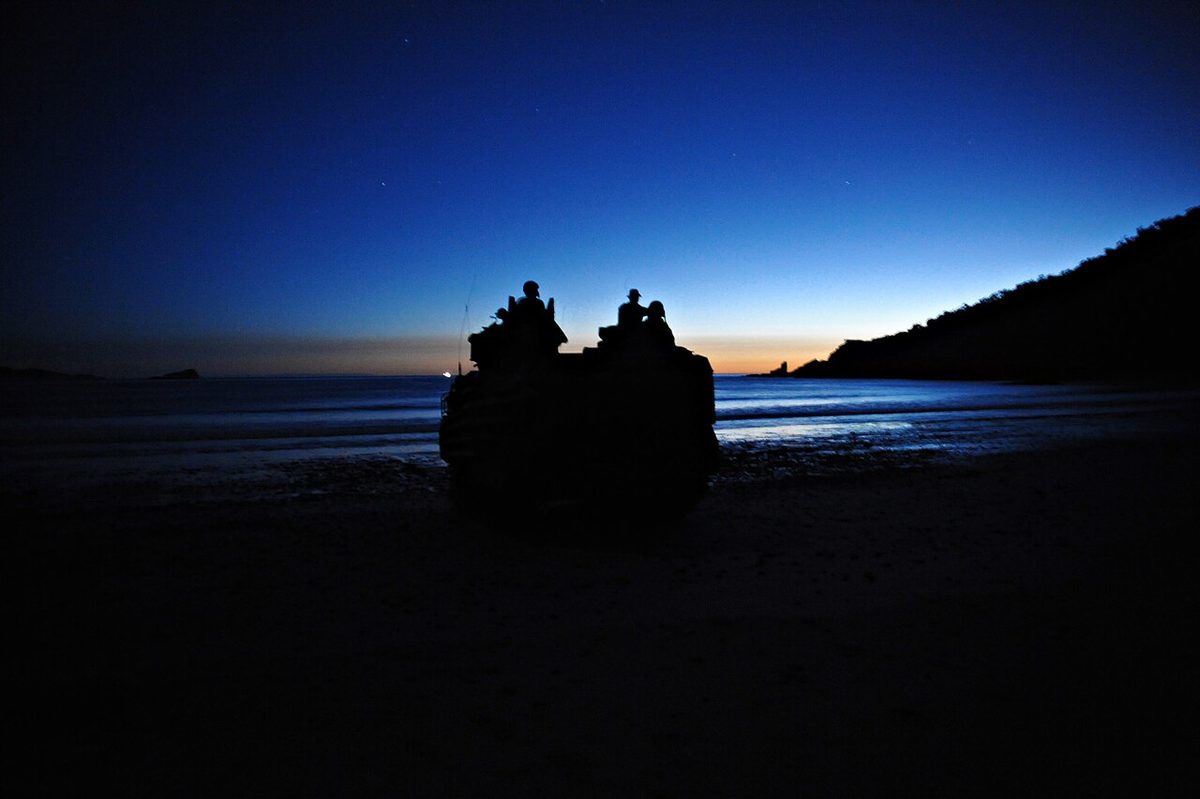
Marines standing on top of an AAV-7A1 amphibious assault vehicle
Marines atop AAV-7A1 vehicles during amphibious operations. Over five decades of service, the AAV's hull integrity degraded, and maintaining watertight seals on vehicles originally built in the 1970s became increasingly difficult.

By 2020, many AAVs in the fleet had hulls that had been in saltwater for nearly half a century. Aluminum corrodes. Seals degrade. Hatches that closed water-tight when the vehicle was new no longer sealed as precisely after thousands of cycles of use. The maintenance required to keep 50-year-old amphibious vehicles genuinely watertight exceeded what units could accomplish with available time and resources. The result was a fleet of vehicles that floated (usually) but that lacked the margin of safety that open-ocean operations demand.

The ACV: Built for the Ocean

The Amphibious Combat Vehicle program was initiated in 2014, after the cancellation of the Expeditionary Fighting Vehicle (EFV), a high-speed amphibious vehicle that was supposed to replace the AAV but proved too expensive and technically problematic. The ACV took a more pragmatic approach: instead of trying to build a vehicle that could plane across the ocean surface at 25 knots, it would build one that could swim reliably at moderate speed and fight effectively on land.

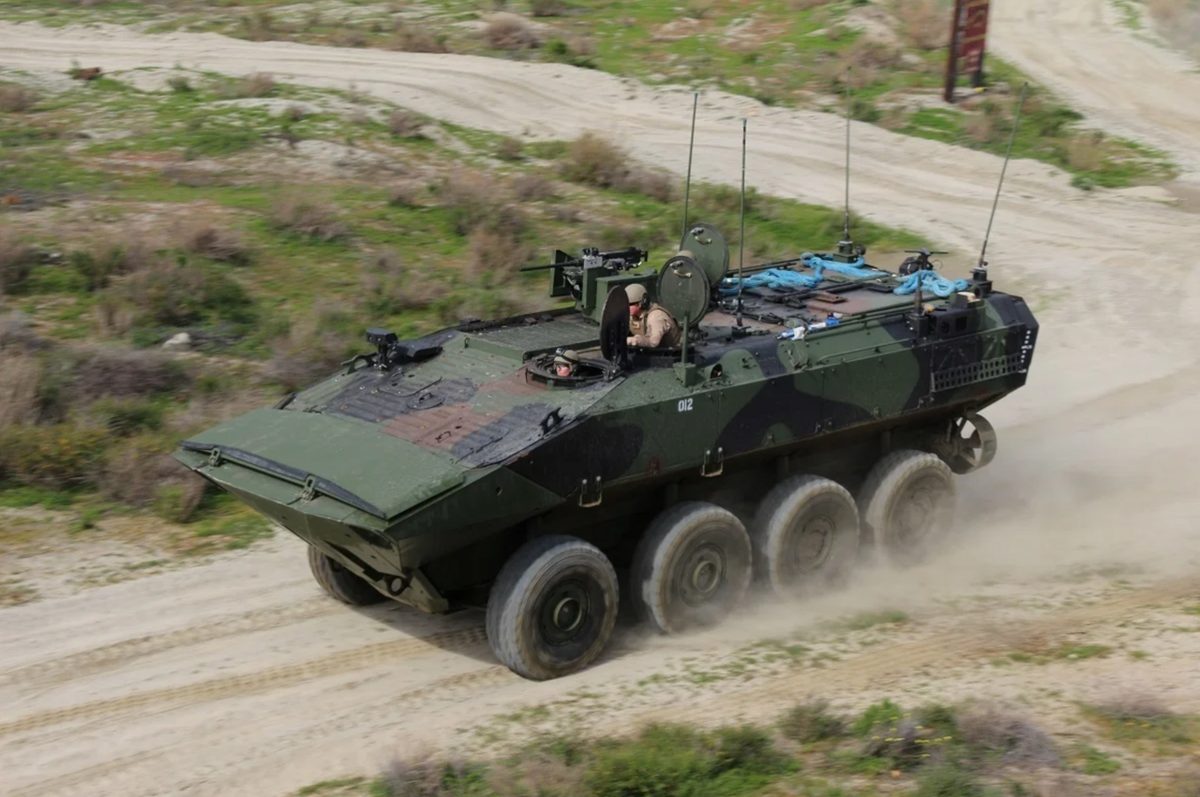
Amphibious Combat Vehicle during water operations testing
The ACV during water operations. Unlike the AAV's tracked waterjets, the ACV uses a wheeled 8x8 configuration with dedicated marine propulsion, providing significantly better stability and buoyancy reserve in open water.

BAE Systems won the contract in 2018 with a design based on the Italian Iveco SuperAV 8x8 armored vehicle. The ACV is a wheeled vehicle, a significant departure from the tracked AAV. On land, its eight-wheel-drive configuration gives it a top speed of 65 mph, compared to the AAV's 45 mph. The ride quality is dramatically better, reducing crew fatigue during extended movements.

In the water, the ACV swims using two independent marine propellers rather than the AAV's waterjets. Its hull is designed with greater freeboard and reserve buoyancy, meaning it sits higher in the water and can take on more water before losing the ability to float. The vehicle can operate in Sea State 3 conditions (moderate seas with wave heights up to 1.25 meters) with a margin of safety that the AAV never provided.

The ACV carries 13 Marines, down from the AAV's 21. This was a deliberate tradeoff: fewer passengers per vehicle, but each vehicle is significantly better protected. The ACV's hull is designed to survive mine blasts and IED detonations, protection the flat-bottomed AAV never had. The V-shaped hull deflects blast energy away from the crew compartment, a lesson learned from a decade of IED warfare in Iraq and Afghanistan.

What's Different About the ACV Family

Like the Stryker family, the ACV is being developed in multiple variants on a common chassis. The baseline ACV 1.1 is the personnel carrier. The ACV-30 adds a turret with a 30mm cannon, giving the vehicle direct-fire capability that the AAV lacked. A command-and-control variant, a recovery variant, and other mission-specific versions are planned or in development.

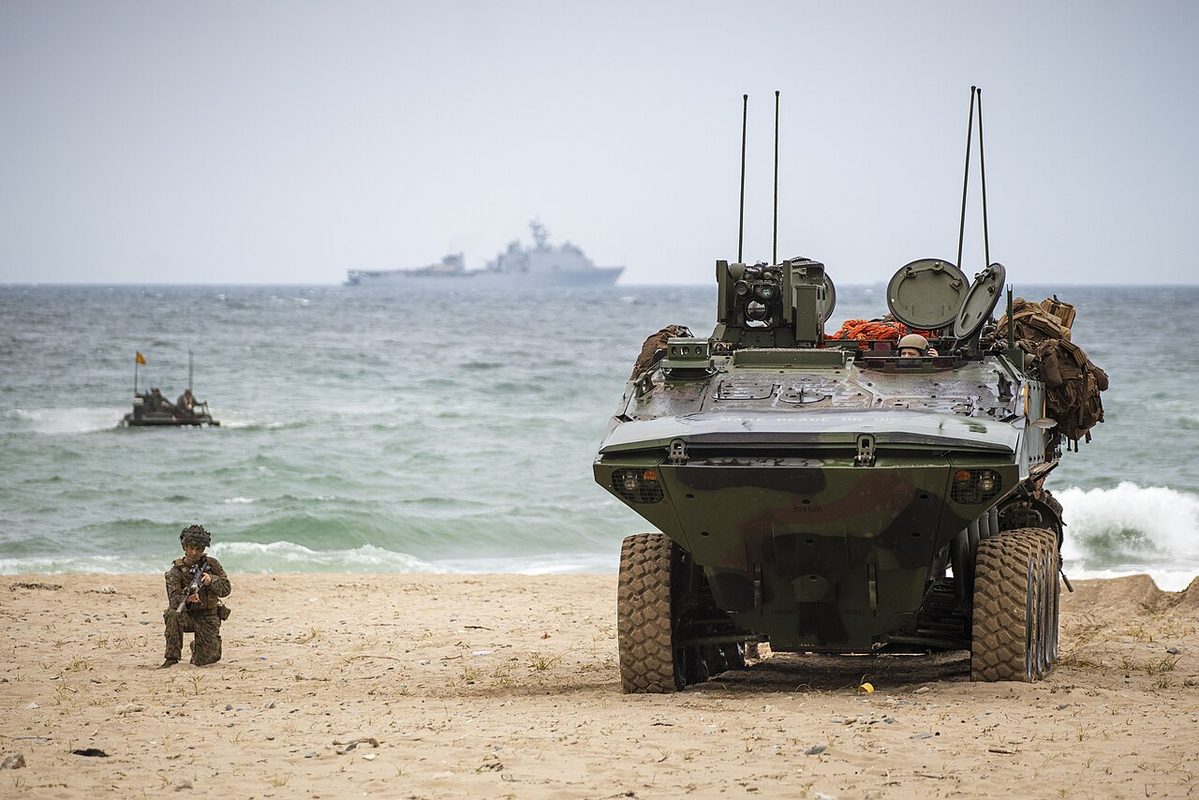
ACVs conducting a simulated amphibious assault during Ssang Yong 24 exercise
ACVs begin a simulated amphibious assault during exercise Ssang Yong 24. The 8x8 wheeled vehicle can reach 65 mph on land and swim reliably in moderate sea states, capabilities that represent a generational leap over the AAV.

The Marine Corps plans to field more than 630 ACVs to replace its fleet of approximately 1,000 AAVs. The smaller number reflects both the ACV's higher unit cost and the Marine Corps' evolving concept of amphibious operations, which increasingly emphasizes smaller, more distributed forces rather than the massed beach assaults that defined Cold War amphibious doctrine.

As of 2026, BAE Systems has delivered over 200 ACVs to the Marine Corps, with full-rate production continuing. The first operational deployment occurred with the 31st Marine Expeditionary Unit in 2023. Initial feedback from units operating the ACV has been positive, with crews particularly noting the improved water performance and the ride quality on land.

The Broader Challenge

The ACV solves the AAV's most dangerous problem: the risk of sinking in open water. But it enters service at a moment when the entire concept of amphibious assault is being questioned. Anti-ship missiles have ranges measured in hundreds of miles. Shore-based radars can detect amphibious forces far from the beach. The idea of loading Marines into vehicles and driving them from ships to shore under fire was already challenging in 1972; in 2026, against a peer adversary with precision-guided weapons, it may be suicidal.

The Marine Corps is addressing this through Force Design 2030, which envisions smaller, more dispersed units operating from austere positions rather than conducting traditional beach assaults. In this concept, the ACV may spend more time as a tactical mobility vehicle, moving Marines between islands or along coastlines, than as a classic assault vehicle charging through the surf zone.

None of that diminishes what the ACV represents. Nine Marines and a sailor died in a vehicle that should have been replaced decades earlier. The technology existed. The requirements were understood. What was lacking was the institutional urgency to replace a vehicle that worked most of the time, until the day it didn't. The ACV exists because the Marine Corps finally accepted that "usually floats" is not an acceptable standard for a vehicle that carries young Americans into the ocean.

Share this article

Share:

Recommended

Ace of The Skies: Can You Identify These Military Aircraft Throughout The Years?
Test Yourself

Ace of The Skies: Can You Identify These Military Aircraft Throughout The Years?

Can you identify these aircraft?

Take the Quiz

Get Military News & History in Your Inbox

Join thousands of readers receiving our weekly digest of military technology, history, and analysis.

Test Your Knowledge