Skip to content
April 28:Execution of Benito Mussolini81yr ago

How Electronic Warfare Shuts Down an Entire Air Defense Network Without Firing a Shot

David Kowalski · · 10 min read
Save
Share:
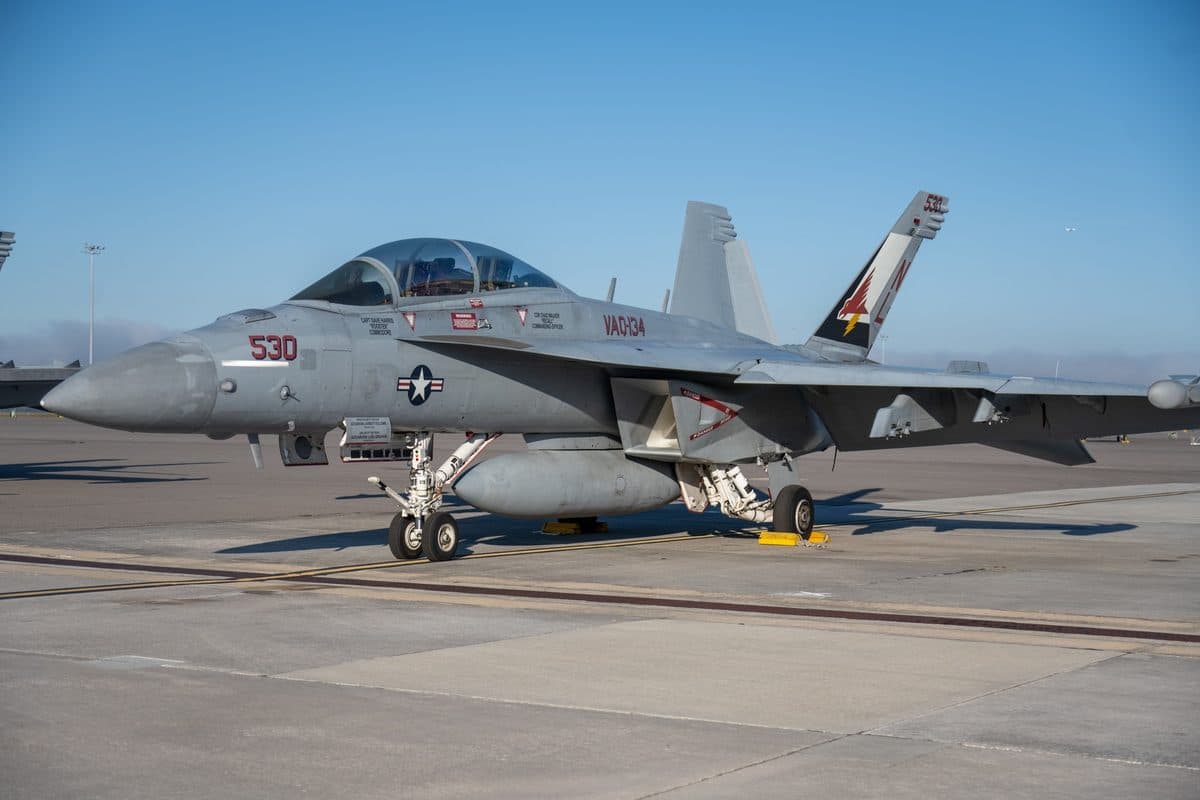
EA-18G Growler electronic warfare aircraft on a carrier flight deck
David Kowalski
David Kowalski

Missile Systems & Air Defense Contributor

David Kowalski writes about missile systems, air defense networks, and the technology behind precision strike warfare. His work examines how offensive and defensive missile capabilities shape the balance of power between nations.

Before a single bomb is dropped, electronic warfare has already blinded the enemy. In the opening hours of any modern air campaign, the first aircraft over hostile territory aren't bombers or fighters, they're electronic warfare platforms whose mission is to shut down the enemy's air defense network without destroying a single piece of hardware. They jam radars, spoof tracking systems, and create an electromagnetic environment so hostile that surface-to-air missiles can't find their targets. If a radar operator is bold enough to turn on his system anyway, an anti-radiation missile is already in the air, homing on his signal.

This mission, Suppression of Enemy Air Defenses, or SEAD, is arguably the most important and least understood aspect of modern air warfare. Without SEAD, strike aircraft face integrated air defense systems capable of detecting, tracking, and destroying targets at ranges exceeding 200 miles. With SEAD, those same air defense systems become expensive collections of blind radar dishes and unfired missiles.

The principles are straightforward. The execution is extraordinarily complex. And the aircraft that do this work, particularly the EA-18G Growler, the only dedicated tactical electronic warfare aircraft in the Western world, carry capabilities so sensitive that most of what they can do is classified.

The Problem: Integrated Air Defense Systems

A modern Integrated Air Defense System, or IADS, is not a collection of independent radars and missile launchers. It's a networked system in which multiple sensors share data, command centers fuse that data into a common picture, and missile batteries receive targeting from any sensor in the network. An early warning radar might detect an incoming aircraft at 300 miles. A fire control radar 50 miles away locks on. A missile battery 20 miles from the target fires. The aircraft faces a threat it can't see, launched by a system it wasn't aware of, guided by a radar it didn't know existed.

Russia's S-400 system exemplifies this approach. Its surveillance radar can detect targets at over 370 miles. Its engagement radar can track multiple targets simultaneously. And the system can receive targeting data from other sensors in the network, airborne early warning aircraft, other radar sites, even optical tracking systems. Destroying one radar or one launcher doesn't disable the system. The network adapts, rerouting data through surviving nodes.

Defeating an IADS requires attacking the network, not individual nodes. This is where electronic warfare becomes decisive.

The EA-18G Growler: The Only Game in Town

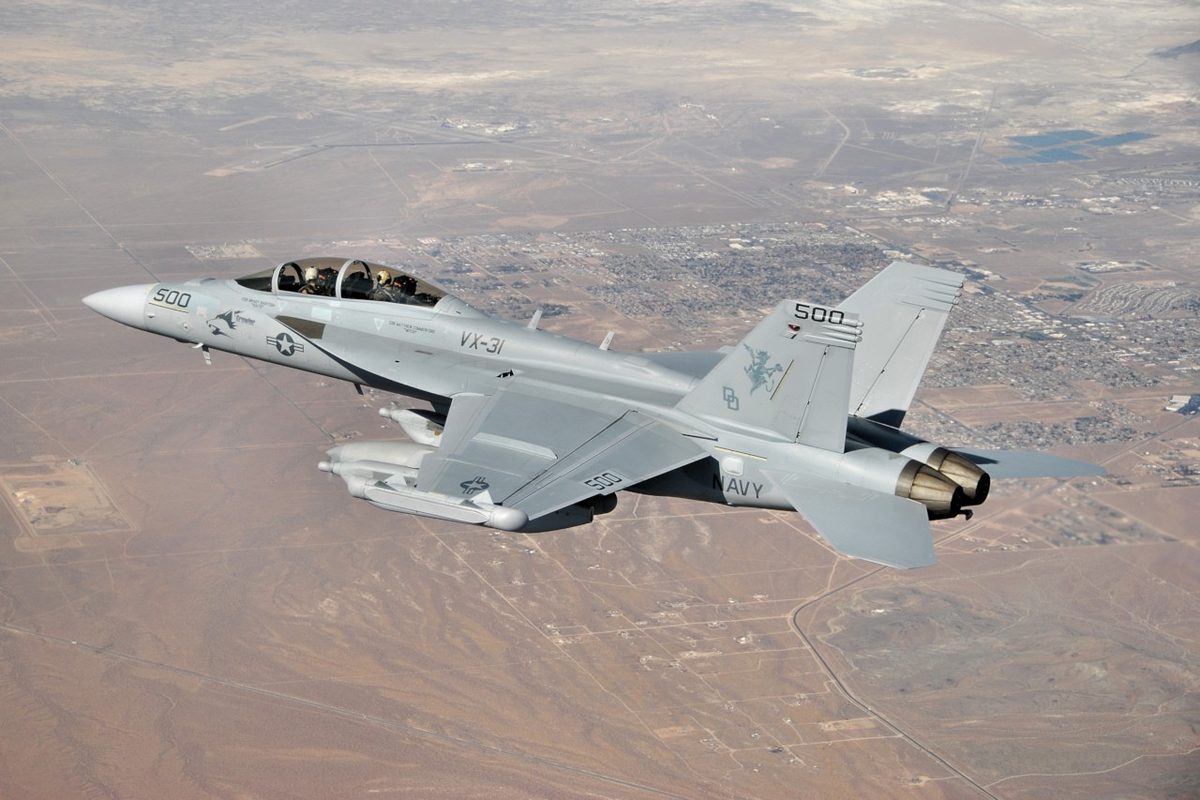
EA-18G Growler electronic warfare aircraft in flight over California
An EA-18G Growler from Air Test and Evaluation Squadron VX-31 over Ridgecrest, California. The Growler is the only dedicated tactical electronic warfare aircraft in Western inventories.

The Boeing EA-18G Growler is a modified F/A-18F Super Hornet that replaces the standard fighter's internal cannon with electronic warfare systems. It carries the AN/ALQ-99 Tactical Jamming System, podded jammers mounted on wing and centerline stations, and is being upgraded to the Next Generation Jammer (NGJ), which uses Active Electronically Scanned Array technology to focus jamming energy with precision that the legacy system cannot match.

The Growler can perform three fundamental electronic warfare functions: noise jamming, deception jamming, and anti-radiation missile employment.

Noise jamming overwhelms enemy radars with electromagnetic energy across their operating frequency, effectively blinding them. The radar screen fills with noise, and actual targets disappear into the clutter. Stand-off jamming, where the Growler orbits at a safe distance and jams from outside the enemy's engagement envelope, is the safest approach, but its effectiveness decreases with distance.

Deception jamming is more sophisticated. Using Digital Radio Frequency Memory (DRFM) technology, the Growler's systems receive an enemy radar pulse, analyze it, modify it, and retransmit it, all within microseconds. The modified signal creates false targets on the enemy's radar. The operator sees what appears to be a legitimate aircraft, but it's actually a phantom created by the jammer. Multiple false targets can be generated simultaneously, forcing the air defense system to divide its attention and waste missiles on targets that don't exist.

Anti-radiation missiles home on the electromagnetic emissions of enemy radars. The AGM-88 HARM (High-speed Anti-Radiation Missile) and its successor, the AGM-88E AARGM (Advanced Anti-Radiation Guided Missile), can detect a radar's signal, fly toward the source, and destroy the antenna even if the radar shuts down mid-flight. The AARGM adds a millimeter-wave radar seeker and GPS guidance, so it can find and destroy a radar that goes silent before the missile arrives.

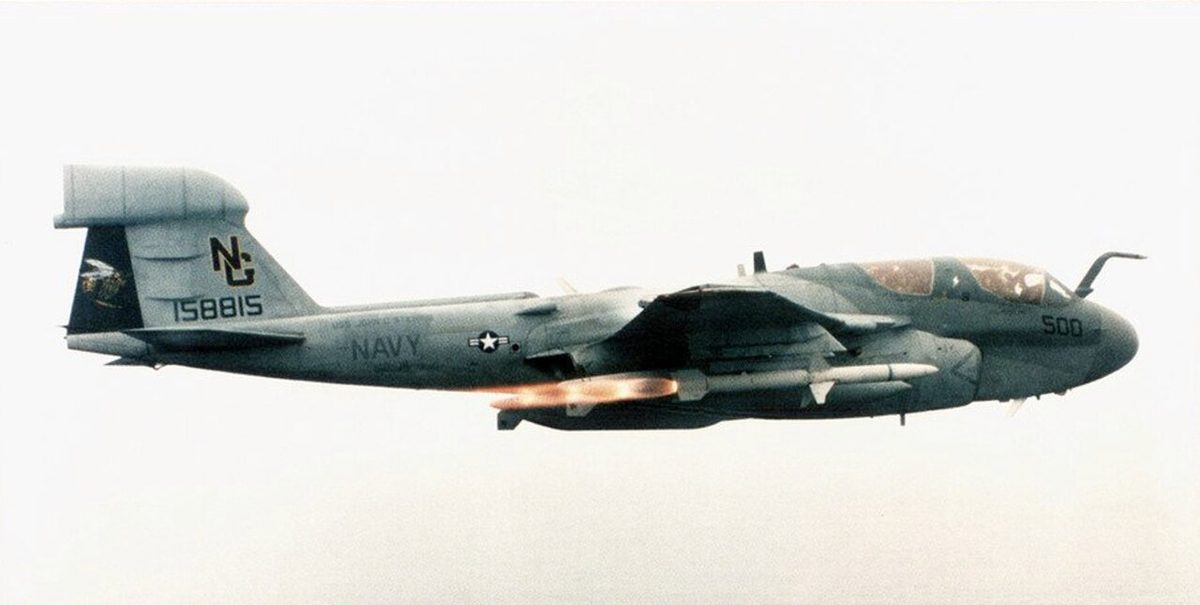
EA-6B Prowler launching an AGM-88 HARM anti-radiation missile
An EA-6B Prowler launches an AGM-88 HARM anti-radiation missile. The HARM homes on radar emissions, if an air defense radar turns on, it becomes a target. This creates a lethal dilemma for air defense operators.

The Lethal Dilemma

The combination of jamming and anti-radiation missiles creates an impossible choice for air defense operators. If they turn on their radars, they can see through the jamming, but they also reveal their position to anti-radiation missiles. If they keep their radars off to avoid the missiles, they can't see the incoming aircraft. Either way, the air defense system fails to do its job.

This dilemma is exploited systematically in the "first night" sequence of a modern air campaign. Electronic warfare aircraft jam the enemy's early warning radars, degrading their ability to detect the initial wave. Anti-radiation missiles are launched at any fire control radar that activates. Stealth aircraft exploit the gaps in radar coverage to strike command centers and communications nodes that link the air defense network together. Within hours, what was an integrated system becomes a collection of isolated, uncoordinated launchers, far less dangerous than the networked whole.

Wild Weasels: Where SEAD Began

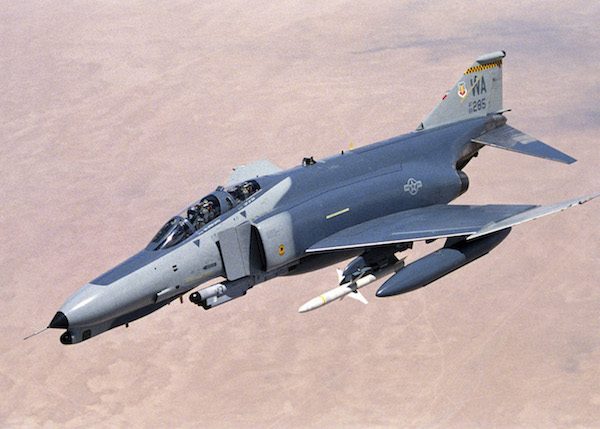
F-4G Phantom II Wild Weasel aircraft, the original dedicated SEAD platform
An F-4G Phantom II "Wild Weasel", the original dedicated SEAD aircraft. Wild Weasel crews flew directly at enemy radar sites, using themselves as bait to draw fire and then destroying the radar with anti-radiation missiles.

The SEAD mission traces its origins to the Vietnam War, where North Vietnamese SA-2 surface-to-air missiles were destroying American aircraft at an alarming rate. The Air Force responded with the "Wild Weasel" program, modified F-100F and later F-105F/G aircraft equipped with radar warning receivers that could detect and locate enemy radar emissions.

The original Wild Weasel tactic was brutally simple: fly toward the SAM site until it locked on, identify its position from the radar signal, and then attack it with bombs or the newly developed AGM-45 Shrike anti-radiation missile. The motto of the Wild Weasel crews, "First In, Last Out", reflected the reality that they were deliberately drawing enemy fire to suppress air defenses for the strike package behind them. It was among the most dangerous missions in aviation.

The F-4G "Advanced Wild Weasel" served from the late 1970s through the Gulf War, where it proved devastatingly effective against Iraq's Soviet-built air defense network. The F-4G was retired in 1996, and its mission was initially distributed among F-16CJ aircraft equipped with the HARM Targeting System. Today, the Growler has inherited and expanded the Wild Weasel's mission, adding sophisticated electronic attack capabilities that the original Wild Weasels could only have imagined.

Operation Orchard: Electronic Warfare in Action

On September 6, 2007, Israeli Air Force F-15I Strike Eagles crossed into Syrian airspace, flew to a facility in the Deir ez-Zor region, and destroyed what was later confirmed to be a nuclear reactor under construction with North Korean assistance. The strike itself was unremarkable, precision-guided bombs hitting a fixed target. What was remarkable was what happened to Syria's air defense network.

Satellite imagery related to the suspected nuclear reactor site in Syria targeted during Operation Orchard
The suspected nuclear reactor site in Syria's Deir ez-Zor region. During Operation Orchard, Israeli electronic warfare systems reportedly blinded the entire Syrian air defense network, allowing strike aircraft to operate with impunity.

Syria operated one of the most dense integrated air defense networks in the Middle East, built around Russian-supplied radar systems and SA-2, SA-3, SA-5, SA-6, and SA-17 missile batteries. On the night of the Israeli strike, the entire network failed to detect the incoming aircraft. Syrian radar screens reportedly showed empty sky while Israeli jets were overhead.

The details of how Israel accomplished this remain classified. Open-source analysis suggests a combination of electronic attack, jamming or spoofing the radar network, and possibly a cyber operation that compromised the network's software. Some analysts believe Israel exploited a vulnerability in the Syrian network's data links, injecting false data that told the system there was nothing to see. Others suggest stand-off jamming from Israeli electronic warfare aircraft or even a ground-based system.

Whatever the specific method, Operation Orchard demonstrated that a sophisticated electronic warfare capability can render an entire integrated air defense system ineffective without physically destroying a single component. The radars were intact. The missiles were loaded. The operators were at their stations. And none of them saw the aircraft that were about to end Syria's nuclear ambitions.

The Future: Cognitive Electronic Warfare

The next generation of electronic warfare is moving toward artificial intelligence. The Next Generation Jammer, currently being fielded on the Growler, uses AESA technology that can focus multiple beams simultaneously, jamming one radar while spoofing another while supporting communications on a third frequency. Future systems will add cognitive capabilities: AI algorithms that analyze the enemy's electromagnetic environment in real time, identify threats, select countermeasures, and execute them faster than any human operator could react.

This matters because modern air defense systems are also getting smarter. Frequency-hopping radars change their operating frequency hundreds of times per second, making them harder to jam. Low Probability of Intercept radar uses spread-spectrum techniques to hide its signal in the ambient noise floor. Passive detection systems don't emit at all, using the reflections of commercial FM radio or television signals to detect aircraft.

The competition between electronic warfare and air defense is an arms race that has been running since the first radar was jammed in World War II. Each advance in air defense technology drives a corresponding advance in electronic warfare, and vice versa. What remains constant is the fundamental principle: in modern air warfare, the electromagnetic spectrum is a battlefield as important as the physical one. Whoever dominates it controls the sky. Whoever loses it doesn't get to fight.

Share this article

Share:

Recommended

Ace of The Skies: Can You Identify These Military Aircraft Throughout The Years?
Test Yourself

Ace of The Skies: Can You Identify These Military Aircraft Throughout The Years?

Can you identify these aircraft?

Take the Quiz

Get Military News & History in Your Inbox

Join thousands of readers receiving our weekly digest of military technology, history, and analysis.

Test Your Knowledge