Skip to content
April 28:Execution of Benito Mussolini81yr ago

The E-7 Wedgetail Is Replacing the AWACS. The Air Force Waited 30 Years Too Long.

Michael Trent · · 10 min read
Save
Share:
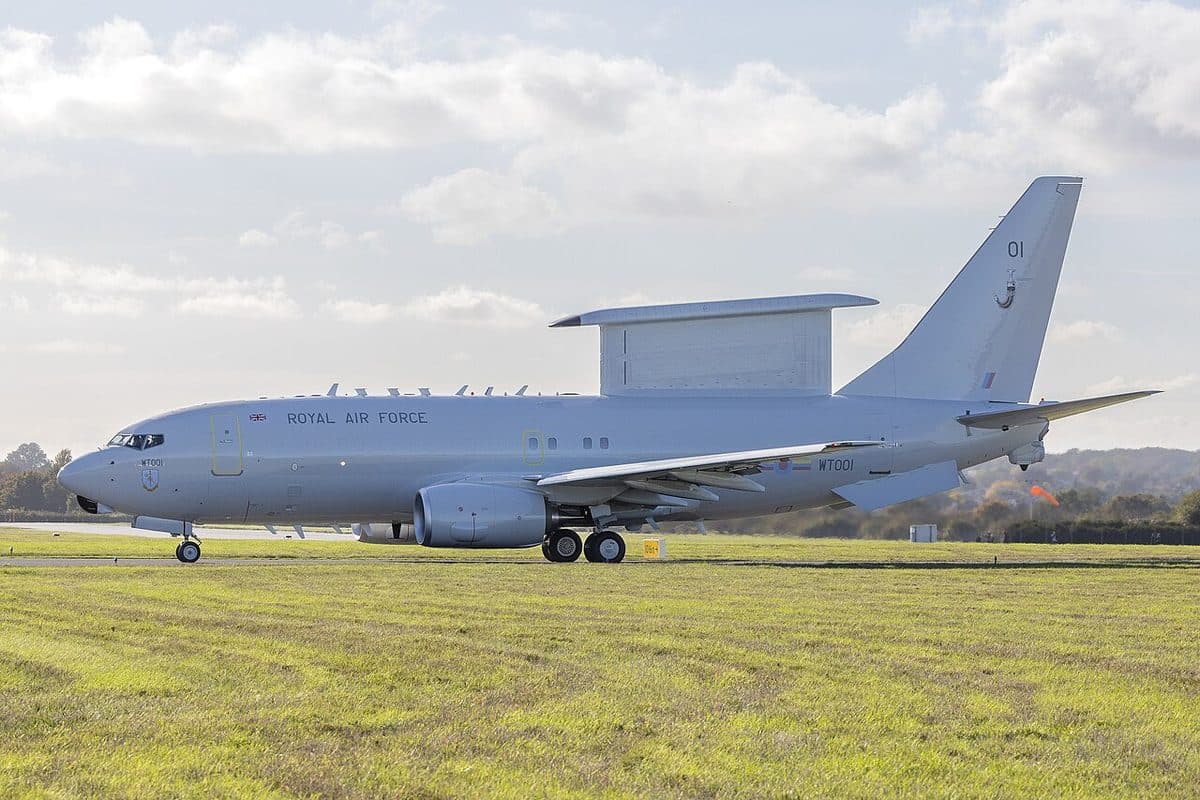
RAF E-7 Wedgetail airborne early warning and control aircraft at Birmingham Airport
Michael Trent
Michael Trent

Defense Systems Analyst

Michael Trent covers military aircraft, weapons systems, and defense technology with an emphasis on cost, maintenance, and real-world performance. He focuses less on specifications and more on how systems hold up once they are deployed, maintained, and operated at scale.

The Air Force's primary airborne radar platform is older than the pilots flying it. The E-3 Sentry AWACS, Airborne Warning and Control System, entered service in 1977 on a Boeing 707 airframe that hasn't been in commercial production since 1979. The aircraft's rotating radar dome, its defining feature, uses 1970s-era technology that requires constant mechanical maintenance. Some E-3s in the current fleet have been flying for nearly 50 years. Their replacement, the E-7A Wedgetail, has been operational with the Royal Australian Air Force since 2009, proven in combat, praised by every operator, and available for purchase. The U.S. Air Force didn't select it until 2023.

The gap between what Australia had and what the United States didn't is one of the most frustrating stories in modern defense procurement. Australia identified the need, evaluated the options, bought the E-7, and put it into combat operations while the U.S. Air Force spent two decades studying alternatives, pursuing bespoke solutions, and watching its E-3 fleet gradually fall apart. By the time the USAF finally selected the Wedgetail, Australia had already been operating the aircraft for 14 years.

Why AWACS Matters

An airborne early warning and control aircraft is the nerve center of modern air operations. Flying at high altitude, its radar looks down and out across hundreds of miles, detecting aircraft, cruise missiles, and surface threats that ground-based radars can't see due to terrain masking and the curvature of the Earth. The AWACS doesn't just detect, it controls. Battle managers aboard the aircraft direct fighter engagements, coordinate tanker rendezvous, manage airspace deconfliction, and provide the overall picture of the air battle to every aircraft in the fight.

Without AWACS, fighter pilots rely on their own radars, powerful but limited in range and scope. With AWACS, they see the entire battlefield before they enter it. They know where every friendly aircraft is. They know where every threat is. They can be directed to optimal intercept positions by controllers who have the big picture. The difference between fighting with AWACS support and fighting without it is the difference between seeing and being blind.

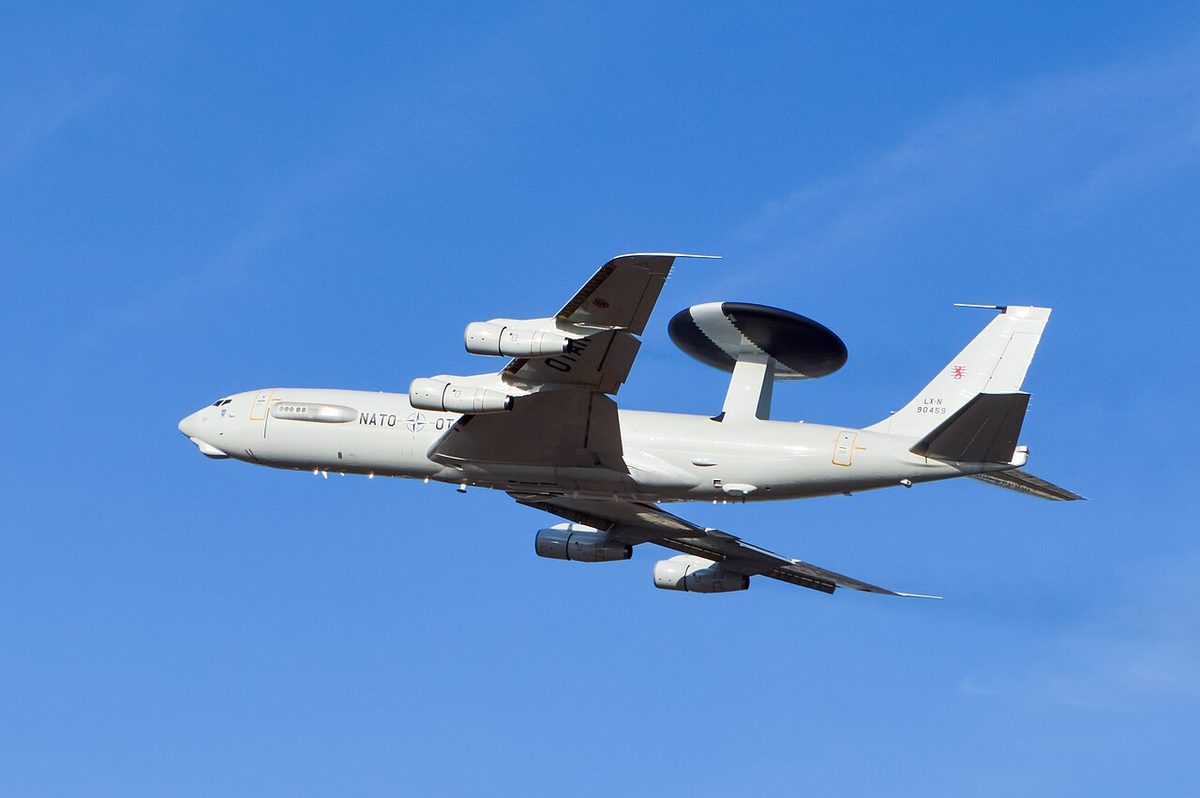
E-3 Sentry AWACS aircraft with its distinctive rotating radar dome
A NATO E-3A Sentry AWACS aircraft. The rotating radar dome, or rotodome, is the E-3's defining feature, and its greatest maintenance burden. The mechanical rotation mechanism requires constant upkeep on aircraft that are nearly 50 years old.

The E-3 Sentry: Falling Apart

The E-3 was revolutionary when it entered service. Its AN/APY-1 and later AN/APY-2 radar could detect low-flying aircraft at ranges that stunned adversaries. In the 1991 Gulf War, E-3s controlled the air battle so effectively that Iraqi fighters were detected and engaged before they knew they were being tracked. The aircraft's contribution to air superiority in Desert Storm was so decisive that no serious air campaign has been conducted without AWACS support since.

But the E-3 was built on a platform that was already old in 1977. The Boeing 707 had been designed in the 1950s. Its engines are loud, thirsty, and maintenance-intensive. The airframe requires constant structural inspections as it ages beyond its original service life. The rotating radar dome, the rotodome, is a mechanical system with bearings, seals, and drive motors that wear out and must be rebuilt at enormous cost.

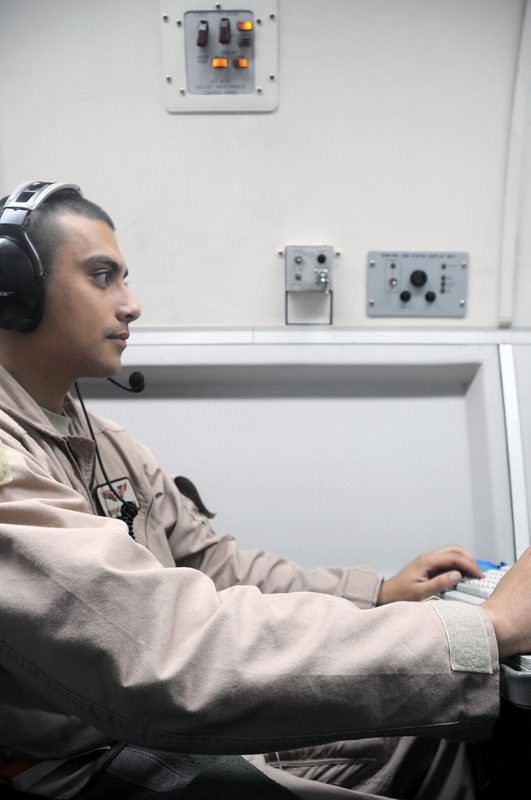
Interior of an E-3 AWACS aircraft showing radar operator consoles
A radar operator aboard an E-3 Sentry during combat air missions in Southwest Asia. The aircraft's internal systems have been upgraded multiple times, but the fundamental radar technology dates to the 1970s.

The USAF's E-3 fleet has shrunk from a peak of 33 aircraft to approximately 23, with availability rates that are publicly described only as "challenged." The Air Force has acknowledged that on any given day, fewer than half of the fleet may be mission-capable. Structural fatigue, avionics obsolescence, and the difficulty of maintaining aircraft with components that are no longer manufactured have turned the E-3 from a force multiplier into a maintenance burden.

Multiple upgrades have been attempted. The Radar System Improvement Program modernized the radar processing. The Block 40/45 upgrade improved the mission computing. But these upgrades were applied to an airframe that was fundamentally wearing out. You can put a new engine in a 1970s car, but the frame is still rusting.

The Wedgetail: What Australia Knew First

In the early 2000s, the Royal Australian Air Force selected Boeing's 737 AEW&C, later designated the E-7A Wedgetail, to replace its aging fleet of airborne early warning aircraft. The aircraft entered Australian service in 2009 and quickly proved itself in operations over the Middle East, providing airborne control for coalition operations in Iraq and Syria.

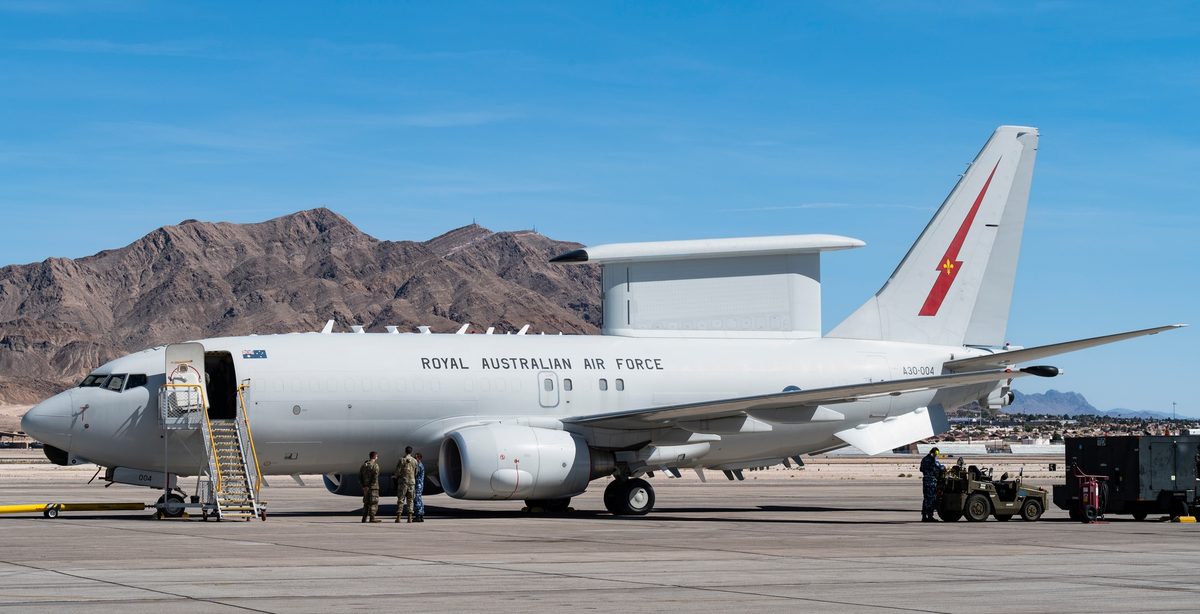
Royal Australian Air Force E-7A Wedgetail at Nellis Air Force Base during exercises
An RAAF E-7A Wedgetail at Nellis Air Force Base, Nevada, during Red Flag exercises. Australia has operated the Wedgetail since 2009 and deployed it in combat operations over the Middle East.

The E-7's key innovation is its radar: the Multi-role Electronically Scanned Array, or MESA. Instead of a rotating mechanical dome, the MESA radar is a fixed, electronically scanned array mounted in a dorsal "top hat" structure above the fuselage. The array electronically steers its beam in every direction, 360 degrees of coverage without any moving parts.

The advantages of an electronically scanned array over a mechanical rotodome are fundamental. A mechanical rotation takes about 10 seconds per sweep. An electronic beam can revisit a target in milliseconds. A mechanical system has bearings, motors, and seals that wear out. An electronic system has no moving parts. A mechanical radar can look in one direction at a time. An electronic array can track multiple targets in multiple directions simultaneously, devoting more energy to high-priority contacts while maintaining surveillance across the full 360-degree field.

The MESA radar also provides maritime surveillance capability, it can detect and track surface vessels, and electronic support measures, passively detecting electromagnetic emissions from enemy radars and communications systems. The E-3's radar, designed exclusively for air surveillance, can't do either.

The Platform Advantage

The E-7 is built on the Boeing 737-700, the most widely produced jet airliner in history. This provides the same advantages the P-8 Poseidon gains from its 737 platform: access to a global parts supply chain, a massive pool of trained maintenance technicians, and structural engineering data accumulated over millions of flight hours.

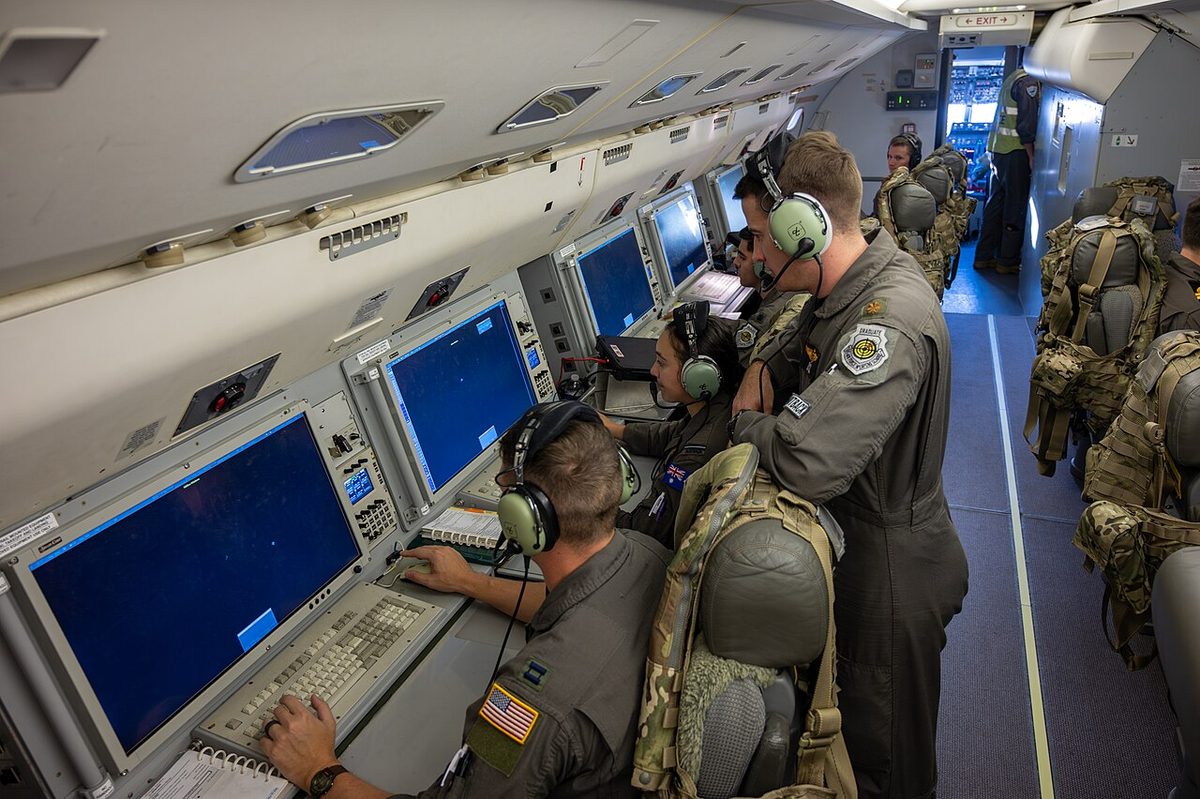
Interior of an RAAF E-7A Wedgetail showing mission crew consoles and displays
The mission crew compartment of an RAAF E-7A Wedgetail. The aircraft's mission computing offers roughly 10 times the processing power of the E-3, enabling simultaneous tracking of hundreds more targets.

The 737's twin CFM56 engines are dramatically more fuel-efficient and reliable than the E-3's four TF33 turbofans. This means longer time on station for the same fuel load, lower operating costs, and reduced maintenance requirements. The cockpit is modern glass, the same flight deck used by thousands of commercial 737s worldwide, rather than the steam-gauge analog instruments in the E-3.

Inside the mission compartment, the E-7 carries approximately 10 mission crew stations, each with large-format displays showing the fused tactical picture. The mission computing system has roughly 10 times the processing power of the E-3's computers, enabling the aircraft to track more targets, process more data, and provide more information to the battle managers who direct the air fight.

Why the Air Force Waited

The obvious question is: if Australia bought the E-7 in the 2000s and it worked brilliantly, why didn't the U.S. Air Force do the same?

The answer involves institutional culture, budget politics, and the perpetual pursuit of the perfect at the expense of the good. The Air Force considered replacing the E-3 multiple times but repeatedly chose to study options rather than buy a proven system. There were proposals for a clean-sheet design with even more advanced capabilities. There were concepts for using distributed sensors instead of a single large aircraft. There were advocates for the F-35's sensor suite making dedicated AWACS aircraft unnecessary.

None of these alternatives materialized. The clean-sheet design was always 15 years and billions of dollars away. The distributed sensor concept lacked the communications architecture to work reliably. The F-35's sensors, while impressive, can't replicate what a dedicated platform with a large radar array provides. Meanwhile, the E-3s kept getting older, and fewer and fewer of them were available for missions.

In February 2023, the Air Force finally selected the E-7A Wedgetail to replace the E-3. The decision came after decades of deferral and only after the E-3 fleet had deteriorated to the point where continued operation was becoming impractical. The first USAF E-7 is expected to be delivered in the late 2020s, meaning the Air Force will have been without a modern airborne early warning capability for the entire period between the E-3's practical obsolescence and the E-7's arrival.

Australia will have been operating the Wedgetail for nearly 20 years by the time the first USAF aircraft reaches initial operational capability. The Royal Australian Air Force's combat experience with the platform, including lessons learned from operations over Iraq, Syria, and the broader Indo-Pacific, will be invaluable to the USAF as it brings the aircraft into service. But the fact that the Air Force is learning from a partner nation about an aircraft it could have bought two decades ago is a damning commentary on its acquisition process.

The Cost of Delay

Every year the Air Force operated aging E-3s instead of modern E-7s was a year of degraded capability. Fewer aircraft available. Less time on station. Less capable radar. Higher maintenance costs. The cumulative cost of maintaining the E-3 fleet beyond its practical service life, in dollars, in readiness, and in capability, almost certainly exceeded what it would have cost to buy E-7s in the 2010s when Australia was demonstrating their effectiveness in combat.

The E-7 Wedgetail is not a revolutionary aircraft. It's an evolutionary one, a proven platform, a proven radar, a proven concept of operations. What makes the E-7 story unusual isn't the aircraft itself but the institutional failure to adopt it when it was available, proven, and desperately needed. The Air Force's airborne radar fleet didn't need a revolution. It needed a replacement. The Wedgetail was there all along.

Share this article

Share:

Recommended

Ace of The Skies: Can You Identify These Military Aircraft Throughout The Years?
Test Yourself

Ace of The Skies: Can You Identify These Military Aircraft Throughout The Years?

Can you identify these aircraft?

Take the Quiz

Get Military News & History in Your Inbox

Join thousands of readers receiving our weekly digest of military technology, history, and analysis.

Test Your Knowledge