Skip to content
April 29:Liberation of Dachau Concentration Camp81yr ago

The S-400 Triumf: Inside Russia's Air Defense System

Alex Carter · · 12 min read
Save
Share:
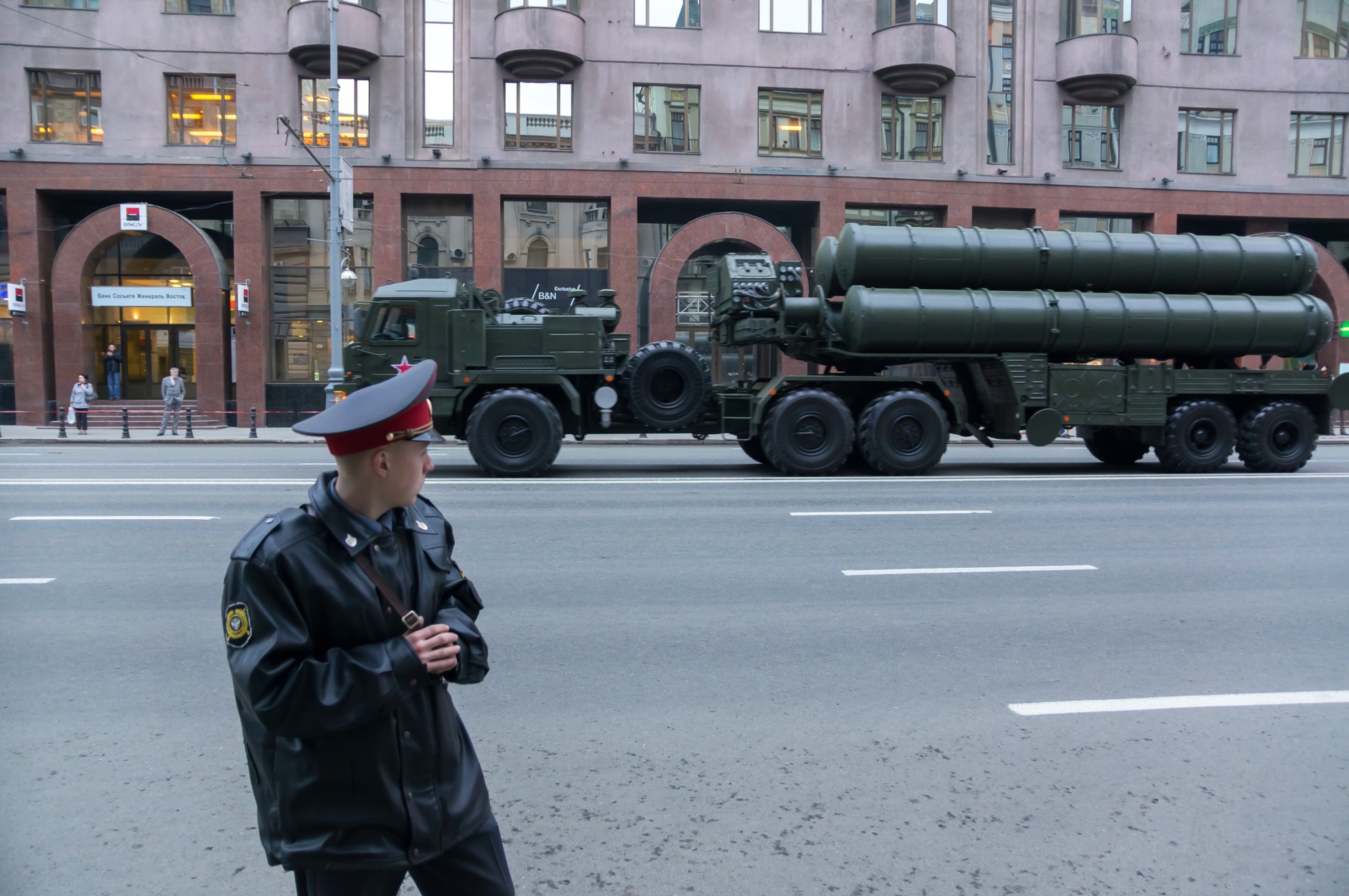
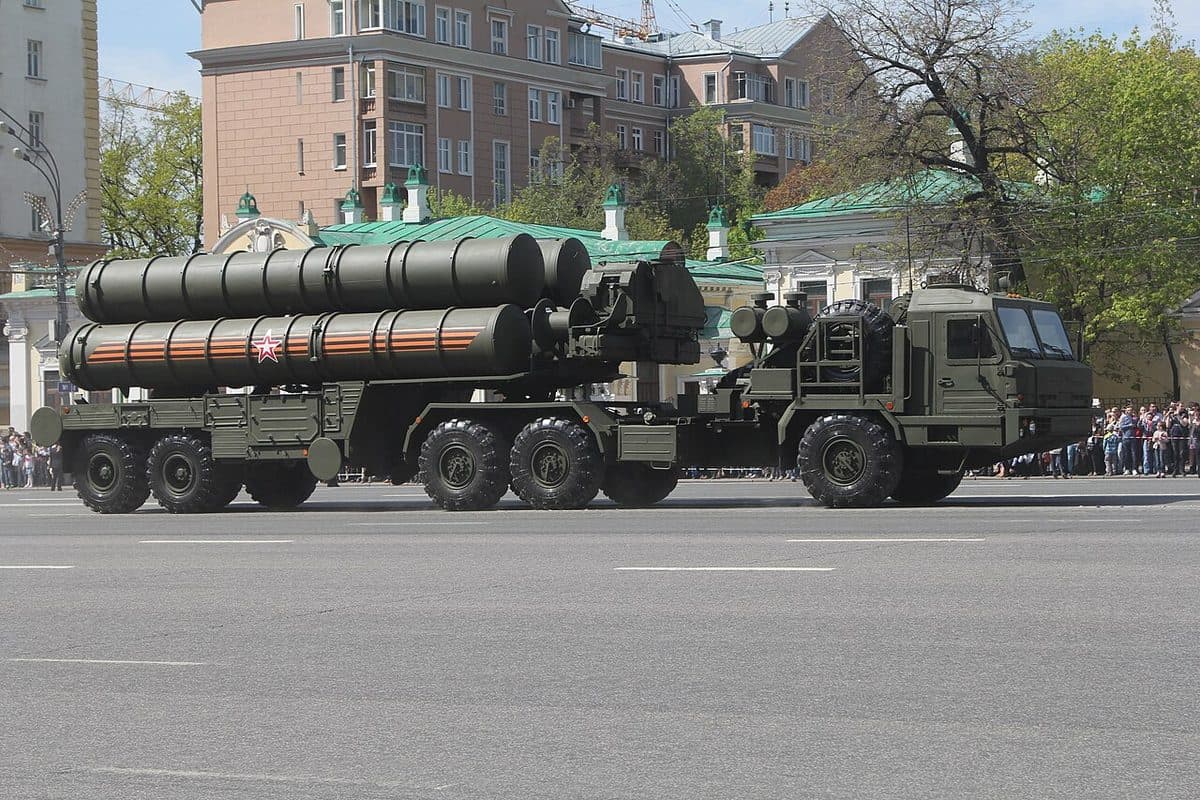
S-400 Triumf air defense system launcher vehicle with missile canisters in raised firing position
Alex Carter
Alex Carter

Modern Warfare & Defense Technology Contributor

Alex Carter writes about modern warfare, emerging military technology, and how doctrine adapts to new tools. His work focuses on what changes in practice -- command, control, targeting, and risk -- when systems like drones and autonomous platforms become routine.

The S-400 Triumf (NATO reporting name: SA-21 Growler) is Russia's most capable and most exported air defense system. Developed by Almaz-Antey and entering Russian service in 2007, the S-400 is designed to detect and destroy aircraft, cruise missiles, unmanned aerial vehicles, and tactical ballistic missiles at ranges up to 400 kilometers (250 miles). It is the successor to the S-300 family, itself one of the most feared air defense systems of the Cold War era, and represents the most sophisticated surface-to-air missile system that Russia offers for export. The S-400 has not yet been tested in a full-scale war against a peer adversary, but it has already reshaped global defense politics through its sale to Turkey, China, and India.

How the S-400 Works

The S-400 is not a single weapon but a system of systems. A standard S-400 battalion consists of a command post, an acquisition radar, up to six fire units (each with a target engagement radar and up to four launcher vehicles), and support vehicles. The layered architecture gives the system redundancy and flexibility. If one component is damaged, others can continue operating.

The 91N6E "Big Bird" acquisition and battle management radar is the system's long-range eyes. This large, high-power radar can detect targets at ranges exceeding 600 kilometers, tracking up to 300 targets simultaneously and identifying which ones require engagement. The 92N6E "Gravestone" multifunction engagement radar then provides precision tracking and missile guidance for individual targets.

The system can use four different types of missiles, each optimized for different engagement scenarios, from short-range defense against incoming missiles to ultra-long-range engagements against high-altitude aircraft. This multi-missile capability allows a single S-400 battalion to handle threats ranging from low-flying cruise missiles to high-altitude reconnaissance aircraft, without requiring separate specialized systems.

The Missiles

The S-400's versatility comes from its ability to fire multiple missile types from the same launcher:

48N6E3 (range ~250 km): The workhorse missile, evolved from the S-300 family. It uses semi-active radar homing with command guidance updates, and can engage aircraft, cruise missiles, and tactical ballistic missiles. This is the missile most frequently associated with the S-400 in export configurations.

9M96E/9M96E2 (range ~40/120 km): Smaller, more agile missiles designed for engaging maneuvering targets like cruise missiles and precision-guided munitions. The 9M96 uses active radar homing in the terminal phase and features a gas-dynamic control system that allows extreme maneuverability at the end of its flight, critical for hitting small, fast-moving targets.

40N6E (range ~400 km): The ultra-long-range missile designed to engage high-value targets like AWACS aircraft, tankers, and strategic reconnaissance aircraft at extreme distances. The 40N6E's ability to reach targets 250 miles away makes the S-400 one of the longest-ranged air defense systems in the world, though its effectiveness at maximum range against maneuvering targets is debated by Western analysts.

Each launcher vehicle carries four missile canisters, and a standard fire unit with four launchers can have 16 missiles ready to fire. A full S-400 battalion with six fire units can have up to 96 missiles deployed, a significant defensive firepower concentration.

S-400 Triumf air defense system deployed in field position with multiple launcher vehicles and radar systems visible
An S-400 battalion deployed in the field. The system's layered architecture, combining acquisition radar, engagement radar, and multiple launcher vehicles, gives it the flexibility to engage targets from cruise missiles to high-altitude aircraft. (Russian Ministry of Defence)

The Geopolitical Weapon

The S-400's most significant impact may not be military but political. Russia has used the system as a strategic instrument of foreign policy, offering it to countries whose purchase creates friction with the United States and NATO.

Turkey: Turkey's purchase of the S-400 in 2017 triggered one of the most serious crises within NATO in decades. The United States argued that the S-400's radar could collect data on the F-35's stealth characteristics, compromising the program's secrets. Washington responded by removing Turkey from the F-35 program and imposing CAATSA sanctions on Turkey's defense procurement agency. Turkey received the S-400 batteries but lost access to the most advanced Western fighter aircraft, a trade that continues to shape Turkish defense policy and drove the development of indigenous alternatives like the KAAN fighter and Kizilelma drone.

China: China was the first export customer for the S-400, receiving the system in 2018. The purchase gave the People's Liberation Army Air Force a long-range air defense capability that complements China's own HQ-9 system, and it deepened the Sino-Russian defense relationship at a time of increasing tension with the United States.

India: India signed a $5.4 billion contract for five S-400 battalions in 2018, despite strong American pressure to cancel the deal. India has received initial deliveries and is integrating the system alongside its existing mix of Western and Russian air defense equipment. The purchase tested the limits of the U.S.-India defense partnership, though Washington ultimately chose not to impose sanctions on New Delhi.

The Untested Question

The S-400's greatest vulnerability is not a technical weakness. It is the gap between its manufacturer's claims and its verified combat record. Russia's marketing positions the S-400 as capable of engaging stealth aircraft, hypersonic weapons, and massed cruise missile attacks. Western analysts are more skeptical, noting that:

The S-400 has not engaged stealth aircraft in combat. Its ability to detect and track fifth-generation fighters like the F-35 at operationally relevant ranges is unproven. Russian claims about detection ranges against low-observable targets are based on manufacturer specifications, not demonstrated combat results.

Russian air defenses, including S-400 batteries deployed in Syria and within Russia itself, have not prevented Ukrainian drone and cruise missile attacks from reaching their targets. While these attacks typically involve lower-end threats rather than the most sophisticated Western weapons, the fact that Russian air defenses have been unable to provide comprehensive protection has raised questions about the system's real-world performance.

The MIM-104 Patriot, by contrast, has an extensive combat record spanning multiple conflicts, including demonstrated kills against Russian cruise missiles and aircraft in Ukraine. The Patriot's limitations are well understood because it has been used in real combat. The S-400's limitations remain largely theoretical because it has not faced a comparable test.

S-400 vs Patriot: Different Philosophies

Comparing the S-400 to the Patriot is inevitable but imperfect. The two systems have different design philosophies and operational concepts. The S-400 is designed as a wide-area defense system with extremely long range, creating a "bubble" of denied airspace that extends hundreds of miles. Its strategy is deterrence through range, forcing attacking aircraft to operate so far from protected targets that they cannot be effective.

The Patriot is designed as a point defense system that protects specific high-value targets such as airfields, command posts, and population centers from missile and aircraft attack. Its range is shorter than the S-400's, but its missile guidance (particularly the PAC-3 hit-to-kill interceptor) is specifically optimized for the extremely demanding task of destroying incoming ballistic missiles.

In practice, neither system is clearly "better." They are designed for different roles. The S-400's longer range makes it a more effective area-denial weapon. The Patriot's combat-proven interceptors make it a more reliable point defense system. The ideal air defense architecture would include both long-range area systems and short-range point defense, which is why countries like India operate both Russian and Western air defense equipment.

What Comes Next

Russia has announced the S-500 Prometey as the S-400's successor, claiming it will be capable of engaging satellites, hypersonic weapons, and intercontinental ballistic missile warheads. How much of this is genuine capability versus marketing aspiration remains unclear. The S-500 has undergone limited testing and is not yet widely deployed.

The S-400 itself remains a significant factor in global military planning. Any air operation within the envelope of an S-400 battery must account for its presence, whether by suppressing it with electronic warfare, destroying it with standoff weapons, or flying around its coverage area. Even if its real-world performance falls short of Russian claims, the uncertainty it creates forces adversary planners to respect its capabilities. In air defense, perception matters almost as much as reality, and the S-400's reputation as a system that even stealth aircraft should avoid has proven to be a powerful deterrent in its own right.

Share this article

Share:

Recommended

Ace of The Skies: Can You Identify These Military Aircraft Throughout The Years?
Test Yourself

Ace of The Skies: Can You Identify These Military Aircraft Throughout The Years?

Can you identify these aircraft?

Take the Quiz

On This Day in Military History

March 20

Napoleon Returns to Paris, The Hundred Days Begin (1815)

After escaping exile on the island of Elba, Napoleon Bonaparte entered Paris with a growing army as King Louis XVIII fled the city. Marshal Ney, sent to arrest Napoleon, had instead joined him with 6,000 men. Napoleon's return marked the beginning of the "Hundred Days," during which he reconstituted the French Empire before his final defeat at the Battle of Waterloo on June 18, 1815. The return triggered the War of the Seventh Coalition, in which Austria, Prussia, Russia, and Britain each pledged 150,000 troops to end the Napoleonic era.

1922, USS Langley Commissioned, America's First Aircraft Carrier

1943, Battle of the Mareth Line Begins in Tunisia

1995, Tokyo Subway Sarin Attack

See all 10 events on March 20

Get Military News & History in Your Inbox

Join thousands of readers receiving our weekly digest of military technology, history, and analysis.

Test Your Knowledge