Skip to content
April 28:Execution of Benito Mussolini81yr ago

10 Best Bombers of All Time, Ranked

Daniel Mercer · · 14 min read
Save
Share:
B-52 Stratofortress bomber in flight representing decades of strategic bombing capability
Daniel Mercer
Daniel Mercer

Military History Editor

Daniel Mercer writes about military history with a focus on the 20th century, including World War II, the Cold War, and Vietnam. His work looks at how decisions made decades ago still influence doctrine, planning, and assumptions today.

A great bomber is more than an aircraft that drops ordnance. The best bombers shaped the wars they fought in, forced adversaries to build entire defensive systems to counter them, and proved so effective that they remained in service for decades, sometimes generations, beyond their intended lifespans. This list ranks the 10 greatest bombers in aviation history, weighing combat impact, technological innovation, versatility, and lasting strategic significance.

10. Avro Vulcan
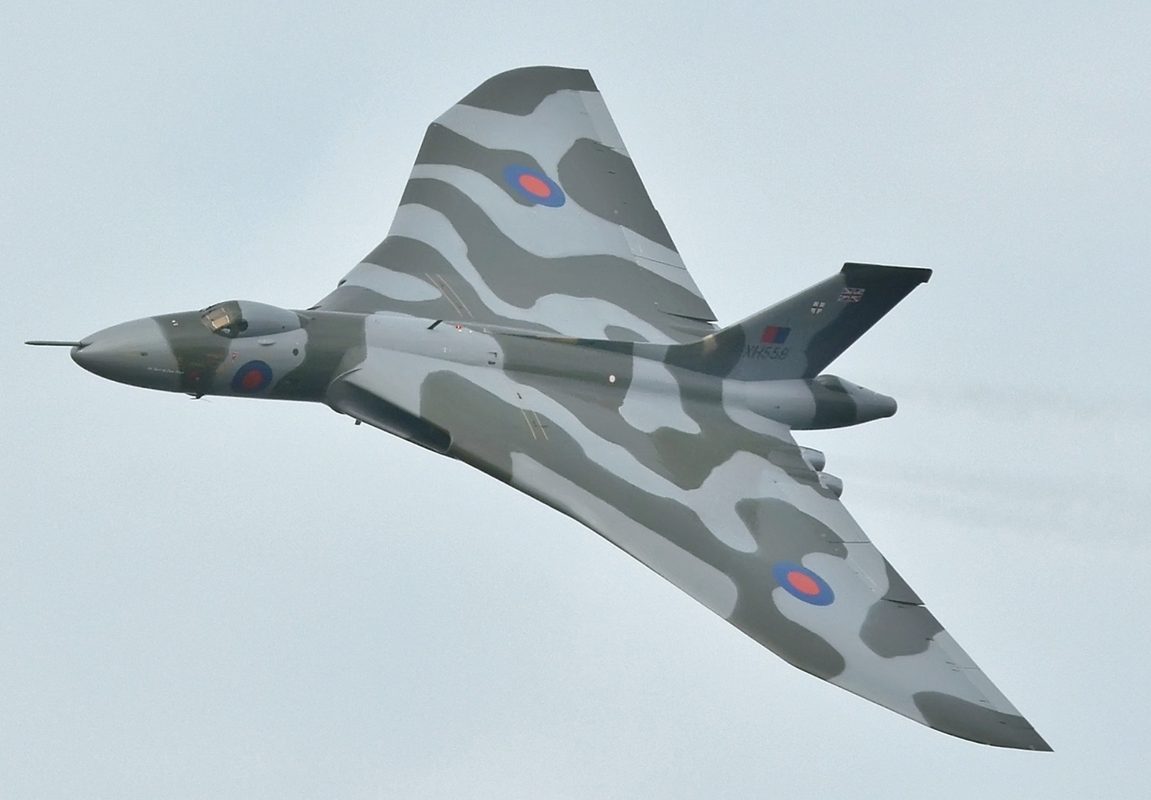
Avro Vulcan XH558 in flight showing its distinctive delta wing shape in camouflage livery
Avro Vulcan XH558, the last airworthy Vulcan, displays its dramatic delta wing planform. (Wikimedia Commons)

Britain's delta-winged nuclear deterrent bomber entered service in 1956 and carried Britain's free-fall nuclear weapons throughout the most dangerous years of the Cold War. The Vulcan's dramatic shape, a massive delta wing with no horizontal tail surfaces, gave it surprisingly good high-altitude performance and maneuverability for its size. But the Vulcan earns its place on this list for one mission above all: the Black Buck raids during the 1982 Falklands War, when Vulcans flew 3,900-mile round trips from Ascension Island to bomb Port Stanley airfield, the longest bombing missions in history at that time, requiring multiple aerial refueling contacts. The Vulcan proved that strategic bombers could project power across intercontinental distances even without forward bases.

9. Handley Page Halifax
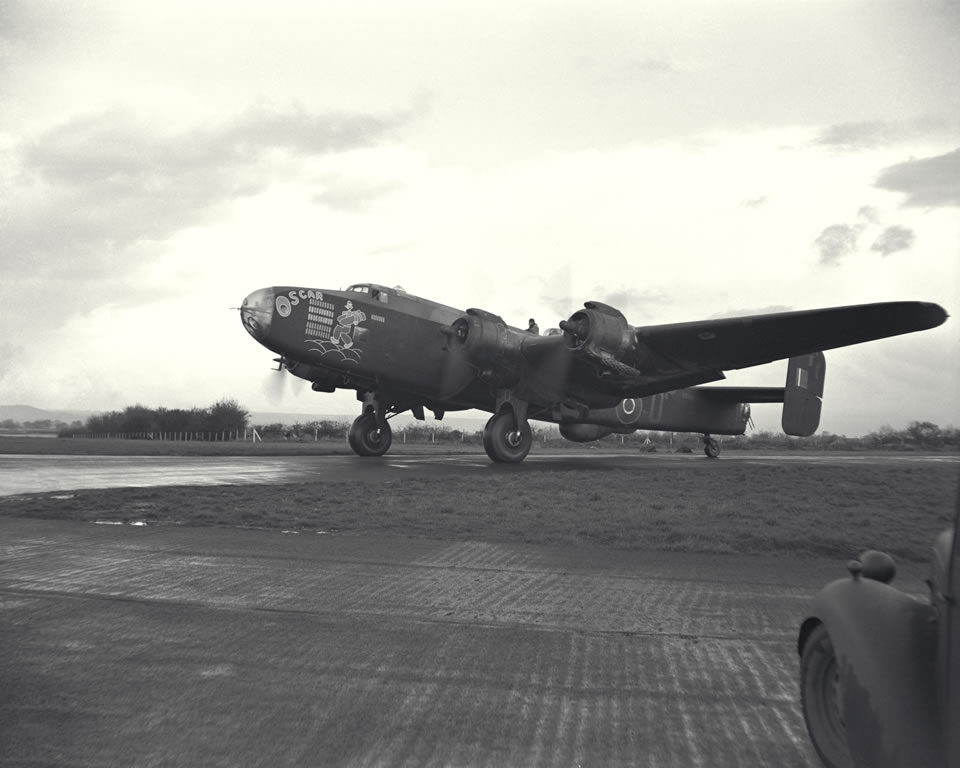
Handley Page Halifax heavy bomber in flight during World War II
The Handley Page Halifax was the most versatile heavy bomber of the war, serving in roles from strategic bombing to SOE operations.

The Halifax has always lived in the Lancaster's shadow, but it was a critically important bomber in its own right. Over 6,170 were built, and they flew throughout the strategic bombing campaign against Germany. The Halifax was more versatile than the Lancaster. It served as a bomber, maritime patrol aircraft, transport, glider tug, and SOE agent delivery platform. Its crash survival rate was also better than the Lancaster's, partly due to a wider fuselage that made escape easier. The Halifax carried a slightly lighter bomb load than the Lancaster, but its broader mission portfolio and its contribution to winning the bomber war earn it a place on this list.

8. Tupolev Tu-95 Bear
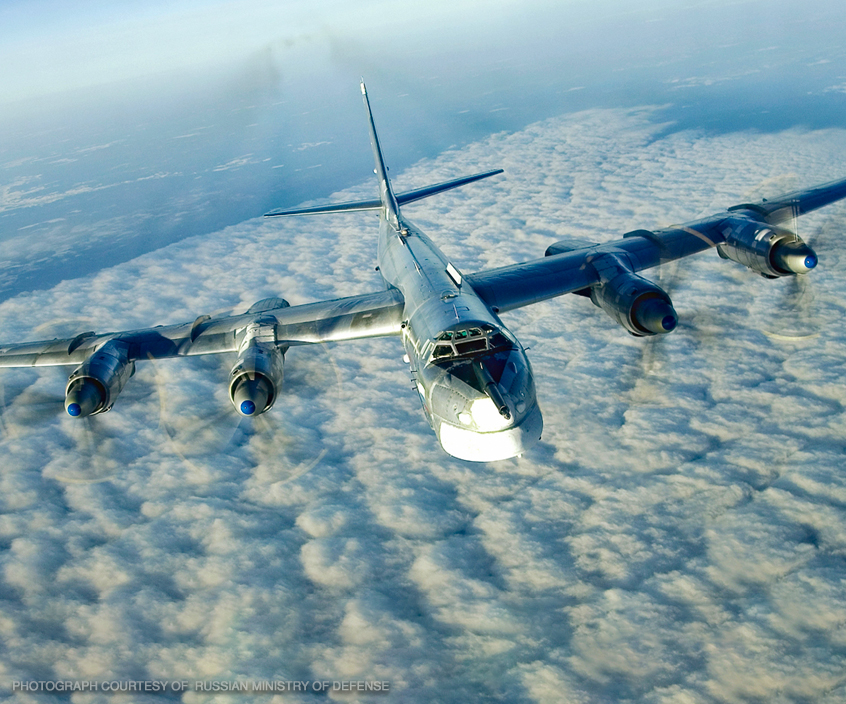
Tupolev Tu-95 Bear strategic bomber in flight showing its distinctive contra-rotating propellers
The Tupolev Tu-95 Bear, still in service after 70+ years, the only turboprop strategic bomber still operational. (Russian Ministry of Defense)

The Tu-95 first flew in 1952 and remains in active service with the Russian Air Force more than 70 years later, the only turboprop-powered strategic bomber still operational. Its four Kuznetsov NK-12 engines, each driving massive contra-rotating propellers, give it a range exceeding 9,000 miles without refueling. The Tu-95 has served as a nuclear bomber, maritime patrol aircraft, cruise missile carrier, and intelligence platform. Its longevity reflects the soundness of the original design. The Bear has been upgraded with modern cruise missiles (Kh-55 and Kh-101) and continues to fly nuclear deterrence patrols and conventional strike missions.

7. Consolidated B-24 Liberator

Consolidated B-24 Liberator heavy bomber in flight during World War II
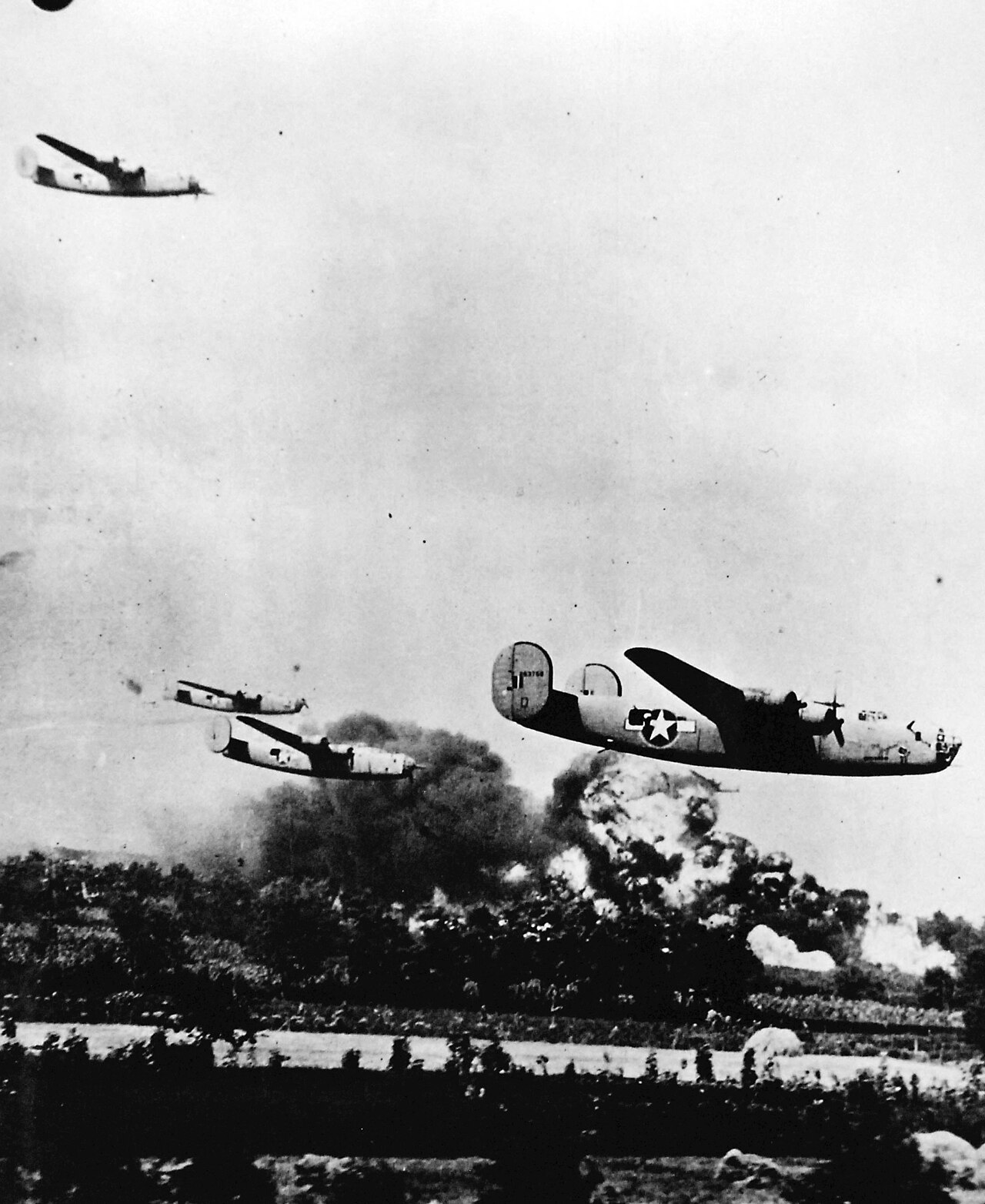
The B-24 Liberator, the most-produced American military aircraft in history, with 18,482 built.

The most-produced American military aircraft in history, with 18,482 built, the B-24 was the workhorse of the Allied strategic bombing campaign. It carried a heavier bomb load and flew farther than the B-17, thanks to its innovative Davis wing, which was more aerodynamically efficient. The B-24 served in every theater of World War II: bombing Germany from English bases, attacking Japanese shipping in the Pacific, flying anti-submarine patrols over the Atlantic, and supporting operations in North Africa, Italy, and Burma. It was not as glamorous or as rugged as the B-17, but it was produced in greater numbers and carried more bombs farther. In the raw calculus of strategic bombing, the Liberator delivered more tonnage than any other Allied bomber.

6. North American B-25 Mitchell

North American B-25 Mitchell medium bomber in flight
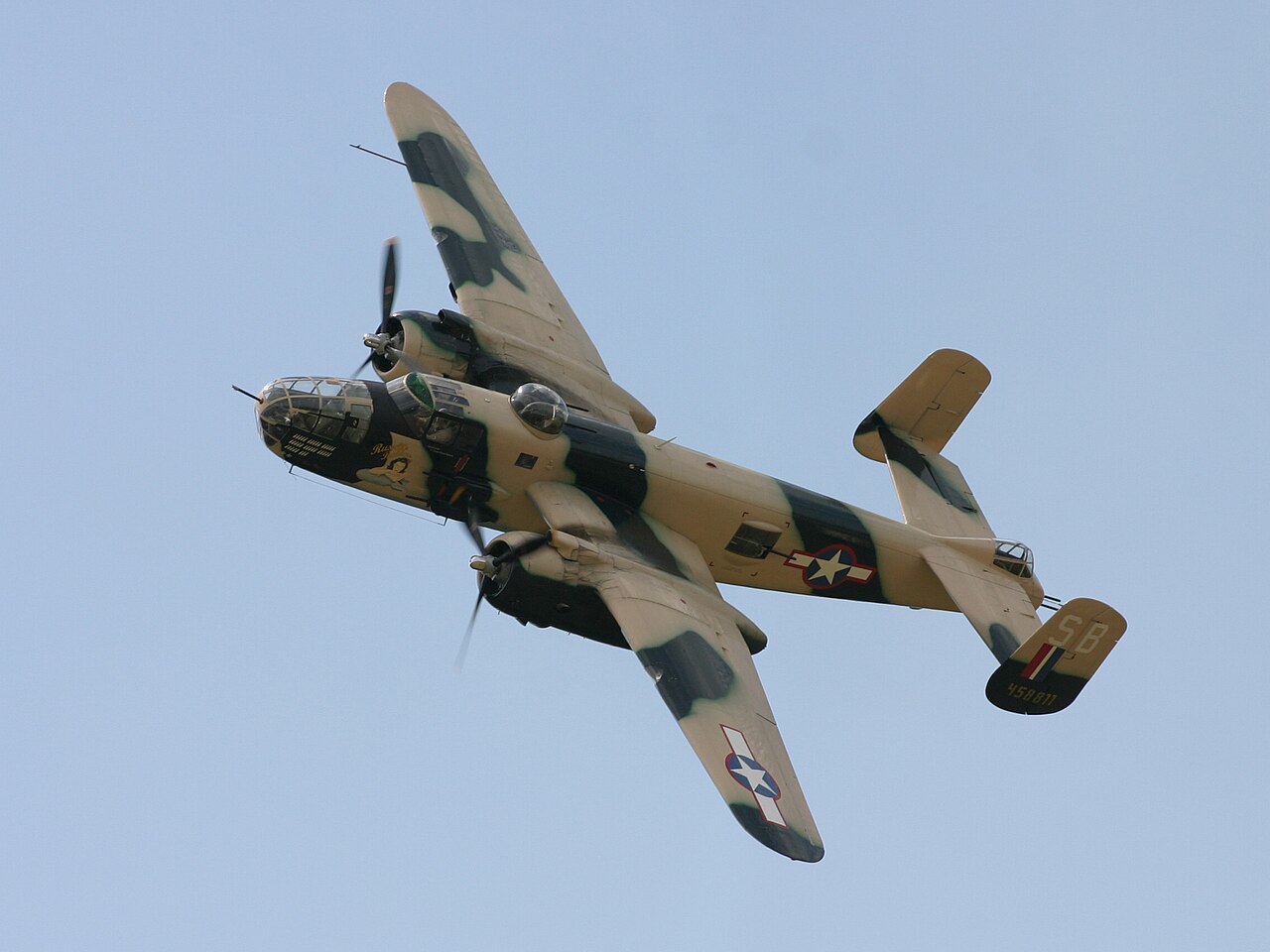
The B-25 Mitchell, famous for the Doolittle Raid, the most audacious bombing mission of World War II.

The B-25 Mitchell was a medium bomber, not a strategic heavyweight, but it earned its ranking through one of the most audacious military operations in history. On April 18, 1942, sixteen B-25Bs launched from the aircraft carrier USS Hornet and bombed Tokyo in the Doolittle Raid, which stunned Japan and boosted American morale at the war's lowest point. No medium bomber had ever launched from a carrier before, and the mission's success demonstrated a flexibility that no other bomber of its era could match. Beyond the Doolittle Raid, the B-25 served as a highly effective strafer and skip-bomber in the Pacific, with some variants carrying up to 14 forward-firing machine guns and a 75mm cannon in the nose.

5. Boeing B-17 Flying Fortress

B-17 Flying Fortress bombers in tight formation during a daylight bombing mission over Europe
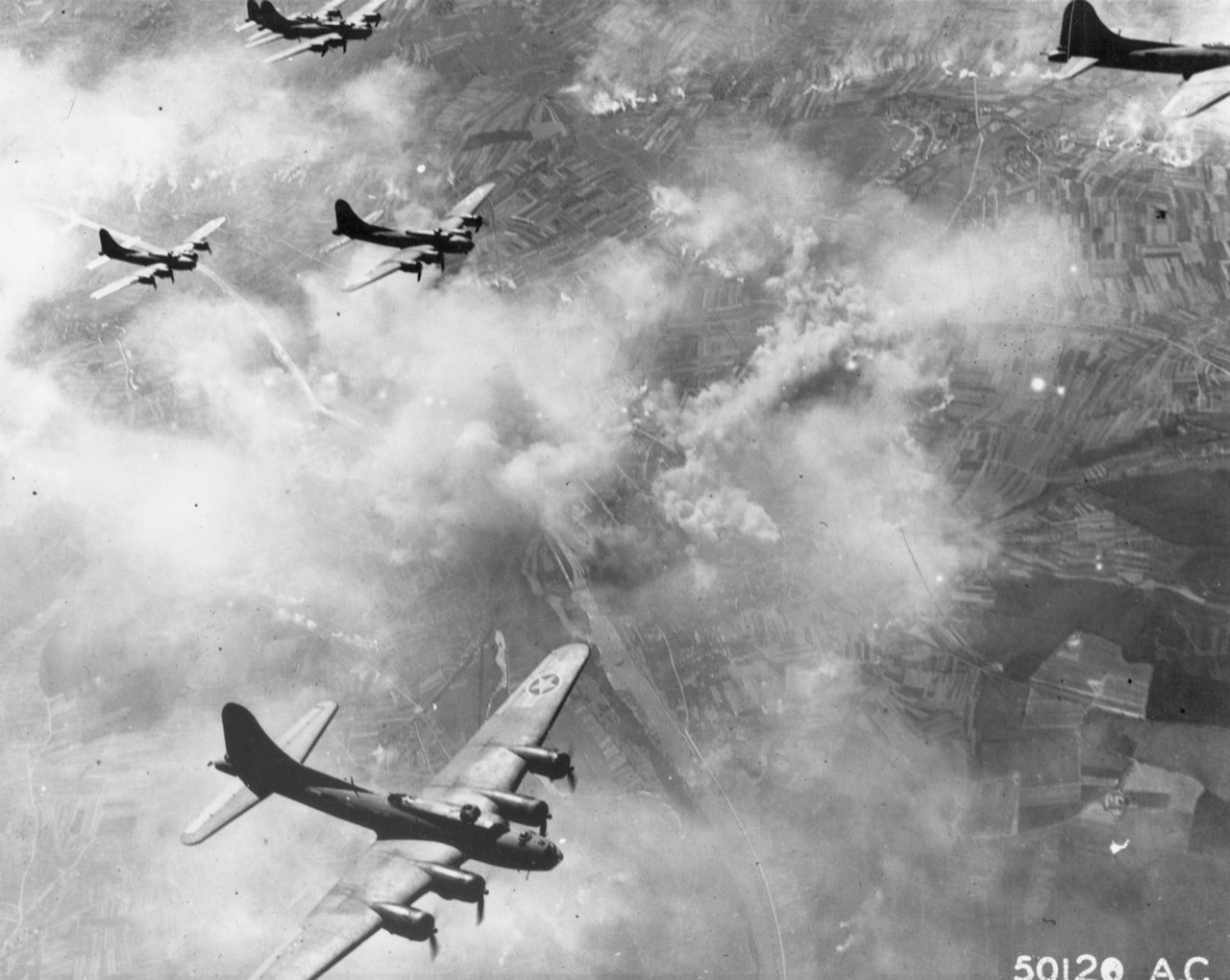
B-17 Flying Fortresses in tight combat formation. Massed box formations created overlapping fields of defensive fire. (U.S. Army Air Forces)

The B-17 became the iconic aircraft of the American strategic bombing campaign against Nazi Germany. Its reputation rests not on the tonnage it delivered (the B-24 actually dropped more bombs) but on its extraordinary toughness and the mythology that grew around it. B-17s returned to base with entire sections of tail shot away, engines destroyed, control surfaces shredded, and crew members killed or wounded. The aircraft's defensive armament, up to 13 .50-caliber machine guns, gave it its "Flying Fortress" name and allowed massed formations to create overlapping fields of fire that made attacking fighters pay a heavy price. The B-17's ability to absorb punishment and bring its crew home earned a loyalty from its aircrews that endures to this day.

4. de Havilland Mosquito

de Havilland Mosquito in flight, the Wooden Wonder that was faster than the fighters sent to intercept it
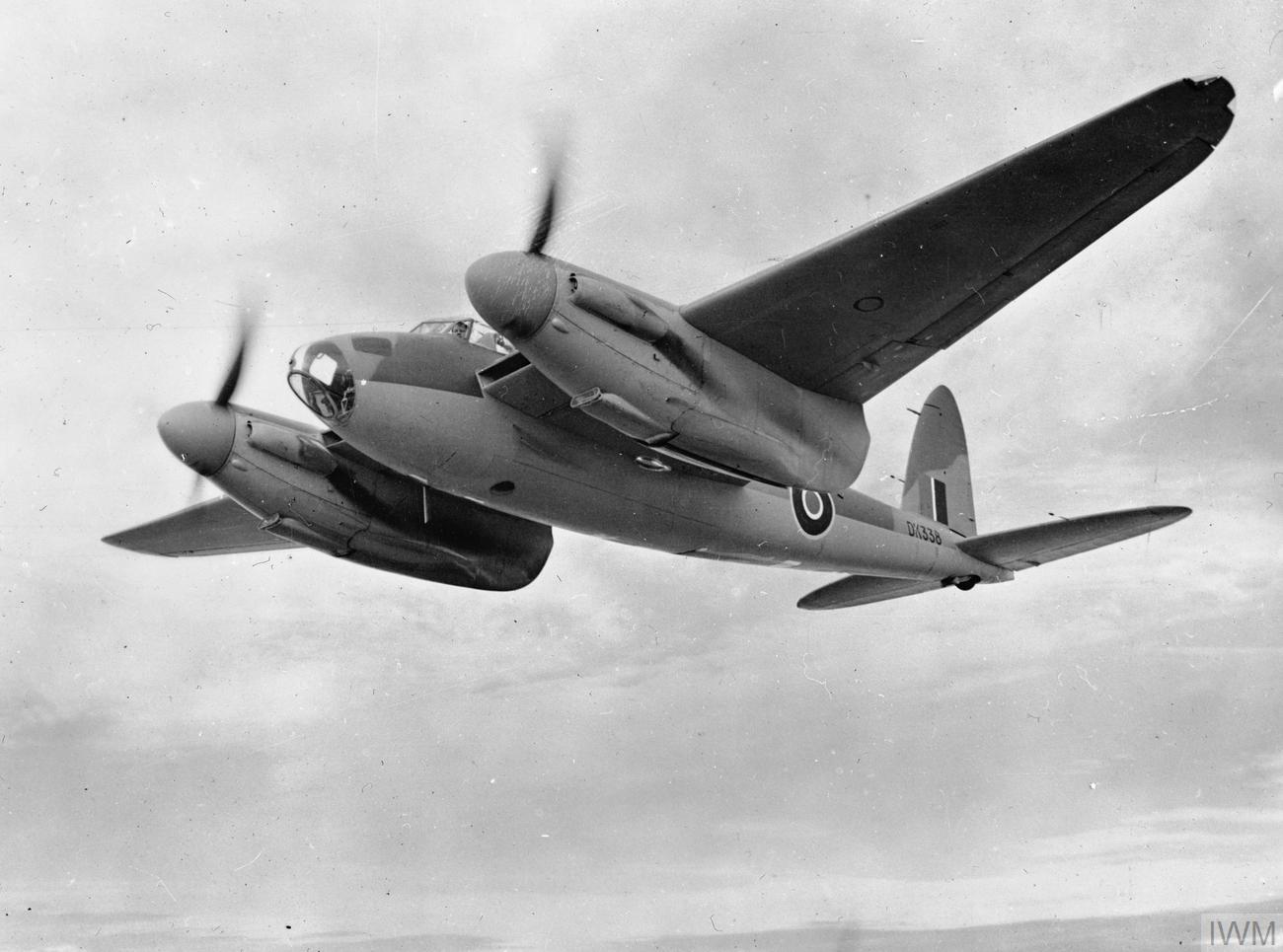
The de Havilland Mosquito: built from plywood and balsa, faster than enemy fighters, and the lowest loss rate in Bomber Command.

The Wooden Wonder earns its place for proving that speed could replace armor. Built from plywood and balsa wood, the Mosquito was faster than the fighters sent to intercept it, carried a 4,000-pound Cookie bomb to Berlin, and suffered the lowest loss rate of any aircraft in Bomber Command. It served as bomber, night fighter, pathfinder, fighter-bomber, photo-reconnaissance platform, and anti-shipping strike aircraft. It was the most versatile aircraft of World War II. No other bomber could match its combination of speed, precision, and mission flexibility, and it did it all with a crew of just two.

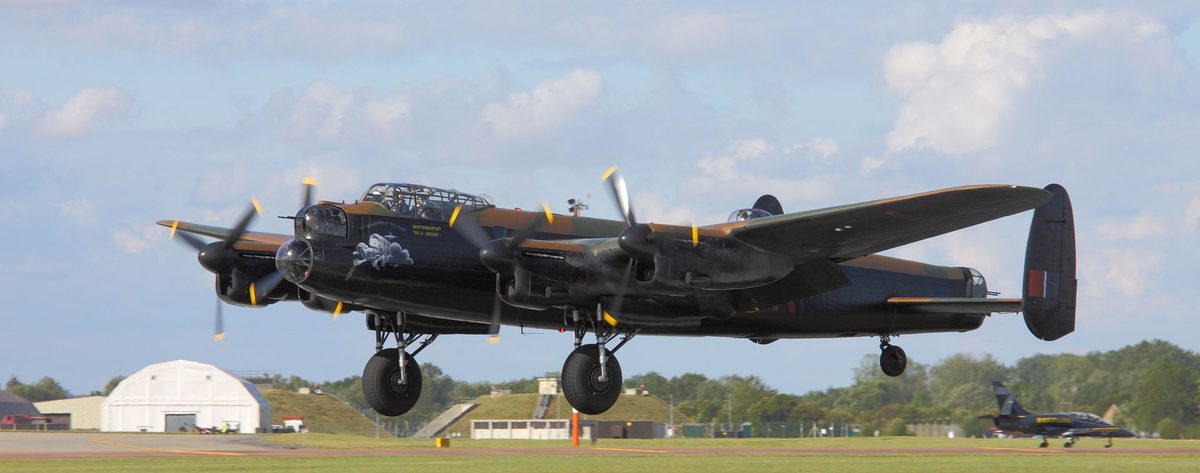
3. Avro Lancaster

Avro Lancaster heavy bomber in flight during World War II
The Avro Lancaster: backbone of RAF Bomber Command, capable of carrying the 22,000-pound Grand Slam earthquake bomb.

The Lancaster was the backbone of RAF Bomber Command's strategic offensive against Germany and the most effective heavy bomber in the European theater by almost any measure. It carried a heavier bomb load than any other Allied bomber, up to 22,000 pounds, including the 12,000-pound Tallboy and 22,000-pound Grand Slam earthquake bombs designed by Barnes Wallis. No other bomber could carry these massive weapons, which were used to destroy hardened targets including submarine pens, V-weapon sites, and the Bielefeld Viaduct. The Lancaster also carried the famous bouncing bomb during Operation Chastise, the Dam Busters raid of May 1943, which breached the Möhne and Eder dams. With 7,377 built and 156,000 sorties flown, the Lancaster dropped more bombs on Germany than any other single aircraft type.

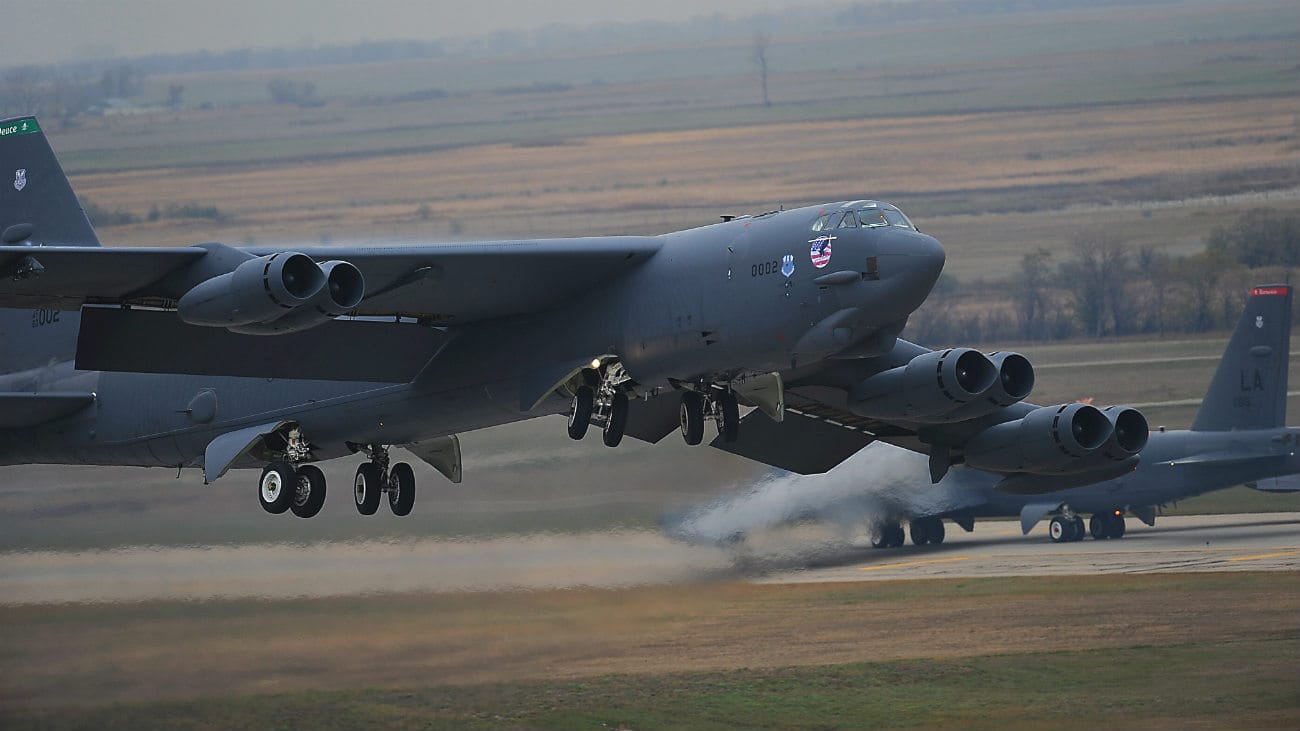
2. Boeing B-52 Stratofortress

Boeing B-52 Stratofortress strategic bomber in flight
The Boeing B-52 Stratofortress: in service since 1955, planned to fly past 2050 for a 90+ year career.

The B-52 has been in continuous service with the U.S. Air Force since 1955 and is currently planned to remain operational past 2050, a service life that will exceed 90 years. No other combat aircraft in history has demonstrated such longevity. Originally designed as a high-altitude nuclear bomber to deter the Soviet Union, the B-52 has reinvented itself repeatedly: as a conventional carpet bomber over Vietnam, a cruise missile carrier during the Gulf War, a precision strike platform in Afghanistan and Iraq, and today as a cruise missile and hypersonic weapons carrier. The B-52H model currently in service can carry over 70,000 pounds of ordnance, including AGM-86 cruise missiles, JDAM precision bombs, naval mines, and the upcoming AGM-183 ARRW hypersonic missile. The B-52 has dropped more bombs in combat than any other aircraft in history, and it remains the most versatile and cost-effective strategic bomber in the American arsenal.

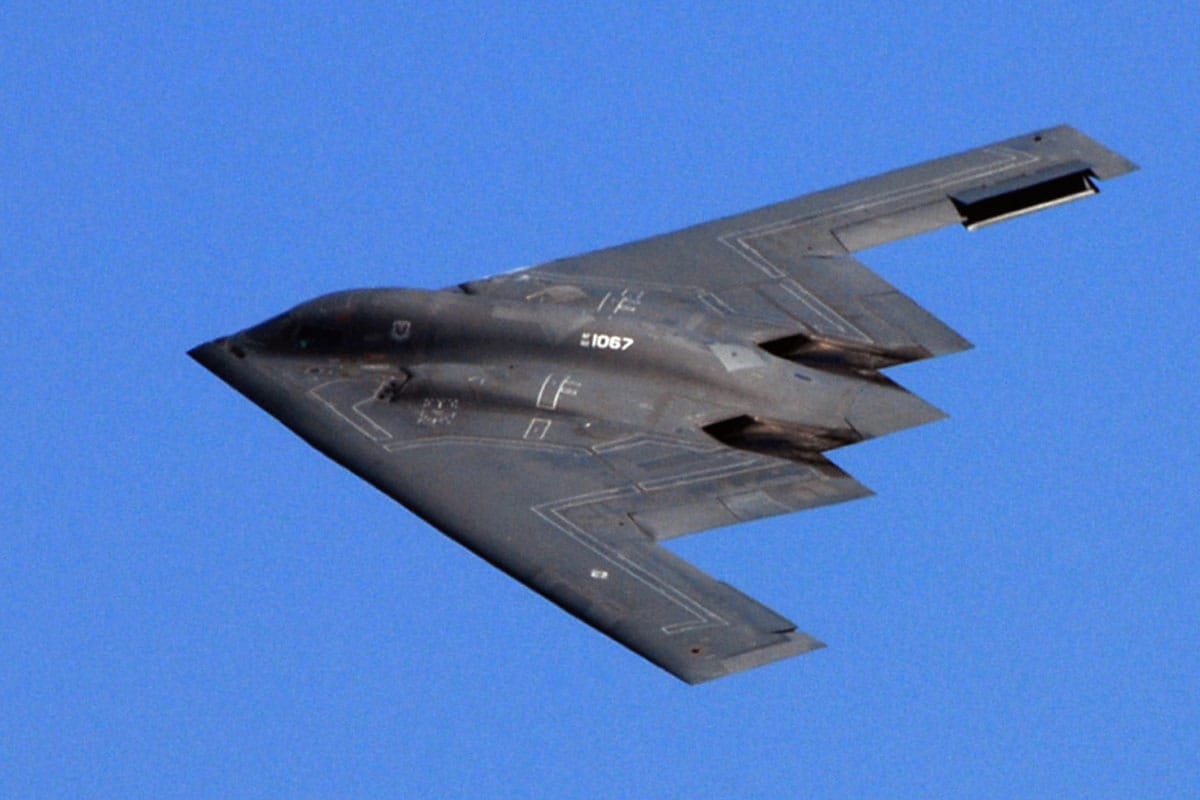
1. Northrop Grumman B-2 Spirit

Northrop Grumman B-2 Spirit stealth bomber in flight showing its flying wing design
The B-2 Spirit: the most advanced bomber ever built, with a radar cross-section the size of a large insect. (U.S. Air Force)

The B-2 Spirit is the most advanced and capable bomber ever built. Its flying wing design, radar-absorbent materials, and carefully engineered shape give it a radar cross-section roughly equivalent to a large insect, making a 172-foot wingspan aircraft effectively invisible to radar. The B-2 can penetrate the most sophisticated integrated air defense systems in the world, deliver nuclear or conventional weapons with precision, and return to base without the enemy ever knowing it was there.

The B-2 made its combat debut during Operation Allied Force over Serbia in 1999, flying 30-hour round-trip missions from Whiteman Air Force Base in Missouri to deliver JDAM precision bombs. It has since flown missions in Iraq, Afghanistan, and Libya, demonstrating the ability to strike any target on earth from a single base in the continental United States.

Only 21 B-2s were built. The program's $2.1 billion per-aircraft cost (including development) made it the most expensive aircraft ever produced. But the B-2's ability to penetrate defended airspace and deliver weapons with impunity gives it a strategic value that no other bomber can match. It is the only aircraft in the world that combines intercontinental range, stealth, heavy payload, and precision strike in a single platform. Its successor, the B-21 Raider, is entering production, proof that the stealth bomber concept the B-2 pioneered has become the standard for the future of strategic airpower. The B-2 Spirit ranks first because it represents the most complete realization of what a bomber can be: invisible, precise, and capable of reaching any target on the planet.

Share this article

Share:

Recommended

Ace of The Skies: Can You Identify These Military Aircraft Throughout The Years?
Test Yourself

Ace of The Skies: Can You Identify These Military Aircraft Throughout The Years?

Can you identify these aircraft?

Take the Quiz

On This Day in Military History

March 19

The Bombing of USS Franklin (CV-13) (1945)

Operating 70 miles off the coast of Shikoku, Japan, the Essex-class aircraft carrier USS Franklin was struck by two 550-pound bombs from a lone Japanese dive bomber. The bombs detonated among 31 fully armed and fueled aircraft, igniting aviation fuel and ordnance in a catastrophic chain of secondary explosions. Between 724 and 807 crew members were killed, the single deadliest attack on a U.S. Navy ship that survived the war. The crew's extraordinary damage control effort saved the ship, which steamed 12,000 miles home under her own power.

1865, Battle of Bentonville: Last Major Battle of the Civil War

1945, Hitler Issues the Nero Decree

1944, Operation Margarethe: Germany Occupies Hungary

See all 10 events on March 19

Get Military News & History in Your Inbox

Join thousands of readers receiving our weekly digest of military technology, history, and analysis.

Test Your Knowledge