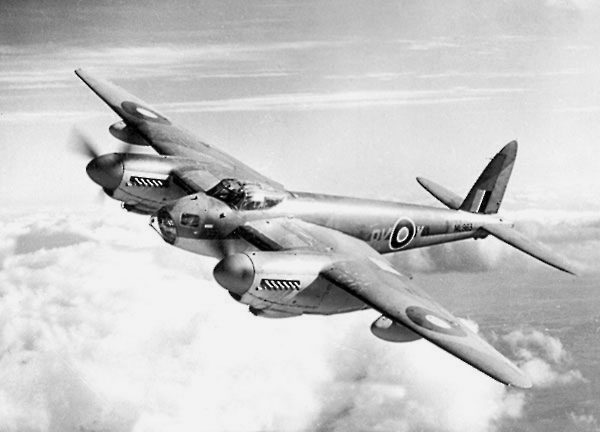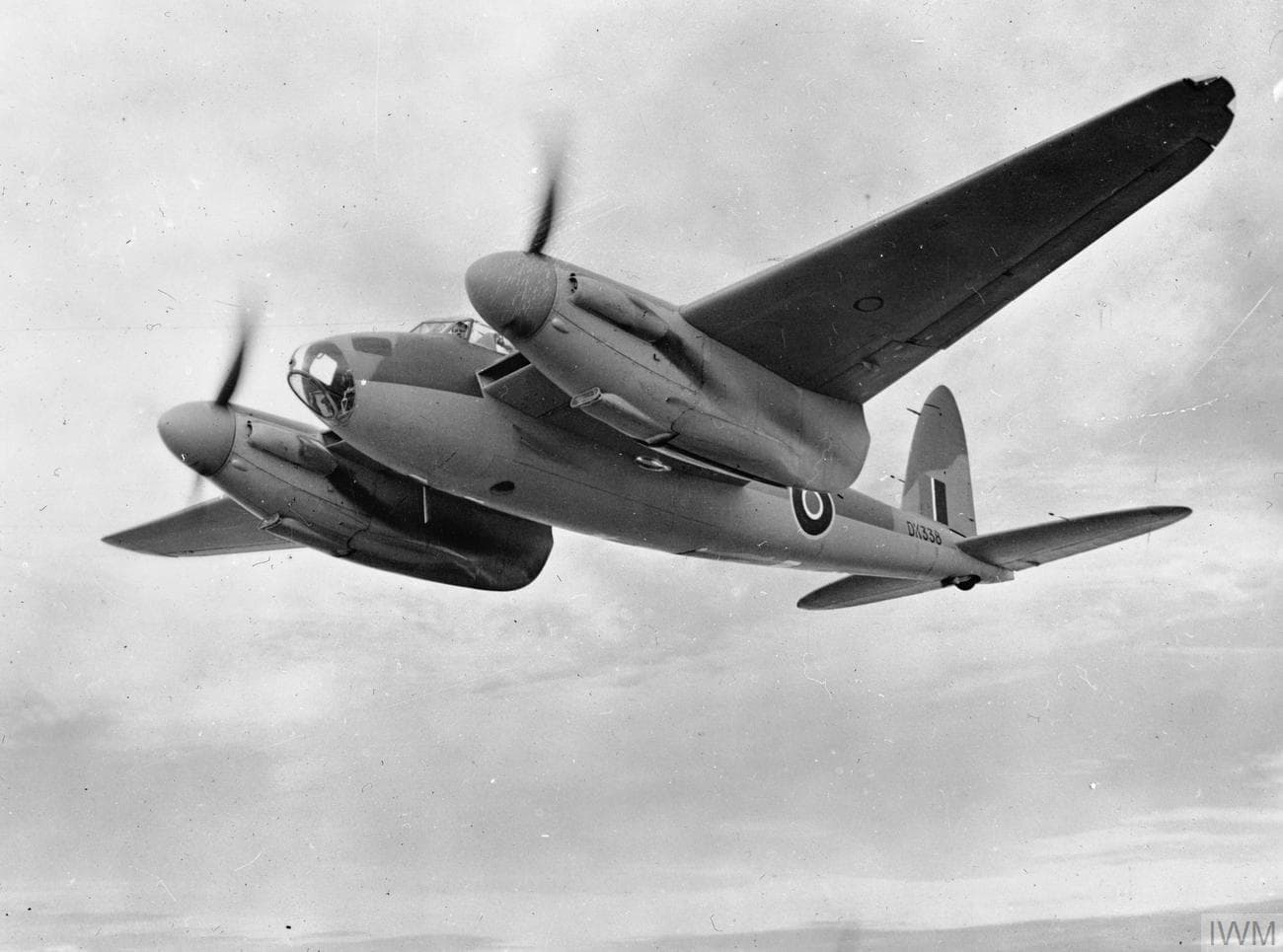

In 1938, Geoffrey de Havilland and designer R.E. Bishop proposed something that the British Air Ministry considered absurd: a fast, unarmed bomber built entirely of wood. At a time when the RAF was investing in heavy, turret-armed bombers bristling with defensive guns, the idea of a lightweight wooden aircraft that relied on speed alone for survival seemed like a step backward. The Air Ministry initially rejected the proposal. They were wrong. The de Havilland Mosquito would become the most versatile aircraft of World War II, serving as bomber, night fighter, fighter-bomber, pathfinder, photo-reconnaissance platform, anti-shipping strike aircraft, and more. It was faster than the fighters sent to intercept it, could carry a 4,000-pound bomb to Berlin, and suffered the lowest loss rate of any aircraft in RAF Bomber Command.
Why Wood?
The decision to build an aircraft from wood was not born of desperation. It was strategic brilliance. Britain in 1940 faced critical shortages of aluminum, which was consumed in vast quantities by the Spitfire, Hurricane, Lancaster, and every other aircraft in production. Wood, on the other hand, was abundant. More importantly, woodworking was a skill that existed outside the aviation industry. Furniture factories, cabinet makers, and piano manufacturers could be retooled to produce aircraft components without drawing skilled workers away from existing metal aircraft production lines.
The Mosquito's structure used a sandwich construction of balsa wood between two layers of birch plywood, bonded with a casein-based adhesive (later replaced with more weather-resistant formaldehyde-based glues). The result was a structure that was remarkably strong for its weight, lighter than an equivalent aluminum airframe, which contributed directly to the aircraft's extraordinary performance. The smooth wooden skin, shaped in compound curves that were difficult to achieve with metal construction, produced excellent aerodynamics.
The first prototype flew on November 25, 1940, just 11 months after the design was finalized. Test pilots were immediately impressed. The aircraft was fast. Very fast. With two Rolls-Royce Merlin engines powering an airframe that was significantly lighter than any comparable twin-engine design, the Mosquito could outrun virtually anything in the sky.