Skip to content
April 27:The Sinking of the SS Sultana161yr ago

The Arleigh Burke Destroyer: Backbone of the US Navy

James Holloway · · 13 min read
Save
Share:
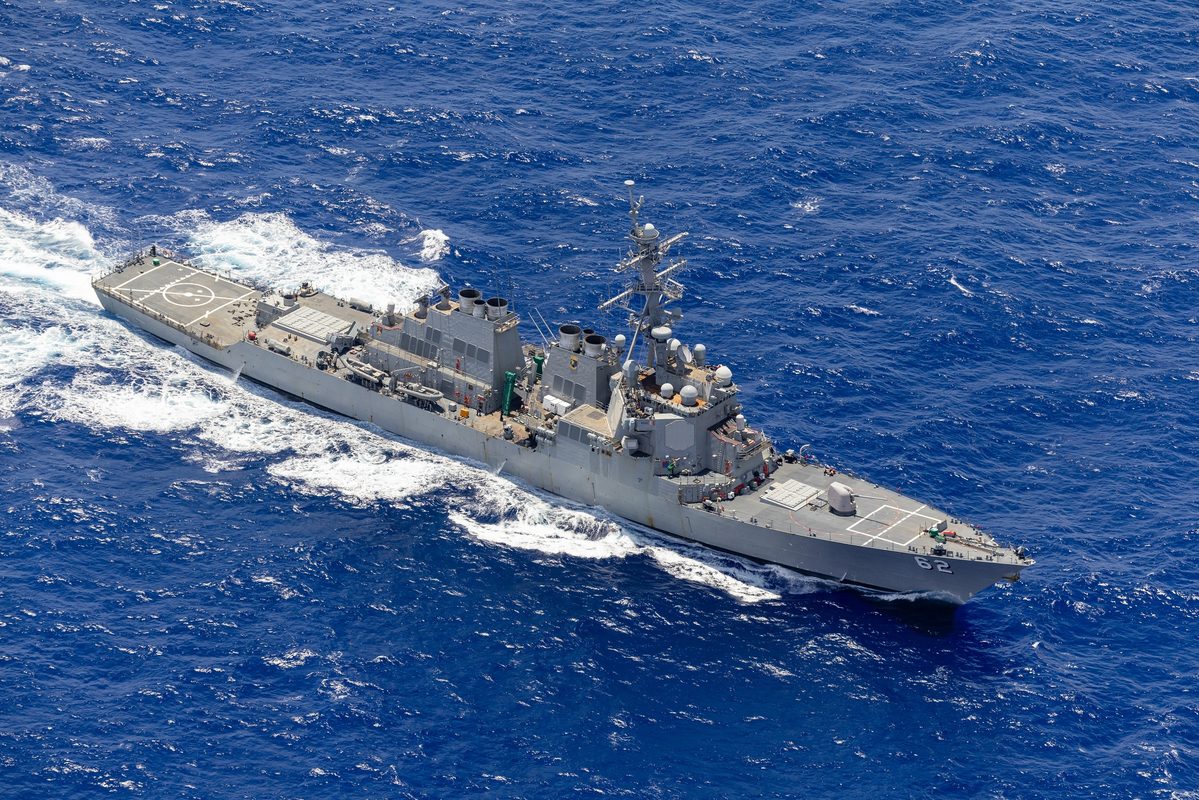
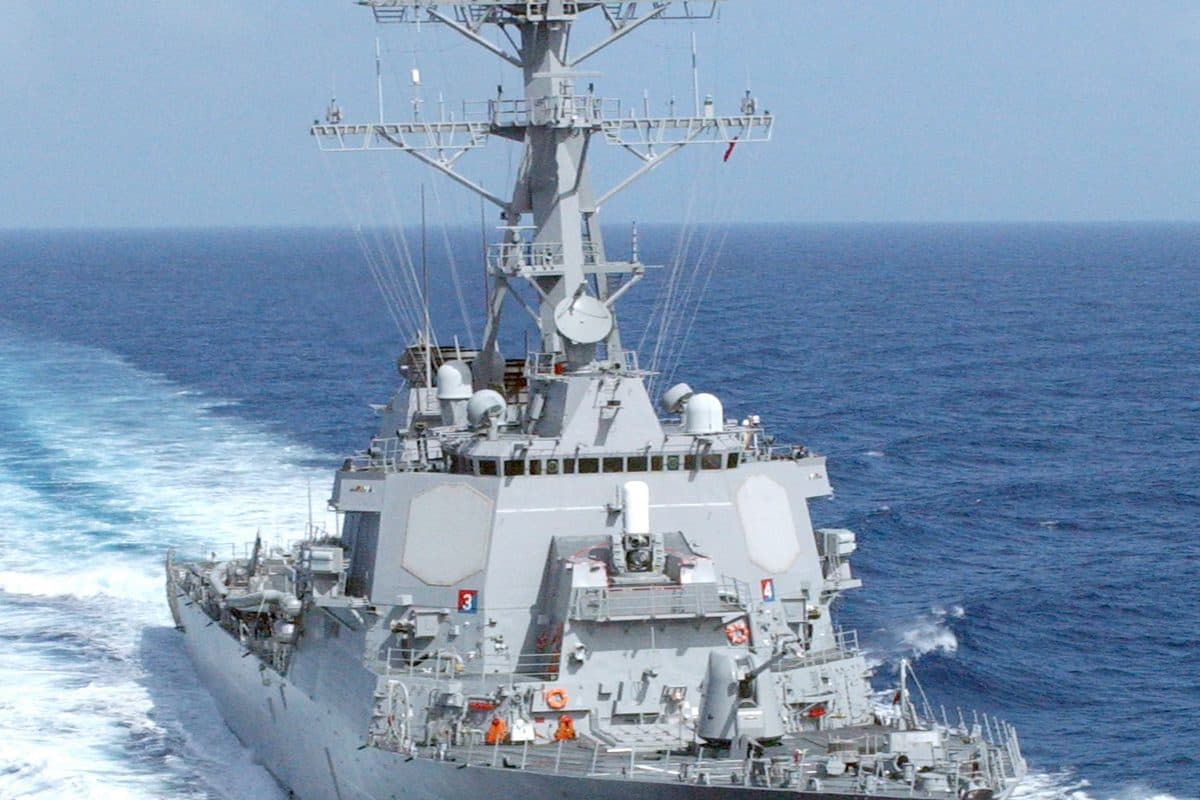
Arleigh Burke-class guided missile destroyer at sea showing its Aegis radar arrays and vertical launch system
James Holloway
James Holloway

Military Logistics & Sustainment Analyst

James Holloway writes about military readiness, logistics, and the practical limits of modern forces. His work focuses on how training, sustainment, and organizational decisions shape what militaries can actually do -- not just what they are designed to do on paper.

On July 4, 1991, the USS Arleigh Burke (DDG-51) was commissioned into the United States Navy as the lead ship of what would become the most produced class of surface warship in American naval history. More than three decades later, the Arleigh Burke-class remains in continuous production. Nearly 90 ships have been built or are building, with no end in sight. The Navy keeps ordering them because they keep proving indispensable: versatile, upgradable, and armed with the Aegis Combat System that makes them the most capable air defense and ballistic missile defense platforms afloat. Every American carrier strike group depends on Arleigh Burke destroyers as its primary shield, and no replacement has yet been approved for production.

Why the Navy Built the Burke

By the mid-1980s, the U.S. Navy needed a new surface combatant to replace its aging Farragut, Charles F. Adams, and Coontz-class destroyers. The new ship needed to carry the Aegis Combat System, the revolutionary integrated air defense system built around the AN/SPY-1 phased array radar that had first gone to sea aboard the Ticonderoga-class cruisers. The Ticonderoga-class ships were capable, but they were built on Spruance-class destroyer hulls that were reaching the limits of their growth potential. The Navy wanted a purpose-built Aegis platform that could be produced in large numbers.

The ship was named for Admiral Arleigh Burke, one of the most distinguished destroyermen in Navy history. Burke commanded destroyer squadrons in the Solomon Islands during World War II, earning the nickname "31-Knot Burke" for his aggressive, high-speed attacks against Japanese forces. He later served as Chief of Naval Operations for an unprecedented three consecutive terms. Naming the class after Burke was a statement of intent: these ships would be fighters.

The Aegis Combat System

The Arleigh Burke's defining feature is Aegis, an integrated weapons system that ties together radar, computers, and missile launchers into a unified combat network. At its heart is the AN/SPY-1D phased array radar, whose four fixed antenna faces are mounted on the ship's superstructure, providing 360-degree coverage without the need for a rotating antenna. The SPY-1D can simultaneously track hundreds of air targets at ranges exceeding 200 nautical miles.

Unlike conventional rotating radars that sweep the sky in sequence, the SPY-1D's phased array can steer its beam electronically, focusing energy on specific threats, tracking multiple targets at different bearings and altitudes simultaneously, and guiding missiles to intercept. This allows a single Arleigh Burke destroyer to defend against saturation attacks that would overwhelm a ship equipped with conventional radar.

The newest Flight III ships carry the AN/SPY-6(V)1 Air and Missile Defense Radar (AMDR), a next-generation active electronically scanned array that provides significantly greater sensitivity and discrimination than the SPY-1D. The SPY-6 can detect smaller targets at greater ranges, a critical capability as adversary missiles become faster and stealthier.

Arleigh Burke-class destroyer underway at sea with Aegis radar panels visible on superstructure and Mk 41 VLS forward
An Arleigh Burke-class destroyer at sea. The flat SPY-1D radar panels on the superstructure provide 360-degree coverage, enabling the ship to track and engage hundreds of air targets simultaneously. (U.S. Navy)

Armament: 96 Cells of Versatility

The Arleigh Burke's striking power comes from its 96 Mark 41 Vertical Launch System (VLS) cells, with 32 forward and 64 aft. Each cell can carry a single missile, and the VLS can fire any combination of missile types, giving the ship extraordinary flexibility. A typical combat loadout might include:

SM-2 Standard Missile: The primary area air defense weapon, capable of engaging aircraft and cruise missiles at ranges exceeding 90 nautical miles.

SM-3 Standard Missile: A ballistic missile defense interceptor that can engage medium- and intermediate-range ballistic missiles in the exoatmosphere, literally shooting down targets in space. The SM-3 gives the Burke a role in national missile defense that was never envisioned when the class was designed.

SM-6 Standard Missile: The most versatile missile in the inventory, capable of air defense, ballistic missile defense (terminal phase), and anti-surface warfare. The SM-6 can engage targets beyond the ship's own radar horizon using data from other platforms, a networked capability called Cooperative Engagement.

Tomahawk Cruise Missile: The long-range land attack weapon, with a range exceeding 1,000 nautical miles. Arleigh Burke destroyers have launched Tomahawks in multiple conflicts, including operations in Iraq, Libya, and Syria.

ESSM (Evolved Sea Sparrow Missile): A short-range defensive missile, quad-packed four to a VLS cell, providing close-in defense against anti-ship missiles.

In addition to VLS-launched weapons, the Burke carries a 5-inch/62-caliber Mk 45 gun for naval gunfire support and surface action, Phalanx CIWS (Close-In Weapon System) for last-ditch missile defense, Mark 32 torpedo tubes with lightweight torpedoes for anti-submarine warfare, and, on later variants, two MH-60R Seahawk helicopters for ASW, surface search, and special operations support.

Flight Evolution

The Arleigh Burke class has evolved through four major "Flights," each building on the preceding design:

Flight I (DDG-51 to DDG-71): The original 21 ships, commissioned between 1991 and 1999. These ships established the baseline design with full Aegis capability but lacked helicopter hangars. They carried a helicopter deck but could not maintain or house a helicopter aboard permanently.

Flight II (DDG-72 to DDG-78): Seven ships with upgraded electronics and the SPY-1D(V) radar with improved littoral performance. Still no helicopter hangar.

Flight IIA (DDG-79 to DDG-116): The largest production block at 38 ships, which added dual helicopter hangars capable of housing two MH-60R Seahawks. This was a major capability upgrade, giving each ship organic anti-submarine warfare, surface search, and special operations helicopter support. The Flight IIA ships also added the cooperative engagement capability for networked warfare.

Flight III (DDG-118 onward): The newest and most capable variant, centered on the AN/SPY-6(V)1 AMDR radar. The SPY-6 provides dramatically improved sensitivity and is specifically designed for the ballistic missile defense mission, with the ability to detect and track advanced ballistic missile threats that could challenge the older SPY-1D. The Flight III ships also feature upgraded power generation and cooling systems to support the radar's increased power demands.

Ballistic Missile Defense

When the first Arleigh Burke was designed in the 1980s, ballistic missile defense was not part of the mission set. The ship was built to protect carrier battle groups from Soviet aircraft and cruise missiles. But the flexibility of the Aegis system and the VLS launch architecture allowed the Navy to add BMD capability without redesigning the ship.

Today, Arleigh Burke destroyers armed with SM-3 missiles form a critical component of the U.S. ballistic missile defense network. They deploy to the Eastern Mediterranean, the Western Pacific, and other strategic locations to provide a mobile shield against ballistic missile threats. The Aegis Ashore installations in Romania and Poland, which are land-based versions of the shipboard system, use the same SPY-1 radar and SM-3 missiles, underscoring how central the Burke's combat system has become to American missile defense strategy.

The SM-3 Block IIA, developed jointly with Japan, can intercept medium- and intermediate-range ballistic missiles at altitudes exceeding 1,000 kilometers, well above the atmosphere. This gives the Arleigh Burke a strategic defense capability that extends far beyond traditional surface warfare.

Production: A Ship That Won't Stop Being Built

The Arleigh Burke class is built at two shipyards: Bath Iron Works in Maine and Huntington Ingalls Industries' Ingalls Shipbuilding in Pascagoula, Mississippi. Between them, these yards have delivered nearly 90 ships, making the Burke the most-produced major surface combatant in U.S. Navy history since World War II.

The Navy has repeatedly attempted to develop a successor. The Zumwalt-class (DDG-1000) was supposed to replace the Burke, a radical stealth destroyer with an integrated power system, a tumblehome hull form, and advanced gun systems. But the Zumwalt program ran into severe cost overruns and was truncated to just three ships. The planned DDG(X) next-generation destroyer remains in development, with first delivery not expected until the 2030s.

In the meantime, the Navy keeps ordering Burkes because they work, they are proven, and the industrial base knows how to build them. The Flight III upgrade ensures the class remains relevant against evolving threats, particularly ballistic missiles and advanced anti-ship weapons. The Arleigh Burke has outlasted every proposed replacement and shows no sign of leaving production.

Global Influence

The Arleigh Burke design has influenced surface combatant development worldwide. Japan's Maya-class and Atago-class destroyers are based on the Burke design and carry the Aegis Combat System. South Korea's Sejong the Great-class (KDX-III) destroyers also use Aegis. Spain's Álvaro de Bazán-class frigates and Australia's Hobart-class destroyers carry variants of the Aegis system as well. The Burke's combination of Aegis radar, VLS missiles, and gas turbine propulsion has become the global standard for advanced surface combatants.

Why It Matters

The Arleigh Burke class represents something increasingly rare in modern defense acquisition: a program that delivered on its promises, remained affordable enough to produce in quantity, and proved adaptable enough to absorb missions its designers never anticipated. From air defense to ballistic missile defense, from land attack with Tomahawk to anti-submarine warfare with helicopters and torpedoes, the Burke does everything the Navy asks of it, and keeps getting better with each Flight upgrade.

Nearly every significant U.S. naval operation since 1991 has involved Arleigh Burke destroyers. They launched the Tomahawks that opened conflicts, defended carriers against air and missile threats, conducted ballistic missile defense patrols, and operated in every ocean on earth. With Flight III production continuing and no replacement imminent, the Arleigh Burke will likely remain the backbone of the U.S. surface fleet well into the 2060s, a run that would span more than 70 years from the first ship's commissioning. Few warship classes in history have proven so durable, so adaptable, or so essential.

Share this article

Share:

Recommended

Ace of The Skies: Can You Identify These Military Aircraft Throughout The Years?
Test Yourself

Ace of The Skies: Can You Identify These Military Aircraft Throughout The Years?

Can you identify these aircraft?

Take the Quiz

On This Day in Military History

March 18

Allied Naval Assault on the Dardanelles (1915)

A combined British and French fleet of 16 battleships launched a massive naval assault to force the Dardanelles strait and threaten Constantinople. Concealed Ottoman minefields proved devastating, the French battleship Bouvet capsized and sank in two minutes, killing 639 of her 710 crew. HMS Irresistible and HMS Ocean also sank, and HMS Inflexible was badly damaged. Three capital ships lost in a single afternoon. The failure led directly to the catastrophic Gallipoli Campaign that cost over 250,000 Allied casualties.

1766, British Parliament Repeals the Stamp Act

1871, The Paris Commune Uprising Begins

1962, Evian Accords End the Algerian War

See all 10 events on March 18

Get Military News & History in Your Inbox

Join thousands of readers receiving our weekly digest of military technology, history, and analysis.

Test Your Knowledge