Skip to content
April 28:Execution of Benito Mussolini81yr ago

The Patriot Missile System: How America's Air Defense Works

Michael Trent · · 13 min read
Save
Share:
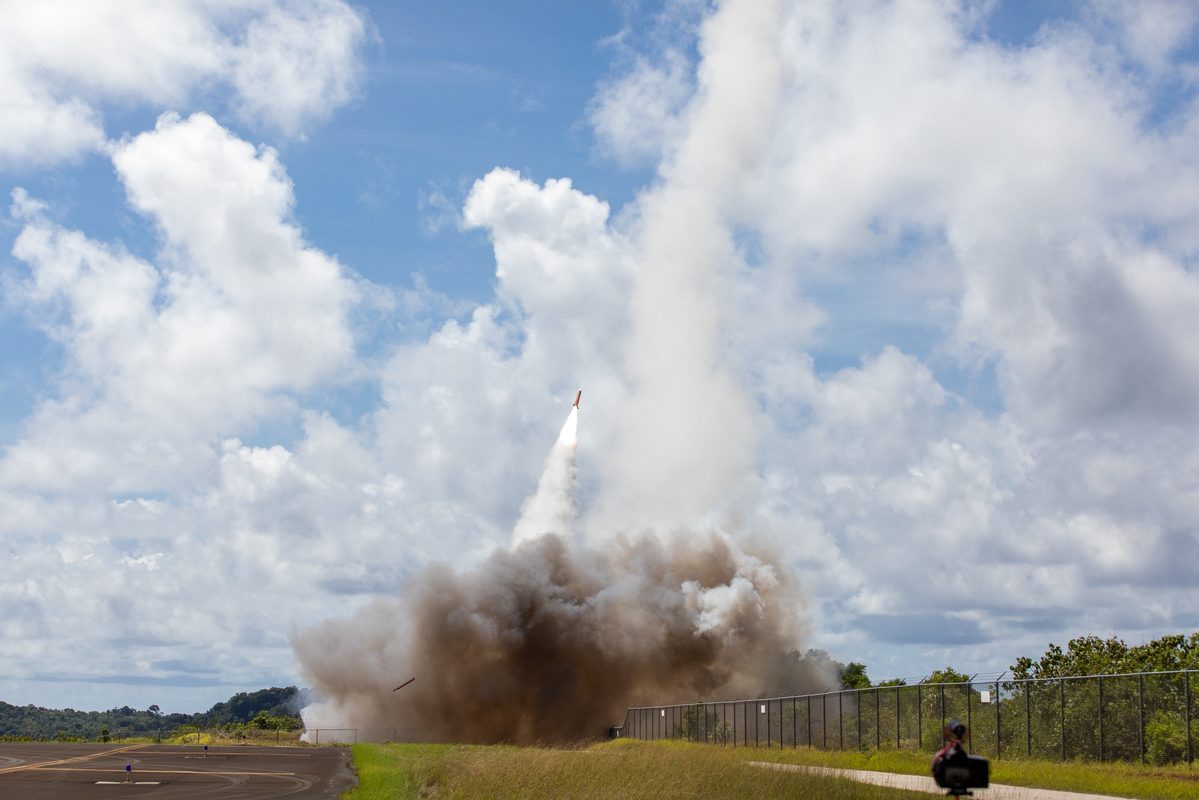
MIM-104 Patriot missile launcher in firing position with radar unit visible in background at a deployed air defense site
Michael Trent
Michael Trent

Defense Systems Analyst

Michael Trent covers military aircraft, weapons systems, and defense technology with an emphasis on cost, maintenance, and real-world performance. He focuses less on specifications and more on how systems hold up once they are deployed, maintained, and operated at scale.

The MIM-104 Patriot is the Western world's most deployed air and missile defense system. Originally developed by Raytheon in the 1970s to shoot down Soviet aircraft, the Patriot has been continuously upgraded through four decades of service, evolving from a basic anti-aircraft system into a multi-layered defense capable of intercepting cruise missiles, tactical ballistic missiles, and even manned aircraft at ranges exceeding 100 miles. Its combat record spans the Gulf War, Iraq, Saudi Arabia, and Ukraine, a track record that has made it the most sought-after air defense system on the global arms market.

What a Patriot Battery Looks Like

A Patriot battery is not a single weapon. It is a system of interconnected components that work together to detect, track, and destroy airborne threats. A standard battery consists of:

The Radar: The AN/MPQ-53 (PAC-2 configuration) or AN/MPQ-65 (PAC-3 configuration) phased array radar is the system's eyes. It is a single-face electronically scanned array that can search for targets, track them, and guide missiles to intercept, all simultaneously. The radar can track over 100 targets and engage multiple threats at once. Unlike rotating radars that sweep the sky, the phased array steers its beam electronically, switching between search, track, and missile guidance functions thousands of times per second.

The Engagement Control Station (ECS): A mobile command post where the battery commander and operators monitor the air picture, identify threats, and authorize engagements. The ECS receives data from the radar, classifies targets, and manages the engagement sequence. While the system can operate in automatic mode, detecting and engaging threats without human input, the standard operating procedure keeps a human in the loop for engagement authorization.

The Launchers: Each battery deploys up to eight M903 launcher stations, each carrying four missile canisters. The launchers are simple, reliable, and can be positioned independently of the radar and ECS, spread out to reduce vulnerability to attack or concentrated for maximum firepower.

The Power Plant: Trailer-mounted generators that provide electrical power to the entire battery. The Patriot system is power-hungry, the phased array radar alone requires substantial electrical power to operate.

The entire battery is mobile. Every component is truck-mounted and can be set up or torn down in approximately 30 minutes, allowing the battery to displace rapidly if its position is detected. This mobility has proven critical in Ukraine, where Patriot batteries have had to relocate frequently to avoid Russian targeting.

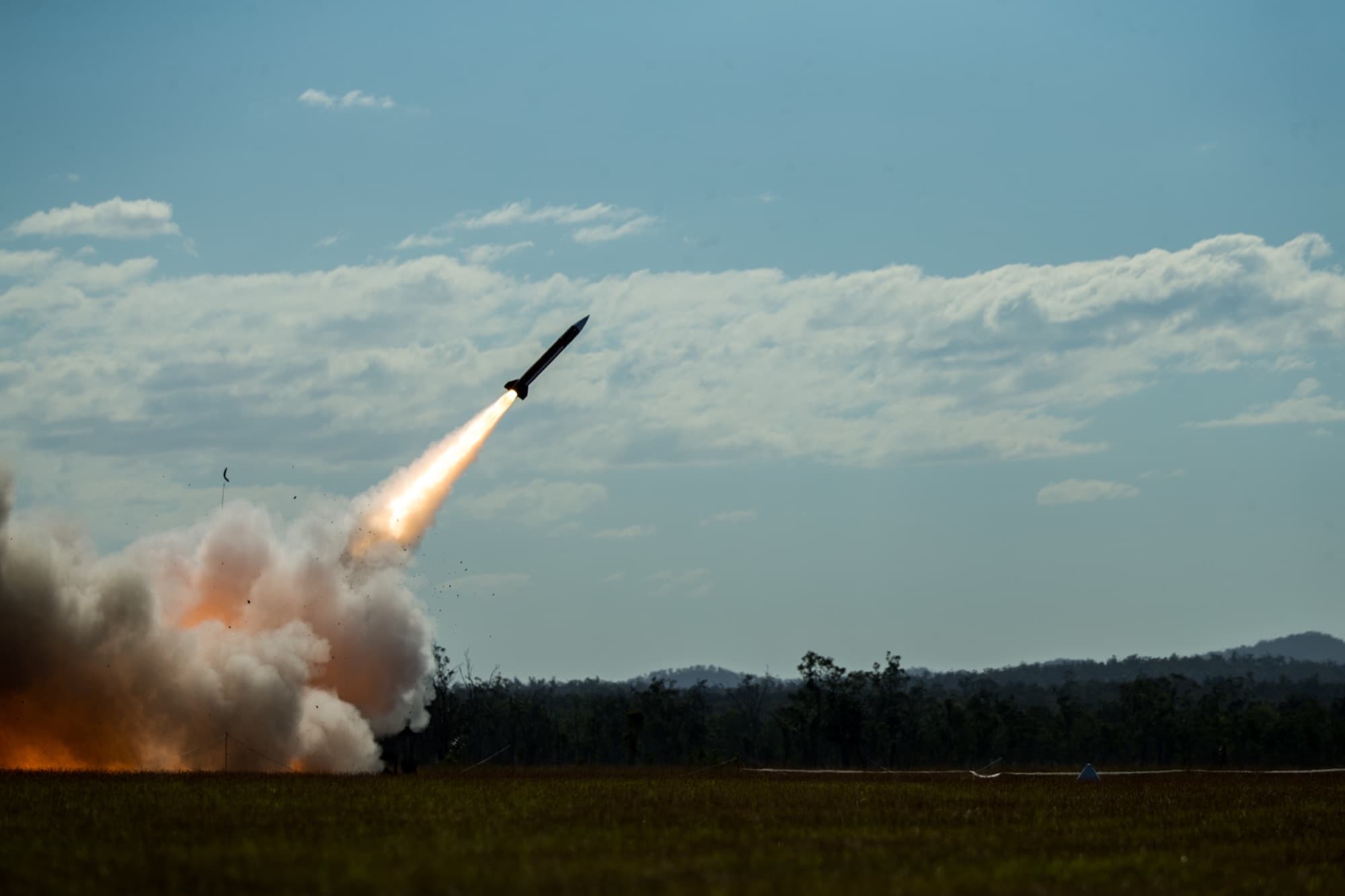
Patriot PAC-3 missile launching from its canister during an intercept test showing the missile's exhaust plume
A PAC-3 missile launches from its canister during a test. Unlike the earlier PAC-2 which detonated a warhead near its target, the PAC-3 destroys threats through direct kinetic impact, hitting a missile with a missile. (U.S. Army / MDA)

The Missiles: From Blast Fragmentation to Hit-to-Kill

The Patriot system has used four generations of missiles, each representing a fundamentally different approach to destroying targets:

PAC-1: The original Patriot missile, designed primarily for anti-aircraft defense. It used semi-active radar homing, the ground radar illuminated the target, and the missile homed on the reflected energy. Effective against aircraft but not designed for ballistic missile defense.

PAC-2 (GEM/GEM+/GEM-T): An upgraded missile with improved guidance and a larger blast-fragmentation warhead optimized for destroying ballistic missile warheads. The PAC-2 uses track-via-missile (TVM) guidance, the missile sends radar data back to the ground station, which computes guidance corrections and transmits them to the missile. This is the missile that fought in the Gulf War and remains in service alongside newer variants.

PAC-3: A completely different missile built by Lockheed Martin rather than Raytheon. The PAC-3 is a hit-to-kill kinetic interceptor, it does not carry an explosive warhead. Instead, it maneuvers to physically collide with the incoming threat at closing speeds exceeding Mach 5. The kinetic energy of the impact is sufficient to destroy the target. The PAC-3 is smaller than the PAC-2, allowing 16 PAC-3 missiles to fit in the same launcher space as four PAC-2 missiles, quadrupling the number of interceptors available.

PAC-3 MSE (Missile Segment Enhancement): The latest and most capable variant. The MSE adds a larger rocket motor and improved aerodynamics, extending the engagement envelope significantly, both in range and altitude. It can intercept threats at higher altitudes, greater distances, and with more maneuvering energy than the original PAC-3. The MSE is the primary interceptor for current Patriot deployments.

The Gulf War: A Complicated Debut

The Patriot's first combat came during the 1991 Gulf War, when Iraqi Scud missiles targeted Saudi Arabia and Israel. The U.S. Army deployed Patriot batteries to defend against the Scud attacks, and initial reports were euphoric, the Army claimed a 96% intercept rate in Saudi Arabia and a similar rate over Israel.

Those claims did not survive scrutiny. Post-war analysis by the U.S. Government Accountability Office (GAO) and independent researchers revealed that the actual intercept rate was likely far lower, perhaps as low as 9% in Saudi Arabia and even less over Israel. Many "successful" intercepts had damaged but not destroyed the incoming Scud warheads, which continued to impact populated areas. The Scud missiles were notoriously inaccurate and often broke apart during reentry, creating multiple radar targets that confused the Patriot's tracking system.

The Gulf War experience was humbling but transformative. The Army and Raytheon used the lessons learned to drive the development of the PAC-3 hit-to-kill interceptor, recognizing that blast-fragmentation warheads detonating near a ballistic missile were insufficient. The missile needed to hit its target directly. That requirement produced the PAC-3, which represented a generational leap in missile defense capability.

Combat Since the Gulf War

During the 2003 invasion of Iraq, upgraded Patriot batteries intercepted Iraqi tactical ballistic missiles with significantly improved performance. The system also achieved several firsts, including the first combat intercept of a tactical ballistic missile by a PAC-3 hit-to-kill interceptor. However, the 2003 campaign also produced two tragic friendly fire incidents: a Patriot battery shot down a British RAF Tornado GR4, killing the crew, and another engaged a U.S. Navy F/A-18C Hornet. These incidents led to significant improvements in identification-friend-or-foe procedures and engagement protocols.

Saudi Arabia has used Patriot extensively to defend against Houthi ballistic missile and cruise missile attacks launched from Yemen. The Saudi experience, involving frequent, real-world intercept attempts over several years, has provided valuable performance data, though the effectiveness claims have been debated.

Ukraine has been the system's most demanding proving ground. Patriot batteries provided to Ukraine by the United States, Germany, and the Netherlands have been credited with intercepting Russian cruise missiles, ballistic missiles, and even manned aircraft, including Su-34 strike aircraft and Su-35 fighters at extended ranges. The performance in Ukraine has dramatically boosted global demand for the system, with multiple countries accelerating purchase requests after seeing its effectiveness against Russian weapons.

How an Engagement Works

When a threat enters the Patriot's engagement zone, the sequence unfolds rapidly:

The AN/MPQ-65 radar detects the incoming object during its routine search scan. The system's computers classify the target, aircraft, cruise missile, ballistic missile, based on its speed, trajectory, altitude, and radar signature. This classification determines which type of interceptor is optimal.

The engagement control station presents the track to the operators with a recommended engagement plan. In automatic mode, the system can launch without human input; in standard operations, the operator authorizes the engagement. A missile launches from the nearest available launcher.

For PAC-2 engagements, the radar tracks both the target and the interceptor, computing guidance corrections and transmitting them to the missile in flight. The PAC-2 detonates its blast-fragmentation warhead when it reaches the closest point to the target.

For PAC-3/MSE engagements, the missile initially flies on radar-transmitted guidance updates, then activates its own onboard Ka-band active radar seeker in the terminal phase. The PAC-3 steers itself directly into the target using its own sensor data, a hit-to-kill intercept that destroys the threat through kinetic energy alone.

The entire sequence, detection, classification, launch, and intercept, can occur in under a minute, depending on the threat's range and speed. Against a ballistic missile reentering the atmosphere at Mach 5 or higher, every second counts.

Operators and Demand

More than 18 countries operate or have ordered the Patriot system, including the United States, Germany, Japan, South Korea, the Netherlands, Israel, Saudi Arabia, the United Arab Emirates, Qatar, Kuwait, and others. The system's combat-proven track record, particularly its performance in Ukraine, has driven a surge in demand that exceeds Raytheon's current production capacity.

The cost is substantial. A Patriot battery costs approximately $1 billion. Individual PAC-3 MSE missiles cost roughly $4-5 million each. A full engagement, potentially requiring two missiles fired at a single target for redundancy, can cost $8-10 million. This cost-per-intercept becomes particularly challenging when defending against cheaper threats like Iranian-designed drones or cruise missiles that cost a fraction of the interceptor's price.

The Cost Dilemma

The Patriot's most significant strategic challenge is economic. A $4 million PAC-3 MSE missile is the right weapon to intercept a ballistic missile carrying a conventional or unconventional warhead. It is the wrong weapon to shoot down a $50,000 drone. The conflict in Ukraine and the Houthi attacks in the Red Sea have highlighted this asymmetry: defenders using Patriot-class interceptors against cheap cruise missiles and drones face an exchange ratio that favors the attacker.

This does not make the Patriot obsolete, it means it must be part of a layered defense that uses less expensive systems (short-range missiles, guns, directed energy weapons, electronic warfare) against cheaper threats, reserving the Patriot's sophisticated and expensive interceptors for the high-end threats they were designed to defeat. The Patriot remains the gold standard for defending against ballistic missiles and advanced cruise missiles, threats where failure to intercept carries consequences that no price tag can offset.

Share this article

Share:

Recommended

Ace of The Skies: Can You Identify These Military Aircraft Throughout The Years?
Test Yourself

Ace of The Skies: Can You Identify These Military Aircraft Throughout The Years?

Can you identify these aircraft?

Take the Quiz

On This Day in Military History

March 19

The Bombing of USS Franklin (CV-13) (1945)

Operating 70 miles off the coast of Shikoku, Japan, the Essex-class aircraft carrier USS Franklin was struck by two 550-pound bombs from a lone Japanese dive bomber. The bombs detonated among 31 fully armed and fueled aircraft, igniting aviation fuel and ordnance in a catastrophic chain of secondary explosions. Between 724 and 807 crew members were killed, the single deadliest attack on a U.S. Navy ship that survived the war. The crew's extraordinary damage control effort saved the ship, which steamed 12,000 miles home under her own power.

1865, Battle of Bentonville: Last Major Battle of the Civil War

1945, Hitler Issues the Nero Decree

1944, Operation Margarethe: Germany Occupies Hungary

See all 10 events on March 19

Get Military News & History in Your Inbox

Join thousands of readers receiving our weekly digest of military technology, history, and analysis.

Test Your Knowledge