Skip to content
April 25:The Gallipoli Landings, ANZAC Day111yr ago

The Bayraktar Kizilelma: Turkey's Jet-Powered Combat Drone

Alex Carter · · 11 min read
Save
Share:
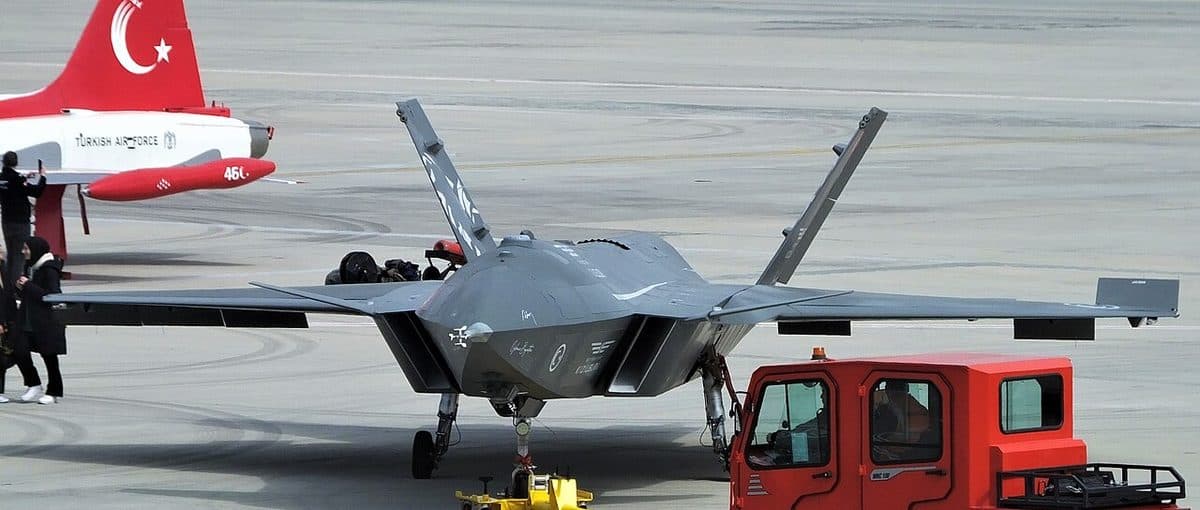
Bayraktar Kizilelma jet-powered unmanned combat aircraft on runway showing swept wing design and twin tail configuration
Alex Carter
Alex Carter

Modern Warfare & Defense Technology Contributor

Alex Carter writes about modern warfare, emerging military technology, and how doctrine adapts to new tools. His work focuses on what changes in practice -- command, control, targeting, and risk -- when systems like drones and autonomous platforms become routine.

The Bayraktar TB2 made Baykar a household name in defense circles. The propeller-driven drone proved devastatingly effective in conflicts across Libya, Syria, Nagorno-Karabakh, and Ukraine, destroying tanks, air defenses, and supply columns at a fraction of the cost of manned airstrikes. Baykar's ambitions did not stop at surveillance and precision strike. The company's next aircraft is a jet-powered unmanned fighter designed to shoot down other aircraft, operate from aircraft carriers, and fly in autonomous formation with other drones. The Bayraktar Kizilelma is Turkey's bid to leapfrog an entire generation of combat aviation.

From TB2 to Jet Fighter

Baykar's progression has been remarkably methodical. The TB2 demonstrated that a relatively inexpensive drone could deliver precision munitions in contested airspace where manned aircraft would face serious risk. The larger Bayraktar Akinci, which entered service in 2021, pushed further by carrying heavier weapons, synthetic aperture radar, and operating at higher altitudes. But both aircraft are propeller-driven and subsonic, limited to strike and ISR roles. Neither can engage enemy aircraft or survive against modern fighter jets.

The Kizilelma, Turkish for "Red Apple," a phrase rooted in Turkic mythology representing an ultimate aspiration, was designed from the outset as something different. This is not a surveillance platform that can carry a few bombs. It is an unmanned combat aircraft built around a jet engine, an AESA radar, and air-to-air missiles. Where the TB2 changed the ground war, the Kizilelma is designed to change the air war.

Baykar chief technology officer Selçuk Bayraktar has driven the program with the same philosophy that made the TB2 successful: move fast, test relentlessly, and iterate based on real flight data rather than endless simulation cycles. The first Kizilelma prototype flew on December 14, 2022, roughly three years after the program was publicly announced. By September 2024, the production-representative third prototype had completed its maiden flight. That pace of development rivals or exceeds anything coming out of established defense primes.

Design and Performance

The Kizilelma is a swept-wing, single-engine jet aircraft measuring 14.7 meters long with a 10-meter wingspan and a maximum takeoff weight of approximately 6,000 kilograms (13,200 pounds). It cruises at Mach 0.6 and can dash to Mach 0.9, not quite supersonic, though the Kizilelma-B variant powered by the AI-322F afterburning turbofan has demonstrated afterburner flight and could breach the sound barrier. The initial prototypes used the Ukrainian-built AI-25TLT turbofan, while the production variant uses the more powerful AI-322F, produced through the Turkish-Ukrainian joint venture Black Sea Shield.

The aircraft carries up to 1,500 kilograms (3,300 pounds) of payload, enough for a meaningful weapons load including precision-guided munitions and air-to-air missiles. Its combat radius is approximately 500 nautical miles (930 kilometers), with an endurance exceeding three hours at operational altitudes. The service ceiling reaches 45,000 feet, putting it in the same altitude band as manned fighter aircraft.

The airframe incorporates low-observable design features: blended wing-body shaping, internal weapons carriage options, and careful attention to reducing radar cross-section. While it is not a full stealth aircraft in the F-35 sense, its signature management is considerably more advanced than any previous Turkish drone.

Bayraktar Kizilelma in flight during testing over Turkey showing its jet-powered swept wing configuration
The Bayraktar Kizilelma during flight testing in Turkey. The swept-wing jet design represents a quantum leap from Baykar's propeller-driven TB2 and Akinci platforms. (Baykar)

AESA Radar and Air-to-Air Combat

The Kizilelma's most significant capability, and the feature that separates it from nearly every other drone in its class, is its integrated MURAD active electronically scanned array (AESA) radar. Developed domestically by Turkish defense firm Meteksan, the MURAD gives the Kizilelma the ability to independently detect, track, and engage airborne targets. This is not a drone that needs a ground station or manned aircraft to find its targets. It can hunt on its own.

On November 30, 2025, Baykar demonstrated this capability in dramatic fashion. A Kizilelma launched a Gökdoğan beyond-visual-range air-to-air missile using its MURAD radar for autonomous target acquisition and guidance. The missile successfully hit its target, marking the first time the aircraft had conducted a live air-to-air engagement. In separate testing, the Kizilelma performed a simulated kill against an F-16 target, demonstrating that an unmanned aircraft could detect, track, and engage a manned fighter jet.

This is a capability threshold that very few unmanned platforms have crossed. Most combat drones, including the American MQ-9 Reaper and the Turkish TB2, operate exclusively in the air-to-ground domain. The Kizilelma's combination of AESA radar and active-radar air-to-air missiles makes it one of the first drones in the world capable of genuine air superiority missions.

Autonomous Formation Flight

On December 17, 2025, Baykar achieved another milestone: two Kizilelma aircraft performed the world's first autonomous close-formation flight by unmanned fighter jets. The two aircraft maintained precise station-keeping using AI-driven flight control, and no human pilot was directing the formation in real time. The drones communicated with each other and adjusted their positions autonomously.

This capability is foundational for the concept of drone swarms and autonomous wingman operations. If multiple Kizilelmas can fly in coordinated formation without human intervention, they can execute complex tactical maneuvers: bracket an enemy fighter from multiple angles, overwhelm air defenses through simultaneous attacks from different directions, or establish persistent combat air patrols across a wide area with minimal operator workload.

Baykar has been explicit about its vision: the Kizilelma is not designed to operate alone. It is designed to fight in packs, with multiple aircraft coordinating their sensors and weapons through AI-driven networking. One Kizilelma with a radar might detect a target and pass the track to another Kizilelma carrying weapons, which engages from a different angle. This kind of distributed combat operation would be extraordinarily difficult for an adversary to counter.

The TCG Anadolu Connection

The Kizilelma was designed from the beginning to operate from Turkey's light aircraft carrier TCG Anadolu. The ship, based on the Spanish Juan Carlos I-class design, was originally intended to carry F-35B Lightning II short-takeoff/vertical-landing fighters. When Turkey was removed from the F-35 program in 2019 over its purchase of Russian S-400 air defense systems, the Anadolu lost its primary air wing.

Rather than leaving the ship without fixed-wing combat aircraft, Turkey adapted the vessel for drone operations. The Kizilelma's design accommodates the Anadolu's flight deck dimensions and arresting gear. Baykar has publicly stated that the drone will operate from the carrier, giving Turkey a carrier-based combat aviation capability that does not depend on any foreign-supplied aircraft.

This is a strategically significant development. Turkey becomes one of a small number of nations with carrier-based combat aviation, and the first to achieve it primarily through unmanned aircraft. The Anadolu carrying a dozen or more Kizilelmas would represent a formidable power projection capability in the Eastern Mediterranean, Black Sea, or any other theater where Turkey chooses to deploy.

How It Compares

The Kizilelma occupies a unique position in the global combat drone landscape. It is more capable than attritable designs like the XQ-58 Valkyrie, which is built to be inexpensive enough to lose in combat. The Kizilelma is not expendable. It carries sophisticated radar and sensors that represent significant per-unit investment. But it is less expensive and less complex than high-end autonomous wingman programs like the MQ-28 Ghost Bat or the S-70 Okhotnik.

What separates the Kizilelma from most of its competitors is the combination of AESA radar and proven air-to-air capability. The MQ-28 Ghost Bat has not publicly demonstrated air-to-air weapons integration. The XQ-58 Valkyrie is primarily an air-to-ground platform. The S-70 Okhotnik is a large strike drone, not an air combat platform. The Kizilelma has already shot down a target with an air-to-air missile using its own radar, a milestone that puts it ahead of programs backed by far larger defense budgets.

The aircraft also benefits from Baykar's track record of actually delivering operational systems. The TB2 was not just a prototype that flew. It fought in multiple wars and proved its value. Baykar has demonstrated repeatedly that it can move from concept to operational capability faster than traditional defense contractors. The Kizilelma appears to be following the same trajectory.

Export Potential and Production

The first serial production Kizilelma completed its maiden flight in 2024, and Baykar has announced plans to begin deliveries to the Turkish Armed Forces in early 2026. Given the TB2's export success (the drone has been sold to more than 30 countries), the Kizilelma will almost certainly attract significant international interest.

For nations that cannot afford or access manned fifth-generation fighters, the Kizilelma offers something extraordinary: a jet-powered combat aircraft with AESA radar and air-to-air capability at a fraction of the cost of an F-35 or Eurofighter Typhoon. Countries that currently rely on aging third- and fourth-generation fighters could supplement their air forces with Kizilelmas, gaining air-to-air capability without the enormous expense of manned fighter procurement.

The geopolitical implications are significant. Turkey's removal from the F-35 program was meant to limit its access to advanced combat aviation. Instead, it accelerated the development of indigenous alternatives. The Kizilelma, along with Turkey's KAAN fifth-generation manned fighter, represents Turkey's answer to that exclusion. Rather than depending on American or European aircraft, Turkey is building its own combat aviation ecosystem. The Kizilelma is the unmanned half of that equation, and based on what it has demonstrated so far, it may be the more immediately impactful half.

Share this article

Share:

Recommended

Ace of The Skies: Can You Identify These Military Aircraft Throughout The Years?
Test Yourself

Ace of The Skies: Can You Identify These Military Aircraft Throughout The Years?

Can you identify these aircraft?

Take the Quiz

On This Day in Military History

March 15

Germany Occupies Czechoslovakia: The End of Appeasement (1939)

German troops marched into Prague and occupied the remainder of Czechoslovakia, violating the Munich Agreement signed just six months earlier. Hitler declared a "Protectorate of Bohemia and Moravia." This was the moment that finally convinced Britain and France that appeasement had failed, two weeks later, they guaranteed Poland's independence, setting the stage for World War II.

1781, Battle of Guilford Courthouse: A Pyrrhic British Victory

1917, Tsar Nicholas II Abdicates: The Russian Revolution Begins

1943, Germans Recapture Kharkov After Days of Savage Street Fighting

See all 10 events on March 15

Get Military News & History in Your Inbox

Join thousands of readers receiving our weekly digest of military technology, history, and analysis.

Test Your Knowledge