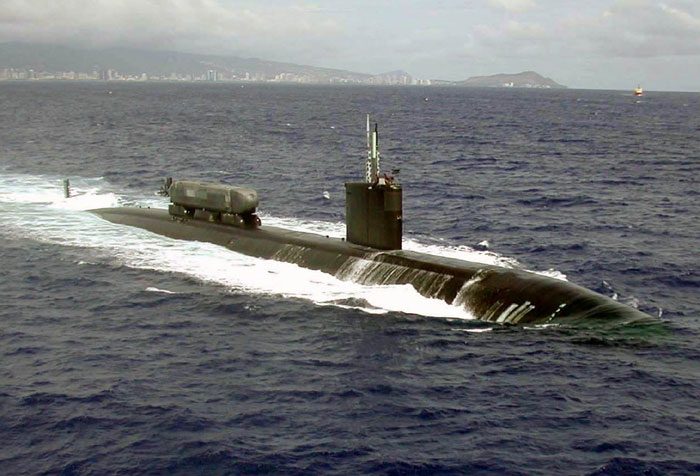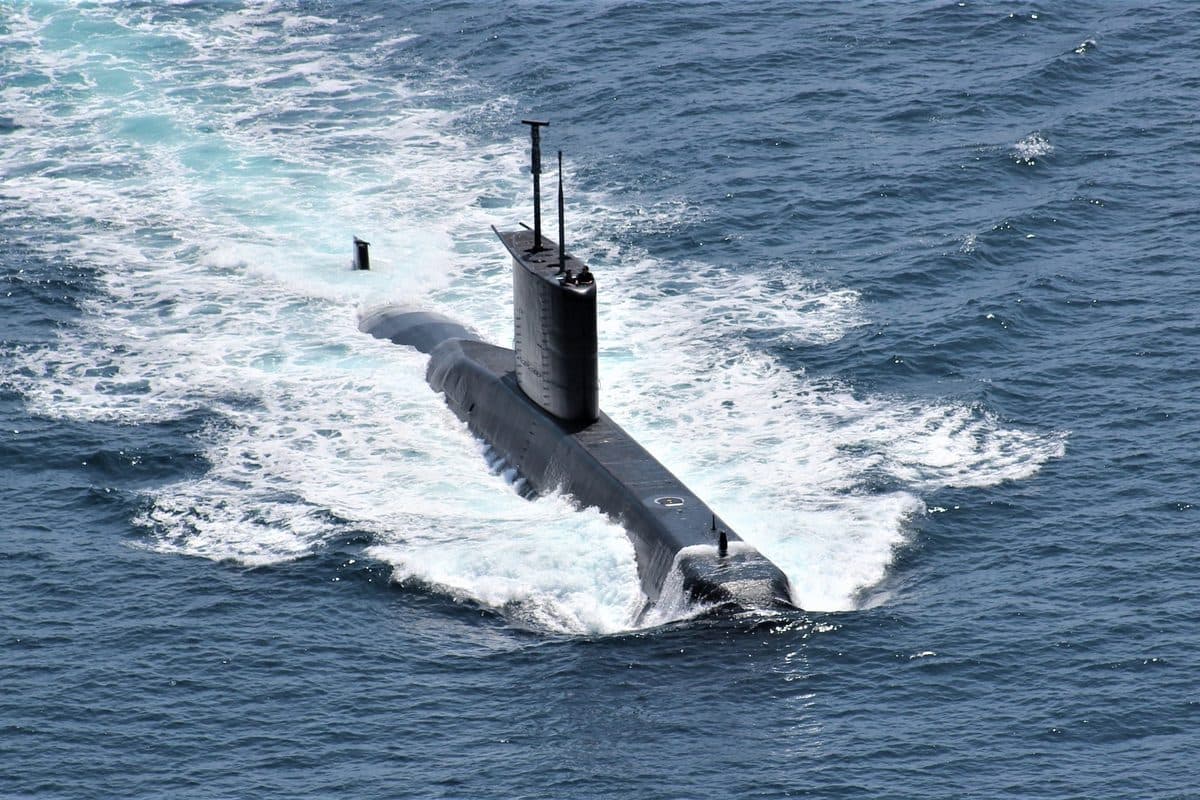

The distances in the Indo-Pacific are staggering. From Australia's northern coast to the contested waterways of the South China Sea is over 3,000 nautical miles. Patrolling those waters with manned submarines requires enormous crews, nuclear reactors, and boats that cost billions of dollars each. Australia's answer to this problem is the Ghost Shark, an extra-large autonomous underwater vehicle (XL-AUV) that can operate independently across oceanic distances, conduct surveillance and anti-submarine warfare, and return to base without a single human ever entering the water. It is the most ambitious military autonomous underwater program in the Southern Hemisphere, and it represents a fundamentally different approach to undersea warfare, one where the machines go where the submariners don't.
Why Australia Needs Unmanned Submarines
Australia faces a submarine capability gap that is measured in decades. The Royal Australian Navy's six Collins-class submarines, diesel-electric boats commissioned between 1996 and 2003, are aging and reaching the limits of their service life. Under the AUKUS agreement announced in September 2021, Australia will acquire nuclear-powered submarines: initially Virginia-class boats from the United States, followed by the SSN-AUKUS design jointly developed with the UK. But the first SSN-AUKUS boat is not expected to enter Australian service until the early 2040s.
That leaves a gap of roughly 15 to 20 years where Australia's submarine capability will be stretched thin, precisely the period when strategic competition in the Indo-Pacific is intensifying. China's navy is expanding rapidly, building submarines, surface combatants, and anti-access systems at a pace that no Western navy has matched. Australia needs undersea presence it cannot currently provide with manned boats alone.
The Ghost Shark is designed to fill that gap, not by replacing manned submarines, but by extending their reach. An autonomous underwater vehicle that can conduct long-range surveillance, map the ocean floor, detect and track adversary submarines, and potentially deliver offensive payloads gives Australia undersea capability at a fraction of the cost and crew requirement of a nuclear submarine. One Collins-class boat costs over $1 billion to maintain per decade. A fleet of Ghost Sharks could provide persistent undersea presence across multiple operating areas simultaneously.