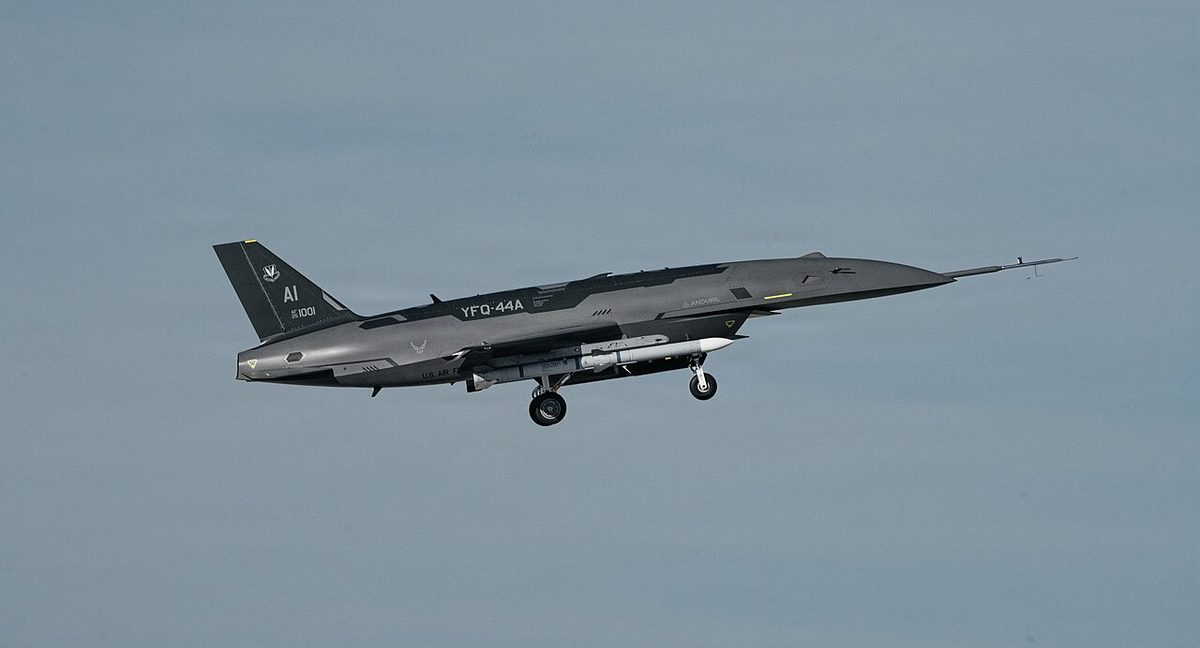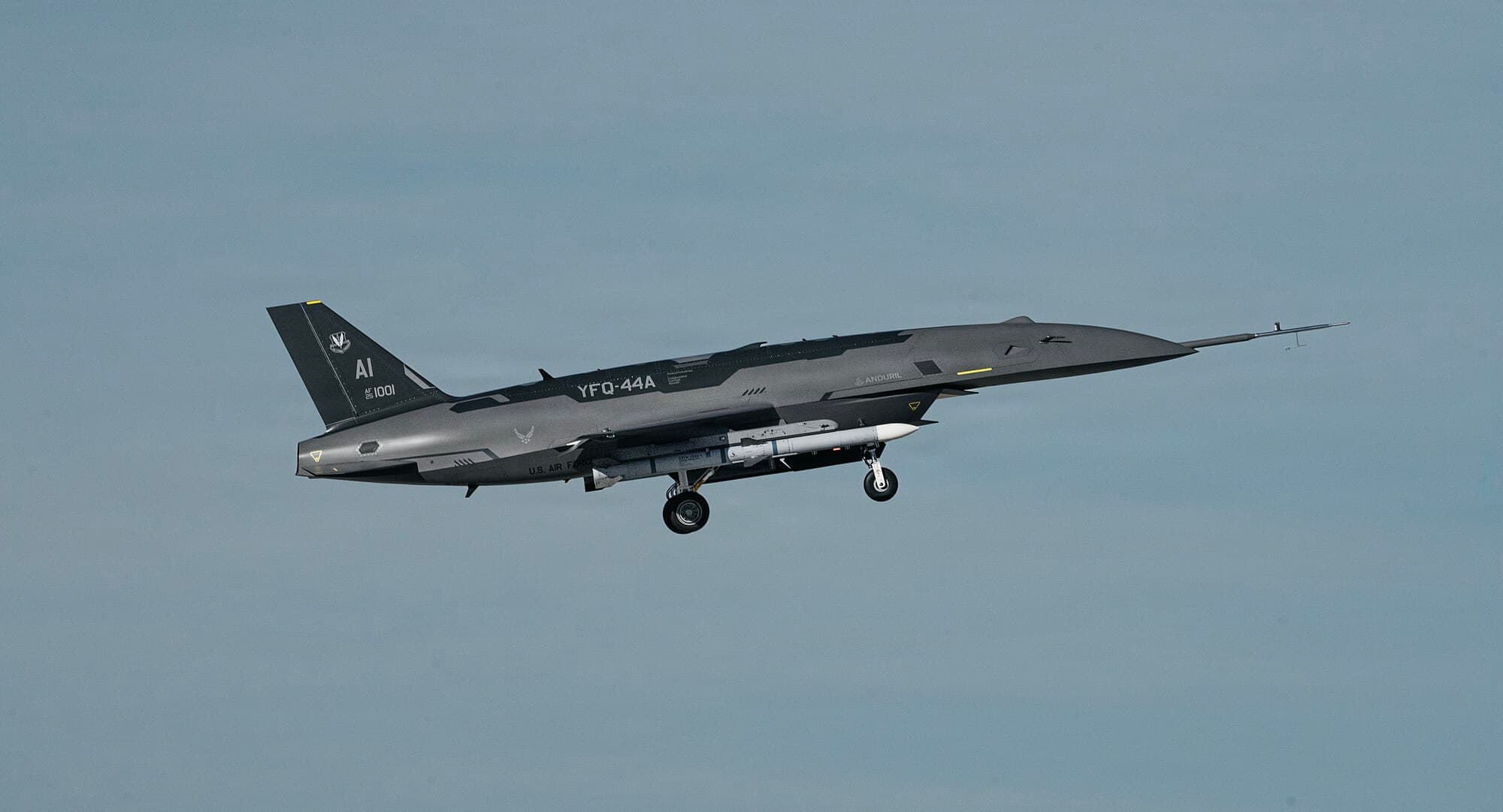

The United States Air Force has a problem it cannot solve with traditional fighter jets alone. Manned fighters are extraordinarily expensive, an F-35A costs over $80 million, and the new F-47 sixth-generation fighter will likely cost significantly more. The Air Force needs hundreds more combat aircraft to match the scale of potential adversaries, but it cannot afford to fill that gap with manned platforms. The answer is the Collaborative Combat Aircraft (CCA) program: autonomous drones that fly alongside manned fighters, absorbing risk and multiplying combat power. Anduril's YFQ-44 Fury is one of the first aircraft selected for the program, and it represents a fundamentally different approach to building combat aircraft, designed from day one around AI autonomy, modular payloads, and factory-scale production.
The CCA Program: Why the Air Force Needs Expendable Fighters
The logic behind the Collaborative Combat Aircraft program is straightforward. In a conflict with a peer adversary, the United States would need to generate enormous amounts of combat airpower, far more than the current fleet of manned fighters can sustain. Every manned fighter that is shot down means the loss of a $80-to-$150 million aircraft and a pilot who took years and millions of dollars to train. The attrition math does not work.
CCAs change that math. If a manned fighter can control two or three autonomous wingmen, the effective size of the fighter force multiplies without proportionally increasing cost. The CCAs fly into the most dangerous airspace first, scouting, jamming, and engaging threats so that the manned fighters behind them can operate more safely. If a CCA is lost, the cost is measured in millions rather than tens of millions, and no pilot comes home in a body bag.
The Air Force selected two companies for the CCA Increment I program: Anduril Industries and General Atomics. Anduril's entry is the Fury, designated YFQ-44A by the Air Force, marking the first time a drone has received the "F" fighter designation. That nomenclature is not symbolic. It reflects the Air Force's intent for the Fury to operate as a fighter aircraft, not merely a reconnaissance or strike drone.