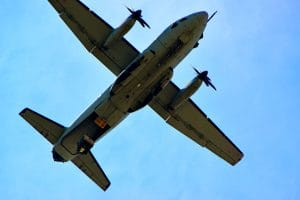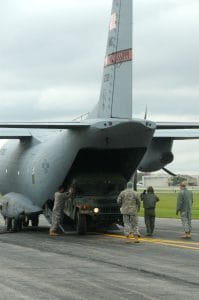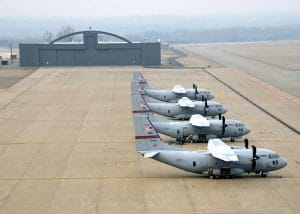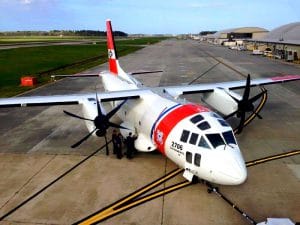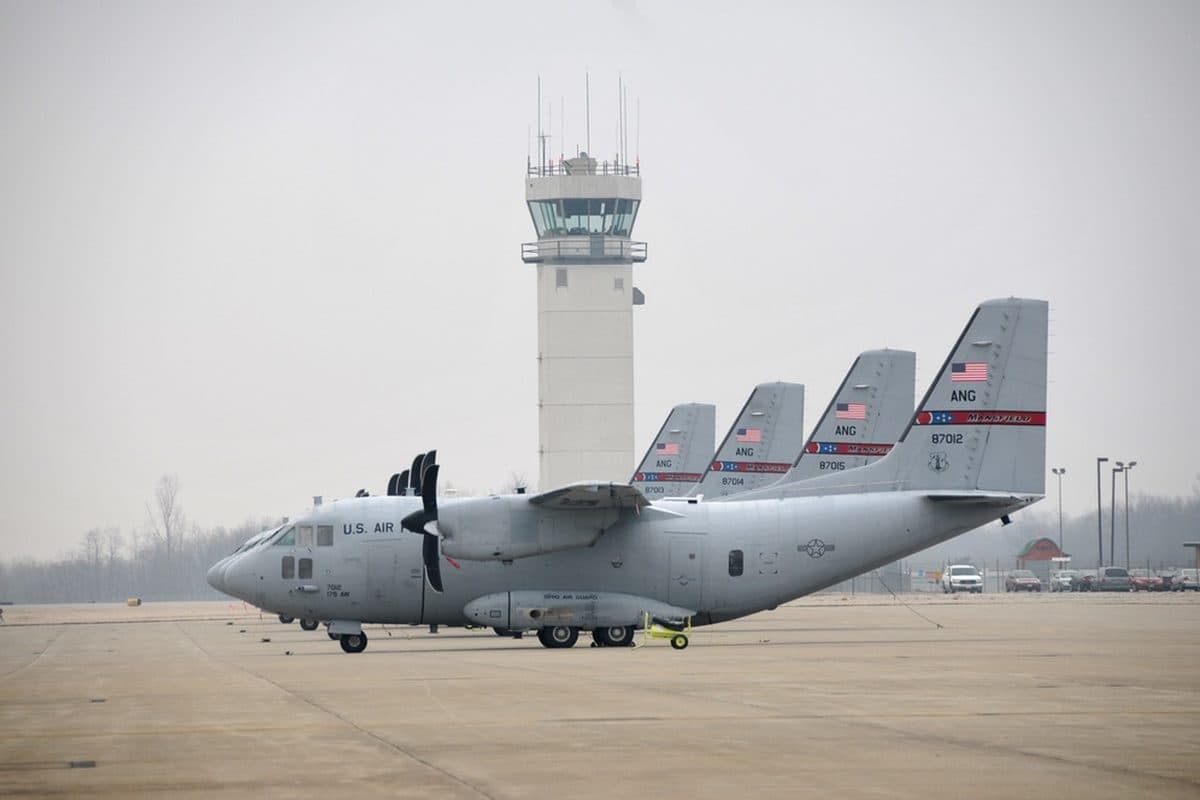


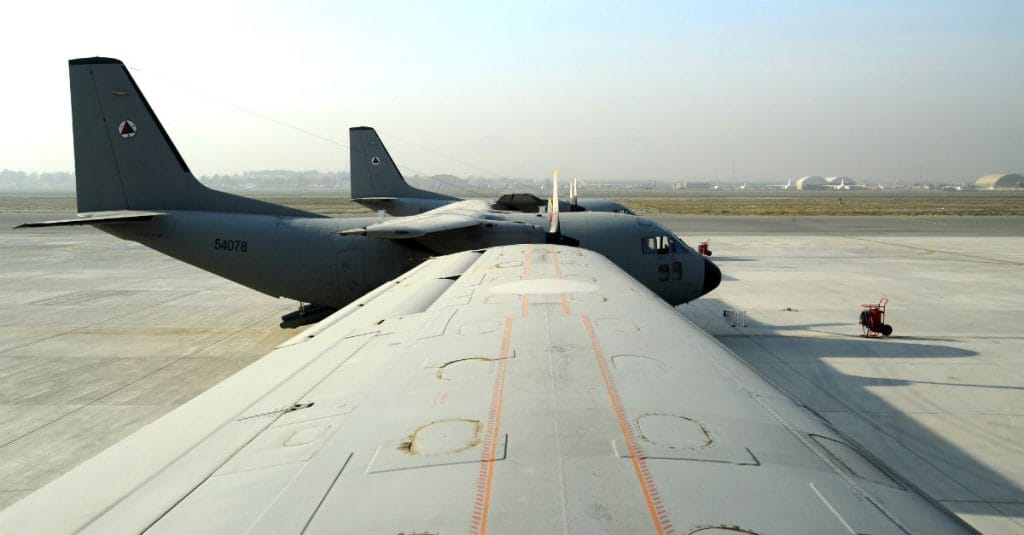
Designed for operation in austere environments, the C-27J Spartan airlifter is the ideal solution for transporting troops and equipment to and from Forward Operating Bases. Developed through a collaboration between Alenia and L-3 Communications, this tactical airlifter was originally commissioned through a U.S. Army and U.S. Air Force Joint Cargo Aircraft competition. Of the 21 Spartans that exist in the military today, 14 are in the process of being delivered to the U.S. Coast Guard to support Search and Rescue missions, while the other seven are used by the U.S. Special Operations Command (SOCOM) for “training purposes.”
Increased Power:

The C-27J Spartan was designed to be a juiced-up successor to the Alenia G.222 (U.S. Military C-27A). To add more power to the airframe, the 3.4K shp T64G engines of the G.222 were replaced with 4.5K shp Rolls Royce AE 2100’s, identical to the one’s in the C-130J Super Hercules, and the number of propeller blades was increased from four to six. These upgrades extended the flight time by 35% and pushed the maximum airspeed up by 15%.
 Upgrades:
Alenia Aeronautica and Lockheed-Martin began plans to design a versatile airlifter together in 1996. It was to be based off of Alenia’s G.222 transporter and given the designation C-27J based off the G.222’s C-27A military designation in the U.S. This new aircraft was to incorporate many of the advanced features of Lockheed-Martin’s C-130J Super Hercules, such as a glass cockpit, more powerful engines, and an upgraded cargo compartment. The avionics architecture was also updated to comply with the MIL-STD-1553 standard, introduced by the U.S. Air Force in 1973 – upgrades that the Air Force did themselves when they purchased their fleet of G.222’s in 1990.
New Aircraft For The National Guard:
In 1997, Alenia and Lockheed-Martin officially joined forces to form Lockheed-Martin Alenia Military Tactical Transport Systems (LMATTS) whose sole mission was to develop the C-27J Spartan. Wanting to replace several of their aging fixed-wing transporters in the National Guard and Air National Guard with a single airframe, the U.S. Army and U.S. Air Force announced the Joint Cargo Aircraft (JCA) competition in 2006. LMATTS split shortly after when Lockheed-Martin announced plans to enter their C-130J into the competition against the C-27J Spartan.