Skip to content
April 26:The Bombing of Guernica89yr ago

Which Aircraft Would Win in a Dogfight: F-16 or F-15?

James Holloway · Updated January 15, 2024 · 3 min read
Save
Share:
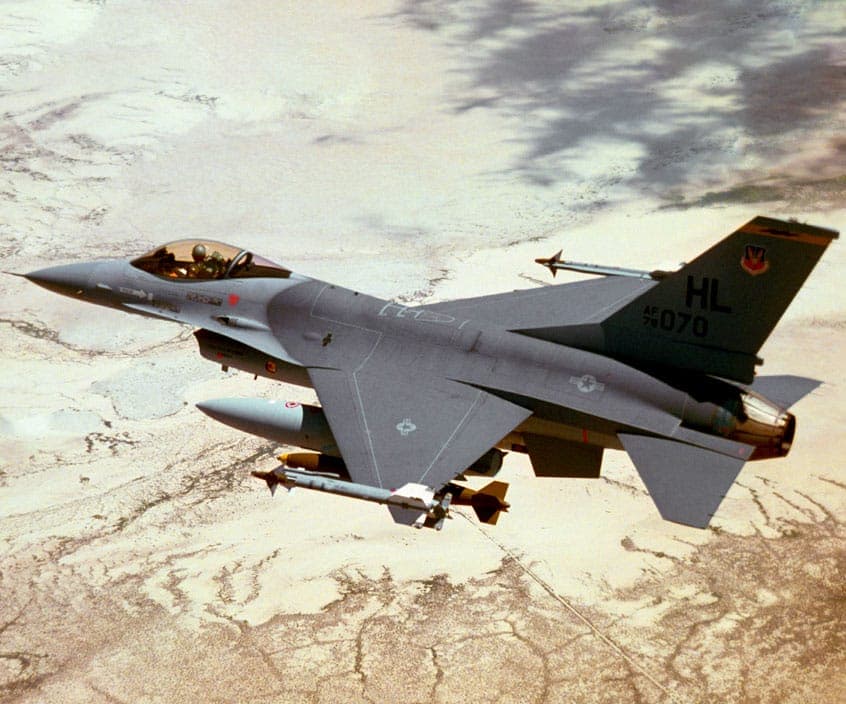
F-16 Fighting Falcon in flight
James Holloway
James Holloway

Military Logistics & Sustainment Analyst

James Holloway writes about military readiness, logistics, and the practical limits of modern forces. His work focuses on how training, sustainment, and organizational decisions shape what militaries can actually do -- not just what they are designed to do on paper.

The F-15 Eagle and F-16 Fighting Falcon represent two different philosophies in fighter design. In a hypothetical dogfight between these American fighters, the outcome depends heavily on the engagement's starting conditions and the pilots' skill levels.
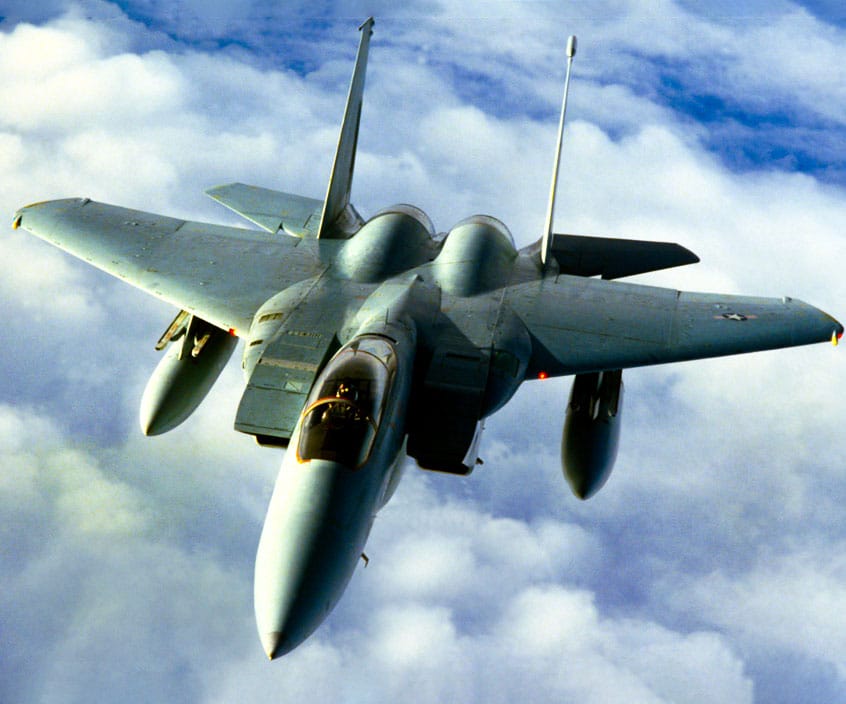
F-15 Eagle in flight
The F-15 Eagle was designed specifically for air superiority (U.S. Air Force photo)

The Short Answer: F-15 Favored

In most scenarios, the F-15 Eagle holds advantages that tip the balance in its favor. Its superior radar, higher top speed, and greater weapons capacity give it more options for controlling the engagement. However, the F-16 is far from helpless.

F-15 Advantages

Speed and Power

The F-15 can reach Mach 2.5, significantly faster than the F-16's Mach 2.0 maximum. Its twin F100 engines produce 58,000 pounds of thrust combined, compared to the F-16's single engine producing 29,000 pounds. This power advantage lets the F-15 dictate the terms of engagement.

Radar and Sensors

The F-15's AN/APG-63 or AN/APG-70 radar outperforms the F-16's radar in range and tracking capability. The F-15 can detect and engage targets at greater distances, potentially ending fights before the F-16 gets within its effective envelope.

Weapons Load

The F-15 carries up to eight air-to-air missiles, while the F-16 typically carries six. More missiles mean more engagement opportunities and greater margin for error.

F-16 Advantages

Maneuverability

The F-16's lighter weight and fly-by-wire control system give it excellent instantaneous turn rate. In a close-quarters fight, the F-16 can pull angles the heavier F-15 cannot match. Its bubble canopy provides superior visibility in a turning fight.

Size and Signature

The F-16's smaller airframe makes it harder to spot visually. In within-visual-range combat, seeing your opponent first matters enormously. The F-16's compact profile offers a subtle but real advantage.

Sustained Turn Rate

At certain speeds and altitudes, the F-16's power-to-weight ratio allows it to sustain high-G turns longer than the F-15. A skilled F-16 pilot can use this to force the engagement into a regime where the Eagle's advantages diminish.

How the Fight Plays Out

Beyond visual range, the F-15 dominates. Its radar picks up the F-16 first, and its missiles have longer range. An F-15 pilot can launch, assess, and re-engage before the F-16 gets close.

If the fight enters close quarters, things become more competitive. The F-16's agility allows it to threaten the F-15, especially if the F-15 pilot makes mistakes. However, the F-15's superior energy retention means it can extend, regain advantage, and re-engage on favorable terms.

Design Philosophy Matters

The F-15 was designed from the outset as an air superiority fighter. Its famous motto, "Not a pound for air-to-ground," reflected a pure focus on defeating enemy aircraft. The F-16 was designed as a lightweight day fighter that evolved into a multirole platform.

This philosophical difference shows in the results. The F-15 has never lost an air-to-air engagement in combat. The F-16 has proven itself capable in air combat but also excels in strike missions the F-15C wasn't designed for.

The Bottom Line

In a pure dogfight, the F-15 wins more often than not. Its combination of speed, sensors, and weapons capacity creates advantages the F-16 struggles to overcome. But in the hands of a skilled pilot who can drag the fight to low-speed, close-quarters combat, the F-16 remains dangerous.

For more fighter comparisons, see our analysis of the F-35 vs F-22 in a dogfight or learn why the F-22 is called Raptor.

Share this article

Share:

Recommended

Ace of The Skies: Can You Identify These Military Aircraft Throughout The Years?
Test Yourself

Ace of The Skies: Can You Identify These Military Aircraft Throughout The Years?

Can you identify these aircraft?

Take the Quiz

Get Military News & History in Your Inbox

Join thousands of readers receiving our weekly digest of military technology, history, and analysis.

Test Your Knowledge