Skip to content
May 5:Battle of Puebla: Cinco de Mayo164yr ago

Which Aircraft Would Win in a Dogfight: F-35 or F-22?

James Holloway · Updated January 15, 2024 · 3 min read
Save
Share:
F-22 Raptor and F-35 Lightning II comparison
James Holloway
James Holloway

Military Logistics & Sustainment Analyst

James Holloway writes about military readiness, logistics, and the practical limits of modern forces. His work focuses on how training, sustainment, and organizational decisions shape what militaries can actually do -- not just what they are designed to do on paper.

The F-22 Raptor and F-35 Lightning II represent America's fifth-generation fighter capability. While both are stealth aircraft, they were designed for fundamentally different roles. In a hypothetical dogfight between these two, the outcome depends heavily on the engagement parameters.
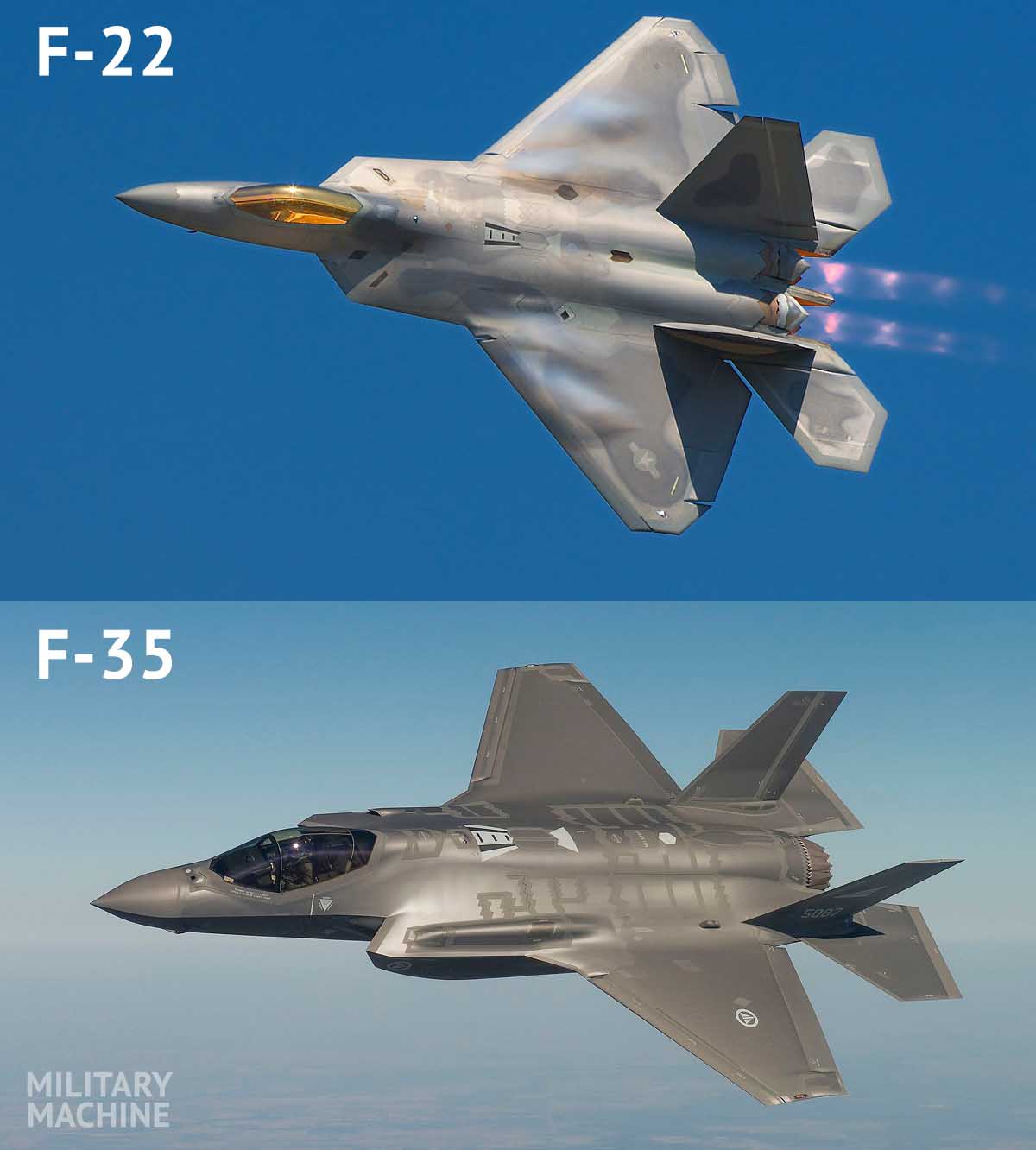
F-22 Raptor versus F-35 Lightning II
The F-22 and F-35 serve complementary roles in American air power (U.S. Air Force)

The Short Answer: F-22 Wins the Dogfight

In a classic within-visual-range dogfight, the F-22 Raptor holds significant advantages. Its combination of speed, maneuverability, and thrust vectoring makes it the superior platform for close-range air combat.

Why the F-22 Has the Edge

Speed and Altitude

The F-22 can supercruise at Mach 1.8+ without afterburners. Its maximum speed exceeds Mach 2.25. The F-35 maxes out around Mach 1.6. In a dogfight, speed is energy, and energy equals options.

The Raptor operates comfortably at 65,000 feet, while the F-35 optimizes at lower altitudes. The F-22 can dictate the engagement by controlling altitude.

Maneuverability

The F-22's thrust vectoring engines allow maneuvers no conventional fighter can match. It can point its nose independently of its flight path, tracking targets through extreme angles. The F-35 lacks thrust vectoring entirely.

At the 2017 Atlantic Trident exercise, F-22 pilots demonstrated the Raptor's superiority in within-visual-range combat against European fighters. The aircraft's agility remains unmatched.

The F-22's Design Purpose

The F-22 was built as an air superiority fighter. Everything about its design prioritizes defeating enemy aircraft. The F-35 was designed as a multirole platform that balances air-to-air capability with strike, reconnaissance, and electronic warfare roles.

Why This Comparison Misses the Point

Modern air combat rarely involves dogfights. Both aircraft carry advanced radars and beyond-visual-range missiles. The aircraft that detects, tracks, and launches first typically wins. In this domain, both platforms excel.

The F-35's sensor fusion may actually give it advantages in situational awareness. Its distributed aperture system provides 360-degree coverage. Pilots describe it as having "God's eye view" of the battlespace.

Complementary Roles

The Air Force operates both aircraft because they serve different purposes:

  • F-22: Air superiority, establishing control of the skies
  • F-35: Multirole operations, strike, ISR, and network-centric warfare

In a real conflict, these aircraft work together rather than against each other. The F-22 clears the airspace while the F-35 prosecutes ground targets and gathers intelligence.

The Bottom Line

If forced into a dogfight, the F-22 wins. But asking which is "better" misunderstands how modern air power works. Both aircraft excel at their designed missions.

For a deeper analysis, see our comprehensive F-22 vs F-35 comparison. You might also enjoy our breakdown of the F-16 vs F-15 dogfight scenario.

Share this article

Share:

Recommended

Ace of The Skies: Can You Identify These Military Aircraft Throughout The Years?
Test Yourself

Ace of The Skies: Can You Identify These Military Aircraft Throughout The Years?

Can you identify these aircraft?

Take the Quiz

Get Military News & History in Your Inbox

Join thousands of readers receiving our weekly digest of military technology, history, and analysis.

Test Your Knowledge