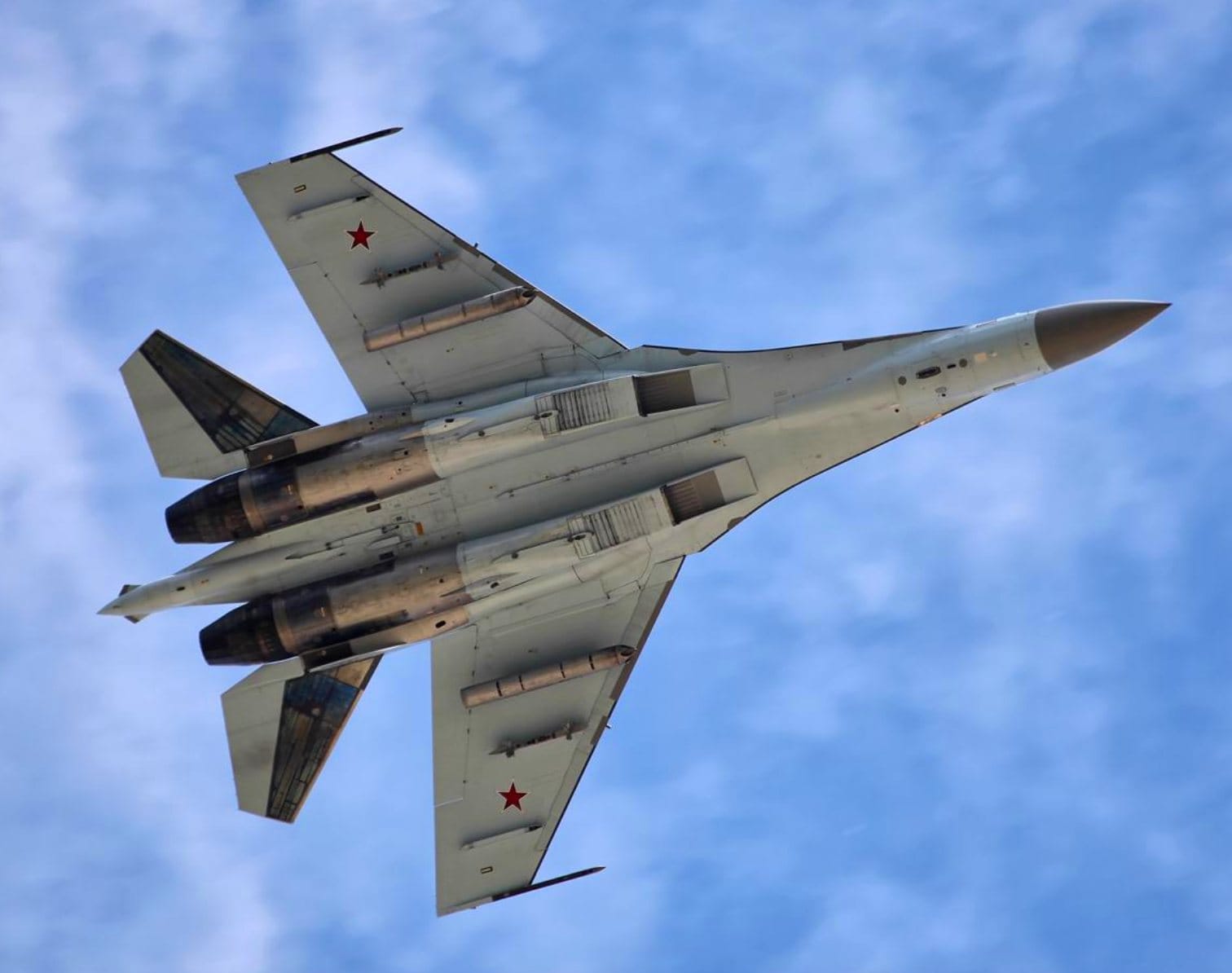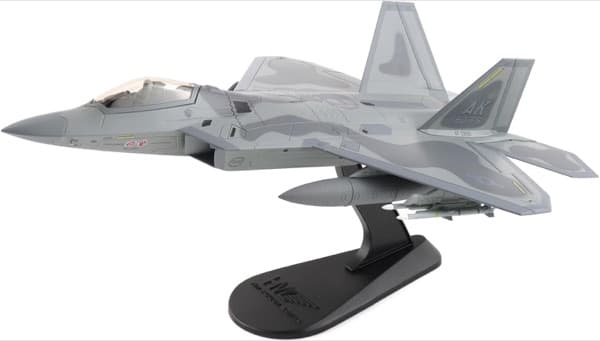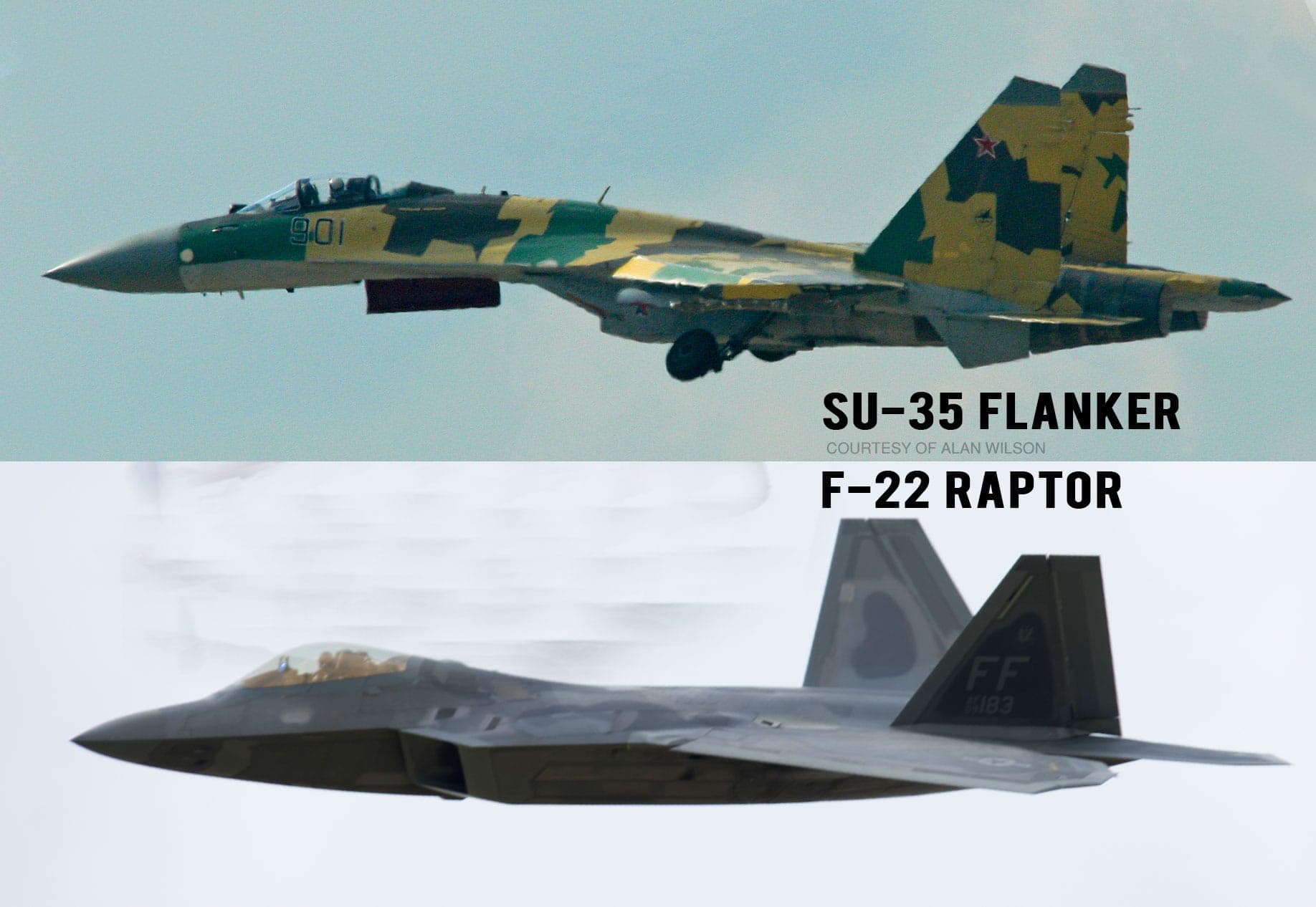

The two predominant fighter jets for the two predominant world military powers’ seem like a perfect match. Where the American F-22 Raptor excels, the Russian Su-35 shies away. And where the Su-35 is most powerful, the F-22 is outmatched. Call it a grudge match, or a stalemate, or a hypothetical – because that’s all it is at this point – but however you phrase it, comparing the F-22 vs. Su-35 is an exciting venture.
F-22 vs Su-35 History
As far as public knowledge goes, there has only been one run-in between these two flagship fighters. In December of 2017, two F-22s engaged two Su-25’s over Syria after the Russian jets crossed the de-confliction line – entering territory claimed by the U.S. At one point a Su-35 became involved was treated to a warm welcome by an F-22 as well. The American fighter jets fired flares as warning signs, and there was even a near mid-air collision, according to the U.S. Air Force. But at the end of the day, the Russian jets turned tail and went home. Nothing escalated to a combative degree – but there was several serious minutes of engagement between these two fighter jets.
That’s all the anecdotal evidence we have for now. Before you get a complete sense of what each fighter jet brings to the table, here are the quick hits:
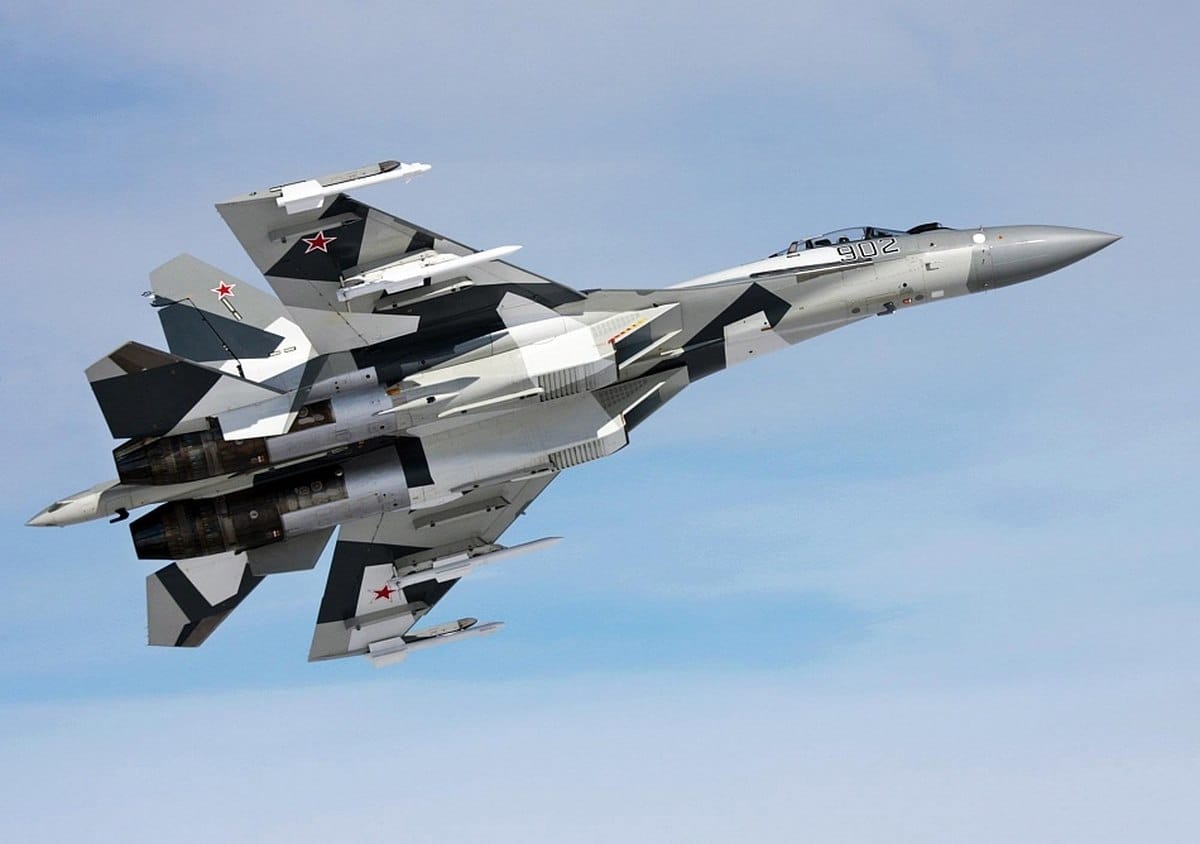
- The Su-35 is bigger, faster, and can fly longer
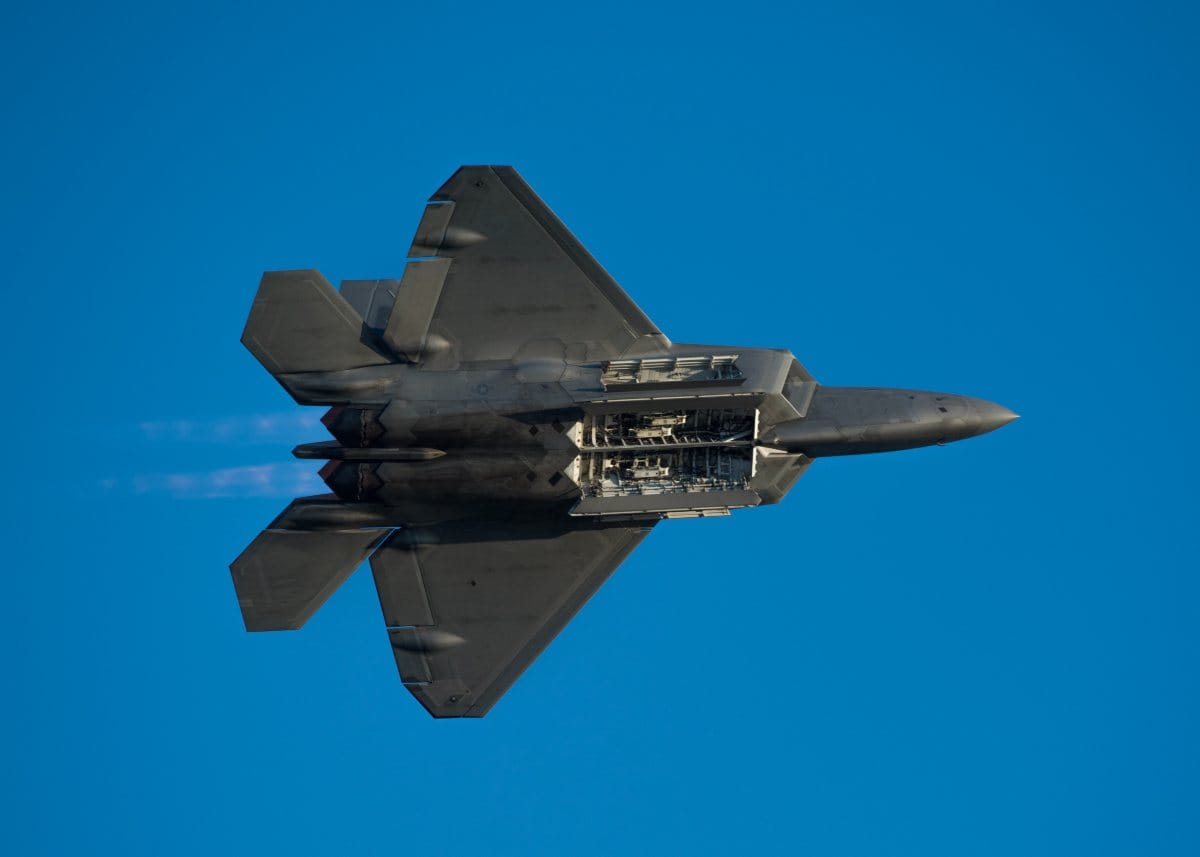
- The F-22 is nearly undetectable, and can lock on to a target without being in visual range
- The Su-35 has more external firepower, and more of a chance to win in a dogfight
- The F-22 has the most advanced avionics ever (outside of the F-35 Lightning II)
- The F-22 pilots are likely much more talented and experienced
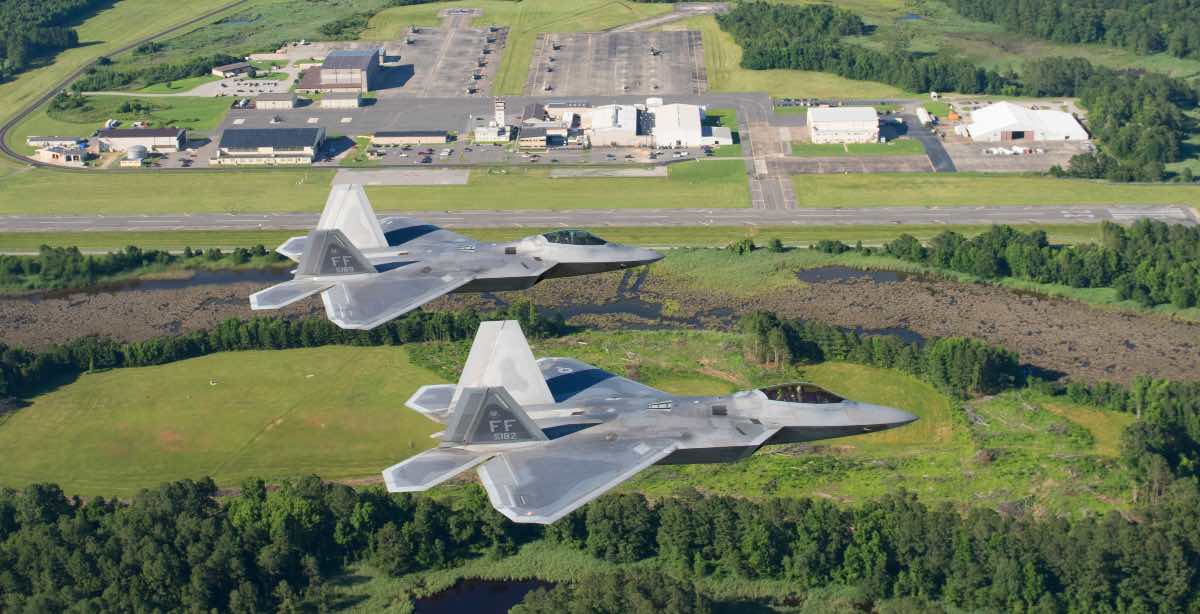
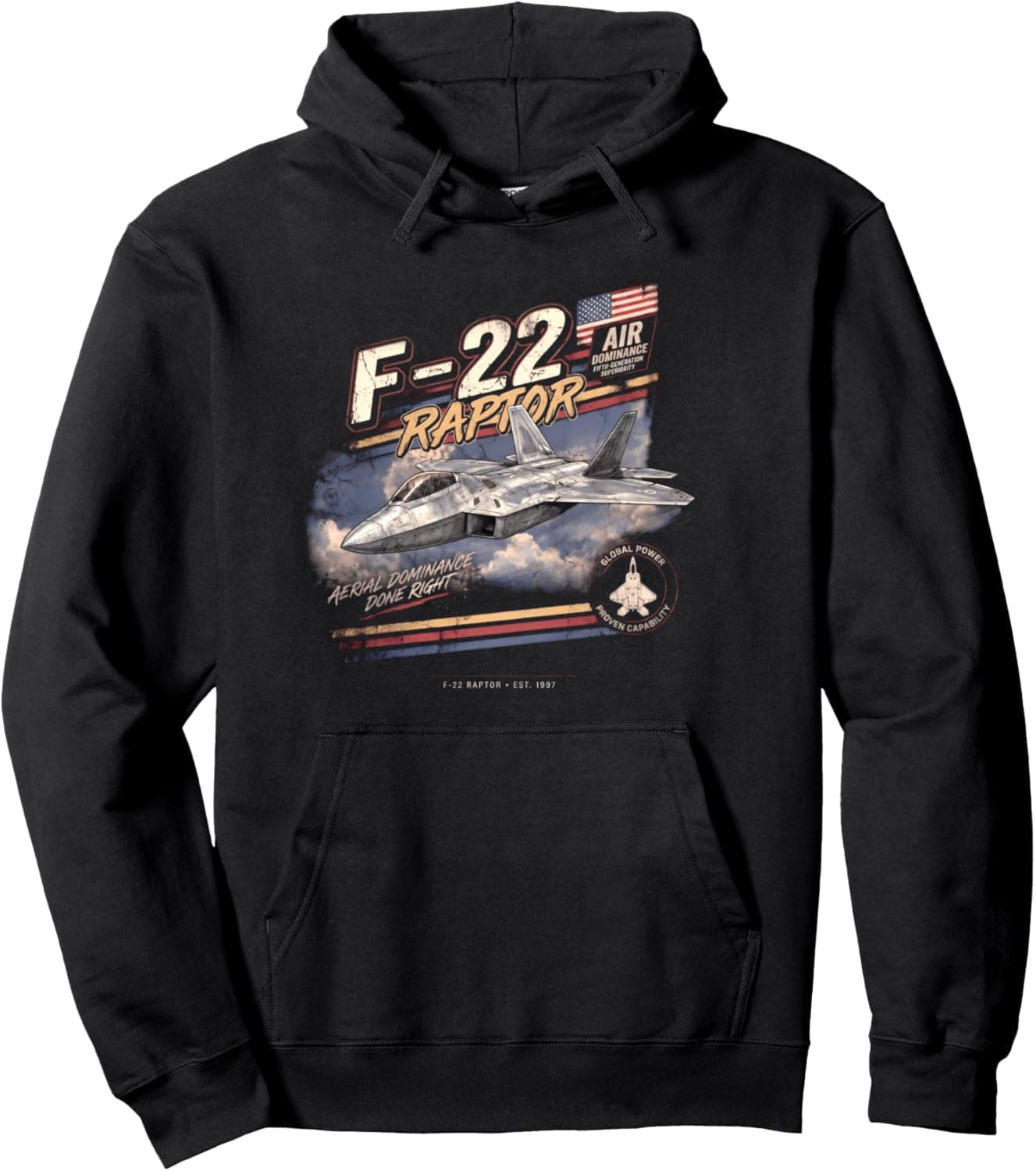
The Lockheed Martin F-22 Raptor is considered by many to be the most advanced fighter ever made and the very definition of air superiority. This is great news for Lockheed Martin, as it was their mission to produce a fighter whose capabilities had never been seen before. No other fighter combines the level of stealth, speed, maneuverability, weaponry, and avionics of the Raptor. The F-22 entered service in 2005.