
F-100 Super Sabre
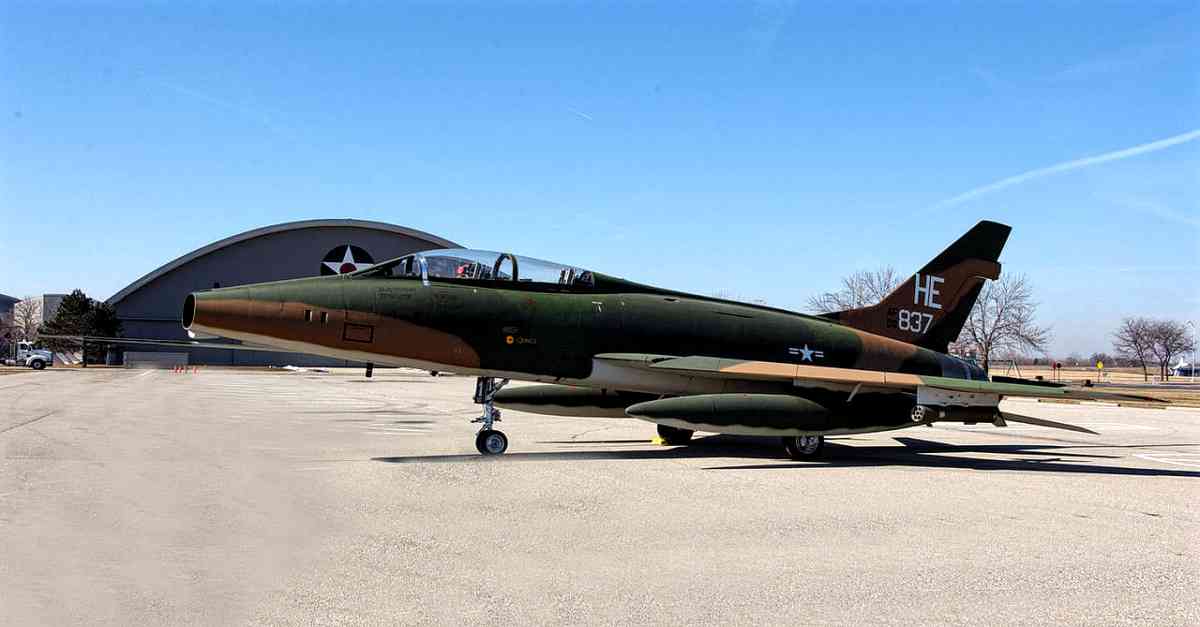
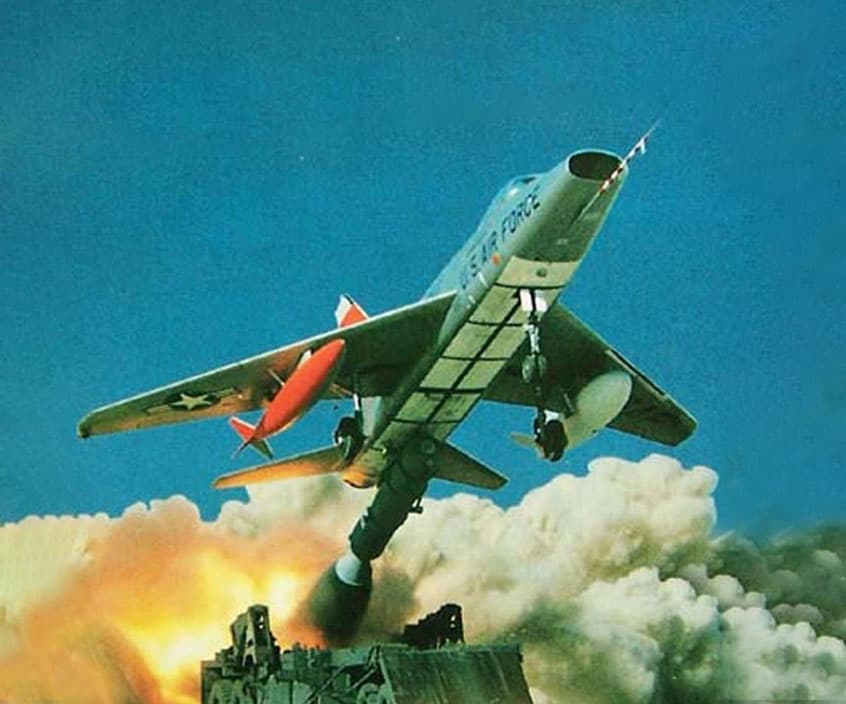
The F-100 Super Sabre was America’s answer to the future of air-to-air superiority in the mid-1950s. Equipped with a single Pratt Whitney J-57-P-21 turbojet, it would face off against the latest generation of Soviet MiGs over the Korean Peninsula and prevail as one of the fastest jets at an astounding success rate. This is an example of an American-made fighter jet built for speed and dog fighting. It would go on from Korea to the jungles of Vietnam where it became the first U.S. Air Force jet fighter to engage enemy aerial jets. The F-100s on that mission were escorting the F-105 Thunderchief, which would eventually take over for them. F-100s were lovingly referred to as “Huns”, a shortening of their full designation. They would go on to serve 25 years in the United States Air Force. This classic is one of the fastest fighter jet aircraft, and a great start to this list.
- Top Speed: 864 mph
- Max Flight Distance: 2,235 miles at 610 mph with internal fuel
F-101 Voodoo
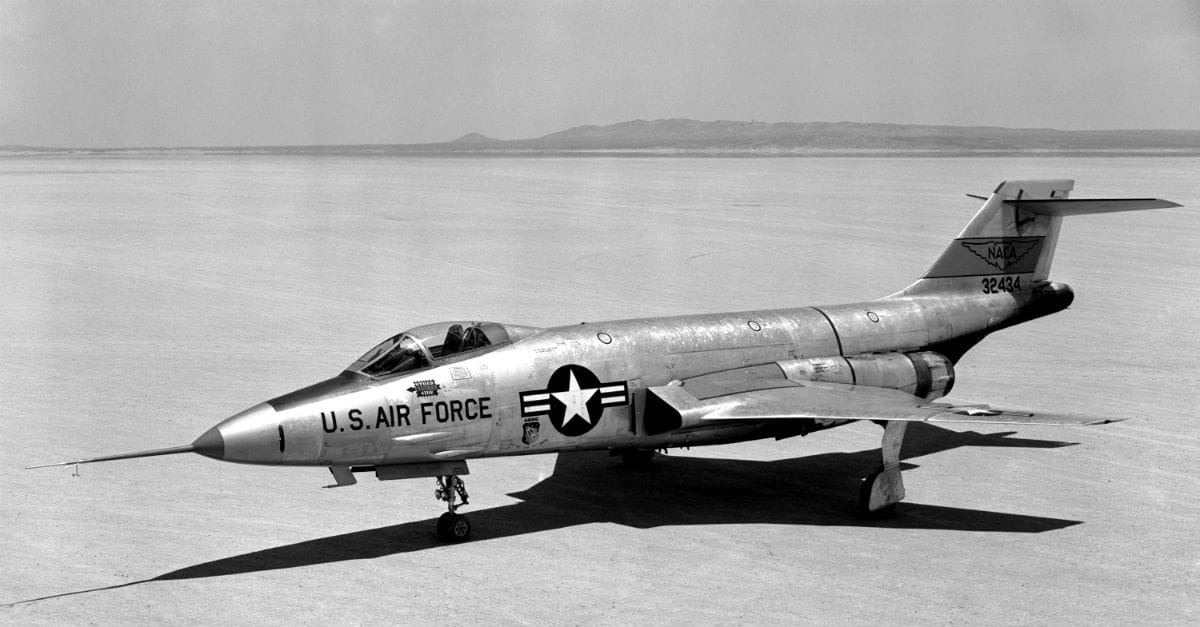
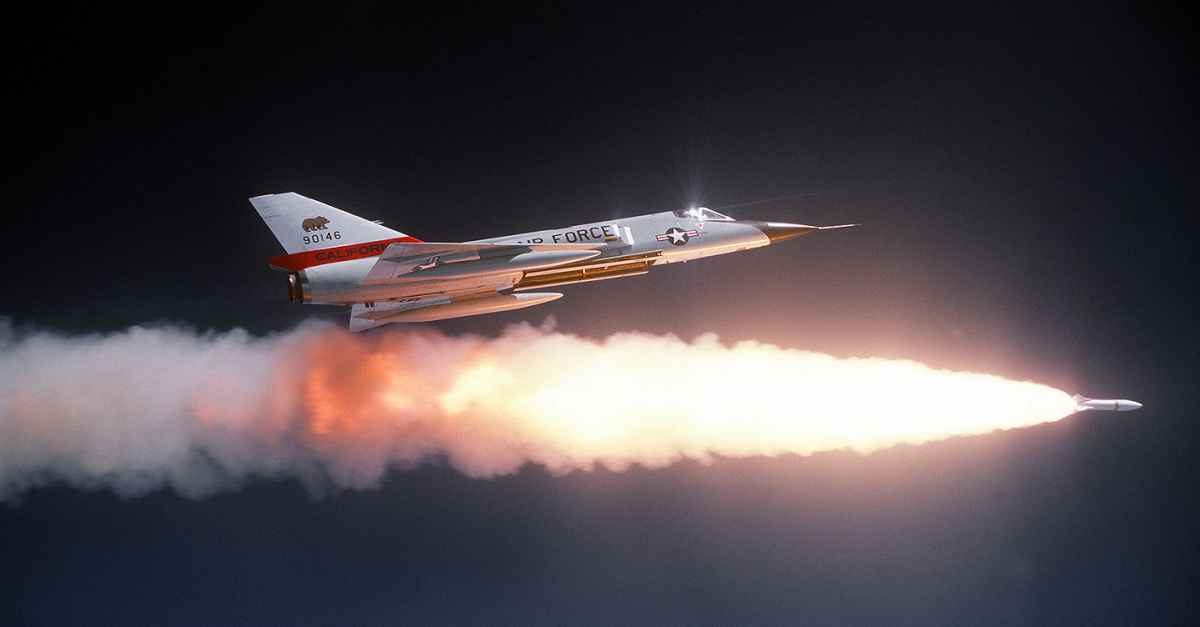
Someone has to protect the strategic air bombers as they move deep into enemy territory. That was the main thought when the United States Air Force and the Royal Canadian Air Force commissioned McDonnell-Douglas to build a supersonic long-range bomber escort jet. Thus the F-101 Voodoo was born. While the F-100 became the premier supersonic air-to-air fighter, the F-101 would undergo many transformations. The Air Force saw its potential grow from a long-range fighter escort to a strategic fighter-bomber. Pushed into the sky in 1957, the Voodoo immediately went on to set a world record for supersonic flight at a blistering 1,208 mph. The Voodoo would be called upon to serve everything from reconnaissance runs during the Cuban Missile Crisis to the war in Vietnam.
Because it was equipped with two Pratt Whitney J57-variant turbojets, the F-101 Voodoo could quickly accelerate past the speed of sound. This made it a hard target for MiGs patrolling the air across Northern Vietnam. Only one RF-101C was lost to air-to-air encounters, and its design influenced and accelerated the production of the F-4 Phantom. With a top speed of 1,134 mph, it didn’t take long for it to get to hot spots in Vietnam. But without additional external tanks or inflight refueling, it pretty much had to arrive at destination, drop its payload, and go home.
- Top Speed: 1,134 mph
- Max Flight Distance: 1,520 miles with internal fuel
F-35 Lightning II
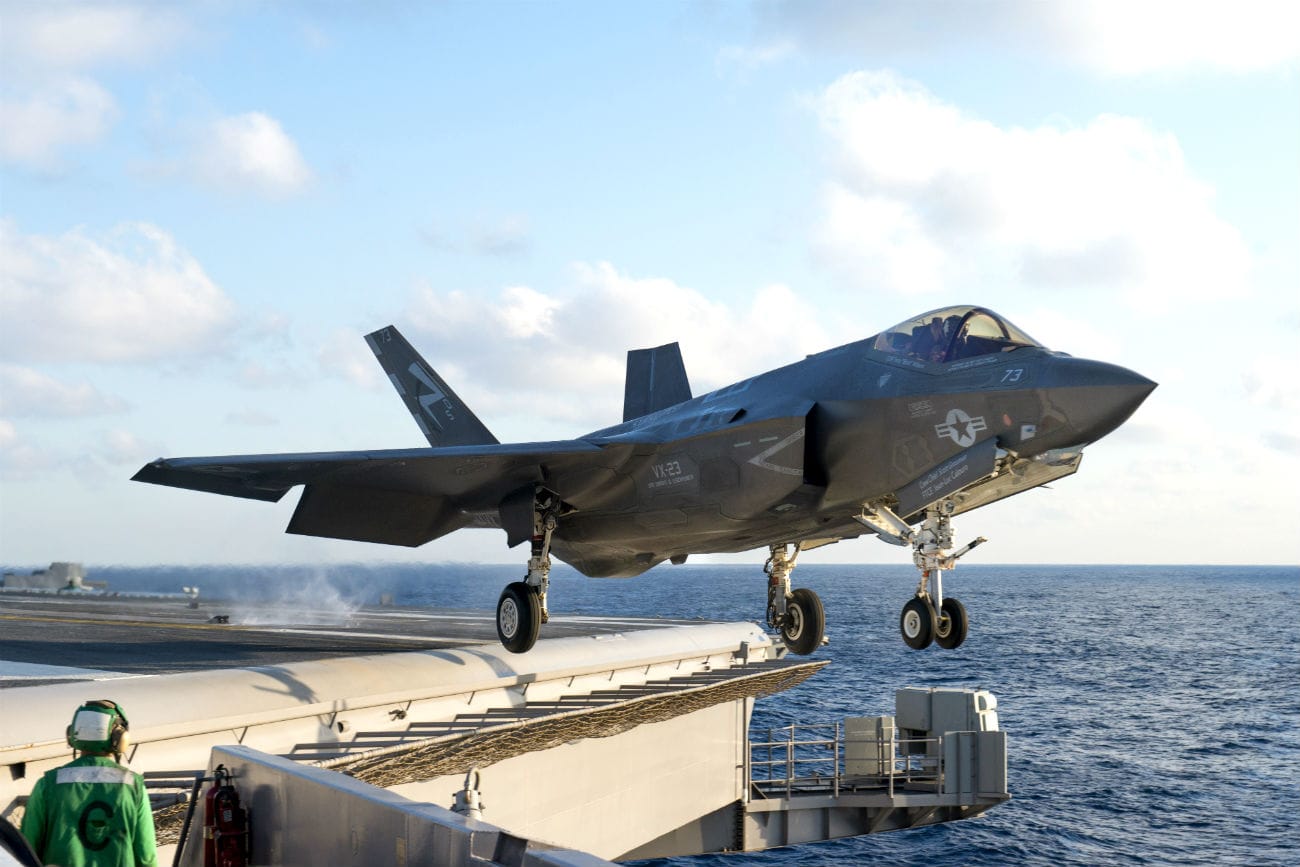
Hailed as America’s next gen wave of stealth multirole jet fighters, the F-35 Lightning II borrows its name from an older generation of fighter aircraft that served in WWII. The first wave of F-35s to hit the fleet went straight to the U.S. Marine Corps, where they came ready for extreme short take-offs and landings. This is one of the first aircraft to implement 720 degrees of vision to its pilots. This functionality is enabled through a system of sensors feeding straight to the pilot’s helmet. With a top speed of Mach 1.6, this single pilot jet fighter promises to bring high maneuverability matched with stunning versatility in mission parameters. The F-35 is fifth-generation and speed isn’t its purpose, yet it’s still a contender for fastest fighter jet.