
AWACS
Airborne Warning and Control System
Airborne Warning and Control System is a mobile airborne radar platform that provides all-weather surveillance, command, control, and communications for tactical and strategic operations.
The Airborne Warning and Control System (AWACS) combines powerful surveillance radar with a battle management capability, enabling a single aircraft to monitor hundreds of thousands of square miles of airspace while directing friendly fighters and coordinating complex air operations. The term is most closely associated with the Boeing E-3 Sentry, recognizable by its large rotating radar dome mounted above the fuselage.
An AWACS aircraft operates as the nerve center of an air campaign, providing the "God's eye view" that allows commanders to see the full tactical picture. Its radar can detect aircraft at ranges exceeding 400 kilometers, track maritime vessels, and identify low-altitude threats that ground-based radars might miss. The onboard crew of mission specialists manages the flow of information to fighters, surface units, and ground commanders in real time.
The E-3 has served NATO and allied forces since 1977, seeing action in every major conflict from Desert Storm to operations over Syria. It is now being replaced by the E-7 Wedgetail, which uses a modern AESA radar and requires a significantly smaller crew thanks to automation. The loss of an AWACS aircraft in combat would represent a severe blow to any air force's operational capability.
Related Terms
AEW(Airborne Early Warning)
Airborne Early Warning refers to aircraft equipped with powerful radar systems that detect threats at long range, providing surveillance and command-and-control for friendly forces.
AESA(Active Electronically Scanned Array)
Active Electronically Scanned Array is a type of radar that uses thousands of individual transmit/receive modules to steer its beam electronically, enabling simultaneous tracking and jamming across multiple frequencies.
EW(Electronic Warfare)
Electronic Warfare encompasses all military actions that use electromagnetic energy to control the electromagnetic spectrum, including jamming, deception, and electronic intelligence gathering.
Related Articles
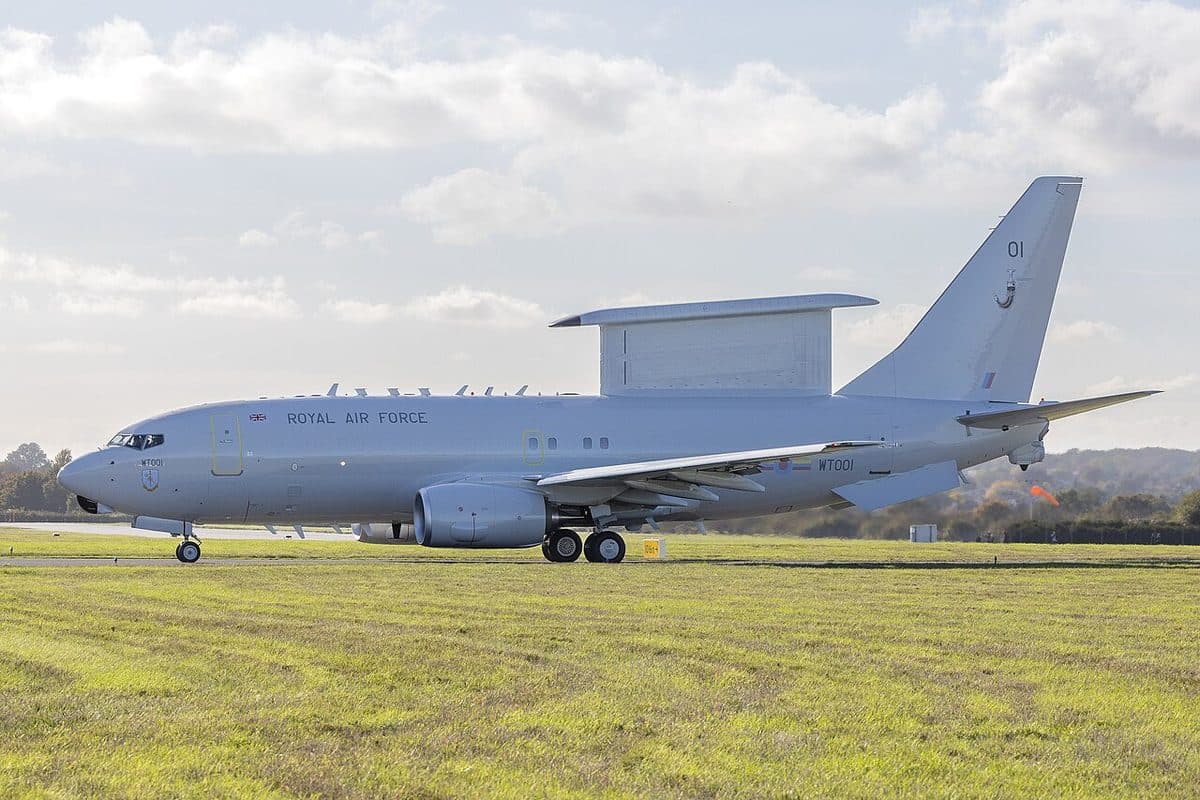
The E-7 Wedgetail Is Replacing the AWACS. The Air Force Waited 30 Years Too Long.
The Air Force's airborne radar platform is older than the pilots flying it. Its replacement has been in service with Australia for 15 years. The delay in adopting the E-7 Wedgetail cost decades of capability.
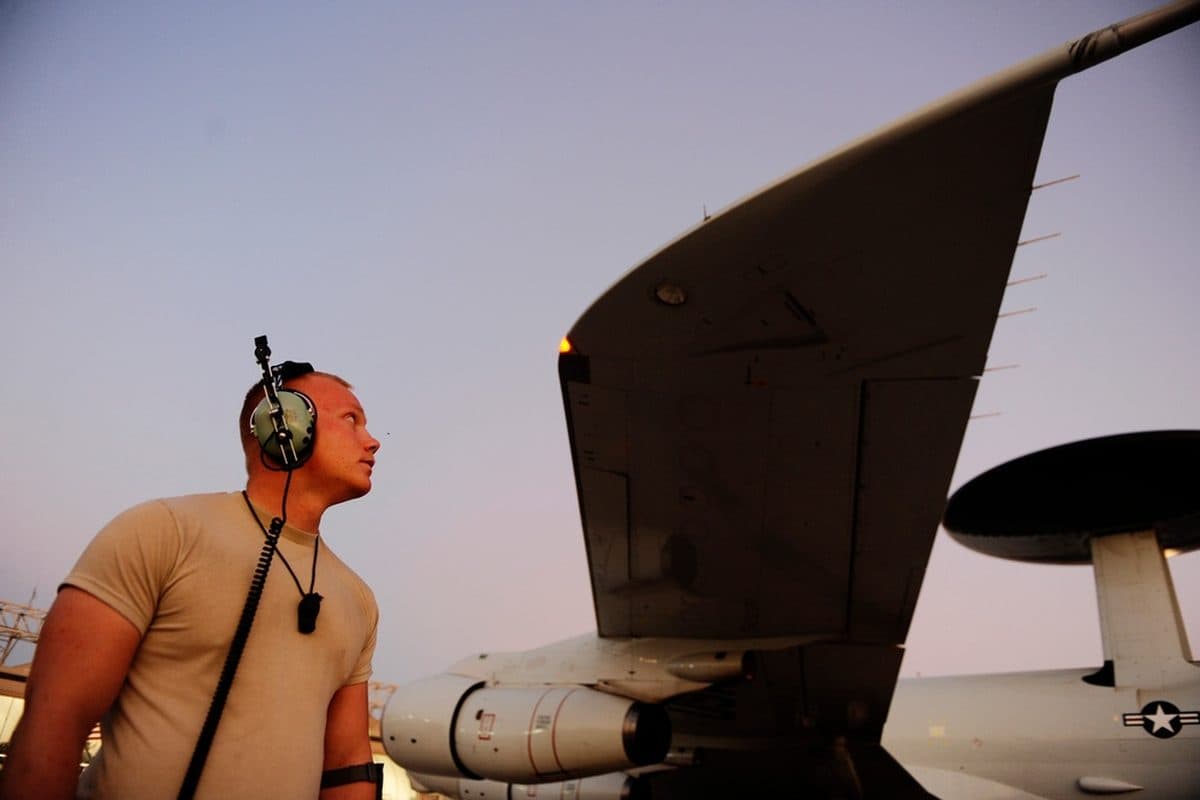
The Boeing E-3 Sentry
The Boeing E-3 Sentry is far more than just an airborne radar. Nicknamed the “Eye in the Sky” by many pilots, this airborne warning and control system (AWACS) is a…