
Electromagnetic Railgun
A weapon that uses electromagnetic force to launch projectiles at hypersonic speeds without chemical propellant, using two parallel rails and an electric current to accelerate a conductive projectile.
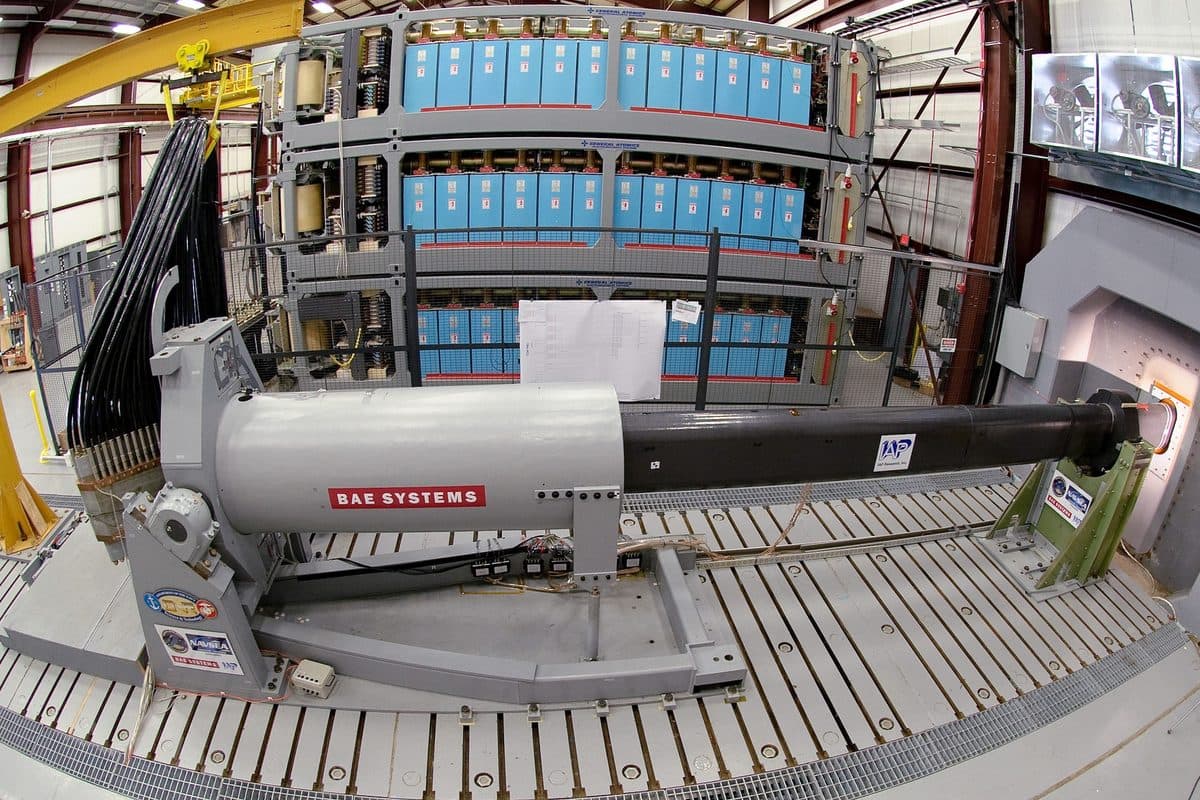
An electromagnetic railgun uses the Lorentz force generated by a massive electric current flowing between two parallel conducting rails to accelerate a projectile to velocities exceeding Mach 6. Unlike conventional guns that use chemical propellants, the railgun converts electrical energy directly into kinetic energy, launching projectiles at speeds that make them devastating purely through their kinetic impact, no explosive warhead is needed.
The U.S. Navy invested over $500 million in railgun development, with test firings achieving muzzle velocities over 2,500 meters per second and ranges exceeding 100 nautical miles. At these velocities, a relatively small projectile carries more kinetic energy than many explosive warheads. The railgun also offered the promise of deep magazines, since electrically-powered projectiles are smaller and safer to store than conventional ammunition.
Despite promising tests, the Navy canceled its railgun program in 2021, primarily due to unsolved engineering challenges including rapid rail erosion, enormous power requirements, and the difficulty of integrating multi-megawatt power systems into existing warships. The underlying technology may find application in future platforms designed from the ground up to support directed energy and electromagnetic weapons.
Related Terms
Directed Energy Weapon
A weapon system that emits concentrated energy, such as a laser beam or microwave pulse, to damage or destroy targets at the speed of light without using conventional ammunition.
Kinetic Energy Penetrator
A long, dense rod, typically tungsten or depleted uranium, fired at very high velocity to defeat armor through sheer kinetic energy rather than explosive force.
Related Articles
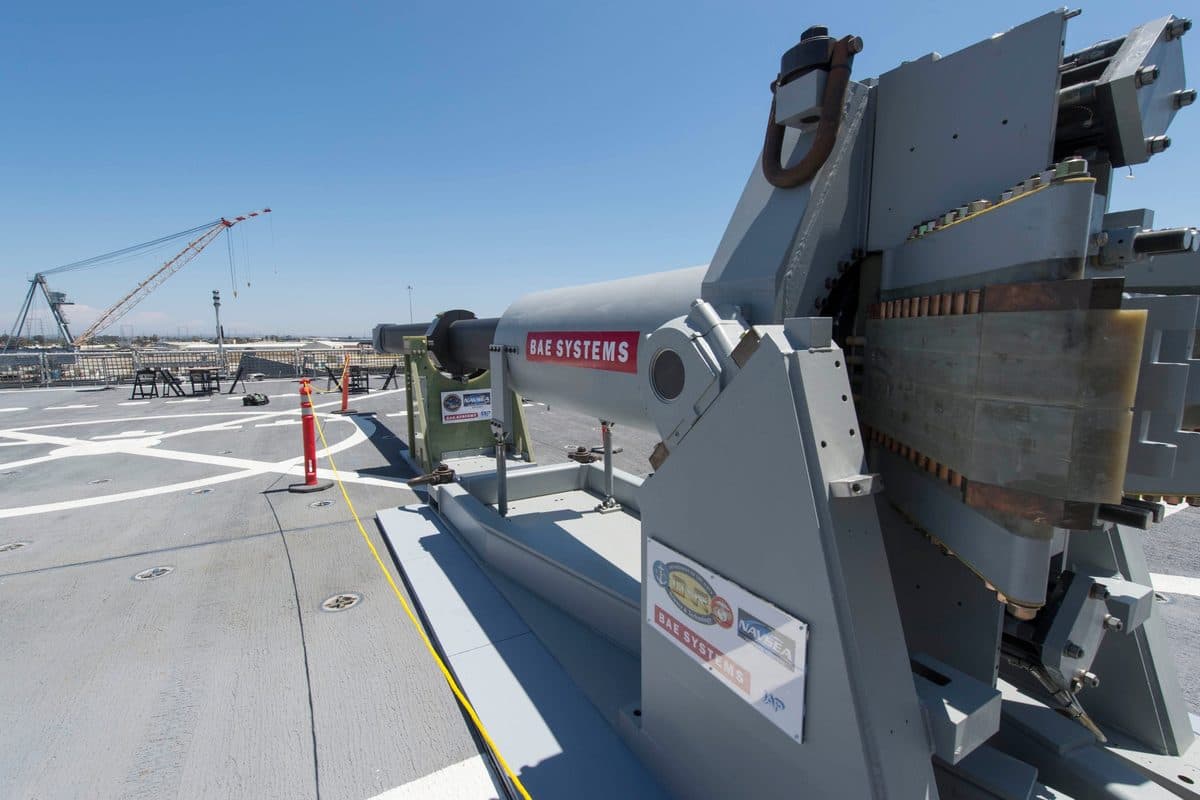
Why the Navy's Electromagnetic Railgun Failed After $500 Million, and What Replaced It
The railgun worked. It fired projectiles at Mach 6 using electromagnetic force instead of explosives. It just destroyed itself every time it did it. After $500 million and 15 years, the Navy cancelled the program, then took the railgun's ammunition and put it in a conventional gun. Here's what went wrong, and what the failure actually produced.
7 Next-Generation Weapons Already in Testing (2026): F-47, CCA, Hypersonics, and More
The F-47 sixth-gen fighter, AI-controlled CCA drone wingmen, hypersonic missiles, 60kW laser defenses, the M1E3 tank, Columbia-class sub, and FPV kamikaze drones. All in testing or combat now.