
FLIR
Forward Looking Infrared
Forward Looking Infrared is an imaging system that detects thermal radiation to produce a visual picture, allowing operators to see in complete darkness and through smoke or haze.
Forward Looking Infrared (FLIR) systems use thermal imaging sensors to detect the infrared radiation emitted by all objects based on their temperature. The sensor converts these heat signatures into a visual image displayed on a screen, revealing people, vehicles, and equipment that would be invisible to the naked eye in darkness or obscured by smoke, dust, or light camouflage. FLIR does not require any ambient light to function, making it fundamentally different from image intensification night vision devices.
FLIR technology is installed on virtually every modern military platform. Attack helicopters use FLIR turrets to identify and engage targets at night, fighter aircraft carry FLIR pods for targeting and navigation, warships use FLIR for surveillance and fire control, and ground vehicles integrate FLIR into their commander and gunner sights. The technology has also been miniaturized for use by individual soldiers in the form of weapon-mounted thermal sights and handheld imagers.
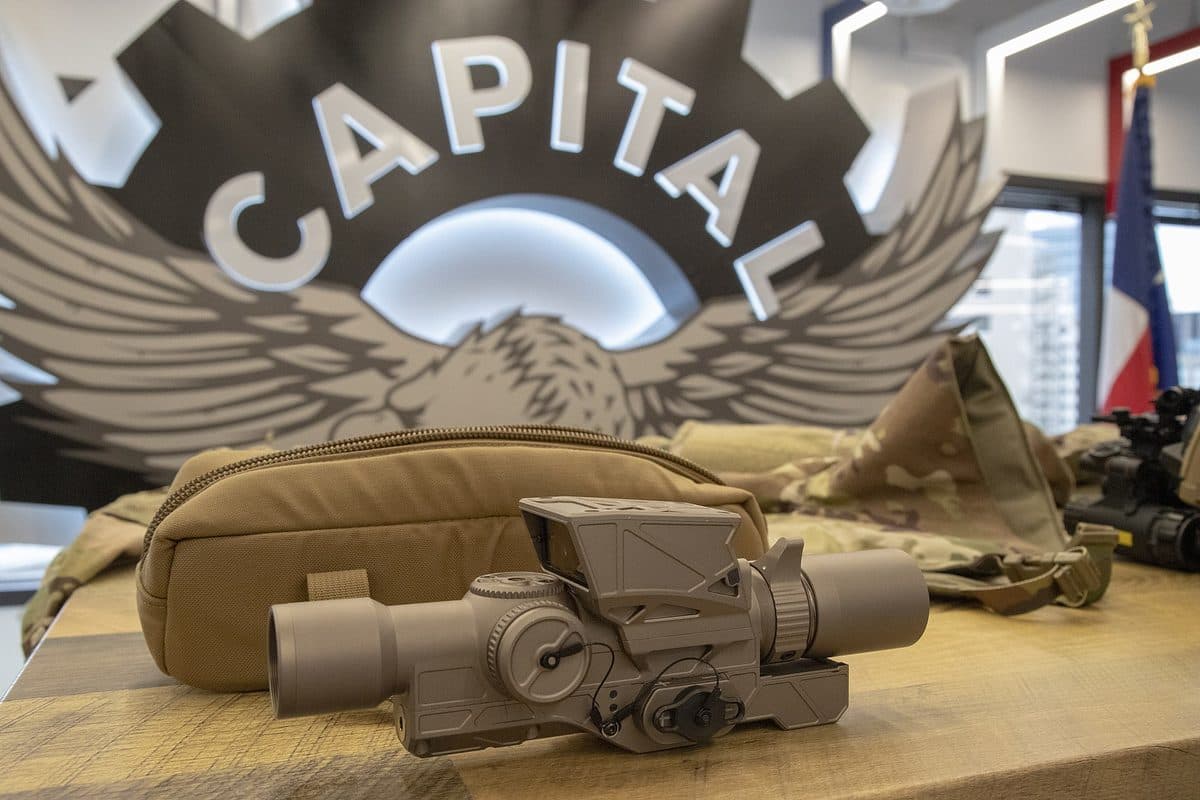
Modern FLIR systems use cooled or uncooled detector arrays to produce high-resolution thermal images with sufficient detail to identify vehicle types, detect recently disturbed earth (a sign of buried explosives), and distinguish combatants from civilians at significant distances. The integration of FLIR with other sensors and targeting systems enables precision engagement in conditions that would have made combat impossible just a few decades ago.
Related Terms
NVG(Night Vision Goggles)
Night Vision Goggles amplify ambient light from stars and moonlight to produce a visible image, allowing military personnel to see and operate effectively in near-total darkness.
IRST(Infrared Search and Track)
Infrared Search and Track is a passive sensor that detects the thermal signature of aircraft at long range without emitting any radiation, enabling stealthy target detection.
Sensor Fusion
The integration of data from multiple sensors, radar, infrared, electronic warfare, datalinks, into a single unified tactical picture that provides greater situational awareness than any individual sensor alone.
Related Articles
How Military Night Vision Actually Works
Military night vision turns near-total darkness into a tactical advantage. Here is how image intensification, thermal imaging, and augmented reality NVGs actually work, and why they let the U.S. military own the night.