
IRST
Infrared Search and Track
Infrared Search and Track is a passive sensor that detects the thermal signature of aircraft at long range without emitting any radiation, enabling stealthy target detection.
Infrared Search and Track (IRST) systems are passive sensors that detect the heat emitted by aircraft engines, airframes heated by aerodynamic friction, and exhaust plumes at ranges of up to 100 kilometers or more. Unlike radar, which actively broadcasts electromagnetic energy and can be detected by the target's radar warning receiver, IRST is completely passive, it listens for heat rather than broadcasting, making it invisible to the target.
IRST has gained renewed importance with the proliferation of stealth aircraft. While stealth technology dramatically reduces an aircraft's radar cross section, it does little to suppress the heat generated by jet engines and aerodynamic heating. An IRST system can potentially detect and track a stealth aircraft that is invisible to radar, particularly from the rear aspect where the engine exhaust is hottest.
Modern IRST systems like the Legion Pod used by U.S. F-15s and F-16s combine high-resolution infrared sensors with sophisticated signal processing to detect, track, and identify aircraft at tactically significant ranges. European fighters like the Typhoon, Rafale, and Gripen have long incorporated IRST as a standard sensor, and the technology is being integrated into an increasing number of combat aircraft as a complement to radar-based detection.
Related Terms
FLIR(Forward Looking Infrared)
Forward Looking Infrared is an imaging system that detects thermal radiation to produce a visual picture, allowing operators to see in complete darkness and through smoke or haze.
Stealth Technology
Design principles and materials that reduce an aircraft's radar, infrared, visual, and acoustic signatures to make it difficult or impossible for enemy sensors to detect.
RCS(Radar Cross Section)
Radar Cross Section is a measure of how detectable an object is by radar, expressed in square meters. A smaller RCS means the object is harder to detect.
Related Articles

How IRST Systems Find Stealth Aircraft Without Ever Turning On a Radar
Stealth aircraft are designed to defeat radar. They are not designed to defeat heat. IRST systems, passive infrared sensors that detect aircraft by their thermal signature, are the most significant threat to stealth dominance in 2026, and every major fighter in the world now carries one.
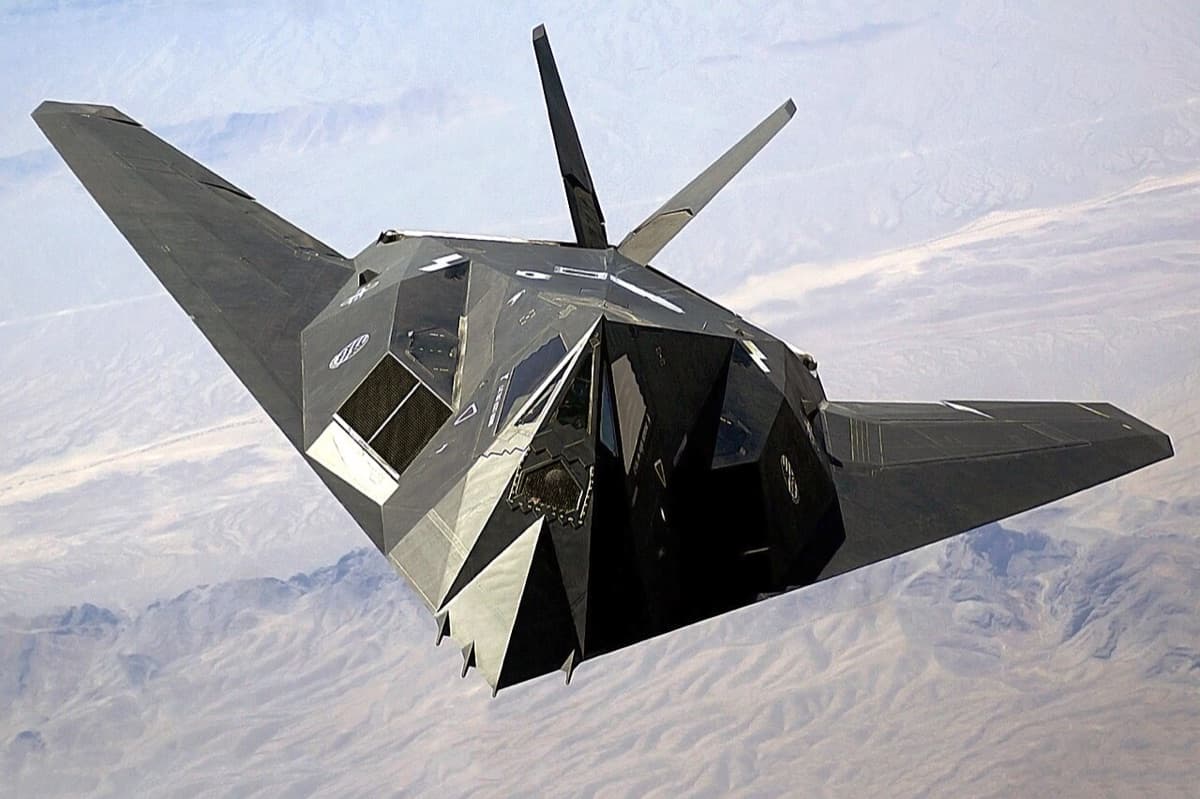
How Stealth Really Works: The Engineering Behind Radar Cross Sections Smaller Than a Golf Ball
An F-22 Raptor has the radar signature of a marble. A B-52 has the radar signature of a barn. The difference comes down to five engineering disciplines: shaping, materials, inlet masking, exhaust design, and the limits of 1970s computing power that explain why the F-117 looks nothing like the B-2.