Alex Carter writes about modern warfare, emerging military technology, and how doctrine adapts to new tools. His work focuses on what changes in practice -- command, control, targeting, and risk -- when systems like drones and autonomous platforms become routine.
Updated April 2026
2026 Update: ENVG-B, IVAS, and the Shift to Digital Night Vision
Since this article was first published, the landscape of military night vision has shifted from evolutionary improvement to a fundamental technological transition. The U.S. Army is fielding systems that do not just amplify light or detect heat. They fuse both into a single augmented reality display, overlay tactical data onto the soldier's view, and connect every pair of goggles into a networked combat system. The green-phosphor image intensifier tube that defined night vision for sixty years is being supplemented, and in some applications replaced, by digital sensors that see things the human eye and traditional NVGs never could.
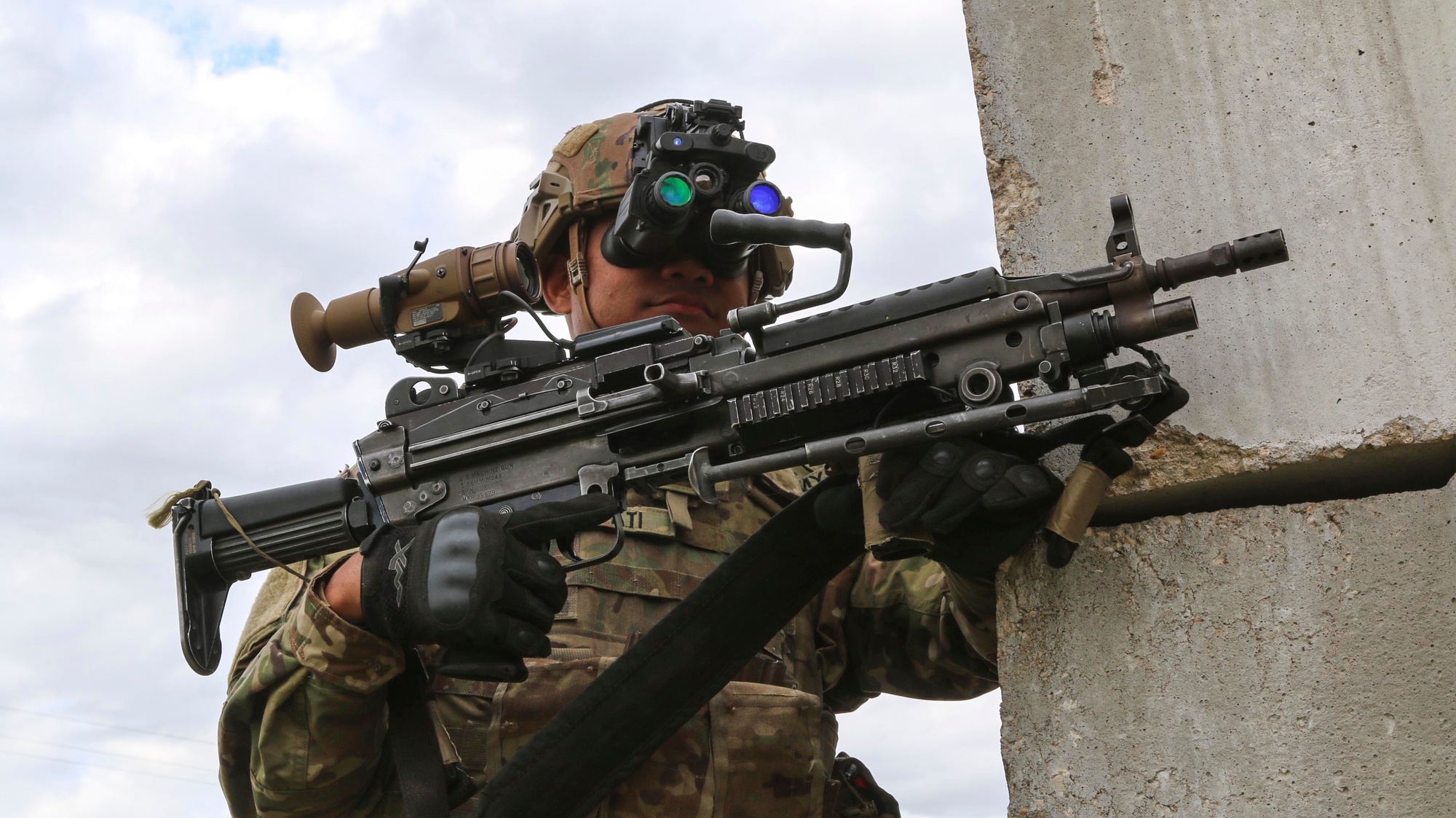
A soldier demonstrates the ENVG-B (Enhanced Night Vision Goggle-Binocular), which fuses image intensification and thermal imaging into a single binocular display with augmented reality overlay capability (U.S. Army photo).
The Enhanced Night Vision Goggle-Binocular (ENVG-B), manufactured by L3Harris Technologies, represents the current state of the art in fielded night vision. Unlike previous systems that required soldiers to choose between image intensification (green world) and thermal imaging (heat world), the ENVG-B fuses both simultaneously. The soldier sees a combined image where the detail and depth perception of image intensification are merged with the target-detection capability of thermal. A person hiding behind a bush is visible in thermal even when invisible through standard NVGs. The system also displays augmented reality overlays: compass headings, waypoints, friendly force positions, and targeting data projected directly into the soldier's field of view.
The ENVG-B also integrates wirelessly with the Family of Weapon Sights-Individual (FWS-I), a thermal sight mounted on the soldier's rifle. This combination, called Rapid Target Acquisition (RTA), allows the soldier to see what the weapon sight sees inside the goggle display. In practice, this means a soldier can aim around a corner or over a wall without exposing themselves: the rifle's sight transmits its view to the goggles, and the soldier fires from a covered position. This capability, once limited to special operations forces with expensive custom setups, is now being fielded to conventional infantry.
The more ambitious system, the Integrated Visual Augmentation System (IVAS), built by Microsoft on a modified HoloLens platform, has had a rockier path to fielding. IVAS was designed as a comprehensive augmented reality headset that would replace goggles, maps, compasses, and GPS receivers with a single heads-up display. Early versions suffered from a range of problems that soldiers reported during testing: motion sickness and nausea caused by display latency, a narrow field of view that limited situational awareness, weight and bulk that made the headset uncomfortable during extended use, and reliability issues in field conditions.
The IVAS headset during field testing. Based on Microsoft's HoloLens platform, IVAS aims to provide augmented reality, night vision, and networked tactical data in a single integrated system, though fielding delays have pushed the timeline back (U.S. Army photo).
The Army has continued to iterate on IVAS, with the latest version (IVAS 1.2) addressing many of the early complaints. The field of view has been widened, the display latency reduced, and the form factor slimmed. Limited fielding began in 2025, with the Army targeting broader deployment in 2026-2027. But the system remains controversial. Critics argue that the Army should have invested more in proven ENVG-B technology rather than betting on an immature augmented reality platform, while proponents maintain that IVAS represents the inevitable future of soldier-level situational awareness.
Perhaps the most significant underlying trend is the shift from analog to digital sensors. Traditional image intensifier tubes, the photocathode-microchannel plate-phosphor screen assembly that has defined night vision since Gen II, are being challenged by CMOS (complementary metal-oxide-semiconductor) digital sensors similar to those in smartphone cameras, but far more sensitive. Digital night vision sensors offer several advantages: they do not bloom or burn out when exposed to bright light (a critical vulnerability of traditional tubes), they can display in color rather than monochrome green or white, they can record and transmit video natively, and they can be manufactured at lower cost as commercial CMOS technology improves.
The tradeoff is that current digital sensors still lag behind the best Gen III image intensifier tubes in raw low-light sensitivity and resolution. But the gap is closing rapidly, driven by commercial investment in autonomous vehicle sensors, security cameras, and consumer electronics. Several companies, including SiOnyx and Photonis, are producing hybrid systems that combine digital CMOS sensors with traditional image intensification for the best of both worlds. The era of the green-glow tube is not over, but the technology that eventually replaces it is already in the field, getting better with every iteration.
White phosphor tubes have also become the standard replacement for traditional green phosphor in most new-production image intensifiers. The white-phosphor image, essentially a black-and-white view rather than the familiar green, provides better contrast, reduced eye strain during extended use, and improved depth perception. Most ENVG-B systems and current-production AN/PVS-31A binocular NVGs use white phosphor, and the green-glow image that defined night vision in popular culture is increasingly a relic of previous generations.
The human eye is a remarkable sensor, but it has a hard limit. Below roughly one lux of ambient light, the level of a moonless overcast night, unaided human vision is functionally useless. Colors vanish first. Depth perception goes next. Eventually, you are navigating by memory and sound. For most of human history, this meant that armies stopped fighting when the sun went down. Nightfall was a ceasefire that neither side chose but both obeyed.
That constraint disappeared in the second half of the twentieth century. Today, U.S. military forces routinely operate in conditions where the unaided eye can see nothing, moving through pitch-black buildings, flying helicopters at treetop level over unlit terrain, and engaging targets at distances where the enemy cannot even detect their presence. The doctrine has a name: "own the night." It is not a slogan. It is a measurable tactical reality enabled by technology that most people have seen in movies but few actually understand.
Night vision is not one technology. It is two fundamentally different approaches to seeing in the dark, and the most advanced modern systems combine both. The first, image intensification, takes the tiny amount of light that exists even on the darkest nights and amplifies it until the scene becomes visible. The second, thermal imaging, ignores visible light entirely and instead detects the infrared radiation that every object emits based on its temperature. Each approach has strengths, weaknesses, and a distinct visual signature. Understanding how both work, and how they have evolved across four generations of hardware, explains why the ability to fight at night remains one of the most decisive advantages in modern warfare.
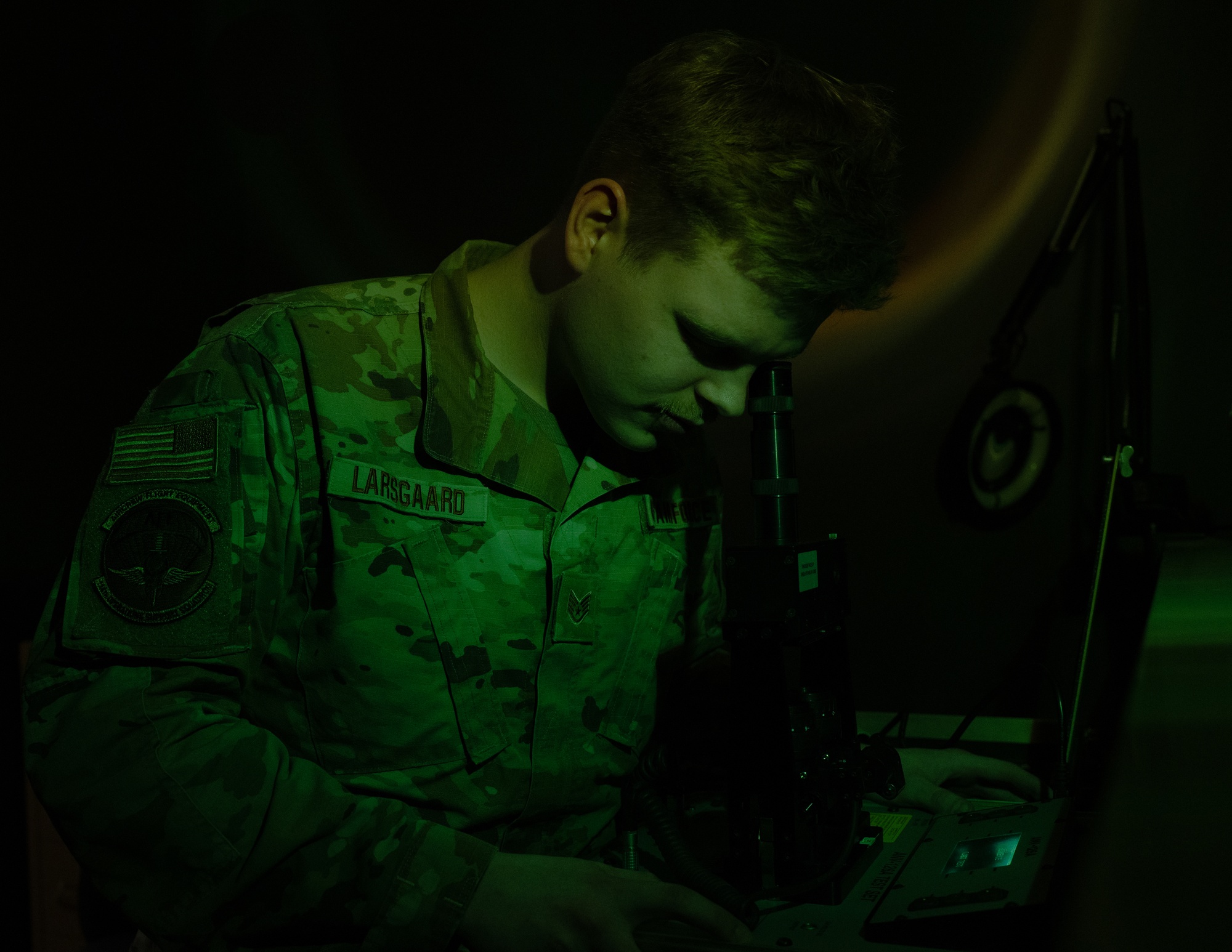
A U.S. soldier scans the terrain through night vision goggles during a nighttime training exercise. Night vision technology gives American forces a decisive advantage in low-light and no-light operations (U.S. Army photo).
Image Intensification: Amplifying What Is Already There
Image intensification is the technology behind the classic green-glow night vision that most people recognize. It does not create light. It collects the photons that already exist, even on the darkest night, and multiplies them until there are enough to form a visible image. According to the Army's Night Vision and Electronic Sensors Directorate (NVESD), the source photons come from starlight, moonlight, ambient skyglow, or faint near-infrared radiation that the human eye cannot detect. An image intensifier tube takes these photons and amplifies them by factors of tens of thousands.
The process works in three stages. First, incoming photons strike a photocathode, a thin layer of photosensitive material at the front of the intensifier tube. The photocathode converts photons into electrons through the photoelectric effect, the same phenomenon Albert Einstein described in 1905. Each photon that hits the photocathode liberates one electron.
Bushnell brings decades of sports optics engineering to the digital night vision space with the Equinox X650. It features a glass objective lens (not plastic like most budget units), WiFi streaming to your phone, and a 650-yard detection range that leads this price class.
Second, those electrons enter a microchannel plate, or MCP. This is where the real amplification happens. The MCP is a thin glass disc containing millions of microscopic channels, each roughly 6 to 10 micrometers in diameter. When an electron enters a channel and strikes the channel wall, it knocks loose additional electrons. These secondary electrons bounce down the channel, hitting more walls and producing more electrons with each impact. A single electron entering the MCP can produce thousands of electrons at the output. This cascade amplification is what turns a near-invisible scene into something a human eye can interpret.
Third, the amplified electrons strike a phosphor screen at the back of the tube. The phosphor converts electrons back into photons, producing the visible image that the user sees through the eyepiece. Traditionally, this phosphor emits green light because the human eye can distinguish more shades of green than any other color, maximizing the detail a user can perceive. That is why classic night vision imagery has that distinctive green glow.
The entire process, from photon in to photon out, happens at the speed of light. There is no processing delay, no frame rate, no digital artifacts. What you see through an image intensifier is a real-time, analog amplification of the actual scene. This immediacy is one of the reasons image intensification remains the dominant technology for head-mounted night vision goggles, where even slight latency can cause disorientation or nausea.
Four Generations of Night Vision
Night vision technology has evolved through four generations, each representing a leap in sensitivity, resolution, and usability. Understanding the generations explains why modern military NVGs are so dramatically superior to earlier devices and to anything available on the civilian market.
Generation I: The Vietnam Era
The first practical military night vision devices entered service during the Vietnam War in the mid-1960s. Generation I devices, like the AN/PVS-2 Starlight Scope, used a simpler form of image intensification without a microchannel plate. Instead, they relied on a series of accelerating electrodes to amplify the electron stream. The result was a device that worked, but with serious limitations. Gen I devices required moonlight or ambient light from flares to produce a usable image. They suffered from significant image distortion around the edges, a characteristic called "bloom," and they were bulky and heavy. The AN/PVS-2 weighed nearly six pounds and was mounted on a rifle, not worn on the head.
Despite those limitations, Gen I devices were a revelation. For the first time, individual soldiers could see and engage targets in conditions where the enemy was effectively blind. U.S. forces in Vietnam used starlight scopes to devastating effect in ambush positions and on perimeter defense. The technology was crude by modern standards, but the tactical advantage was immediate and unmistakable.
Generation II: The Microchannel Plate
Generation II night vision, introduced in the 1970s, added the microchannel plate described earlier. This single innovation transformed performance. The MCP provided dramatically higher electron gain, meaning Gen II devices could operate in much lower light conditions than Gen I. Image quality improved substantially, with better resolution and less edge distortion. The devices also became smaller and lighter, making head-mounted goggles practical for the first time.
The AN/PVS-5, introduced in 1977, was the first widely issued head-mounted night vision goggle in the U.S. military. It gave soldiers and aircrew hands-free night vision capability, enabling everything from dismounted infantry patrols to helicopter night flights. Gen II devices could operate in starlight conditions without requiring moonlight, a meaningful improvement that expanded the operational envelope of night operations.
Gen II technology remains the standard in many NATO allied forces and in the civilian night vision market, where U.S. export restrictions limit access to more advanced generations.
Generation III: Gallium Arsenide and the Current Standard
Generation III represents the current standard for U.S. military night vision and has been in service since the mid-1980s. According to the Army's Program Executive Office (PEO) Soldier, the defining innovation is a gallium arsenide photocathode that is dramatically more sensitive to near-infrared light than the multialkali photocathodes used in Gen II devices. Gallium arsenide detects a broader spectrum of near-infrared radiation and converts photons to electrons more efficiently, producing brighter, sharper images in lower light conditions.
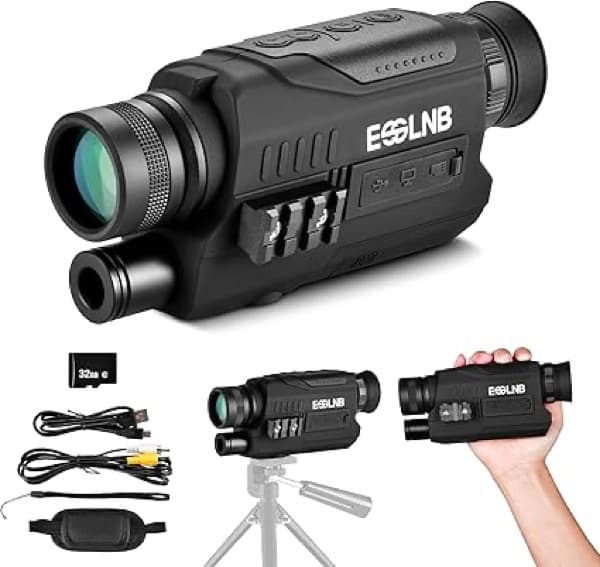
ESSLNB's 6x32 model sits in an unusual position: priced like a budget unit but featuring a large 32mm objective lens and 6x optical zoom that give it more raw light-gathering capability than most competitors under $150.
Gen III devices also add an ion barrier film on the MCP to extend the tube's operational life. Earlier tubes degraded as positive ions from the phosphor screen drifted back into the MCP and eroded the channel walls. The ion barrier blocks this back-migration, extending tube life from roughly 2,000 hours in Gen II to 10,000 hours or more in Gen III. That is a critical practical improvement, as replacing intensifier tubes is expensive.
The AN/PVS-14, a monocular night vision device manufactured by L3Harris Technologies, is the single most widely used night vision device in the U.S. military. Issued across the Army, Marine Corps, and special operations forces, the PVS-14 uses a Gen III image intensifier tube, weighs just 12 ounces, runs on a single AA battery for approximately 40 hours, and can be mounted on a helmet, held by hand, or attached to a weapon. L3Harris product specifications list a 40-degree field of view and waterproofing rated to 66 feet. Its ubiquity makes it the workhorse of American night operations.
The AN/PVS-31, a binocular NVG also built around Gen III tubes, provides depth perception that the monocular PVS-14 cannot. Binocular night vision is particularly important for tasks that require distance judgment, such as driving vehicles, navigating rough terrain, or fast-roping from helicopters. The PVS-31 is standard issue in many infantry and aviation units.
The progression from Gen I through Gen III night vision brought dramatic improvements in image clarity, light sensitivity, and edge-to-edge resolution. Each generation expanded the conditions under which forces could operate effectively at night (U.S. Army photo).
Generation IV and "Filmless" Tubes
The designation "Generation IV" is somewhat contested within the industry, but it generally refers to filmless or gated image intensifier tubes. These devices remove the ion barrier film from the MCP, which paradoxically improves performance even though the film was added in Gen III to extend tube life. Per the Army's Night Vision and Electronic Sensors Directorate, removing the film increases the signal-to-noise ratio by as much as 100 percent in low-light conditions, producing cleaner, higher-contrast images. The tradeoff in tube longevity is managed through improved manufacturing processes that reduce ion feedback without requiring the physical barrier.
The other key advancement in Gen IV is automatic gating. Standard Gen III tubes struggle when exposed to sudden bright light sources (explosions, headlights, fire) which can cause the image to bloom or temporarily wash out. Automatic gating rapidly switches the photocathode voltage on and off thousands of times per second, controlling the electron flow into the MCP and preventing the tube from being overwhelmed by bright light while maintaining sensitivity to dim areas of the scene. For operators moving through environments with mixed lighting, such as urban combat where streetlights, vehicle headlights, and dark alleys coexist, auto-gating is a transformative capability.
The U.S. Army has classified these advanced tubes under the "Omni VIII" and "thin-filmed" designations rather than formally adopting the Gen IV label, but the performance improvements are real and fielded.
NVG Generations Compared
Feature
Gen I
Gen II
Gen III
Gen IV / Filmless
Era introduced
1960s
1970s
Mid-1980s
2000s
Photocathode
S-20 multialkali
Improved multialkali
Gallium arsenide (GaAs)
Gallium arsenide (filmless MCP)
Microchannel plate
No
Yes
Yes (with ion barrier film)
Yes (filmless, auto-gated)
Min. light needed
Moonlight / flares
Starlight
Starlight / overcast
Near-total darkness
Tube life
~1,000 hrs
~2,500 hrs
~10,000 hrs
~10,000+ hrs
Auto-gating
No
No
Some models
Yes
Representative device
AN/PVS-2
AN/PVS-5
AN/PVS-14, AN/PVS-31
ENVG-B (image intensifier channel)
Approx. unit cost
$200 - $500 (surplus)
$1,000 - $3,000
$3,000 - $4,500
$10,000+ (ENVG-B: ~$23,000)
Green Phosphor vs. White Phosphor
One of the most noticeable changes in modern night vision is the shift from green to white imagery. Classic NVGs use a P43 green phosphor screen that produces the familiar green-tinted image. This was the standard for decades because green falls in the middle of the visible spectrum where the human eye has the highest number of cone receptors, allowing users to distinguish the most shades and detail.
Beginning in the 2010s, white phosphor tubes became increasingly common in U.S. military service. White phosphor produces a grayscale image, similar to a black-and-white photograph, instead of the monochromatic green. Research conducted by the Army Research Laboratory found that white phosphor imagery provides better contrast perception, improved depth perception, and reduced eye fatigue during extended use. The grayscale image feels more natural to the brain, which is accustomed to interpreting light and shadow rather than varying shades of a single color.
The AN/PVS-31A and newer AN/PVS-14 tubes are available in white phosphor configurations, and the ENVG-B uses white phosphor exclusively. Most special operations units have transitioned to white phosphor NVGs. The improvement is subjective but widely acknowledged: operators report that terrain features, facial details, and camouflage patterns are easier to distinguish in white phosphor than in green.
Thermal Imaging: Seeing Heat, Not Light
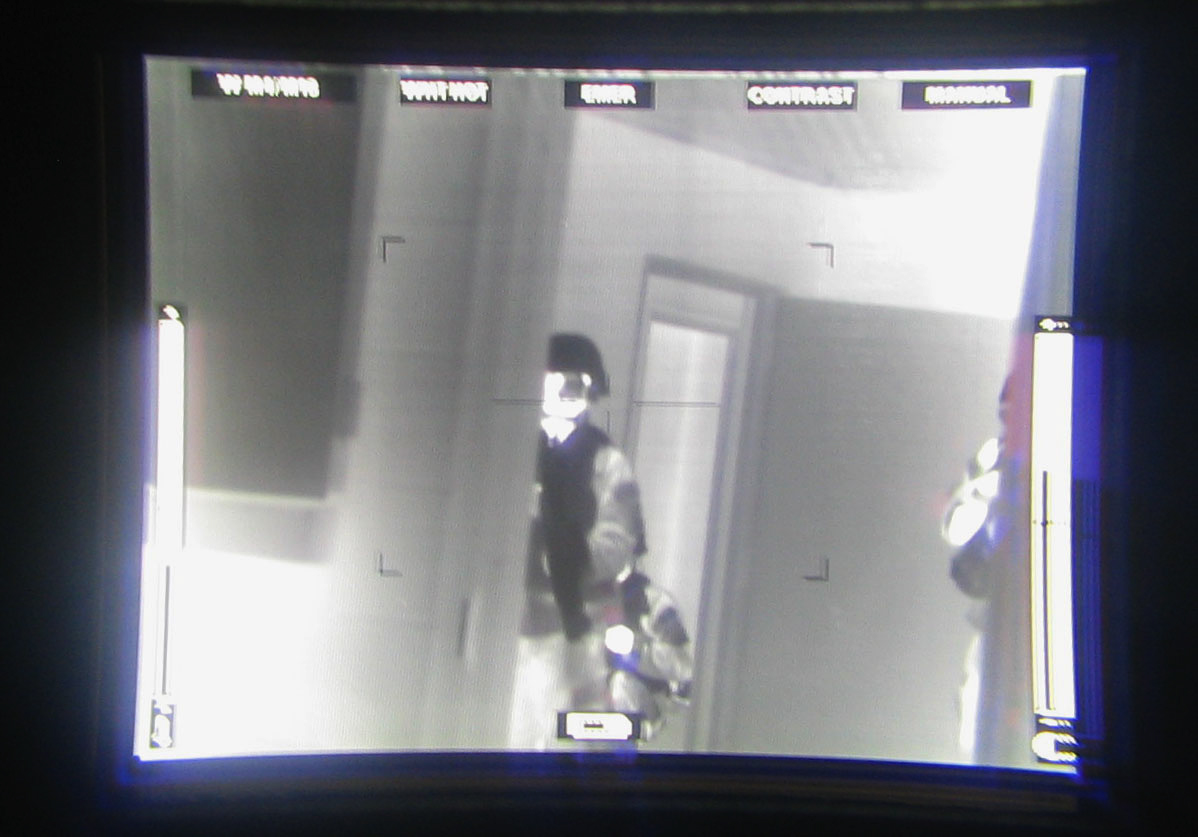
A thermal imaging sensor detects infrared radiation emitted by soldiers and vehicles, creating a heat map that works regardless of ambient light conditions. Thermal imaging sees through darkness, smoke, and light fog that would defeat image intensification (U.S. Army photo).
Thermal imaging takes a completely different approach to seeing in the dark. Instead of amplifying visible or near-infrared light, thermal cameras detect mid-wave or long-wave infrared radiation, the heat energy that every object with a temperature above absolute zero naturally emits. A human body at 98.6 degrees Fahrenheit radiates infrared energy that is invisible to the naked eye but clearly detectable by a thermal sensor. So does a vehicle engine, a recently fired weapon, a campfire, or even footprints on a cold floor.
The key advantage of thermal imaging is that it requires zero ambient light. Image intensification needs at least some photons to amplify; thermal imaging generates its own picture from the heat signature of the scene. This means thermal works in absolute darkness, underground, inside buildings with no windows, and even through visual obscurants like smoke, dust, and light fog that would render image intensifiers useless.
Military thermal imaging systems, broadly categorized as FLIR (Forward Looking Infrared), fall into two types. Cooled sensors use a cryogenic cooling unit to bring the detector array down to extremely low temperatures, typically around 77 Kelvin (-196 degrees Celsius). Cooling the detector dramatically reduces thermal noise, producing sharper, higher-resolution imagery with greater detection range. Cooled FLIR systems are standard on combat aircraft, armored vehicles, and long-range surveillance platforms. The downside is that the cooling unit adds weight, power consumption, and maintenance requirements, and it takes time to reach operating temperature.
Uncooled sensors operate at ambient temperature using microbolometer technology. Each pixel in the detector array is a tiny thermal resistor that changes its electrical resistance as it absorbs infrared radiation. According to FLIR Systems (now part of Teledyne), uncooled sensors are smaller, lighter, cheaper, and start instantly, but they produce lower-resolution imagery with shorter detection ranges than cooled systems. Uncooled thermal sensors are commonly found in handheld devices, weapon sights, and the thermal channels of head-mounted systems like the ENVG-B.
Thermal imaging does not show the world the way the human eye sees it. Instead of trees, roads, and buildings, the user sees heat contrast: warm objects appear bright against cool backgrounds (in "white hot" mode) or dark against light backgrounds (in "black hot" mode). A person standing in a field at night shows up as a glowing silhouette. A vehicle that has been running for hours radiates like a beacon. The technology is exceptional at detecting the presence of people, vehicles, and activity, but it provides less detail about textures, signage, and terrain features than image intensification does.
This is precisely why the most advanced military night vision systems now combine both technologies.
The Key Systems: From PVS-14 to ENVG-B
AN/PVS-14: The Workhorse
The AN/PVS-14, manufactured by L3Harris Technologies, is the standard-issue monocular night observation device across the U.S. military. It is mounted over one eye, typically the non-dominant eye, leaving the other eye free for use with a weapon optic, a flashlight, or unaided vision. This monocular configuration allows the user to maintain some degree of natural night-adapted vision in the uncovered eye, a capability that binocular goggles sacrifice.
L3Harris specifications list a single Gen III image intensifier tube with a 40-degree field of view, a weight of 12 ounces, and a runtime of roughly 40 hours on one AA battery. The device can be helmet-mounted, head-mounted, handheld, or attached to a weapon sight via adapters, and it is waterproof to 66 feet. At a unit cost of roughly $3,000 to $4,500 depending on tube specification and procurement contract, it is relatively affordable by military standards, part of the reason the Department of Defense has purchased hundreds of thousands of them.
The PVS-14's simplicity is its strength. It does one thing well: it amplifies available light. It has no thermal capability, no digital overlay, no wireless connectivity. For a dismounted infantryman who needs to see in the dark, navigate terrain, and identify threats, the PVS-14 has been the answer for over two decades.
GPNVG-18: Panoramic Vision for Special Operations
The GPNVG-18, or Ground Panoramic Night Vision Goggle, represents the high end of image-intensification night vision. Manufactured by L3Harris Technologies, the GPNVG-18 uses four Gen III image intensifier tubes arranged to provide a 97-degree field of view, more than double the 40-degree field of a standard PVS-14 or PVS-31. The two center tubes provide a fused binocular image directly ahead, while the two outboard tubes extend peripheral vision to either side.
The expanded field of view is not a luxury. In close-quarters combat, where threats can appear from any direction and reaction times are measured in fractions of a second, the 40-degree tunnel vision of standard NVGs is a dangerous limitation. Operators describe the difference between standard goggles and the GPNVG-18 as the difference between looking through a toilet paper tube and looking through a window. The panoramic view allows faster target acquisition, better situational awareness, and more confident movement through confined spaces.
The GPNVG-18 is most closely associated with U.S. special operations forces. It was prominently used during the May 2011 raid on Osama bin Laden's compound in Abbottabad, Pakistan. The device weighs roughly 27 ounces, and unit costs have been reported at $40,000 or more. Those factors limit its distribution primarily to special operations units where the operational benefit justifies the cost and weight penalty.
ENVG-B: Fused Night Vision with Augmented Reality
The ENVG-B combines image intensification, thermal imaging, and an augmented reality overlay into a single head-mounted system. It represents the most significant leap in military night vision capability in decades (U.S. Army photo).
The Enhanced Night Vision Goggle - Binocular, or ENVG-B, is the U.S. Army's newest night vision system and the most capable head-mounted NVG ever fielded. Manufactured by L3Harris Technologies under a contract managed by PEO Soldier, the ENVG-B combines three technologies that previous systems kept separate: image intensification, thermal imaging, and an augmented reality display.
Each eyepiece contains a white phosphor Gen III image intensifier tube and an uncooled thermal sensor. The system can display either image independently or fuse both into a single combined image. In fused mode, the user sees the natural-looking detail of image intensification overlaid with the heat-detection capability of thermal. A person hiding in dense brush who would be invisible to standard NVGs becomes immediately visible when their body heat shows through the foliage on the thermal layer. A trip wire or terrain feature that thermal alone might not reveal is clearly visible through the image-intensification layer. The fusion of both technologies eliminates most of the individual weaknesses of each.
The augmented reality capability is what truly sets the ENVG-B apart. The system includes a digital display that can overlay tactical information directly onto the user's view of the real world. When wirelessly linked to the Family of Weapon Sights - Individual (FWS-I), a thermal weapon sight mounted on the soldier's rifle, the ENVG-B can display the weapon sight's reticle and thermal image in the goggle. This allows a soldier to aim and fire accurately around corners, over walls, or from any position without bringing the weapon to their eye. Army modernization documents describe this as "rapid target acquisition," and in practice it means a soldier can engage targets from covered positions that would have required full exposure with previous technology. The concept parallels the F-35 helmet's approach of fusing sensor data into a single head-mounted display, adapted for the dismounted infantryman.
The ENVG-B can also display waypoints, friendly force positions, and other tactical data fed from the Army's Integrated Visual Augmentation System (IVAS) network. The goal is a common operating picture visible through the goggle: every soldier sees where their teammates are, where the objective is, and where threats have been identified, all overlaid on their real-world view of the battlefield.
The Army awarded L3Harris a production contract worth over $400 million for initial ENVG-B fielding, with deliveries beginning in 2023. Per the program of record, unit cost is approximately $23,000 per system, significantly more than the PVS-14 it replaces but far less than the GPNVG-18. The ENVG-B is being fielded to infantry brigade combat teams, with the goal of eventually equipping every close-combat soldier in the Army.
How Night Vision Changed Warfare
The tactical impact of night vision is difficult to overstate. Before these devices existed, night operations were extremely limited: patrols moved slowly, engagements were chaotic and often fratricidal, and neither side could reliably find or fix the other. Night was an equalizer. A technologically inferior force could use darkness to close the gap with a superior opponent.
Night vision destroyed that equalizer. The first major demonstration came during the 1991 Gulf War, where coalition forces equipped with Gen III NVGs and FLIR-equipped vehicles conducted night ground assaults that Iraqi forces simply could not respond to. The thermal sights on M1 Abrams tanks detected Iraqi armor at ranges exceeding 3,000 meters in complete darkness, while the Iraqis could not see the incoming fire. Gulf War after-action reports documented engagements so one-sided that they redefined expectations for what night operations could achieve.
In Afghanistan and Iraq from 2001 through the 2020s, the night ownership advantage became even more pronounced. Special operations raids were conducted almost exclusively at night, when the combination of NVGs, helicopter FLIR, and tactical surprise gave assaulting forces an overwhelming edge. The enemy knew that American forces preferred to come at night and feared it precisely because there was no effective countermeasure available to non-state actors.
The doctrine of owning the night is not just about seeing in the dark. It encompasses an entire ecosystem of night-capable systems: NVGs for dismounted troops, FLIR for vehicles and aircraft, infrared lasers and illuminators invisible to the naked eye but visible through NVGs, infrared strobes for identification of friendly forces, and weapon sights calibrated for night engagement. The combined effect is that a well-equipped force can maneuver, communicate, identify targets, and engage with near-daytime effectiveness while the enemy operates blind. For a broader look at technologies that have transformed the modern battlefield in ways most people do not expect, see our roundup of military technologies that sound like science fiction but are already in use.
Night vision technology is one of the most tightly controlled categories of defense equipment in the world. Under the International Traffic in Arms Regulations (ITAR), administered by the State Department's Directorate of Defense Trade Controls, Gen III and more advanced image intensifier tubes are classified as controlled defense articles. Exporting them without a license is a federal crime. This is not a formality: the U.S. government has prosecuted individuals and companies for attempting to smuggle military-grade NVGs overseas.
The reason for the restriction is straightforward. Night vision is a force multiplier, and the United States wants to maintain its advantage. If Gen III tubes were freely available on the global market, adversaries and non-state actors could acquire them at scale, eroding the night dominance that American forces have invested billions to achieve. ITAR restrictions ensure that only approved allies receive Gen III-equivalent technology, and even then under strict end-use agreements.
The civilian market in the United States operates under a separate set of rules. U.S. citizens can legally purchase and own Gen III night vision devices domestically. Prices for civilian AN/PVS-14 units range from roughly $2,500 to $4,500 depending on tube specification and manufacturer. Gen II devices from European manufacturers like Photonis are also widely available and legal to own without restriction.
Digital night vision, which uses a CMOS or CCD sensor and digital processing to amplify light rather than a vacuum tube, falls outside the ITAR generation classifications. Digital devices are cheaper and not export-restricted, but they introduce latency, produce lower-resolution images, and consume more battery power than analog tube-based systems. For hunting, wildlife observation, and other civilian uses, digital night vision is adequate. For military applications where milliseconds and image quality determine survival, analog Gen III tubes remain the gold standard.
What Comes Next
Night vision technology is not standing still. Several developments are shaping the next generation of systems.
Digital fusion and augmented reality. The ENVG-B represents the first generation of fused, augmented-reality night vision, but the concept has much further to go. The Army's IVAS program, built around a Microsoft HoloLens-derived headset, aims to extend the augmented reality concept into a full heads-up tactical display with mapping, targeting, after-action review, and even synthetic training environments. Per the Defense Advanced Research Projects Agency (DARPA) and Army Futures Command roadmaps, integrating these capabilities with night vision is a stated priority. The end state is a soldier who sees not just the dark terrain but a data-rich overlay of everything relevant to the mission.
Higher-resolution and broader-spectrum tubes. Manufacturers including L3Harris and Elbit Systems are pushing image intensifier performance further through improved photocathode materials, thinner MCP designs, and wider spectral sensitivity. Elbit Systems specifications for their latest thin-filmed tubes show incremental gains in low-light sensitivity and image detail that continue to extend the lower bound of usable ambient light.
Lightweight form factors. Weight on the head matters enormously. Helmet-mounted NVGs cause neck strain, especially during extended operations or high-G maneuvers in aircraft. Soldiers from the 82nd Airborne Division who fielded the ENVG-B during early operational testing reported neck fatigue as a persistent concern. Reducing the weight of four-tube panoramic systems and fused thermal/intensified systems is a priority, and advances in miniaturized thermal sensors and more compact intensifier tubes are driving designs toward lighter configurations without sacrificing capability.
Counter-NVG threats. As night vision proliferates, adversaries are developing countermeasures. Lasers designed to damage or dazzle image intensifier tubes, camouflage materials that reduce thermal signatures, and the use of near-infrared detection to spot NVG-equipped forces are all emerging threats. The next generation of military NVGs will need to incorporate protection against laser attack and adaptation to adversaries who are themselves becoming more capable at night. The weapons defining future warfare increasingly include both the sensors and the countermeasures designed to defeat them.
The broader trend is convergence. Night vision, thermal imaging, augmented reality, wireless networking, and weapon-sight integration are all collapsing into a single system worn on the soldier's head. The ENVG-B is the first step. Within a decade, the individual infantryman's night vision goggle will likely be an AI-assisted, networked, multi-spectral sensor platform that not only shows what is in the dark but highlights what matters, identifies threats automatically, and connects the soldier to every other sensor on the battlefield. The night will not belong to whoever has goggles. It will belong to whoever has the smartest goggles.
Frequently Asked Questions
What is the difference between night vision and thermal imaging?
Night vision (image intensification) amplifies existing ambient light, such as starlight or moonlight, to produce a visible image. It requires at least some light to function. Thermal imaging detects infrared heat radiation emitted by objects and works in complete darkness, through smoke, and through light fog. Night vision shows a scene that looks similar to a dimly lit photograph. Thermal imaging shows heat contrast, where warm objects like people and vehicles stand out against cooler backgrounds. Modern military systems like the ENVG-B combine both technologies.
Why is military night vision green?
Traditional military NVGs use a green phosphor screen because the human eye can distinguish more shades of green than any other color, allowing users to perceive the maximum amount of detail. However, many newer military NVGs now use white phosphor, which produces a grayscale image similar to black-and-white television. White phosphor provides better contrast, improved depth perception, and less eye fatigue during extended use. Most U.S. special operations units have transitioned to white phosphor goggles.
Can civilians buy military night vision?
In the United States, civilians can legally purchase and own Gen III night vision devices, including the AN/PVS-14, without a special license. Prices range from roughly $2,500 to $4,500 for quality Gen III monoculars. However, exporting Gen III or higher night vision outside the United States without a State Department license is a federal crime under ITAR regulations. Gen II and digital night vision devices are available with fewer restrictions and at lower prices.
What NVGs do U.S. special operations forces use?
U.S. special operations forces use several systems depending on the mission. The GPNVG-18 four-tube panoramic goggle, which provides a 97-degree field of view, is widely used for direct-action raids and close-quarters combat. The AN/PVS-31 binocular NVG is common for general operations. Special operations units are also receiving the ENVG-B and IVAS systems with fused thermal and augmented reality capabilities. The specific device depends on the unit, the mission profile, and the operating environment.
How far can military night vision see?
Detection range depends on the device, the amount of ambient light, and the size of the target. A Gen III monocular like the AN/PVS-14 can detect a person-sized target at roughly 300 to 500 meters under starlight conditions. Vehicle-mounted FLIR thermal systems can detect vehicles at several kilometers. Long-range surveillance thermal systems can detect targets at 10 kilometers or more. The ENVG-B's fused thermal and intensified image extends the effective range and detection probability beyond what either technology achieves alone.
What is the ENVG-B and why does it matter?
The Enhanced Night Vision Goggle - Binocular (ENVG-B) is the U.S. Army's newest night vision system. It combines image intensification, thermal imaging, and an augmented reality display in a single head-mounted device. When linked wirelessly to a thermal weapon sight on the soldier's rifle, it allows aiming and firing from behind cover without exposing the body. It can also display tactical data like friendly positions and waypoints. The ENVG-B represents the most significant advance in individual soldier night vision since the introduction of Gen III technology in the 1980s.