
Mine
An explosive device placed on or below the surface of land or water, designed to detonate when contacted or triggered by the presence of a vehicle, ship, or person.
Mines are explosive weapons that wait passively for a target to come to them, making them among the oldest and most persistent hazards of warfare. Land mines include anti-tank mines designed to disable or destroy vehicles and anti-personnel mines intended to injure or kill soldiers. Naval mines are placed in waterways to damage or sink ships and submarines, using contact, magnetic, acoustic, or pressure sensors to detect passing vessels.
Naval mines are particularly effective area-denial weapons. A single minefield can close a harbor or strait, diverting shipping and requiring extensive and dangerous mine clearance operations before normal traffic can resume. During the Gulf War, two U.S. warships, USS Tripoli and USS Princeton, struck Iraqi mines, demonstrating that even the world's most powerful navy is vulnerable to relatively simple mine warfare.
The humanitarian impact of land mines has led to the Ottawa Treaty banning anti-personnel mines, signed by over 160 nations (though not the United States, Russia, or China). Mines laid decades ago continue to kill and maim civilians in former conflict zones from Cambodia to Angola. Mine clearance is slow, dangerous, and expensive, and millions of mines remain in the ground worldwide.
Related Terms
Depth Charge
An anti-submarine weapon consisting of a canister of explosives set to detonate at a predetermined depth, designed to damage or destroy submarines underwater.
Torpedo
A self-propelled underwater weapon that uses acoustic homing or wire guidance to seek and destroy submarines and surface ships with a warhead detonated on impact or by proximity fuse.
IED
An Improvised Explosive Device is a homemade bomb constructed from military or commercial explosives, designed to damage or destroy vehicles and personnel, widely used by insurgents and terrorist groups.
Related Articles
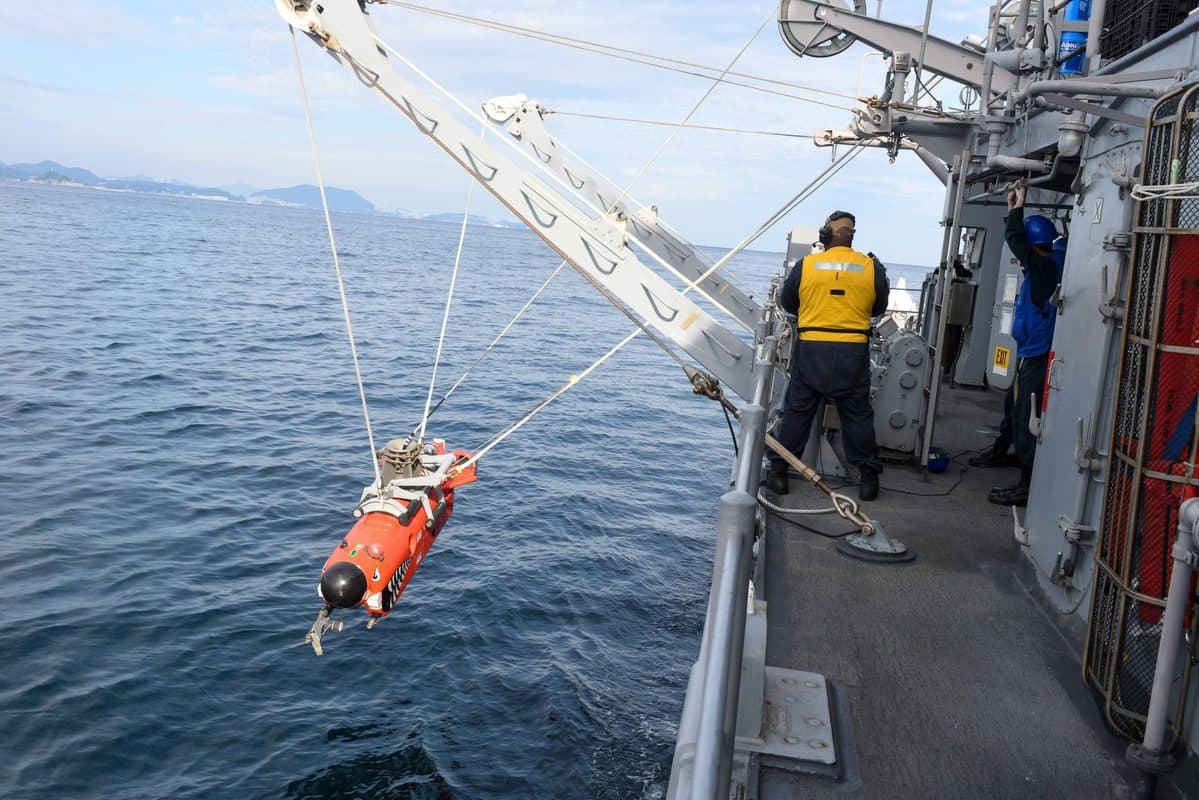
How the US Navy Mines an Entire Strait in 48 Hours, and How an Enemy Clears It
A $25,000 naval mine can stop a $13 billion aircraft carrier. And there is no reliable way to find every one. Mine warfare is the cheapest, most asymmetric weapon in naval combat, and the U.S. Navy has spent decades neglecting the one capability that could shut down the world's most critical shipping lanes overnight.