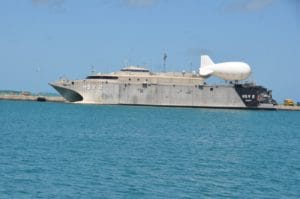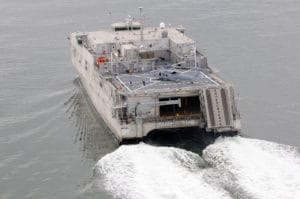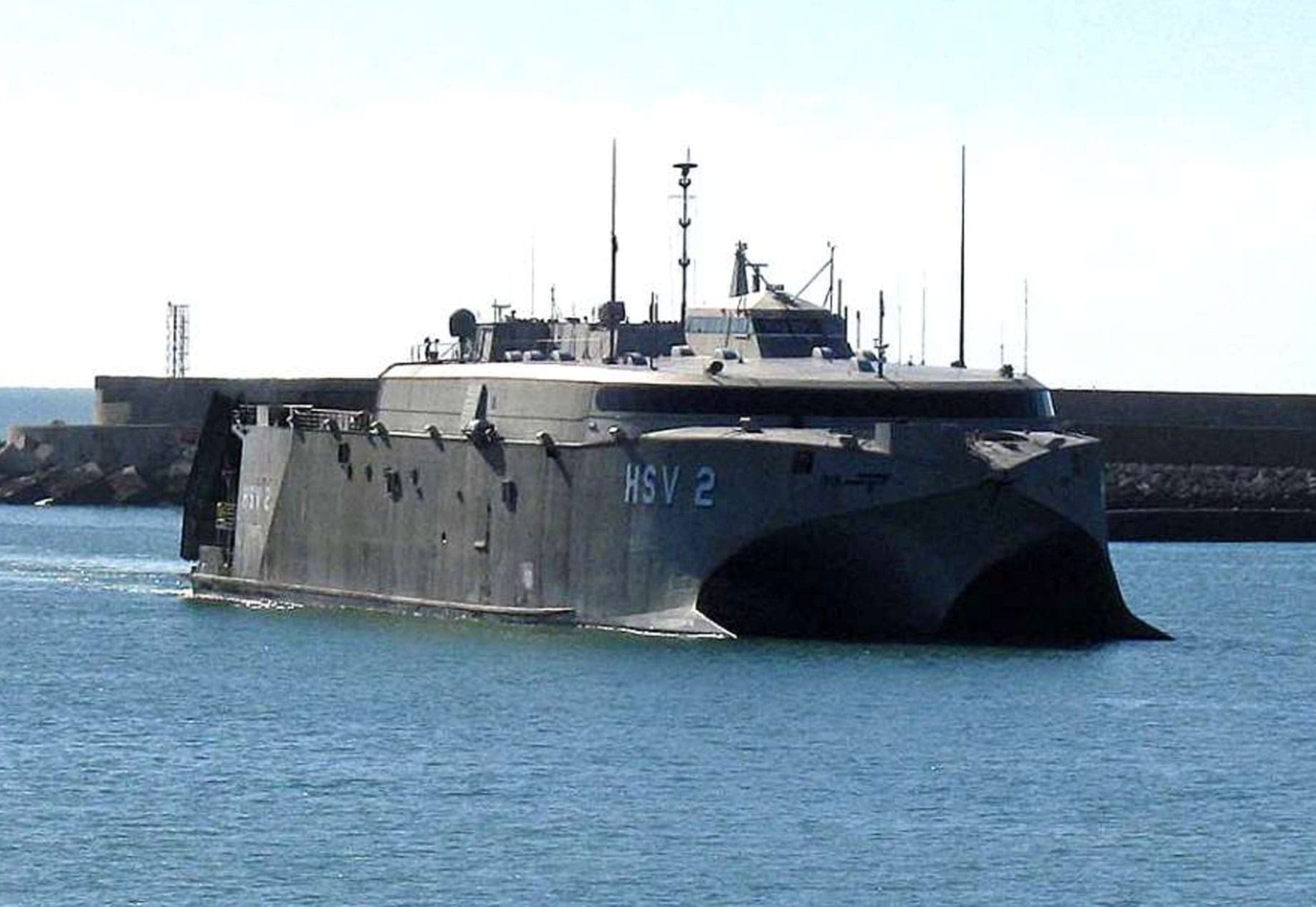

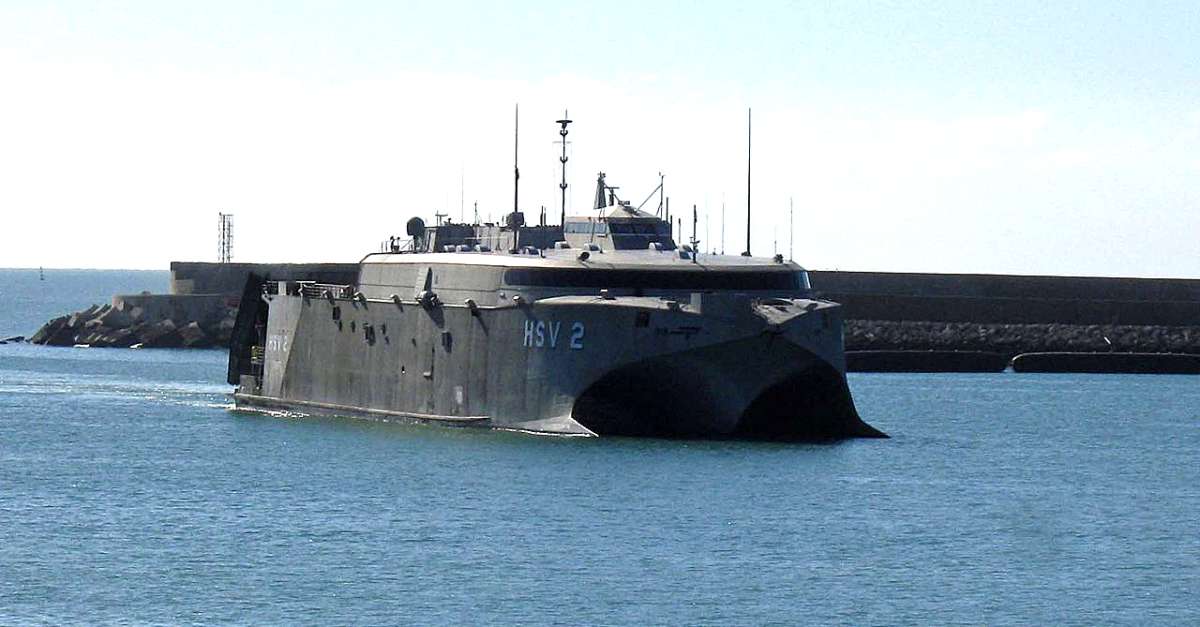
Catamarans have long held a beloved place in Naval tradition. Capable of staying mostly above the water, a catarmaran reduces friction with the water by allowing the water to pass beneath it in channels. When the Navy first came up with the idea of engineering a hybrid naval catamaran, the HSV-2 Swift, they envisioned a military ship able to work on anti-mine operations. Furthermore, the HSV-2 Swift would serve as a useful testing platform for naval technology. In 2008, Australian ship builder Incat produced the first and only modern naval hybrid catamaran. The United States Navy employed the craft for ten years before selling it to the United Arab Emirates for dredging operations.

The acronym “HSV” stands for “High Speed Vessel”. Because a hybrid catamaran would stay above the water, its aluminum hull and light weight made it an ideal platform for helicopters and unmanned aerial and naval vehicles. When it first launched from Norfolk, Virginia in October of 2003, the Navy envisioned a class of warship able to quickly manuever to the front lines and disable mines or launch a wave of UAVs and helicopters into action.