Skip to content
April 19:Battles of Lexington and Concord251yr ago

How the US Military Feeds 1.3 Million People Every Day Across 4,800 Sites in 160 Countries

James Holloway · · 11 min read
Save
Share:
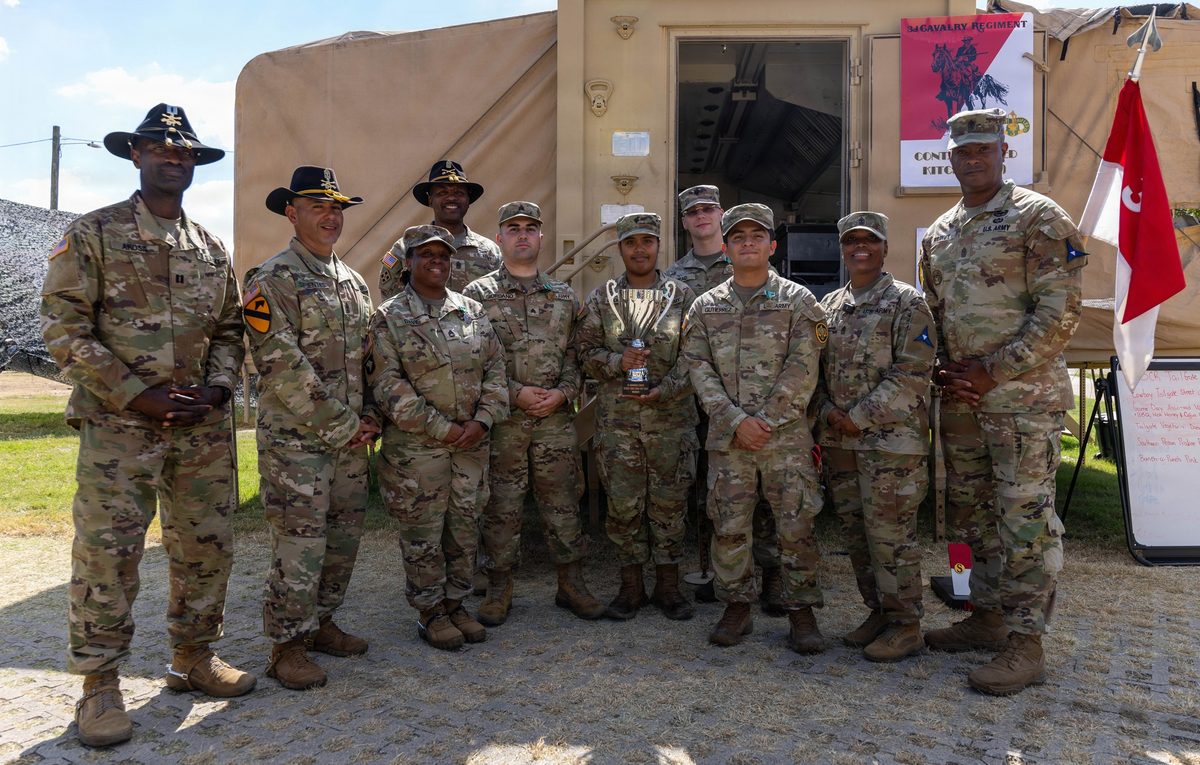
U.S. Army culinary specialists preparing food in a field kitchen during a military exercise
James Holloway
James Holloway

Military Logistics & Sustainment Analyst

James Holloway writes about military readiness, logistics, and the practical limits of modern forces. His work focuses on how training, sustainment, and organizational decisions shape what militaries can actually do -- not just what they are designed to do on paper.

Every day, the United States military feeds approximately 1.3 million people across 4,800 dining facilities, field kitchens, and food service operations in more than 160 countries. The annual food budget exceeds $13 billion. The logistics chain that moves food from American farms and processing plants to a combat outpost in a remote corner of the world is one of the largest, most complex food distribution systems ever created — and almost no one outside the military knows how it works.

Napoleon's dictum that an army marches on its stomach has never been more literally true. A modern U.S. soldier requires approximately 4,500 calories per day during combat operations — nearly double the civilian average. A deployed infantry division of 15,000 soldiers consumes roughly 80,000 pounds of food per day. Sustaining that intake across time zones, climate zones, and active combat areas requires a supply chain that begins at the Defense Logistics Agency and ends with a culinary specialist serving chow from a containerized kitchen in a place most Americans cannot find on a map.

DLA Troop Support: The Largest Government Food Buyer

The Defense Logistics Agency Troop Support, based in Philadelphia, is the starting point for nearly every meal the military serves. It is the largest purchaser of food in the U.S. government and one of the largest in the world. DLA Troop Support manages subsistence supply chains for all four military branches, the Coast Guard, federal agencies, and authorized resale activities including commissaries.

The numbers are staggering. DLA Troop Support manages contracts with thousands of food vendors, processes tens of thousands of requisitions annually, and moves billions of dollars' worth of food products through a global distribution network. The agency buys everything from fresh produce and frozen meat to shelf-stable rations and specialty dietary items. Every item must meet strict specifications that often exceed commercial food safety standards — military food undergoes USDA inspection at the point of manufacture, again at distribution centers, and again at the point of consumption.

U.S. Army soldiers operating a field kitchen preparing hot meals during a training exercise
Soldiers prepare meals in a field kitchen during an exercise. The ability to provide hot food in the field — rather than relying solely on MREs — is a force multiplier for morale and physical performance (U.S. Army photo).

The distribution network uses a hub-and-spoke model. Food moves from manufacturers to Defense Distribution Centers (DDCs) — massive warehouses strategically positioned across the continental United States and at key overseas locations. From there, it flows through military transportation networks — trucks, cargo aircraft, container ships, and even helicopters for the most remote outposts — to its final destination. The system is designed for redundancy: if one supply line is disrupted, alternatives exist. That resilience has been tested repeatedly, from hurricane response to warzone logistics.

The MRE: 24 Menus, 1,300 Calories, 3-Year Shelf Life

The Meal, Ready-to-Eat is the most recognizable military food item in the world, and also the most misunderstood. Soldiers alternately love it and despise it, but the MRE is an extraordinary piece of food engineering that has evolved continuously since it replaced the older C-ration and MCI in 1981.

Each MRE is a complete meal in a sealed pouch. The current lineup offers 24 different menus, each providing approximately 1,250-1,300 calories with a balance of protein, carbohydrates, and fat. Every MRE includes an entree, a side dish, bread or crackers, a spread (peanut butter, cheese, or jelly), a dessert, a beverage mix, and an accessory pack containing a flameless ration heater, utensils, seasoning, and a napkin. The flameless ration heater is a chemical heating pad activated by water — no fire needed, which matters when you are eating in a fighting position where smoke or flame would give away your location.

Contents of a military MRE (Meal Ready to Eat) spread out showing all components including entree, sides, and accessories
An MRE contains a complete meal — entree, side, dessert, beverage, utensils, and a flameless ration heater — in a single sealed pouch with a minimum three-year shelf life (U.S. Army photo).

MREs have a minimum shelf life of three years when stored at 80 degrees Fahrenheit, and can last significantly longer at lower temperatures. The U.S. Army's Combat Feeding Directorate at the Natick Soldier Research, Development, and Engineering Center in Massachusetts is responsible for developing and testing MRE menus. New items are evaluated by soldier taste panels before adoption. Popular menus (chili with beans, beef ravioli, chicken pesto pasta) are legends among troops. Unpopular ones (the veggie omelet, since discontinued) become running jokes that outlast the item itself.

A soldier in combat is authorized three MREs per day, providing roughly 3,900 calories. This is sufficient for sustained operations but is not intended as a permanent diet. The military's goal is always to transition from MREs to hot meals from field kitchens as quickly as the tactical situation allows. Extended MRE-only diets cause digestive issues, morale decline, and nutritional gaps that hot meals address. The unofficial rule among experienced soldiers: MREs are fuel, not food. They keep you fighting. They do not keep you happy.

Field Kitchens: Hot Food in the Middle of Nowhere

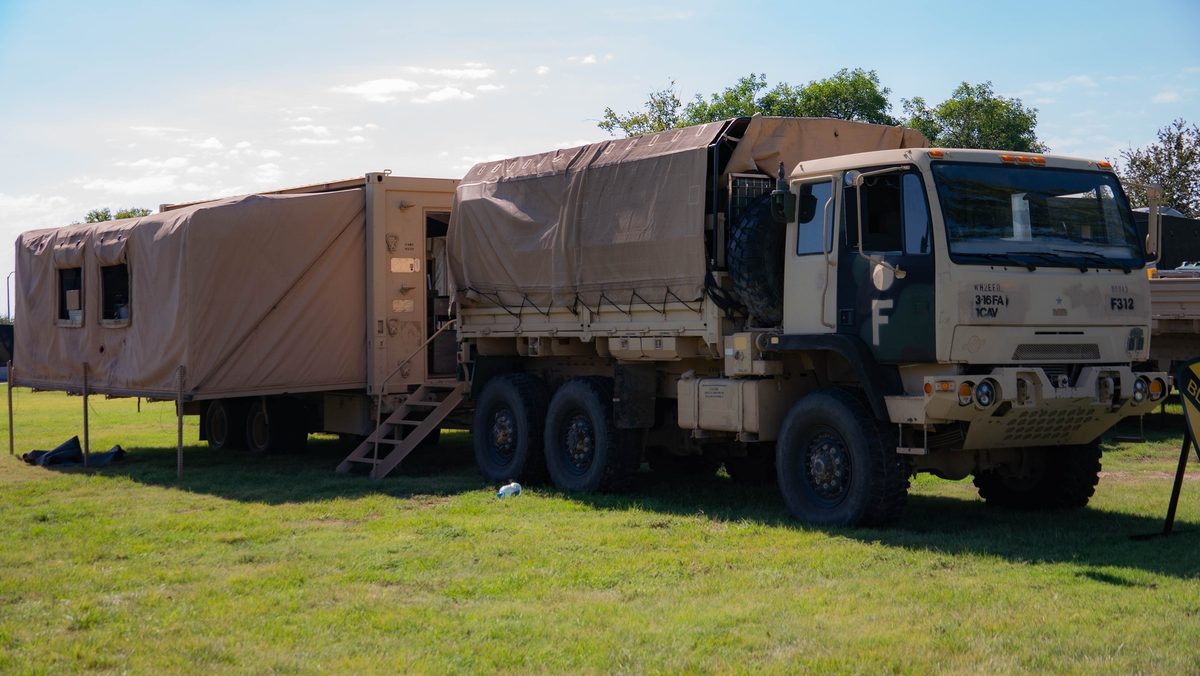
The Containerized Kitchen (CK) is the Army's primary field food preparation system. It is exactly what it sounds like: a full kitchen built into a standard military shipping container that can be transported by truck, helicopter, or cargo aircraft and set up in under 90 minutes. A single CK can prepare meals for up to 250 soldiers per meal period, producing four meals per day (breakfast, lunch, dinner, and midrats — the midnight ration for overnight personnel).

The CK includes commercial-grade cooking equipment: convection ovens, griddles, steam tables, refrigerators, and sinks with hot and cold running water. It runs on JP-8 fuel (the same fuel used by most military vehicles and aircraft) for power generation, which simplifies the supply chain. A team of four culinary specialists can operate a CK, preparing hot meals from a mix of fresh, frozen, and shelf-stable ingredients.

Getting hot food from the CK to soldiers at forward positions creates its own logistical challenge. During the wars in Iraq and Afghanistan, field kitchens were typically located at forward operating bases (FOBs), and food convoys ran daily routes to smaller combat outposts (COPs). These food convoys were vulnerable to IED attacks, which meant that feeding soldiers in remote locations sometimes cost American lives. The military has invested in autonomous resupply vehicles and drone delivery systems partly to reduce the human risk associated with logistics convoys, including food delivery.

Soldiers being served a meal at a military dining facility during a field training exercise
A military dining facility during a training exercise. The transition from MREs to hot prepared meals is a logistics priority — hot food is a measurable force multiplier for troop morale and performance (U.S. Army photo).

Garrison Dining: The Warrior Restaurant

On permanent military installations, dining facilities (DFACs) have evolved far beyond the mess halls of previous generations. The Army's Warrior Restaurant initiative has transformed many garrison dining facilities into food-court-style operations offering multiple cuisine stations, salad bars, made-to-order grills, and nutrition labeling. The goal is to improve soldier nutrition, reduce obesity-related readiness issues, and compete with the off-base fast food that many soldiers choose over subpar DFACs.

The transformation is not just aesthetic. The Army's Holistic Health and Fitness (H2F) program has driven changes to military menus that emphasize performance nutrition — higher protein, complex carbohydrates, and reduced processed foods. Some installations now employ registered dietitians who work with culinary teams to develop menus that support the physical demands of military training. The Philip A. Connelly Awards program, the military food service equivalent of the Oscars, has driven competitive excellence among dining facilities for decades.

Submarine Food: The Best in the Military

Ask any sailor where the best food in the military is, and the answer is nearly universal: submarines. The submarine service has always allocated the highest per-person food budget in the Department of Defense, and for good reason. When you take away sunlight, fresh air, personal space, phone calls, and internet for 70-90 days, food becomes the single most important morale factor available. The Navy treats submarine food as a strategic investment in crew endurance.

Military supply convoy transporting provisions and equipment during a deployment operation
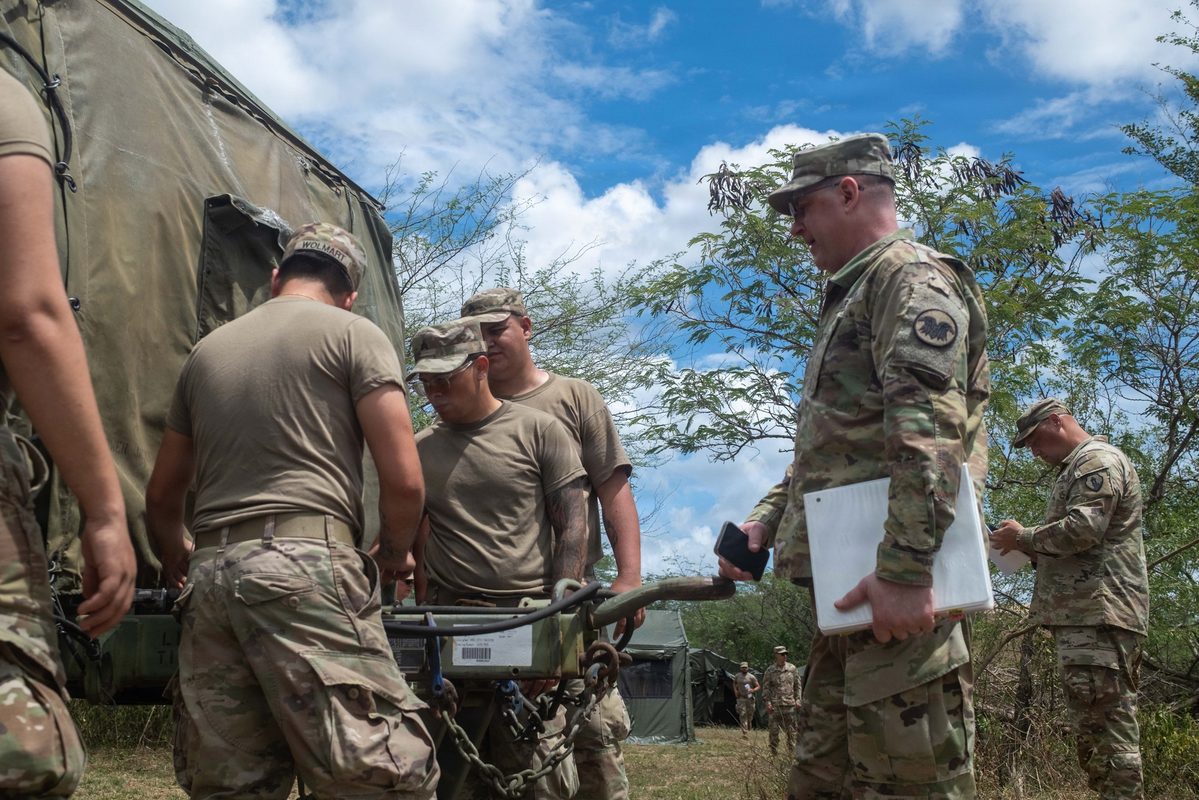
Military supply convoys transport food and provisions to forward positions. During the wars in Iraq and Afghanistan, food logistics convoys were regular targets for IED attacks, making supply chain security a critical concern (U.S. Army photo).

Submarine food budgets run approximately 30-50% higher per person than surface ships. Submarine cooks — Culinary Specialists who volunteer for submarine duty — are generally the most skilled food service personnel in the fleet. A typical submarine patrol menu includes prime rib, lobster tails on holidays, fresh-baked bread and pastries daily, and midnight rations for the overnight watch. The quality declines over the course of a 90-day patrol as fresh ingredients give way to frozen and then canned, but even the late-patrol meals are prepared with a level of care that reflects the Navy's understanding: these 155 people have nothing else. Give them the food.

The Math of Feeding a Division

Consider the logistics of feeding a single Army division deployed for combat operations. A heavy division fields approximately 15,000 soldiers. Each requires roughly 4,500 calories per day. That translates to about 14 pounds of food per soldier per day (including water content), or 210,000 pounds — 105 tons — of food daily for one division alone. Over a 30-day period, that single division consumes over 3,000 tons of food.

Now multiply across an entire theater of operations. During the peak of the Iraq War, the U.S. military had approximately 170,000 personnel deployed in Iraq alone. Feeding that force required a daily logistics effort involving hundreds of refrigerated trucks, cargo flights, and contracted food service operations. The Defense Logistics Agency sustained this for years.

The scale becomes even more impressive when you consider dietary requirements. The military must accommodate halal, kosher, vegetarian, and allergen-free meals across all its operations. MRE menus include vegetarian and kosher-certified options. Dining facilities maintain separate preparation areas for dietary restrictions. In a force of 1.3 million, the diversity of dietary needs mirrors the diversity of the force itself.

Frequently Asked Questions

How many calories does a military MRE contain?

Each MRE provides approximately 1,250-1,300 calories. Soldiers in combat are authorized three MREs per day, providing roughly 3,900 calories. The actual caloric requirement during sustained combat operations can exceed 4,500 calories per day, which is why the military prioritizes transitioning from MREs to hot meals as quickly as the tactical situation permits.

Why is submarine food the best in the military?

The Navy allocates the highest per-person food budget in the Department of Defense to submarines because food is the primary morale tool available during 70-90 day submerged patrols where crews have no access to sunlight, fresh air, or communication with family. The investment in quality food is a deliberate strategy to sustain crew performance and mental health during extreme isolation.

How long do MREs last?

MREs have a minimum shelf life of three years when stored at 80 degrees Fahrenheit. At lower storage temperatures, they can remain edible and nutritious for significantly longer — five years or more at 60 degrees Fahrenheit. The shelf life is verified through regular testing by the Army's Combat Feeding Directorate at Natick Soldier Systems Center.

Continue Reading

Share this article

Share:

Recommended

Ace of The Skies: Can You Identify These Military Aircraft Throughout The Years?
Test Yourself

Ace of The Skies: Can You Identify These Military Aircraft Throughout The Years?

Can you identify these aircraft?

Take the Quiz

On This Day in Military History

April 19

Battles of Lexington and Concord (1775)

British regulars and colonial militia exchanged fire at Lexington Green and the North Bridge in Concord, Massachusetts, in the opening battles of the American Revolutionary War. The "shot heard round the world" launched a conflict that would create the United States of America.

1943Warsaw Ghetto Uprising Begins

1995Oklahoma City Bombing

See all 4 events on April 19

Get Military News & History in Your Inbox

Join thousands of readers receiving our weekly digest of military technology, history, and analysis.

Test Your Knowledge