Skip to content
April 19:Battles of Lexington and Concord251yr ago

What 90 Days on a Nuclear Submarine Actually Feels Like — Told by the Crews Who Do It

Nathan Cole · · 11 min read
Save
Share:
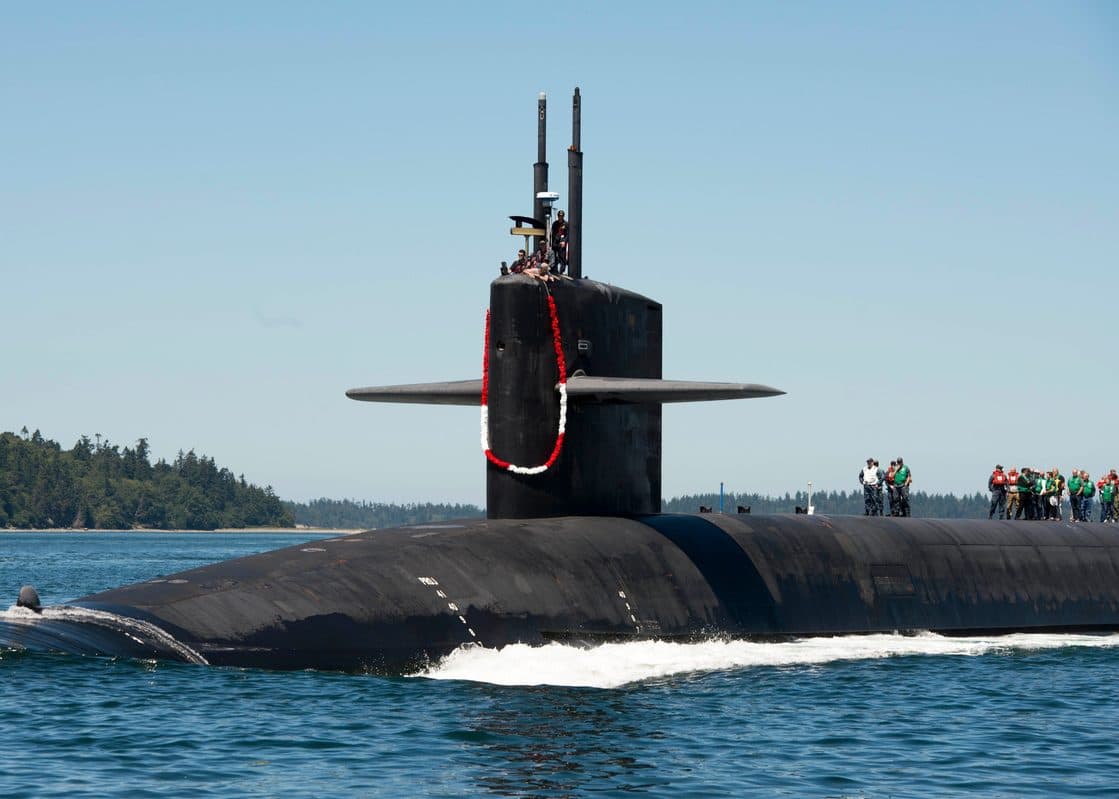
U.S. Navy submarine crew members returning to port after a strategic patrol deployment
Nathan Cole
Nathan Cole

Naval Warfare & Maritime Systems Analyst

Nathan Cole covers naval warfare, maritime strategy, and the ships and submarines that project power across the world's oceans. His work focuses on fleet architecture, carrier operations, and how navies adapt to threats from missiles, drones, and undersea warfare.

No sunlight. No phone calls. No fresh air for 90 days. Somewhere beneath hundreds of feet of ocean, inside a steel cylinder roughly 560 feet long and 42 feet wide, 155 sailors are living their lives in a world where the concept of "day" and "night" has been replaced by a watch rotation that never stops. They have not seen the sky since they submerged. They will not see it again until their patrol ends. This is life aboard a U.S. Navy ballistic missile submarine — the most isolated human existence in the American military, and arguably anywhere on Earth.

The U.S. Navy's submarine force comprises roughly 20,000 active-duty sailors who volunteer for this life. They are screened psychologically, trained intensively, and then sent underwater for deployments lasting 70 to 90 days — sometimes longer. The submarines they inhabit are engineering marvels, nuclear-powered cities that generate their own oxygen, purify their own water, and could theoretically stay submerged for twenty years without refueling. The limiting factor is never the machine. It is always the people inside it.

The 18-Hour Day: How Time Works Underwater

Surface ships and shore installations follow the 24-hour clock that governs the rest of human civilization. Submarines do not. Most U.S. Navy submarines operate on an 18-hour rotation divided into three 6-hour blocks: six hours on watch, six hours for maintenance and training, and six hours for sleep. This cycle repeats continuously for the duration of the patrol. There are no weekends. There are no holidays. Christmas, Thanksgiving, and the Fourth of July are acknowledged with better-than-usual meals and sometimes a movie, but the watch rotation does not pause.

The 18-hour cycle means the crew's internal clocks never synchronize with the outside world. There is no sunrise to reset the circadian rhythm. The fluorescent lights inside the submarine burn at the same intensity around the clock. Some boats adjust the lighting color — dimming to red during "night" hours — but the effect on sleep quality is marginal. Submariners develop a unique relationship with fatigue. Sleep is functional, not restorative. You sleep because you must, in whatever window the rotation allows, and you wake because the boat demands it.

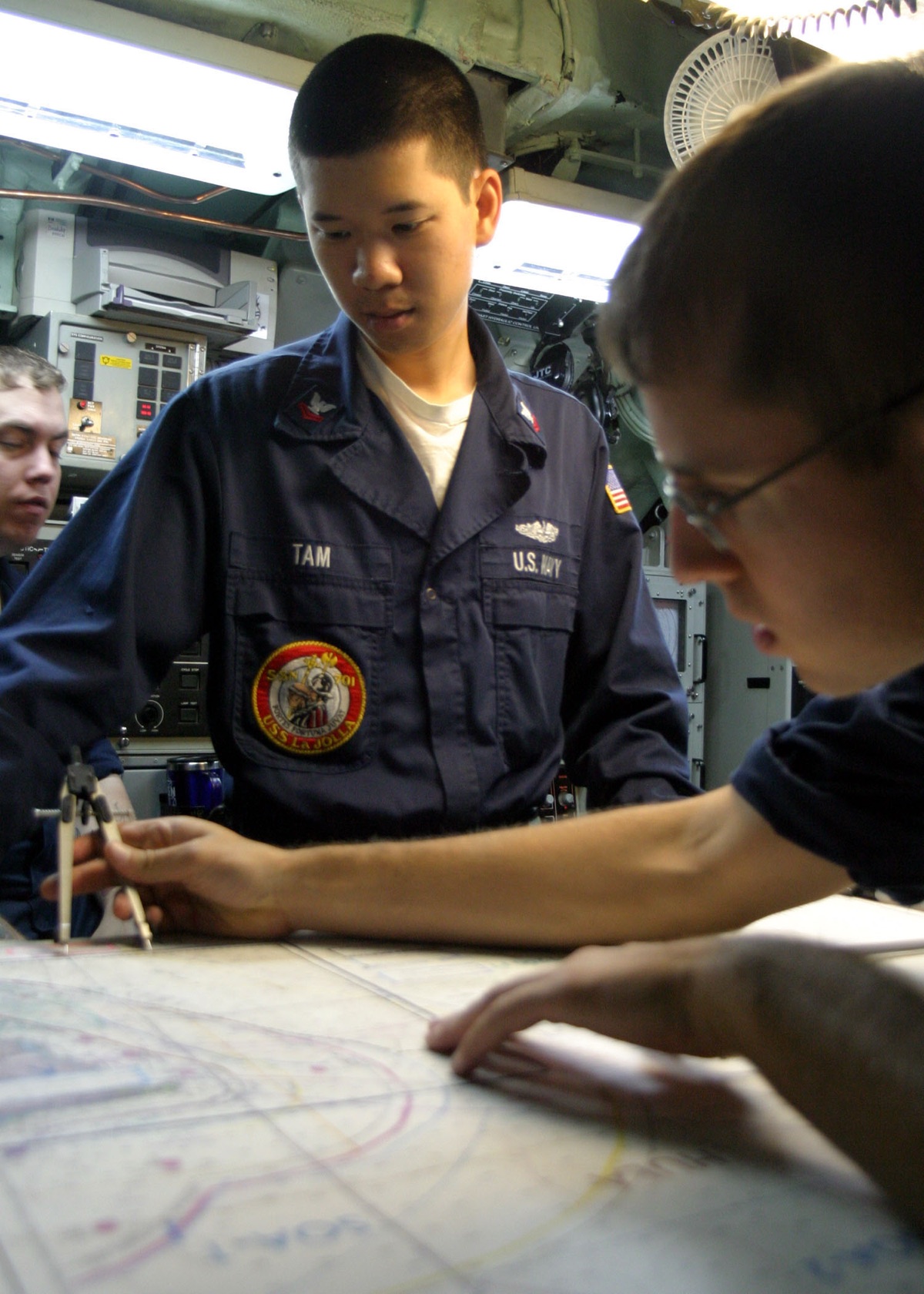
U.S. Navy sailors manning stations in a submarine control room during operations
The control room is the nerve center of the submarine, staffed continuously throughout every watch rotation. Officers and enlisted sailors monitor navigation, sonar, weapons systems, and reactor status around the clock (U.S. Navy photo).

Hot-Racking: Sharing a Bed with Someone You May Never Meet

Space on a submarine is the most precious commodity aboard. Every cubic foot that goes to living space is a cubic foot that cannot hold a missile tube, a torpedo rack, or a sonar array. The result is a berthing arrangement that would violate the housing standards of any civilian workplace: hot-racking.

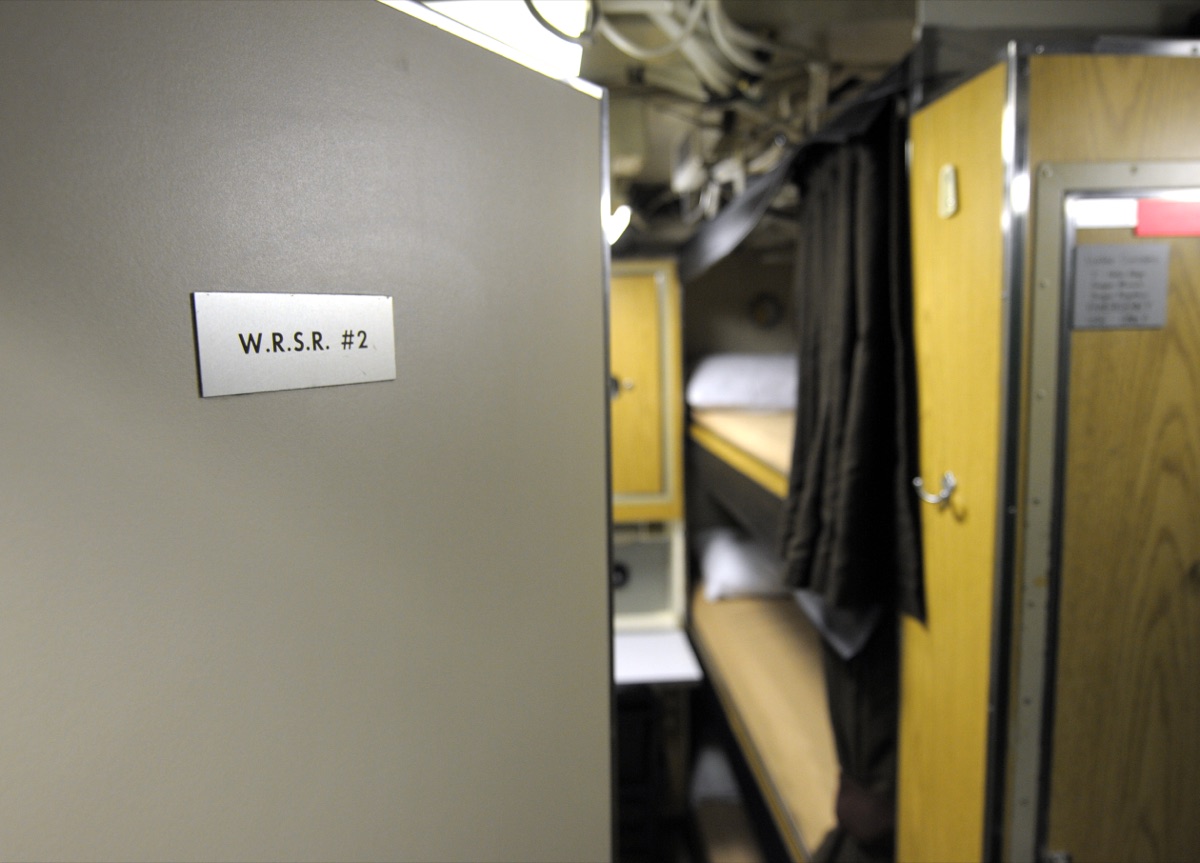
Hot-racking means sharing a bunk with one or two other sailors on alternating watch rotations. When you climb out of your rack at the start of your watch period, someone else climbs into the same bunk — often still warm from your body heat, hence the name. The mattresses are roughly 30 inches wide and 72 inches long, stacked three high in compartments that line the narrow passageways. Each sailor gets a small personal curtain for privacy and a storage locker barely large enough for a change of clothes and a few personal items.

On Ohio-class ballistic missile submarines (SSBNs), which carry crews of about 155, the berthing situation is marginally better than on fast-attack boats because the hull is larger. Virginia-class attack submarines (SSNs), with crews of roughly 135 in a smaller hull, are tighter. On the oldest boats, junior enlisted sailors sometimes sleep on torpedoes — torpedo room bunks are positioned between the weapons. This is not metaphorical. You are literally sleeping next to a MK 48 torpedo.

Submarine berthing compartment showing stacked bunks in a narrow passageway
Berthing space on a submarine is measured in inches. Bunks are stacked three high and shared between sailors on different watch rotations — a practice known as "hot-racking" (U.S. Navy photo).

The Food: Why Submarine Chow Is the Best in the Navy

Ask any sailor in the U.S. Navy where the best food is, and the answer is nearly universal: submarines. This is not an accident. The Navy has understood for decades that when you take away sunlight, fresh air, personal space, and communication with family, food becomes the single most important factor in crew morale. Accordingly, the submarine service allocates the highest per-person food budget in the entire military.

As of recent budgets, submarine food allowances run approximately $12-14 per person per day — roughly 30-50% more than surface ships. The extra funding buys higher-quality ingredients, and submarine cooks (formally designated as Culinary Specialists) are generally the best-trained food service personnel in the fleet. A typical submarine menu includes prime rib, lobster tail on special occasions, fresh-baked bread, and midnight rations ("midrats") that keep the overnight watch fed.

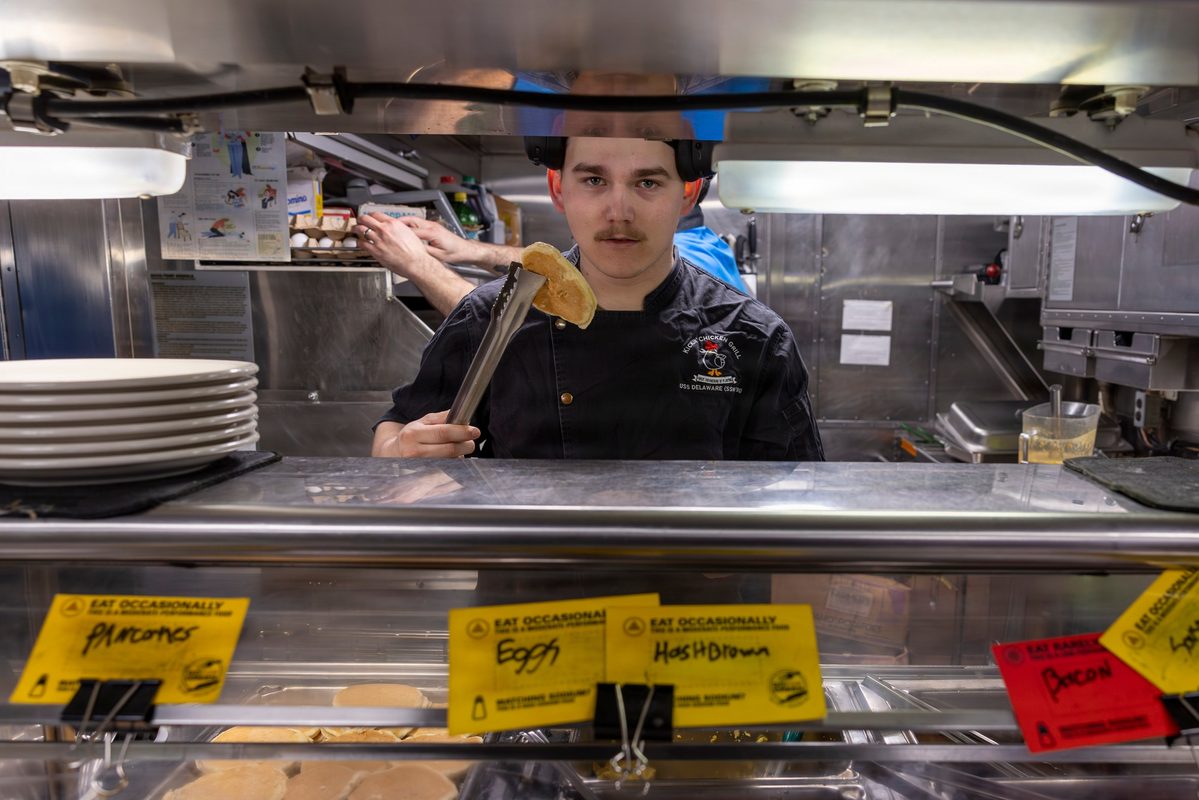
Submarine culinary specialists preparing meals in the boat's galley kitchen
Submarine cooks prepare meals in a galley roughly the size of a residential kitchen — feeding 155 sailors four meals per day for the entire patrol. The quality of submarine food is a deliberate morale strategy (U.S. Navy photo).

The challenge is storage. A submarine departing for a 90-day patrol must carry every ounce of food for the entire deployment. There are no resupply runs underwater. The freezers and dry storage are packed floor to ceiling at the start of a patrol, and every passageway, every unused space, gets filled with canned goods and supplies. Sailors in the early days of a patrol literally walk on cases of food stacked in the corridors. As the weeks pass and supplies dwindle, the menus shift from fresh ingredients to frozen, then to canned. The last weeks of a long patrol are lean — and the cooks' creativity in making canned goods palatable becomes a genuine art form.

Meals serve a social function that goes beyond nutrition. The mess is one of the few places on the boat where crew members from different divisions interact. Sitting down for a meal is the closest thing to normalcy that submarine life offers, and the Navy protects that ritual accordingly.

Family Grams: 40 Words from the People You Love

Communication with the outside world on a ballistic missile submarine is, by design, almost nonexistent. The submarine's entire reason for existing is to remain undetectable. Transmitting radio signals would reveal its position, which would defeat the purpose of the deterrent patrol. So the submarine receives messages but almost never sends them.

The primary link to family is the familygram — a message of no more than 40 words that a sailor's family can send through the submarine squadron's family readiness group. The message is screened by Navy personnel to remove any information that might affect the sailor's ability to perform their duties — news of deaths, divorces, or serious family emergencies is handled separately through the chain of command, not through familygrams. Sailors typically receive 8 to 10 familygrams during a 70-90 day patrol. They cannot reply.

Think about that for a moment. Your only connection to your spouse, your children, your parents, is a 40-word message that arrives at unpredictable intervals. You cannot respond. You cannot ask questions. You cannot say goodnight. You read the words, absorb whatever they tell you, and go back to work. New sailors find this one of the hardest adjustments. Veterans develop a stoic relationship with the familygram system that outsiders sometimes mistake for indifference. It is not indifference. It is survival.

The Blue and Gold Crew System

Ohio-class ballistic missile submarines solve the human endurance problem through a two-crew rotation. Each SSBN has a Blue crew and a Gold crew. One crew takes the boat on patrol for roughly 70-77 days while the other crew is ashore for training, leave, and maintenance. When the boat returns, the crews swap. The turnaround period — called a refit — takes about 25-30 days, during which the returning crew stands down and the departing crew takes over the boat.

This system means each crew spends approximately 60% of its time deployed or preparing to deploy. An SSBN is at sea, on deterrent patrol, approximately 70% of the calendar year. The submarine's reactor does not care about holidays. The missiles do not take vacations. The mission — assuring a survivable second-strike nuclear capability — is permanent, and the manning system reflects that permanence.

Fast-attack submarines (SSNs) do not use the Blue/Gold system. Their single crew deploys for 6-8 month cycles that include port visits, exercises, and varied operational tasking. Life on a fast-attack boat is different from an SSBN — more varied, less isolated, but in many ways more physically demanding because the smaller hull leaves even less personal space.

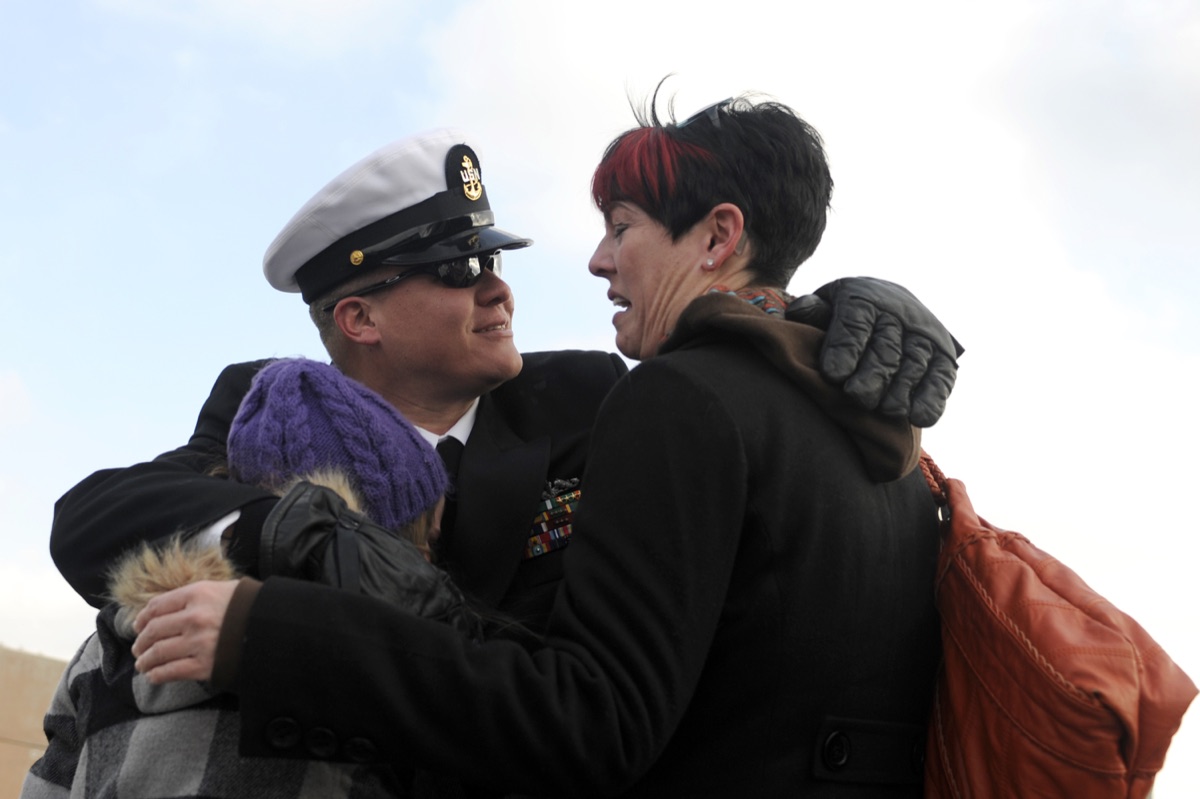
Submarine crew members greeting families on the pier after returning from a strategic patrol
The homecoming pier. After months submerged with no communication beyond 40-word familygrams, returning to the surface and seeing family is the emotional peak of the deployment cycle (U.S. Navy photo).

When Things Go Wrong at 800 Feet

A submarine at depth is the most isolated environment in the military. If a sailor has a medical emergency — a burst appendix, a broken bone, a heart attack — there is no helicopter, no ambulance, no evacuation. The boat's independent duty corpsman (IDC), a highly trained enlisted medical specialist, is the only medical provider aboard. There are no doctors. The IDC handles everything from dental emergencies to minor surgery, sometimes with telephone guidance from physicians ashore transmitted through the boat's limited communication systems.

Submarine crews train extensively for casualty response — fire, flooding, reactor emergencies, and hydraulic failures. Fires in a sealed steel tube filled with oxygen-generating equipment and weapons are existential threats. Every sailor, regardless of their primary job, qualifies on damage control procedures. The submarine qualification process — earning your "dolphins," the insignia worn by qualified submariners — requires demonstrating knowledge of every major system on the boat, from the reactor to the torpedo tubes. This universal cross-training means that in an emergency, any qualified submariner can respond to a casualty in any compartment.

The psychological screening process for submarine duty is rigorous precisely because the consequences of a crew member breaking down underwater are severe. Claustrophobia is an obvious disqualifier, but the screening goes deeper. Evaluators look for emotional stability, tolerance for monotony, ability to function in close quarters with the same people for months, and the temperament to handle extreme stress without panic. The attrition rate during submarine qualification is significant — many sailors who volunteer for submarine duty ultimately choose to leave or are reassigned.

Why They Do It

The logical question is: why would anyone volunteer for this? The pay differential is modest — submarine duty pay adds a few hundred dollars per month. The living conditions are objectively worse than any other assignment in the Navy. The isolation from family is extreme. And yet, the submarine service has never had difficulty finding volunteers. Reenlistment rates for qualified submariners consistently rank among the highest in the Navy.

The answer, from submariners themselves, tends to center on three things. First, the mission. Knowing that your patrol directly contributes to strategic nuclear deterrence — the capability that has prevented great-power war for eight decades — gives the work a weight and purpose that other assignments cannot match. Second, the crew. A 155-person crew that lives, works, and sleeps in a steel tube for three months develops a bond that submarine veterans describe as closer than family. Third, the competence. The submarine force's relentless qualification standards create an environment where everyone around you is exceptionally capable. There is no dead weight on a submarine. The person next to you has proven they can handle the worst the boat can throw at them. That mutual trust is its own reward.

The average age of a submarine crew is 22. These are young sailors, many on their first deployment, learning to live in conditions that most adults would find unbearable. They do it quietly, underwater, with no audience and no recognition. When they surface and return to port, their families are waiting on the pier. That moment — stepping off the boat into sunlight and arms — is, by every account, worth every one of those 90 days in the dark.

Frequently Asked Questions

How long do submarines stay underwater?

U.S. Navy ballistic missile submarines (SSBNs) typically conduct patrols lasting 70-90 days continuously submerged. The nuclear reactor and onboard oxygen generation systems can sustain the boat indefinitely — food and crew endurance are the limiting factors. Fast-attack submarines (SSNs) deploy for 6-8 months but make port visits during that period.

Do submariners ever see sunlight?

Not during a strategic patrol. From the moment the submarine submerges until it surfaces at the end of the patrol, the crew lives entirely under artificial light. There are no windows on a submarine. Some boats adjust interior lighting to simulate day/night cycles, but most operate under constant fluorescent illumination.

What is a familygram?

A familygram is a 40-word message that a submariner's family can send during a patrol. Messages are screened by Navy personnel before delivery. Sailors cannot reply. Familygrams are typically the only personal communication a ballistic missile submariner receives during an entire 70-90 day deployment.

Continue Reading

Share this article

Share:

Recommended

Ace of The Skies: Can You Identify These Military Aircraft Throughout The Years?
Test Yourself

Ace of The Skies: Can You Identify These Military Aircraft Throughout The Years?

Can you identify these aircraft?

Take the Quiz

On This Day in Military History

April 19

Battles of Lexington and Concord (1775)

British regulars and colonial militia exchanged fire at Lexington Green and the North Bridge in Concord, Massachusetts, in the opening battles of the American Revolutionary War. The "shot heard round the world" launched a conflict that would create the United States of America.

1943Warsaw Ghetto Uprising Begins

1995Oklahoma City Bombing

See all 4 events on April 19

Get Military News & History in Your Inbox

Join thousands of readers receiving our weekly digest of military technology, history, and analysis.

Test Your Knowledge