Skip to content
April 19:Battles of Lexington and Concord251yr ago

Patriot Missile System: The Only Air Defense That Has Shot Down Ballistic Missiles in 3 Different Wars

David Kowalski · · 12 min read
Save
Share:
U.S. Army Patriot missile battery deployed in a live-fire exercise with launchers elevated
David Kowalski
David Kowalski

Missile Systems & Air Defense Contributor

David Kowalski writes about missile systems, air defense networks, and the technology behind precision strike warfare. His work examines how offensive and defensive missile capabilities shape the balance of power between nations.

The MIM-104 Patriot is the only air defense system on Earth with confirmed ballistic missile kills in three different wars. No other system — not the Russian S-300, not Israel's Iron Dome, not China's HQ-9 — can make that claim. Patriot has engaged and destroyed ballistic missiles in Desert Storm (1991), the Iraq War (2003), and the ongoing conflicts in the Middle East and Ukraine (2022-present). That combat record, spanning more than three decades and multiple generations of the interceptor, is unique in the history of missile defense.

But Patriot's story is not a clean narrative of unbroken success. The system's Desert Storm debut was surrounded by controversy that took years to untangle. The PAC-2 that fired in 1991 was a fundamentally different weapon from the PAC-3 MSE that defends Ukrainian cities today. Understanding Patriot means understanding how a system evolved from a deeply flawed first combat outing into what many analysts now consider the most combat-proven air defense platform in the world.

How the Patriot System Works

A Patriot battery is not a single weapon. It is an integrated system of radar, fire control, launchers, and interceptors that work together as a unit. The core components have remained broadly consistent across Patriot's evolution, even as every element has been upgraded or replaced.

The AN/MPQ-65 radar (upgraded to the AN/MPQ-65A in the latest configurations) is the system's eyes. This multifunction phased-array radar handles search, detection, tracking, missile guidance, and electronic counter-countermeasures all from a single antenna. It can track over 100 targets simultaneously while guiding multiple interceptors to their targets. The radar's ability to distinguish real warheads from decoys and debris — a capability that was essentially nonexistent in 1991 — has improved enormously through successive software upgrades.

AN/MPQ-65 Patriot radar system deployed in the field during a training exercise
The AN/MPQ-65 phased-array radar serves as the Patriot battery's primary sensor, handling target detection, tracking, classification, and missile guidance simultaneously (U.S. Army photo).

The Engagement Control Station (ECS) is the battery's brain, where operators monitor the tactical picture and authorize engagements. A typical Patriot battery includes up to eight M901 launching stations, each carrying four PAC-3 MSE interceptors (sixteen per launcher in the PAC-3 configuration, compared to four PAC-2 missiles per launcher). A standard battery fields the radar, the ECS, a communications relay group, an electric power plant, and the launchers — roughly 70 soldiers to operate the entire system.

The battery composition means Patriot is mobile but not agile. Setting up a battery takes several hours. Tearing it down takes hours more. The system was designed to defend fixed assets — airfields, logistics hubs, population centers — rather than to maneuver with frontline forces. That limitation has shaped how Patriot gets used in every conflict.

PAC-2 vs. PAC-3: Two Completely Different Weapons

The single most important thing to understand about Patriot's combat record is that the PAC-2 and PAC-3 are not incremental upgrades of the same missile. They are fundamentally different weapons that use different kill mechanisms, and their performance in combat reflects that difference.

The PAC-2 (Patriot Advanced Capability-2) uses a blast-fragmentation warhead. The missile flies toward the incoming target and detonates its 200-pound warhead when the proximity fuze determines it is close enough. The explosion sends a cloud of fragments outward, hoping to damage or destroy the target through sheer destructive energy. This approach works well against aircraft. Against ballistic missiles, which are traveling at several times the speed of sound, the intercept geometry is far less forgiving. Even a near-miss that tears off chunks of the warhead may not prevent the debris — potentially still carrying a payload — from reaching the ground.

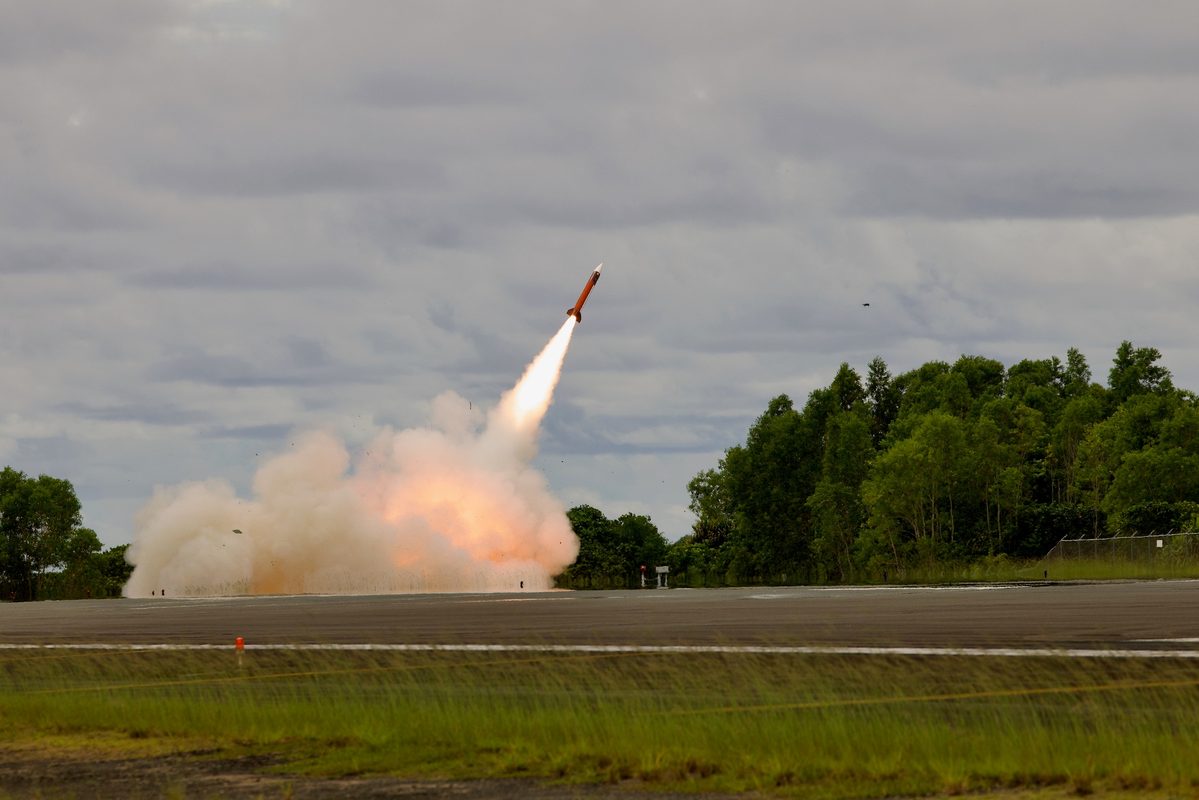
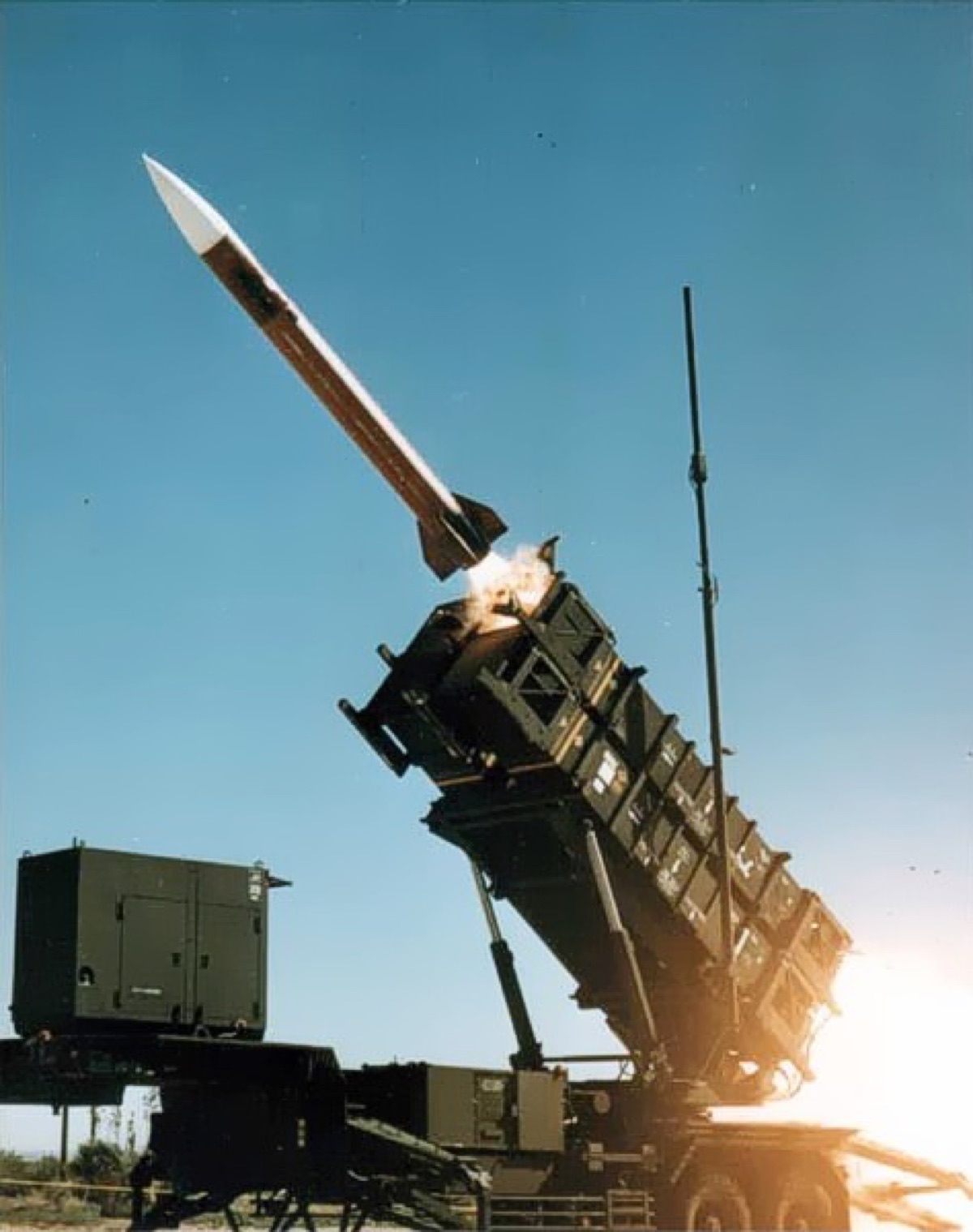
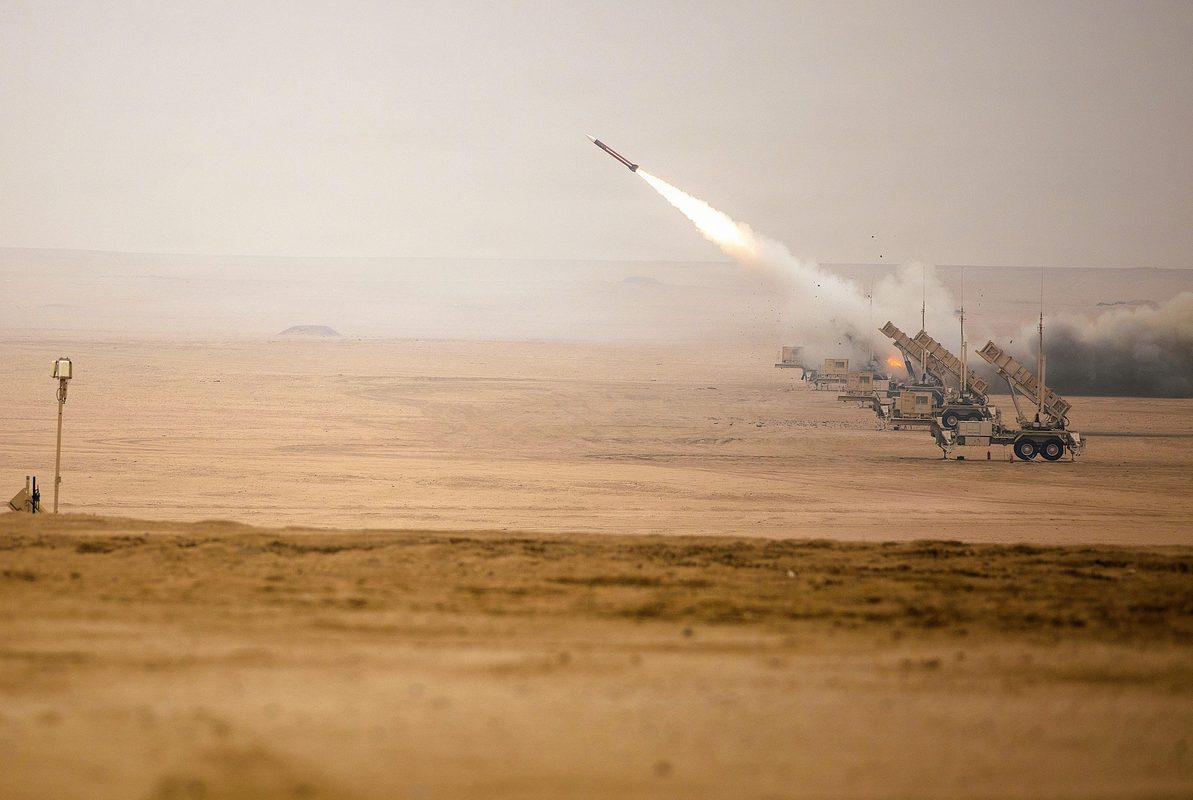
Patriot PAC-3 missile launching during a live-fire exercise at White Sands Missile Range
A PAC-3 interceptor launches during a live-fire test. Unlike the PAC-2's blast-fragmentation approach, PAC-3 uses hit-to-kill technology — destroying the target through direct body-to-body impact at closing speeds exceeding Mach 5 (U.S. Army photo).

The PAC-3 uses hit-to-kill technology. There is no warhead in the traditional sense. Instead, the missile physically rams into the target at closing speeds that can exceed Mach 5. The kinetic energy of a direct body-to-body impact at those velocities is devastating — it doesn't just damage the warhead, it obliterates it. The PAC-3 missile is smaller than the PAC-2, which allows sixteen interceptors to be loaded on a single launcher instead of four, but it requires vastly more precise guidance. The missile uses an onboard Ka-band active radar seeker and small attitude control motors to make final-second corrections measured in fractions of a meter.

The PAC-3 MSE (Missile Segment Enhancement) takes this further. It adds a larger, more powerful solid rocket motor, an improved seeker, and upgraded maneuvering capability. The result is an interceptor with a significantly larger engagement envelope — it can reach higher altitudes, longer ranges, and engage faster targets than the original PAC-3. Lockheed Martin, the PAC-3 prime contractor, describes the MSE as roughly doubling the defended area compared to the baseline PAC-3.

Desert Storm 1991: The Controversy

Patriot's first combat deployment became one of the most scrutinized events in military technology history. When Iraq fired Scud ballistic missiles at Israel and Saudi Arabia during the Gulf War, Patriot batteries — then armed exclusively with PAC-2 interceptors — were the only defense available. The U.S. Army initially claimed an intercept rate of over 95% in Saudi Arabia and nearly 50% in Israel.

Those numbers did not survive scrutiny. A 1992 investigation by the Government Accountability Office concluded that Patriot's success rate was far lower than claimed. MIT professor Theodore Postol and his colleague George Lewis conducted an independent analysis using video evidence and concluded that the actual kill rate may have been close to zero — that while Patriot missiles detonated near incoming Scuds, the warheads were not reliably destroyed and continued to the ground. The Army's own post-war review quietly acknowledged only confirmed kills in a single-digit percentage of engagements.

The core problem was physics. The PAC-2 was originally designed to shoot down aircraft, not ballistic missiles traveling at Mach 5. The Scud's reentry dynamics made things worse: the missiles were structurally fragile, and many broke apart during reentry, creating a cloud of debris that the Patriot's radar had difficulty distinguishing from the actual warhead. The PAC-2's blast-fragmentation warhead could detonate near the target and still fail to neutralize the payload section. And a tragic software timing error at the Dhahran barracks — where a Patriot battery's internal clock had drifted after 100 hours of continuous operation, causing a tracking error of 687 meters — contributed to the system's failure to engage a Scud that killed 28 American soldiers on February 25, 1991.

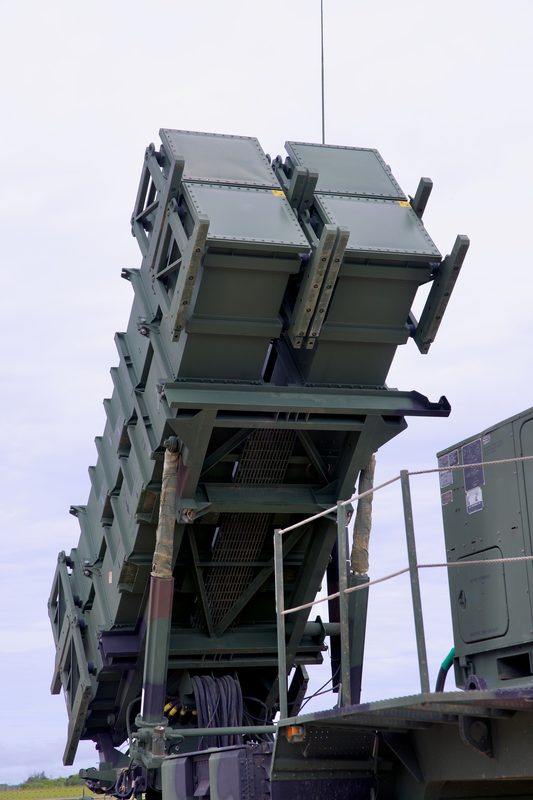
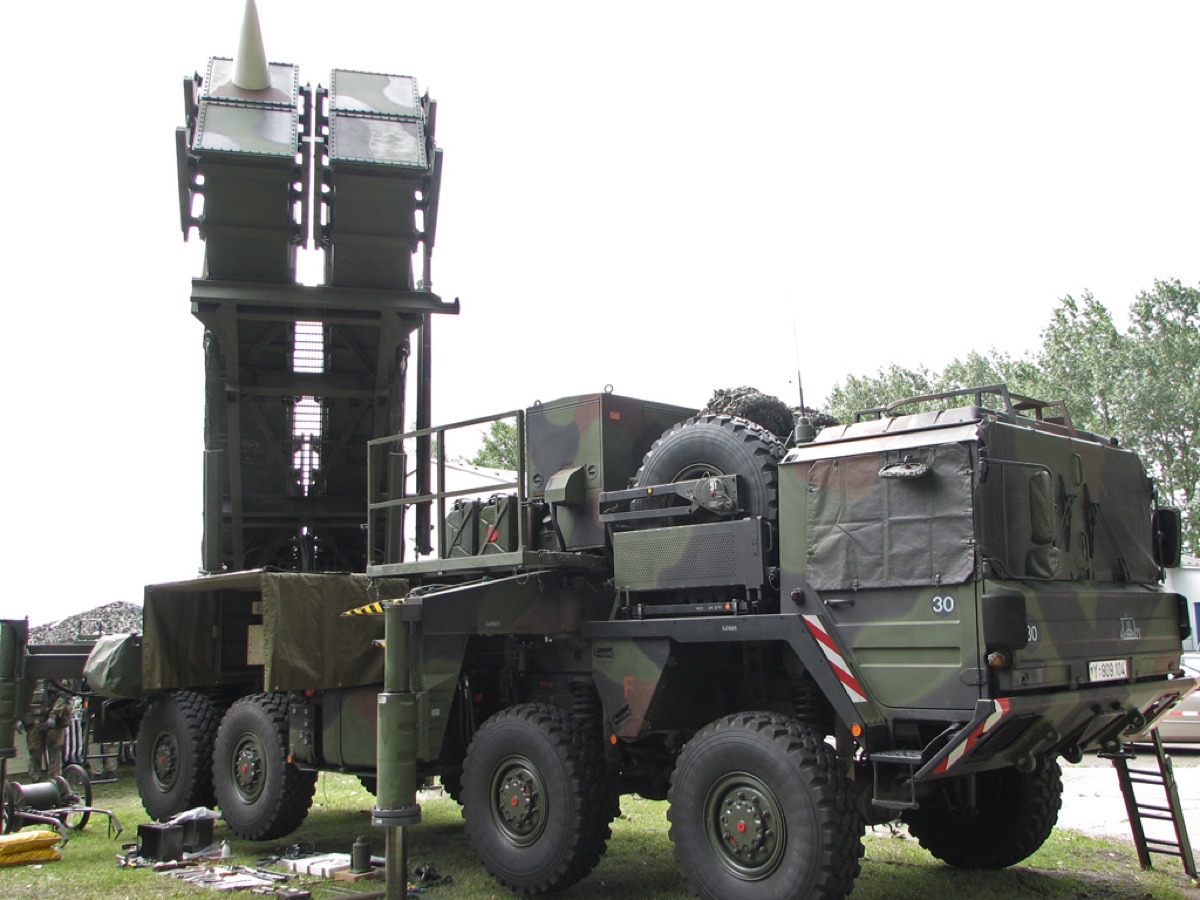
U.S. Army Patriot missile battery deployed during a multinational exercise with launchers aimed skyward
A Patriot battery deploys during a multinational exercise. The system's combat debut in Desert Storm revealed critical limitations in the PAC-2 interceptor's ability to engage ballistic missile targets (U.S. Army photo).

Desert Storm was a humbling debut. But it also provided exactly the kind of brutal, honest feedback that engineers need. Every failure in 1991 became a requirement for what came next.

Iraq 2003: PAC-3 Proves the Concept

By the time the U.S. invaded Iraq in March 2003, the Patriot system had been fundamentally transformed. PAC-3 hit-to-kill interceptors were fielded alongside upgraded PAC-2 GEM+ missiles. The radar software had been completely rewritten. And the operators had twelve years of lessons learned from Desert Storm.

The results were dramatically different. During Operation Iraqi Freedom, Patriot batteries engaged and destroyed nine Iraqi ballistic missiles — all confirmed kills. The PAC-3 performed as designed, physically impacting incoming missiles and destroying them completely. The system also shot down two tactical ballistic missiles in the opening hours of the war, marking the first combat use of hit-to-kill technology against live ballistic missile targets.

The 2003 campaign was not without problems. Two fratricide incidents marred the record. A Patriot battery shot down a Royal Air Force Tornado GR4 on March 23, killing its two-person crew. A U.S. Navy F/A-18C Hornet was also destroyed by a Patriot missile on April 2, killing the pilot. Both incidents were attributed to identification friend-or-foe (IFF) failures and the difficulty of distinguishing friendly aircraft from anti-radiation missiles in a high-threat environment. These tragedies drove urgent improvements to the system's IFF procedures and rules of engagement.

Despite the fratricide incidents, Iraq 2003 validated the core PAC-3 concept. Hit-to-kill worked. The system could reliably intercept ballistic missiles in combat conditions. The gap between Desert Storm and Iraqi Freedom represented one of the most dramatic performance improvements in the history of military technology.

Ukraine and the Middle East: The Modern Era

Patriot's third war — or more accurately, its third and fourth simultaneous wars — has cemented its status as the world's most combat-tested air defense system. The U.S. deployed Patriot batteries to Ukraine beginning in early 2023, and the system has been engaged in near-continuous combat operations in the Middle East against Houthi and Iranian threats since late 2023.

In Ukraine, Patriot achieved what many analysts considered its most impressive kill: the reported interception of a Russian Kh-47M2 Kinzhal hypersonic missile in May 2023. The Kinzhal, an air-launched ballistic missile that Russia had previously described as virtually unstoppable, was reportedly destroyed by a Ukrainian-operated Patriot battery defending Kyiv. If confirmed — and multiple Ukrainian and Western officials have stated the intercept occurred — it represents the first known engagement of a hypersonic weapon by any air defense system.

Patriot air defense system components being prepared for deployment during a military exercise
Patriot batteries deployed to Ukraine have reportedly intercepted Russian Kinzhal hypersonic missiles, Iskander ballistic missiles, and cruise missiles — combat scenarios the system was specifically designed to handle (U.S. Army photo).

Ukrainian Patriot batteries have also engaged Iskander-M short-range ballistic missiles, Kalibr cruise missiles, and various other Russian air threats. The system has reportedly performed well, though at significant cost — both financially and in terms of scarce interceptor stocks. Each PAC-3 MSE round costs approximately $4 million. Ukraine has pushed hard for more interceptors, and U.S. production capacity has been a bottleneck.

In the Middle East, Patriot batteries have been part of the multilayered air defense architecture that has engaged Houthi ballistic missiles and drones targeting Saudi Arabia, the UAE, and U.S. forces in the region. The system has also played a role in defending against Iranian missile salvos — working alongside THAAD, Aegis ships, and Israeli air defense layers during Iran's direct attacks on Israel in 2024.

The Global Patriot Network: 18 Nations

One of Patriot's most significant but underappreciated advantages is its operator base. More than 18 nations currently operate the Patriot system, making it the most widely fielded advanced air defense platform in the world. Operators include Germany, Japan, South Korea, the Netherlands, Israel, Saudi Arabia, the UAE, Qatar, Kuwait, Greece, Poland, Romania, Sweden, Spain, Bahrain, Jordan, Taiwan, and Switzerland (on order).

This global footprint creates network effects. Interoperability between allied Patriot batteries means that in a coalition scenario — like NATO defending European airspace — multiple nations' systems can share radar data and coordinate engagements. The Integrated Air and Missile Defense Battle Command System (IBCS), currently being fielded by the U.S. Army, takes this further by connecting Patriot sensors and launchers with other systems like THAAD and Sentinel radars into a single integrated fire control network.

U.S. Army soldiers loading PAC-3 interceptor canisters onto a Patriot launcher during reload training
Soldiers conduct Patriot missile reload training. Rapid reload capability is critical during sustained operations — a lesson reinforced by Ukraine's heavy consumption of interceptor stocks during Russian air campaigns (U.S. Army photo).

What Patriot Cannot Do

Patriot is not a silver bullet. The system has clear limitations that its combat record has exposed rather than concealed.

First, cost asymmetry. A PAC-3 MSE interceptor costs roughly $4 million. The cruise missiles and ballistic missiles it engages cost a fraction of that. In a prolonged conflict with an adversary willing to launch hundreds of missiles, interceptor stocks run out before the enemy runs out of things to fire. This math has driven urgent investment in lower-cost alternatives like directed energy weapons and gun-based close-in systems.

Second, mobility. A Patriot battery takes hours to emplace and displace. In a contested environment where the enemy can locate and target air defense sites with precision munitions, that setup time is a vulnerability. Ukraine has reportedly moved its Patriot batteries frequently to avoid Russian targeting, but this "shoot and scoot" approach is stressful for equipment and crews not originally designed for that tempo.

Third, saturation. No point defense system can handle an unlimited number of simultaneous incoming threats. If an adversary coordinates enough missiles to arrive on a single target at the same time, they can overwhelm the Patriot battery's engagement capacity. This reality is why modern air defense doctrine emphasizes layered systems rather than relying on any single platform.

Frequently Asked Questions

How many countries operate the Patriot missile system?

More than 18 countries currently operate or have ordered the Patriot system, including the United States, Germany, Japan, South Korea, the Netherlands, Israel, Saudi Arabia, the UAE, Poland, Romania, Sweden, and Taiwan. This makes it the most widely deployed advanced air defense system in the world.

What is the difference between PAC-2 and PAC-3?

PAC-2 uses a blast-fragmentation warhead that detonates near the target, destroying it with shrapnel. PAC-3 uses hit-to-kill technology — the missile physically rams into the target at closing speeds exceeding Mach 5, destroying it through kinetic energy alone. PAC-3 is far more effective against ballistic missiles because a direct hit obliterates the warhead rather than potentially leaving debris to fall on the target area.

Did Patriot really shoot down a Kinzhal hypersonic missile?

Multiple Ukrainian and Western officials have stated that a Ukrainian-operated Patriot battery intercepted a Russian Kh-47M2 Kinzhal hypersonic missile over Kyiv in May 2023. If confirmed, it represents the first known intercept of a hypersonic weapon by any air defense system. Independent verification remains limited, but the claim has not been officially disputed.

How much does a Patriot interceptor cost?

A PAC-3 MSE interceptor costs approximately $4 million per round. A PAC-2 GEM-T missile costs roughly $2-3 million. These costs make sustained defensive operations extremely expensive and have driven investment in lower-cost alternatives for engaging cheaper threats like drones.

Continue Reading

Share this article

Share:

Recommended

Ace of The Skies: Can You Identify These Military Aircraft Throughout The Years?
Test Yourself

Ace of The Skies: Can You Identify These Military Aircraft Throughout The Years?

Can you identify these aircraft?

Take the Quiz

On This Day in Military History

April 19

Battles of Lexington and Concord (1775)

British regulars and colonial militia exchanged fire at Lexington Green and the North Bridge in Concord, Massachusetts, in the opening battles of the American Revolutionary War. The "shot heard round the world" launched a conflict that would create the United States of America.

1943Warsaw Ghetto Uprising Begins

1995Oklahoma City Bombing

See all 4 events on April 19

Get Military News & History in Your Inbox

Join thousands of readers receiving our weekly digest of military technology, history, and analysis.

Test Your Knowledge