Michael Trent covers military aircraft, weapons systems, and defense technology with an emphasis on cost, maintenance, and real-world performance. He focuses less on specifications and more on how systems hold up once they are deployed, maintained, and operated at scale.
Updated April 2026
2026 Update: How Iron Dome's Engineering Has Been Tested Under Fire
Since this article was first published, Iron Dome has undergone its most severe operational testing in history. The system that once intercepted Qassam rockets from Gaza has now faced Iranian ballistic missiles, coordinated multi-front barrages, and sustained fire campaigns lasting months rather than days. What emerged is a clearer picture of both Iron Dome's extraordinary capabilities and the hard limits of any kinetic intercept system.
The October 2023 war and its aftermath marked a turning point. In the opening hours alone, Hamas launched an estimated 3,000 rockets in a concentrated salvo designed to overwhelm the system through sheer volume. Iron Dome held, engaging threats heading for populated areas while letting harmless rounds fall in open terrain, just as designed. But the simultaneous opening of a northern front with Hezbollah, and later direct Iranian involvement, pushed Israel's entire air defense architecture into uncharted territory.
Iran's direct ballistic missile attacks in April 2024 and October 2024 tested not just Iron Dome but every layer of Israel's defense. Iron Dome was never designed to engage ballistic missiles, that role belongs to Arrow 2, Arrow 3, and David's Sling. But during these attacks, Iron Dome batteries engaged debris, lower-tier threats, and incoming cruise missiles and drones that fell within its engagement envelope. The multi-layered system worked as intended: Arrow intercepted ballistic missiles in the exo-atmosphere and upper atmosphere, David's Sling handled medium-range threats, and Iron Dome cleaned up what penetrated the upper tiers. Some Iranian ballistic missiles did get through, striking Nevatim Air Base and other targets, proving that no missile defense is impenetrable, even a layered one.
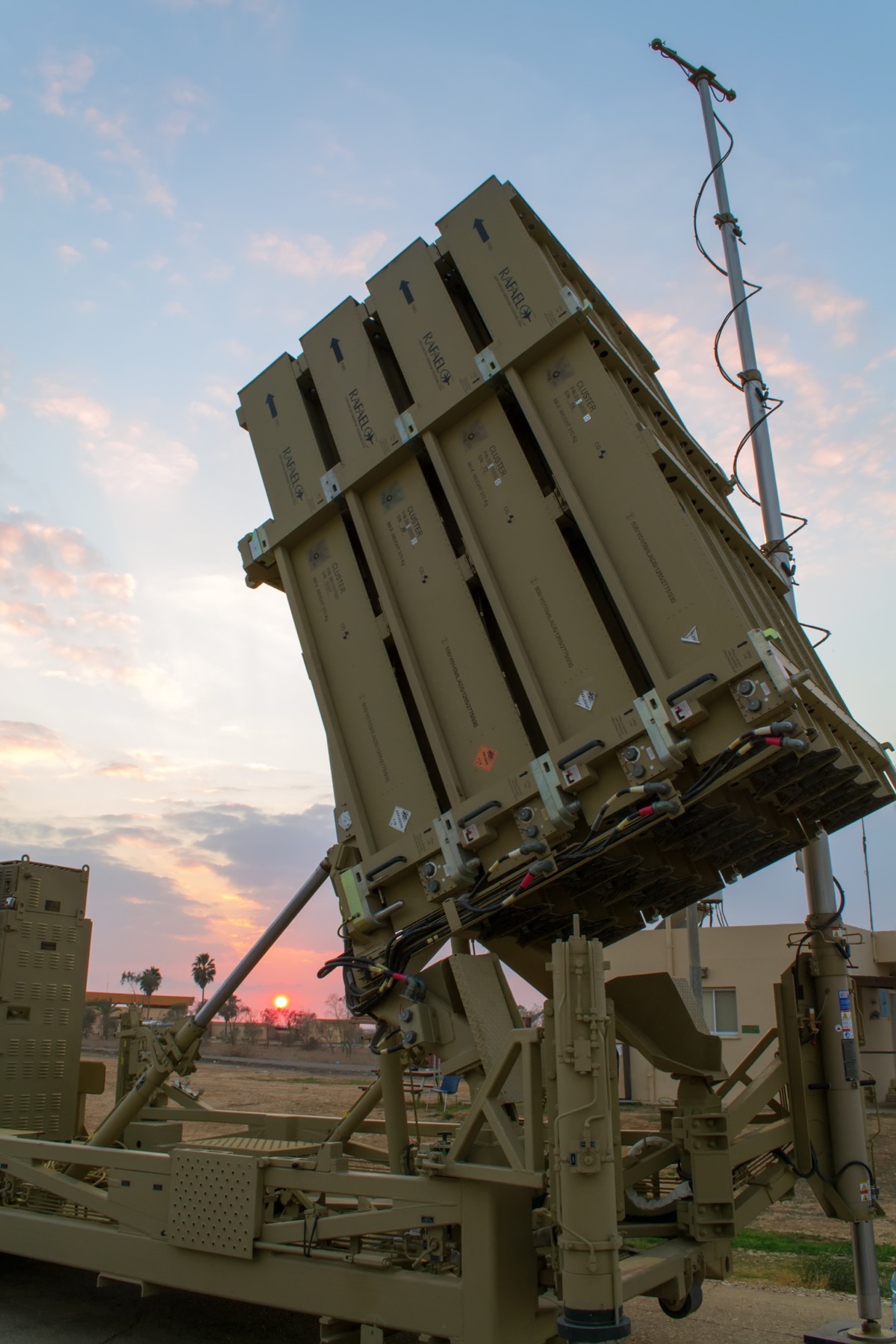
The Tamir interceptor remains the backbone of Iron Dome's short-range defense capability. Each missile costs between $40,000 and $100,000, a fraction of the threats it can neutralize, but hundreds of times more than the rockets it most often engages. (Israel Defense Forces photo)
The system's trajectory selectivity, its core engineering principle, proved critical during sustained operations. Iron Dome's battle management computer continued to discriminate between threatening and non-threatening rockets even during the heaviest barrages, conserving interceptor stocks that would have been exhausted within hours if every incoming round had been engaged. Israeli officials maintained the system's intercept rate exceeded 90% across more than 5,000 engagements during the 2023-2025 period, though independent verification of that figure remains difficult given the fog of sustained combat operations.
The cost asymmetry that has always haunted Iron Dome became starker than ever. With Tamir interceptors costing between $40,000 and $100,000 each, estimates vary depending on production batch and variant, and Hamas rockets costing as little as $300, the economics of sustained defense are punishing. Recognizing this, Israel signed a multi-billion shekel deal with Rafael Advanced Defense Systems in November 2025 to dramatically expand Tamir production capacity, ensuring stockpiles can sustain prolonged multi-front operations.
The United States deepened its investment in Iron Dome technology during this period. The two Iron Dome batteries the U.S. purchased from Israel for $373 million in 2019 were leased back to Israel during the October 2023 war to bolster its defensive capacity, an unusual arrangement that underscored both the system's operational value and the depth of U.S.-Israeli defense cooperation. Meanwhile, the U.S. Marine Corps moved forward with acquiring three Iron Dome batteries and 1,840 SkyHunter interceptors (the American-produced variant of the Tamir) for its Medium Range Intercept Capability (MRIC) program, making Iron Dome the first foreign-developed air defense system adopted by the Marines.
Looking ahead, Israel's missile defense architecture continues to evolve. The Arrow 4 system, a next-generation exo-atmospheric interceptor designed to counter advanced ballistic missiles and hypersonic threats, is planned for deployment beginning in 2026. Arrow 4 will add another layer above Arrow 3, extending the intercept envelope against threats that current systems may struggle to engage. Iron Dome itself continues to receive software and hardware upgrades, including improved discrimination algorithms and expanded engagement envelopes. The system that started as a response to crude Qassam rockets has become the foundation of the most tested, most layered air defense network on Earth.
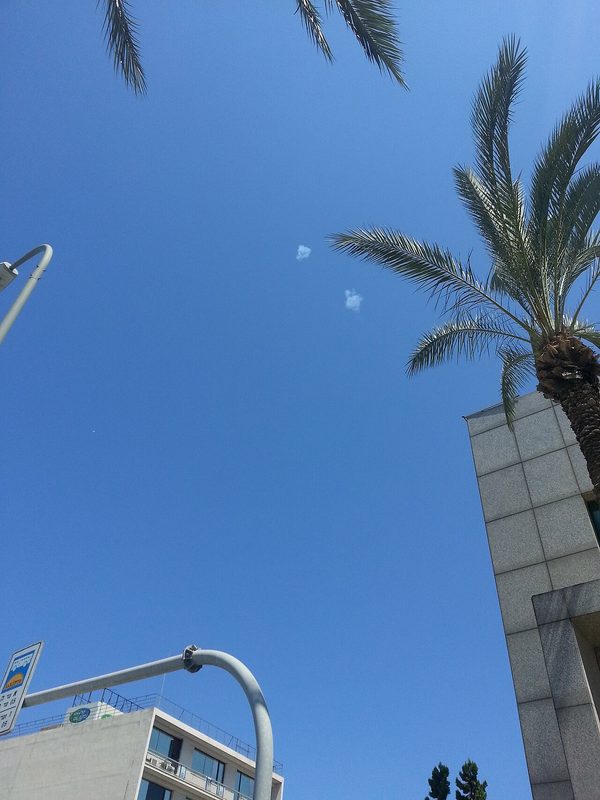
On April 7, 2011, an Iron Dome battery near Beersheba tracked an incoming Grad rocket fired from Gaza. The system's radar detected the rocket, its battle management computer calculated its trajectory in a fraction of a second, determined it was heading for a populated area, and launched a Tamir interceptor. The Tamir climbed to altitude, acquired the incoming rocket, and destroyed it in mid-air. It was the first operational intercept by Iron Dome, and the beginning of the most intensive missile defense campaign in military history. In the years since, Iron Dome has engaged and destroyed thousands of incoming rockets, mortar rounds, and short-range missiles, fundamentally changing the calculus of the Israeli-Palestinian conflict and proving that short-range rocket defense is not only possible but practical.
(Israel Defense Forces photo via Wikimedia Commons)
Why Israel Needed Iron Dome
The threat was simple and devastating: cheap, unguided rockets. Starting in the early 2000s, Palestinian militant groups, primarily Hamas in Gaza and Hezbollah in Lebanon, began firing Qassam rockets and Katyusha-type rockets into Israeli territory. These were crude weapons: steel tubes packed with explosive and propellant, aimed in the general direction of a target and fired. They had no guidance systems, poor accuracy, and relatively small warheads. But they were cheap to produce, easy to conceal, and virtually impossible to stop.
The 2006 Lebanon War made the scale of the problem unmistakable. Hezbollah fired approximately 4,000 rockets into northern Israel over 34 days, killing 44 Israeli civilians, forcing hundreds of thousands to flee or shelter, and disrupting life across the entire northern third of the country. Israel's military could not stop the rockets, the launchers were hidden, mobile, and numerous, and the rockets' flight time from launch to impact was too short for any existing defense system to react.
After the 2006 war, the Israeli government authorized Rafael Advanced Defense Systems and Israel Aerospace Industries (IAI) to develop a system specifically designed to intercept short-range rockets and mortar shells. The system had to work against threats with flight times as short as 15 seconds, it had to be affordable enough to use against cheap rockets without bankrupting the defense budget, and it had to distinguish between rockets heading for populated areas and those that would land in empty fields. This last requirement was critical, if the system tried to intercept every incoming rocket regardless of where it would land, it would quickly exhaust its interceptor supply against an enemy that could produce rockets for a few hundred dollars each.
How Iron Dome Works
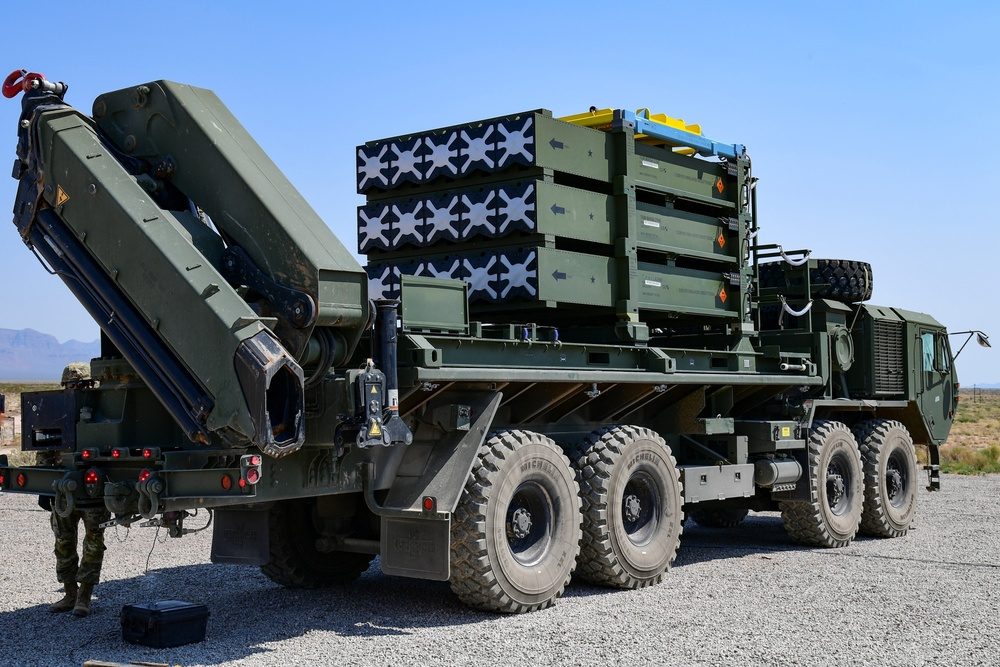
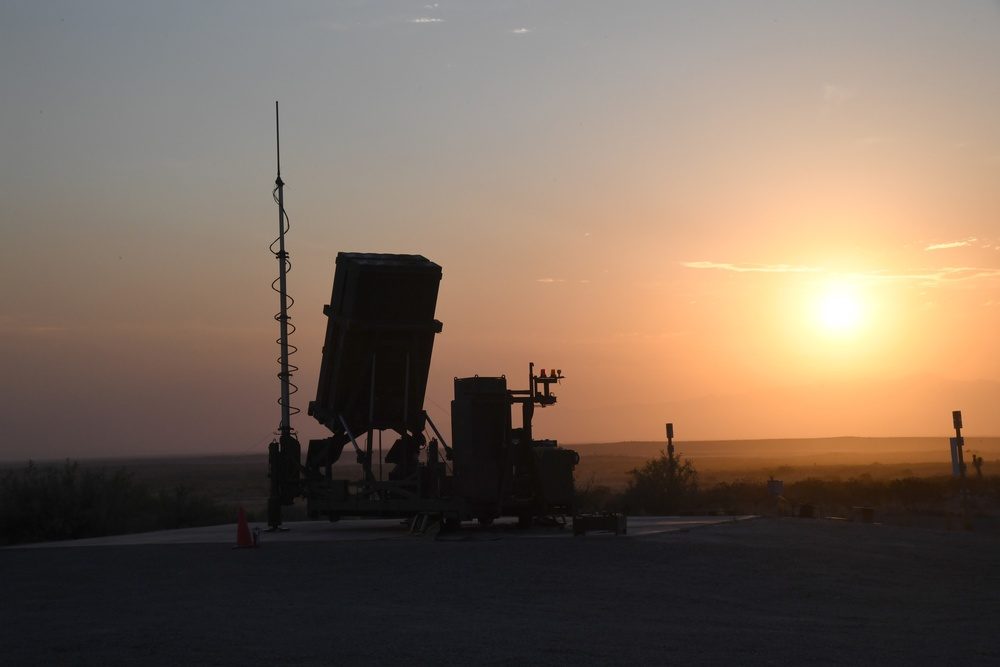
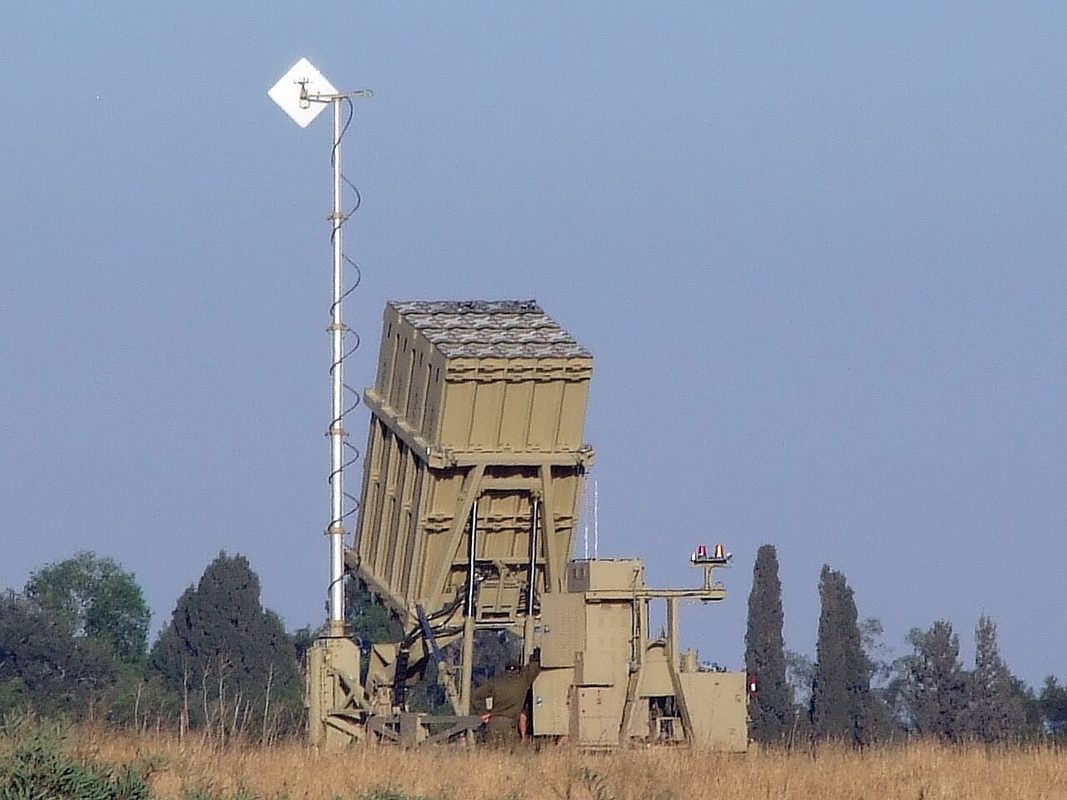
An Iron Dome battery consists of three main components: the EL/M-2084 Multi-Mission Radar, the Battle Management & Weapon Control (BMC) system, and three to four missile launchers, each carrying 20 Tamir interceptors.
The EL/M-2084 radar, developed by IAI's ELTA Systems, is a phased array radar that detects and tracks incoming projectiles. When a rocket is launched, the radar detects it almost immediately, within the first few seconds of flight, and begins tracking its trajectory. The radar can track multiple incoming threats simultaneously, providing continuous position and velocity data to the battle management computer.
The BMC system is Iron Dome's brain. Within seconds of detecting an incoming rocket, the computer calculates its ballistic trajectory and predicts its impact point. This is the system's most critical function: determining whether the rocket will hit a populated area, critical infrastructure, or military installation, or whether it will land in an open field where it poses no threat. Only if the predicted impact point falls within a defined "protected zone" does the system authorize an intercept. Rockets heading for empty areas are allowed to land without wasting an interceptor.
This selectivity is fundamental to Iron Dome's operational concept. In a typical barrage from Gaza, many rockets will fall short, land in empty areas, or miss any meaningful target entirely. By intercepting only the threatening rockets, Iron Dome conserves its interceptor supply and avoids the cost trap of spending expensive interceptors on harmless incoming rounds.
When an intercept is authorized, the BMC assigns the threat to a launcher and fires one or two Tamir interceptors. The Tamir missile is a relatively small, agile interceptor with an active radar seeker and proximity-fused warhead. It climbs to the predicted intercept point, acquires the incoming rocket with its onboard radar, and maneuvers to a position where its warhead detonation will destroy or neutralize the threat. The entire sequence, detection, tracking, threat assessment, launch, and intercept, typically takes less than 15 seconds.
The Tamir Interceptor
(Israel Defense Forces photo via Wikimedia Commons)
The Tamir missile is the technological heart of Iron Dome. At approximately 3 meters (10 feet) long and weighing about 90 kg (198 pounds), it is significantly smaller and cheaper than interceptors used by systems like the Patriot, which engages larger, longer-range threats. The Tamir's small size and simplicity are deliberate, the interceptor must be cheap enough that using it against a $500 Qassam rocket doesn't represent a catastrophic cost mismatch.
Each Tamir interceptor is estimated to cost between $40,000 and $50,000, expensive compared to the rockets it intercepts, but a fraction of the cost of a Patriot PAC-3 ($4 million) or THAAD interceptor ($12 million). The cost is still a concern, during major escalations, Israel can expend hundreds of Tamir interceptors in a single day, but it is manageable enough to sustain defensive operations over extended periods.
The Tamir uses a proximity-fused blast-fragmentation warhead rather than hit-to-kill technology. Against small, slow-moving rockets, a near-miss that detonates the warhead close to the target is sufficient to destroy or deflect it. The proximity fuze provides a wider engagement envelope than a hit-to-kill system, increasing the probability of a successful intercept against targets that are small and may be tumbling or following irregular trajectories.
Combat Record
Iron Dome's combat record is unmatched by any other missile defense system in terms of sheer volume of engagements.
During Operation Pillar of Defense in November 2012, Iron Dome intercepted approximately 421 rockets out of roughly 1,500 fired from Gaza. The system's software determined that the remaining rockets were heading for unpopulated areas and did not engage them. The Israel Defense Forces reported a success rate of approximately 84% against rockets that were engaged.
During Operation Protective Edge in July-August 2014, Hamas and other Gaza-based groups fired approximately 4,594 rockets and mortar rounds at Israel. Iron Dome intercepted 735, with the system engaging only those heading for populated areas. The reported success rate climbed to approximately 90%.
(Photo via Wikimedia Commons)
The most intensive test came during the May 2021 escalation, when Hamas launched approximately 4,360 rockets toward Israel over 11 days. Iron Dome intercepted approximately 1,428 of those targeting populated areas, with a reported success rate of roughly 90%. The system operated continuously, with batteries across southern and central Israel engaging multiple salvos simultaneously. Several dramatic videos showed Iron Dome interceptors streaking upward in clusters to engage incoming rocket barrages, images that became iconic symbols of the conflict.
In October 2023, during the largest escalation in the Israeli-Palestinian conflict in decades, Iron Dome faced its most intense challenge yet, with thousands of rockets fired in the opening hours alone. The system performed at a level consistent with its previous engagements, though the sheer volume of fire, combined with attacks from multiple directions including Hamas, Hezbollah, and other groups, stressed the system's capacity in ways it had not been tested before.
The 90% Question
Iron Dome's claimed 90%+ intercept rate is widely cited but also debated. Independent analysts have noted that verifying the intercept rate is extremely difficult, distinguishing between a successful warhead kill, a near-miss that deflected the rocket but didn't destroy it, and a miss where debris was mistaken for an intercept is challenging, especially in the chaos of a rocket barrage.
MIT physicist Theodore Postol, who also challenged Patriot's Gulf War success claims, has argued that Iron Dome's actual success rate is significantly lower than 90%, based on analysis of intercept videos and debris patterns. Israeli officials and Rafael have disputed these claims vigorously, citing their access to radar tracking data that external analysts don't have.
The practical evidence suggests the system is highly effective regardless of the exact percentage. During major rocket campaigns, civilian casualties in areas defended by Iron Dome have been dramatically lower than in areas without coverage. The reduction in casualties, from dozens or hundreds expected from thousands of incoming rockets to single digits, is consistent with a system that is intercepting the vast majority of threatening rockets, even if the exact figure is debated.
Layered Defense
Iron Dome is one layer of Israel's multi-tier missile defense architecture. Each tier addresses a different threat range:
Iron Dome: Short-range threats, rockets, mortars, and short-range missiles from 4 to 70 kilometers. This is the layer that engages the high-volume, low-cost rocket threat from Gaza and Lebanon.
(Israel Ministry of Defense photo via Wikimedia Commons)
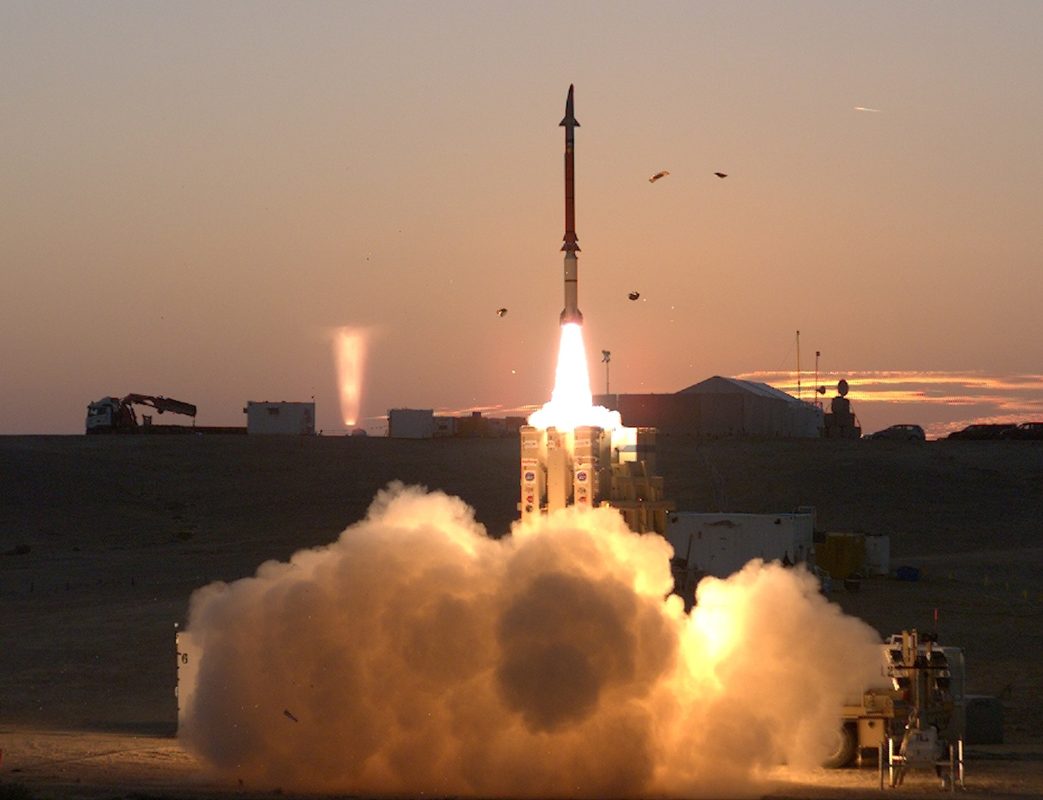
David's Sling: Medium-range threats, cruise missiles, large-caliber rockets, and short-range ballistic missiles from 40 to 300 kilometers. David's Sling fills the gap between Iron Dome and the Arrow system.
Arrow 2/Arrow 3: Long-range threats, ballistic missiles from hundreds to thousands of kilometers. Arrow 3 intercepts ballistic missiles in space, outside the atmosphere, while Arrow 2 intercepts within the atmosphere. These systems are designed to counter ballistic missiles from Iran.
Together, these systems create a layered defense that theoretically covers the entire threat spectrum, from a Qassam rocket with a 10-kilometer range to an Iranian ballistic missile crossing 1,500 kilometers. Iron Dome handles the high-volume, low-altitude threat; David's Sling handles the mid-altitude threat; and the Arrow system handles the exo-atmospheric ballistic missile threat.
(Israel Defense Forces photo via Wikimedia Commons)
Export and Adaptation
The United States has invested heavily in Iron Dome, providing approximately $1.6 billion in funding since 2011. The U.S. Marine Corps has tested Iron Dome batteries for its own short-range air defense needs, and components of Iron Dome technology have been integrated into American air defense architecture. Israel and the United States have also collaborated on developing an Iron Dome variant, called SkyHunter, for potential deployment by U.S. forces.
Other nations have expressed interest in Iron Dome or similar systems, driven by the demonstrated effectiveness of short-range rocket defense. The system's combat record makes it the most proven short-range missile defense system in the world, a credential that no competitor can match.
The Strategic Impact
Iron Dome's most significant contribution may be strategic rather than tactical. Before Iron Dome, every rocket fired at Israel demanded a military response, the political pressure to "do something" about rocket attacks was enormous, often driving Israel into large-scale ground operations in Gaza that were costly in lives and international standing. Iron Dome gave Israeli leaders the option of absorbing a rocket campaign without immediate ground action, because the rockets were being intercepted before they could cause mass casualties.
This strategic flexibility is perhaps Iron Dome's greatest achievement. It transformed the rocket threat from an intolerable attack on civilian life into a manageable military problem. It did not eliminate the threat, rockets still get through, people still die, and the psychological impact of air raid sirens and explosions overhead remains significant. But it changed the equation enough to give policymakers options they did not have before.
Iron Dome is not a solution to the conflicts that produce rocket attacks. It is a shield, brilliant, effective, and indispensable, but still only a shield. The rockets continue. The interceptors continue. And somewhere in the arithmetic of $500 rockets against $50,000 interceptors, the underlying questions remain unanswered. But for the families in Sderot, Ashkelon, and Beersheba who have heard the "boom" of an Iron Dome intercept overhead and known that the rocket meant for them will not arrive, the system works. And that is enough.