
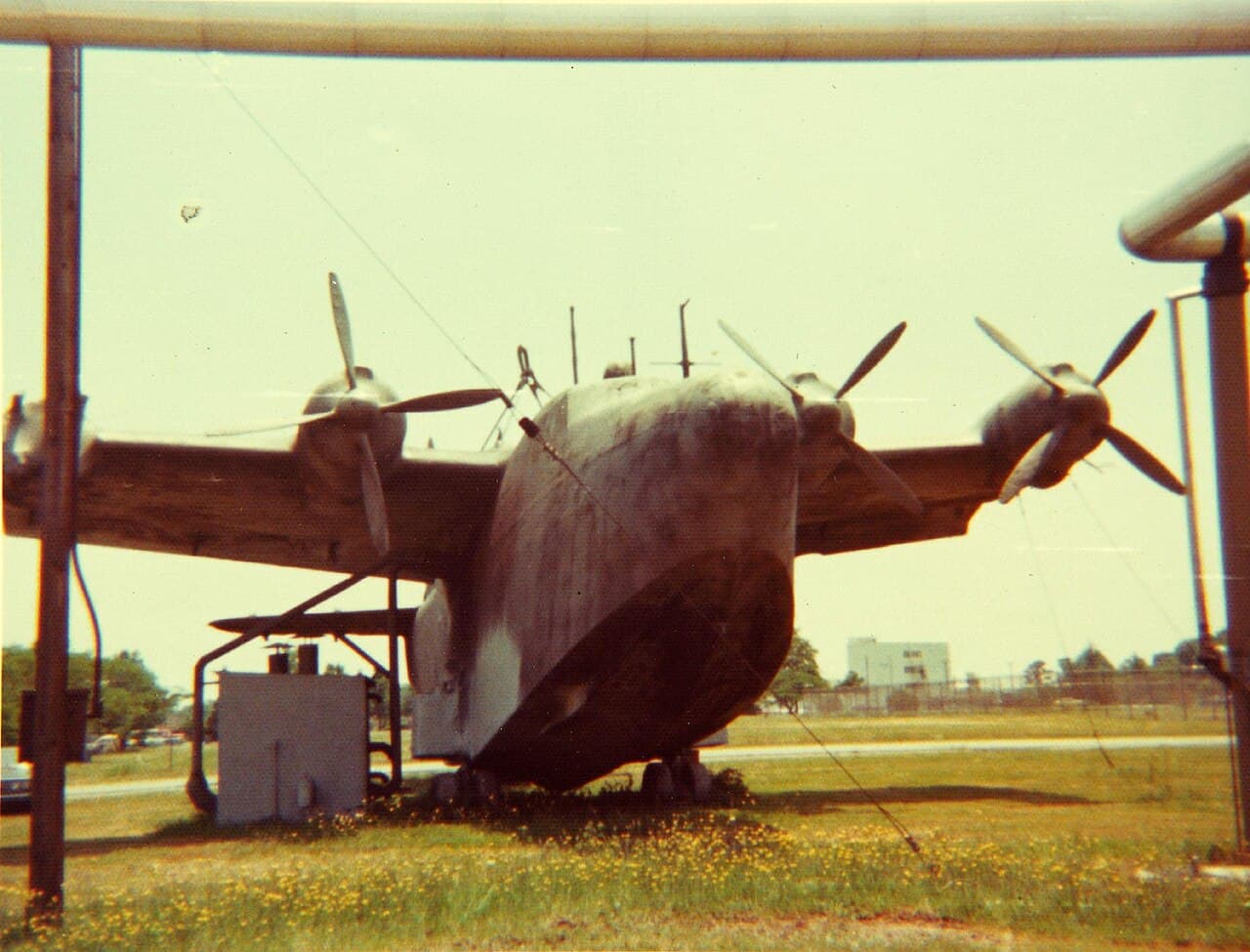
Kawanishi H8K2 Type 2 Flying Boat
Kawanishi · Allied code name: “Emily”
How does the H8K2 stack up?
CompareOverview
The Kawanishi H8K was the finest flying boat of World War II and arguably the best maritime patrol aircraft built by any nation during the conflict. Massive, heavily armed, well-protected, and possessed of extraordinary range, the H8K was everything that its land-based counterpart, the G4M Betty, was not, a testament to what Japanese engineers could achieve when they were allowed to design for survivability as well as performance. Allied aircrews who tangled with "Emily" quickly learned to respect the big flying boat's bristling defensive armament and surprising resilience.
The H8K was a remarkable technical achievement. Its four Kasei engines drove a 125-foot wingspan aircraft to speeds approaching 290 mph, fast for any four-engine aircraft, let alone a flying boat that had to contend with the additional drag of a hull designed to operate on water. With a ferry range exceeding 4,400 miles, it could patrol vast swaths of the Pacific that no other aircraft could cover. Its ability to land on open ocean, refuel from submarines, and then continue its mission gave the Japanese Navy a reconnaissance reach that was unmatched.
Unlike most Japanese wartime aircraft, the H8K was designed with genuine crew protection. Self-sealing fuel tanks, fuel tank fire suppression systems, armor protection for critical crew positions, and a formidable defensive armament of five 20mm cannon and four machine guns made it a dangerous opponent for any fighter foolish enough to attack from an unfavorable angle. American pilots described the Emily as the toughest Japanese aircraft they encountered in the Pacific.
Performance Profile
Max Speed
290 mph
at 16,400 ft
Range
4,443 miles
ferry
Service Ceiling
28,770 ft
Rate of Climb
1,575 ft/min
Armament
9 guns
5x 20mm, 4x 7.7mm
Crew
10
Engine
Mitsubishi MK4Q Kasei 22
1850 hp radial
Development History
The H8K originated from a 1938 Japanese Navy specification calling for a flying boat to replace the Kawanishi H6K "Mavis" with substantially improved performance, range, and survivability. Kawanishi's design team, led by Shizuo Kikuhara, created an aircraft that broke decisively from the Japanese tradition of sacrificing protection for performance.
Kikuhara's team designed a deep-hulled flying boat with a high-mounted, slightly tapered wing of enormous span. The hull incorporated advanced hydrodynamic features including a single main step and a carefully shaped forebody that reduced spray and porpoising during water operations. To suppress the hydrodynamic instability that plagued many flying boats, Kawanishi fitted retractable stabilizing floats under the outer wing sections rather than the fixed floats common on contemporary designs.
The first H8K1 prototype flew in January 1941 and immediately demonstrated excellent flight characteristics, but water handling was initially poor. Extensive hull redesign solved the porpoising problem, and the aircraft entered production. The Navy specified self-sealing fuel tanks, one of the few Japanese aircraft types to receive them as standard equipment, along with automatic fire extinguishers for the fuel tanks, armor plate for the pilot and critical crew stations, and a heavy defensive armament.
The H8K2 (Model 12), which entered service in 1942, was the definitive variant. It featured the improved Kasei 22 engine with water-methanol injection for emergency power, a powered dorsal turret with a 20mm cannon, and provision for air-to-surface radar. The fuel system was particularly sophisticated, with tanks that could be dumped overboard in an emergency and a network of carbon dioxide fire suppression pipes. Total internal fuel capacity exceeded 4,300 gallons, giving the enormous range that made the Emily invaluable for Pacific operations.
Combat History
The H8K saw its first operational use in a remarkable long-range bombing mission. On the night of March 4, 1942, two H8K1 flying boats launched from Wotje Atoll, refueled from submarines at French Frigate Shoals northwest of Hawaii, and flew over 2,000 miles to bomb Oahu, the second Japanese attack on Hawaii. Clouds obscured the targets and the bombs fell harmlessly, but the mission demonstrated the extraordinary reach of the new flying boat and alarmed American intelligence.
Through 1942-1943, H8K2s became the primary Japanese long-range maritime patrol aircraft across the Pacific. Operating from bases at Rabaul, Truk, and the Marshall Islands, Emily flying boats conducted reconnaissance sweeps covering hundreds of thousands of square miles of ocean, locating Allied shipping and fleet movements. Their ability to land on open water allowed them to use remote anchorages and be refueled by submarine or surface tender, extending their operational reach even further.
Allied fighters found the Emily to be a formidable opponent. The five 20mm cannon could keep attacking fighters at bay from almost any angle, and the self-sealing fuel tanks and armor meant that the H8K could absorb hits that would have instantly destroyed a G4M Betty. Multiple accounts describe prolonged running battles where fighters expended all their ammunition against an Emily without bringing it down. However, the H8K was not invulnerable, and American pilots who achieved positional advantage or attacked in coordinated pairs could and did destroy them.
As the war progressed and Japan's perimeter contracted, the H8K's bases were overrun and its operating areas shrank. By 1944, most surviving Emilys were restricted to transport duties, evacuating personnel from isolated garrisons, and short-range patrol missions around the home islands. The H8K2-L transport variant, stripped of armament to increase passenger capacity, carried up to 64 troops. In the final months, some H8K2s were employed in kamikaze-style operations, though their primary value remained as the Navy's longest-range patrol platform.
Variants
| Designation | Key Differences | Produced |
|---|---|---|
| H8K1 (Model 11) | Initial production with Kasei 11 engines (1,530 hp each); no dorsal turret. Limited production. | 16 |
| H8K2 (Model 12) | Kasei 22 engines (1,850 hp) with water-methanol injection; powered dorsal turret, ASV radar capability. | 112 |
| H8K2-L Seiku (Clear Sky) | Unarmed transport variant; two-deck cabin for up to 64 passengers or 29 seated plus cargo. Powered turret removed. | 36 |
| H8K3 (Model 22) | Retractable dorsal turret, improved hull step; only two prototypes completed before war's end. | 2 |
| H8K4 (Model 23) | Proposed variant with Kasei 25b engines (1,825 hp) and further aerodynamic refinements; never completed. | 0 |
Strengths & Weaknesses
+Strengths
- Extraordinary range exceeding 4,400 miles allowed patrol coverage over vast Pacific expanses that no other aircraft could match
- Formidable defensive armament of five 20mm cannon and four machine guns made it extremely dangerous for attacking fighters
- Excellent survivability with self-sealing fuel tanks, fire suppression systems, and crew armor, unique among Japanese wartime aircraft
- Ability to operate from water eliminated dependence on conventional airfields, enabling operations from remote lagoons and open ocean
-Weaknesses
- Large size and moderate speed made it detectable at long range and vulnerable to coordinated multi-fighter attacks
- Produced in very small numbers (167 total) due to complex manufacturing and Kawanishi's limited production capacity
- Dependent on calm water conditions for takeoff and landing; rough seas could make operations impossible
- Maintenance-intensive hull and flying surfaces required specialized facilities that became increasingly scarce
Pilot Voices
“The Emily was the queen of the Pacific. No other aircraft could fly as far, carry as much, and fight as hard. She was the one Japanese aircraft that was built like the Americans built theirs, tough.”
“We hit that Emily with everything we had and she just kept flying. I have never seen an airplane take that much punishment and stay in the air. It was like shooting at a battleship.”
Did You Know?
The H8K conducted the second Japanese attack on Hawaii on March 4, 1942, when two flying boats refueled from submarines and flew over 2,000 miles to bomb Oahu. Though the bombs missed, the raid demonstrated unprecedented aerial range.
American pilots considered the Emily the most dangerous Japanese aircraft to attack. One fighter pilot reported firing over 900 rounds of .50-caliber ammunition into an H8K2 without bringing it down.
The H8K was one of the very few Japanese aircraft equipped with self-sealing fuel tanks and fire suppression systems from the factory, a direct result of the Navy studying combat damage reports from the vulnerable G4M.
Only two H8K aircraft survive today. One H8K2 is displayed at the Museum of Maritime Science in Tokyo, making it one of the rarest intact World War II aircraft in existence.

