
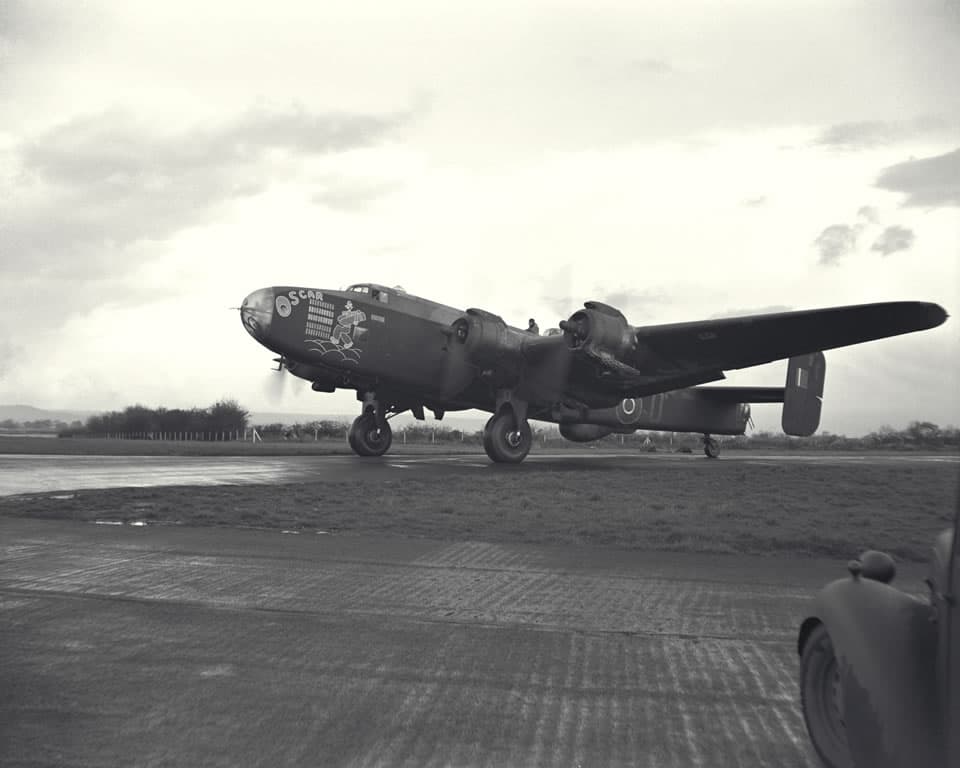
Handley Page Halifax B Mk III
Handley Page
How does the Halifax B Mk III stack up?
CompareOverview
The Handley Page Halifax B Mk III was the most capable version of the RAF's second most important heavy bomber, finally realizing the aircraft's full potential after years of troubled early variants. By replacing the problematic Rolls-Royce Merlin engines with Bristol Hercules radials and fitting a streamlined nose fairing, the Mk III transformed the Halifax from an underperformer into a reliable, effective heavy bomber.
The Halifax has always lived in the Lancaster's shadow, but its contribution to the bombing campaign was substantial. Halifaxes flew 82,773 bombing sorties and dropped 224,207 tons of bombs. More importantly, the Halifax proved more versatile than the Lancaster, excelling in roles the Lancaster was less suited to: maritime patrol with Coastal Command, supply dropping to resistance movements, electronic countermeasures, and glider towing.
The Mk III in particular earned respect from its crews for reliability and survivability. Its Bristol Hercules engines were less vulnerable to flak damage than the liquid-cooled Merlins, and the aircraft offered a better crew escape rate than the Lancaster, a grim statistic that mattered enormously to the young men flying over Germany at night.
Performance Profile
Max Speed
282 mph
at 13,500 ft
Range
1,985 miles
normal
Service Ceiling
24,000 ft
Rate of Climb
750 ft/min
Armament
9 guns
9x .303 Browning
Crew
7
Engine
Bristol Hercules XVI
1615 hp radial
Development History
The Halifax was designed to Air Ministry Specification P.13/36, the same specification that produced the Avro Manchester. Sir Frederick Handley Page's team originally designed a twin-engine bomber around the Vulture, but wisely switched to four Merlins before the first prototype flew, a decision that avoided the engine disasters that plagued the Manchester.
The prototype flew on October 25, 1939, and early Mk I and Mk II variants entered service in 1941. However, the early Halifaxes were disappointing, suffering from high drag due to the triangular-section fuselage and the original exhaust-heated dorsal turret fairing. Performance was significantly below expectations, and loss rates were unacceptably high compared to the Lancaster.
The Mk III, first flying in 1943, addressed these problems comprehensively. The switch from Merlin engines to Bristol Hercules XVI radials eliminated the cooling system vulnerability that had caused many losses. A new streamlined Perspex nose fairing replaced the angular nose turret, reducing drag and improving forward visibility. Extended rectangular wingtips increased span and improved high-altitude performance.
These changes collectively increased maximum speed, improved service ceiling, and reduced the loss rate substantially. The Mk III and its derivatives (Mk VI and Mk VII) accounted for the majority of Halifax production and served effectively through the end of the war. Handley Page also developed the Halifax for transport, maritime patrol, and special operations roles that exploited its spacious fuselage.
Combat History
The Halifax B Mk III entered Bomber Command service in February 1944, replacing the unsatisfactory earlier marks in the main force squadrons. The timing was significant, the Mk III was ready for the intensive operations leading up to D-Day, including the Transportation Plan that systematically destroyed French railway infrastructure to isolate the Normandy beachhead.
During the D-Day landings themselves, Halifaxes bombed coastal batteries, dropped Window (chaff) to confuse German radar, and towed Horsa and Hamilcar gliders carrying airborne troops to their landing zones. This glider-towing role was one the Halifax performed better than the Lancaster due to its more stable low-speed handling characteristics.
In the continuing night bombing campaign, Mk III Halifaxes served alongside Lancasters in raids on German cities and industrial targets. While they could not carry the heaviest specialized weapons like the Tallboy and Grand Slam, they were effective with standard bomb loads and proved more survivable than earlier Halifax variants. No. 4 Group and No. 6 (RCAF) Group operated large Halifax fleets.
Halifaxes also played crucial roles often overlooked in popular history. Coastal Command Halifaxes conducted maritime patrol over the Bay of Biscay, attacking U-boats. Special Operations Executive (SOE) missions relied on Halifaxes for supply drops and agent insertions over occupied Europe. By VE Day, surviving Halifaxes had earned a reputation as reliable, honest aircraft that may have lacked the Lancaster's glamour but served with distinction in roles the Lancaster could not fill.
Variants
| Designation | Key Differences | Produced |
|---|---|---|
| B Mk I | Initial production with four Merlin X engines; nose turret with two .303 guns; poor performance limited effectiveness. | 84 |
| B Mk II | Improved variant with Merlin XX engines and Boulton Paul dorsal turret; still suffered from drag and performance issues. | 1,966 |
| B Mk III | Definitive bomber with Bristol Hercules XVI radials, streamlined Perspex nose fairing, extended wingtips, and improved performance. | 2,091 |
| B Mk VI | Hercules 100 engines with 1,675 hp each; fuel-injected; improved high-altitude performance; final bomber variant. | 467 |
| A Mk VII | Dedicated transport and paratroop variant based on Mk III airframe; used extensively for SOE operations. | 395 |
| GR Mk VI | Coastal Command general reconnaissance variant with ASV radar for maritime patrol and U-boat hunting. | - |
Strengths & Weaknesses
+Strengths
- Bristol Hercules radial engines more resistant to flak damage than liquid-cooled Merlins
- Better crew escape rate than the Lancaster, with larger escape hatches and better egress paths
- Outstanding versatility in transport, glider-towing, SOE operations, and maritime patrol roles
- Spacious fuselage accommodated diverse equipment fits and special modifications
-Weaknesses
- Smaller bomb bay could not carry Tallboy, Grand Slam, or Upkeep specialized weapons
- Lower service ceiling and payload compared to the Lancaster in the pure bombing role
- Early variants (Mk I and II) had dangerously poor performance that damaged the type's reputation
- Defensive armament of .303 machine guns was inadequate against cannon-armed night fighters
Pilot Voices
“The Halifax III was a completely different aircraft from the earlier marks. The Hercules engines made her reliable, and the new nose cleaned her up beautifully. She was a good, honest kite.”
“We always said the Lancaster got the glory, but the Halifax got the job done in ways the Lanc couldn't. Try towing a Hamilcar glider with a Lancaster, it can't be done.”
Did You Know?
The Halifax had a significantly better crew escape rate than the Lancaster. Around 29% of Halifax crews survived being shot down, compared to only 15% for Lancaster crews, largely due to better escape hatch placement.
More SOE (Special Operations Executive) supply-dropping and agent-insertion missions were flown by Halifaxes than any other aircraft type, because its spacious fuselage could accommodate supply containers and its stable flight characteristics made low-level parachute drops more accurate.
The last RAF Halifax operation was a meteorological reconnaissance flight in March 1952, making it one of the longest-serving RAF heavy aircraft from the wartime era.

