
Grumman TBF/General Motors TBM-3 Avenger
Grumman / General Motors (Eastern Aircraft)
How does the TBF/TBM-3 stack up?
CompareOverview
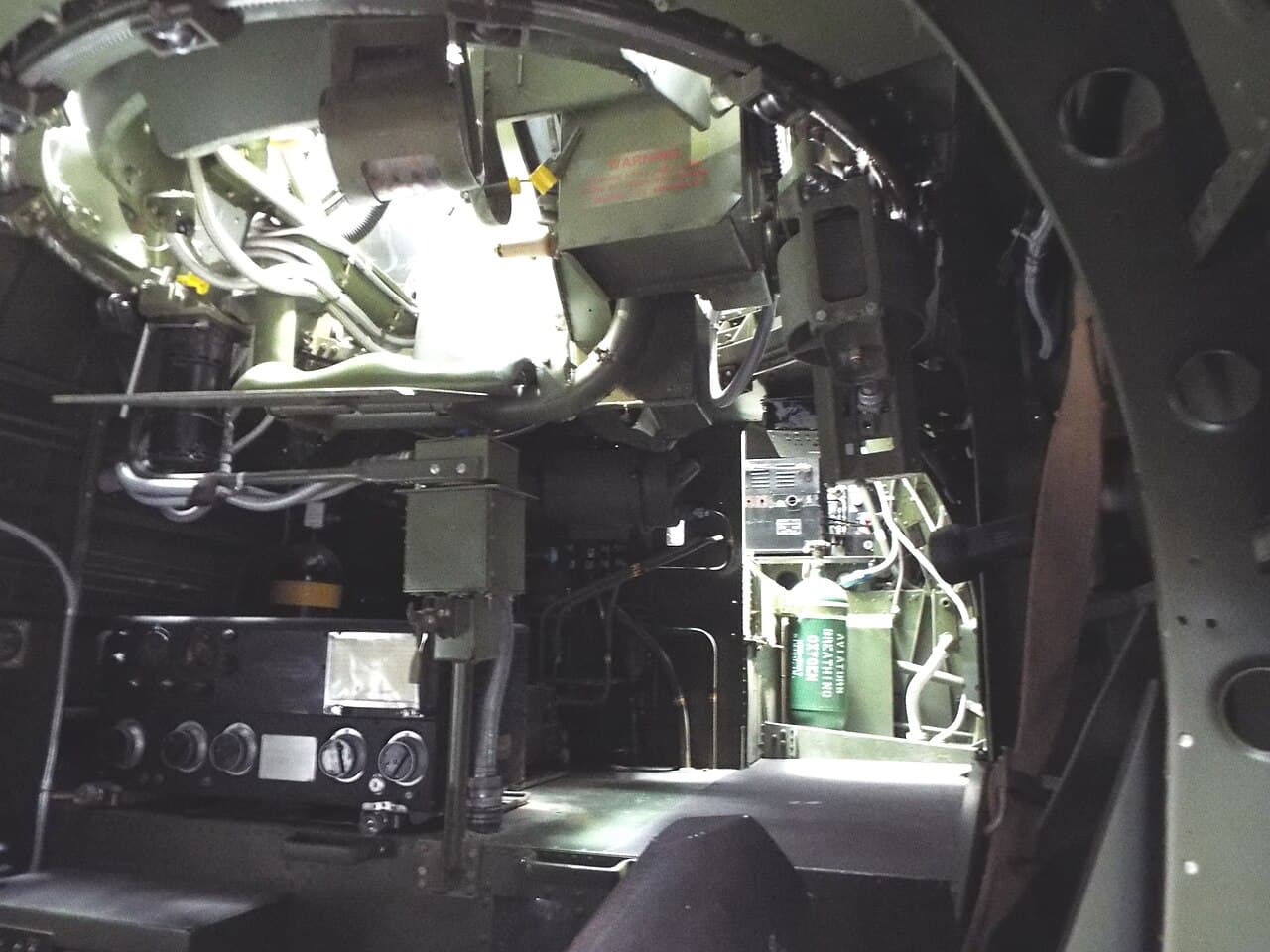
The Grumman TBF Avenger and its General Motors-built counterpart, the TBM, was the US Navy's standard torpedo bomber from 1942 through the end of the war and the most effective torpedo-bombing aircraft of the conflict. The Avenger's capacious internal weapons bay could accommodate a torpedo, 2,000 pounds of bombs, or a depth charge, while its three-man crew of pilot, turret gunner, and radioman/ventral gunner operated a well-coordinated combat team.
The Avenger's combat debut at Midway was catastrophic, five of six TBFs from VT-8's detachment were shot down, but the aircraft went on to compile an outstanding record across the Pacific. Avenger torpedo attacks contributed to the sinking of Japanese carriers and battleships in nearly every major naval engagement from 1943 onward, including the superbattleship Musashi and the carrier Hiyo at the Philippine Sea. In the anti-submarine role, Avengers from escort carriers hunted and sank German U-boats across the Atlantic.
The TBM-3, built by General Motors' Eastern Aircraft Division, was the most numerous variant with over 4,600 produced. It featured a more powerful engine, stronger wings for carrying rockets, and provisions for radar. The Avenger served in virtually every naval role: torpedo attack, level bombing, glide bombing, close air support, anti-submarine warfare, mine laying, and even night attack. It remained in US Navy service until 1954.
Performance Profile
Max Speed
276 mph
at 16,500 ft
Range
1,010 miles
normal
Service Ceiling
30,100 ft
Rate of Climb
2,060 ft/min
Armament
4 guns
2x .50 BMG, 1x .50 BMG, 1x .30 cal
Crew
3
Engine
Wright R-2600-20 Cyclone 14
1900 hp radial
Development History
Grumman began designing the TBF Avenger in 1939 to replace the obsolescent Douglas TBD Devastator, which had been the Navy's first monoplane torpedo bomber. The design requirement called for an internal weapons bay (unlike the TBD's external torpedo), an enclosed powered turret, and significantly improved performance. Grumman's Leroy Grumman and design team created a large, barrel-shaped aircraft around the Wright R-2600 engine, with a bomb bay large enough to accommodate the 22-inch Mk 13 torpedo.
The XTBF-1 prototype first flew on August 7, 1941, and production was fast-tracked as war loomed. The first production TBF-1s were delivered in January 1942. Recognizing that Grumman's Bethpage facility would be consumed by F6F Hellcat production, the Navy contracted General Motors' Eastern Aircraft Division at Trenton, New Jersey, to build the Avenger as the TBM. Eastern Aircraft would go on to produce the majority of all Avengers, with virtually identical quality to the Grumman originals.
The TBF-1 and TBM-1 were the initial production variants, armed with one .50-caliber forward gun, one .50-caliber in the powered dorsal turret, and one .30-caliber in a ventral position. The TBM-3 introduced the more powerful R-2600-20 engine with 1,900 hp, strengthened wing for eight HVAR rockets or drop tanks, and provisions for an APS-4 search radar pod under the right wing. Later TBM-3 sub-variants added increasingly sophisticated electronic equipment for anti-submarine warfare.
The Avenger proved remarkably adaptable. Beyond its primary torpedo-attack role, it served as a level bomber, glide bomber, mine layer, anti-submarine hunter-killer (paired with escort carriers), night intruder, and even airborne early warning platform in its postwar TBM-3W variant.
Combat History
The Avenger's combat debut was a disaster. At the Battle of Midway on June 4, 1942, six TBF-1s of VT-8's detachment launched from Midway Island against the Japanese fleet. Only one returned, badly damaged. Ensign Albert Earnest nursed his crippled Avenger back to Midway with his rear gunner dead and his turret gunner wounded. Despite this inauspicious start, the Avenger quickly proved its worth as torpedo bomber tactics and the Mk 13 torpedo improved.
Avengers played critical roles in every major Pacific naval engagement from late 1942 onward. At the Battle of the Philippine Sea in June 1944, TBF/TBM torpedo bombers helped sink the carrier Hiyo and damaged several other Japanese warships. At the Battle of Leyte Gulf in October 1944, Avengers from escort carriers of "Taffy 3" made desperate torpedo and bombing attacks against the Japanese Center Force's battleships and heavy cruisers during the Battle off Samar, helping to turn back the most dangerous Japanese thrust of the battle.
In the anti-submarine role, Avengers from escort carriers were instrumental in winning the Battle of the Atlantic. Flying from CVE escort carriers, Avenger crews hunted U-boats using radar, sonobuoys, and depth charges. The USS Card's VC-9, flying Avengers, sank eight U-boats in just three patrols. The Avenger-Wildcat hunter-killer teams from escort carriers closed the mid-Atlantic gap and helped break the U-boat threat.
Avengers also served with distinction in the Royal Navy's Fleet Air Arm, which operated over 1,000 aircraft as the "Tarpon" and later "Avenger." British Avengers participated in strikes against the Tirpitz, operations in the Indian Ocean, and the British Pacific Fleet's campaigns against Japan. By war's end, the Avenger had established itself as the finest torpedo bomber of the war and one of the most versatile naval aircraft ever built.
Variants
| Designation | Key Differences | Produced |
|---|---|---|
| TBF-1 | Initial Grumman-built production, R-2600-8, three-gun armament, Midway veteran | 2,291 |
| TBM-1 (GM) | General Motors Eastern Aircraft-built equivalent of TBF-1 | 2,882 |
| TBM-3 | R-2600-20 (1,900 hp), strengthened wing for rockets, radar provisions, most-produced | 4,657 |
| TBM-3E | APS-4 search radar as standard, improved for anti-submarine warfare | 646 |
| TBM-3W (postwar) | Airborne early warning variant with APS-20 radar in ventral radome | 40 |
Strengths & Weaknesses
+Strengths
- Capacious internal weapons bay could carry torpedo, bombs, depth charges, or mines
- Excellent stability made it a steady platform for torpedo delivery and level bombing
- Versatile enough to serve in virtually every naval aviation role: torpedo, bombing, ASW, recon, EW
- Powered dorsal turret provided meaningful defensive capability
- Robust Grumman construction allowed it to absorb considerable battle damage
-Weaknesses
- Slow and unmaneuverable compared to fighters, highly vulnerable during torpedo runs
- The Mark 13 torpedo was unreliable early in the war, limiting the aircraft's primary weapon
- Large size and limited speed made it an easy target for anti-aircraft fire
- Ventral gunner position was cramped and offered limited field of fire
Pilot Voices
“The Avenger was big, strong, and dependable. You could hang anything under those wings and it would carry it. It was the truck of naval aviation.”
“Going in on a torpedo run, you had to fly straight and level at 200 feet for what seemed like an eternity. That took more guts than any dogfight.”
Did You Know?
Future president George H.W. Bush flew TBM Avengers as the youngest naval aviator in the US Navy, earning the Distinguished Flying Cross after being shot down over Chichi Jima on September 2, 1944.
At the Battle of Midway, five of six TBF Avengers from VT-8 were shot down on the type's very first combat mission, but the aircraft went on to become the most successful torpedo bomber of the war.
The USS Card's VC-9 squadron, flying Avengers, sank eight German U-boats in three Atlantic patrols, making it one of the most successful anti-submarine units of the war.
General Motors' Eastern Aircraft Division, better known for building Buicks and Pontiacs, produced more Avengers than Grumman itself, a testament to American industrial flexibility.

