
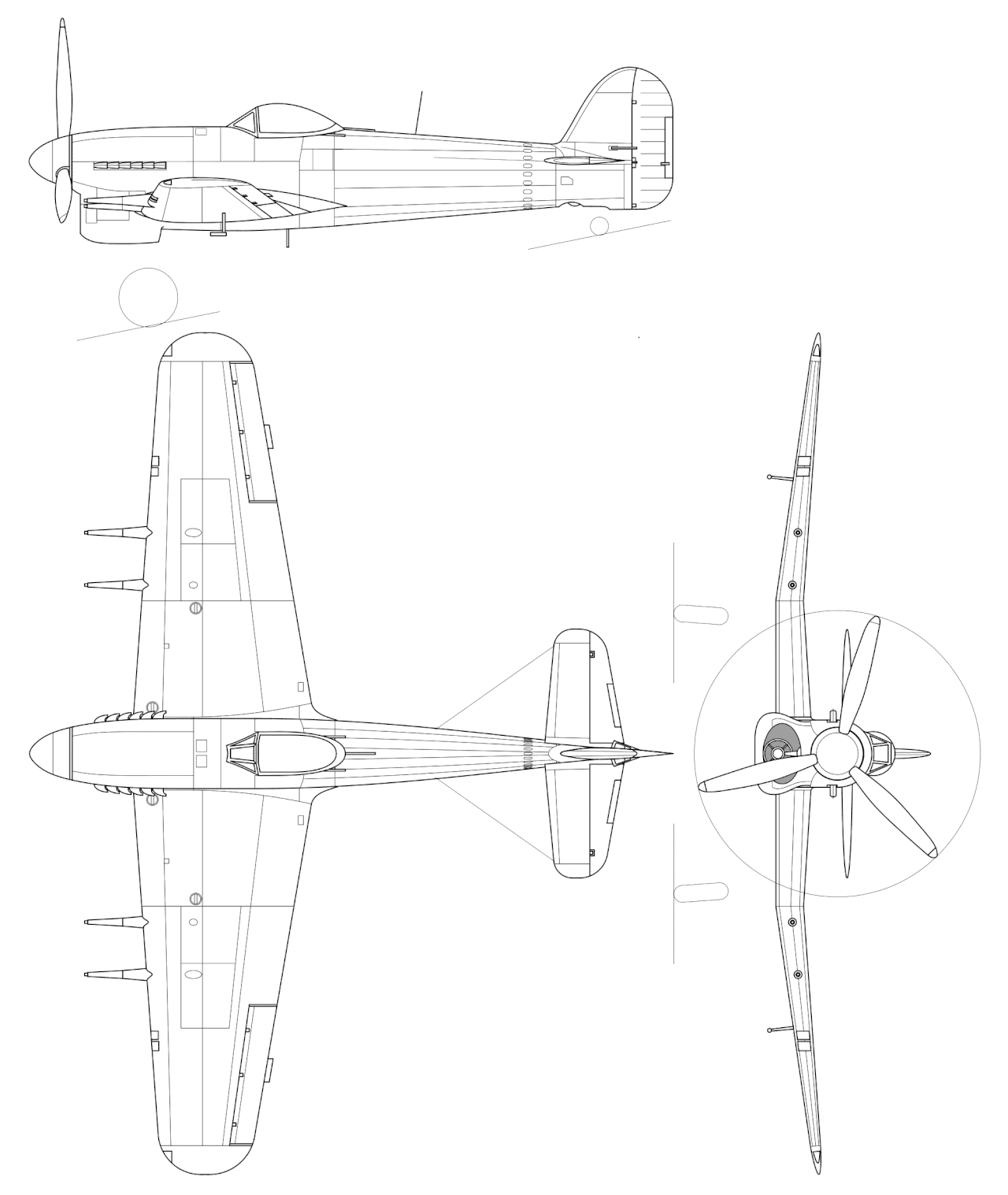
Hawker Typhoon Mk IB
Hawker Aircraft
How does the Typhoon Mk IB stack up?
CompareOverview
The Hawker Typhoon began life as a troubled interceptor that nearly got cancelled, then transformed into the most devastating ground-attack aircraft in the European theater. Armed with four 20mm cannon and eight RP-3 rockets or 2,000 pounds of bombs, the Typhoon became the weapon that Allied ground commanders called upon to break German armored counterattacks and destroy enemy strongpoints.
Powered by the temperamental but enormously powerful 2,180 hp Napier Sabre engine, the Typhoon was the fastest RAF fighter at low altitude when it entered service. Early problems with engine reliability, structural failures of the tail section, and carbon monoxide leaking into the cockpit nearly killed the program, but these issues were eventually resolved.
The Typhoon truly found its calling during the Normandy campaign, where rocket-firing "Tiffies" roamed ahead of advancing Allied armies, striking at German armor, transport, and fortified positions. The carnage at the Falaise Gap, where Typhoons helped trap and destroy an entire German army, cemented the aircraft's fearsome reputation.
Performance Profile
Max Speed
412 mph
at 19,000 ft
Range
510 miles
normal
Service Ceiling
35,200 ft
Rate of Climb
3,000 ft/min
Armament
4 guns
4x 20mm Hispano Mk II
Crew
1
Engine
Napier Sabre IIA
2180 hp inline
Development History
The Typhoon was designed to Specification F.18/37 as a successor to the Hurricane, intended to counter the next generation of Luftwaffe fighters. Sydney Camm designed the aircraft around the powerful new Napier Sabre 24-cylinder H-block engine, creating a large, heavy fighter with a distinctive chin radiator.
The prototype first flew on February 24, 1940, but development was plagued with problems. The Sabre engine was unreliable in its early forms, suffering frequent sleeve-valve failures. More dangerously, several aircraft suffered catastrophic tail failures when the entire empennage separated in flight, traced to elevator flutter and fatigue cracking at the transport joint. Carbon monoxide from the engine seeped into the cockpit, causing pilot incapacitation.
By early 1942, Fighter Command was on the verge of cancelling the Typhoon entirely. The intervention of Roland Beamont, who championed the aircraft and worked closely with Hawker to resolve its problems, proved decisive. Structural reinforcements, engine modifications, and cockpit sealing gradually transformed the Typhoon from a death trap into a formidable weapon.
The Mk IB, with four 20mm cannon replacing the earlier Mk IA's twelve machine guns, became the definitive variant. When rocket rails were fitted in late 1943, the Typhoon found its true role as a ground-attack aircraft. The addition of a bubble canopy and whip aerial in late production improved pilot visibility and marked the final evolution of the type.
Combat History
The Typhoon's first operational success came not in the ground-attack role but as a low-altitude interceptor. In 1942-43, it was the only RAF fighter fast enough at sea level to catch Fw 190 "Jabo" fighter-bombers conducting hit-and-run raids on southern English coastal towns. Typhoons of No. 609 Squadron and others broke these tip-and-run raids decisively.
From mid-1943, the Typhoon transitioned primarily to ground attack. Rocket-armed Typhoons attacked V-1 launch sites during Operation Crossbow and softened up German positions in France ahead of D-Day. On June 6, 1944, Typhoon squadrons flew continuous "cab rank" patrols over the beachheads, responding within minutes to army requests for close air support.
The Falaise Pocket in August 1944 was the Typhoon's defining moment. As the German Seventh Army and Fifth Panzer Army attempted to escape encirclement, Typhoons attacked the trapped columns relentlessly. The roads became choked with burned-out vehicles, and while post-war analysis showed that many vehicles were destroyed by artillery rather than rockets, the psychological effect of the Typhoon attacks was devastating, causing mass abandonment of equipment.
Typhoons continued supporting the Allied advance through the Low Countries and into Germany, attacking marshalling yards, bridges, and strongpoints. During the Ardennes offensive, Typhoons flew despite terrible winter weather to blunt German armored thrusts. By VE Day, Typhoon squadrons had fired over 222,000 rockets and dropped over 52,000 tons of bombs.
Variants
| Designation | Key Differences | Produced |
|---|---|---|
| Mk IA | Early production variant with twelve .303 Browning machine guns; suffered from engine reliability and tail structural issues. | 105 |
| Mk IB | Definitive variant with four 20mm Hispano cannon; later fitted with rocket rails, bubble canopy, and whip aerial. | 3,212 |
| FR Mk IB | Fighter-reconnaissance variant fitted with cameras for tactical photo-reconnaissance while retaining full armament. | - |
| Night Intruder | Field modification with exhaust shrouds for night ground-attack missions over occupied Europe. | - |
Strengths & Weaknesses
+Strengths
- Devastating ground-attack capability with eight RP-3 rockets and four 20mm cannon
- Fastest RAF fighter at low altitude, capable of catching Fw 190 fighter-bombers
- Extremely robust airframe that could withstand heavy ground fire and return home
- Massive 2,180 hp Sabre engine provided excellent low-altitude speed and acceleration
-Weaknesses
- Napier Sabre engine required intensive maintenance and was unreliable in early service
- Poor high-altitude performance above 20,000 feet limited air-to-air effectiveness
- Heavy and unresponsive at altitude compared to the Spitfire and Fw 190
- Early variants suffered dangerous structural tail failures and cockpit carbon monoxide leaks
Pilot Voices
“The Typhoon was a beast to fly. It felt like riding a barely tamed stallion. But when you fired those eight rockets into a Panzer column, there was nothing in the sky to match it.”
“Once we got the bugs sorted, the Tiffy was magnificent. At low level, nothing could catch us and nothing could survive our rockets.”
Did You Know?
Typhoon pilots wore oxygen masks at all times during early operations, not for altitude but to avoid carbon monoxide poisoning from engine fumes leaking into the cockpit.
Post-war analysis of the Falaise Gap found that only about 100 of the 3,000 destroyed vehicles could be definitively attributed to rocket strikes, but the psychological effect caused thousands of Germans to abandon their vehicles and surrender.
The Typhoon nearly got cancelled multiple times in 1942 due to its problems, and only the personal advocacy of Wing Commander Roland Beamont saved the program.

