Skip to content
April 23:The Zeebrugge Raid108yr ago

10 Warships That Were Sunk by Something They Were Designed to Defeat

Ryan Caldwell · · 14 min read
Save
Share:
HMS Hood battlecruiser at sea in 1924 showing its massive profile and armored superstructure
Ryan Caldwell
Ryan Caldwell

Defense Analysis Editor

Ryan Caldwell writes about military decision-making, failed programs, and the tradeoffs behind major defense choices. His work is focused on understanding why systems succeed or fail beyond headlines, promises, and initial expectations.

Every one of these warships was designed to survive exactly the kind of attack that killed it. They were not undone by weapons they never anticipated or tactics no one imagined. They were sunk by the precise threats their designers spent years and fortunes trying to defeat. The gap between blueprint and battlefield has claimed some of the most powerful vessels ever built, and the pattern repeats across 160 years of naval warfare.

1. HMS Hood (1941), The Battlecruiser Killed by a Battleship
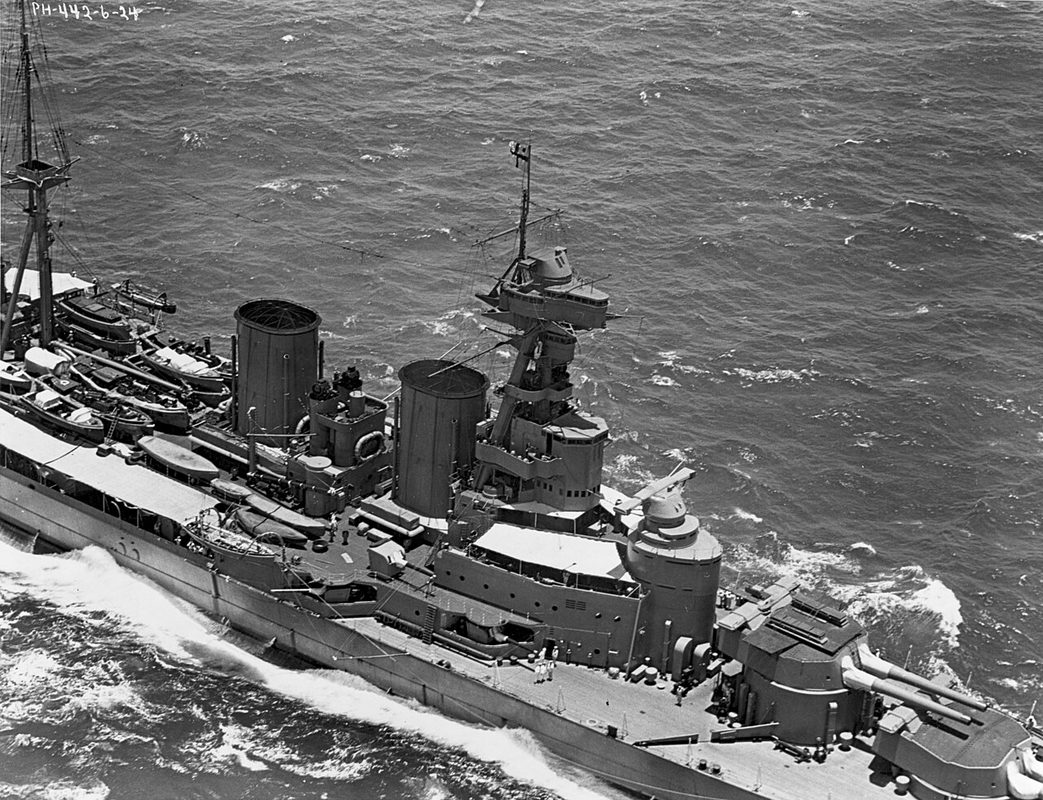
HMS Hood at sea showing the battlecruiser's massive length and main armament
HMS Hood was the pride of the Royal Navy for two decades, the largest warship afloat when commissioned in 1920. (Photo via Wikimedia Commons)

HMS Hood was a battlecruiser, a class of warship specifically designed to engage enemy capital ships at long range. Her eight 15-inch guns could trade blows with any battleship afloat, and her armor was intended to protect against the plunging fire that characterized long-range gunnery duels. But Hood's armor scheme, designed in 1916, reflected the understanding of ballistics from World War I. By 1941, improvements in propellant charges and shell design meant that battleship rounds arrived at steeper angles and higher velocities than her designers had anticipated.

On May 24, 1941, in the Battle of the Denmark Strait, a 15-inch shell from the German battleship Bismarck struck Hood and penetrated to her after magazines. The resulting explosion broke the ship in half. She sank in three minutes. Of 1,418 crew, three survived. Hood had been designed to fight battleships. A battleship killed her, not through some unforeseen weapon, but by exploiting the exact vulnerability her armor was supposed to prevent.

2. Yamato (1945), The Anti-Aircraft Fortress Overwhelmed by Aircraft
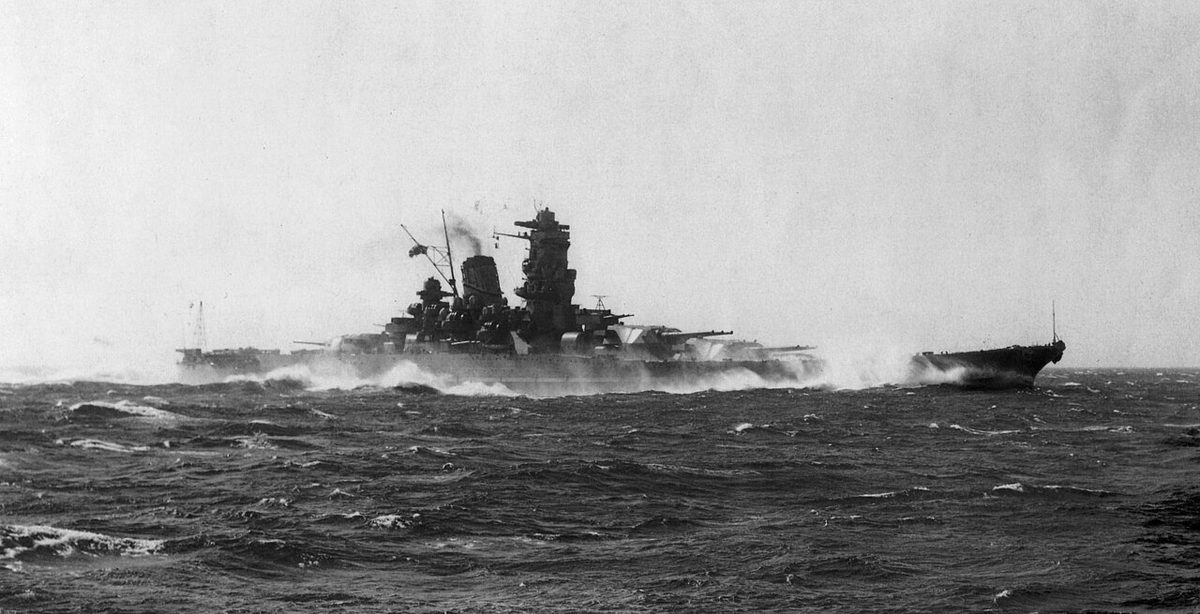
Japanese battleship Yamato during sea trials in 1941 showing its massive hull and pagoda superstructure
Yamato during sea trials off Bungo Strait, October 1941. By 1945, the battleship had been refitted with over 150 anti-aircraft guns, and it still was not enough. (Photo via Wikimedia Commons)

By 1945, the Imperial Japanese Navy had transformed Yamato into a floating anti-aircraft battery. The world's largest battleship carried over 150 anti-aircraft guns of various calibers, including 24 127mm dual-purpose guns and over 150 25mm autocannons. The refit was designed to make the ship survivable against the massed air attacks that had already destroyed much of the Japanese fleet.

On April 7, 1945, during Operation Ten-Go, 386 American aircraft attacked Yamato in waves over two hours. Despite the anti-aircraft barrage, the attackers scored at least 11 torpedo hits and 6 bomb hits. The torpedo damage was concentrated on the port side, causing progressive flooding that eventually capsized the ship. Yamato's magazines exploded as she rolled, producing a mushroom cloud visible from 100 miles away. Of 3,332 crew, 276 survived. The ship built to withstand air attack was destroyed by exactly that.

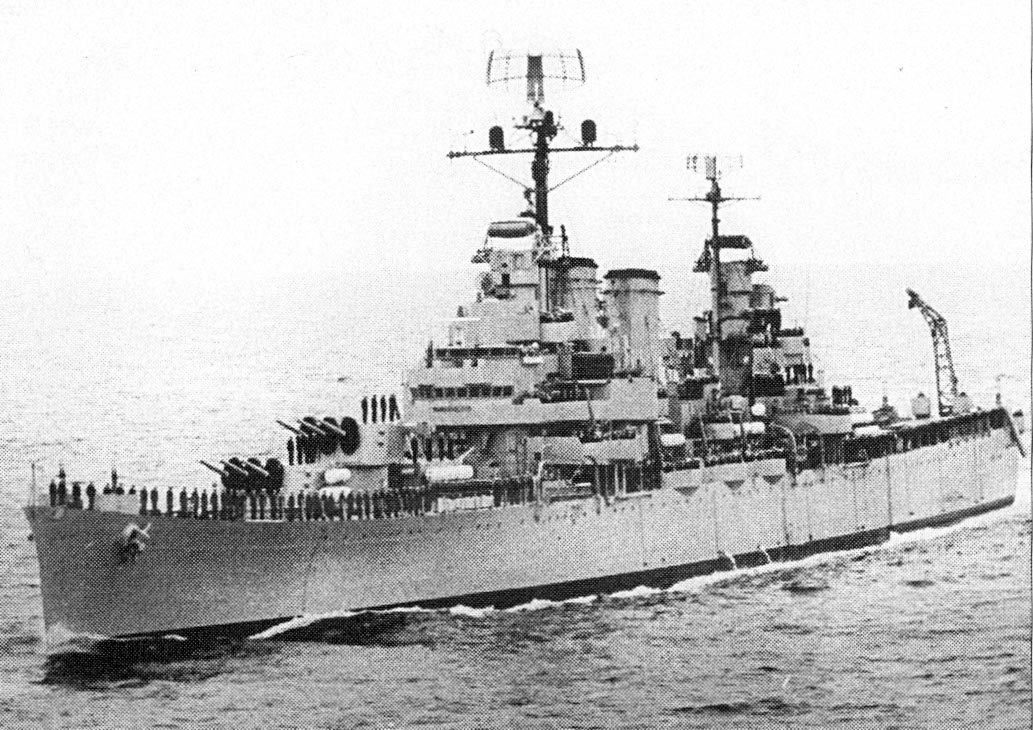
3. ARA General Belgrano (1982), The Anti-Submarine Ship Torpedoed by a Submarine

ARA General Belgrano cruiser underway at sea
ARA General Belgrano, the Argentine cruiser originally built as USS Phoenix, a survivor of Pearl Harbor that would not survive the Falklands. (Photo via Wikimedia Commons)

The ARA General Belgrano was a Brooklyn-class light cruiser, originally USS Phoenix, a Pearl Harbor survivor, that had been modernized with anti-submarine warfare equipment including sonar systems and depth charge racks. The Argentine Navy considered her capable of defending against submarine threats, a critical mission in the South Atlantic.

On May 2, 1982, during the Falklands War, the British nuclear submarine HMS Conqueror fired three Mark 8 torpedoes, a World War II-era straight-running torpedo design. Two struck Belgrano. The first hit the bow, blowing off 45 feet of the ship's forward section. The second struck aft, disabling her propulsion. The cruiser sank in 40 minutes. 323 crew were killed. Belgrano's anti-submarine systems never detected Conqueror. The ship designed to hunt submarines was killed by one without ever knowing it was there.

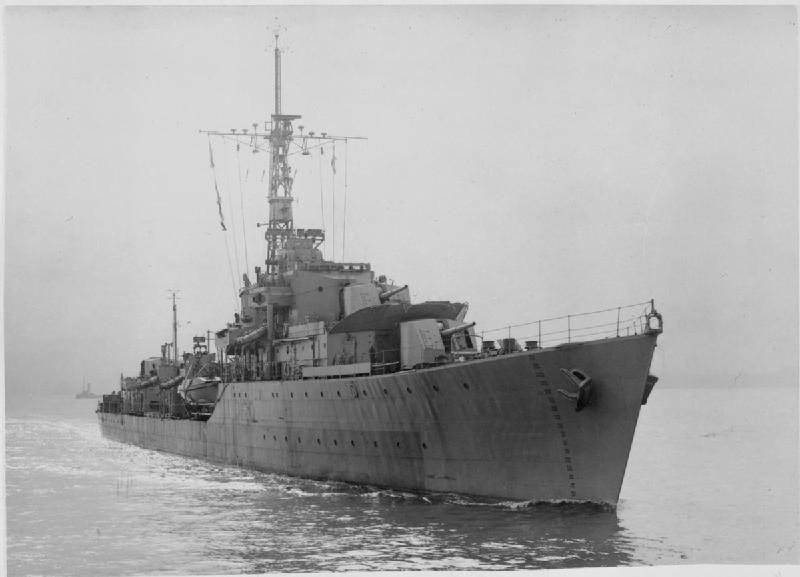
4. INS Eilat (1967), The First Ship Killed by Anti-Ship Missiles

INS Eilat destroyer of the Israeli Navy at sea
INS Eilat, originally HMS Zealous, a British Z-class destroyer transferred to Israel in 1955. Her loss changed naval warfare permanently. (Photo via Wikimedia Commons)

INS Eilat was a Z-class destroyer, a warship designed during World War II to defend against surface threats and submarines. Destroyers were, by definition, built to screen larger vessels against exactly the kind of fast-moving surface threats that included small attack craft. But the destroyers of 1967 had no defense against a weapon that did not exist when they were designed: the anti-ship cruise missile.

On October 21, 1967, two Egyptian Komar-class missile boats launched four Soviet-made P-15 Styx missiles at Eilat from a range of approximately 12 miles, well beyond the range of the destroyer's guns. Three missiles struck the ship. Eilat sank with 47 crew killed. It was the first warship in history destroyed by anti-ship missiles, and it made every gun-armed destroyer in the world obsolete overnight. The ship designed to counter surface threats was annihilated by a surface threat it could neither detect in time, outrun, nor shoot down.

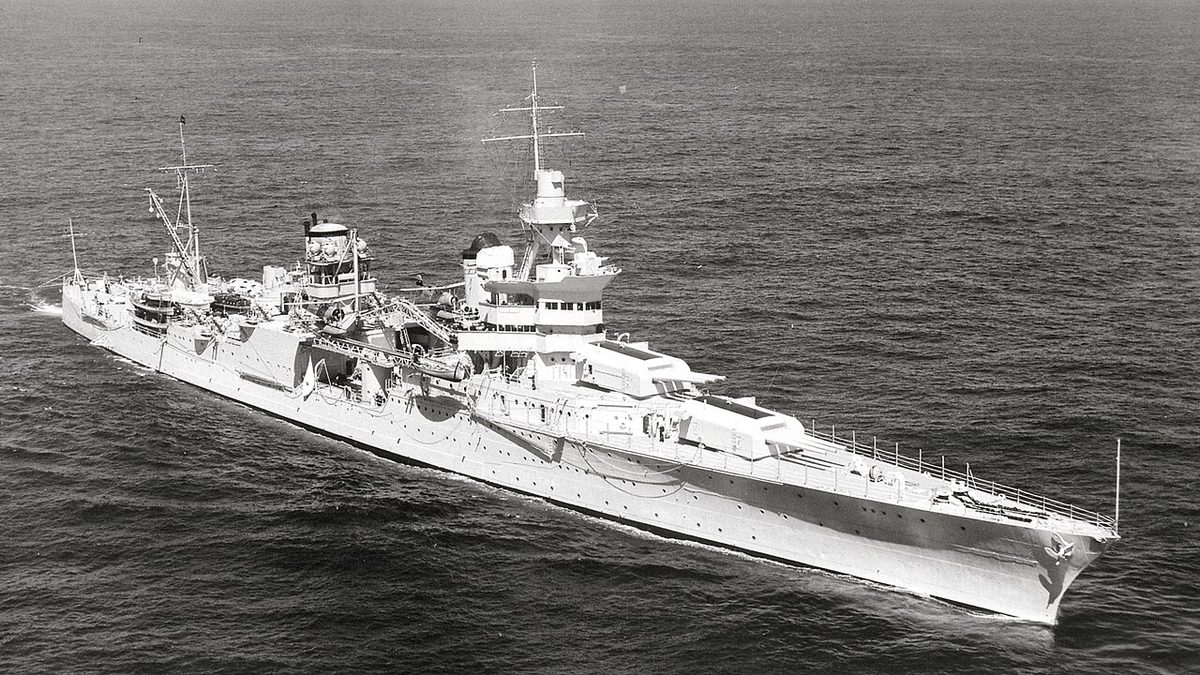
5. USS Indianapolis (1945), The Heavy Cruiser Torpedoed by a Submarine

USS Indianapolis heavy cruiser underway at sea in September 1939
USS Indianapolis (CA-35) underway in September 1939. After delivering components for the first atomic bomb, she was torpedoed and sank before anyone knew she was missing. (Photo: U.S. Naval History and Heritage Command)

USS Indianapolis was a Portland-class heavy cruiser, an escort and surface combat vessel whose role included protecting larger capital ships from submarine and surface threats. Heavy cruisers carried depth charges and had anti-submarine detection equipment. They were designed to survive in submarine-infested waters.

On July 30, 1945, after secretly delivering enriched uranium for the atomic bomb that would be dropped on Hiroshima, Indianapolis was struck by two torpedoes from the Japanese submarine I-58. The cruiser sank in 12 minutes. Of 1,195 crew, approximately 900 survived the sinking, but the Navy did not realize the ship was missing for four days. By the time rescue arrived, only 316 men remained alive, the rest had succumbed to exposure, dehydration, and shark attacks. It remains the deadliest single-ship disaster in U.S. Navy history.

6. SMS Blücher (1940), The Heavy Cruiser Sunk by Shore Batteries in a Fjord

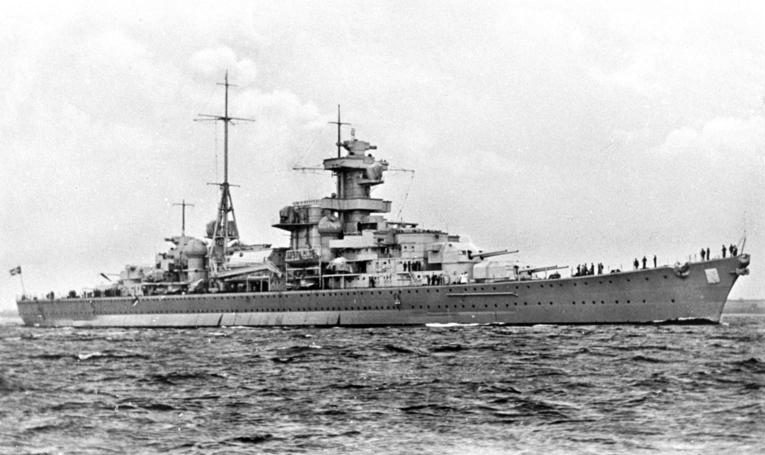
German heavy cruiser Blücher before the invasion of Norway
The German heavy cruiser Blücher. Her designers built her to withstand coastal defense fire, but not at point-blank range in a narrow fjord. (Photo: Bundesarchiv, via Wikimedia Commons)

The heavy cruiser Blücher was one of the Admiral Hipper-class, warships designed with armor belts specifically intended to resist the fire of coastal defense guns. The Kriegsmarine understood that naval operations would sometimes bring warships within range of shore batteries, and the Hipper-class was armored accordingly.

On April 9, 1940, during the German invasion of Norway, Blücher led the naval task force through the narrow Drøbak Sound toward Oslo. The Norwegian fortress of Oscarsborg opened fire at a range of approximately 1,800 meters, point-blank for naval gunnery. Two 280mm Krupp guns, installed in 1893, struck the cruiser's superstructure and ignited her aviation fuel stores. As Blücher slowed, burning, the fortress launched two torpedo-tube-mounted torpedoes that struck below the waterline. Blücher capsized and sank with over 600 crew and soldiers killed. The delay gave the Norwegian government and royal family time to evacuate Oslo, arguably the most consequential sinking in the entire Norwegian campaign.

7. Moskva (2022), The Air Defense Cruiser Sunk by Anti-Ship Missiles

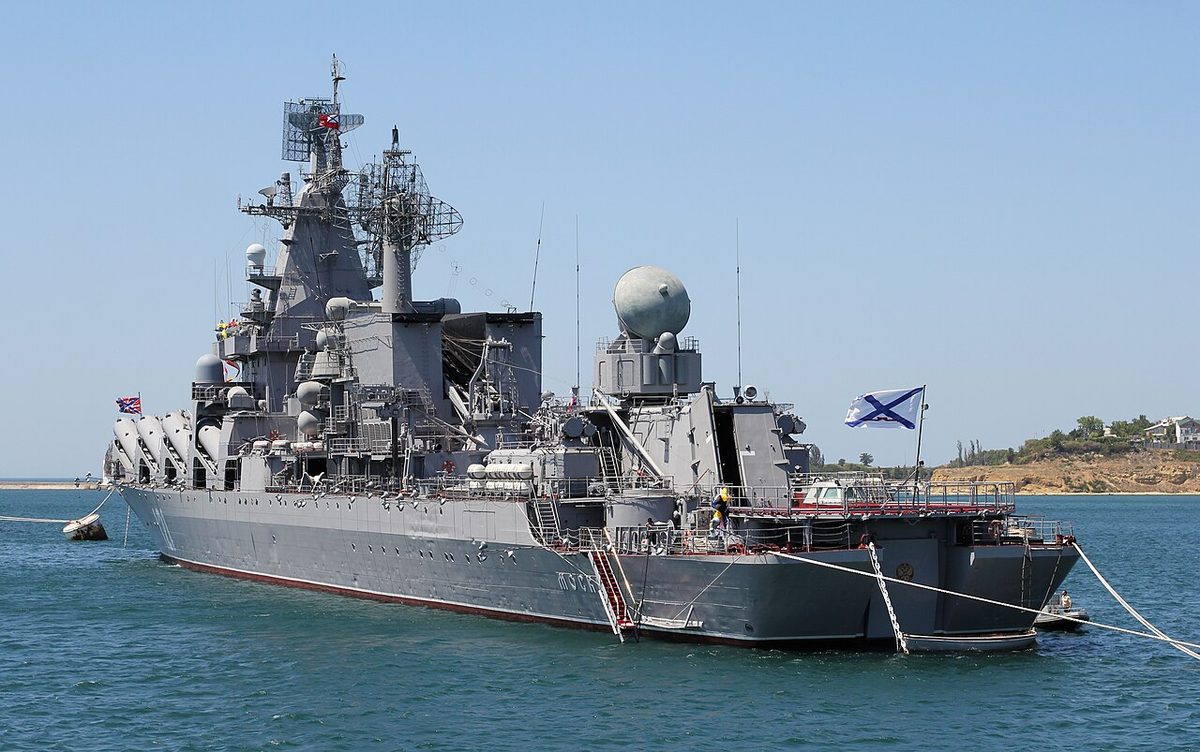
Russian guided-missile cruiser Moskva at sea showing its massive anti-ship missile launchers and radar arrays
The guided-missile cruiser Moskva, flagship of Russia's Black Sea Fleet. Her S-300F air defense system was designed to intercept exactly the kind of missiles that sank her. (Photo via Wikimedia Commons)

The Slava-class guided-missile cruiser Moskva was the flagship of Russia's Black Sea Fleet and one of the most heavily armed air defense platforms afloat. Her primary defensive system was the S-300F Fort, a naval variant of the S-300 surface-to-air missile system, capable of engaging aircraft and cruise missiles at ranges exceeding 90 miles. She also carried the Osa-M short-range air defense system and six AK-630 close-in weapon systems. Moskva was designed, above all else, to shoot down incoming missiles.

On April 13, 2022, two Ukrainian Neptune anti-ship cruise missiles struck Moskva while she operated approximately 60 nautical miles south of Odessa. The Neptune is a subsonic, sea-skimming missile, exactly the type of threat the S-300F and her close-in defense systems were designed to intercept. The strikes ignited fires that reached the ship's magazine spaces. Moskva capsized and sank on April 14. The most powerful air defense ship in the Black Sea was destroyed by exactly the weapons she existed to defeat.

8. HMS Repulse and HMS Prince of Wales (1941), Capital Ships Without Air Cover

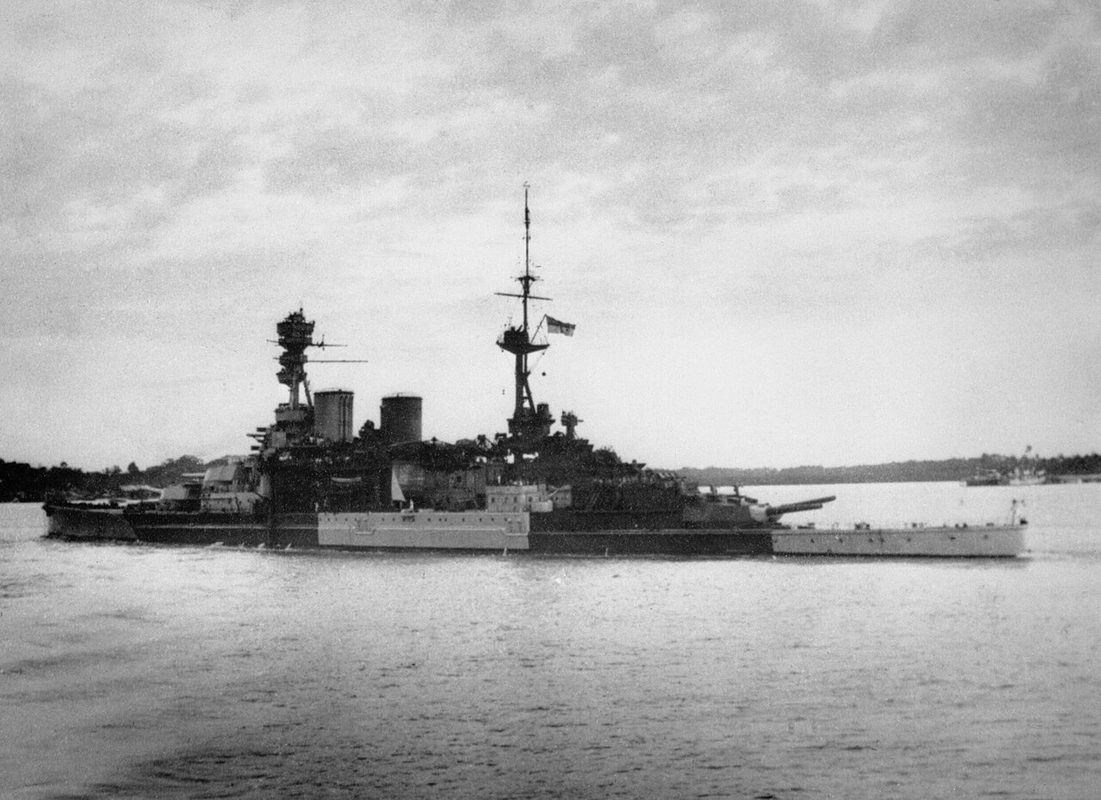
HMS Repulse battlecruiser leaving Singapore harbor in December 1941
HMS Repulse leaving Singapore shortly before her final sortie. Two days later, she and Prince of Wales would become the first capital ships sunk by air attack while underway at sea. (Photo via Wikimedia Commons)

HMS Repulse was a Renown-class battlecruiser and HMS Prince of Wales was a King George V-class battleship, both designed to survive aerial attack through anti-aircraft armament and armored decks. Prince of Wales, in particular, was one of the newest battleships in the Royal Navy, completed in 1941 with a modern anti-aircraft suite including sixteen 5.25-inch dual-purpose guns and numerous smaller weapons.

On December 10, 1941, three days after Pearl Harbor, Japanese land-based bombers and torpedo aircraft from the 22nd Air Flotilla attacked Force Z off the coast of Malaya. Without air cover, the intended carrier escort HMS Indomitable had run aground during work-up, both ships relied entirely on their anti-aircraft defenses. Repulse was hit by five torpedoes and sank first. Prince of Wales absorbed six torpedo hits and at least one bomb before capsizing. A total of 840 men were killed. They were the first capital ships sunk by air power while actively maneuvering and defending themselves at sea.

9. Roma (1943), The Battleship Killed by a Guided Bomb

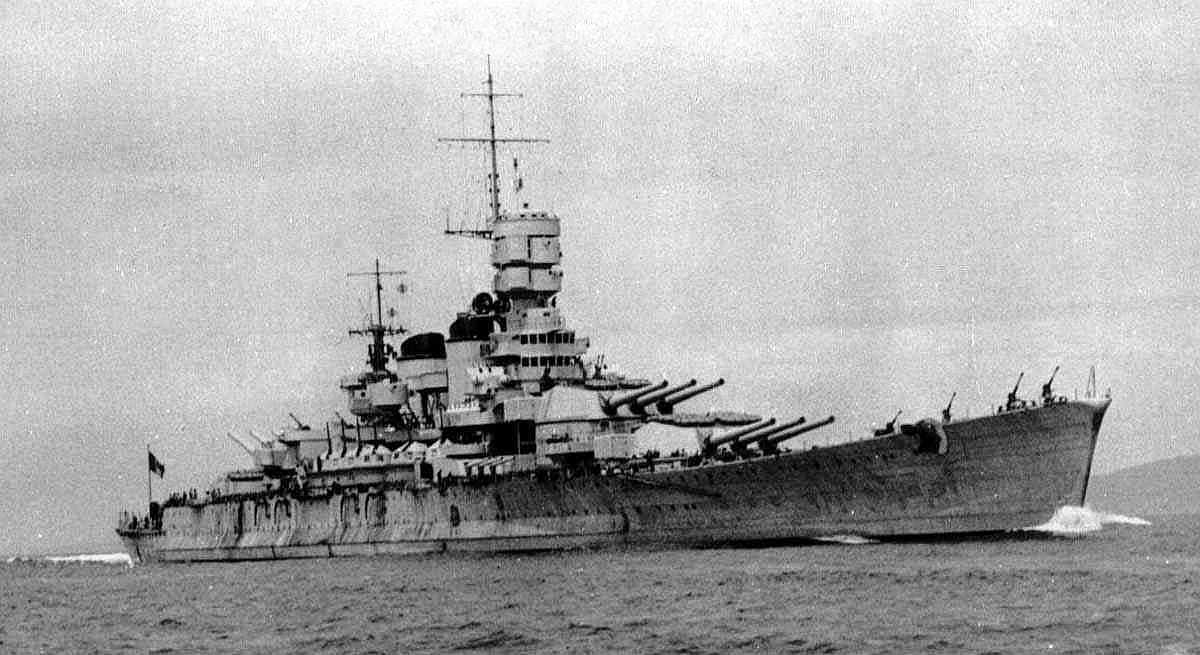
Italian battleship Roma at sea showing her sleek Littorio-class hull and triple gun turrets
The Italian battleship Roma, one of the most modern and heavily armored warships in the Mediterranean. She was sunk by a weapon no ship had ever encountered before, but one her armor was theoretically designed to resist. (Photo via Wikimedia Commons)

Roma was a Littorio-class battleship, one of the most modern warships in the Regia Marina, with a Pugliese torpedo defense system and armored decks designed to resist aerial bombs. Her deck armor was specifically calculated to defeat the largest conventional bombs in service with any air force.

On September 9, 1943, as the Italian fleet sailed to surrender to the Allies following the armistice, Luftwaffe Dornier Do 217 bombers attacked using Fritz X guided bombs, the world's first precision-guided munition. The Fritz X was a 3,450-pound armor-piercing bomb with radio-controlled tail fins that allowed the bombardier to steer it onto the target. Two Fritz X bombs struck Roma. The second penetrated through the armored deck into the forward magazine. The resulting explosion blew off the entire bow section. Roma sank in minutes, killing 1,393 of 1,849 crew. Her armor had been designed to stop bombs, but not bombs that could be guided directly onto the most vulnerable point of the ship.

10. USS Housatonic (1864), The First Warship Sunk by a Submarine

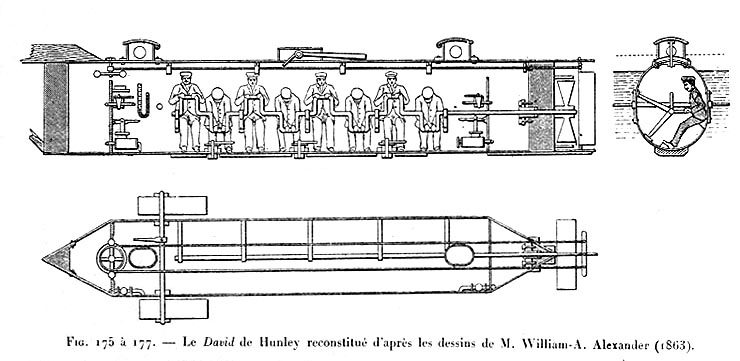
Painting of the Confederate submarine CSS Hunley showing its hand-cranked propulsion design
The CSS Hunley, the first submarine to sink an enemy warship. The hand-cranked vessel carried a spar torpedo on a pole extending from its bow. (Image via Wikimedia Commons)

USS Housatonic was a Canonicus-class sloop-of-war stationed off Charleston harbor as part of the Union blockade. Blockade vessels were specifically positioned to prevent Confederate ships from entering or leaving port, their entire purpose was to control the approaches to Charleston against exactly the kind of surface and underwater threats the Confederacy might deploy.

On the night of February 17, 1864, the Confederate submarine CSS Hunley, a hand-cranked, eight-man submersible carrying a spar torpedo, approached Housatonic on the surface. Despite being spotted by a lookout, the submarine closed to contact distance and detonated its torpedo against the sloop's hull. Housatonic sank in approximately five minutes, becoming the first warship in history to be sunk by a submarine. Five crew were killed. Hunley herself also sank after the attack, likely swamped by the blast wave from her own weapon. The ship designed to block all threats from the sea was destroyed by a threat that came from beneath it.

The Pattern That Never Breaks

These ten ships span 160 years, four navies, and eight different conflicts. The weapons that killed them include everything from 19th-century spar torpedoes to 21st-century cruise missiles. But the pattern is identical in every case: a warship specifically designed to counter a particular threat was destroyed by exactly that threat.

The lesson is not that naval architects are incompetent. It is that the gap between design specifications and combat reality is never zero. Armor that should resist plunging fire fails when the shells arrive steeper than predicted. Anti-aircraft systems that should stop hundreds of planes fail when the planes arrive in waves of 386. Air defense radars that should detect incoming missiles fail when the crew is distracted, or the systems are in standby, or the missile approaches from an angle the radar was not watching. Every design assumption becomes a vulnerability when combat exposes the assumptions that were wrong.

The ships on this list were not poorly designed. They were designed for a war that turned out to be slightly different from the one they fought. That margin, between the war you planned for and the war you got, has proven to be the deadliest margin in naval history.

Share this article

Share:

Recommended

Ace of The Skies: Can You Identify These Military Aircraft Throughout The Years?
Test Yourself

Ace of The Skies: Can You Identify These Military Aircraft Throughout The Years?

Can you identify these aircraft?

Take the Quiz

On This Day in Military History

April 23

The Zeebrugge Raid (1918)

On St. George's Day, the Royal Navy launched a daring raid on the German-held Belgian port of Zeebrugge, attempting to block the canal entrance used by German U-boats. HMS Vindictive stormed the harbor mole while blockships were scuttled in the canal. Eight Victoria Crosses were awarded for the action.

1951, Battle of the Imjin River

See all 4 events on April 23

Get Military News & History in Your Inbox

Join thousands of readers receiving our weekly digest of military technology, history, and analysis.

Test Your Knowledge