Skip to content
April 24:Operation Eagle Claw Fails in Iran46yr ago

How the US Military Built an Entire Base in the Desert in 72 Hours During Desert Shield

James Holloway · · 10 min read
Save
Share:
RED HORSE airmen working on rapid airfield repair and construction at a forward operating location
James Holloway
James Holloway

Military Logistics & Sustainment Analyst

James Holloway writes about military readiness, logistics, and the practical limits of modern forces. His work focuses on how training, sustainment, and organizational decisions shape what militaries can actually do -- not just what they are designed to do on paper.

In August 1990, the Saudi desert was empty. By January 1991, it held more American troops than most US cities hold people. Operation Desert Shield, the six-month buildup that preceded Desert Storm, required the United States military to build an entire theater infrastructure from bare sand. Airfields capable of supporting F-15s and B-52s. Water purification systems that produced millions of gallons per day. Hospitals with surgical capability. Housing, dining facilities, fuel depots, ammunition storage, and communications networks for over 500,000 troops and their equipment. All of it built in a desert where nothing existed, under the threat of an Iraqi attack that could come at any time.

The Three Construction Forces

The US military has three dedicated construction forces, each with its own specialization and each critical to the Desert Shield buildup. The Air Force's Rapid Engineer Deployable Heavy Operational Repair Squadron Engineers, better known as RED HORSE, specialize in airfield construction and repair. The Navy's Construction Battalions, the Seabees, build port facilities, camps, and infrastructure in combat zones. The Army Corps of Engineers designs and manages large-scale military construction projects and oversees civilian contractor operations.
RED HORSE airmen returning from a deployment involving construction and airfield repair operations
RED HORSE airmen return from a six-month deployment that included forward airfield construction and repair. The same skills used in Desert Shield remain critical to expeditionary operations today. (U.S. Air Force photo)

During Desert Shield, all three organizations deployed simultaneously, along with thousands of civilian contractors hired through the Logistics Civil Augmentation Program (LOGCAP). The scale of the construction effort was staggering. In six months, the military built or expanded more than 30 airfields, constructed over 100 forward operating bases and logistics sites, installed hundreds of miles of pipeline for fuel and water distribution, and built enough housing, in tents, containerized units, and hardened structures, to shelter half a million people.

Building Airfields from Sand

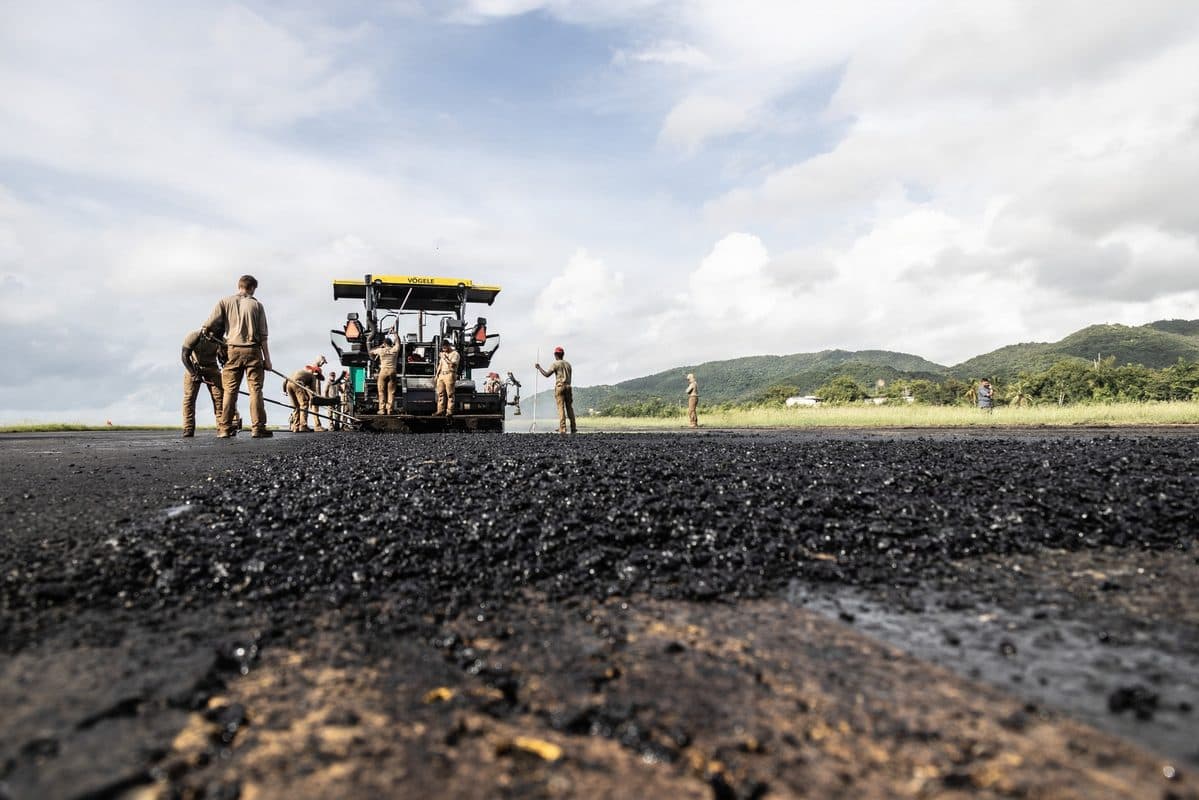
The most urgent construction requirement was airfields. The coalition's air campaign depended on hundreds of aircraft operating from bases throughout Saudi Arabia, and the existing Saudi airfields, while excellent, could not handle the volume. RED HORSE squadrons deployed to expand existing airfields and build new ones from scratch.

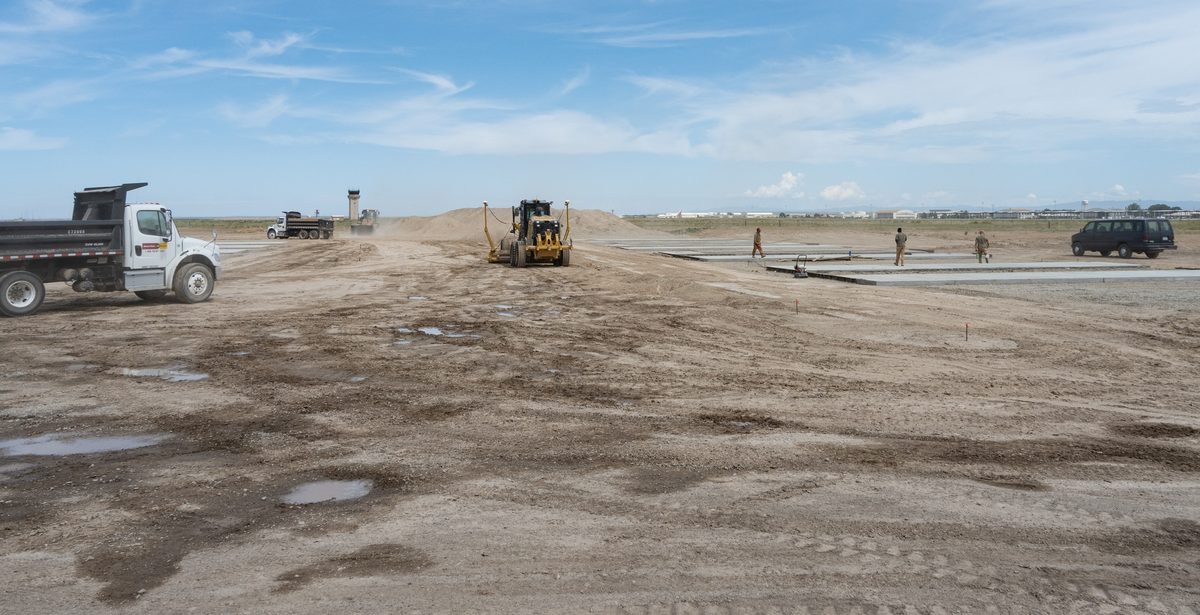
RED HORSE squadron airmen working on airfield construction at a regional training site
RED HORSE airmen construct infrastructure at a training site. The squadron's heavy equipment operators can build a functional airfield from bare ground in as little as 72 hours. (U.S. Air Force photo)

Building a tactical airfield in the desert follows a specific sequence. First, engineers survey and grade the site, using bulldozers and motor graders to create a flat, compacted surface. The desert floor in Saudi Arabia is a mix of sand and hardpan, firm enough for light aircraft but requiring stabilization for high-performance jets. Engineers apply soil stabilization compounds and compact the surface with heavy rollers to create a runway capable of supporting the 68,000-pound landing weight of an F-15 Eagle.

For more permanent installations, RED HORSE teams laid AM-2 aluminum matting, interlocking metal panels that create an instant runway surface on any terrain. A team of 50 airmen could lay a 3,500-foot runway using AM-2 matting in approximately 72 hours. Add another 48 hours for taxiways, parking aprons, and arresting gear, and a bare patch of desert becomes a fully functional fighter base in less than a week.

Water: The Most Critical Resource

In the Saudi desert, water is more important than ammunition. A soldier in combat in 120-degree heat needs a minimum of two gallons of drinking water per day, and the half-million troops deployed during Desert Shield required over a million gallons daily. Add vehicle maintenance, aircraft washing, medical facilities, food preparation, and shower water, and the total daily water requirement exceeded 5 million gallons.

The military solved this problem through a combination of reverse osmosis water purification units (ROWPU), contracted water trucking, and desalination. The Army deployed dozens of ROWPU systems, trailer-mounted water purification plants that can process brackish groundwater or seawater into potable water at rates of 600 to 3,000 gallons per hour. Each forward operating base had at least one ROWPU system, with larger bases operating multiple units to meet demand.

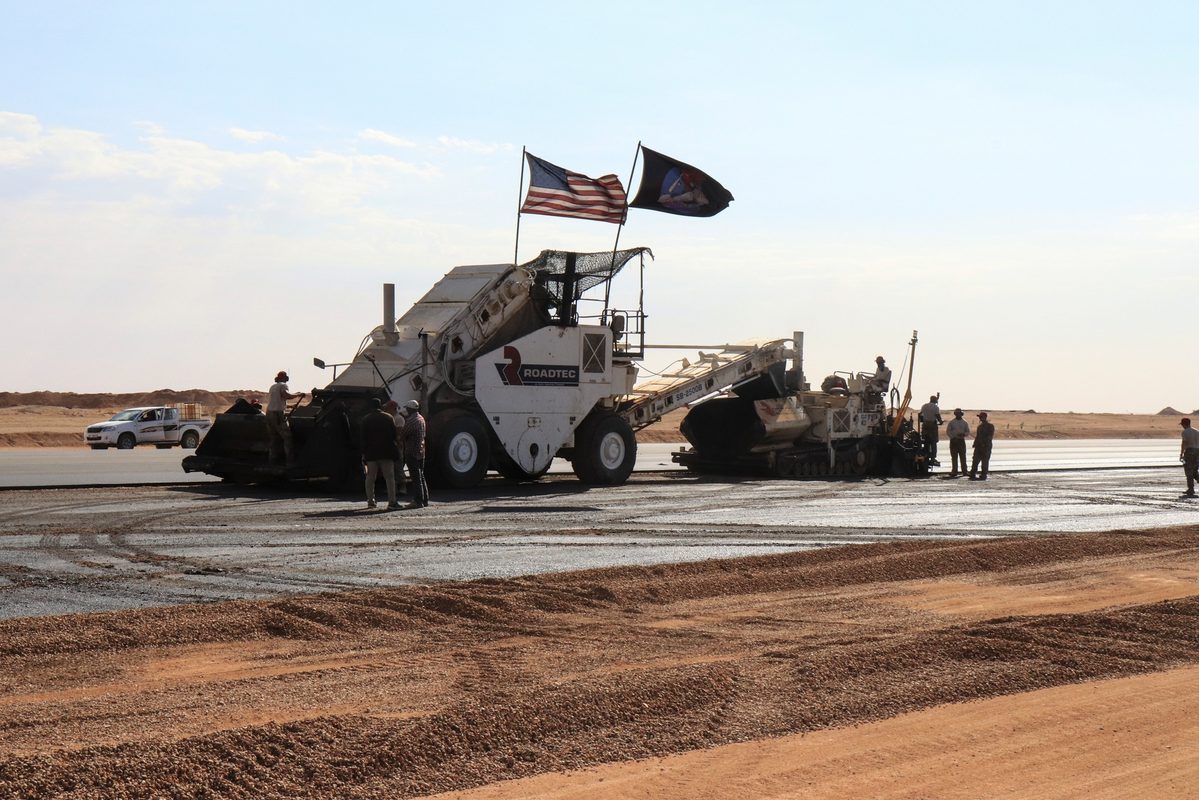
Military construction personnel working on a flight line project at a forward operating base
Military engineers work on a flight line construction project. The skills and techniques developed during Desert Shield became the foundation for every US expeditionary base built in the decades that followed. (U.S. Air Force photo)

LOGCAP: The Contractor Army

The military's organic construction forces, RED HORSE, Seabees, and Army engineers, could not build an entire theater alone. The Logistics Civil Augmentation Program (LOGCAP), managed by the Army, provided the rest. Under LOGCAP, civilian contractors, principally Brown & Root, later KBR, were pre-positioned to provide base construction and logistical support anywhere in the world within 72 hours of activation.

During Desert Shield, LOGCAP contractors built dining facilities, latrines, shower facilities, and containerized housing units (CHUs) at forward operating bases across Saudi Arabia. They installed power generation systems, constructed fuel storage and distribution infrastructure, and built the road networks that connected dispersed bases to the main supply routes. At the peak of the buildup, over 40,000 civilian contractors were working alongside military engineers.

The LOGCAP model proved so effective during Desert Shield that it became the template for every major US military deployment that followed. In Afghanistan and Iraq, LOGCAP contractors built and maintained bases that housed tens of thousands of troops for years, entire small cities with dining halls, gyms, post exchanges, and internet cafes, all constructed in environments where nothing existed before the military arrived.

Containerized Basing: The Military's Building Block

Containerized military equipment and housing units at a forward operating base
Containerized housing and equipment at a forward operating base. Standard shipping containers, modified for military use, became the fundamental building block of expeditionary basing. (U.S. Air Force photo)

The Desert Shield buildup accelerated a concept that would define military basing for the next 30 years: the containerized base. Standard 20-foot and 40-foot ISO shipping containers were modified into housing units, command posts, medical clinics, communications centers, and even portable laundries and kitchens. The containers could be transported by truck, rail, ship, or aircraft, and assembled at the destination like building blocks.

A containerized housing unit provides climate-controlled living space for two to four troops, with electrical power, lighting, and environmental controls. Stacked and arranged in rows, hundreds of CHUs can create a base camp for a brigade combat team in days rather than weeks. The modularity of the system means bases can be expanded or contracted by simply adding or removing containers, a flexibility that proved invaluable during the rapidly evolving deployments of the post-9/11 era.

The Scale of the Achievement

The numbers from Desert Shield remain extraordinary. In six months, the United States military moved 500,000 troops, 1,800 aircraft, and 100,000 vehicles to a theater 7,000 miles from the continental United States. It built the base infrastructure to house, feed, equip, and sustain all of them. It constructed or expanded 30+ airfields, installed hundreds of miles of pipeline, and established a logistics network that delivered 700,000 tons of supplies per month.

The construction effort consumed over 20 million square feet of construction materials, 95 million gallons of fuel for construction equipment, and the labor of approximately 150,000 military and civilian construction workers. The total cost of base construction during Desert Shield, separate from the combat operations of Desert Storm, exceeded $3 billion.

The Modern Equivalent

The lessons of Desert Shield are being applied today through the Army's Expeditionary Basing concept and the Air Force's Agile Combat Employment (ACE) doctrine. Both recognize that future conflicts, particularly in the Indo-Pacific, may require the rapid construction of forward operating bases on contested islands, in jungle environments, or in locations where Chinese long-range missiles have destroyed existing infrastructure.

RED HORSE squadrons now train specifically for rapid airfield repair, the ability to patch a bomb-damaged runway and return it to operational status within hours. The concept is the inverse of Desert Shield's construction-from-scratch: instead of building a base before the shooting starts, modern doctrine assumes the base will be attacked and must be rebuilt under fire. The engineers who turned empty desert into a theater of operations in six months are now training to rebuild what an enemy missile destroys in six hours.

In August 1990, the Saudi desert was 250,000 square miles of nothing. By January 1991, it was the most densely constructed military theater since Normandy. The engineers, Seabees, and contractors who built it did not fire a shot during the war that followed. They built the platform that made the war winnable, and they did it in six months from a standing start.

Share this article

Share:

Recommended

Ace of The Skies: Can You Identify These Military Aircraft Throughout The Years?
Test Yourself

Ace of The Skies: Can You Identify These Military Aircraft Throughout The Years?

Can you identify these aircraft?

Take the Quiz

On This Day in Military History

April 24

Operation Eagle Claw Fails in Iran (1980)

President Carter's mission to rescue 52 American hostages from the US Embassy in Tehran was aborted at Desert One staging area after three helicopters became inoperable. During withdrawal, a helicopter collided with a C-130, killing eight servicemen. The disaster led to the creation of US Special Operations Command.

1915, Armenian Genocide Begins

1916, Easter Rising in Dublin

See all 11 events on April 24

Get Military News & History in Your Inbox

Join thousands of readers receiving our weekly digest of military technology, history, and analysis.

Test Your Knowledge