Skip to content
May 3:British Recapture of Rangoon: The Burma Campaign Ends81yr ago

50 Deadliest Battles in Military History

Charles Bash · · 51 min read
Save
Share:
Soviet soldiers fighting in the ruins of Stalingrad
Charles Bash
Charles Bash

Military Culture & Global Defense Writer

Charles Bash covers military culture, global defense forces, and the human side of armed services around the world. His work explores how militaries shape the lives of the men and women who serve in them.

#50, Battle of Ia Drang: The First Major Clash That Defined Vietnam's Air Cavalry Doctrine

US infantry soldiers disembarking from a Huey helicopter during the Battle of Ia Drang in 1965

The Battle of Ia Drang in November 1965 killed approximately 3,561 soldiers in just five days, 234 Americans and an estimated 3,327 North Vietnamese troops from the 33rd and 66th NVA Regiments. It was the first large-scale engagement between the United States Army and the People's Army of Vietnam, and it proved that airmobile warfare could deliver infantry directly into hostile territory faster than any conventional advance.

Landing Zone X-Ray became a killing ground on November 14, 1965, when Lt. Col. Hal Moore's 1st Battalion, 7th Cavalry Regiment was surrounded by over 2,000 NVA soldiers. American forces called in "Broken Arrow", every available aircraft diverted for close air support, and B-52 Arc Light strikes cratered the jungle around the perimeter. Two days later at LZ Albany, an ambush killed 155 Americans in the deadliest single engagement of the battle. Ia Drang convinced the Pentagon that helicopter-borne assault tactics could work, while simultaneously teaching North Vietnam that closing to "belt-buckle range" negated American firepower advantages, a lesson that shaped the next decade of ground combat in Southeast Asia.

#49, Second Battle of Fallujah: The Bloodiest Urban Combat Since Hue

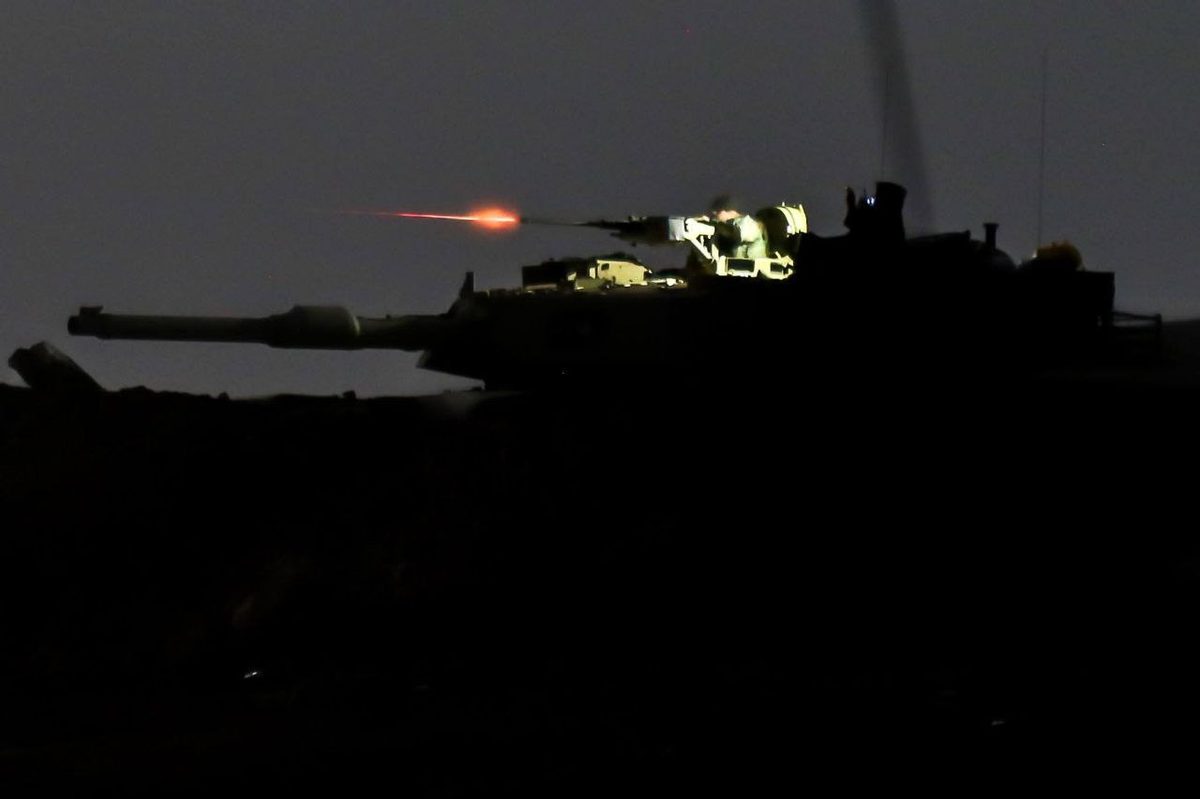
M1A1 Abrams tank advancing through the streets of Fallujah Iraq in 2004

Operation Phantom Fury in November 2004 produced an estimated 3,800 total casualties, 95 Americans killed, approximately 1,350 insurgents confirmed dead, and an unknown number of civilian deaths estimated between 800 and 6,000. Over 10,000 U.S. Marines and soldiers fought block by block through a city of 300,000 in what became the heaviest urban fighting American forces had seen since the Vietnam War.

Fallujah was a fortress. Al-Qaeda in Iraq and affiliated insurgent groups had turned the city into a labyrinth of IEDs, sniper positions, and fortified houses connected by "mouse holes" punched through interior walls. Six U.S. Marine and Army battalions attacked from the north, clearing each building methodically while AC-130 gunships circled overhead. The city was 70% destroyed by the time the fighting ended in late December 2004. American forces fired over 5,685 high-explosive rounds from tanks and artillery. The battle proved that even with overwhelming firepower and technology, clearing a defended urban environment remains the most casualty-intensive form of modern warfare.

#48, Battle of Gaugamela: Alexander's Masterpiece That Killed an Empire

Historical painting depicting the Battle of Gaugamela between Alexander the Great and the Persian Empire

At Gaugamela in 331 BC, approximately 40,000 to 90,000 Persian soldiers were killed against fewer than 1,200 Macedonian dead, one of the most lopsided casualty ratios in ancient military history. Alexander the Great's 47,000-strong army faced Darius III's force of 250,000 men on a plain the Persian king had specifically leveled for his 200 scythed war chariots and 15 Indian war elephants.

Alexander's tactical genius was the oblique advance, he shifted his entire formation to the right, drawing the Persian line wider and wider until a gap opened in the center. He then personally led his Companion Cavalry in a wedge charge directly at Darius, who fled the field for the second time in two battles. The collapse was total. Persia's elite Immortals were scattered, Darius was later murdered by his own satrap Bessus, and the Achaemenid Empire, the largest the ancient world had ever seen, ceased to exist. Gaugamela proved that tactical brilliance and elite training could overcome numerical advantages of five-to-one, a principle that military academies still teach today.

#47, Battle of Hastings: The 9-Hour Bloodbath That Rewrote England's DNA

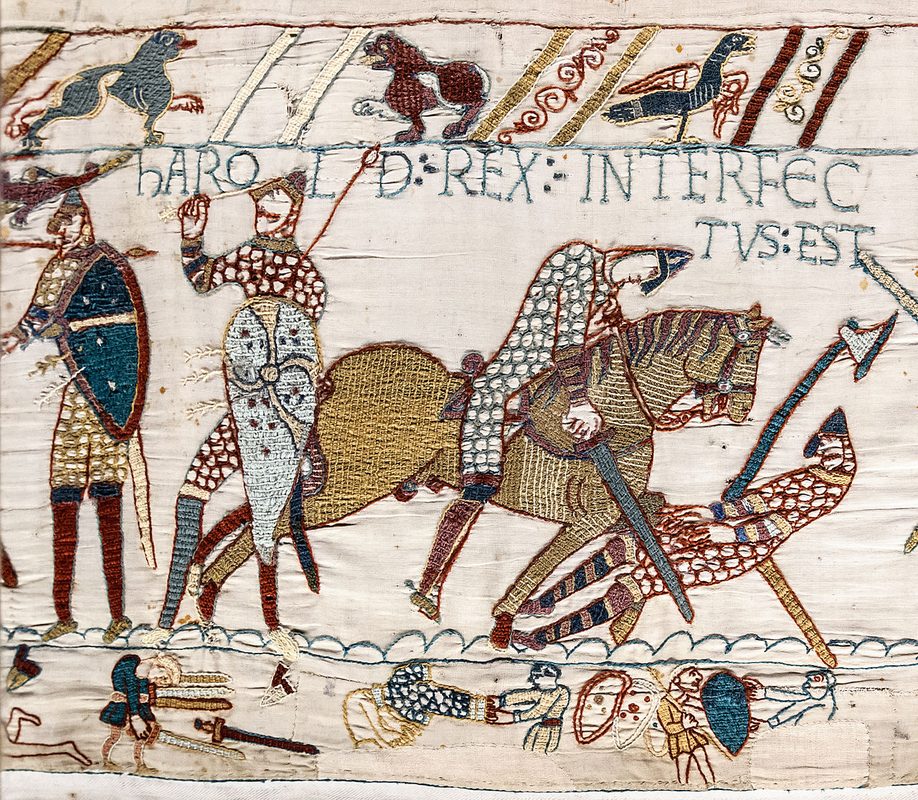
Bayeux Tapestry depicting Norman knights and archers fighting at the Battle of Hastings in 1066

The Battle of Hastings on October 14, 1066, killed an estimated 5,000 to 12,000 soldiers in a single day, including King Harold Godwinson, whose death ended the Anglo-Saxon era. William the Conqueror's 10,000-strong Norman army, comprising heavy cavalry, archers, and infantry, attacked Harold's 7,000 Anglo-Saxon warriors arrayed in a dense shield wall atop Senlac Hill near the Sussex coast.

The shield wall held for nine brutal hours. Norman cavalry charges broke against the Anglo-Saxon formation repeatedly until William's troops feigned retreat, a tactic that drew impetuous English defenders down the hill to be slaughtered by wheeling horsemen. An arrow struck Harold in the eye (or so the Bayeux Tapestry suggests), and his housecarls fought to the last man around his body. Hastings wasn't just a battle, it was a complete civilizational replacement. Norman French became the language of England's ruling class, the feudal system was imposed from Scotland to Cornwall, and every English king since has traced their legitimacy back to that single bloody hillside.

#46, Battle of Agincourt: The Mud-Soaked Massacre That Made the Longbow Legendary

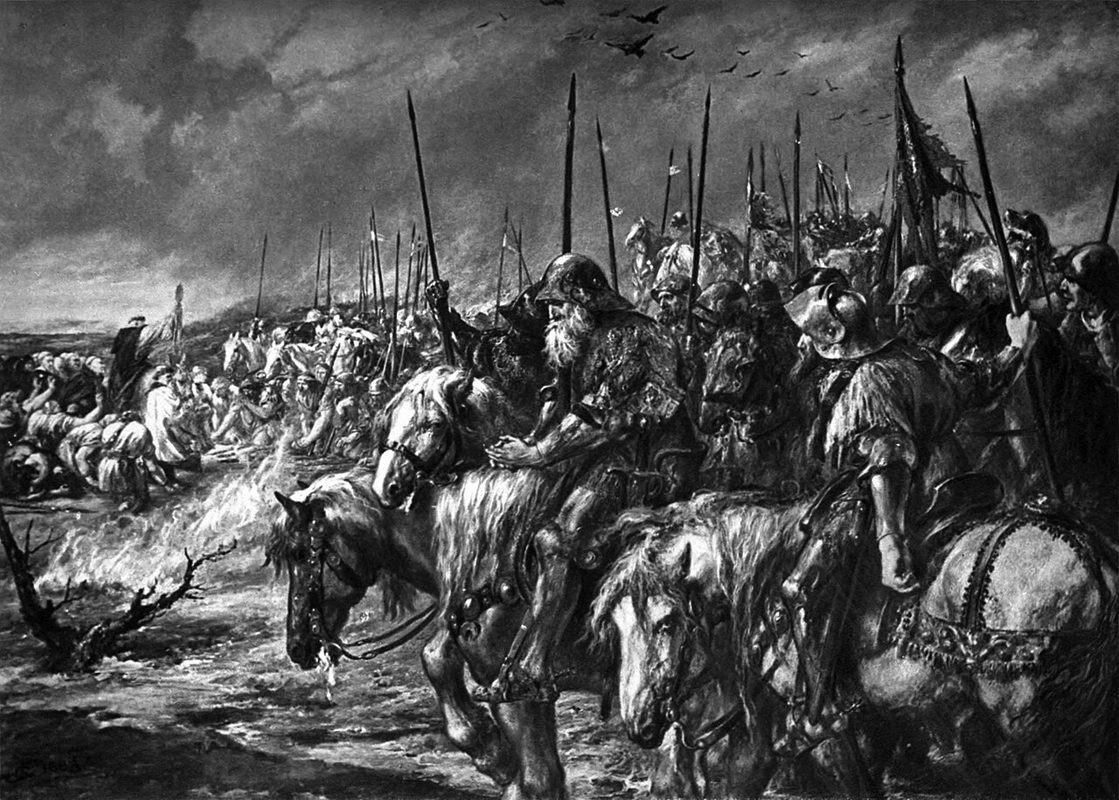
Historical illustration of the Battle of Agincourt showing English longbowmen fighting French knights in 1415

Agincourt on October 25, 1415, killed between 7,000 and 10,000 French soldiers against just 112 English dead, a casualty ratio so extreme it transformed European military doctrine. Henry V's exhausted, dysentery-ridden army of 6,000 (5,000 of them longbowmen) annihilated a French force of 12,000 to 36,000 armored knights and men-at-arms on a narrow, rain-soaked field in northern France.

The French nobility charged across 300 yards of freshly plowed mud, their heavy plate armor sinking into the mire while 5,000 English longbows launched 60,000 arrows per minute into the compressed mass. Knights who reached the English line were too exhausted to fight. Entire ranks of French aristocracy, dukes, counts, and barons, were killed or captured. The flower of French chivalry was literally trampled into the mud. Henry ordered the execution of French prisoners when a rumored counterattack threatened his rear, a controversial decision that added hundreds more to the death toll. Agincourt proved that armored cavalry supremacy, the dominant military paradigm for 500 years, could be negated by disciplined ranged infantry and favorable terrain.

#45, First Battle of Ypres: The Slaughter That Killed Europe's Professional Armies

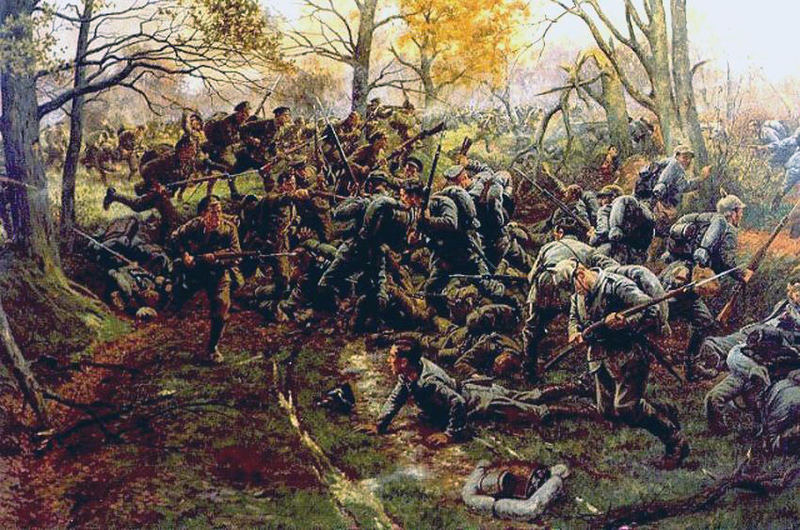
British soldiers of the 2nd Ox and Bucks fighting the Prussian Guard during the First Battle of Ypres 1914

The First Battle of Ypres from October to November 1914 consumed approximately 250,000 total casualties, 130,000 German, 58,000 French, and 58,000 British. These weren't conscripts; these were the prewar professional soldiers of Europe's finest armies, and when the guns fell silent at Ypres, they were largely gone. Germany's volunteer student battalions attacked singing patriotic songs and were machine-gunned in rows, an event Germans called the "Kindermord bei Ypern", the Massacre of the Innocents.

The BEF's original seven divisions, the "Old Contemptibles", were reduced to skeletal cadres. The 1st Battalion Scots Guards went into battle with 850 men and emerged with 60. Yet they held. The German Fourth and Sixth Armies failed to break through to the Channel ports, and the front line at Ypres would barely move for the next four years. First Ypres marked the end of maneuver warfare on the Western Front and the beginning of trench deadlock. The professional armies of 1914 were replaced by mass citizen armies that would fight and die in the same salient through two more devastating battles before the war's end.

#44, Battle of Hue: 26 Days of House-to-House Hell During the Tet Offensive

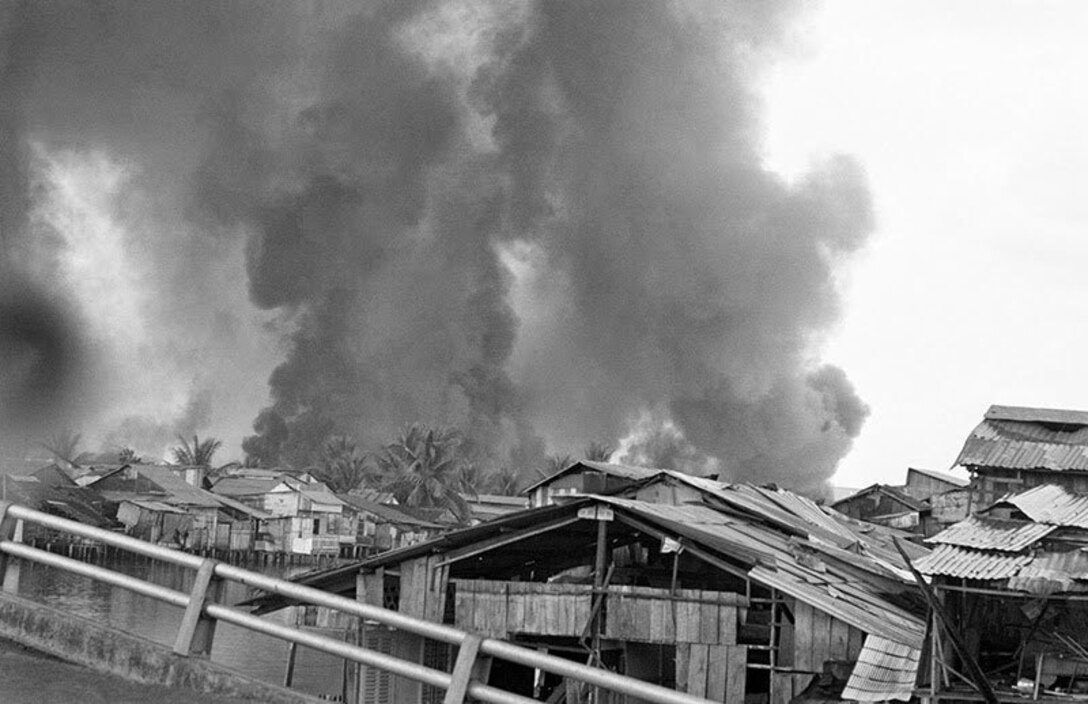
US Marines moving through the ruined streets of Hue Vietnam during the 1968 Tet Offensive

The Battle of Hue from January 31 to March 2, 1968, killed approximately 8,800 combatants and civilians, 216 Americans, 384 ARVN soldiers, an estimated 5,000 NVA and Viet Cong fighters, and over 2,800 civilians massacred in one of the war's worst atrocities. The North Vietnamese 4th and 6th Regiments seized Vietnam's former imperial capital during the Tet Offensive and held it for 26 days against furious American and South Vietnamese counterattacks.

Marines fought room by room through the ancient Citadel's thick stone walls, using CS gas, M48 tanks, and naval gunfire from ships on the Perfume River. The NVA had fortified every building, and snipers covered every intersection. When the city was finally recaptured, mass graves revealed that communist forces had systematically executed government officials, teachers, priests, and anyone connected to the South Vietnamese administration. The carnage at Hue was broadcast into American living rooms and became a turning point in public opinion against the Vietnam War, proving that military victory in the field meant nothing if the political war at home was lost.

#43, Battle of Leyte Gulf: The Largest Naval Battle Ever Fought

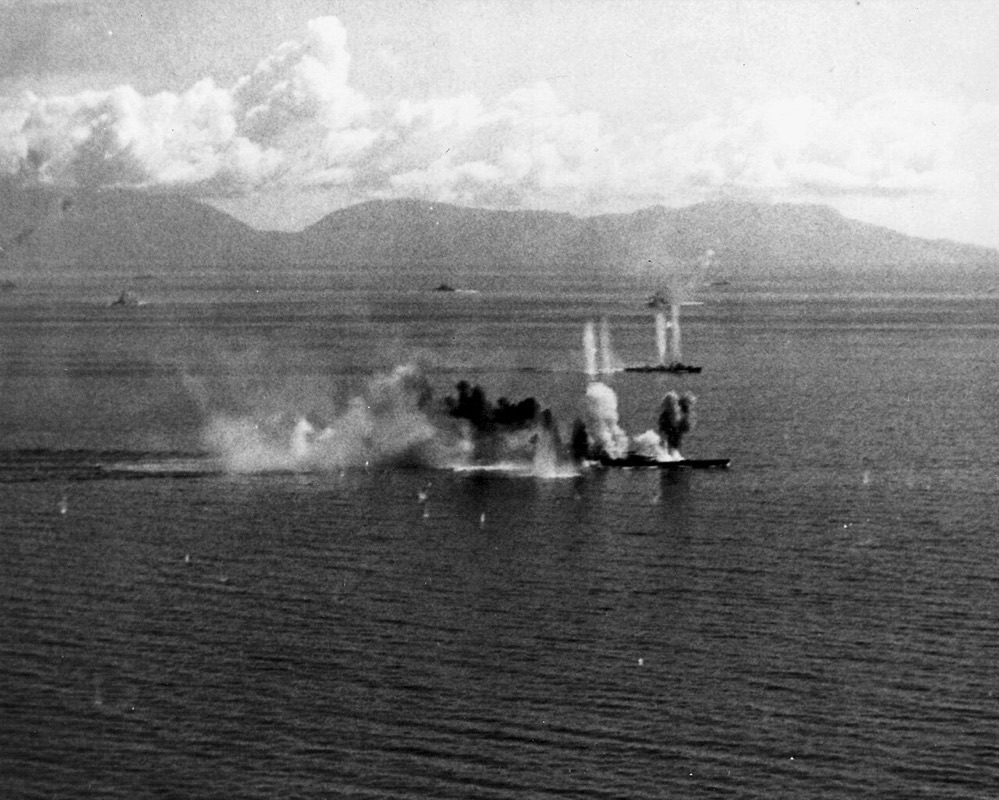
Japanese battleship Musashi under air attack in the Sibuyan Sea during the Battle of Leyte Gulf October 1944

The Battle of Leyte Gulf from October 23 to 26, 1944, killed approximately 12,500 Japanese sailors and airmen against 3,000 Americans, the deadliest naval engagement in history by raw numbers. Over 280 warships clashed across four separate engagements spanning 100,000 square miles of the Philippine Sea, making it the largest naval battle ever fought by tonnage, number of ships, and geographic scope.

Japan committed its entire remaining fleet in a desperate gamble to destroy the American invasion of the Philippines. Admiral Kurita's Center Force, including the super-battleships Yamato and Musashi, nearly broke through to the vulnerable transport ships off Leyte. The Musashi absorbed 17 bombs and 19 torpedoes before sinking, a testament to Japanese naval engineering. At Surigao Strait, U.S. battleships achieved the last crossing of the T in naval history. Off Samar, the destroyer escorts of Taffy 3 charged Japanese battleships in a suicidal defense that became one of the U.S. Navy's most celebrated actions. Leyte Gulf destroyed the Imperial Japanese Navy as a fighting force and introduced kamikaze attacks as Japan's last desperate weapon.

#42, Battle of Mosul: The Brutal Nine-Month Siege to Crush the Islamic State

Iraqi security forces transporting combat equipment during the Battle of Mosul 2016-2017

The Battle of Mosul from October 2016 to July 2017 killed an estimated 40,000 people, the bloodiest urban battle of the 21st century. Iraqi Security Forces, Kurdish Peshmerga, and Shia militia units backed by a U.S.-led coalition of 60 nations fought to liberate Iraq's second-largest city from the Islamic State, which had held it since June 2014 and transformed it into the de facto capital of their self-declared caliphate.

The eastern half fell relatively quickly, but western Mosul, with its narrow Old City streets too tight for armored vehicles, became a meat grinder. ISIS fighters used over 800 vehicle-borne IEDs as rolling car bombs, rigged entire neighborhoods with explosives, and used tens of thousands of civilians as human shields. Coalition airstrikes leveled entire city blocks. The Al-Nuri Mosque, where Abu Bakr al-Baghdadi declared the caliphate in 2014, was destroyed by ISIS during the final days. Nine months of grinding urban combat reduced western Mosul to rubble and displaced over 900,000 civilians, but it broke the Islamic State's territorial hold on Iraq and signaled the beginning of the end for their physical caliphate.

#41, Battle of Antietam: America's Bloodiest Single Day

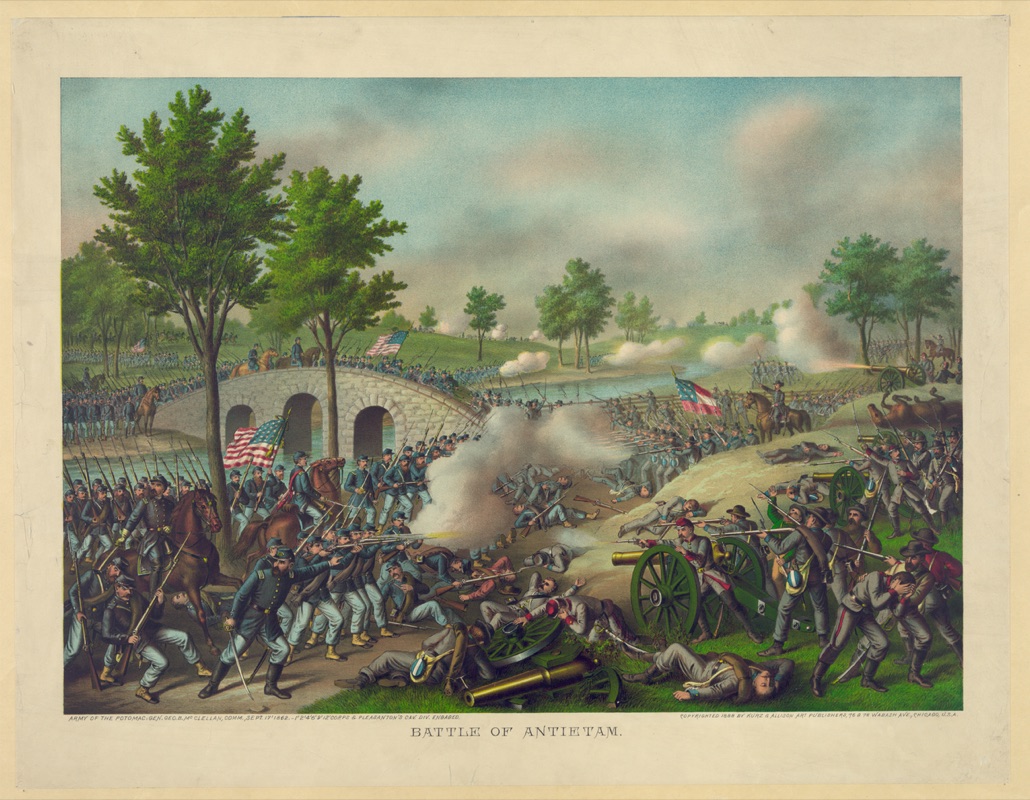
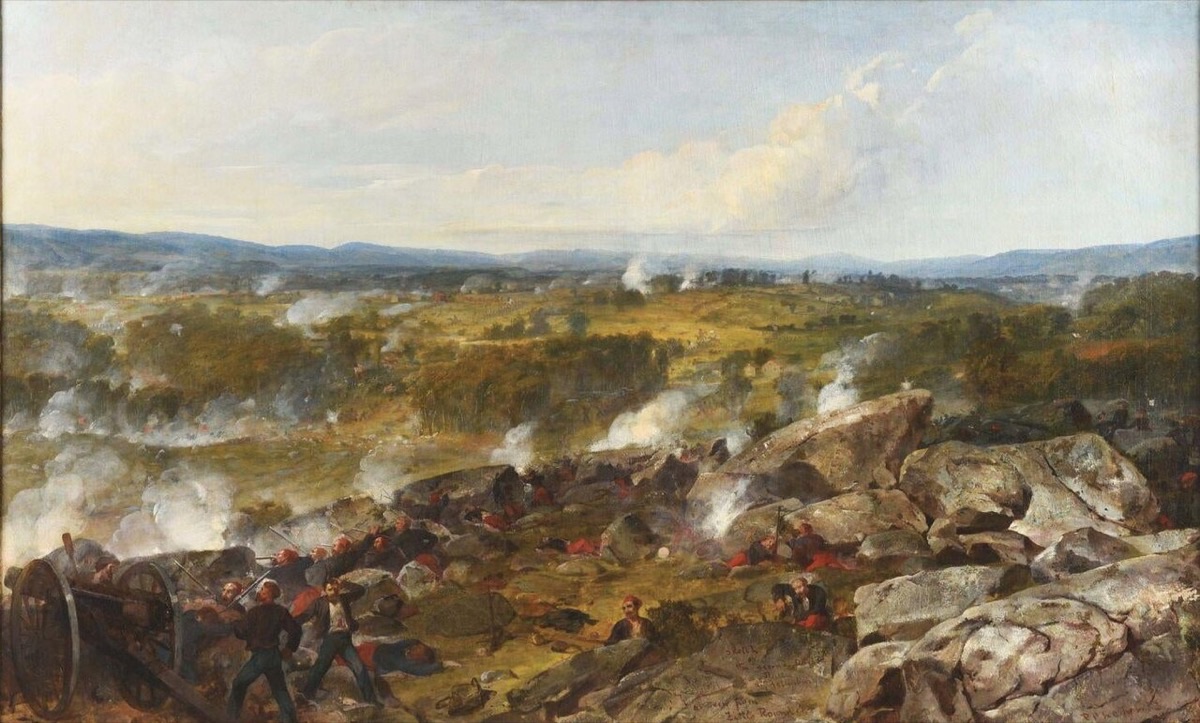
Painting depicting the fierce fighting at the Battle of Antietam during the American Civil War in 1862

Antietam on September 17, 1862, produced 22,717 casualties in 12 hours, approximately 3,650 dead and 19,000 wounded or missing, making it the single bloodiest day in American military history. George McClellan's 75,000-strong Army of the Potomac attacked Robert E. Lee's 38,000 Confederates along Antietam Creek near Sharpsburg, Maryland, in three uncoordinated assaults that squandered Union numerical superiority.

The Cornfield changed hands 15 times in four hours, with entire regiments advancing into point-blank musket fire and being annihilated. The Sunken Road, afterward called "Bloody Lane", was filled with Confederate dead stacked two and three deep after Union troops finally flanked the position. Burnside's Bridge, which 500 Georgians defended for three hours against 12,000 Federal troops, became a symbol of tactical incompetence meeting stubborn courage. Though tactically inconclusive, Antietam was a strategic Union victory that gave Lincoln the political cover to issue the Emancipation Proclamation, transforming the Civil War from a fight to preserve the Union into a crusade to end slavery, and ensuring that Britain and France would never recognize the Confederacy.

#40, Operation Market Garden: The Bridge Too Far That Cost the Allies 17,000 Men

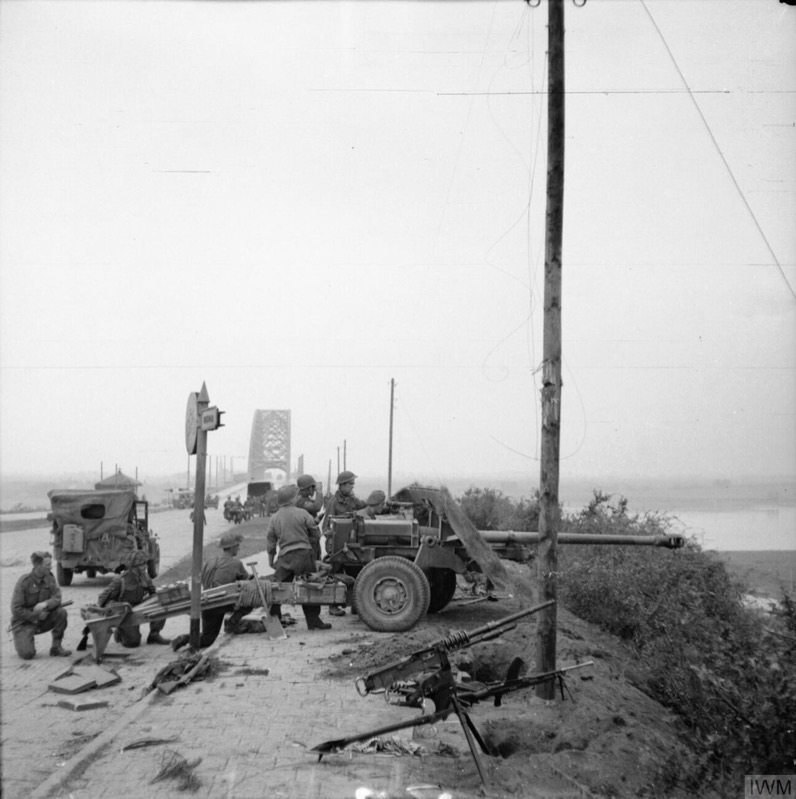
British 17-pounder anti-tank gun positioned near the Nijmegen Bridge during Operation Market Garden 1944

Operation Market Garden from September 17 to 25, 1944, produced approximately 17,200 Allied casualties, including the near-total destruction of the British 1st Airborne Division at Arnhem, which went in with 10,600 men and came out with 2,398. Combined with German losses of 6,000 to 13,000, the operation killed or wounded over 25,000 soldiers in nine days across three Dutch cities.

Montgomery's plan was audacious: drop three airborne divisions to seize bridges across the Rhine at Eindhoven, Nijmegen, and Arnhem, then drive XXX Corps' armored column 64 miles up a single highway to relieve them. Everything went wrong. The 1st Airborne landed 8 miles from the Arnhem bridge. Two SS Panzer divisions, the 9th and 10th, happened to be refitting nearby, something intelligence had flagged but commanders ignored. The single road became a traffic jam under constant attack. Colonel John Frost's paratroopers held the north end of Arnhem bridge for four days against tanks and self-propelled guns with nothing heavier than PIAT launchers and Gammon bombs. Market Garden's failure extended the war by months and condemned the Netherlands to the "Hunger Winter" of 1944-45 that killed 20,000 Dutch civilians.

#39, Battle of Chosin Reservoir: 17 Days in Frozen Hell Against 120,000 Chinese

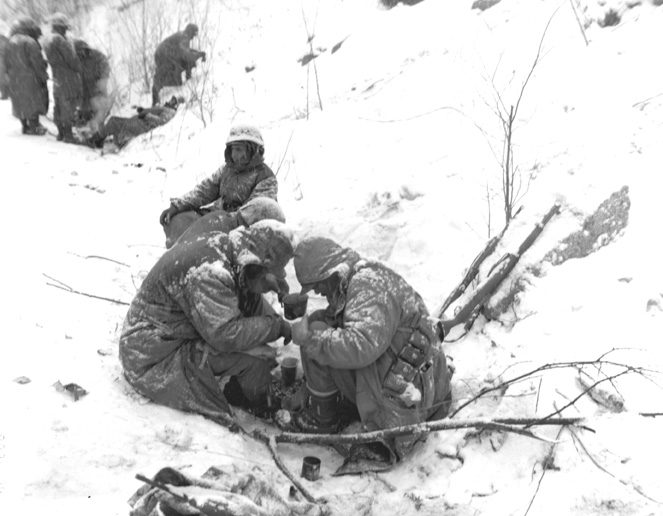
Chinese 79th Division soldiers at the Chosin Reservoir during the Korean War in 1950

The Battle of Chosin Reservoir from November 27 to December 13, 1950, killed an estimated 48,156 combatants, approximately 1,029 Americans killed, 4,894 wounded, and over 7,000 non-battle casualties from frostbite in temperatures reaching minus 36 degrees Fahrenheit. Chinese losses were catastrophic: an estimated 29,800 battle casualties plus tens of thousands of additional cold-weather casualties from the 9th Army Group's 120,000-strong force.

The Chinese 9th Army Group attacked in human waves at night, blowing bugles and whistles, overwhelming isolated Marine and Army positions along the frozen reservoir. But the 1st Marine Division didn't retreat, they attacked in a different direction, fighting 78 miles south through seven Chinese divisions to reach the coast at Hungnam. Marine Major General Oliver Smith famously told reporters, "Retreat, hell. We're just attacking in another direction." Entire Chinese divisions were rendered combat-ineffective by frostbite; soldiers froze to death in their foxholes. The breakout from Chosin is considered one of the most remarkable fighting withdrawals in modern military history and cemented the Marine Corps' reputation for tenacity under impossible conditions.

#38, Battle of Gettysburg: Three Days That Determined Whether America Would Survive

Painting by Peter Rothermel depicting the fierce fighting at the Battle of Gettysburg in 1863

The Battle of Gettysburg from July 1 to 3, 1863, produced 51,000 total casualties, approximately 23,049 Union and 28,063 Confederate killed, wounded, captured, or missing. It was the bloodiest battle ever fought on American soil and the turning point of the Civil War. Lee's Army of Northern Virginia invaded Pennsylvania with 75,000 men, seeking a decisive victory that would force the Union to negotiate peace.

The fighting consumed every feature of the landscape: Seminary Ridge, Little Round Top, the Devil's Den, the Peach Orchard, the Wheatfield, Cemetery Ridge. On the third day, Lee ordered 12,500 Confederate soldiers to charge across three-quarters of a mile of open ground directly into massed Union artillery and rifle fire. Pickett's Charge reached the stone wall at the "High Water Mark of the Confederacy" before being shattered. Only half returned. Gettysburg ended Lee's strategic offensive capability and, combined with the fall of Vicksburg the next day, split the Confederacy in two. The battle's aftermath inspired Lincoln's Gettysburg Address, 272 words that redefined American democracy and remain the most quoted speech in the nation's history.

#37, Battle of Iwo Jima: 36 Days of Volcanic Hell for 8 Square Miles

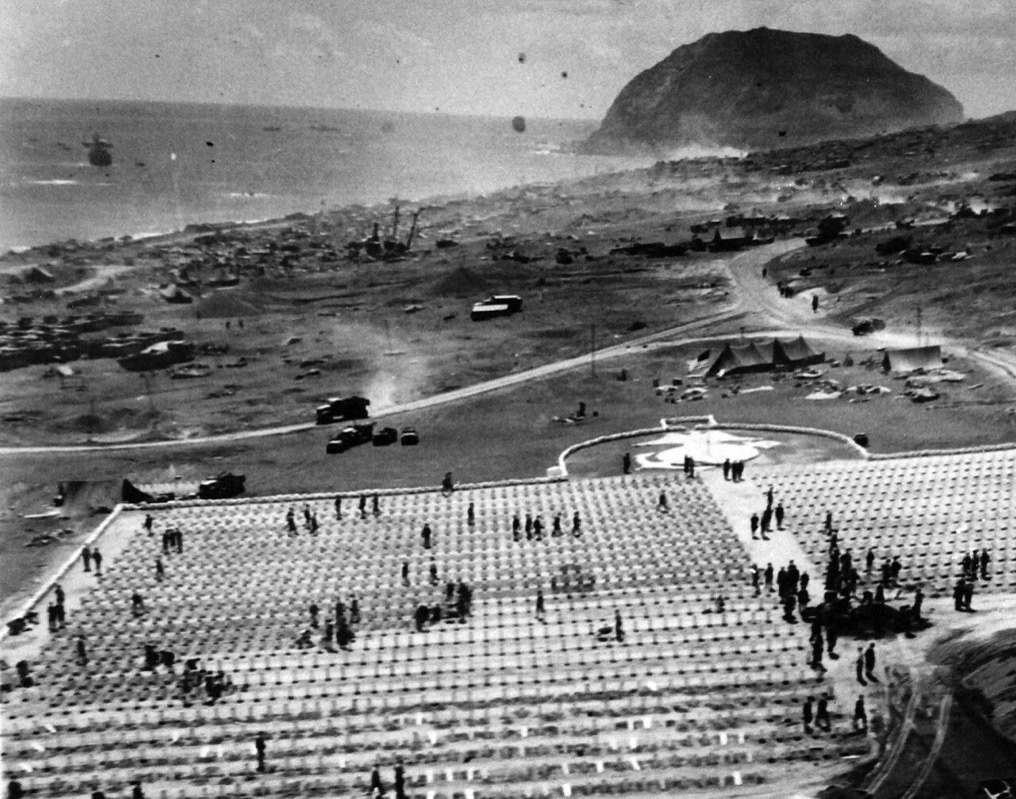
US Marines advancing across the volcanic terrain of Iwo Jima in February 1945

The Battle of Iwo Jima from February 19 to March 26, 1945, killed 26,040 combatants on an island of just eight square miles, 6,821 Americans dead and 19,217 wounded, plus nearly all 21,000 Japanese defenders killed. Only 216 Japanese soldiers were captured alive. The casualty rate was so extreme that Iwo Jima was the only Pacific battle where total American casualties exceeded Japanese casualties.

General Tadamichi Kuribayashi had spent months constructing 11 miles of interconnected tunnels, 1,500 underground rooms, and hundreds of concealed bunkers in the volcanic rock. There was no preliminary bombardment that could reach them. Marines advanced into interlocking fields of fire from positions they couldn't see, clearing each bunker with flamethrowers, satchel charges, and grenades. Mount Suribachi fell on day five, producing Joe Rosenthal's famous flag-raising photograph, but the real fight for the island's northern plateau dragged on for another month. Twenty-seven Medals of Honor were awarded at Iwo Jima, the most for any single operation in Marine Corps history. The island's airfields ultimately served as emergency landing strips for 2,251 B-29 bombers that might otherwise have been lost.

#36, Battle of Waterloo: Napoleon's Final Gamble Killed an Empire in Nine Hours

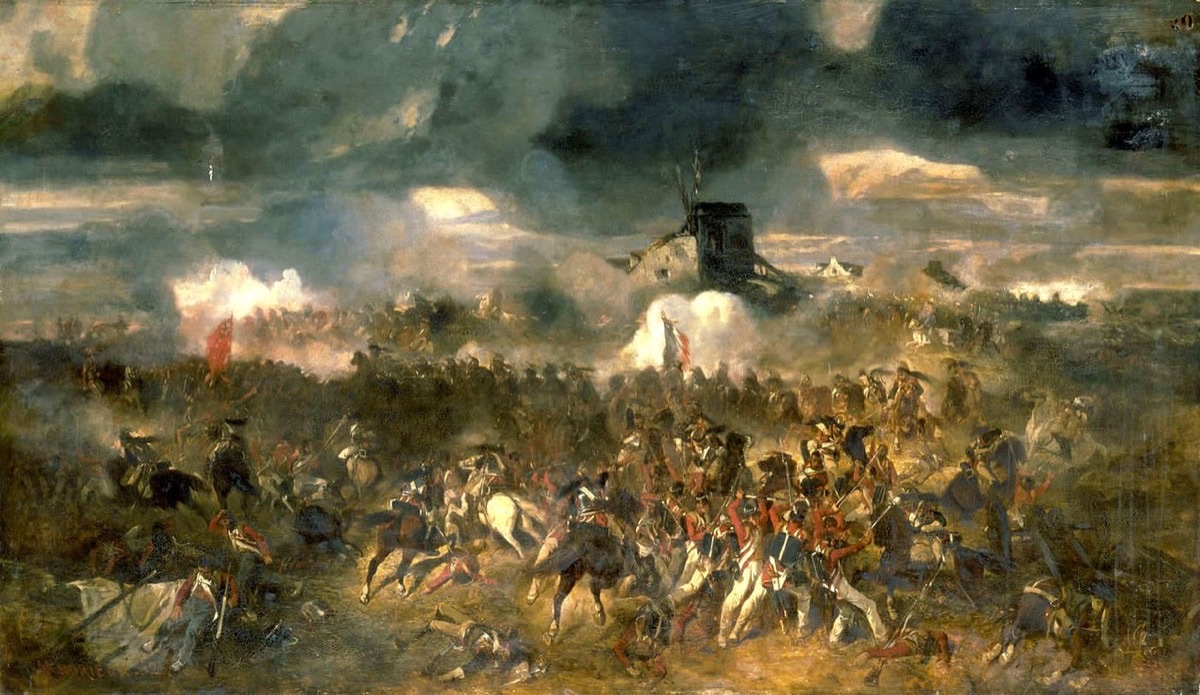
Painting depicting the Battle of Waterloo with cavalry charges and artillery fire in 1815

Waterloo on June 18, 1815, killed or wounded approximately 55,000 soldiers in nine hours, 25,000 French, 15,000 Allied (British, Dutch, Belgian, German), and 7,000 Prussians. Napoleon's 72,000-strong Armée du Nord attacked the Duke of Wellington's 68,000 Allied troops positioned along a ridge near the Belgian village of Waterloo, and the result ended 23 years of nearly continuous European warfare.

Napoleon delayed his attack until noon to let the rain-soaked ground dry, a decision that gave Blücher's Prussian army time to march to Wellington's rescue. Marshal Ney's massed cavalry charges, 9,000 horsemen surging up the slope in waves, broke against British infantry squares that held like granite. The French Imperial Guard, Napoleon's elite reserve that had never been defeated, was committed at 7:30 PM in a last desperate push. When Wellington's line stood firm and the Guard retreated, the cry went up: "La Garde recule!", the Guard is falling back. The French army dissolved. Napoleon abdicated four days later and was exiled to St. Helena, where he died in 1821. Waterloo reshaped the map of Europe and inaugurated a century of relative peace.

#35, Battle of Cannae: The Ancient World's Most Perfect Massacre

Marble bust of Hannibal Barca the Carthaginian general who engineered the devastating victory at Cannae

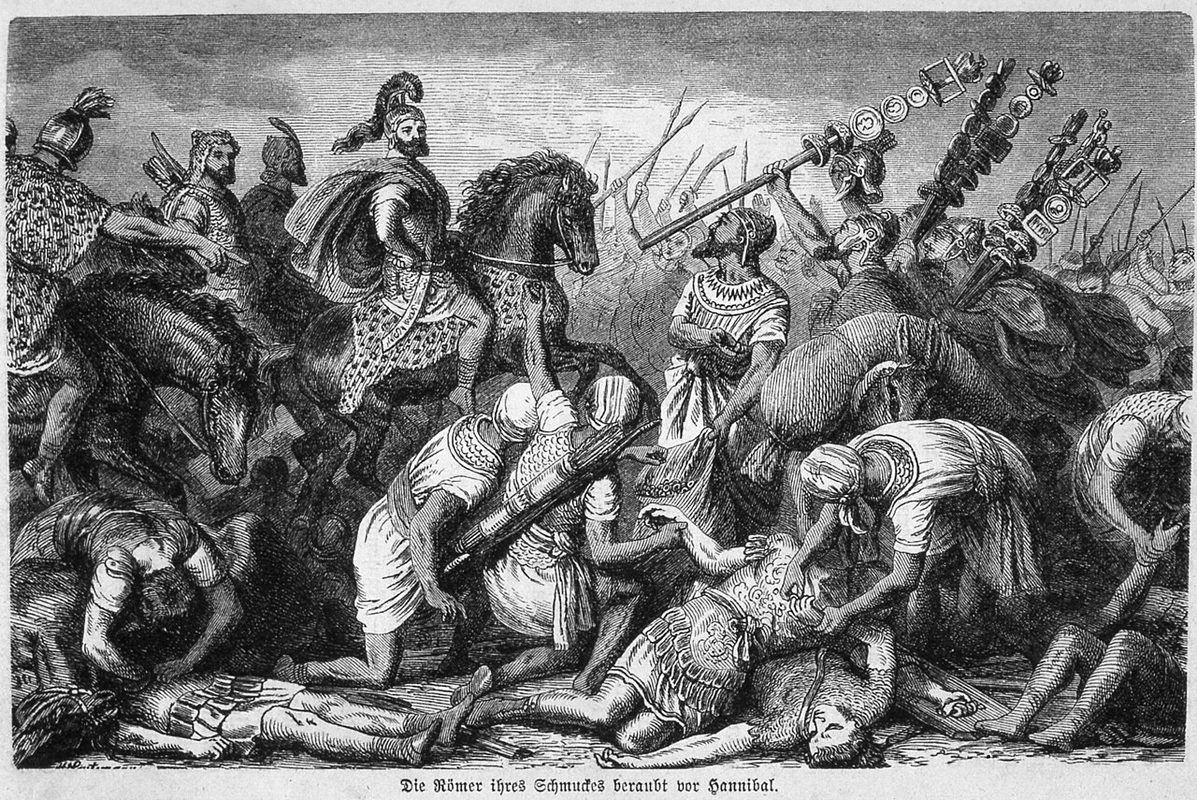
At Cannae on August 2, 216 BC, Hannibal Barca's 50,000-man Carthaginian army killed between 55,000 and 70,000 Roman soldiers in a single afternoon, the highest single-day death toll in Western military history until the 20th century. The Roman Republic fielded 86,000 men, the largest army it had ever assembled, and lost roughly 80% of them in approximately eight hours of fighting. An estimated 600 Roman soldiers were killed per minute at the height of the battle.

Hannibal's double envelopment at Cannae remains the most studied tactical maneuver in military history. His center deliberately gave ground, drawing the Roman legions deeper into a crescent that slowly closed around them. Numidian and Spanish cavalry routed the Roman horsemen on both flanks, then wheeled into the Roman rear. The legions were compressed into a suffocating mass where soldiers in the center couldn't raise their weapons. Roman consul Lucius Aemilius Paullus, 29 of 48 military tribunes, and 80 Roman senators died on the field. Yet Rome refused to surrender, rebuilding its legions and eventually destroying Carthage. Cannae's double envelopment was studied by Schlieffen, Schwarzkopf, and every military academy in the modern world.

#34, Battle of Borodino: Napoleon's Hollow Victory That Bled His Grande Armée White

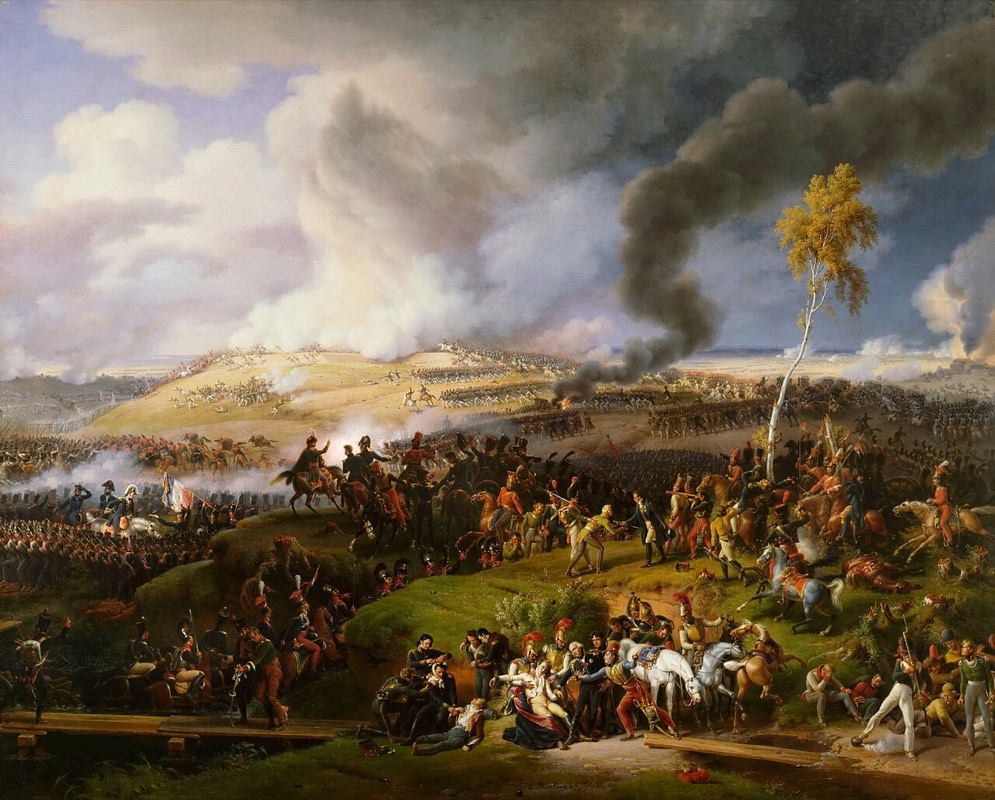
Oil painting depicting the Battle of Borodino between Napoleon's Grande Armée and Russian forces in 1812

The Battle of Borodino on September 7, 1812, produced approximately 72,000 casualties in a single day, 30,000 French and 44,000 Russian killed, wounded, or missing. It was the bloodiest single-day battle of the Napoleonic Wars and one of the costliest days of combat in the 19th century. Napoleon's 130,000-strong Grande Armée attacked Kutuzov's 120,000 Russian troops along fortified positions near the village of Borodino, 75 miles west of Moscow.

The battle was a grinding frontal assault, nothing like Napoleon's usual maneuver warfare. The Raevsky Redoubt and the Bagration flèches changed hands multiple times in savage fighting, with cavalry charges, bayonet assaults, and massed artillery at point-blank range. Napoleon, suffering from a cold and uncharacteristically cautious, refused to commit his Imperial Guard, a decision his marshals never forgave him for. Though the French held the field, the Russian army retreated intact and would fight again. Napoleon occupied Moscow a week later, but found it burned and empty. Borodino's true cost was irreplaceable: the 30,000 French casualties included thousands of experienced officers and NCOs who could never be replaced, hollowing out the Grande Armée for the catastrophic winter retreat that followed.

#33, Second Battle of Ypres: The First Mass Poison Gas Attack in History

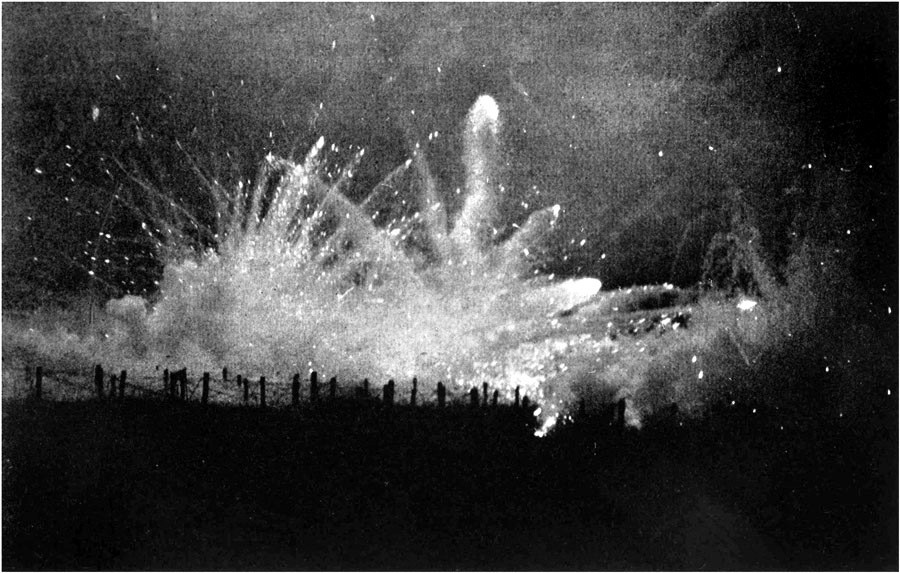
German barrage fire illuminating the night sky during the Battle of Ypres on the Western Front

The Second Battle of Ypres from April 22 to May 25, 1915, killed or wounded approximately 105,000 soldiers, 59,000 Allied (35,000 British, 10,000 French, and thousands of Canadians and Belgians) and 35,000 German. It was the first battle in modern history where poison gas was used as a weapon of mass destruction, when German troops released 168 tons of chlorine gas from 5,730 cylinders along a four-mile front on April 22.

The yellow-green cloud drifted across the French 45th Algerian Division's positions, and soldiers who didn't flee suffocated where they stood. A four-mile gap opened in the Allied line. But the Germans hadn't planned for their own success, no reserves were positioned to exploit the breakthrough, and Canadian troops counterattacked with improvised gas masks (urine-soaked cloths held over their faces) to close the gap at brutal cost. The 1st Canadian Division lost 6,035 men in 48 hours at places like Kitcheners' Wood and St. Julien. Second Ypres introduced chemical warfare to the Western Front and launched an arms race in poison gas that would escalate to mustard gas, phosgene, and the development of protective equipment that soldiers would carry for the rest of the war and beyond.

#32, Battle of Changsha: China's Forgotten Bloodbath That Stalled Japan's Advance

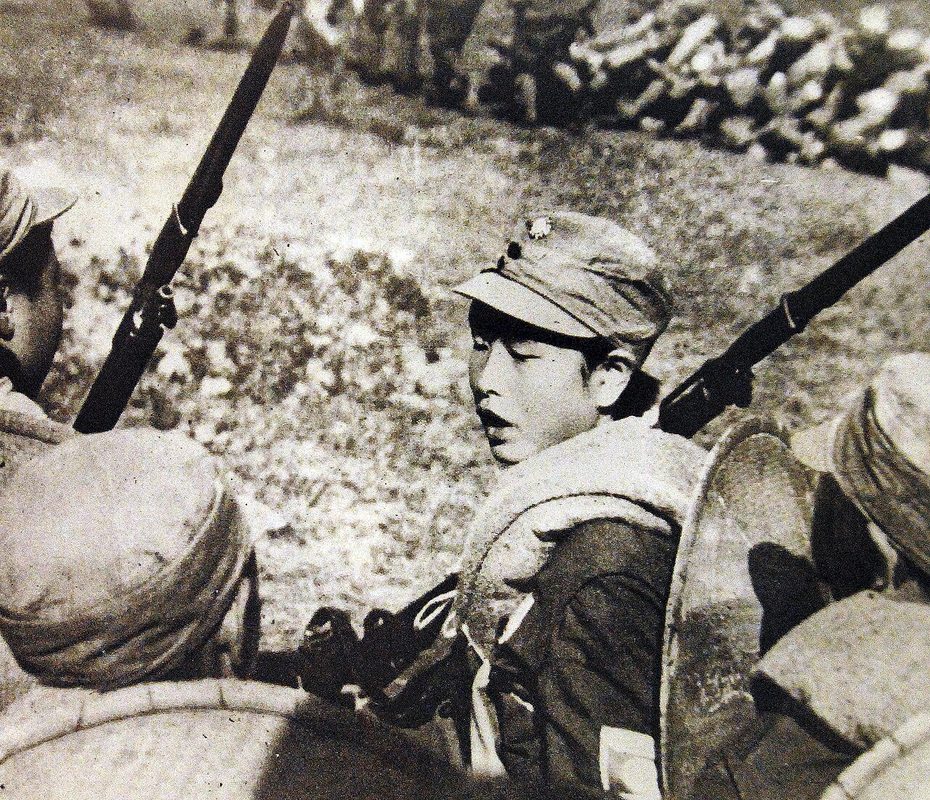
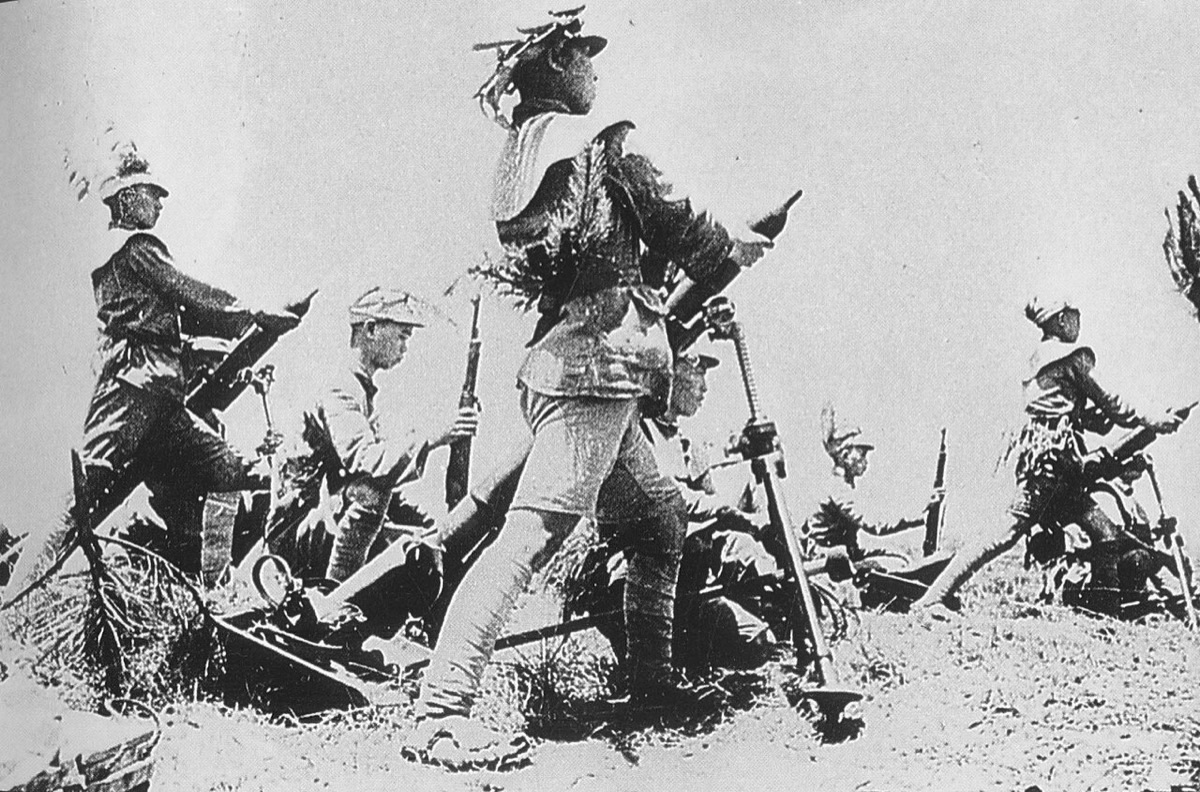
Japanese soldiers during the Battle of Changsha in China in September 1939

The four Battles of Changsha between 1939 and 1944 produced a combined estimated 100,000 or more casualties across both sides. The first battle alone in September-October 1939 cost Japan an estimated 40,000 casualties while Chinese Nationalist forces under General Xue Yue suffered approximately 30,000. Changsha, the capital of Hunan Province, was one of the most contested cities in the Second Sino-Japanese War and a critical transportation hub connecting southern and central China.

General Xue Yue, nicknamed "the Tiger of Changsha," employed a strategy of elastic defense, allowing Japanese forces to advance into prepared kill zones before counterattacking from the flanks. In the first three battles (1939, 1941, 1942), this tactic worked brilliantly, inflicting devastating losses on the Imperial Japanese Army and forcing withdrawals. The third battle in January 1942, coming just weeks after Pearl Harbor, was the first major Allied land victory of World War II, a fact largely forgotten in Western military histories. Only the fourth battle in 1944, part of Japan's massive Operation Ichi-Go, finally captured the city. Changsha demonstrated that the Chinese army, despite being outgunned and undersupplied, could defeat Japanese forces when led by competent commanders using terrain and maneuver to negate Japan's technological advantages.

#31, Battle of Leipzig: The "Battle of the Nations" That Broke Napoleon's Empire

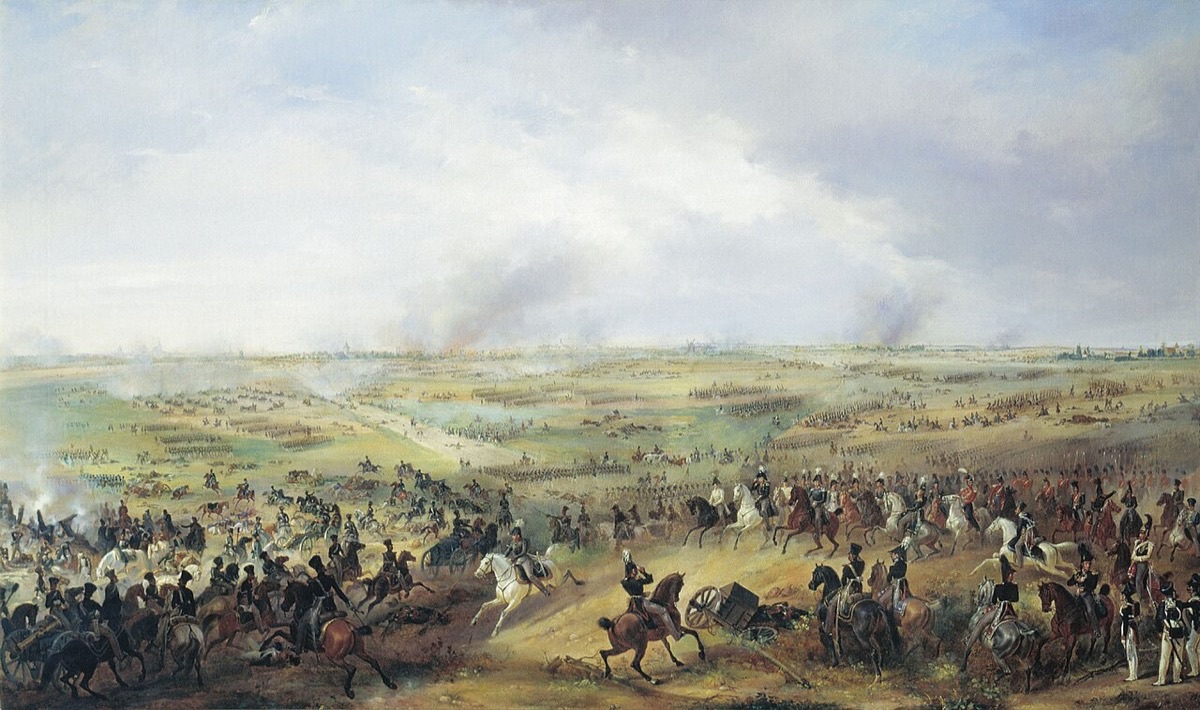
Painting depicting the massive Battle of Leipzig in 1813 with cavalry and infantry clashing on the battlefield

The Battle of Leipzig from October 16 to 19, 1813, killed or wounded approximately 92,000 to 110,000 soldiers, making it the largest and bloodiest battle in European history before World War I. Napoleon's 177,000-strong army faced a coalition of 365,000 Russian, Prussian, Austrian, and Swedish troops in a four-day slugfest around the Saxon city. Over 600,000 soldiers fought in what contemporaries called the Völkerschlacht, the Battle of the Nations.

On the first day, Napoleon held his ground despite being outnumbered two to one, even launching counterattacks that nearly broke the Allied lines. But reinforcements arrived for the coalition while Napoleon's never came. On October 18, two Saxon divisions and a Württemberg cavalry brigade defected to the Allies mid-battle, tearing a hole in the French line. Napoleon ordered retreat across the single bridge over the Elster River, which was prematurely blown by a panicked engineer corporal, stranding 20,000 French troops who were killed or captured. Leipzig ended Napoleon's control of Germany, forced the dissolution of the Confederation of the Rhine, and began the chain of events that led to his first abdication and exile to Elba in April 1814.

#30, Battle of Sedan: The Single Day That Destroyed the French Empire

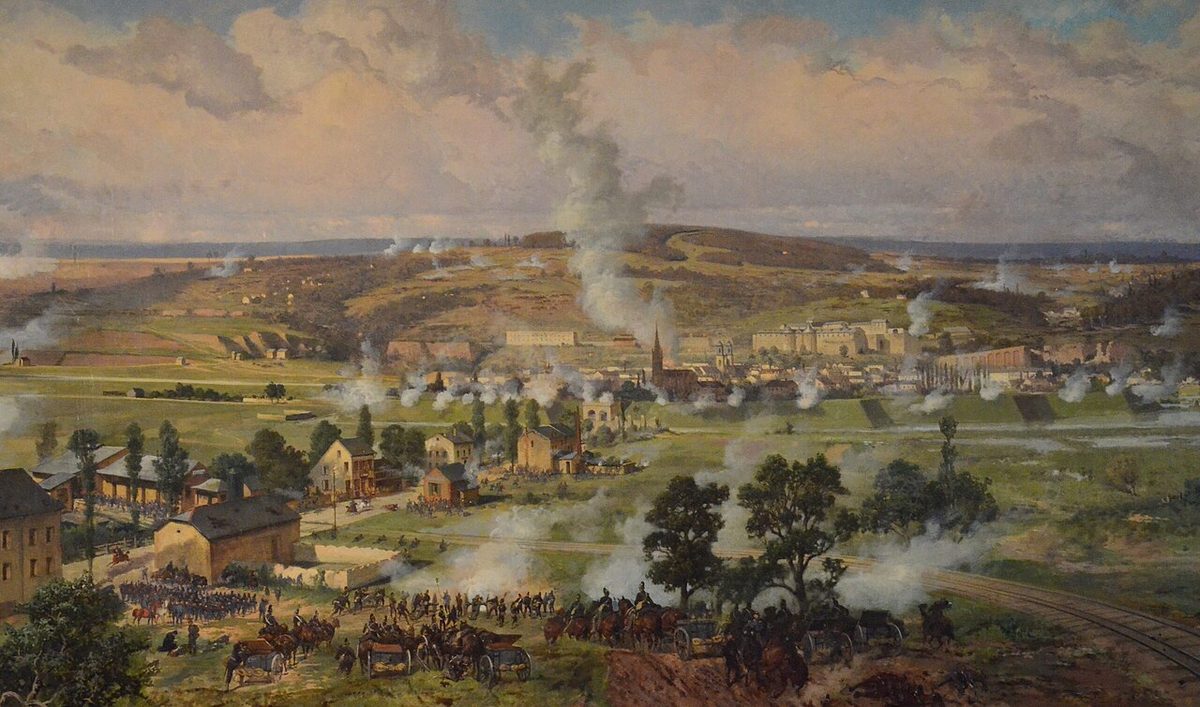
Painting of the Prussian Guard storming French positions at the Battle of Sedan in 1870

The Battle of Sedan on September 1, 1870, killed approximately 17,000 French and 9,000 Prussian soldiers, with over 100,000 French troops, including Emperor Napoleon III himself, surrendering the following day. It was the most decisive single battle of the 19th century, destroying the Second French Empire in 24 hours and establishing Prussian-led Germany as the dominant military power in Europe.

Helmuth von Moltke the Elder's Prussian armies encircled Marshal MacMahon's Army of Châlons against the Meuse River and the Belgian frontier, creating an inescapable pocket. Krupp breech-loading artillery, superior to anything the French possessed, pounded the trapped army from surrounding heights while French cavalry launched suicidal charges to buy time for a breakout that never came. General Margueritte's chasseurs d'Afrique charged directly into massed Prussian rifle fire in what King Wilhelm I of Prussia called "Ah, les braves gens!", brave men indeed, but wasted. Napoleon III surrendered with 104,000 troops, and when news reached Paris, mobs overthrew the Empire and declared the Third Republic. Sedan's humiliation burned so deeply into French national consciousness that it directly influenced French strategic planning for the next 70 years.

#29, Battle of the Bulge: Hitler's Last Gamble Killed 186,000 Soldiers in Six Weeks

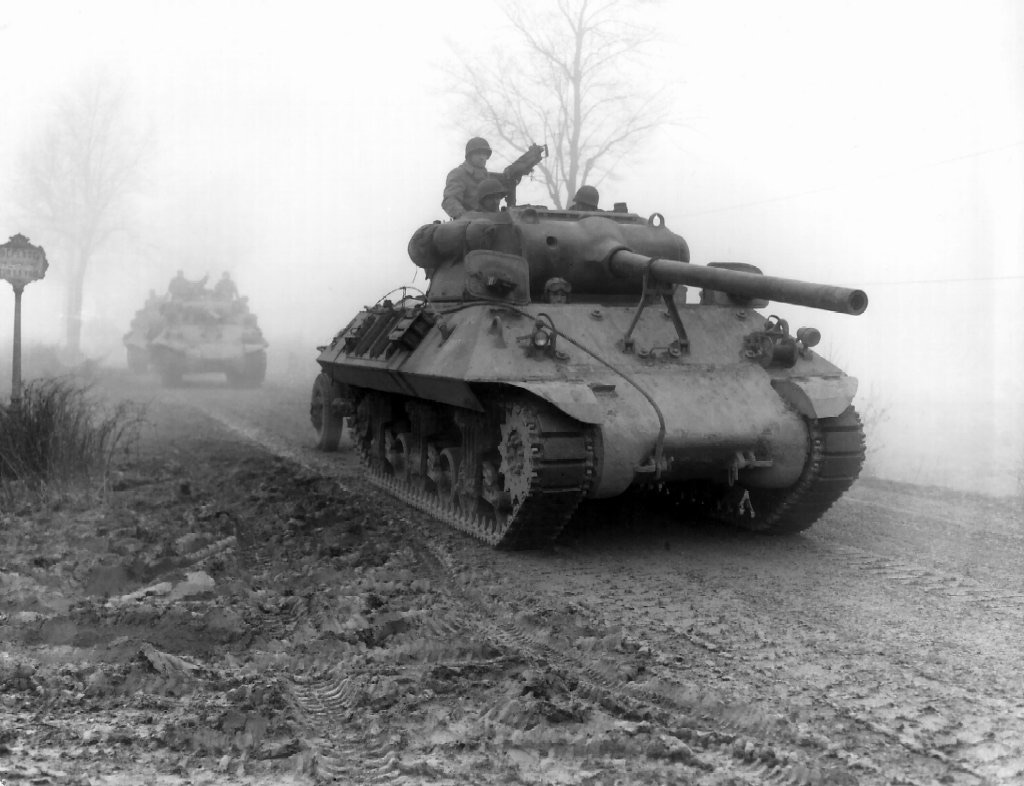
American tank destroyers advancing through the snow during the Battle of the Bulge in winter 1944-1945

The Battle of the Bulge from December 16, 1944, to January 25, 1945, produced approximately 186,000 total casualties, 89,000 American (19,000 killed), 84,000 German (12,000 killed), and 3,000 Belgian civilians. It was the largest and bloodiest single battle fought by the United States Army in World War II, involving over 600,000 American troops and 500,000 Germans across a 75-mile front in the frozen Ardennes forest.

Hitler's Wacht am Rhein offensive achieved complete surprise, smashing through thinly held American lines with 30 divisions, including elite SS Panzer units. German commandos in American uniforms caused chaos behind the lines. The 101st Airborne Division was surrounded at Bastogne, where Brigadier General Anthony McAuliffe famously replied "Nuts!" to a German surrender ultimatum. Patton's Third Army executed a 90-degree pivot and drove 100 miles north in 48 hours through blizzard conditions to relieve Bastogne, one of the most remarkable logistical feats of the war. The Bulge consumed Germany's last operational reserves of armor, fuel, and experienced troops, accelerating the collapse of the Western Front and ensuring the war would end within months.

#28, Battle of Tannenberg: The Eastern Front Annihilation That Became Legend

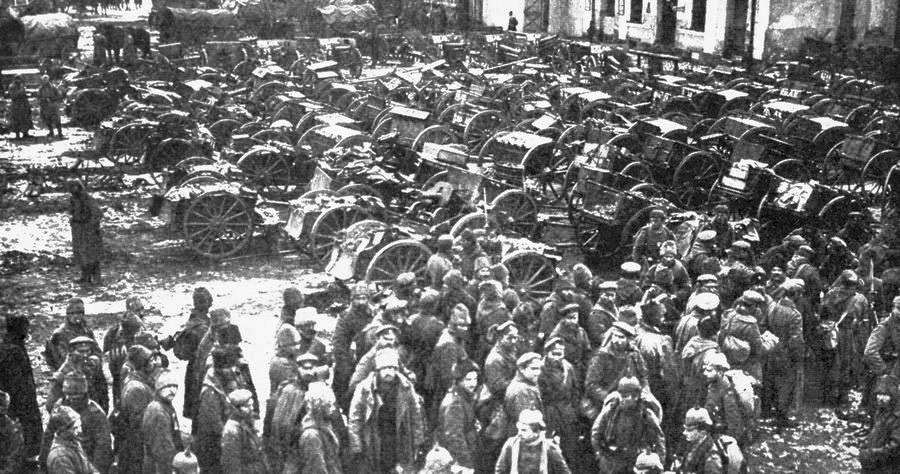
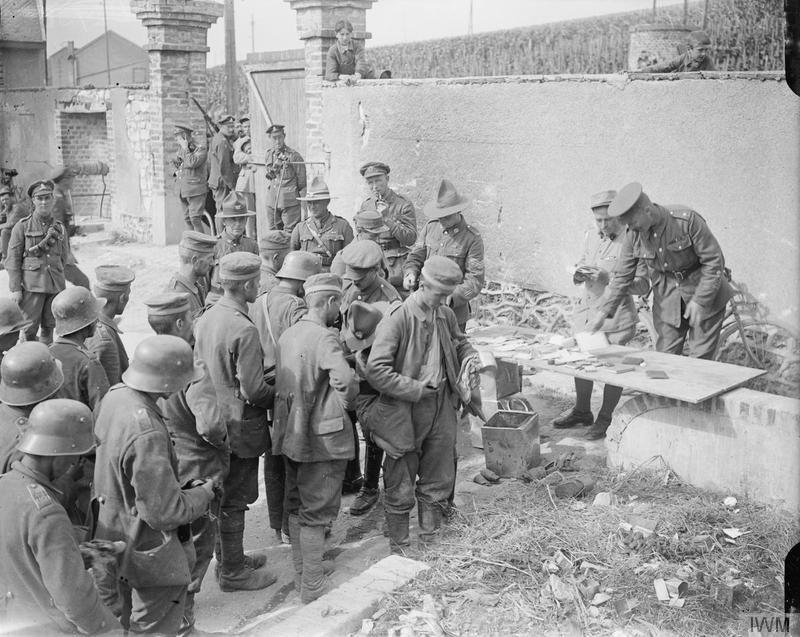
Columns of Russian prisoners of war captured during the Battle of Tannenberg in August 1914

The Battle of Tannenberg from August 26 to 30, 1914, destroyed the Russian Second Army almost completely, approximately 78,000 killed or wounded and 92,000 captured against just 12,000 German casualties. General Samsonov's army was encircled and annihilated in the forests of East Prussia in one of the most complete military disasters of the 20th century. Samsonov shot himself rather than face the Tsar with news of the catastrophe.

Hindenburg and Ludendorff, using intercepted Russian radio messages sent in clear text, concentrated their Eighth Army against Samsonov while Rennenkampf's First Army advanced from the northeast at a glacial pace. The Germans executed a classic double envelopment, with corps attacking both Russian flanks while the center held. Entire Russian divisions marched into the pocket without knowing they were surrounded until artillery fire came from every direction. Tannenberg created the myth of Hindenburg as a military genius, he was actually sleeping during the critical decisions, and launched the careers that would eventually make both men dictators of Germany. The battle's name was deliberately chosen to "avenge" a 1410 Teutonic defeat at the same location, a propaganda coup that energized the German home front.

#27, Battle of Okinawa: The Typhoon of Steel That Killed 240,000

American soldiers attacking Bloody Ridge during the intense fighting on Okinawa in 1945

The Battle of Okinawa from April 1 to June 22, 1945, killed approximately 240,000 people, 12,510 Americans dead, 77,166 Japanese military killed, and an estimated 40,000 to 150,000 Okinawan civilians who perished in the crossfire, from Japanese-compelled mass suicides, or from American artillery and naval gunfire. The combined naval fleet supporting the invasion exceeded 1,300 ships, the largest armada in Pacific War history.

Okinawa's defenders, under General Mitsuru Ushijima, abandoned beach defenses in favor of a layered defense-in-depth across the island's southern ridges, caves, and fortified tombs. The Shuri Line, a network of mutually supporting positions anchored on Shuri Castle, held for nearly two months against constant bombardment. Japanese kamikaze attacks sank 36 Allied ships and damaged 368 more, killing 4,907 Navy personnel, more than the Marines lost on the ground. The battle lasted 82 days, the longest in the Pacific theater. Okinawa's staggering casualty figures directly influenced Truman's decision to drop atomic bombs on Hiroshima and Nagasaki, planners estimated an invasion of mainland Japan would cost over a million Allied and millions of Japanese casualties based on Okinawa's precedent.

#26, Siege of Sevastopol: 250 Days of Bombardment That Leveled a Fortress City

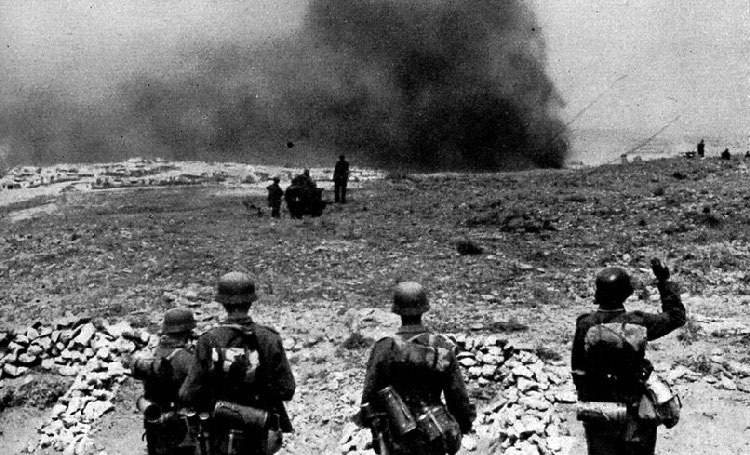
German 11th Army troops during the Siege of Sevastopol showing the devastated fortifications in 1942

The Siege of Sevastopol from October 30, 1941, to July 4, 1942, produced approximately 230,000 total casualties, over 118,000 Soviet killed, captured, or evacuated wounded, and an estimated 75,000 German and Romanian casualties. The German 11th Army under Erich von Manstein spent 250 days reducing the Soviet Black Sea Fleet's main base, a fortress city defended by permanent fortifications, coastal batteries, and a garrison that fought with suicidal determination.

Manstein brought the heaviest artillery pieces ever deployed in warfare, including the 800mm Schwerer Gustav railway gun that fired 7-ton shells 30 miles. The 600mm Karl-Gerät siege mortars lobbed 2-ton concrete-piercing rounds into underground ammunition magazines. Soviet Marines launched counterattacks from the sea. Sailors manned fortress guns until the barrels melted. When the final assault came on June 7, 1942, German infantry had to clear every bunker, cave, and tunnel individually. The garrison's last defenders held out in the Inkerman Caves and 35th Battery until July 4, when organized resistance ended. Sevastopol's fall freed Manstein's 11th Army for the summer offensive toward Stalingrad, but the quarter-million casualties it cost Germany were troops the Eastern Front could never replace.

#25, Second Battle of the Marne: The Counterattack That Broke Germany's Will

Allied soldiers during the Second Battle of the Marne advancing across the battlefield in 1918

The Second Battle of the Marne from July 15 to August 6, 1918, produced approximately 267,000 total casualties, 168,000 German and 95,000 French and American. It was the last major German offensive of World War I and the turning point that made Allied victory inevitable. Ludendorff launched his Friedensturm, "Peace Offensive", with 52 divisions across the Marne River, aiming to split the French armies before American reinforcements arrived in overwhelming numbers.

The German attack east of Reims ran directly into a French elastic defense that absorbed the blow and counterattacked. West of Reims, German troops crossed the Marne but advanced into a trap. On July 18, Foch launched his counterstroke: 24 French divisions, 8 American divisions, and over 300 Renault FT tanks struck the German salient from both flanks. The U.S. 3rd Division earned its "Rock of the Marne" nickname by holding the line at Château-Thierry. German morale cracked, for the first time, large numbers of German soldiers surrendered willingly. Ludendorff later wrote that July 18, 1918 was "the black day of the German Army." Second Marne marked the moment when initiative permanently shifted to the Allies and the countdown to armistice began.

#24, Battle of Arras: The Bloody Prelude That Swallowed 280,000 Men

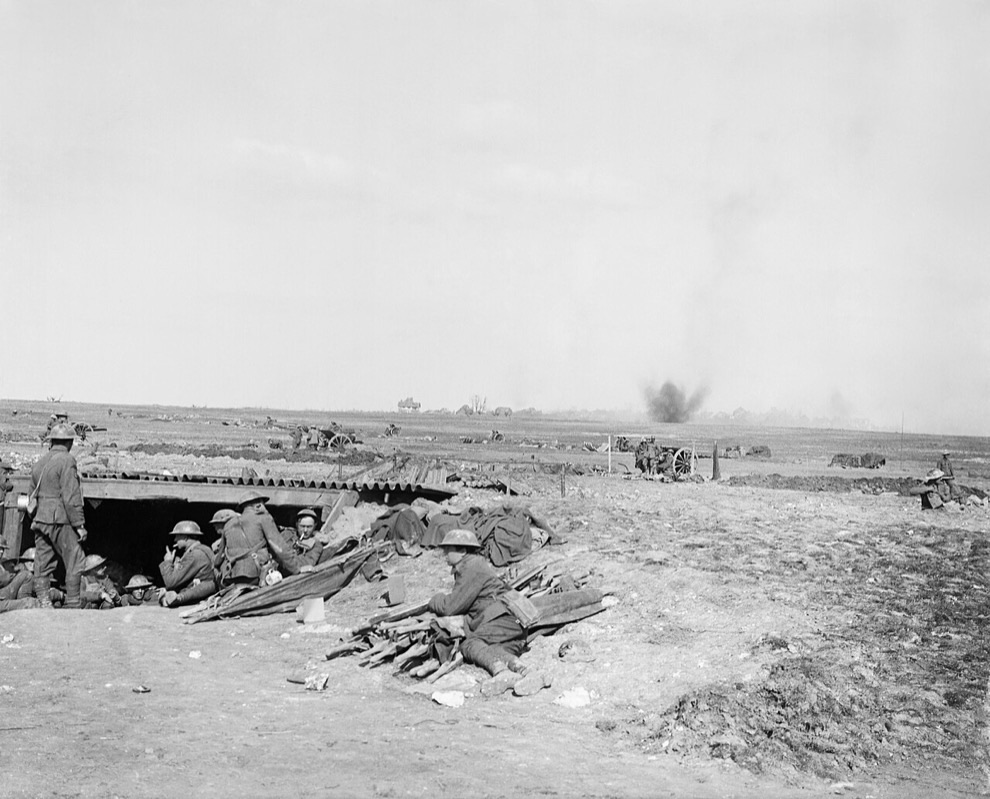
British 18-pounder artillery guns under fire during the Battle of Arras in April 1917

The Battle of Arras from April 9 to May 16, 1917, consumed approximately 278,000 total casualties, 158,000 British and Commonwealth and 120,000 German. The British daily casualty rate at Arras, 4,076 per day, was higher than at the Somme, Passchendaele, or any other British battle of the war, making it statistically the most lethal sustained engagement the British Expeditionary Force ever fought.

The opening day was stunning. Canadian Corps troops stormed Vimy Ridge in a meticulously planned assault that captured in hours what the French had failed to take in two years of fighting at a cost of 150,000 casualties. Underground tunnels quarried from medieval chalk mines allowed 24,000 troops to advance unseen to within yards of German trenches. But after the first day's success, the battle devolved into the familiar Western Front pattern: each mile of advance multiplied casualties while defenders reinforced faster than attackers could exploit. The offensive was meant to support the French Nivelle Offensive on the Aisne, which failed catastrophically and triggered mutinies in 54 French divisions. Arras continued grinding for five more weeks with diminishing returns, consuming a generation of British soldiers for territorial gains measured in hundreds of yards.

#23, Second Battle of Kharkov: The Soviet Disaster That Cost 280,000 Troops

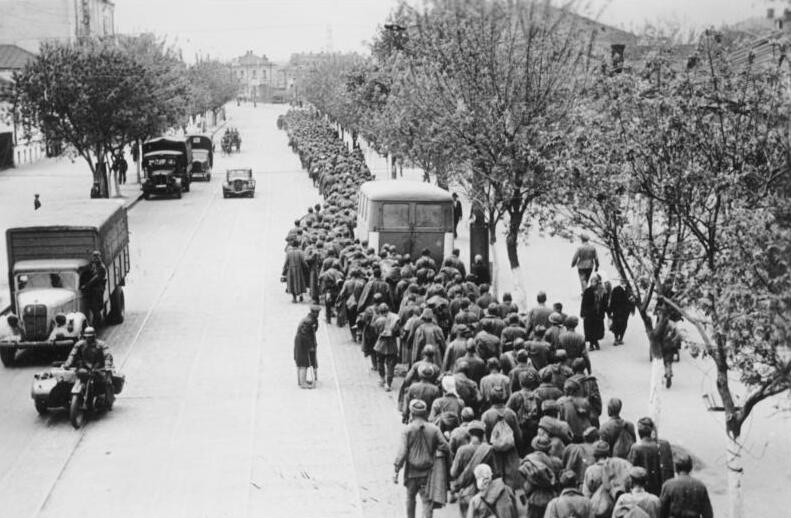
Soviet prisoners of war marching through the streets of Kharkov after the German victory in 1942

The Second Battle of Kharkov from May 12 to 28, 1942, killed, wounded, or captured approximately 280,000 Soviet soldiers against 20,000 German casualties, a 14-to-1 casualty ratio that ranked it among the worst Soviet defeats of the entire war. Marshal Timoshenko's offensive to recapture Kharkov, the Soviet Union's fourth-largest city, began successfully but walked directly into a German trap that consumed three Soviet armies in 16 days.

The Soviet 6th, 57th, and 9th Armies advanced into a salient south of Kharkov, unaware that Kleist's 1st Panzer Army was positioned on their southern flank ready to strike. On May 17, Kleist attacked northward while Paulus's 6th Army struck southward, closing the pocket. Stalin ignored Timoshenko's requests to halt the offensive for three critical days. By the time retreat was authorized, it was too late, 22 Soviet divisions and 7 tank brigades were encircled. Over 240,000 Soviet soldiers surrendered, and 1,250 tanks were captured or destroyed. The Kharkov disaster opened the road to Stalingrad: German forces exploited the gap in Soviet lines to launch Case Blue, the summer offensive aimed at the Caucasus oil fields that would lead to the defining battle of the Eastern Front.

#22, Meuse-Argonne Offensive: America's Deadliest Campaign Killed 26,277

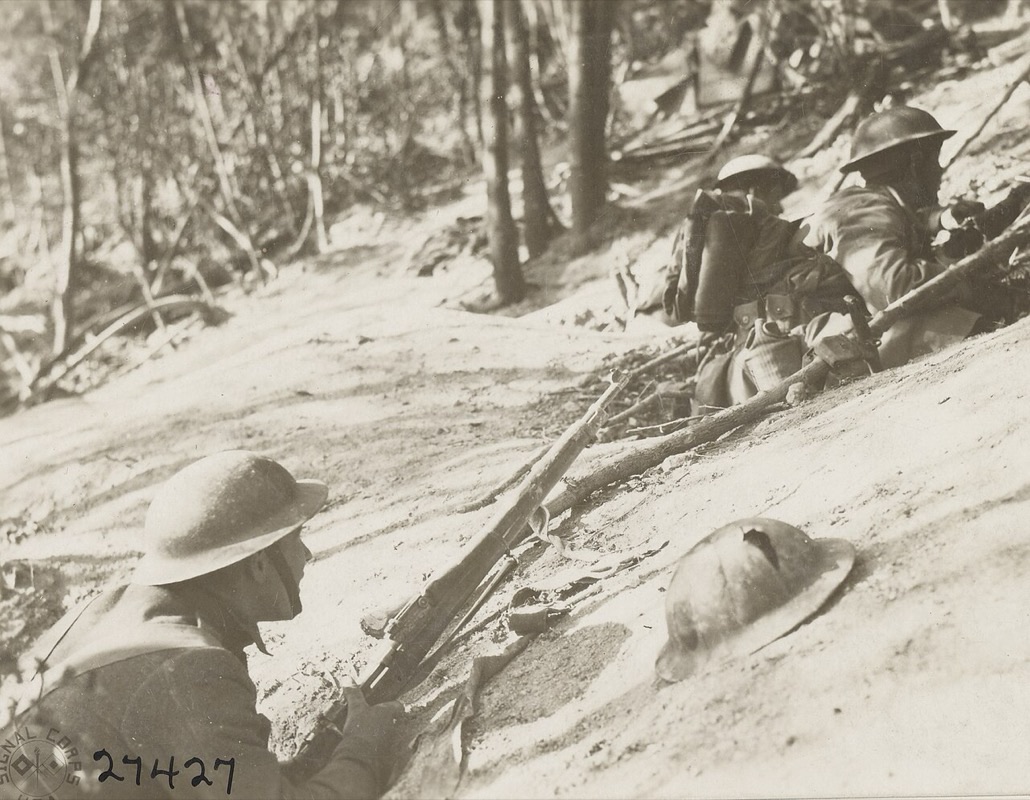
American soldiers advancing through the Meuse-Argonne sector in the final Allied offensive of World War I 1918

The Meuse-Argonne Offensive from September 26 to November 11, 1918, killed 26,277 Americans and wounded over 95,000, making it the bloodiest single campaign in United States military history. Combined French, American, and German casualties exceeded 350,000. Over 1.2 million American soldiers participated in the 47-day operation that drove through the most heavily fortified sector of the Western Front and directly forced Germany to seek an armistice.

The American Expeditionary Forces under General Pershing attacked on a 24-mile front between the Meuse River and the Argonne Forest against four German defensive lines stacked 13 miles deep. Initial advances stalled as inexperienced American divisions got lost in the dense Argonne Forest and encountered killing zones of interlocking machine gun fire. The "Lost Battalion" of the 77th Division held out for five days while surrounded. Sergeant Alvin York single-handedly captured 132 Germans. By late October, fresh American divisions were attacking in waves that the depleted German army couldn't match. The Kriemhilde Stellung, Germany's strongest defensive line, fell on October 14, and the advance became a pursuit. Meuse-Argonne proved that America's industrial manpower could break the stalemate that had defeated Europe's best armies for four years.

#21, Battle of Berlin: The Final Apocalypse That Killed 1.3 Million

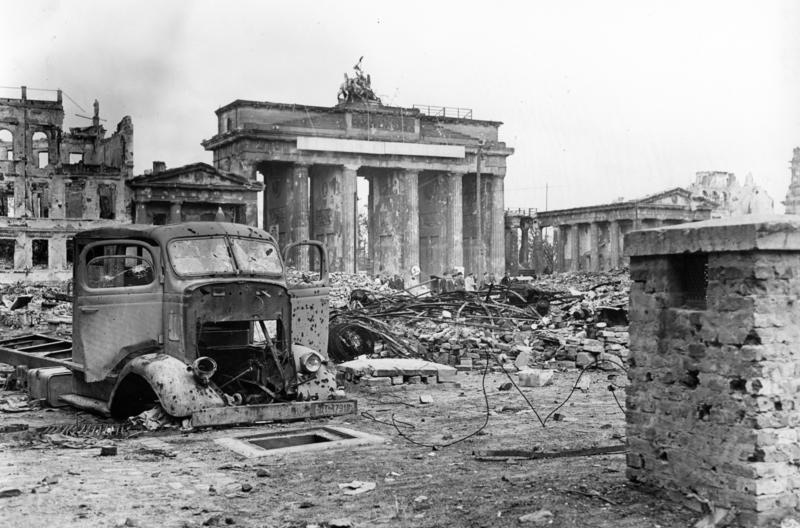
Destroyed buildings and the Brandenburg Gate in Berlin after the final Soviet assault in 1945

The Battle of Berlin from April 16 to May 2, 1945, killed approximately 1.3 million soldiers and civilians, 81,000 Soviet troops dead, an estimated 458,000 German military killed or captured, 125,000 civilians dead, and over 600,000 soldiers from both sides wounded. Three Soviet fronts comprising 2.5 million troops, 6,250 tanks, and 41,600 artillery pieces assaulted the capital of the Third Reich in the final battle of the European war.

Zhukov's assault across the Seelow Heights on April 16 stalled against desperate German resistance, costing 30,000 Soviet casualties in three days for four miles of advance. Stalin deliberately set Zhukov and Konev in competition, promising Berlin to whichever marshal reached it first. Soviet artillery fired 1.2 million shells in the opening barrage, more ammunition than the entire U.S. Army used in the Pacific theater. In the city itself, the fighting was room-to-room, sewer-to-sewer. Hitler Youth and Volkssturm militia, boys and old men, fought alongside SS fanatics while Wehrmacht soldiers tried to surrender. Hitler shot himself in his bunker on April 30. The Soviet flag was raised over the Reichstag on May 1, and General Weidling surrendered the Berlin garrison the following morning, ending the deadliest war in human history in the rubble of the city that started it.

#20, Gallipoli Campaign: Churchill's 11-Month Catastrophe That Killed 473,000

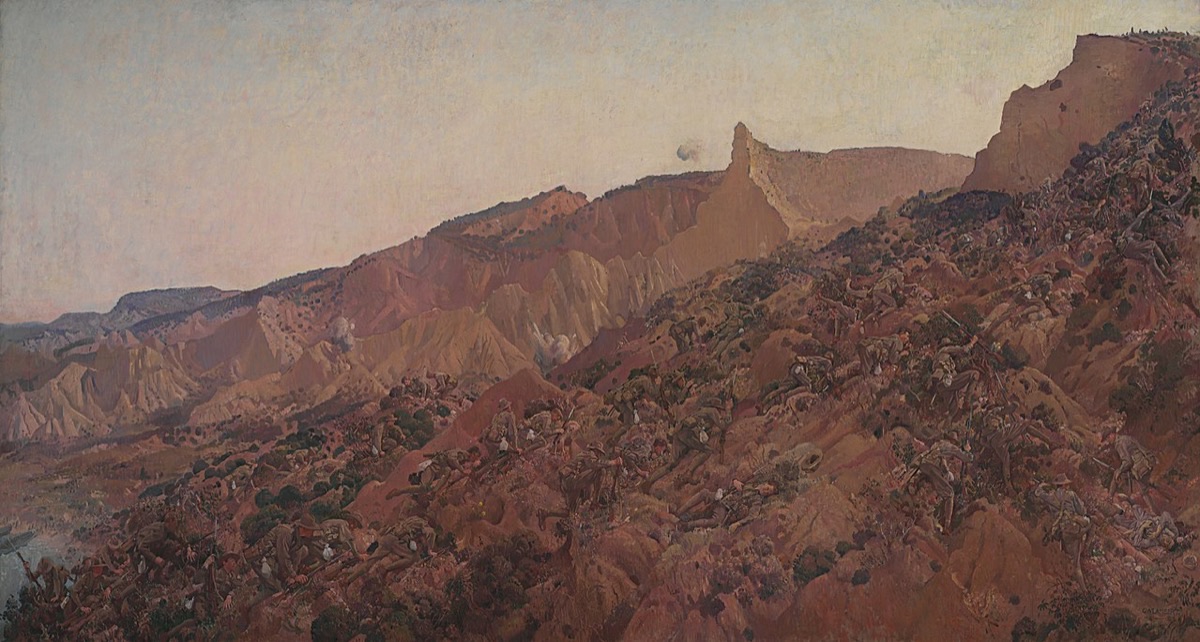
Allied troops landing at Anzac Cove during the Gallipoli Campaign in 1915

The Gallipoli Campaign from February 1915 to January 1916 produced approximately 473,000 total casualties, 252,000 Ottoman (87,000 dead) and 221,000 Allied (46,000 dead, including 8,709 Australians and 2,721 New Zealanders). Winston Churchill's plan to force the Dardanelles and knock the Ottoman Empire out of World War I became one of the most disastrous Allied operations of the entire conflict.

The naval assault on March 18, 1915, lost three battleships to mines and was abandoned. The land invasion at Cape Helles and Anzac Cove on April 25 immediately bogged down against Turkish defenders commanded by Mustafa Kemal, the future Atatürk, who famously told his regiment: "I don't order you to attack. I order you to die." The August offensive at Suvla Bay, meant to break the deadlock, ended in confusion when commanders stopped to brew tea on the beach while Turkish reinforcements rushed to the heights above. After 11 months of trench warfare identical to the Western Front, the Allies evacuated, the only well-executed part of the entire campaign. Gallipoli destroyed Churchill's political career for a decade, forged Australian and New Zealand national identities on ANZAC Day, and launched Kemal on his path to founding modern Turkey.

#19, First Battle of the Marne: The "Miracle" That Saved Paris and Doomed Germany

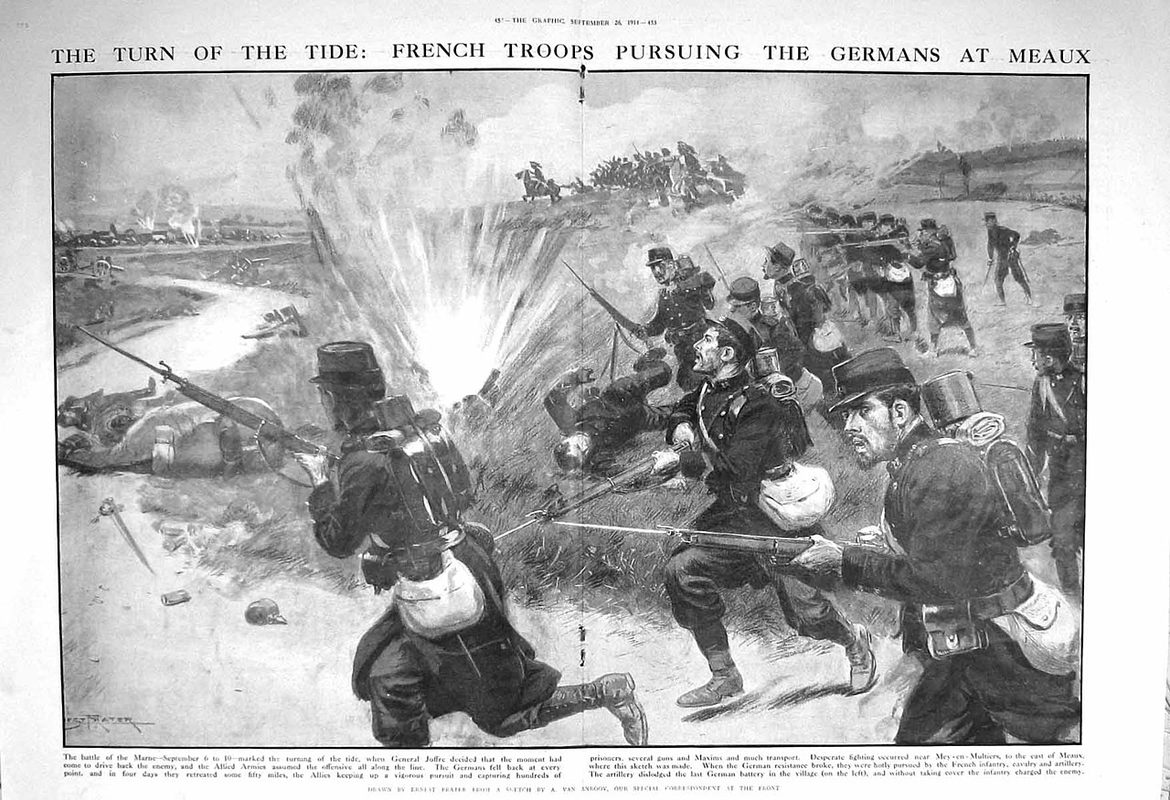
German soldiers in combat during the First Battle of the Marne in September 1914

The First Battle of the Marne from September 5 to 12, 1914, produced approximately 500,000 total casualties, 263,000 French, 13,000 British, and over 220,000 German killed, wounded, or missing. Two million soldiers clashed along a 200-mile front east of Paris in the battle that saved France from defeat and doomed Germany to the two-front war that would eventually destroy it.

The Schlieffen Plan's grand sweep through Belgium and northern France had brought the German First Army to within 30 miles of Paris by early September. Military Governor Gallieni spotted a gap between the German First and Second Armies and convinced Joffre to counterattack. The French 6th Army struck the German right flank while 6,000 reserve troops were famously rushed to the front in 600 Parisian taxicabs. When the Germans retreated behind the Aisne River, the war of movement ended. Both sides began the "Race to the Sea," extending trench lines from Switzerland to the English Channel, creating the Western Front deadlock that would kill millions over the next four years. The "Miracle of the Marne" saved France in 1914 but guaranteed that the war would not be over by Christmas.

#18, Battle of Passchendaele: The Mud That Swallowed 585,000 Soldiers

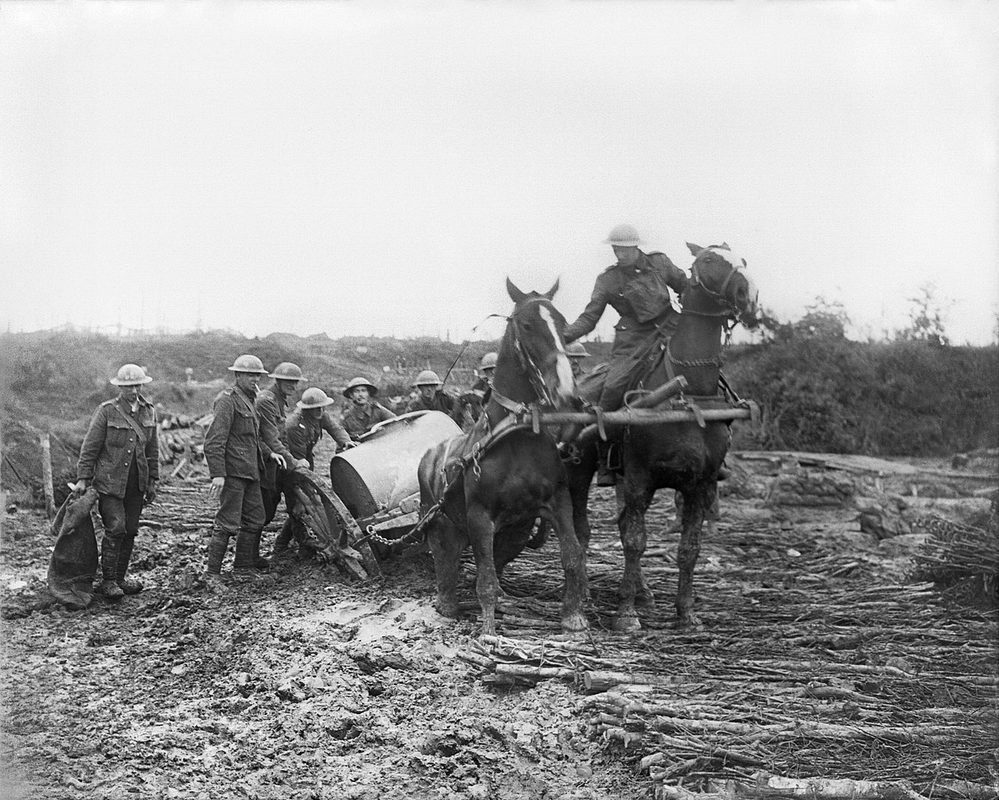
Australian infantry wearing small box respirator gas masks in the mud near Ypres during the Battle of Passchendaele 1917

The Third Battle of Ypres, known as Passchendaele, from July 31 to November 10, 1917, consumed approximately 585,000 total casualties, 275,000 British and Commonwealth and 220,000 German. The advance of less than five miles over four months cost roughly 2 inches of ground per dead soldier. Passchendaele remains the supreme symbol of the futility and horror of World War I trench warfare.

Haig's offensive began with a two-week preliminary bombardment of 4.3 million shells that destroyed the Flemish drainage system, turning the battlefield into a swamp of liquid mud up to 10 feet deep. Wounded men drowned in shell holes. Pack mules disappeared entirely beneath the surface. Tanks sank to their turrets. The Canadian Corps was assigned the final assault on Passchendaele Ridge in October, capturing the village on November 6 at a cost of 15,654 casualties. The village itself was a heap of rubble indistinguishable from the surrounding moonscape. The ground gained at Passchendaele was voluntarily abandoned five months later during the German Spring Offensive. British Prime Minister Lloyd George called it "the campaign which, with the Somme, will always rank as the most gigantic, tenacious, grim, futile, and bloody fight ever waged in the history of war."

#17, Battle of Wuhan: China's 4-Month Last Stand That Cost a Million Casualties

Chinese troops marching in formation during the Battle of Wuhan in 1938

The Battle of Wuhan from June 11 to October 27, 1938, produced an estimated 540,000 Chinese and 140,000 Japanese casualties, among the largest and bloodiest battles of the entire Second Sino-Japanese War. Chiang Kai-shek committed 1.1 million troops to defend the tri-city industrial complex of Wuhan (Wuchang, Hankou, and Hanyang), China's wartime capital and the strategic key to the Yangtze River.

The Japanese attacked along three axes with 350,000 troops supported by aircraft carriers on the Yangtze and heavy air power, but Chinese forces fought a deliberate delaying campaign that bled the Japanese advance to a crawl. Chiang ordered the Yellow River dikes destroyed at Huayuankou to flood the plains and slow the Japanese approach, a scorched-earth decision that killed an estimated 500,000 Chinese civilians and displaced millions but delayed the Japanese by three months. Soviet volunteer pilots flew I-15 and I-16 fighters alongside the Chinese Air Force in some of the largest air battles of the Asian theater. When Wuhan finally fell on October 25, 1938, Japan had suffered its most costly campaign to date, and the strategic stalemate that would characterize the rest of the war had set in. Japan controlled China's cities but could never subdue the vast interior.

#16, Battle of Normandy: D-Day and the 77-Day Campaign That Broke the Atlantic Wall

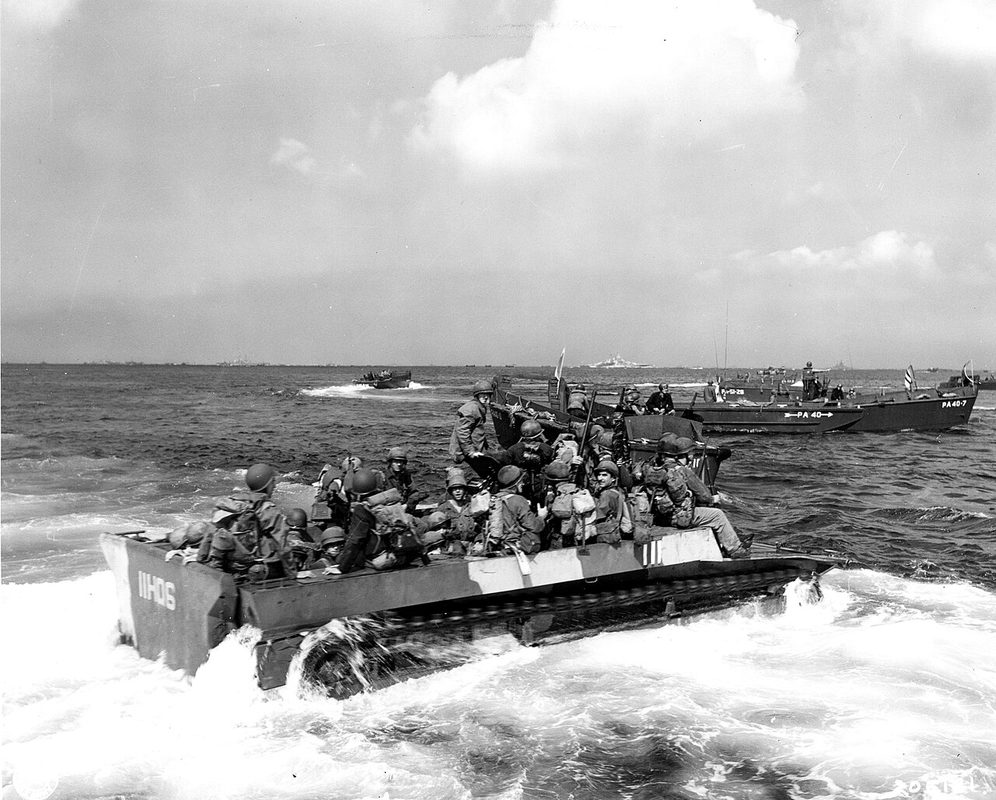
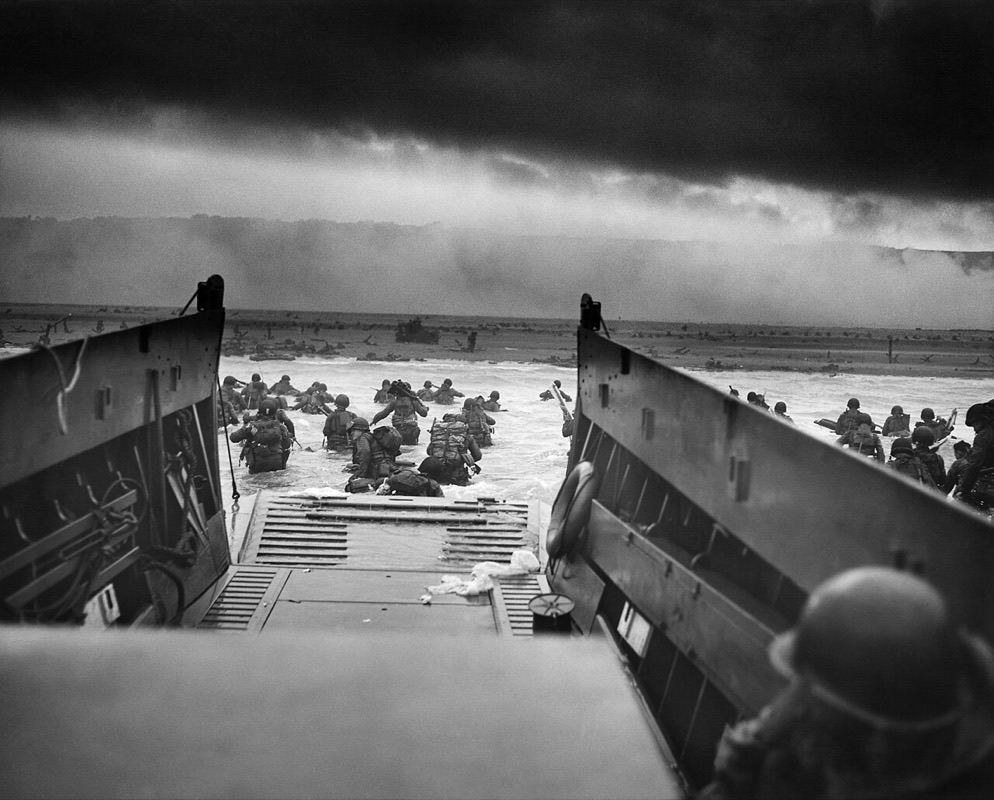
American soldiers wading through the surf onto Omaha Beach during the D-Day invasion of Normandy June 6 1944

The Battle of Normandy from June 6 to August 25, 1944, killed approximately 425,000 soldiers from all sides, 209,000 Allied casualties (37,000 dead) and 200,000 German dead plus 200,000 captured. An additional 20,000 French civilians were killed by bombing and artillery. Over 2 million Allied troops crossed the English Channel in the largest amphibious operation in military history.

D-Day itself on June 6, 1944, put 156,000 Allied soldiers on five Normandy beaches by nightfall. Omaha Beach was the closest call, the 1st and 29th Infantry Divisions suffered 2,400 casualties crossing 300 yards of open sand under fire from the German 352nd Division. But the real bloodletting came in the seven weeks that followed. The hedgerow country of the bocage turned every field into a defensive position. Caen, supposed to fall on D-Day, wasn't captured until July 21 after some of the heaviest fighting the Western Allies experienced. Operation Cobra's breakout on July 25, backed by 2,500 bombers carpet-bombing a narrow corridor, finally shattered the German line. The Falaise Pocket trapped 80,000 to 100,000 German troops in an annihilation that liberated France and opened the road to the Rhine.

#15, Battle of Smolensk: The Two-Month Slugfest That Delayed Barbarossa

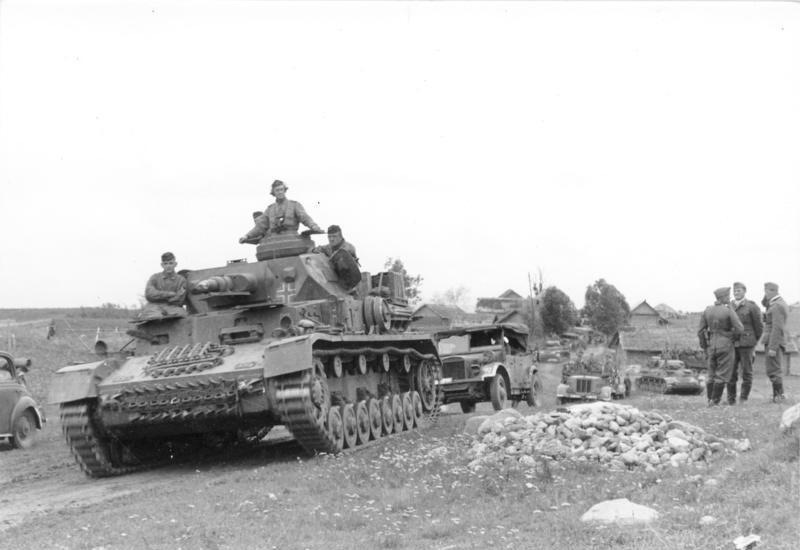
German Panzer IV tank advancing through Russian terrain during the Battle of Smolensk in 1941

The Battle of Smolensk from July 10 to September 10, 1941, killed, wounded, or captured approximately 760,000 Soviet soldiers and inflicted 100,000 casualties on the Germans, a combined total exceeding 850,000 in two months. Three Soviet armies were encircled and destroyed in the Smolensk pocket, but the stubborn defense forced Hitler to make the fateful decision to divert Guderian's Panzer Group 2 south toward Kiev instead of driving straight for Moscow.

Smolensk should have been another quick German encirclement victory. Instead, Soviet forces counterattacked relentlessly, launching the first organized Soviet offensive operations of the war. General Rokossovsky's forces even briefly recaptured the city of Yelnya in what became the first successful Soviet counteroffensive of Operation Barbarossa. The two-month delay at Smolensk consumed irreplaceable German men and machines during the critical summer campaigning season. By the time Army Group Center redirected toward Moscow in October, the autumn rains had begun, turning Russian roads into mud rivers. Many historians argue that the time lost at Smolensk, not the Russian winter, was the real reason Operation Barbarossa failed to capture Moscow in 1941.

#14, Battle of Caporetto: The Italian Disaster That Lost 700,000 Men in Two Weeks

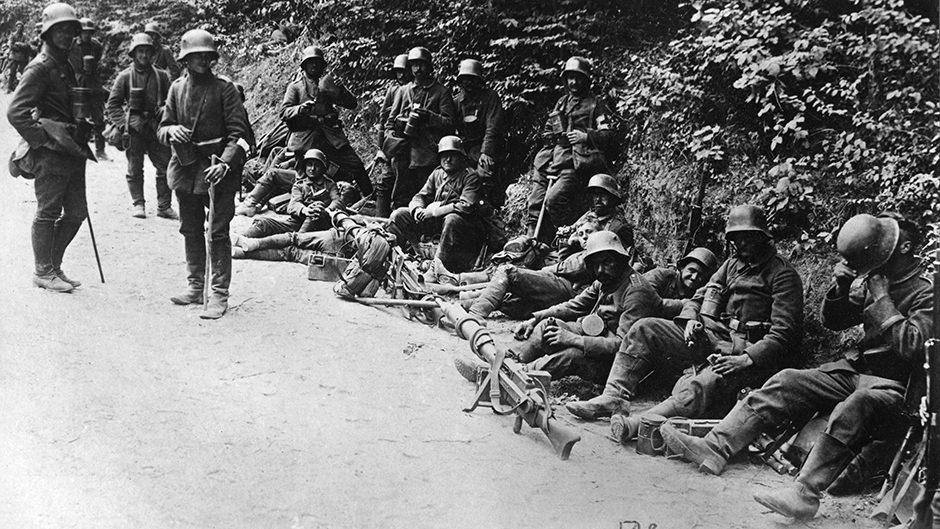
Soldiers during the Battle of Caporetto on the Italian Front showing the chaotic retreat in 1917

The Battle of Caporetto from October 24 to November 19, 1917, produced approximately 700,000 Italian casualties, 10,000 killed, 30,000 wounded, and an astonishing 265,000 captured, with over 350,000 more deserting or becoming stragglers during the retreat. German and Austro-Hungarian losses were approximately 70,000. The Italian Second Army effectively ceased to exist in the worst military disaster in Italian history.

The attack was spearheaded by German Alpenkorps troops using revolutionary infiltration tactics, bypassing strongpoints, attacking headquarters and artillery positions, and creating chaos in the Italian rear. A young lieutenant named Erwin Rommel captured 9,000 Italian soldiers and 81 guns with just 150 men at Mount Matajur, earning the Pour le Mérite. Poison gas flooded the valleys, and the Italian front collapsed along a 19-mile stretch. The retreat didn't stop until the Piave River, 70 miles behind the original lines. Italy lost 10,000 square miles of territory in two weeks. Caporetto was so traumatic it entered the Italian language as a synonym for catastrophic defeat, Ernest Hemingway immortalized the retreat in "A Farewell to Arms," and the battle's tactical innovations in combined-arms infiltration directly influenced German stormtrooper tactics for the 1918 Spring Offensive.

#13, Battle of Kiev: The Largest Encirclement in Military History

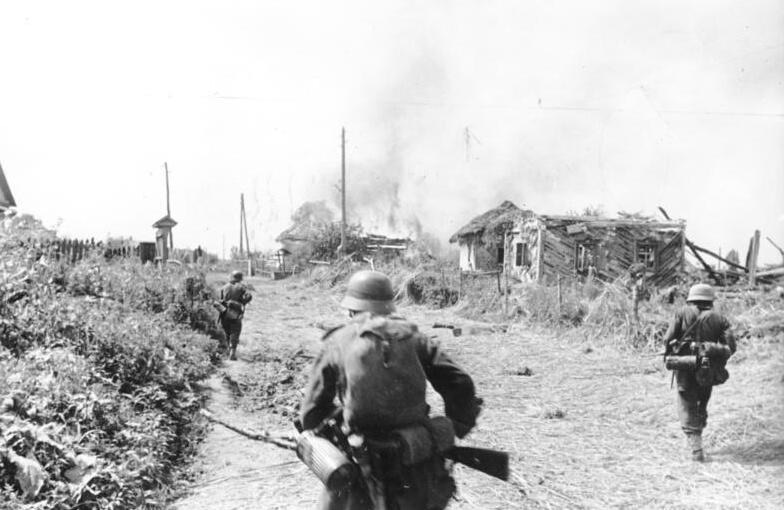
German soldiers occupying a village near Kiev during the massive encirclement battle in 1941

The Battle of Kiev from August 23 to September 26, 1941, resulted in the capture of 665,000 Soviet soldiers, the largest encirclement in the history of warfare. Total Soviet casualties exceeded 700,000 killed, wounded, or captured, including four army commanders. German losses were approximately 100,000 killed and wounded. The Soviet Southwestern Front was annihilated, opening a 300-mile gap in the Soviet defensive line.

Stalin refused to authorize a retreat from Kiev despite urgent warnings from Zhukov and other generals who saw the pincers closing. Guderian's 2nd Panzer Group drove south from Smolensk while Kleist's 1st Panzer Group advanced north from Kremenchug, closing the trap on September 15, 1941, behind five Soviet armies. Commander of the Southwestern Front, Colonel General Kirponos, was killed trying to break out on September 20. The scale of the encirclement was so vast that German troops were still processing prisoners for weeks afterward. Kiev was the Wehrmacht's greatest single victory, but it came at a strategic price: the five weeks Guderian spent driving south were five weeks he didn't spend driving toward Moscow. Zhukov had warned Stalin that Kiev should be abandoned to save the armies, when Stalin fired him for the suggestion, Zhukov was proven devastatingly right.

#12, Battle of Verdun: The 303-Day Meat Grinder That Defined a Generation

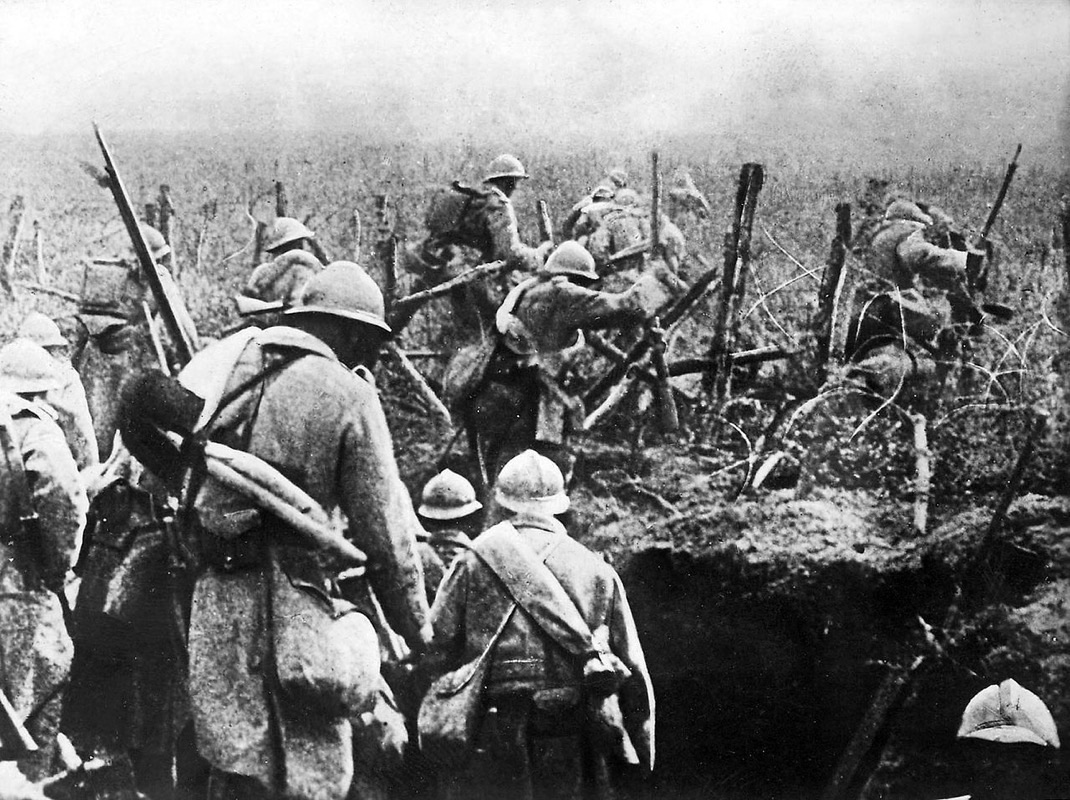
French soldiers defending positions during the devastating Battle of Verdun in 1916

The Battle of Verdun from February 21 to December 18, 1916, produced approximately 714,000 total casualties, 377,000 French (162,000 dead) and 337,000 German (143,000 dead). The German Fifth Army under Crown Prince Wilhelm attacked the fortress city of Verdun with the explicit goal of "bleeding France white" in a battle of attrition. Instead, both armies bled each other nearly equally for 303 consecutive days.

Chief of the German General Staff Erich von Falkenhayn chose Verdun because France could not afford to lose it, a fortress city with centuries of symbolic importance. He was right: France fed every division in its army through Verdun's killing ground via the "Voie Sacrée," a single supply road from Bar-le-Duc where 3,500 trucks passed every day. Fort Douaumont fell on February 25 to a single German squad; Fort Vaux's garrison fought until their water ran out and soldiers drank their own urine. The fighting at Fleury, Thiaumont, and Mort-Homme consumed entire regiments in days. By the time General Mangin recaptured Douaumont in October, the battlefield was an uninhabitable moonscape of craters, unexploded ordnance, and human remains that are still found in the soil today. "Ils ne passeront pas", they shall not pass, became France's defining phrase and Verdun its sacred ground.

#11, Battle of France: Six Weeks of Blitzkrieg That Conquered Western Europe

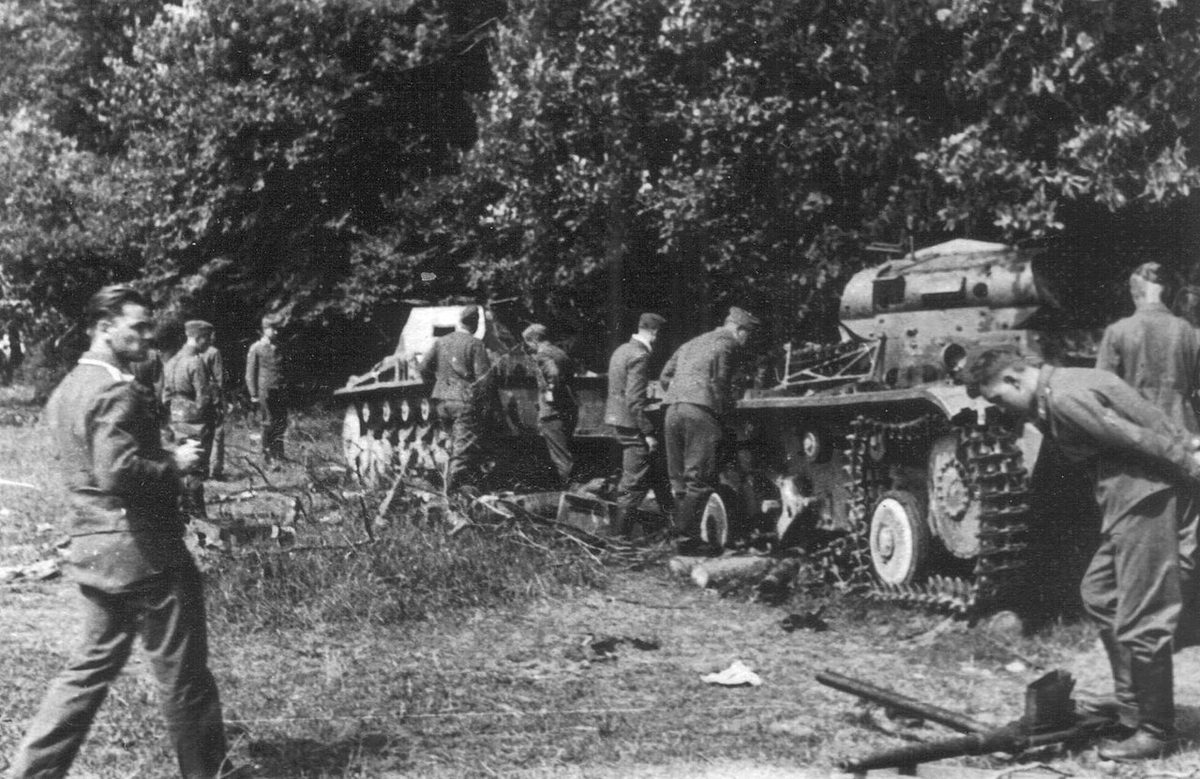
German forces advancing through France during the Fall of France blitzkrieg campaign in May-June 1940

The Battle of France from May 10 to June 25, 1940, produced approximately 360,000 total casualties, 85,000 French dead, 100,000 French wounded, and 1.8 million French prisoners, plus 27,074 German dead and 111,034 wounded. The Wehrmacht conquered France, Belgium, the Netherlands, and Luxembourg in six weeks, a campaign that military academies still study as the most decisive conventional victory of the 20th century.

The Allies actually had more tanks, more artillery, and comparable troop numbers to the Germans. What they lacked was doctrine. Seven Panzer divisions punched through the "impassable" Ardennes forest and crossed the Meuse River at Sedan on May 13, splitting the Allied armies in two. Guderian's XIX Panzer Corps drove to the English Channel in 10 days, trapping the BEF and the cream of the French army in a pocket around Dunkirk. The Halt Order on May 24, still debated by historians, gave the British time to evacuate 338,000 troops from Dunkirk's beaches. Paris fell on June 14 without a fight. France signed an armistice on June 22 in the same railway car where Germany had surrendered in 1918, a deliberate humiliation orchestrated by Hitler. The Fall of France shocked the world and proved that mechanized combined-arms warfare had made the static defenses of World War I obsolete overnight.

#10, Operation Bagration: The Soviet Steamroller That Destroyed Army Group Center

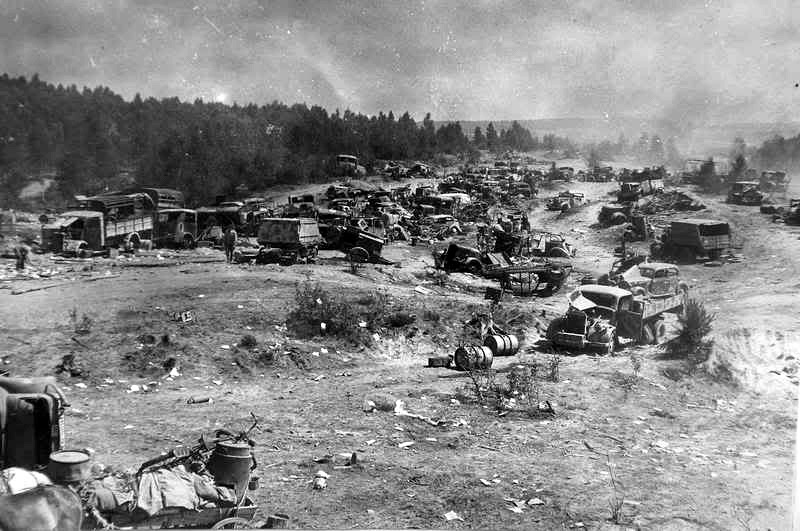
Destroyed and abandoned German military vehicles in Belarus after the devastating Soviet Operation Bagration 1944

Operation Bagration from June 23 to August 19, 1944, destroyed German Army Group Center, killing, wounding, or capturing approximately 400,000 German soldiers and inflicting the most catastrophic defeat the Wehrmacht suffered in the entire war. Soviet casualties were approximately 180,000 dead and 590,000 wounded. The operation liberated Belarus, eastern Poland, and the Baltic states in eight weeks, advancing the front line 300 miles west.

The Soviets achieved complete strategic surprise. German intelligence predicted the summer offensive would target Army Group North Ukraine, not Army Group Center. Four Soviet fronts, 2.3 million troops, 5,200 tanks, and 31,000 guns, attacked a German force of 800,000 with overwhelming force at multiple breakthrough points simultaneously. Entire German corps were encircled and destroyed. The pocket at Minsk trapped 100,000 German soldiers, and Stalin paraded 57,000 German prisoners through the streets of Moscow on July 17, 1944, complete with street-washing trucks following behind as a deliberate insult. Bagration was larger than D-Day in every metric, more troops, more casualties, more territory gained, yet it remains far less known in Western military history. It broke the back of the German army on the Eastern Front and made the fall of Berlin a matter of time.

#9, Siege of Leningrad: 872 Days of Starvation That Killed 1.5 Million

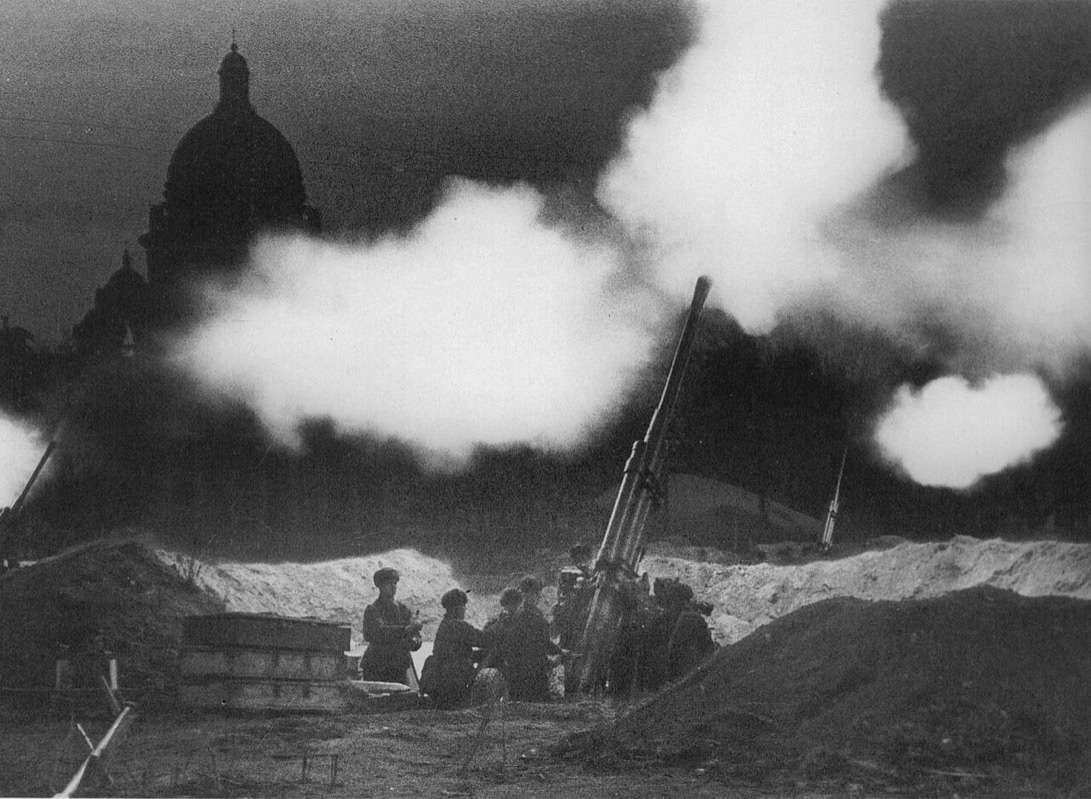
Soviet anti-aircraft gunners defending Leningrad during the 872-day siege in 1941

The Siege of Leningrad from September 8, 1941, to January 27, 1944, killed approximately 1.5 million people, 1 million civilians who starved, froze, or were killed by bombardment, and 500,000 Soviet soldiers. It was the longest and most destructive siege in modern history, lasting 872 days while 2.5 million civilians were trapped in a city that German forces deliberately intended to starve into extinction.

Hitler ordered that Leningrad be not captured but annihilated, "wiped from the face of the earth." German and Finnish forces encircled the city, cutting all land supply routes. During the winter of 1941-42, the daily bread ration fell to 125 grams, four thin slices of bread mixed with sawdust and cotton-seed cake. Over 100,000 people died each month. Citizens ate wallpaper paste, boiled leather belts, and there were documented cases of cannibalism. The only lifeline was the "Road of Life" across frozen Lake Ladoga, where trucks drove across ice under constant Luftwaffe attack. Despite everything, Leningrad never surrendered. Factories continued producing tanks and ammunition. Shostakovich's Seventh Symphony was performed in the besieged city as an act of defiance. The siege was finally broken in January 1944, but the damage was irreparable, an entire generation of Leningraders had been consumed by what remains the deadliest siege in human history.

#8, Battle of Kursk: The Largest Tank Battle in History
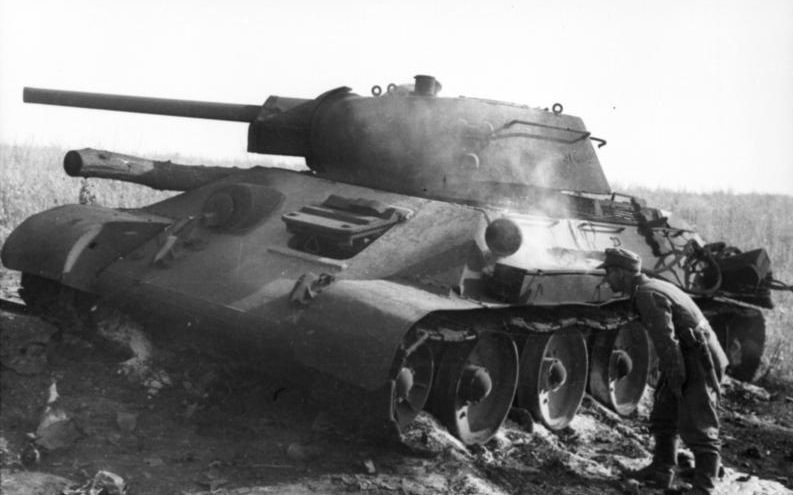
German motorized troops advancing across the Russian steppe during the Battle of Kursk in 1943

The Battle of Kursk from July 5 to August 23, 1943, produced approximately 860,000 total casualties, 254,000 German and 254,000 Soviet dead, with over 350,000 more wounded on both sides. Over 6,000 tanks, 4,000 aircraft, and 2 million soldiers clashed in the largest armored battle in history, Operation Citadel, Germany's last major strategic offensive on the Eastern Front, was stopped cold and then thrown back in a devastating Soviet counteroffensive.

The Germans massed their newest weapons, Tiger I tanks, Panther tanks, Ferdinand tank destroyers, and Henschel Hs 129 ground-attack aircraft, against a Soviet defensive network eight lines deep with over 3,000 miles of trenches and over a million anti-tank and anti-personnel mines. At Prokhorovka on July 12, the Soviet 5th Guards Tank Army charged directly into the II SS Panzer Corps in a point-blank melee where individual T-34s rammed Tiger tanks. The Germans penetrated only 12 miles in a week before the offensive was called off. The Soviet counteroffensives, Operations Kutuzov and Rumyantsev, recaptured Orel, Belgorod, and Kharkov. After Kursk, the Wehrmacht never launched another major offensive in the East. The strategic initiative passed permanently to the Red Army, which would advance relentlessly westward for the next 22 months until it reached Berlin.

#7, Battle of Moscow: The Winter Offensive That Saved the Soviet Union
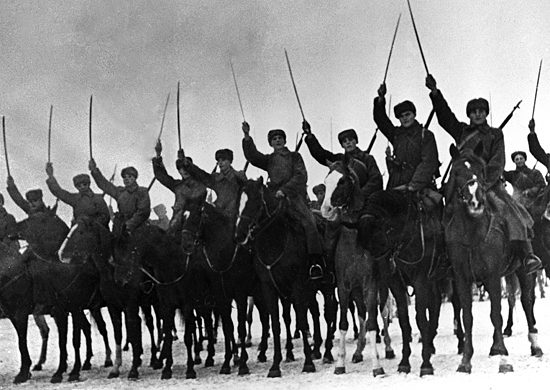
Soviet soldiers defending Moscow during the critical winter battle in 1941-1942

The Battle of Moscow from October 2, 1941, to January 7, 1942, produced approximately 1 million total casualties, 650,000 to 750,000 Soviet and 248,000 German killed, wounded, or captured. Operation Typhoon, the German drive to capture the Soviet capital, came within 12 miles of the Kremlin before the Red Army's winter counteroffensive hurled the Wehrmacht back 100 miles in the first major German defeat of World War II.

By early December 1941, German soldiers could see the spires of Moscow through their binoculars. But the Wehrmacht had outrun its supply lines, temperatures plummeted to minus 40 degrees, and tanks, weapons, and vehicles froze solid, the Germans had not issued winter clothing because Hitler assumed the campaign would be over by October. Zhukov launched his counteroffensive on December 5 with fresh Siberian divisions transferred from the Far East after Soviet spy Richard Sorge confirmed Japan would not attack the USSR. The Soviets attacked through deep snow in white camouflage, supported by T-34 tanks whose wide tracks and diesel engines functioned in conditions that immobilized German armor. Moscow proved that the Wehrmacht was not invincible and that the Soviet Union would not collapse as Hitler had predicted, a psychological turning point equal to its military significance.

#6, German Spring Offensive: Ludendorff's Last Roll of the Dice Cost 1.5 Million
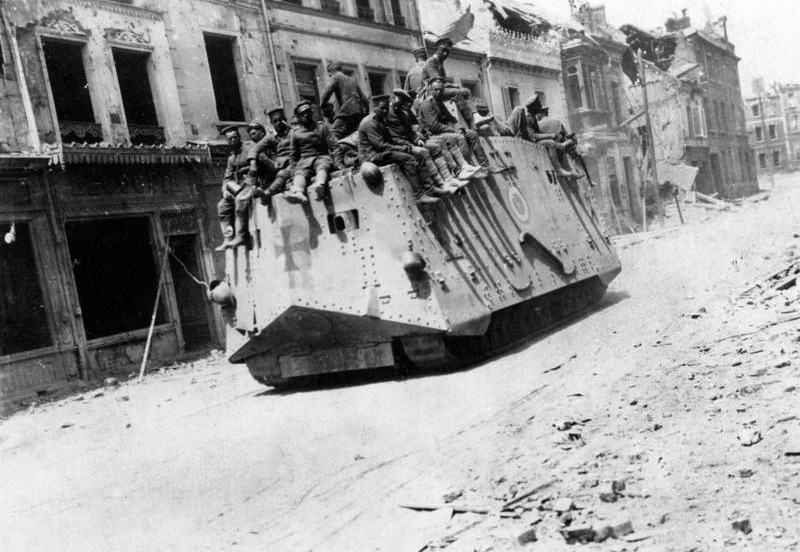
German A7V tank advancing during the 1918 Spring Offensive on the Western Front

The German Spring Offensive (Operation Michael and subsequent operations) from March 21 to July 18, 1918, produced approximately 1.5 million total casualties, 688,000 German and 850,000 Allied (420,000 British, 433,000 French). Ludendorff launched the largest German offensive of World War I before American reinforcements could arrive in overwhelming numbers, using revolutionary stormtrooper infiltration tactics that shattered the British Fifth Army and advanced 40 miles in three days, the deepest penetration on the Western Front since 1914.

The Kaiserschlacht, the Kaiser's Battle, employed 76 divisions on a 50-mile front, preceded by a five-hour bombardment of 6,000 guns using gas, high explosive, and smoke in a carefully sequenced fire plan devised by Colonel Bruchmüller. Stormtrooper units bypassed strongpoints and attacked headquarters, artillery, and supply dumps deep behind the lines. The British front collapsed, and Haig issued his famous "backs to the wall" order. But the offensive had no strategic objective beyond breaking the Allied line, success could not be exploited because the exhausted German infantry moved on foot while the Allies retreated by truck and train. Each successive German operation gained less ground at greater cost, and by July the offensive had consumed Germany's last reserves of trained soldiers. The Spring Offensive gained territory but lost the war.

#5, Battle of the Somme: The 141-Day Massacre That Redefined Slaughter
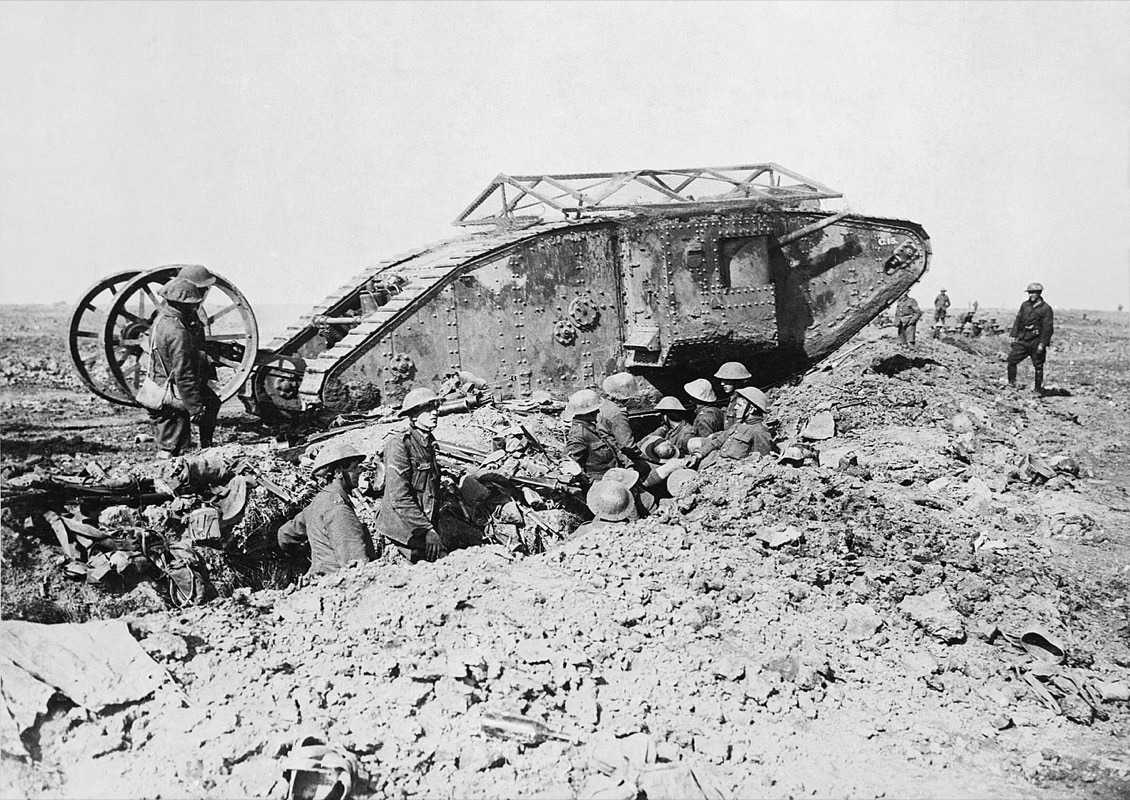
British Mark I tank advancing across the cratered battlefield of the Somme in September 1916

The Battle of the Somme from July 1 to November 18, 1916, consumed approximately 1,070,000 total casualties, 420,000 British (including 57,470 on the first day alone, the worst in British military history), 200,000 French, and 465,000 German. The 141-day battle gained a maximum of seven miles. The Somme's opening day remains the single deadliest day any army has ever experienced, with the British suffering roughly one casualty every second for 14 hours.

Haig's plan relied on a week-long preliminary bombardment of 1.5 million shells to destroy the German trenches. It didn't work. German soldiers sheltered in deep dugouts 30 feet underground and emerged to man their machine guns as the bombardment lifted. British infantry walked in straight lines across no-man's-land carrying 60 pounds of equipment into point-blank fire. The Pals Battalions, units recruited from the same towns and factories, were wiped out together, devastating entire communities back home. The Accrington Pals lost 585 men in 20 minutes. Yet the Somme also saw innovations: the first use of tanks on September 15, the first large-scale use of creeping barrages, and the gradual development of combined-arms tactics that would eventually break the deadlock. The battle ground on for four more months because stopping meant admitting the sacrifice had been for nothing.

#4, Hundred Days Offensive: The Final Allied Juggernaut That Ended World War I
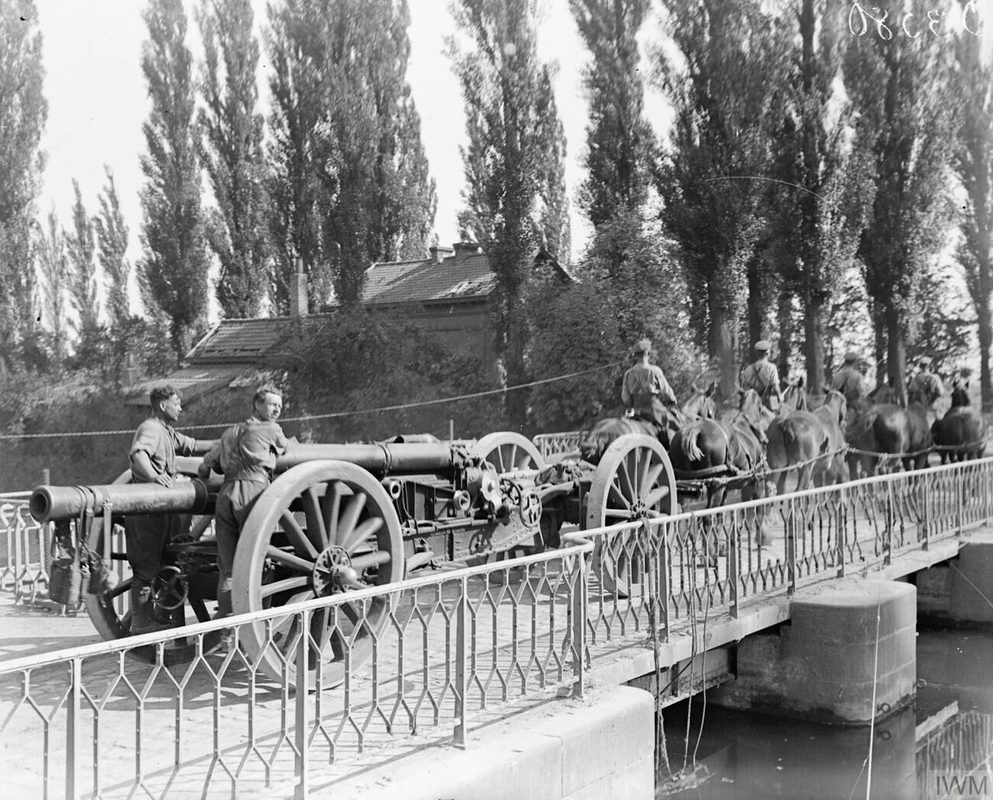
Allied soldiers advancing during the Hundred Days Offensive in the final months of World War I 1918

The Hundred Days Offensive from August 8 to November 11, 1918, produced approximately 1.8 million total casualties, over 785,000 German (including 385,000 prisoners) and approximately 1,070,000 Allied killed and wounded. The relentless Allied advance across a 250-mile front shattered the Hindenburg Line, forced Germany to seek an armistice, and ended the bloodiest war the world had yet seen.

The Battle of Amiens on August 8, what Ludendorff called "the black day of the German Army", saw 532 Allied tanks and 1,900 aircraft support the Australian and Canadian Corps in an advance of eight miles in a single day. For the first time, German units surrendered en masse rather than fight. The Allies had finally cracked the code of trench warfare: combined-arms coordination of infantry, tanks, aircraft, and artillery in a rolling advance that never gave the Germans time to stabilize their lines. The breaking of the Hindenburg Line at the Canal du Nord and Bellenglise in late September, positions the Germans believed impregnable, caused a crisis of confidence in the German High Command. Ludendorff suffered a nervous breakdown and demanded the government seek peace. The armistice on November 11, 1918, ended the fighting at 11:00 AM, but the last Hundred Days consumed more casualties than any other period of the war.

#3, Battle of Stalingrad: 5 Months of Urban Hell That Consumed 1.9 Million
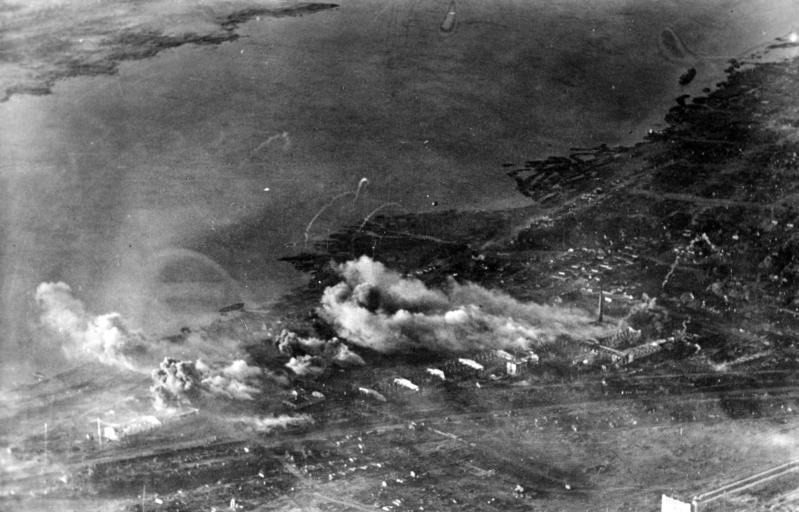
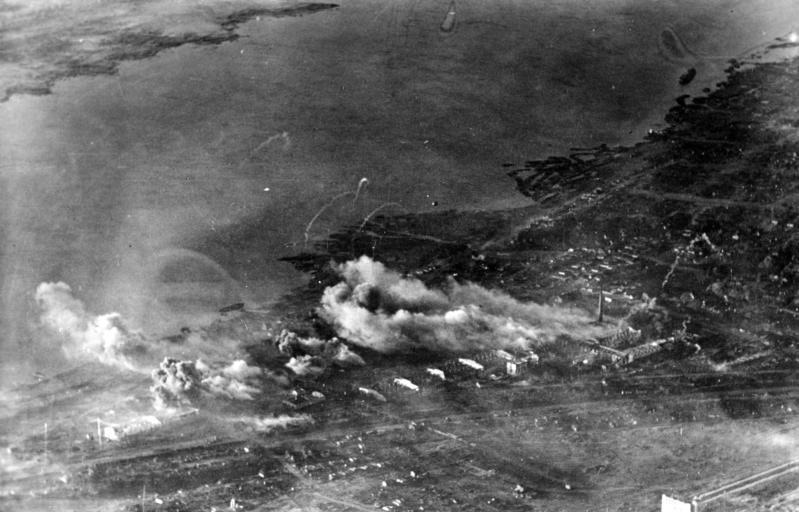
Aerial view of the devastated city of Stalingrad under aerial bombardment during the 1942-1943 battle

The Battle of Stalingrad from August 23, 1942, to February 2, 1943, killed approximately 1.9 million soldiers and civilians, 1.13 million Soviet casualties (including 478,000 dead), 800,000 Axis casualties (including 400,000 dead), and an estimated 40,000 civilians killed. It was the single bloodiest battle in human history and the turning point of World War II on the Eastern Front.

The Luftwaffe's opening bombardment on August 23, 1942, killed 40,000 civilians in a single day and reduced the city to rubble, which then became ideal defensive terrain. Soviet soldiers fought for individual buildings, floors, and rooms in what they called "Rattenkrieg", rat war. The average life expectancy of a Soviet soldier arriving in Stalingrad was 24 hours. Snipers like Vasily Zaitsev hunted Germans through the ruins while Chuikov's 62nd Army held a strip of riverbank sometimes only 300 meters deep. On November 19, 1942, Operation Uranus launched a million Soviet troops in a double envelopment that trapped Paulus's 6th Army, 330,000 German and Romanian soldiers, in a pocket the Soviets methodically crushed over two months. When Paulus surrendered on February 2, 1943, only 91,000 Germans remained alive. Of those, only 5,000 ever returned home. Stalingrad broke the myth of German invincibility and marked the beginning of the end for the Third Reich.

#2, Brusilov Offensive: The Forgotten Assault That Killed 2.4 Million
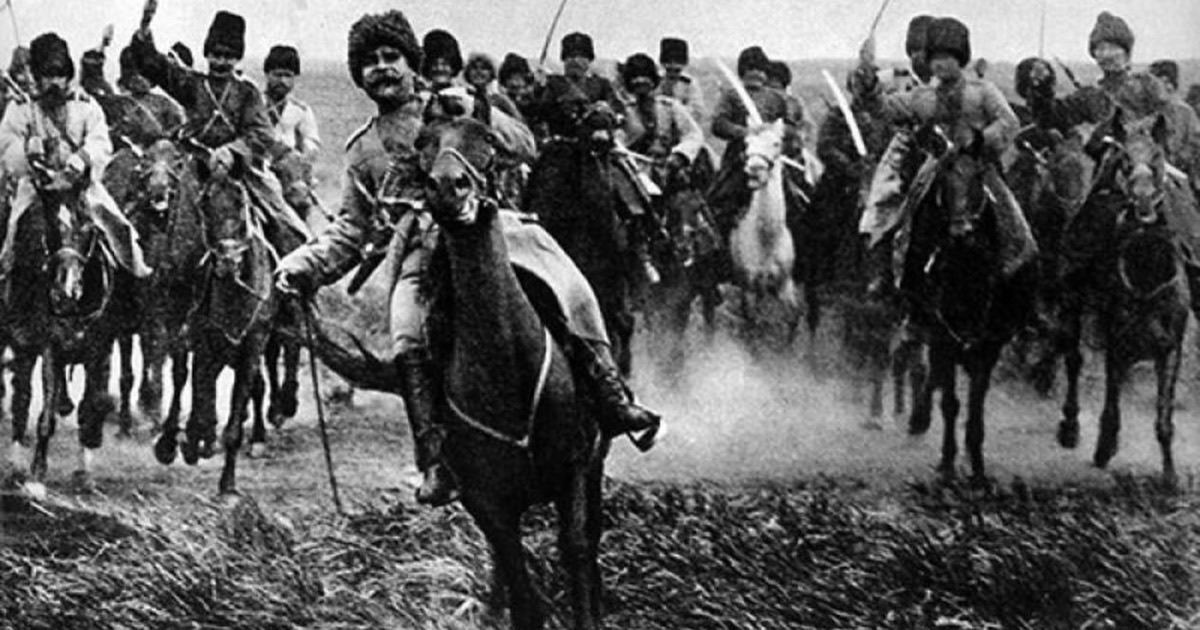
Russian soldiers charging into battle during the Brusilov Offensive on the Eastern Front in 1916

The Brusilov Offensive from June 4 to September 20, 1916, produced approximately 2.4 million total casualties, 500,000 Russian dead, 600,000 Russian wounded and captured, and 1.35 million Austro-Hungarian and German killed, wounded, or captured. General Alexei Brusilov's attack across a 300-mile front was the most successful Allied offensive of the entire war and the most lethal single operation in World War I history.

Brusilov's innovation was revolutionary: instead of concentrating on a narrow front (which defenders could predict and reinforce), he attacked along the entire Southwestern Front simultaneously, preventing the Austro-Hungarians from shifting reserves. Shock troops infiltrated weak points while artillery fired rolling barrages calibrated to maps rather than pre-registered targets, techniques that anticipated the stormtrooper tactics Germany would use in 1918. The Austro-Hungarian Fourth and Seventh Armies collapsed completely, with 400,000 prisoners taken in the first two weeks alone. Austria-Hungary never recovered, the Brusilov Offensive broke the back of the Dual Monarchy's military and set it on the path to dissolution. Romania entered the war on the Allied side (disastrously). Germany was forced to transfer 35 divisions from Verdun and the Somme, relieving pressure on France and Britain. Yet Brusilov's victory also bled the Russian army to exhaustion, contributing to the conditions that produced the Russian Revolution of 1917.

#1, Battle of the Dnieper: The 4-Month Bloodbath That Consumed 2.6 Million
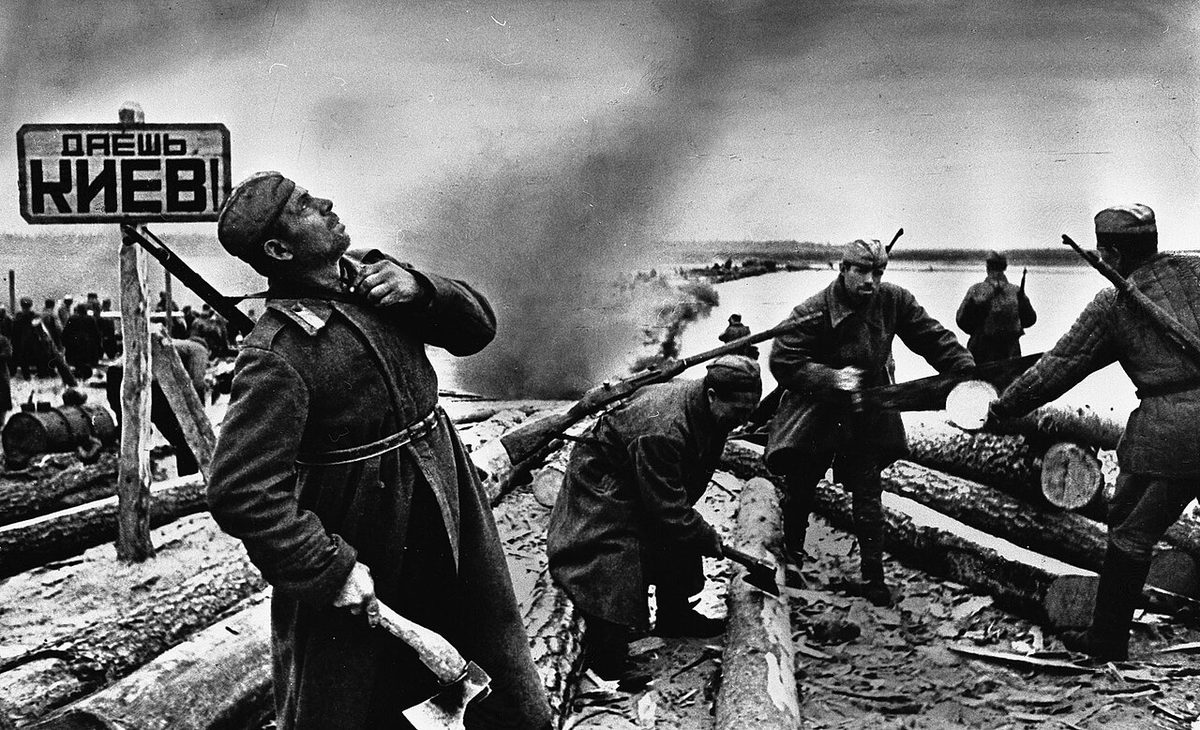
Soviet forces crossing the Dnieper River during the massive 1943 offensive that liberated eastern Ukraine

The Battle of the Dnieper from August 26 to December 23, 1943, produced approximately 2.6 million total casualties, 1.5 million Soviet (including 400,000 dead) and 1.1 million German killed, wounded, or captured, making it the deadliest single battle in the history of warfare. Nearly 4 million soldiers fought along a 750-mile front as the Red Army forced crossings of the Dnieper River, one of Europe's largest natural barriers, against the fortified "Panther Line" that Hitler ordered held at all costs.

The scale defies comprehension. Five Soviet fronts, 2.65 million troops, attacked simultaneously across the entire length of the Dnieper, using everything from pontoon bridges to improvised rafts made of doors and barrels under constant artillery and air attack. The first wave of river crossings suffered catastrophic casualties, with some units losing 90% of their strength in the water. Over 2,500 soldiers earned the Hero of the Soviet Union medal for the Dnieper crossings, the most awarded for any single operation in Soviet history. Kiev was liberated on November 6, and by December the Red Army had established a massive bridgehead that would serve as the springboard for the liberation of Ukraine and the advance into Romania and Poland. The Battle of the Dnieper broke the Panther Line, destroyed the last major German defensive position in the east, and ensured that the Eastern Front would continue its inexorable march toward Berlin.

Share this article

Share:

Recommended

Ace of The Skies: Can You Identify These Military Aircraft Throughout The Years?
Test Yourself

Ace of The Skies: Can You Identify These Military Aircraft Throughout The Years?

Can you identify these aircraft?

Take the Quiz

On This Day in Military History

January 11

British Forces Cross into Zululand, Anglo-Zulu War Begins (1879)

A British force of 15,000 under Lord Chelmsford crossed the Buffalo River into Zululand, beginning the Anglo-Zulu War. The invasion, launched without authorization from London and based on an expired ultimatum to King Cetshwayo, would produce one of the most shocking defeats in British military history at Isandlwana eleven days later, and one of its most celebrated defensive stands at Rorke's Drift.
1942, Japanese Forces Capture Kuala Lumpur

1912, First Use of Aerial Bombing in Combat

2002, First Detainees Arrive at Guantanamo Bay

See all 10 events on January 11

Get Military News & History in Your Inbox

Join thousands of readers receiving our weekly digest of military technology, history, and analysis.

Test Your Knowledge