#19 — Chieftain: The Cold War Sniper With Impenetrable Armor
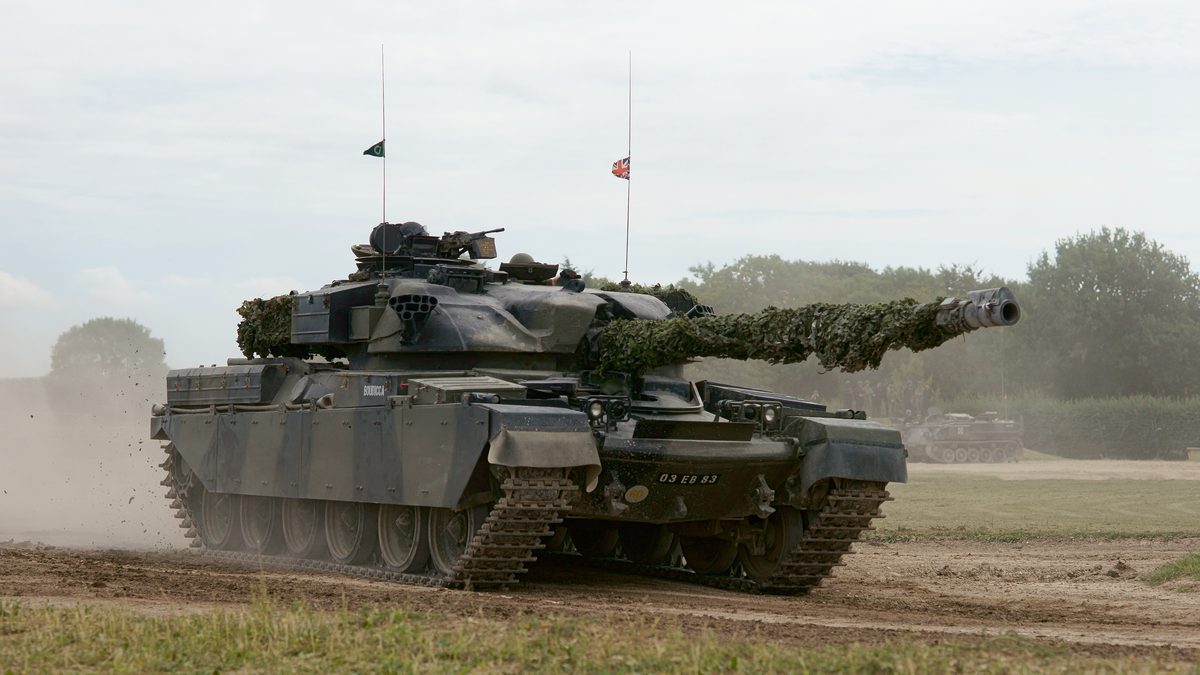
The Chieftain's 120mm L11A5 rifled gun was the most powerful tank cannon in NATO from 1966 to 1979 — its APDS round could penetrate over 300mm of steel at 2,000 meters, and its HESH round could scab lethal fragments off the interior of any Soviet tank's armor.
Britain designed the Chieftain around the hull-down doctrine: get behind a ridge with only the turret exposed and destroy the enemy at maximum range. Its turret featured 390mm of cast steel armor — the thickest on any NATO tank of its era. The driver's semi-reclined position kept the hull profile remarkably low. Over 2,265 were built, with Iran (now operating them as the "Mobarez") and Jordan as major export customers. Iranian Chieftains fought Iraqi T-62s in brutal engagements during the Iran-Iraq War, proving the design's lethality in actual armored warfare. The Chieftain's Achilles' heel was its Leyland L60 multi-fuel engine — underpowered and unreliable, it gave the 56-ton tank a disappointing top speed of 48 km/h. But in its intended role as a hull-down defensive sniper, the Chieftain was the most formidable piece of military equipment in Western Europe.