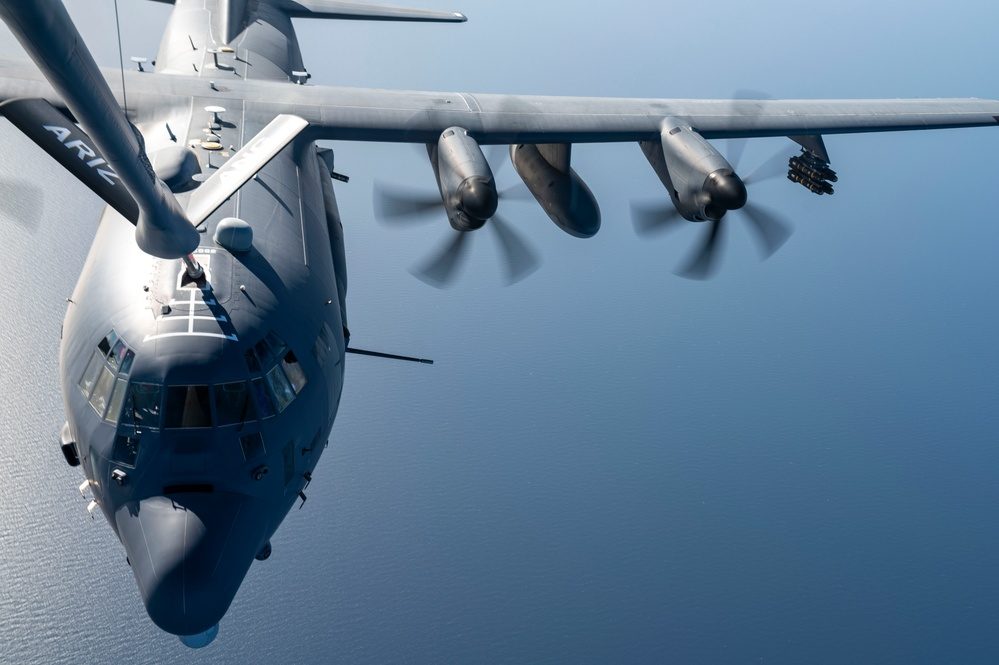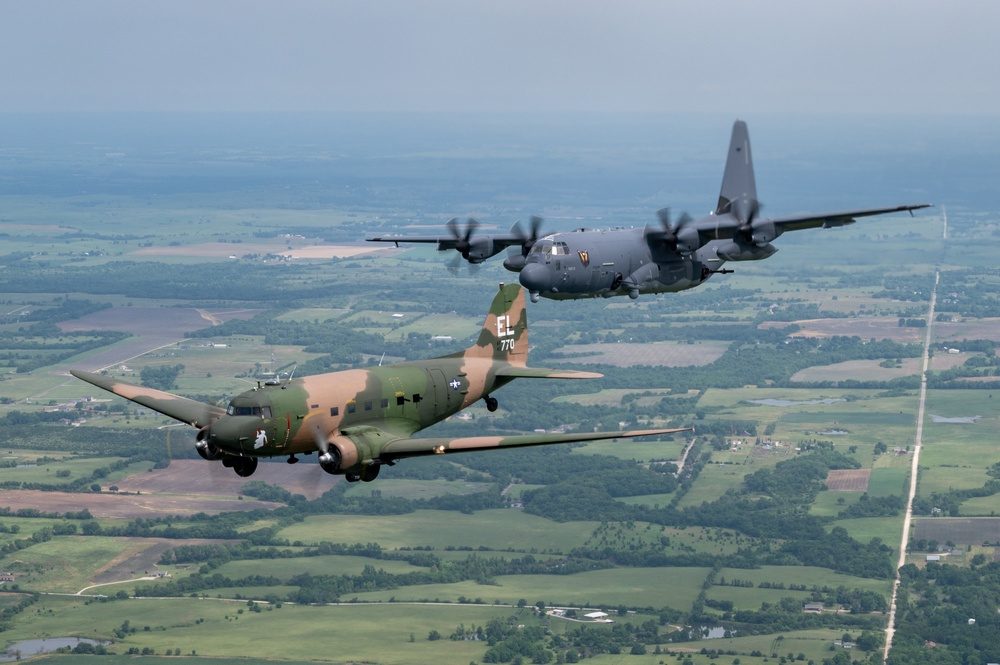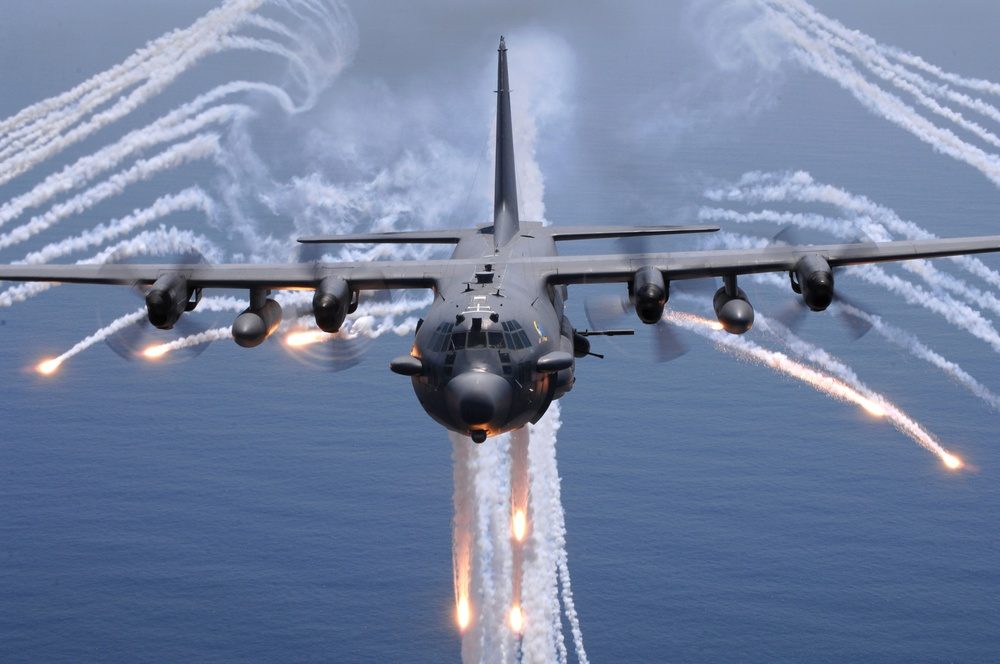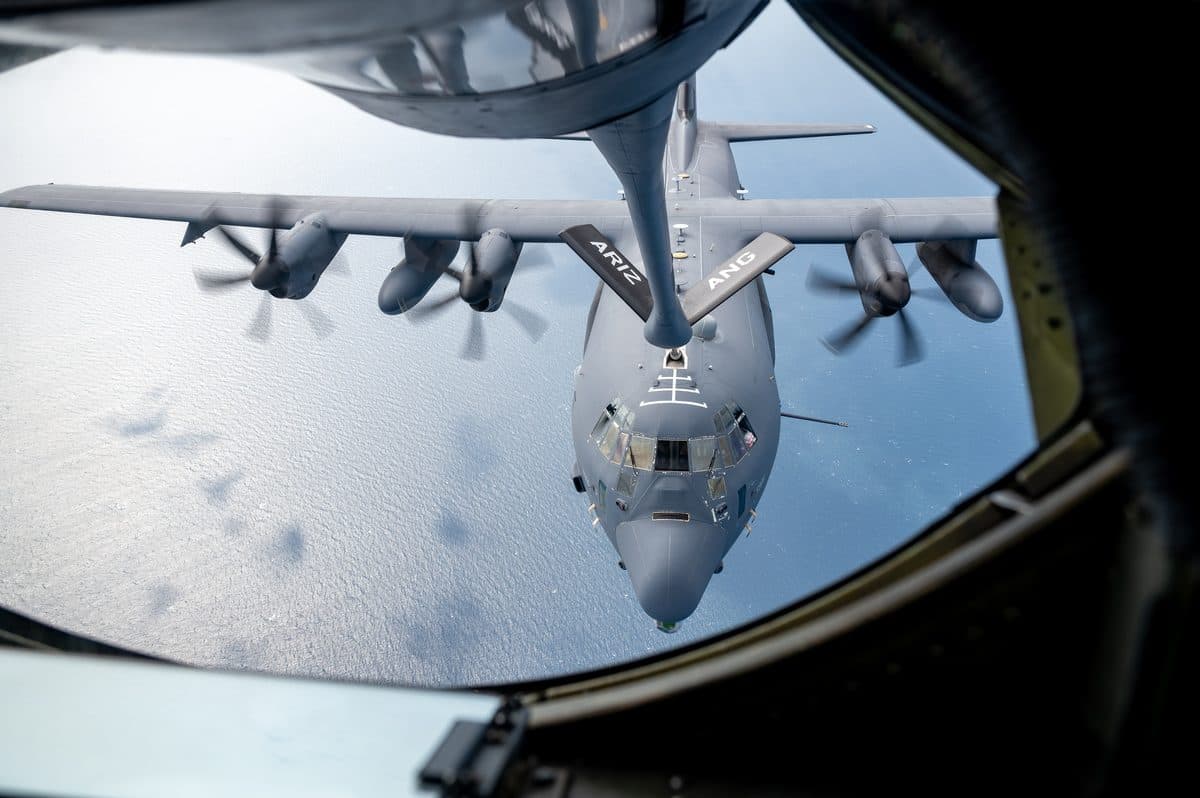

The flying gunship is a uniquely American concept: take a transport aircraft, mount heavy weapons on one side, and fly it in a continuous left-bank orbit around a target, raining fire for hours while sensors track every movement on the ground below. The idea was born in Vietnam, when a modified C-47 transport called "Puff the Magic Dragon" proved that a slow, circling aircraft with side-firing guns could provide devastatingly effective close air support. Six decades and four generations of gunships later, the concept has reached its most advanced form in the AC-130J Ghostrider, a digital, precision-guided weapons platform that bears little resemblance to its Vietnam-era ancestor except in one fundamental respect: it still flies in circles, and anything inside that circle dies.

The Gunship Lineage
The gunship concept began with the AC-47 Spooky in 1964, Project Gunship I. Ground troops in Vietnam nicknamed it "Puff the Magic Dragon" for the streams of tracer fire that poured from its side-firing miniguns at night. The AC-47 proved the concept but was limited by the C-47's payload and endurance.
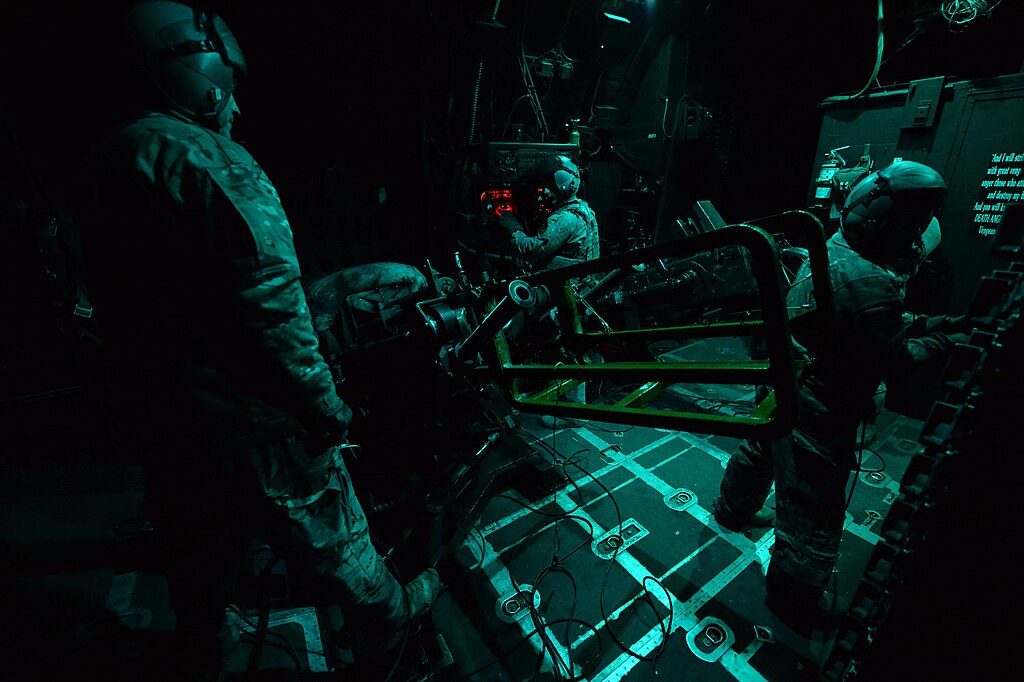
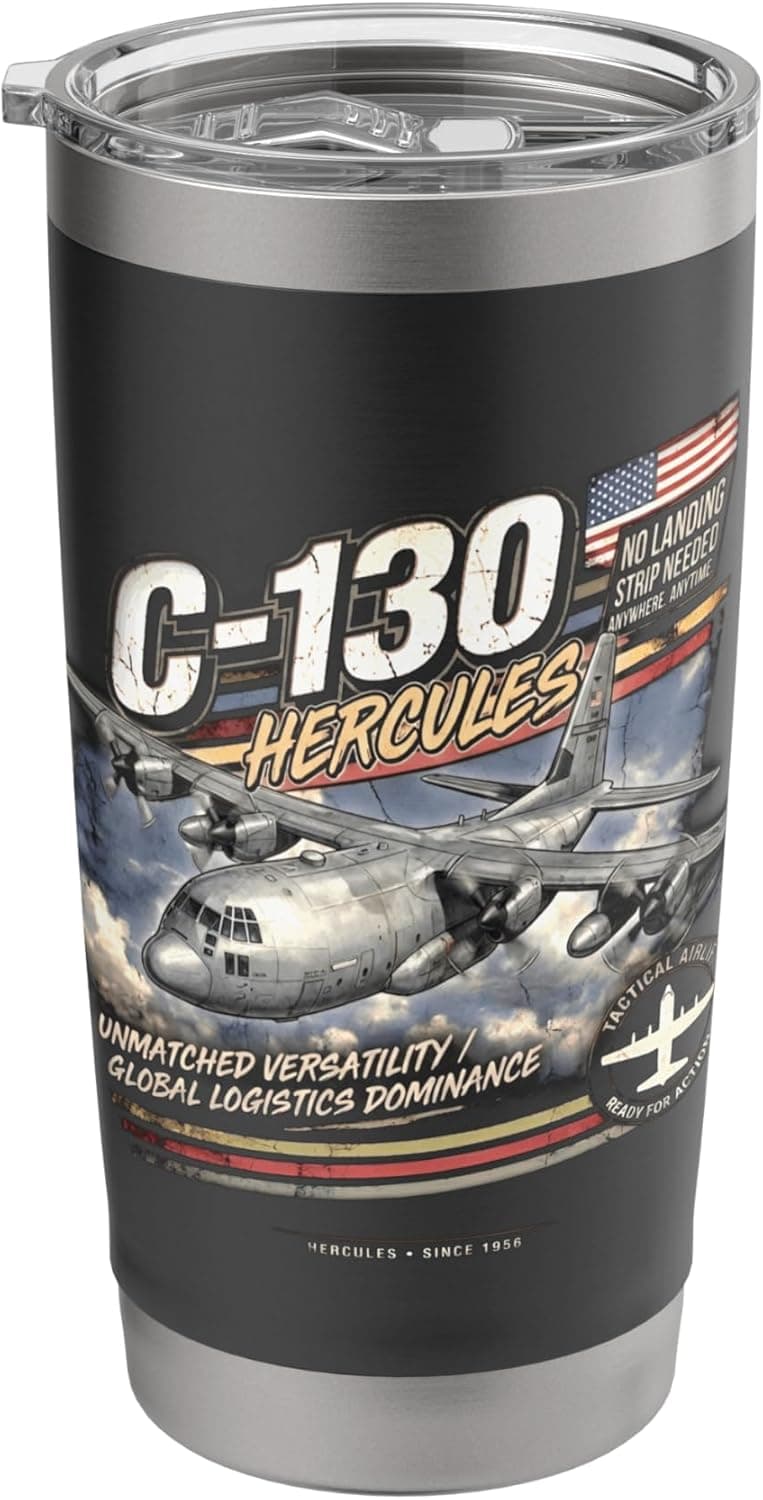
The AC-130A Spectre followed in 1967, built on the larger, more capable C-130 Hercules platform. Project Gunship II armed it with four miniguns and four 20mm Vulcan cannons, plus advanced sensors and searchlights. Subsequent upgrades added 40mm Bofors cannons and, eventually, a 105mm M102 howitzer, an artillery piece mounted inside a flying aircraft. The AC-130 became the most feared weapon in the Vietnam War's night sky.
The AC-130H Spectre served 46 years, the longest of any gunship variant, before retiring in 2015. The AC-130U Spooky II replaced the aging A-models in 1994, featuring a 25mm GAU-12 Equalizer, improved fire control, and increased ammunition capacity. It retired in 2020. The AC-130W Stinger II emerged from a 2007 SOCOM requirement, converting MC-130W transports with a Precision Strike Package in less than 18 months from prototype to combat deployment. It introduced the concept of precision-guided munitions on a gunship, Griffin missiles and Small Diameter Bombs alongside the traditional 30mm cannon.