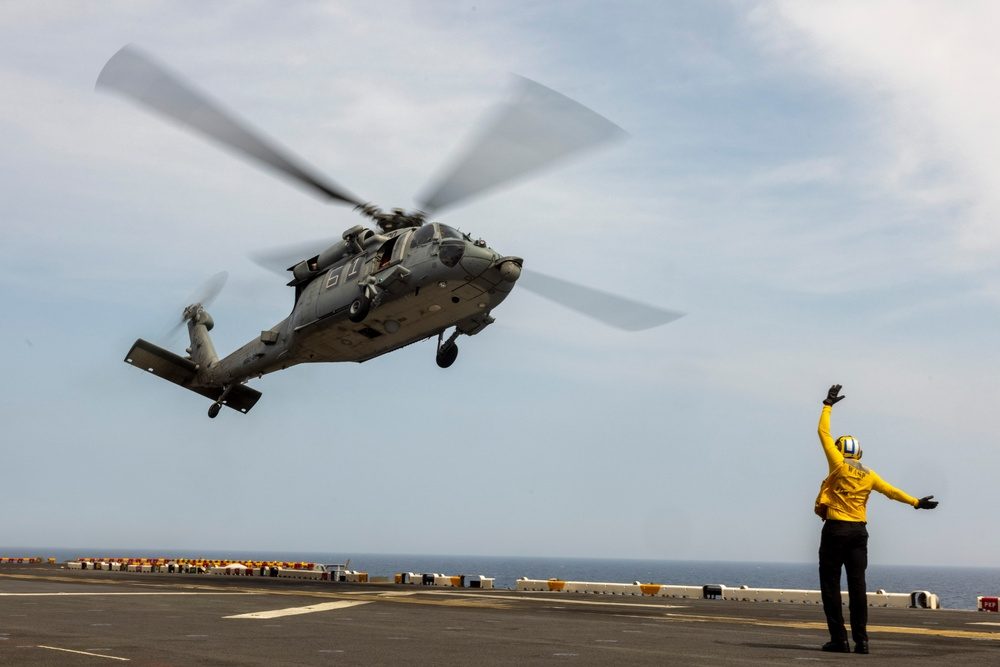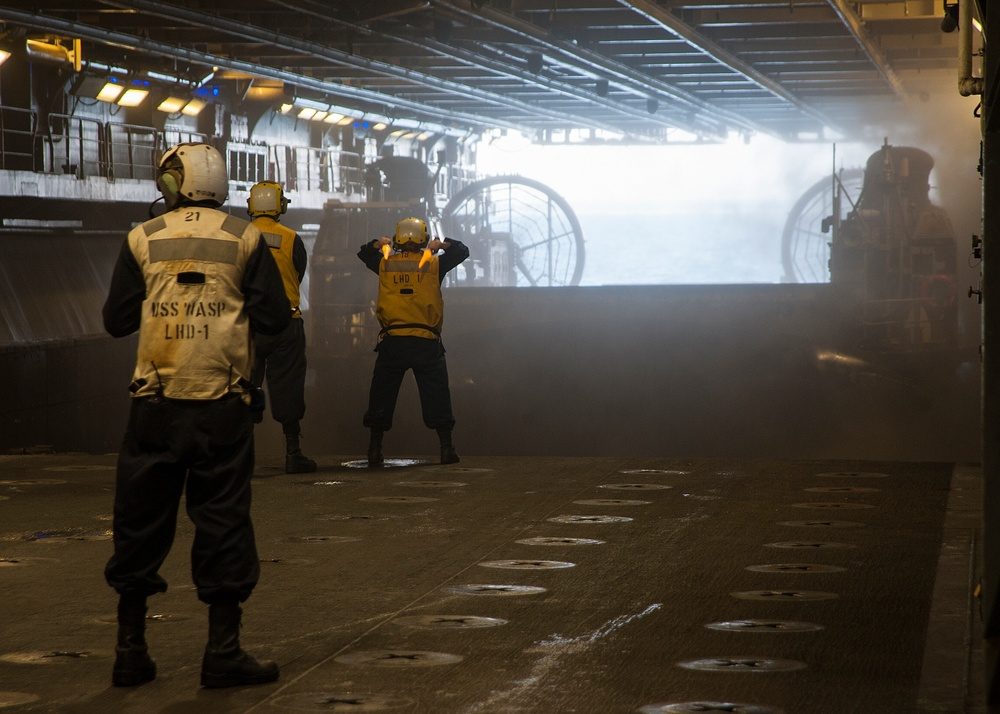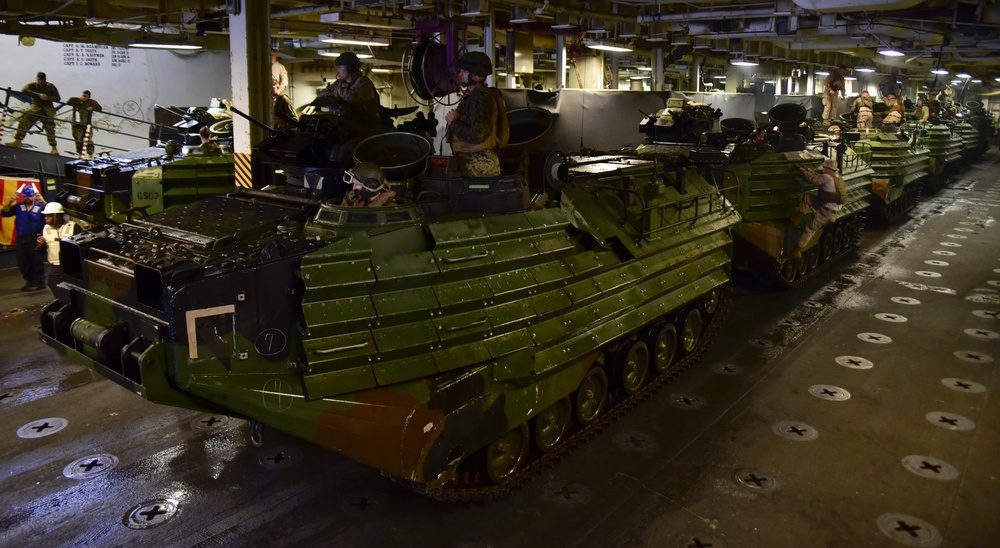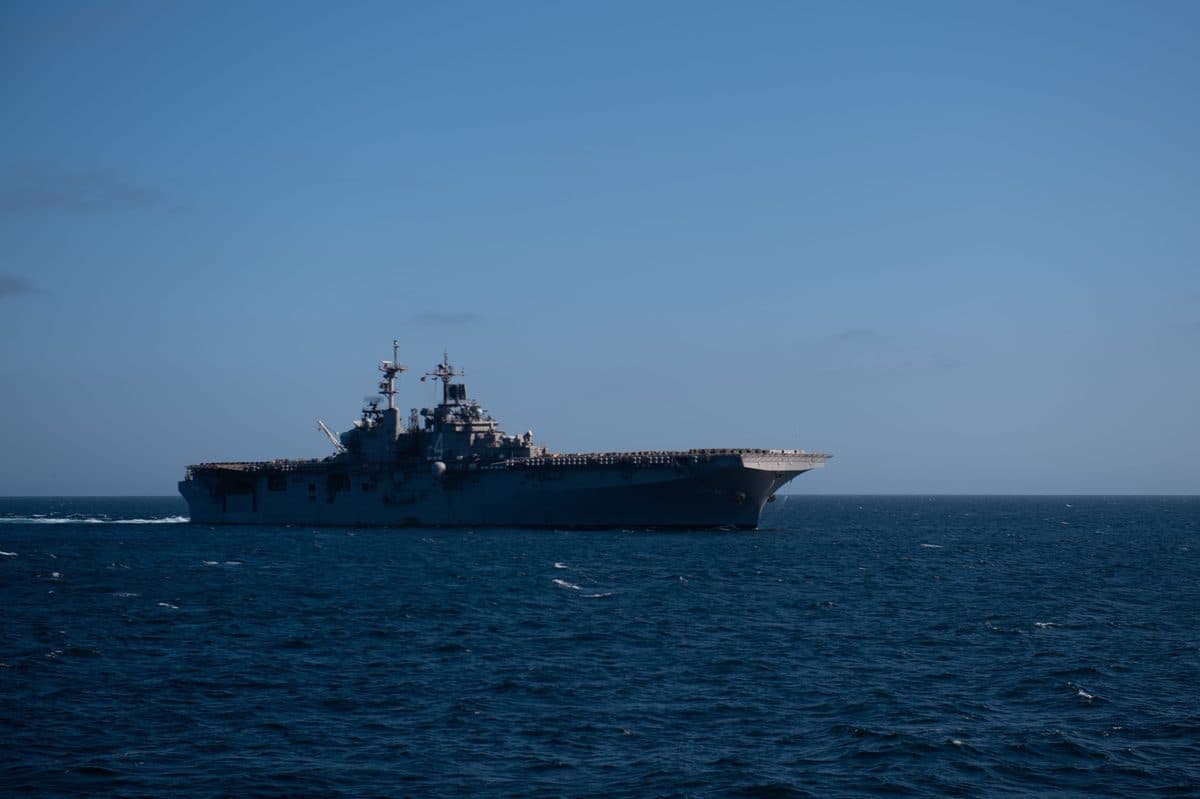

The United States Navy operates 11 nuclear-powered supercarriers, the most powerful warships ever built. But when the mission is to put Marines ashore on a hostile beach, the carrier stays offshore. The ship that does the actual work, launching helicopters, deploying landing craft, and carrying nearly 1,900 Marines with their tanks, trucks, and ammunition, is the Wasp-class amphibious assault ship. At 844 feet long and 40,500 tons, each Wasp-class Landing Helicopter Dock is larger than most countries' aircraft carriers. Eight were built between 1989 and 2009, and they remain the backbone of America's ability to project power from the sea to the shore. When loaded with F-35B stealth fighters instead of Marines, they become something even more versatile: light aircraft carriers that can operate independently anywhere in the world.
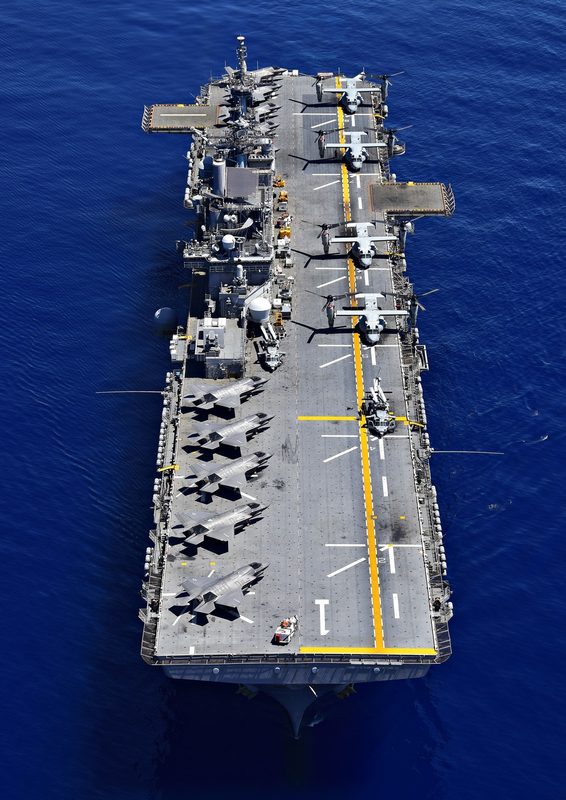
Purpose: The Ship That Does Everything
An amphibious assault ship is not a single-purpose vessel. It is a floating military base that combines the capabilities of an aircraft carrier, a troop transport, a vehicle ferry, a landing craft dock, and a hospital, all in one hull. The Wasp-class was designed to carry a Marine Expeditionary Unit of approximately 1,894 Marines and land them on a hostile shore using every available method: by air, by sea, and by hovercraft.
The flight deck operates helicopters and short-takeoff/vertical-landing aircraft. The well deck at the stern floods with seawater to launch landing craft and amphibious vehicles. The vehicle decks carry tanks, armored personnel carriers, trucks, and artillery. The ammunition magazines store everything the Marines need to fight once ashore. And if casualties occur, the ship's 600-bed hospital, with six operating rooms, provides medical care that would be the envy of many small cities.
The Ships
Eight Wasp-class ships were built by Ingalls Shipbuilding (now Huntington Ingalls Industries) in Pascagoula, Mississippi, replacing the earlier Tarawa-class. The average cost was approximately $750 million in 1989 dollars, roughly $1.6 billion today.