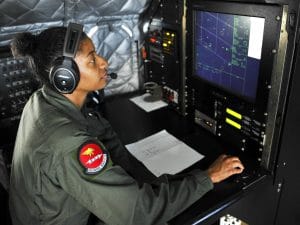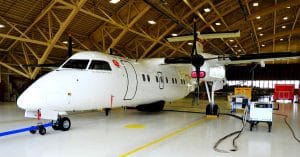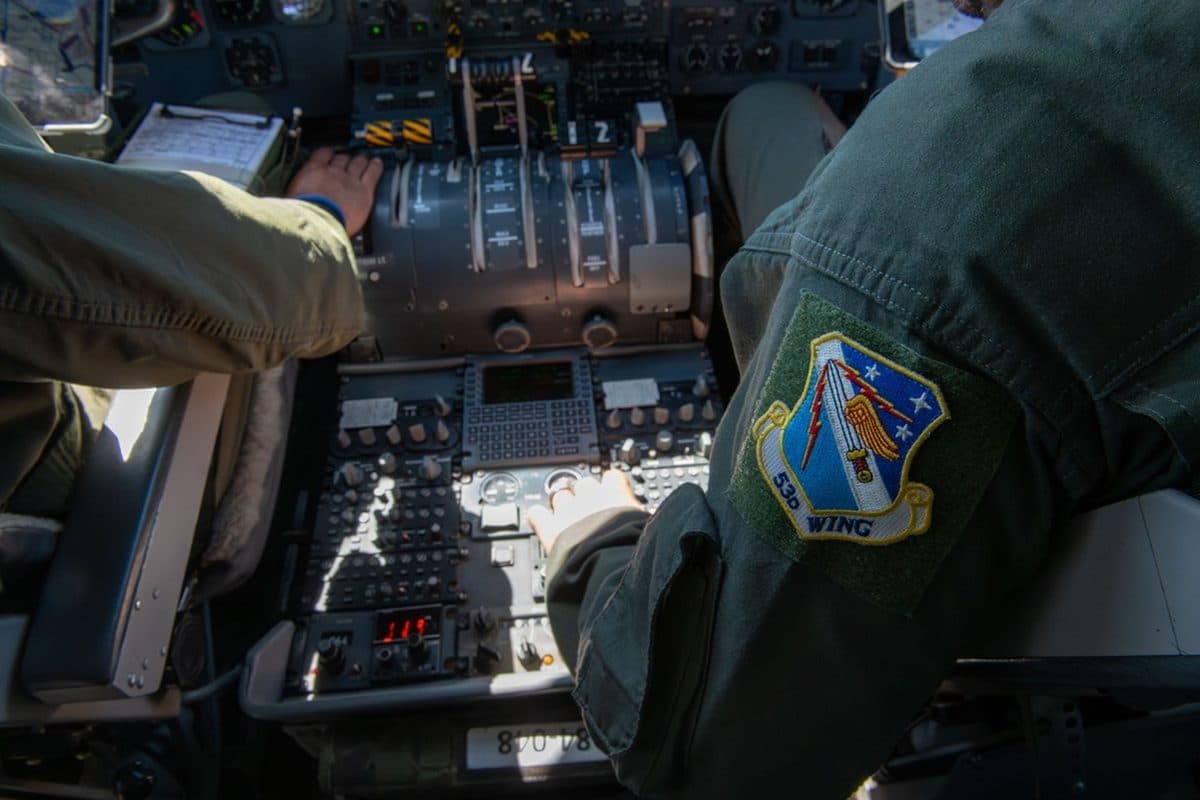

The E-9A Widget is one of the Air Force’s least flashy aircraft, but is still quite important to national security. The twin turboprop E-9A is primarily employed by the US Air Force to patrol waters around military research and training facilities. In the Gulf of Mexico especially, these aircraft are also used to clear waters of civilian vessels and aircraft during live missile launches and other dangerous military activities. Once the area is safe, the E-9A tracks the testing of air-to-air weapons systems. No other aircraft is so uniquely equipped to collect crucial evaluation, development and operational data for weapons designers.
Design:
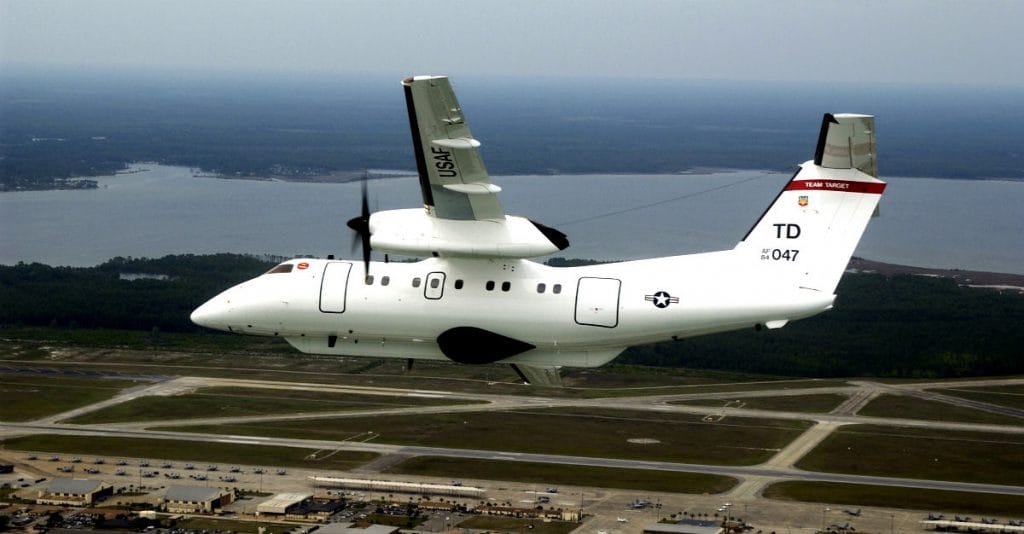
While not the most glamorous job in the Air Force, collecting telemetry and radio relays is critical to developing advanced weapons in the future and ensuring the reliability of our current arsenal. For such a job, the reliable E-9 medium-range turboprop is a solid choice. The designers derived the airframe from the Havilland “Bombardier” Dash, which is frequently used in short-haul civilian airline operations. With its ability to take off and land from short airfields, the E-9 can also operate from all sorts of isolated research facilities.
Radar Technology:
Equipped with the AN/APS-143(V)-1 Airborne Sea Surveillance Radar, this aircraft can detect the smallest dangers in the water at high-altitude. E-9’s can even detect a single person in a life preserve up to 25 miles out and sweep. With this unique capability, the range control plane can scan hundreds of square miles in a matter of minutes. All the data is sent directly to the nearest range safety officer who can then determine if the “downrange” area is safe for live-fire actions.
Missile Monitor:
Additionally in the evaluation mode, the E-9A is uniquely suited to monitoring high-speed missile tests. Its Airborne Telemetry Platform provides a beyond visual range, ultra-high frequency command initiate/destruct relay system to monitor weapon flight and missile profiles with incredible accuracy. The E-9 also constantly streams the telemetry to ground-based engineers and scientists in real-time, thanks to its datalink’s transfer rates of up to 10 Mbits/sec.