Skip to content
April 30:The Fall of Saigon51yr ago

Why the F-35 Is the Most Controversial Weapon System Ever Built (and Why It Might Also Be the Best)

Ryan Caldwell · · 12 min read
Save
Share:
U.S. Navy F-35C Lightning II performing a dramatic flight demonstration at an air show over Naval Air Station Corpus Christi
Ryan Caldwell
Ryan Caldwell

Defense Analysis Editor

Ryan Caldwell writes about military decision-making, failed programs, and the tradeoffs behind major defense choices. His work is focused on understanding why systems succeed or fail beyond headlines, promises, and initial expectations.

One point seven trillion dollars. That is the estimated total lifecycle cost of the F-35 Lightning II program, covering development, procurement of more than 3,000 aircraft for three U.S. services and international partners, and operation and sustainment through 2088. It is, by any measure, the most expensive weapons program in human history. More than the Apollo program adjusted for inflation. More than the Manhattan Project. More than every other fighter aircraft program in the American inventory combined.

And it might be worth every cent.

Or it might be the single greatest example of defense procurement dysfunction ever produced by the Pentagon. The answer depends on which set of facts you emphasize, and the F-35 debate has generated enough facts, and enough spin, to support almost any conclusion. The aircraft has been called a flying disaster, a budget black hole, a jack-of-all-trades that masters none, and a machine so troubled that its own test pilots damned it. It has also racked up an air-to-air kill, conducted stealth strike missions in contested airspace, been adopted by 19 nations, and demonstrated sensor fusion capabilities that no other fighter on Earth can match. Both narratives are true. Neither tells the whole story.

The Case Against: Cost, Delays, and the Maintenance Problem

The F-35 program has been over budget and behind schedule since before it produced its first flying prototype. The Joint Strike Fighter competition, which Lockheed Martin won in 2001, was supposed to deliver a common airframe across three variants, the conventional-takeoff F-35A for the Air Force, the short-takeoff/vertical-landing F-35B for the Marines, and the carrier-capable F-35C for the Navy, at a unit cost competitive with fourth-generation fighters. The original estimate was approximately $50 million per aircraft in then-year dollars. The program was supposed to achieve initial operational capability by 2012.

None of that happened. First flight didn't occur until 2006. The F-35B's STOVL system required a fundamental redesign that added years to the schedule and billions to the budget. Software development, the F-35 runs more than 8 million lines of code, making it one of the most complex software systems ever deployed on a combat aircraft, fell behind repeatedly. The aircraft didn't achieve its first IOC (the Marine Corps F-35B) until 2015, and the Air Force's F-35A followed in 2016. The Navy's F-35C didn't reach IOC until 2019. Full-rate production wasn't approved until 2024, 17 years after first flight.

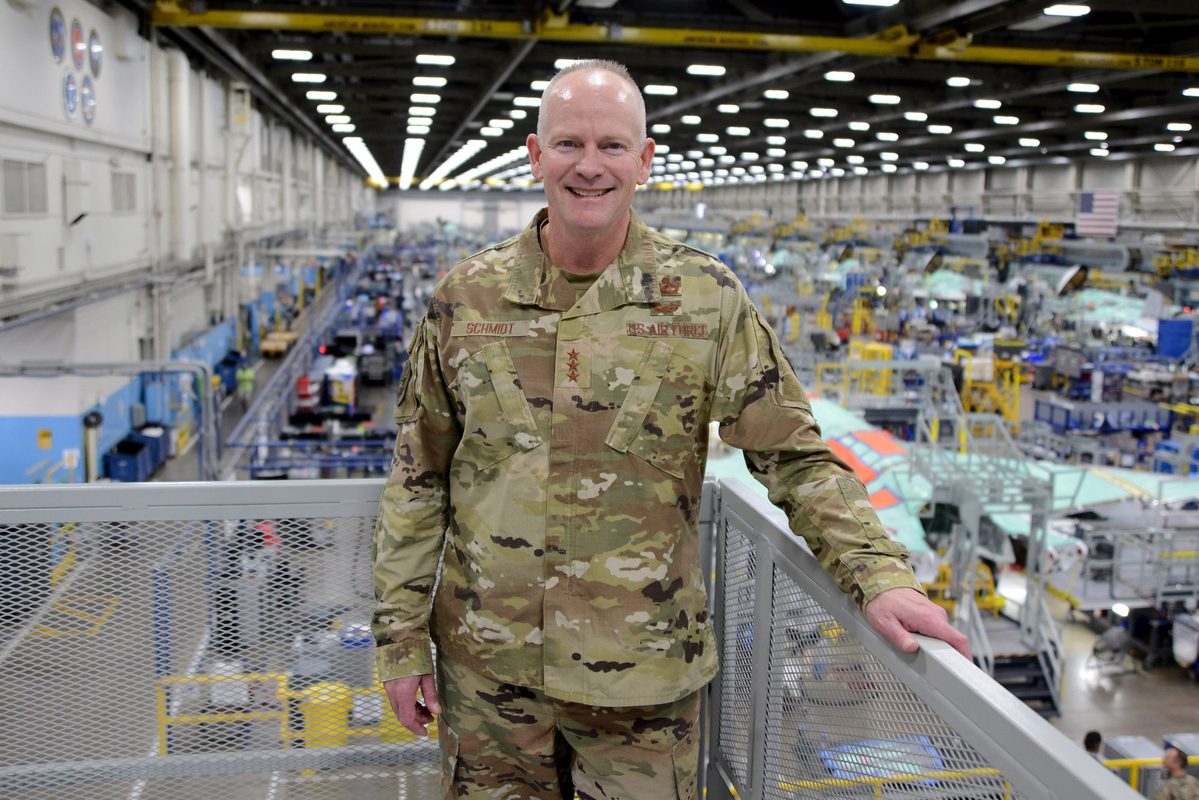
F-35 Joint Program Executive Officer overlooking the Lockheed Martin F-35 assembly line at Air Force Plant 4 in Fort Worth, Texas
The F-35 assembly line at Lockheed Martin's Air Force Plant 4 in Fort Worth, Texas. The 7.5 million square foot facility operates three shifts, 24 hours a day, building F-35s for the U.S. military and international partners. The sheer scale of the production line reflects the program's ambition, and its cost.

The unit cost eventually came down, the F-35A reached approximately $78 million per aircraft in Lot 14 procurement, but the development cost overruns were staggering. The original development budget of $34 billion grew to more than $55 billion. Total acquisition cost, including procurement of all planned aircraft, was estimated at $398 billion in 2023 dollars. And the sustainment tail, keeping the fleet flying for decades, is where the truly eye-watering numbers live. Operating and maintaining the F-35 fleet through its planned service life accounts for the largest share of that $1.7 trillion lifecycle figure.

Maintenance costs remain one of the program's most persistent criticisms. The F-35A's cost per flight hour was approximately $36,000 in 2023, down from over $40,000 in previous years, but still roughly twice the cost of the F-16 it's replacing. The aircraft's stealth coatings require careful maintenance that fourth-generation fighters don't need. The F135 engine, built by Pratt & Whitney, has suffered from durability issues that have grounded aircraft and driven up maintenance requirements. Mission capable rates, the percentage of the fleet available for tasking on any given day, have consistently fallen below the Pentagon's targets, hovering around 55 percent for much of the fleet's operational life.

The operational criticisms extend to performance. The F-35 is not the fastest fighter in the sky, its top speed of Mach 1.6 is slower than the F-15, F-16, and F/A-18, all of which it's meant to replace in part. It cannot sustain supersonic flight for extended periods without damaging its stealth coating. Early testing revealed that the F-35A was outmaneuvered in visual-range dogfighting by a Block 40 F-16D, a 30-year-old design, leading to headlines about the most expensive fighter in history losing to its predecessor.

The Case For: Sensor Fusion and the Information Advantage

Everything in the previous section is factual. And, according to F-35 proponents, including many of the pilots who fly it, everything in the previous section misses the point entirely.

The F-35 was never designed to be the fastest, most maneuverable, or cheapest fighter in the sky. It was designed to be the most situationally aware, to see the enemy before the enemy sees it, to process more information faster than any other combat aircraft, and to share that information across a network of allied platforms in real time. The F-35's value proposition isn't about individual aircraft performance in a dogfight. It's about what the aircraft knows and what it can tell the rest of the force.

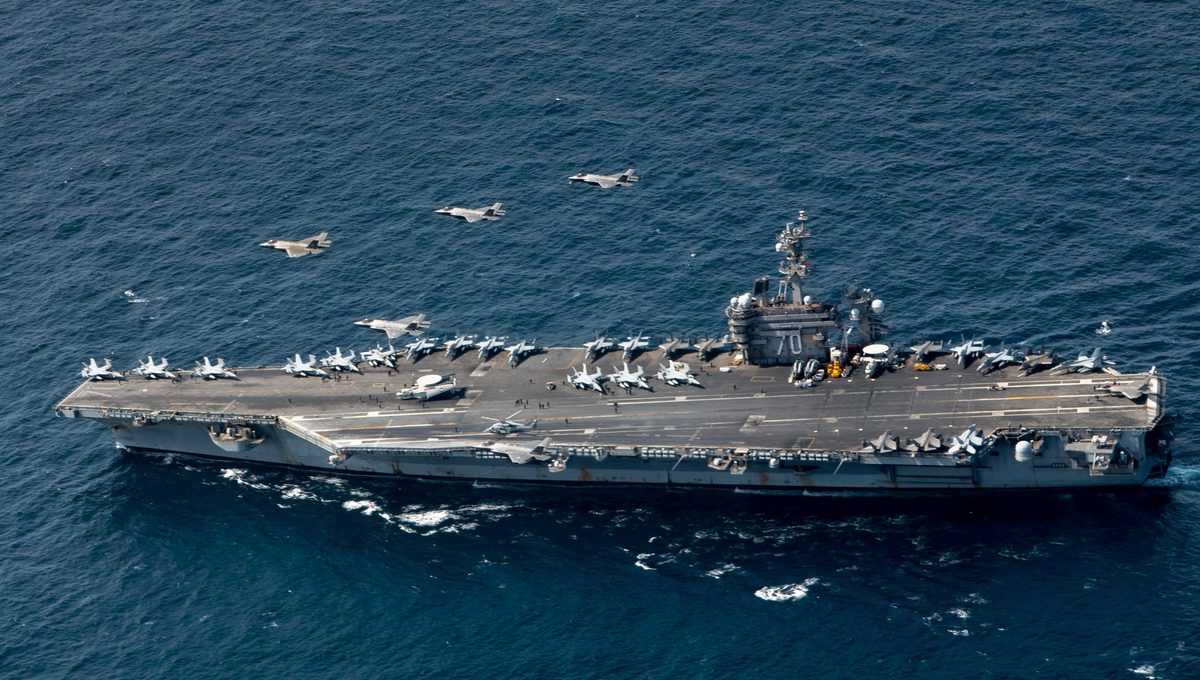
F-35 Lightning II aircraft from the U.S. Air Force, U.S. Navy, and Republic of Korea Air Force flying in formation over the aircraft carrier USS Carl Vinson
F-35 Lightning IIs from the U.S. Air Force, U.S. Navy, and Republic of Korea Air Force fly in formation over the USS Carl Vinson during Freedom Shield 2025. The F-35's greatest strength isn't any single capability, it's the ability to fuse sensor data across platforms and services, creating a shared tactical picture that no fourth-generation fighter can replicate.

The F-35's sensor fusion system combines data from its AN/APG-81 AESA radar, the AN/AAQ-37 Distributed Aperture System (six infrared cameras providing 360-degree coverage), the AN/AAQ-40 Electro-Optical Targeting System, and the AN/ASQ-239 electronic warfare suite into a single integrated tactical picture displayed on the pilot's helmet-mounted display. The pilot doesn't look at separate radar screens and infrared displays, the aircraft's computers merge everything into one coherent picture of the battlespace, with threats identified, classified, and prioritized automatically.

This is the capability that pilots consistently describe as transformative. An F-35 pilot approaching contested airspace knows where every threat is, surface-to-air missile sites, enemy fighters, electronic warfare emitters, before those threats know the F-35 is there. The aircraft's stealth design means it can operate closer to enemy defenses than any fourth-generation fighter, gathering intelligence and distributing targeting data to other platforms while remaining undetected. In exercises, F-35 pilots have reported achieving kill ratios of 20:1 or better against fourth-generation opponents, not because the F-35 outflies them, but because it outsees them.

The dogfighting criticism illustrates the disconnect between the F-35's critics and its operators. Yes, an F-16 outmaneuvered an F-35 in a close-range visual engagement during a 2015 test. But F-35 pilots argue that this scenario is essentially irrelevant. If an F-35 is in a visual-range dogfight, something has gone catastrophically wrong, the aircraft is designed to detect and engage threats at ranges where maneuverability doesn't matter. You don't need to out-turn your opponent if you've already killed him from 60 miles away with an AIM-120 he never saw coming.

Combat Proven: The Record So Far

The F-35 is no longer a theoretical capability. Israel's F-35I "Adir" became the first fifth-generation stealth fighter to see combat when it began flying operational missions over Syria and Lebanon. The Israeli Air Force has used the F-35I for strike missions against targets in Syria, reportedly penetrating integrated air defense networks without being detected. In 2024, an Israeli F-35 scored the type's first confirmed air-to-air kill, though the specific details remain classified, making the Lightning II a combat-proven air superiority platform as well as a strike aircraft.

The U.S. military has deployed F-35s to combat zones in the Middle East, with aircraft flying missions from both land bases and aircraft carriers. While the U.S. hasn't disclosed specific combat engagements in the same detail as Israel, F-35s have conducted strike operations in Syria and participated in deterrence operations in the Pacific. The aircraft's combat debut has been, by most accounts, operationally successful, validating the sensor fusion and stealth capabilities that its designers promised, even if the maintenance and sustainment challenges remain unresolved.

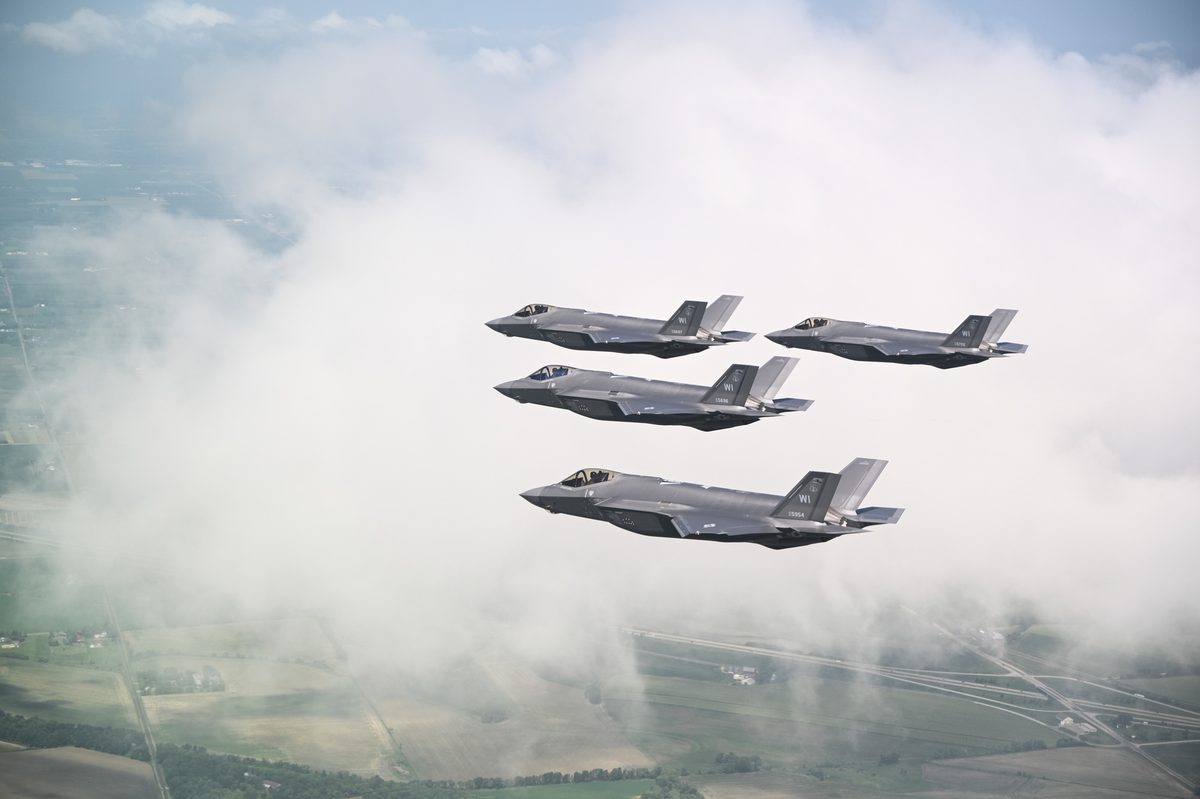
Multiple F-35 Lightning II aircraft flying in formation through clouds over rural Wisconsin during a training mission
F-35 Lightning IIs fly in formation over Wisconsin during a collaborative mission between Air National Guard units. With more than 1,000 aircraft delivered worldwide and 19 nations operating the type, the F-35 is building the largest stealth fighter fleet in history, a scale that no competitor can match.

The international adoption of the F-35 is itself an argument for the program's success. Nineteen nations have ordered or are operating the F-35, including the United Kingdom, Italy, Australia, Japan, South Korea, Norway, and Israel. Total production exceeds 1,000 aircraft delivered as of 2025, with orders for more than 3,600 planned. This scale drives down unit cost, creates a massive interoperability advantage among allied air forces, and ensures a production and sustainment ecosystem that will support the aircraft for decades. No other fifth-generation fighter program, not China's J-20, not Russia's Su-57, has achieved anything close to this level of international adoption.

Block 4 and TR-3: The Software Problem That Won't Die

Just as the F-35 was building momentum through combat validation and international sales, the program hit its most serious obstacle since the F-35B redesign: the Technology Refresh 3 (TR-3) hardware upgrade and the Block 4 software package that runs on it.

TR-3 replaces the F-35's core processor with a more powerful computing system needed to run Block 4 software, which adds new weapons, new sensor modes, and enhanced electronic warfare capabilities. The upgrade was supposed to be straightforward. It was anything but. The new hardware experienced severe reliability problems, and the Block 4 software, which relies on that hardware, fell years behind schedule and billions over budget.

By 2024, the situation was dire. The Government Accountability Office reported that the Block 4 effort was approximately $6 billion over its original budget. The Pentagon's own operational testing office described early TR-3 software as "predominantly unusable," with critical deficiencies that prevented normal flight operations. Lockheed Martin delivered aircraft with TR-3 hardware installed but couldn't deliver functioning Block 4 software to run on it, resulting in new-build aircraft that were less capable than the older Block 3F jets they were supposed to replace.

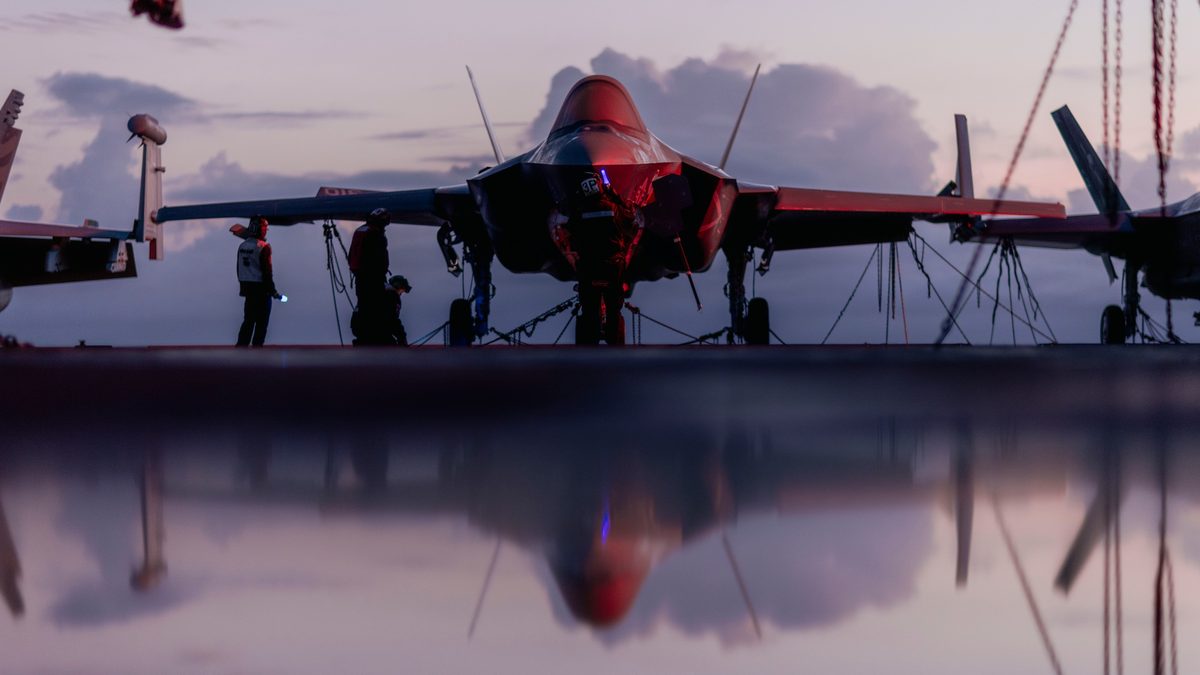
Sailors conducting maintenance on an F-35C Lightning II on the flight deck of the USS George Washington in the Pacific Ocean
Sailors maintain an F-35C aboard the USS George Washington during Pacific operations. The F-35's maintenance requirements, including its stealth coating upkeep and complex engine servicing, drive a cost per flight hour roughly twice that of the F-16 it replaces, a gap the program has struggled to close.

The Block 4 debacle reinforced every criticism the F-35's detractors had leveled for two decades: the program was managed poorly, Lockheed Martin overpromised and underdelivered, and the concurrency strategy, building hundreds of aircraft before testing was complete, then retrofitting them, was fundamentally flawed. The software problems also created a practical crisis for the fleet: with TR-3 aircraft arriving in a degraded capability state, the military services had to decide whether to accept lower-capability jets or halt deliveries until the software was fixed. The Pentagon chose to halt deliveries temporarily, creating a production gap that disrupted Lockheed Martin's supply chain and delayed aircraft for international customers.

The Verdict: Good Aircraft, Bad Program

The most honest assessment of the F-35 requires holding two contradictory truths simultaneously. The aircraft itself, the machine that flies, fights, and generates information dominance across the battlespace, is genuinely excellent. Pilots who have flown both the F-35 and its predecessors consistently describe the sensor fusion as revolutionary. Its combat record, though limited, validates the design concept. Its stealth performance meets or exceeds requirements. Its international adoption is unmatched. No credible military analyst believes the F-35 is a bad airplane.

The program that produced it, however, is a case study in everything that can go wrong with defense acquisition. The concurrency strategy, building aircraft before the design was finalized, added tens of billions in retrofit costs. The three-variant approach imposed engineering compromises on each version that a dedicated design would have avoided. The software development consistently underestimated the complexity of the task. Management failures, contractor incentive structures that rewarded cost growth, and political imperatives that spread production across as many congressional districts as possible all contributed to a program that took twice as long and cost twice as much as originally planned.

The question isn't whether the F-35 is a good fighter. It is. The question is whether a better-managed program could have delivered the same capability for half the cost and half the time, and the answer, almost certainly, is yes. The $1.7 trillion price tag isn't the cost of the F-35's capabilities. It's the cost of those capabilities plus 25 years of institutional dysfunction, managerial failures, and political compromises that inflated the bill far beyond what the technology required.

Whether the F-35 is "worth it" depends on what you're comparing it to. Compared to having no fifth-generation stealth fighter while China fields hundreds of J-20s, the F-35 is obviously worth every dollar. Compared to what a disciplined acquisition program might have delivered, the F-35 represents hundreds of billions of dollars that could have been spent on other capabilities, more ships, more munitions, better training, that the military desperately needs. The aircraft succeeded despite the program, not because of it. And that distinction matters more than any headline about the most expensive weapon system in history.

Share this article

Share:

Recommended

Ace of The Skies: Can You Identify These Military Aircraft Throughout The Years?
Test Yourself

Ace of The Skies: Can You Identify These Military Aircraft Throughout The Years?

Can you identify these aircraft?

Take the Quiz

On This Day in Military History

April 10

Loss of USS Thresher (1963)

The nuclear-powered submarine USS Thresher sank during deep-diving tests 220 miles east of Cape Cod, killing all 129 crew and shipyard personnel aboard. A leak in a silver-brazed pipe joint caused cascading system failures. The disaster led to the creation of the SUBSAFE program, the most rigorous submarine safety protocol in history.

1862, Siege of Fort Pulaski: Rifled Artillery Revolution

See all 11 events on April 10

Get Military News & History in Your Inbox

Join thousands of readers receiving our weekly digest of military technology, history, and analysis.

Test Your Knowledge