Alex Carter writes about modern warfare, emerging military technology, and how doctrine adapts to new tools. His work focuses on what changes in practice -- command, control, targeting, and risk -- when systems like drones and autonomous platforms become routine.
A wounded American airman wedged into a crack in an Iranian mountainside. IRGC troops closing in. No visual contact. No GPS lock. And then, from 40 miles away, the CIA picked up his heartbeat.
That's the official story behind Ghost Murmur, a classified quantum sensing tool that the U.S. government says detected the faint magnetic signature of a human heart beating inside a mountain, in a country the U.S. is actively at war with, from a distance that most physicists say is flatly impossible.
President Trump confirmed the tool's existence to reporters. CIA Director John Ratcliffe said the airman was "invisible to the enemy, but not to the CIA." And 155 aircraft launched in a single night to bring one man home.
Whether Ghost Murmur is a genuine technological breakthrough or the most brilliant psyop in a generation, this is a story worth understanding.
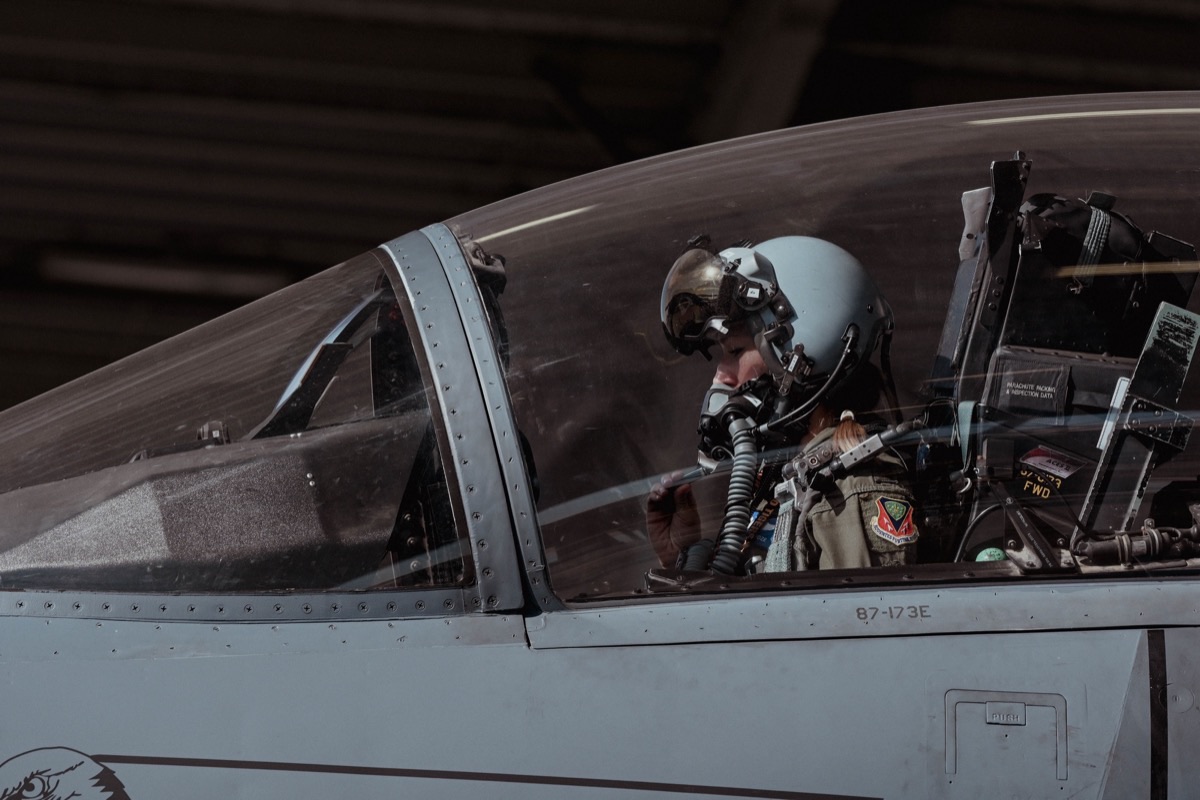
The rear cockpit of an F-15E Strike Eagle, where the weapons systems officer manages sensors, targeting, and electronic warfare. It was a WSO operating from this seat who ended up hiding in an Iranian mountain after his aircraft was shot down on April 3, 2026.
On April 3, 2026, an F-15E Strike Eagle from the 494th Fighter Squadron was conducting strikes on Iranian nuclear facilities when a shoulder-fired missile found its mark. Both crew members ejected successfully. The pilot was recovered relatively quickly through conventional extraction.
The weapons systems officer was not so lucky.
Operating under the callsign "Dude 44 Bravo," the WSO was wounded on landing and found himself deep in hostile territory with IRGC search teams already mobilizing. He located a narrow crack in the side of a mountain and squeezed inside, activating his Boeing Combat Survivor Evader Locator (CSEL) beacon.
The CSEL transmitted his general area to friendly forces, but the signal wasn't precise enough for a safe extraction. For the next 48 hours, American intelligence assets worked to narrow down his exact position while IRGC patrols scoured the mountainside.
That's when, according to multiple U.S. officials, the CIA activated Ghost Murmur.
What Is Ghost Murmur and How Does It Supposedly Work?
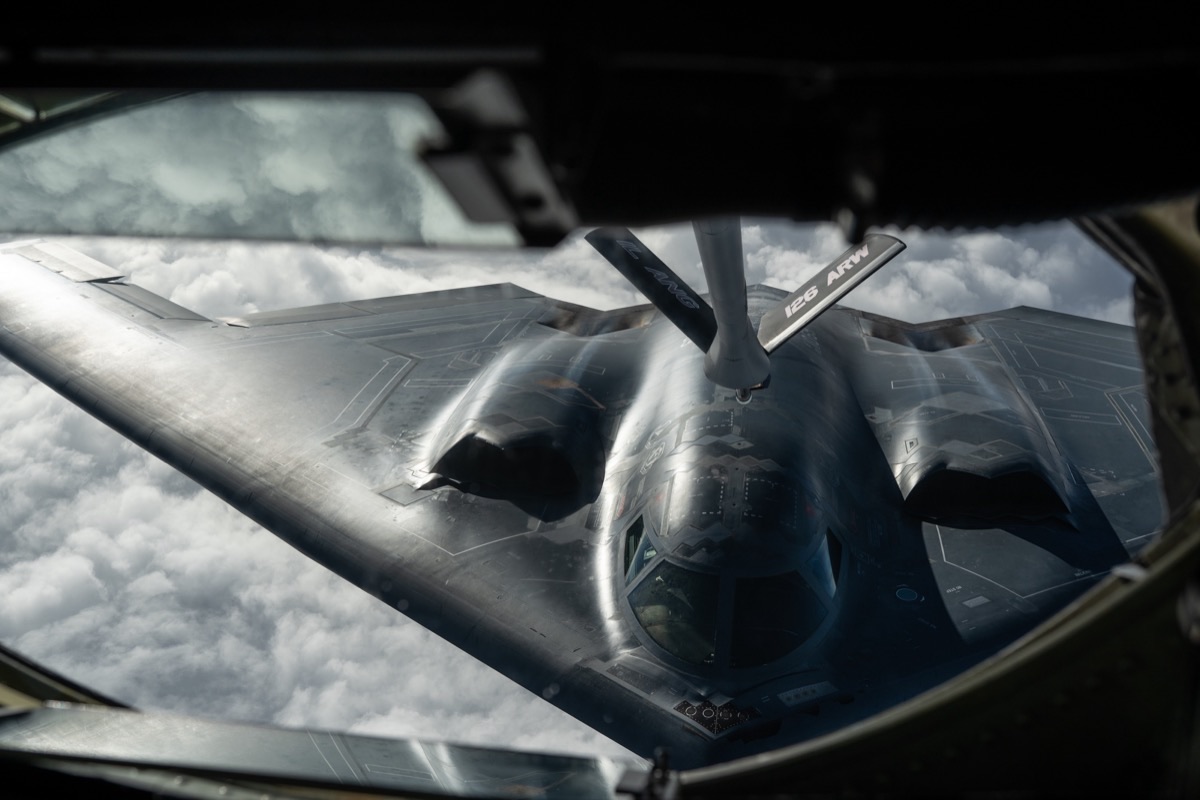
The B-2 Spirit, one of Lockheed Martin's Skunk Works' most famous creations, represents the kind of classified "impossible" technology that Ghost Murmur's developers reportedly built on. Skunk Works has a long history of delivering capabilities that seemed beyond the limits of physics at the time.
Ghost Murmur is described as a long-range quantum magnetometry system built by Lockheed Martin's legendary Skunk Works division. It reportedly combines two technologies that, on their own, are well-documented: quantum sensors and AI-driven signal processing.
Here's the basic concept. The human heart generates an extremely faint magnetic field, roughly one billionth the strength of Earth's magnetic field. Under laboratory conditions, scientists have been measuring these cardiac magnetic fields since the 1960s using devices called magnetocardiographs. But those measurements require the sensor to sit centimeters from the chest, inside a magnetically shielded room that blocks outside interference.
Ghost Murmur supposedly does this at 40 miles, in open terrain, with no shielding whatsoever.
The system reportedly uses atoms held in quantum superposition states that are "exquisitely sensitive to external magnetic disturbances." The AI component then filters the signal, isolating a single human heartbeat from the planet's magnetic field, geological interference, electrical noise, and every other source of magnetic clutter.
One anonymous source involved in the program described it this way: "It's like hearing a voice in a stadium, except the stadium is a thousand square miles of desert."
Reports indicate the system has been tested on Black Hawk helicopters, with future integration planned for F-35 fighter jets.
155 Aircraft in a Single Night: The Rescue of Dude 44 Bravo
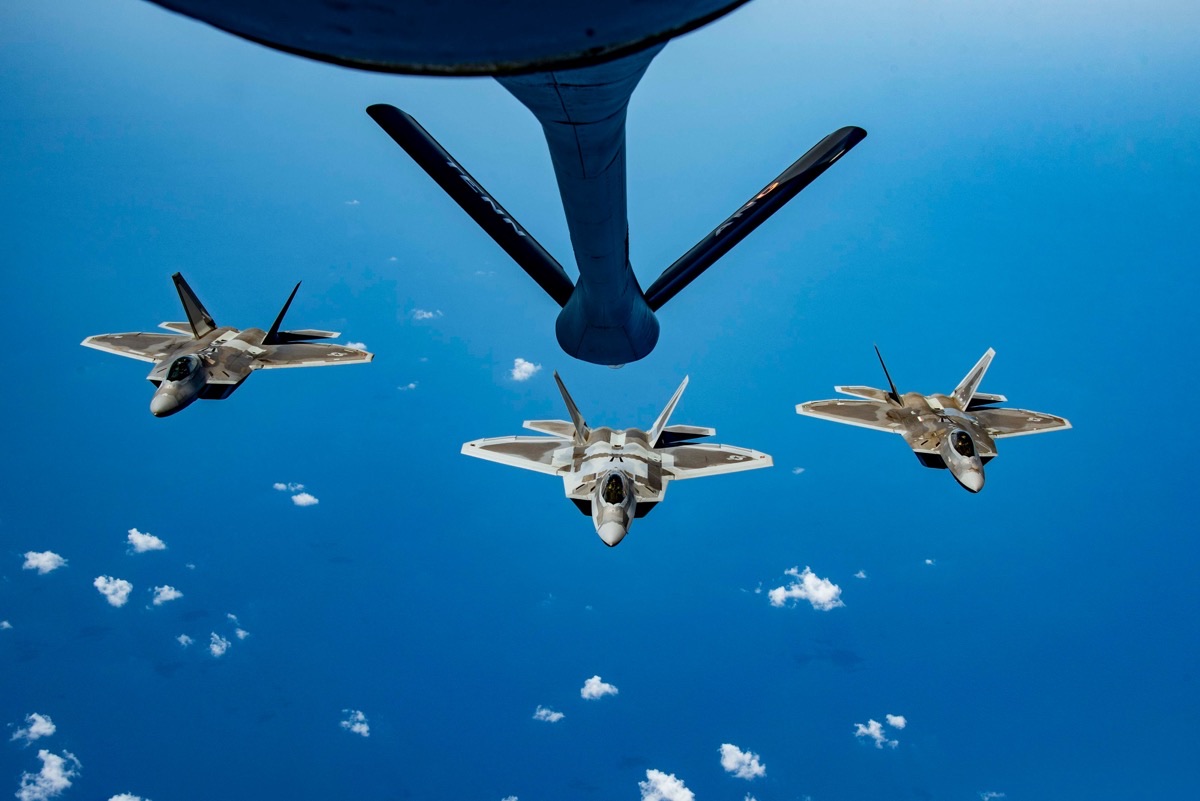
Fighters stack up behind a KC-135 Stratotanker for aerial refueling. The rescue of Dude 44 Bravo required 48 tankers to sustain 155 aircraft over Iran through the night, making it one of the largest combat search and rescue operations in recent U.S. military history.
Once Ghost Murmur allegedly confirmed the airman's exact position, the U.S. military launched an operation that rivals some of the largest air campaigns of recent decades, except this one was for a single person.
On the night of April 4-5, 155 aircraft surged into Iranian airspace:
4 bombers providing heavy strike capability
64 fighters establishing air superiority and suppressing enemy air defenses
48 aerial refueling tankers keeping the armada airborne
13 dedicated rescue aircraft for the actual extraction
Hundreds of special operations personnel on the ground
The operation was not without cost. Two American rescue aircraft became stranded on the ground during the mission. Rather than risk their capture, U.S. forces destroyed both aircraft in place. The details of how they became stranded have not been publicly disclosed.
Despite those losses, Dude 44 Bravo was pulled from his hiding spot and evacuated to safety after nearly 48 hours behind enemy lines.
Trump told the New York Post the operation was "very important" and praised the CIA's role. In his characteristically direct style, he added: "We have equipment the likes of which nobody has ever even thought about."
Everything in one box: paint, glue, brush, and a properly-tooled 1/48 Spitfire. The entry point that has started more modeling careers than any other kit in the hobby.
Why Many Scientists Say It's Physically Impossible
The physics community has not been shy about challenging the Ghost Murmur claims, and their objections carry serious weight.
John Wikswo, a biophysicist at Vanderbilt University who has spent decades studying biomagnetic fields, delivered perhaps the most damning assessment. The heart's magnetic signal, he explained, is "just barely detectable" at 10 centimeters using the most sensitive instruments available. At 40 miles, the signal would be approximately two quintillion times weaker. That's a 2 followed by 18 zeros.
Chad Orzel, a physicist at Union College, pointed out that even with advanced AI filtering, you cannot extract a signal that has dropped below the noise floor. At just one kilometer, the cardiac magnetic field has already fallen to one trillionth of its strength at the chest. At 40 miles, you're asking a sensor to find a signal that is, for all practical purposes, physically nonexistent.
Bradley Roth of Oakland University added historical context that makes the claims even harder to accept. "We've been measuring the heart's magnetic field since the 1960s," he told Scientific American. "And even then you can barely record it" with the sensor touching the chest inside a shielded room.
A pararescueman is hoisted during a CSAR operation in Afghanistan. PJs are the special operators who execute the most dangerous phase of any combat rescue. Whatever technology located Dude 44 Bravo, it was operators like these who physically pulled him out of hostile territory.
Quantum sensors are real and advancing rapidly. Atomic magnetometers using atoms in superposition states genuinely outperform previous-generation instruments. But the gap between "more sensitive than before" and "detecting a heartbeat through 40 miles of open atmosphere" is not an engineering challenge. It's a physics problem, and the numbers don't add up.
The Real Possibility: Is Ghost Murmur a Psyop?
Several intelligence analysts and physicists have suggested that Ghost Murmur may be one of the most effective pieces of strategic disinformation in recent memory. And if it is, it's working exactly as intended.
The theory goes like this: the real method used to locate Dude 44 Bravo was probably more conventional but still highly classified. Possible candidates include:
AI-enhanced satellite imagery capable of detecting subtle terrain disturbances or thermal signatures
Refined CSEL triangulation using multiple overhead assets to narrow the beacon's position far beyond its publicly stated accuracy
Signals intelligence from intercepted IRGC communications that inadvertently revealed search patterns and excluded areas
Human intelligence from assets on the ground in Iran
By attributing the find to a seemingly impossible quantum technology, the CIA accomplishes two things at once. First, it protects whatever actual method was used, which may still be actively employed. Second, it broadcasts a terrifying message to every adversary on the planet: we can find your heartbeat inside a mountain.
Whether that's true or not, the psychological impact is real. If you're an adversary planning to capture or hunt a downed American pilot, the calculus just changed. If you're hiding a high-value target underground, you now have to wonder. That uncertainty is the entire point of a psyop, and Ghost Murmur delivers it perfectly.
What This Means Going Forward
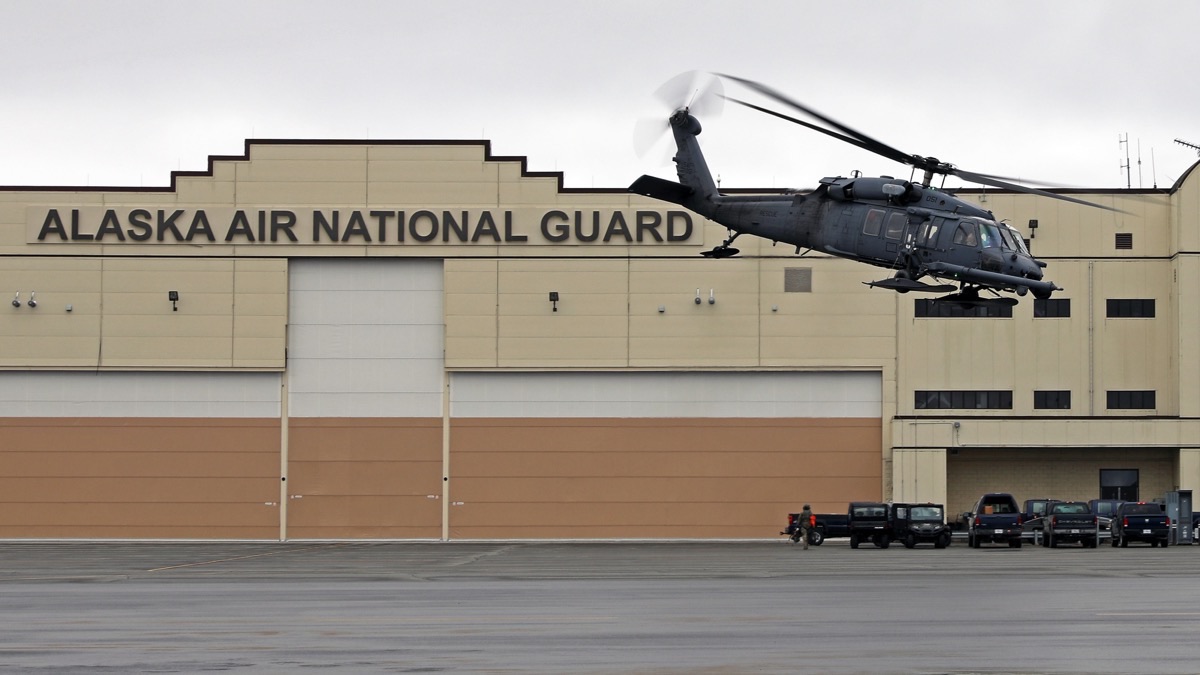
The HH-60G Pave Hawk remains the backbone of U.S. Air Force combat search and rescue operations. Regardless of how Dude 44 Bravo was located, it was Pave Hawk crews who flew into hostile territory to extract him.
Regardless of whether Ghost Murmur works as advertised, the rescue of Dude 44 Bravo demonstrates something that no adversary should doubt: the United States will commit extraordinary resources to recover a single service member.
A 155-aircraft package. Hundreds of special operators. Two aircraft destroyed on the ground rather than risk their capture. All for one wounded weapons systems officer hiding in a crack in a mountain.
If quantum sensing technology eventually does reach the capabilities described in the Ghost Murmur claims, even at shorter ranges, the applications extend far beyond the battlefield. Finding survivors in collapsed buildings after earthquakes. Locating trapped miners. Detecting people hidden in vehicles at border crossings. The humanitarian potential would be enormous.
For now, the scientific consensus is clear: we're not there yet. But the gap between laboratory demonstrations and deployable systems has been closing faster than expected across quantum computing, quantum communications, and quantum sensing. Writing off the possibility entirely would be premature.
The bottom line is this: an American airman is alive today because something found him when the enemy couldn't. Whether that something was a quantum heartbeat detector or the intelligence community's most impressive cover story, the outcome speaks for itself. And for every adversary watching, the message is the same: the United States will find its people, and it will come get them back.
Frequently Asked Questions
What is Ghost Murmur?
Ghost Murmur is a classified CIA tool described as a quantum magnetometry system that can detect the magnetic signature of a human heartbeat from long distances. It was reportedly developed by Lockheed Martin's Skunk Works division and uses quantum sensors paired with AI-driven signal processing.
How was Ghost Murmur used in Iran?
According to U.S. officials, Ghost Murmur detected the heartbeat of a downed F-15E Strike Eagle weapons systems officer from approximately 40 miles away while he hid inside a mountain crack in Iran for 48 hours. The location data enabled a 155-aircraft combat search and rescue operation on April 4-5, 2026.
Do scientists believe Ghost Murmur actually works?
Most physicists are deeply skeptical. The heart's magnetic field is roughly one billionth the strength of Earth's field and drops to undetectable levels within meters. Multiple scientists have stated that detecting a heartbeat from 40 miles away violates known physics. Some analysts believe Ghost Murmur may be a cover story to protect the actual intelligence method used.
What happened to the pilot of the downed F-15E?
The F-15E had two crew members. The pilot was recovered quickly through conventional extraction. The weapons systems officer, callsign "Dude 44 Bravo," was wounded and hid for nearly 48 hours before being rescued in a massive overnight operation involving 155 aircraft and hundreds of special operations personnel.
What is Lockheed Martin's Skunk Works?
Skunk Works is Lockheed Martin's Advanced Development Programs division, responsible for some of America's most groundbreaking military aircraft including the U-2 spy plane, SR-71 Blackbird, F-117 Nighthawk stealth fighter, and F-22 Raptor. The division is known for developing classified technologies that often seem ahead of their time.