Skip to content
April 29:Liberation of Dachau Concentration Camp81yr ago

The Secret Military Payloads That Rode on Every Early Space Mission

Daniel Mercer · · 12 min read
Save
Share:
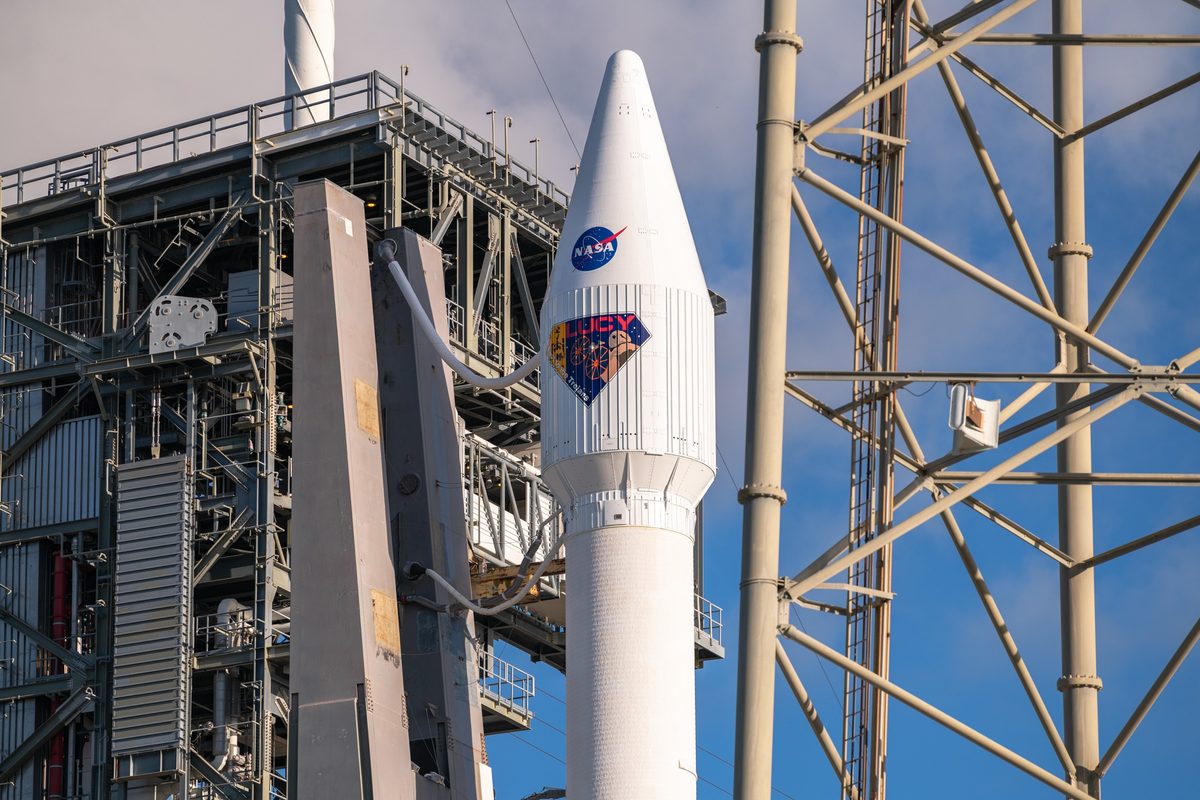
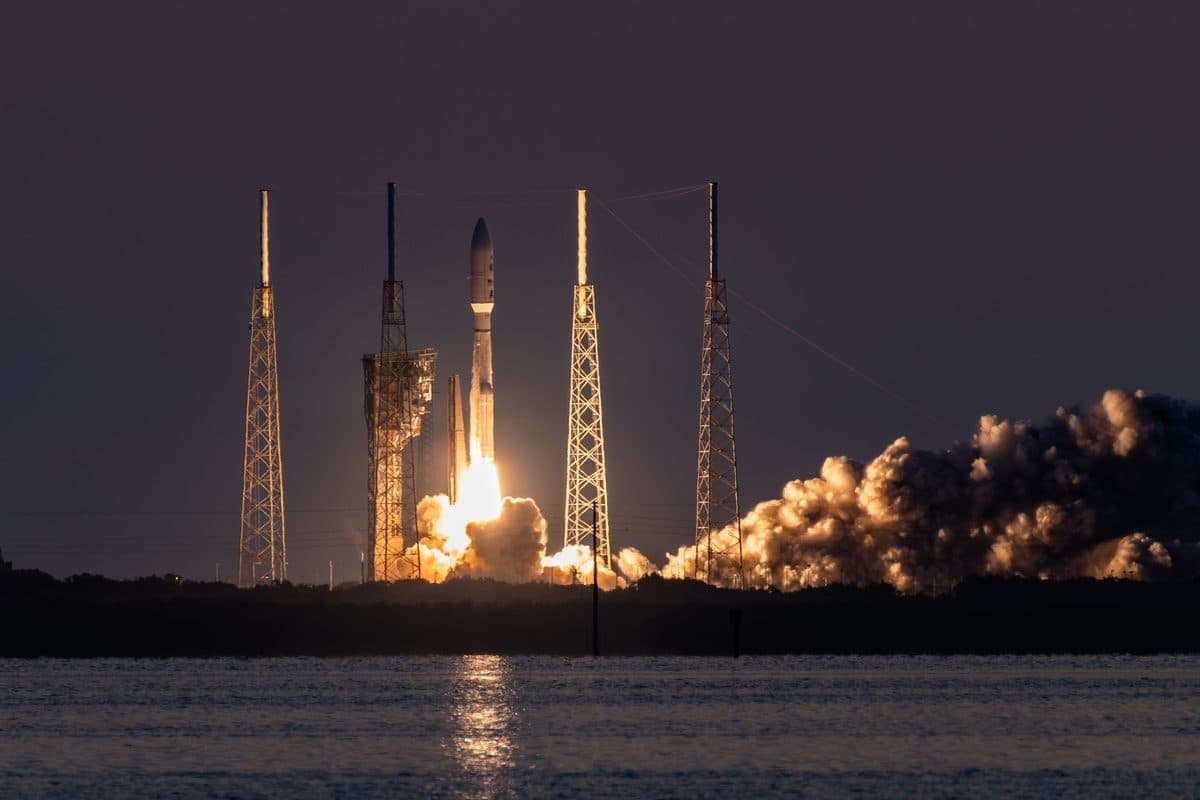
Atlas V rocket launching a classified USSF national security payload into orbit from Cape Canaveral
Daniel Mercer
Daniel Mercer

Military History Editor

Daniel Mercer writes about military history with a focus on the 20th century, including World War II, the Cold War, and Vietnam. His work looks at how decisions made decades ago still influence doctrine, planning, and assumptions today.

The rockets that launched America into space were not built to explore the cosmos. They were built to deliver nuclear warheads to the Soviet Union. The Atlas rocket that carried John Glenn into orbit in February 1962 was a modified SM-65 Atlas intercontinental ballistic missile. The Titan rockets that launched Gemini astronauts were derivatives of the Titan II ICBM, which sat in hardened silos across the American Midwest with thermonuclear warheads atop them. Every iconic launch of the early Space Race had a military origin, a military purpose, or both -- and most had classified payloads that the public would not learn about for decades.

The connection between the military and the space program was not incidental. It was structural. The same factories that built ICBMs built launch vehicles. The same tracking stations that monitored Soviet missile tests tracked American satellites. The same budget that funded nuclear deterrence funded the reconnaissance, navigation, and early warning satellites that transformed Cold War intelligence. Understanding the early space program without acknowledging its military dimension is like studying the Manhattan Project without mentioning the bomb.

The Rockets Were Weapons First

The Atlas rocket began life in 1951 as a crash program to build America's first ICBM. Convair designed it with a pressurized "steel balloon" fuselage so thin that the rocket would collapse under its own weight without internal tank pressure. It was an engineering compromise driven by the need to minimize weight for maximum range -- the Air Force needed a missile that could reach Moscow from the continental United States. The first successful Atlas ICBM test flight came in December 1957, just two months after Sputnik panicked the American public and Congress into pouring resources into space.

When NASA needed a rocket to launch the Mercury capsule, the Atlas was the only American booster powerful enough. The military lineage created problems: the Atlas was designed for a one-way trip, not for the kind of reliability a crewed mission demanded. Engineers had to add redundancies and abort systems to make a weapon safe enough to carry a human being. But the fundamental design -- the staging, the engines, the guidance -- remained that of an ICBM.

The Titan II was even more explicitly a weapon. It entered ICBM service in 1963 carrying a W-53 thermonuclear warhead with a yield of nine megatons -- the most powerful weapon ever deployed on an American missile. The same Titan II, with its upper stage modified and a Gemini spacecraft bolted on top, launched every two-man Gemini mission between 1965 and 1966. Astronauts literally rode nuclear missiles into space.

Atlas V rocket carrying a Space Based Infrared System missile warning satellite during launch from Cape Canaveral
The Atlas rocket family evolved from an ICBM into America's most prolific military space launcher. This Atlas V carries a Space Based Infrared System (SBIRS) missile warning satellite -- a direct descendant of the 1960s MIDAS early warning program. (U.S. Space Force photo)

Corona: The Spy Satellite That Changed Intelligence Forever

While Mercury astronauts captured the public's imagination, the most consequential early space program was one that almost nobody knew existed. Project Corona, officially designated the KH-1 through KH-4B series, was a CIA-Air Force joint program to photograph the Soviet Union from orbit. It began in 1958 under the cover name "Discoverer," which the public was told was a scientific research program testing biomedical experiments in space.

The reality was starkly different. Corona satellites carried panoramic cameras that photographed Soviet military installations, missile sites, airfields, and industrial complexes from altitudes of roughly 100 miles. The exposed film was loaded into reentry capsules that were ejected from the satellite, decelerated through the atmosphere under a parachute, and snatched in midair by specially equipped C-119 Flying Boxcar aircraft trailing a trapeze-like recovery apparatus over the Pacific Ocean.

The program's early years were defined by failure. The first twelve Discoverer missions between February 1959 and June 1960 all failed to return usable imagery -- capsules burned up on reentry, parachutes failed, recovery aircraft missed their targets, or the cameras malfunctioned. Discoverer 13 successfully recovered a capsule in August 1960, but it carried no film. The breakthrough came with Discoverer 14 on August 19, 1960, which returned the first successful photographs from orbit. Those photographs, covering 1.65 million square miles of Soviet territory, produced more intelligence in a single mission than all previous U-2 flights combined.

Over its fourteen-year operational life from 1959 to 1972, Corona flew 145 missions and returned more than 800,000 photographs covering 2.1 million feet of film. The program's intelligence value was incalculable. Corona photographs revealed the actual size of the Soviet missile arsenal, debunking the "missile gap" that had driven American defense spending and presidential politics. Corona showed that the Soviets had far fewer ICBMs than feared -- perhaps four operational missiles in 1961, not the hundreds that Air Force intelligence had estimated. This single finding may have prevented a preemptive American nuclear strike born of overestimation.

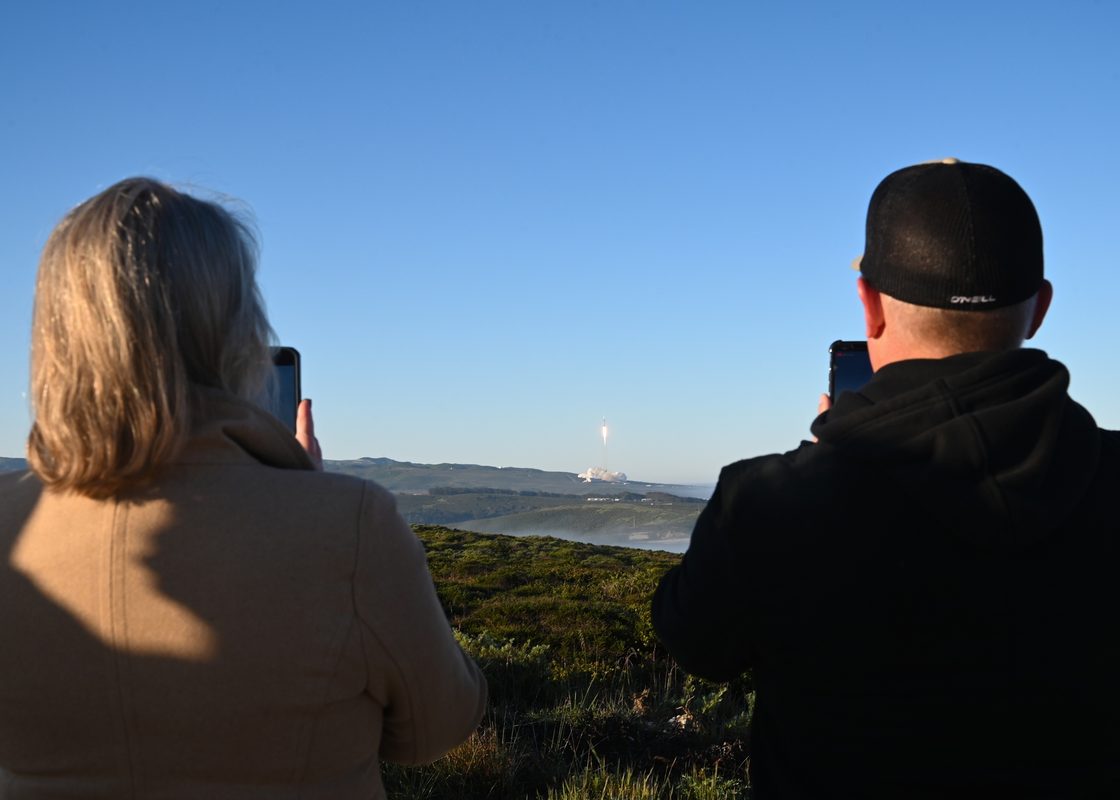
Military satellite launch from Vandenberg Space Force Base showing rocket ascending through clouds
Military satellite launches have continued from the same bases that hosted Corona missions in the 1960s. Vandenberg Space Force Base in California, originally Vandenberg Air Force Base, has launched classified payloads for over six decades. (U.S. Space Force photo)

MIDAS: The First Eyes Watching for Nuclear Attack

While Corona looked down at Soviet installations, another classified program looked for the flash of a missile launch. The Missile Defense Alarm System (MIDAS) was the first satellite-based early warning system, designed to detect the infrared signature of ICBM rocket plumes during their boost phase. The concept was straightforward: an infrared sensor in orbit could see the heat of a missile launch against the cold background of the Earth, providing fifteen to thirty minutes of warning before warheads reached American soil -- far more than ground-based radar, which could not see beyond the horizon.

MIDAS launched its first test satellite in February 1960, just months after Corona's first attempts. The early results were mixed. The infrared sensors struggled to distinguish missile launches from other heat sources -- forest fires, industrial activity, and sunlight reflecting off clouds all triggered false alarms. But the program proved the concept, and its technological descendants became the Defense Support Program (DSP) satellites that provided continuous missile launch detection from 1970 onward. Today's Space Based Infrared System (SBIRS) satellites are the direct grandchildren of MIDAS, and they remain one of America's most critical strategic warning assets.

The MIDAS program demonstrated something that would define military space operations for the next sixty years: the most strategically valuable satellites are not the ones that grab headlines. They are the quiet, persistent systems that watch for the one event that matters most -- the launch of a nuclear weapon.

Transit: The GPS Before GPS

In 1958, two physicists at Johns Hopkins University's Applied Physics Laboratory, William Guier and George Weiffenbach, realized that they could determine a satellite's orbit by measuring the Doppler shift of its radio signal. They then reversed the insight: if you knew a satellite's orbit precisely, you could determine your own position on Earth by measuring the Doppler shift. The Navy immediately recognized the implications. Ballistic missile submarines, which needed to know their exact position before launching nuclear missiles, had no reliable way to fix their location while submerged. Transit changed that.

The Transit satellite navigation system became operational in 1964, initially serving exclusively Navy submarines carrying Polaris nuclear missiles. A submarine could rise to antenna depth, receive signals from Transit satellites passing overhead, and calculate its position to within approximately 200 meters -- accurate enough for nuclear targeting. The system used a constellation of satellites in polar orbits, each broadcasting a continuous signal that receivers could use to compute position fixes.

Transit was the direct ancestor of the Global Positioning System (GPS). The principles were identical -- satellites in known orbits broadcasting signals that receivers use to calculate position -- though GPS dramatically improved accuracy, coverage, and speed. But Transit's original purpose was not civilian navigation. It was enabling submarine-launched nuclear deterrence. The ballistic missile submarines that kept America's second-strike capability credible throughout the Cold War depended on Transit to know where they were and, by extension, where their missiles would land.

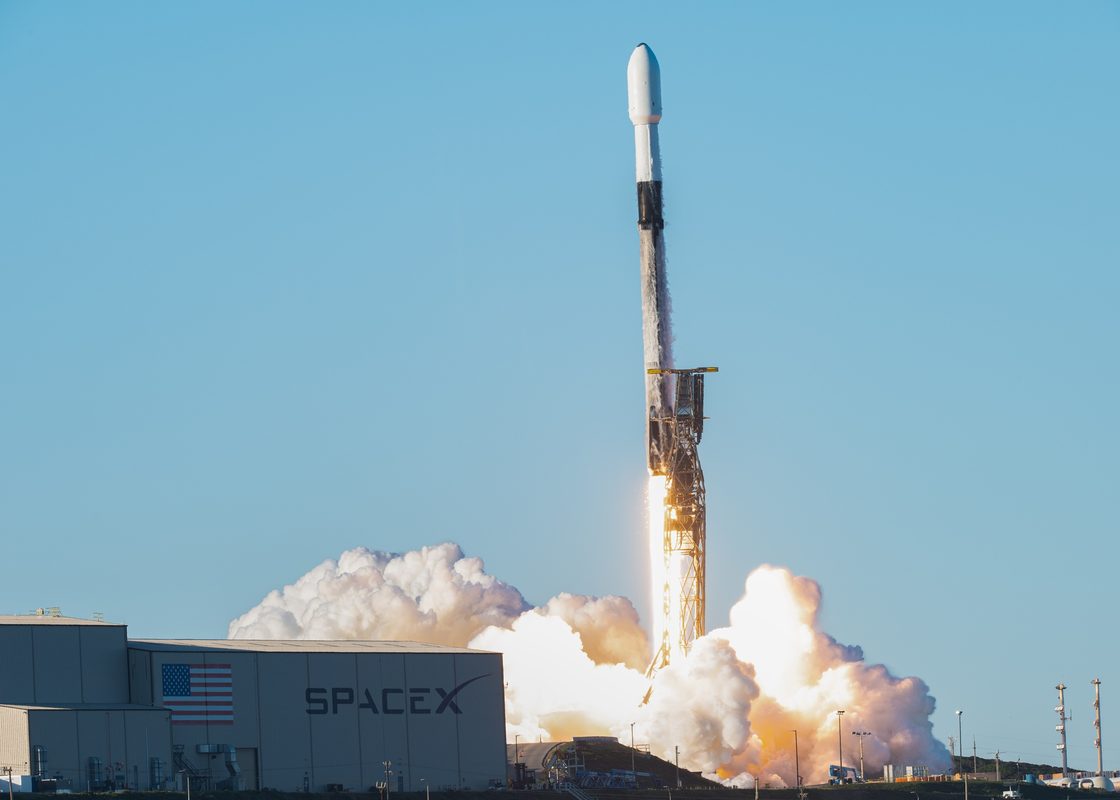
Falcon 9 rocket launching from Vandenberg Space Force Base carrying a military weather satellite
Modern military launches carry the legacy of Transit and MIDAS forward. Today's GPS constellation, missile warning satellites, and secure communications networks all trace their ancestry to classified Cold War programs of the early 1960s. (U.S. Space Force photo)

The Military Space Stations That Never Flew

The Air Force did not simply want to use space for reconnaissance and navigation. It wanted manned military space stations. Two programs -- the X-20 Dyna-Soar and the Manned Orbiting Laboratory -- represented the most ambitious military space concepts of the 1960s, and both were cancelled before they could fly.

The X-20 Dyna-Soar (short for "Dynamic Soaring") was a military spaceplane designed to be launched atop a Titan III booster, orbit the Earth, and glide back to a runway landing -- essentially a predecessor to the Space Shuttle, but with military missions including reconnaissance, satellite inspection, and even orbital bombardment. Boeing received the development contract in 1959, and six military test pilots were selected for the program, including future NASA astronaut Neil Armstrong, who left the program before its cancellation. The X-20 was cancelled in December 1963, a victim of cost overruns and the inability to define a military mission that justified its expense when unmanned satellites could do most of the same work cheaper.

The Manned Orbiting Laboratory (MOL) was announced in December 1963 as the Air Force's replacement for Dyna-Soar. MOL would have been a small space station launched atop a Titan IIIC rocket, with a two-man crew riding a modified Gemini B capsule. The public cover story described MOL as a research platform, but its classified primary mission was reconnaissance: a large camera system called DORIAN (KH-10) would photograph targets with resolution rumored to be as fine as four inches from orbit.

MOL progressed further than Dyna-Soar. Seventeen military astronauts were selected -- including future NASA astronauts Robert Crippen, who would later pilot the first Space Shuttle mission, and Richard Truly, who became a NASA Administrator. An unmanned test flight launched in November 1966. But MOL was cancelled in June 1969 when the Nixon administration concluded that automated reconnaissance satellites could match MOL's capabilities at a fraction of the cost. The program had consumed $1.56 billion (roughly $13 billion in 2026 dollars) without ever putting a crew in orbit.

How Gagarin's Flight Changed Everything

When Yuri Gagarin orbited the Earth on April 12, 1961, the American military response was immediate and far-reaching. Gagarin's flight was not just a propaganda victory for the Soviet Union -- it was a demonstration that the Soviets had rockets powerful enough to place heavy payloads in orbit, which meant they had rockets powerful enough to deliver nuclear warheads to any point on Earth. The military implications were as clear as the public relations disaster.

Within weeks of Gagarin's flight, President Kennedy approved accelerated funding for both NASA's civilian programs and the classified military space programs that ran in parallel. The Air Force received increased funding for Corona, MIDAS, and the early planning that would become MOL. The National Reconnaissance Office (NRO), secretly established in September 1961 to consolidate military and intelligence satellite programs, became the most heavily funded intelligence agency in the United States -- a distinction it held for decades and kept secret until its very existence was declassified in 1992.

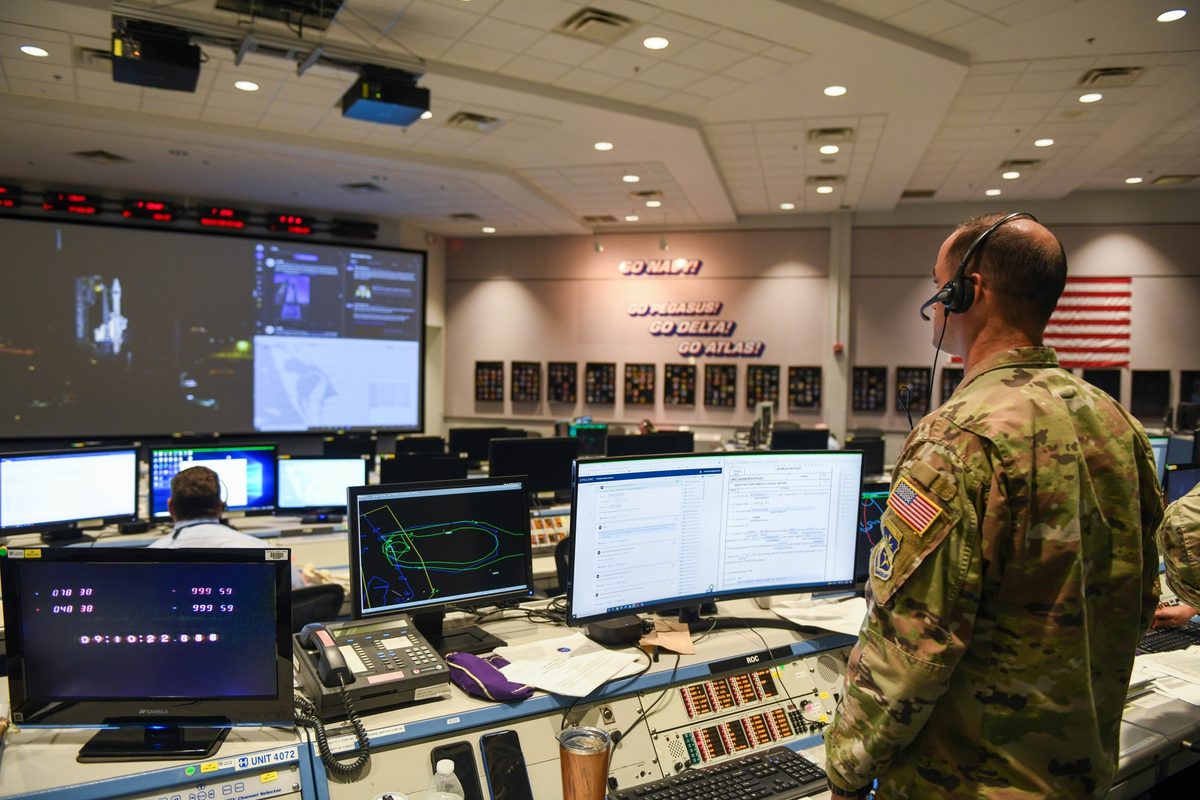
Atlas V rocket standing on launch pad at Cape Canaveral Space Force Station before a space mission
The Atlas rocket family has been launching military and scientific payloads for over sixty years. From ICBM tests in the 1950s to classified national security missions today, the lineage of America's first strategic missile runs unbroken through six decades of space operations. (U.S. Space Force photo)

The Dual-Use Deception

The relationship between NASA and the military was carefully managed to maintain the fiction that America's space program was purely civilian and peaceful. In reality, the line between civilian and military space was often invisible. The Air Force secretly funded portions of NASA's early work, and NASA facilities were used for classified military programs. Astronaut selection drew from military test pilot ranks. Launch pads at Cape Canaveral and Vandenberg served both programs.

The Saturn V rocket that carried Apollo astronauts to the Moon was one of the few major launch vehicles that was not directly derived from a military missile. Werner von Braun's team at NASA's Marshall Space Flight Center designed it specifically for the lunar mission. But even the Saturn V had military connections: the Army's Redstone Arsenal, where von Braun had developed the Redstone and Jupiter missiles, provided the manufacturing infrastructure. And the Saturn V's predecessors -- the Redstone, Jupiter, and Saturn I -- were all military programs before NASA claimed them.

The most telling indicator of the military-space relationship was budgetary. Throughout the 1960s, the Department of Defense spent more on space than NASA did. In 1962, DoD space spending exceeded $4 billion (in 2026 dollars), compared to NASA's $3.4 billion. The military space budget funded the reconnaissance, communications, navigation, weather, and early warning satellites that formed the backbone of American strategic intelligence -- programs that operated in almost complete secrecy while NASA missions played out on live television.

The Legacy: Every Modern Military Capability Traces Back to the 1960s

The classified payloads of the early space program did not just shape the Cold War. They created the architecture of modern military operations. Corona begat the KH-11 electro-optical reconnaissance satellites that provide real-time imagery today. MIDAS begat the DSP and SBIRS missile warning systems that underpin nuclear deterrence. Transit begat GPS, which guides every precision-guided weapon, every military vehicle, and every smartphone on Earth.

The military communications satellites first tested in the 1960s evolved into the systems that enable global command and control. The weather satellites initially launched for military forecasting now serve civilian meteorology. The space situational awareness capabilities developed to track Soviet satellites now track the 30,000-plus pieces of orbital debris that threaten every spacecraft in orbit.

Every Space Force Guardian serving today operates systems whose ancestry runs directly back to the classified programs of the early 1960s. The organizational structure, the launch infrastructure, the tracking networks, and the operational concepts all originated in the same period when America was publicly racing to the Moon and privately building the most comprehensive space-based intelligence and military support system the world had ever seen. The early space program was never just about exploration. It was about survival -- and the military dimension was always the foundation, even when it was hidden from view.

Share this article

Share:

Recommended

Ace of The Skies: Can You Identify These Military Aircraft Throughout The Years?
Test Yourself

Ace of The Skies: Can You Identify These Military Aircraft Throughout The Years?

Can you identify these aircraft?

Take the Quiz

Get Military News & History in Your Inbox

Join thousands of readers receiving our weekly digest of military technology, history, and analysis.

Test Your Knowledge