Skip to content
April 28:Execution of Benito Mussolini81yr ago

The AIM-260: America's Most Classified Air-to-Air Missile That Even Allies Can't Buy

David Kowalski · · 10 min read
Save
Share:
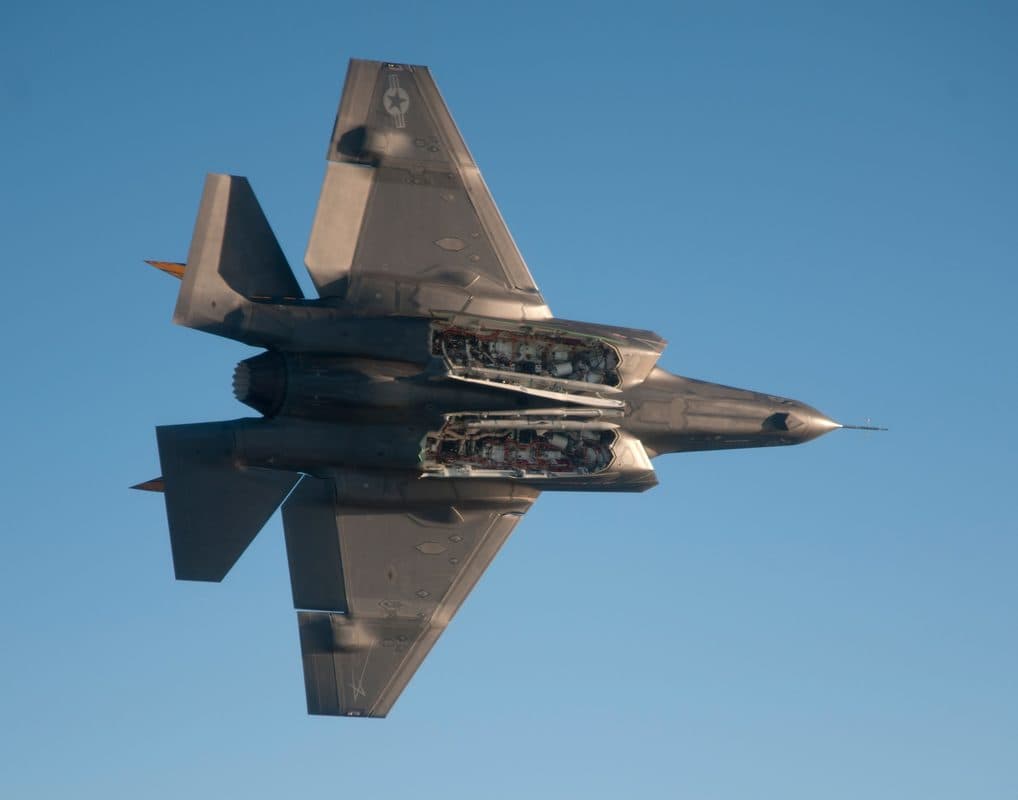
F-35 Lightning II with internal weapons bay doors open, revealing missile stations designed for beyond-visual-range air-to-air missiles
David Kowalski
David Kowalski

Missile Systems & Air Defense Contributor

David Kowalski writes about missile systems, air defense networks, and the technology behind precision strike warfare. His work examines how offensive and defensive missile capabilities shape the balance of power between nations.

There is no publicly available photograph of the AIM-260 Joint Advanced Tactical Missile. No press release with specifications. No manufacturer's booth display at an air show. For years, the most important air-to-air missile program in the United States existed as little more than a budget line item and a collection of carefully worded congressional testimonies. That level of secrecy, maintained across multiple administrations and service chiefs, tells you everything about how seriously the Pentagon takes the threat this weapon was built to counter.

The AIM-260 JATM was created because the United States lost something it had held since the Cold War: the range advantage in beyond-visual-range air-to-air combat. China's PL-15 missile closed that gap, and by some estimates, surpassed it. The JATM is the American answer, a missile designed to outrange anything an adversary can field, carried internally by the fighters that would face those adversaries in the Pacific. And until very recently, no allied nation was permitted to buy it.

The PL-15 Problem That Started Everything

For nearly three decades, the AIM-120 AMRAAM was the unquestioned king of beyond-visual-range air combat. First fielded in 1991, the Advanced Medium-Range Air-to-Air Missile gave American and allied fighters a reliable, fire-and-forget weapon with active radar homing that could engage targets well beyond visual range. The latest variant, the AIM-120D, reportedly reaches engagement ranges of approximately 160 kilometers, a capability that, combined with the radar and sensor advantages of American fighters, made the AMRAAM the standard by which all other air-to-air missiles were measured.

Then China fielded the PL-15.

U.S. Air Force weapons technicians loading an AIM-120 AMRAAM missile onto a fighter aircraft's weapons rail
Airmen load an AIM-120 AMRAAM onto a fighter aircraft. The AMRAAM has been the backbone of American air-to-air capability since 1991, but China's PL-15 missile forced the development of a longer-ranged replacement.

The PL-15, carried by China's J-20 stealth fighter and J-16 multirole fighter, represented a generational leap in Chinese air-to-air missile capability. While exact specifications remain classified, open-source estimates consistently place the PL-15's range at 200 kilometers or more, significantly outranging the AIM-120D. The missile uses an active electronically scanned array (AESA) radar seeker, a dual-pulse rocket motor for extended range, and advanced electronic counter-countermeasures designed to defeat the jamming capabilities of Western fighters.

The strategic implications were immediate. In a conflict over the Taiwan Strait or the South China Sea, Chinese fighters armed with PL-15s could engage American aircraft at ranges where the AMRAAM couldn't shoot back. For the first time since the end of the Cold War, American pilots might face an adversary with a genuine standoff advantage in beyond-visual-range combat. That scenario was unacceptable to Air Force and Navy leadership, and in 2017, the JATM program was born.

What We Know About the AIM-260

The AIM-260 JATM is manufactured by Lockheed Martin, the same company that builds the F-22 Raptor and F-35 Lightning II, the two primary platforms the missile is designed to arm. Beyond that basic fact, confirmed details are scarce by design. The program has maintained a level of classification unusual even by defense industry standards.

What has been confirmed through congressional testimony, budget documents, and occasional official statements:

Range: The JATM is designed to exceed the range of the PL-15, which means an effective engagement envelope of at least 200 kilometers and likely considerably more. Some estimates place it at 250 kilometers or beyond. The missile is explicitly designed to restore the range advantage that the AMRAAM once provided.

Guidance: The AIM-260 uses a multi-mode seeker system, reportedly combining active radar homing with additional guidance modes that remain classified. It features inertial mid-course guidance augmented by a two-way datalink, allowing the launching aircraft to update the missile's targeting information during flight. This datalink capability is a significant advancement over the AIM-120, which relies on semi-active radar illumination during the mid-course phase.

Platform compatibility: The missile is designed to fit within the internal weapons bays of the F-22 and F-35, using existing missile rail interfaces. This is a critical design constraint. The JATM must deliver dramatically improved performance within the same physical envelope as the AMRAAM, because the weapons bays of fifth-generation fighters cannot be enlarged.

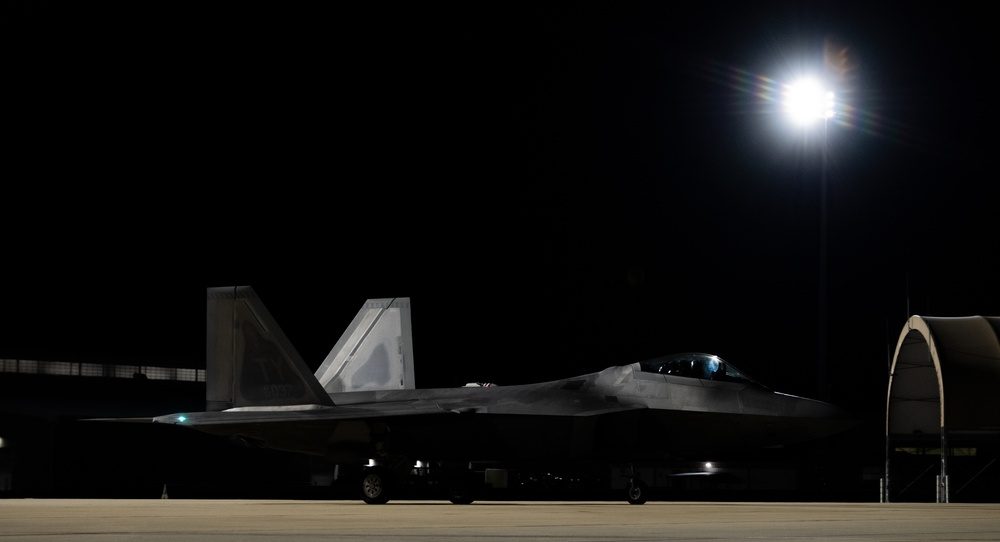
F-22 Raptor photographed during night operations, with the aircraft's silhouette visible against a dark sky
The F-22 Raptor during night operations. The AIM-260 JATM is designed to fit within the Raptor's internal weapons bays, maintaining the aircraft's stealth profile while dramatically extending its engagement range beyond what the AIM-120 AMRAAM can deliver.

Production status: The missile entered initial production around 2024, though integration challenges with the F-22 and F-35 have slowed the path to full operational capability. As of late 2025, a senior Air Force official stated that the JATM was "not yet operational," citing ongoing integration issues with fifth-generation fighter platforms. The FY2026 budget request included $687 million for JATM procurement and continued development across both the Air Force and Navy.

Why the Secrecy Matters

The classification level around the AIM-260 program is not bureaucratic excess. It's a deliberate strategy. In the air-to-air missile competition, knowing your opponent's capabilities is half the battle. If China knows the AIM-260's exact range, seeker characteristics, and electronic warfare resistance, they can begin developing countermeasures before the missile even reaches full operational capability. If they don't know those specifics, every tactical plan they develop must account for worst-case assumptions about what the JATM can do.

This is why the Air Force has released almost no technical information about the weapon. Even budget documents, which typically provide at least basic programmatic details, have been unusually opaque about JATM capabilities. The message is intentional: we have this weapon, we're not telling you what it can do, and you should plan accordingly.

The classification also explains why even the missile's physical appearance remained secret until very recently. In an era where satellite imagery and social media can expose almost any military program, keeping the AIM-260's external configuration classified prevents adversaries from making inferences about its propulsion system, seeker geometry, and aerodynamic performance. A photograph of the missile's body shape alone could tell a sophisticated adversary a great deal about its probable range and maneuverability.

The Export Question: Why Allies Had to Wait

For years, the AIM-260 was restricted to U.S.-only use. No foreign military sales were approved. No allied nation, not the United Kingdom, not Japan, not Australia, was permitted to purchase or receive technical data about the missile. This was unusual. The AIM-120 AMRAAM has been sold to dozens of allied nations, and weapons sharing is a cornerstone of American alliance strategy. Restricting the JATM to domestic use only signaled that the Pentagon considered its capabilities too sensitive to risk even with trusted partners.

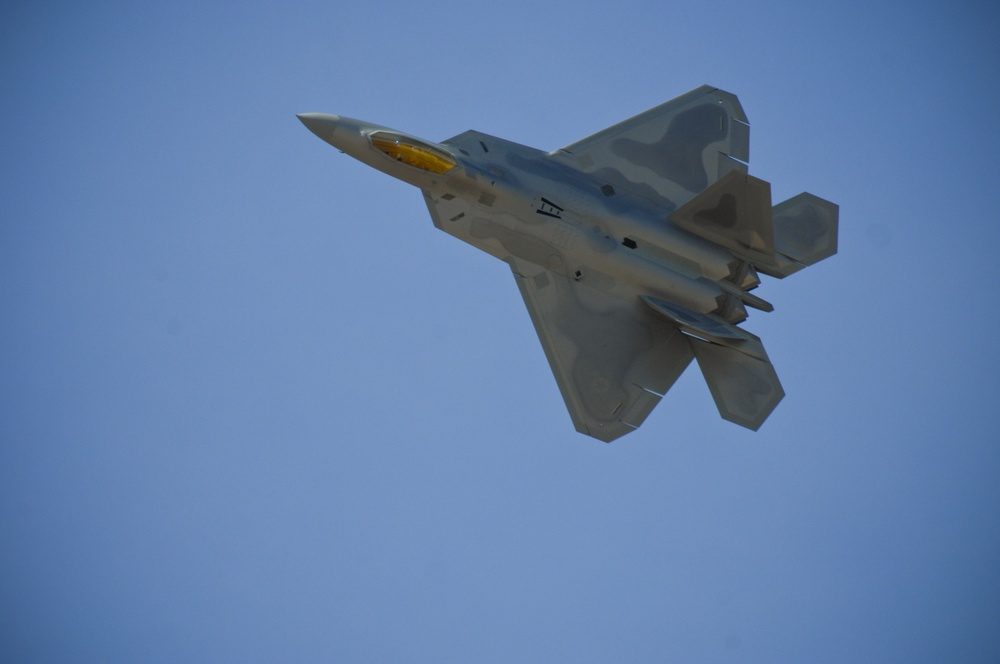
F-22 Raptor flying in formation during a heritage flight demonstration, showcasing the aircraft's sleek stealth design
The F-22 Raptor in flight. Unlike the AIM-120 AMRAAM, which has been exported to dozens of nations, the AIM-260 JATM was initially restricted to U.S.-only use due to the sensitivity of its advanced seeker and guidance technologies.

That policy changed in late 2025 when the U.S. Congress approved a potential $3.16 billion sale of up to 450 AIM-260A missiles to Australia, making the Royal Australian Air Force the first foreign operator of the weapon. The sale included 450 operational missiles, 5 test vehicles, and 30 guided test vehicles, with deliveries expected to begin in the third quarter of 2033.

The Australian sale was significant for several reasons. First, it confirmed that the AIM-260 had matured enough for export consideration. A program still struggling with basic integration issues wouldn't be approved for foreign sales at that scale. Second, the choice of Australia as the first export customer reflected the AUKUS security partnership and the shared strategic priority of Indo-Pacific deterrence. Third, the 2033 delivery timeline suggested that domestic U.S. production would need to ramp up considerably before export quantities could be filled.

The sale also carried an implicit message to China. By arming Australian F-35s with the same beyond-visual-range missile that equips American fighters, the United States signaled that any air combat scenario in the Indo-Pacific would involve multiple nations fielding weapons capable of outranging the PL-15. The range advantage China had briefly achieved would not only be negated by American fighters but also by allied aircraft across the region.

AMRAAM to JATM: What Changes in the Cockpit

For the pilots who will eventually carry the AIM-260, the transition from the AIM-120 represents more than a range increase. The two-way datalink changes how beyond-visual-range engagements are managed from the cockpit.

With the AIM-120, the launching aircraft provides mid-course guidance updates through its own radar, a process that requires the fighter to continue pointing its radar at the target area, limiting the pilot's tactical flexibility. The AIM-120's terminal phase uses its own active radar seeker to find and track the target independently, but the mid-course phase tethers the fighter to the engagement geometry.

F-35 Lightning II in flight during a training mission, showing the aircraft's stealth planform from a forward angle
An F-35 Lightning II during flight operations. The F-35's internal weapons bays are designed to carry the AIM-260 JATM alongside the AIM-120 AMRAAM, giving pilots the option to select the appropriate weapon based on engagement range and threat type.

The AIM-260's two-way datalink allows the missile to receive targeting updates from any networked source, not just the launching aircraft. A Raptor could fire a JATM, turn away to break contact, and have the missile's targeting updated by a different F-22, an F-35, or even an airborne early warning platform like the E-2D Hawkeye. The missile can also send data back to the network, providing the launching aircraft with information about what the missile's seeker is detecting as it approaches the target area.

This creates a fundamentally different engagement model. Instead of a one-to-one relationship between the fighter and its missile, the AIM-260 operates as a node in a larger network. A flight of four F-35s could theoretically fire a salvo of JATMs, turn away from the threat axis entirely, and have the missiles guided to their targets by sensors hundreds of miles from the launch point. The fighters never enter the adversary's engagement envelope. The missiles do the closing. And the network provides the eyes.

The Race That Never Ends

The AIM-260 is not the end of the air-to-air missile competition. China is already developing the PL-17, a very-long-range missile reportedly designed to engage high-value targets like tankers, AWACS aircraft, and ISR platforms at ranges exceeding 400 kilometers. Russia's R-37M, carried by the MiG-31 and Su-35, similarly targets force-multiplier aircraft at extreme range. The next generation of air-to-air missiles will likely incorporate artificial intelligence for autonomous target discrimination, ramjet propulsion for sustained high-speed flight, and cooperative engagement capabilities where multiple missiles share targeting data in flight.

But for now, the AIM-260 JATM represents a critical correction. The window during which Chinese fighters held a meaningful range advantage in beyond-visual-range combat is closing. When the JATM reaches full operational capability aboard F-22s and F-35s, and eventually on allied aircraft across the Indo-Pacific, American and allied air forces will once again be able to fight at the ranges they choose rather than the ranges their adversary dictates.

You still can't see a clear photo of it. That's the point. The most important American weapon of this decade was designed to be felt, not seen, by the adversaries who will have to plan around its capabilities without ever knowing exactly what those capabilities are.

Share this article

Share:

Recommended

Ace of The Skies: Can You Identify These Military Aircraft Throughout The Years?
Test Yourself

Ace of The Skies: Can You Identify These Military Aircraft Throughout The Years?

Can you identify these aircraft?

Take the Quiz

On This Day in Military History

April 8

Fall of Baghdad (2003)

U.S. Army forces from the 3rd Infantry Division seized key government buildings, Saddam Hussein's palaces, and the Green Zone in central Baghdad following dramatic "Thunder Run" armored thrusts. The fall of the Iraqi capital effectively ended organized military resistance after just three weeks of combat.

1864, Battle of Mansfield (Sabine Crossroads)

1865, Lee's Retreat Cut Off Near Appomattox

See all 11 events on April 8

Get Military News & History in Your Inbox

Join thousands of readers receiving our weekly digest of military technology, history, and analysis.

Test Your Knowledge