
Reactive Armor
Armor that reacts to the impact of a projectile, typically by detonating an explosive layer that disrupts incoming shaped-charge jets or deflects kinetic penetrators.
Reactive armor is a category of armor protection that responds dynamically to the impact of an incoming projectile rather than simply absorbing the blow passively. The most common form, Explosive Reactive Armor (ERA), uses tiles containing explosive material sandwiched between metal plates. When a shaped-charge jet strikes the tile, the explosive detonates, driving the plates outward and disrupting the penetration jet.
Reactive armor has evolved significantly since its introduction. First-generation ERA like Kontakt-1 was effective only against shaped-charge warheads. Second-generation systems like Kontakt-5 use heavier flyer plates that can deflect kinetic energy penetrators as well. The latest non-explosive reactive armor (NERA) uses rubber or inert materials between metal plates, achieving similar effects without the hazards of explosive elements, particularly the danger to nearby infantry.
Reactive armor is widely used because it provides a significant protection upgrade at a fraction of the weight and cost of equivalent passive armor. Soviet and Russian tanks have relied heavily on ERA to compensate for thinner base armor compared to Western designs. The technology continues to evolve, with researchers developing smart reactive armor that can sense the type of incoming threat and optimize its response accordingly.
Related Terms
ERA(Explosive Reactive Armor)
Explosive Reactive Armor consists of tiles containing explosive material that detonate outward when struck, disrupting the penetration jet of shaped-charge warheads.
Composite Armor
Multi-layered armor that combines different materials such as steel, ceramics, and polymers to provide superior protection against both kinetic penetrators and shaped-charge warheads.
APS(Active Protection System)
Active Protection System is a defensive system mounted on armored vehicles that detects and intercepts incoming anti-tank missiles and rockets before they strike.
Related Articles

How Explosive Reactive Armor Detonates Itself to Stop an Incoming Anti-Tank Missile
The armor detonates itself. On purpose. Explosive reactive armor uses a controlled detonation to disrupt incoming shaped charge jets and even kinetic penetrators, buying the crew inside precious milliseconds of survival. Here is the physics behind one of the most counterintuitive defense technologies ever fielded.
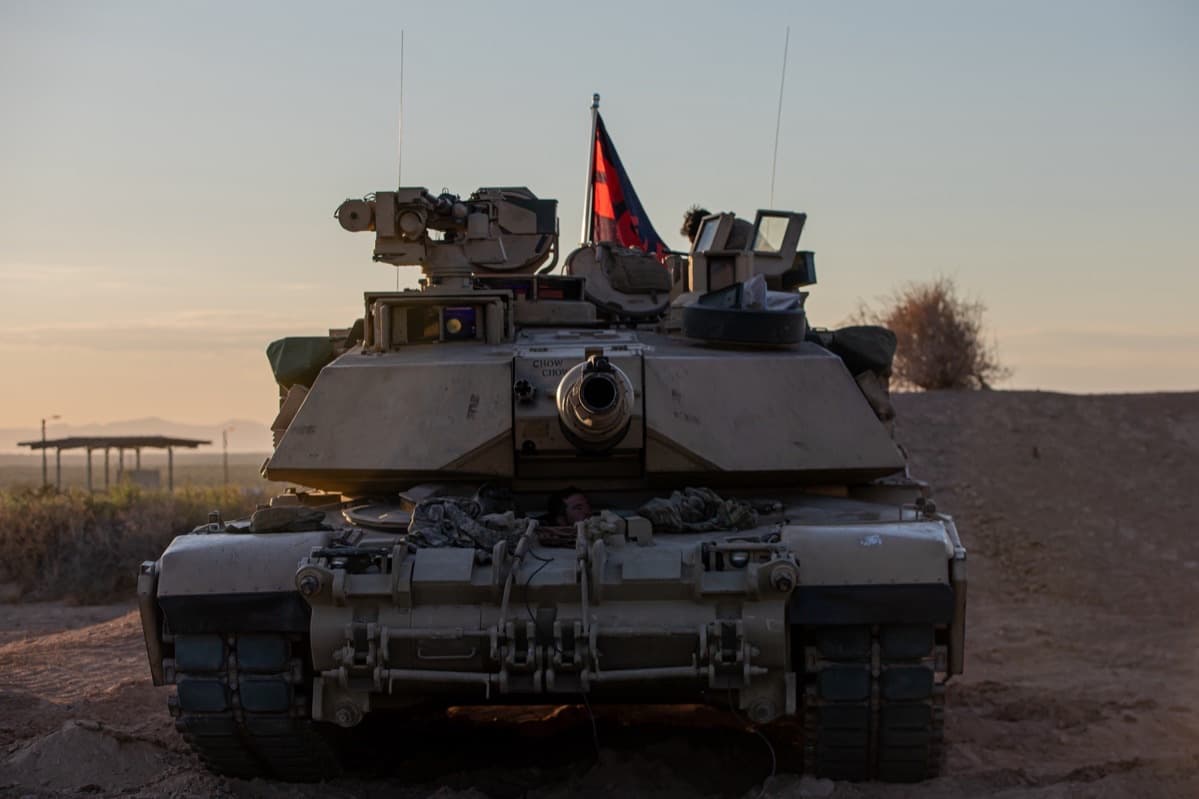
What Happens When an M1 Abrams Gets Hit: Breaking Down Real Armor Test Results
A Ukrainian crew took four to six direct hits inside their M1A1 Abrams. All walked away uninjured. The reason is a 1970s engineering decision involving depleted uranium, blow-out panels, and the difference between how American and Russian tanks store their ammunition.