
SLBM
Submarine-Launched Ballistic Missile
A Submarine-Launched Ballistic Missile is a nuclear-capable ballistic missile carried and launched from a submerged submarine, forming the most survivable leg of the nuclear triad.
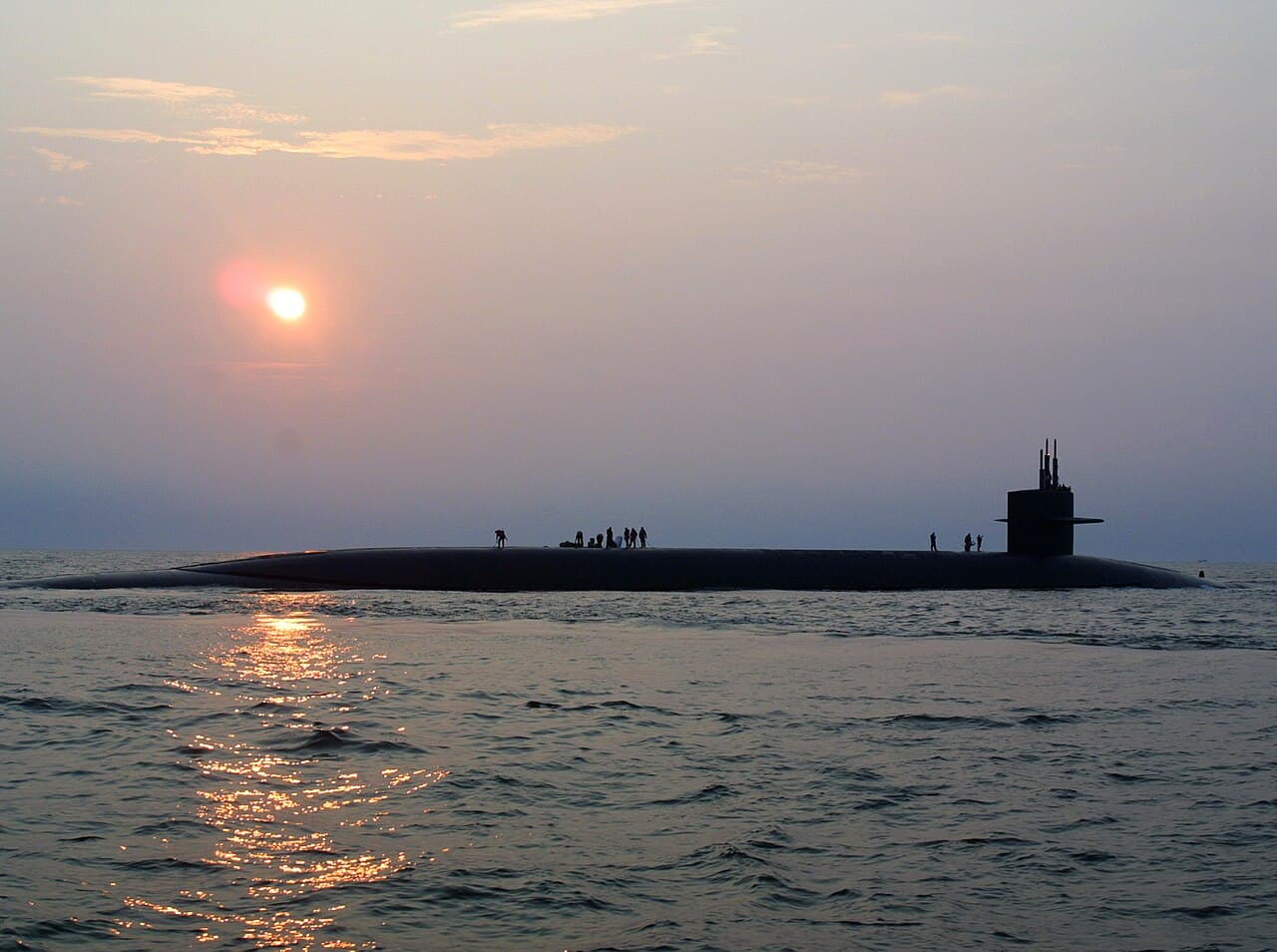
Submarine-Launched Ballistic Missiles (SLBMs) are the most survivable component of a nation's nuclear deterrent because their launch platforms, ballistic missile submarines (SSBNs), operate hidden beneath the ocean, making them virtually immune to preemptive attack. The U.S. Navy's Trident II D5 missile, carried by Ohio-class and future Columbia-class submarines, can deliver multiple nuclear warheads to targets over 7,000 nautical miles away with pinpoint accuracy.
Each Ohio-class submarine carries 20 Trident II missiles, and at any given time several boats are on patrol in secret locations across the world's oceans. This ensures that even if an adversary could somehow destroy all U.S. ICBMs in their silos and bombers on their airfields, the submarine-based deterrent would survive to deliver a devastating retaliatory strike. This assured second-strike capability is the foundation of strategic stability.
The technical achievement of launching a 65-ton missile from a submerged submarine is remarkable. The missile is ejected from its launch tube by a gas-steam generator, breaks through the ocean surface, and ignites its first-stage rocket motor in midair. The submarine continues on patrol after launching, potentially capable of reloading from a tender ship. The combination of stealth, mobility, and destructive power makes the SSBN/SLBM system the ultimate guarantor of nuclear deterrence.
Related Terms
ICBM(Intercontinental Ballistic Missile)
An Intercontinental Ballistic Missile is a long-range nuclear delivery system with a range exceeding 5,500 kilometers, capable of striking targets on another continent within 30 minutes of launch.
MIRV(Multiple Independently-targetable Reentry Vehicle)
Multiple Independently-targetable Reentry Vehicle technology allows a single ballistic missile to carry several warheads, each aimed at a different target.
Ballistic Missile
A missile that follows a high arching ballistic trajectory after its rocket motors burn out, traveling through the upper atmosphere or space before descending on its target.
Related Articles

The Ohio-Class Submarine Carries 24 Nuclear Missiles and Can End Civilization. Here's How It Works.
A single Ohio-class SSBN carries 20 Trident II missiles with up to 160 nuclear warheads, each 30 times more powerful than the bomb dropped on Hiroshima. Four to five of these submarines are on patrol at any given moment. Here is how the most destructive weapon system ever built actually operates.
Columbia-Class vs. Ohio-Class: The Navy's $130 Billion Submarine Upgrade Explained
The Columbia-class will replace the aging Ohio-class as America's sea-based nuclear deterrent. Here is how the two compare and why the program matters.