Skip to content
April 26:The Bombing of Guernica89yr ago

How Ejection Seats Work: The Engineering That Saves Pilots' Lives

Michael Trent · · 12 min read
Save
Share:
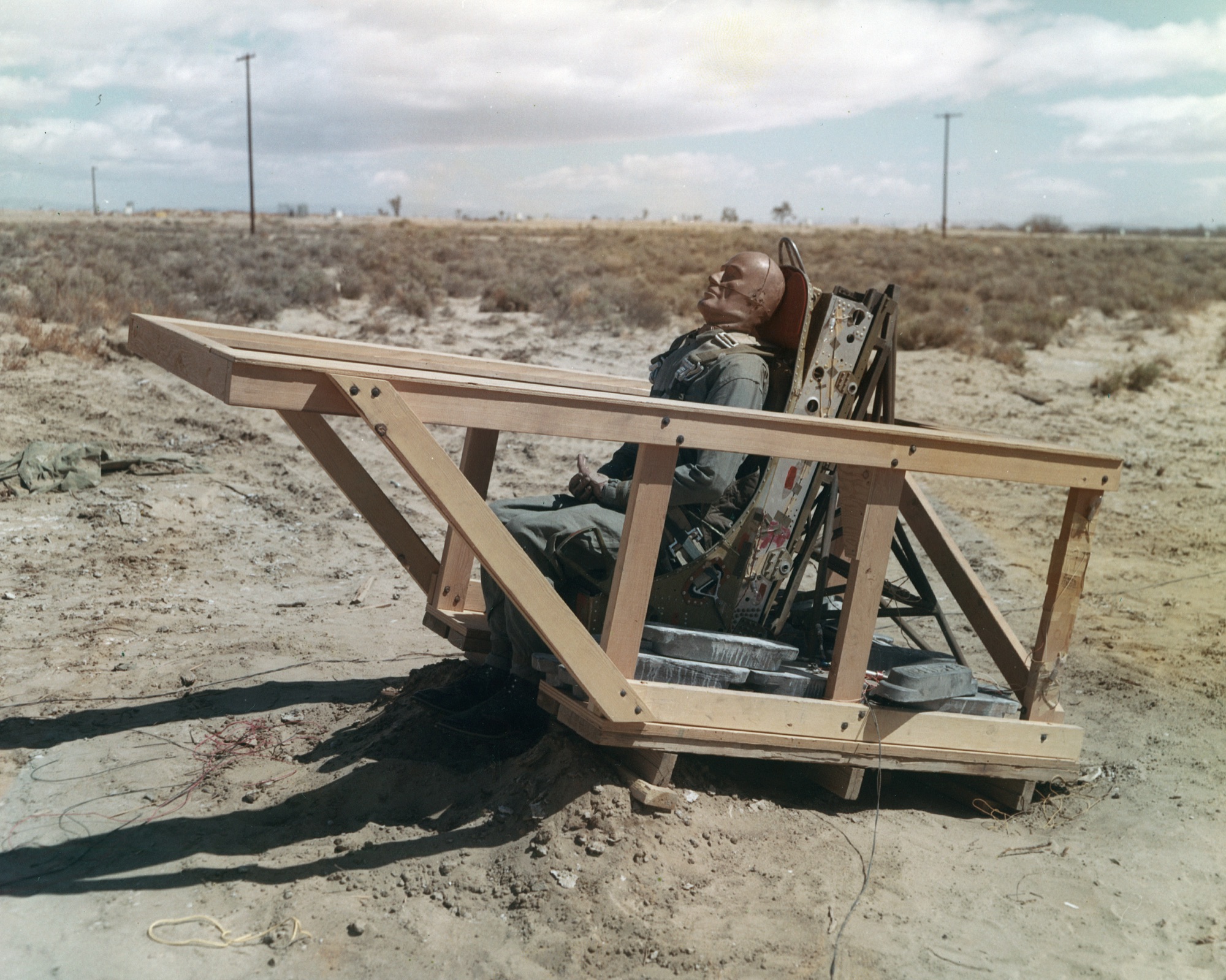
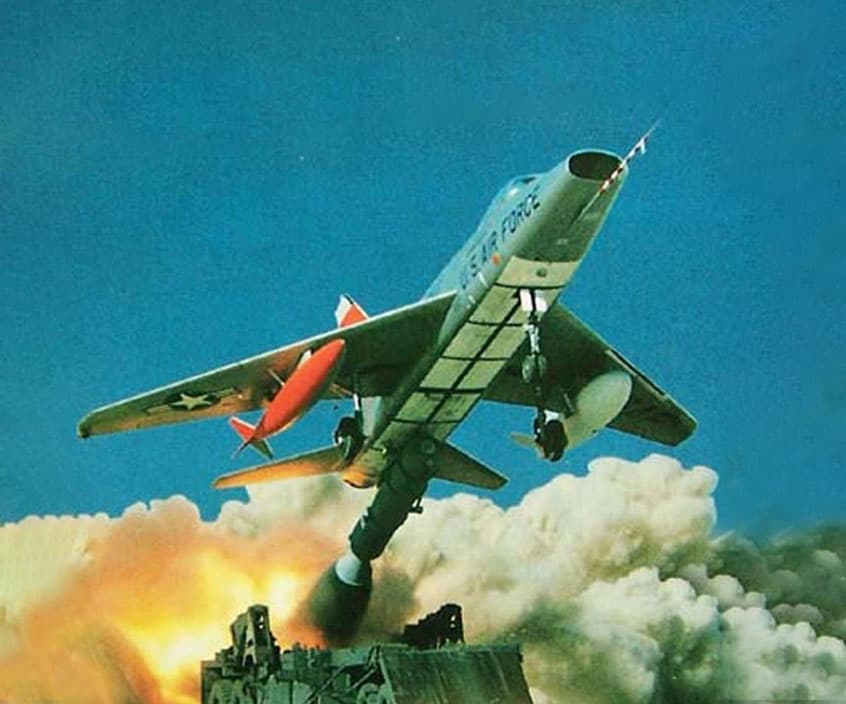
Military ejection seat being tested showing the rocket motor firing and the seat clearing the cockpit
Michael Trent
Michael Trent

Defense Systems Analyst

Michael Trent covers military aircraft, weapons systems, and defense technology with an emphasis on cost, maintenance, and real-world performance. He focuses less on specifications and more on how systems hold up once they are deployed, maintained, and operated at scale.

At 500 knots, the air outside a fighter cockpit is not air. It is a wall. A pilot who tried to climb out at that speed would be hit by windblast forces exceeding 8,000 pounds per square foot, tearing their limbs from their body and killing them instantly. At those speeds, the only way out of a dying aircraft is straight up: through the canopy, above the tail, and into a parachute, all in a controlled sequence that takes less than three seconds from the moment the pilot pulls the handle. The ejection seat makes this possible. It is the last line of defense between a pilot and death, and the engineering behind it is among the most demanding in all of aerospace. Since the first rocket-powered ejection seats entered service in the late 1940s, they have saved more than 12,000 lives.

Why You Can't Just Jump

The fundamental problem is speed. A World War II pilot could bail out of a crippled aircraft at 200 mph by rolling the aircraft inverted, unstrapping, and falling free: dangerous, but possible. As aircraft speeds increased through the jet age, manual bailout became increasingly lethal. At 400 knots, the force of the windblast can break bones. At 500 knots, it can kill. At 600 knots, the dynamic pressure exceeds any human tolerance.

Even at moderate speeds, the canopy itself is an obstacle. Modern fighter canopies are thick, optically clear polycarbonate designed to withstand bird strikes at 300+ knots. A pilot cannot simply push it open against the airstream. And even if the canopy is gone, the tail of the aircraft is directly in the ejection path, and a pilot who ejects too slowly will be struck by the vertical stabilizer, which at 500 knots is as lethal as a concrete wall.

The ejection seat solves all of these problems simultaneously: it jettisons or shatters the canopy, fires the pilot clear of the cockpit with enough velocity to clear the tail, stabilizes the pilot in the airstream, separates them from the seat, and deploys a parachute, all automatically, all in sequence, and all faster than a pilot could consciously execute any single step.

The Sequence: Three Seconds to Survival

Modern ejection seats use a precisely timed sequence of events that varies by manufacturer and model but follows the same fundamental logic. Here is how a typical modern ejection works:

T+0.0 seconds, Handle Pull: The pilot grasps the ejection handle (typically located between the legs on the front edge of the seat pan, or on the seat headrest) and pulls with approximately 40 to 60 pounds of force. This initiates the ejection sequence. From this point, everything is automatic.

T+0.1 seconds, Canopy Jettison: Explosive charges fire to jettison the canopy, blowing it clear of the aircraft. Some systems use a through-canopy ejection system instead. Miniature detonating cord (MDC) embedded in the canopy shatters the transparency milliseconds before the seat arrives, eliminating the risk of the canopy failing to separate. The F-35 Lightning II uses a through-canopy system.

T+0.2 seconds, Seat Catapult: A ballistic cartridge or telescoping rocket fires beneath the seat, launching the seat and pilot up the guide rails and out of the cockpit. The initial catapult provides enough impulse to begin clearing the cockpit but not enough to clear the tail of the aircraft alone.

T+0.3 seconds, Rocket Motor Ignition: A sustained-burn rocket motor in the seat base ignites, providing additional thrust for approximately 0.2 to 0.3 seconds. This rocket motor, the key innovation that enables modern zero-zero ejection, accelerates the seat to a velocity sufficient to clear the aircraft's tail and reach a survivable altitude even from ground level.

T+0.5–1.0 seconds, Drogue Deployment: A small drogue parachute deploys from the top of the seat headrest. The drogue serves two functions: it stabilizes the seat-pilot assembly to prevent tumbling, and it begins decelerating the seat from the high speeds it may have acquired from the aircraft's forward velocity.

T+1.5–2.5 seconds, Seat-Man Separation: Mechanical and pyrotechnic devices release the harness connections, leg restraints, and survival kit attachments. The seat falls away from the pilot, who is now in free fall with the drogue parachute still attached.

T+2.0–3.0 seconds, Main Parachute Deployment: The main parachute, packed in the seat's headrest or backpad, deploys and inflates. The pilot descends under a full canopy. A survival kit containing a life raft, radio, signaling devices, and emergency supplies deploys on a lanyard beneath the pilot.

Diagram showing the ejection sequence from handle pull through canopy jettison, seat catapult, rocket motor, and parachute deployment
The full ejection sequence, from handle pull to parachute deployment, takes approximately 2 to 3 seconds. Modern seats use electronic sequencers that adjust timing based on altitude and airspeed, optimizing the sequence for every possible combination of conditions. (Martin-Baker)

Zero-Zero: The Ground-Level Save

Early ejection seats required the aircraft to be at a minimum altitude and speed for the sequence to work, because the parachute needed time and height to deploy. If the aircraft was on the ground or at very low altitude, ejection was not an option. This changed with the development of zero-zero ejection capability, meaning seats that can save the pilot at zero altitude and zero airspeed, including from a stationary aircraft on the runway.

Zero-zero capability is made possible by the sustained-thrust rocket motor. Rather than relying on the aircraft's forward speed and altitude to give the parachute time to deploy, the rocket motor launches the seat high enough (approximately 100 to 200 feet) for the parachute to inflate and slow the pilot to a survivable descent rate even from ground level. The rocket motor provides the altitude that the aircraft cannot.

The electronic sequencer, a small computer in the seat that controls the timing of every event, is critical for zero-zero operation. The sequencer senses the seat's altitude, speed, and attitude after ejection and adjusts the deployment timing accordingly. At high altitude, it delays the main parachute to allow the pilot to descend to breathable altitude before deploying (preventing hypoxia and cold exposure). At ground level, it accelerates the entire sequence to deploy the parachute as quickly as possible. The same seat handles both extremes automatically.

Martin-Baker: The Company That Saves Lives

Martin-Baker Aircraft Company, founded by Sir James Martin in Northern Ireland, has dominated the ejection seat market for seven decades. The company has designed and built ejection seats for aircraft across more than 90 air forces, and its seats have saved over 7,700 lives, a number the company tracks precisely, with each survivor inducted into the Martin-Baker Ejection Tie Club and presented with a distinctive striped tie and membership card.

Martin-Baker's current production seats include the Mk 16 (used in the F-35 Lightning II), the Mk 14 (Eurofighter Typhoon), and various marks used across European, Asian, and Middle Eastern air forces. The company's design philosophy emphasizes reliability above all. The seat must work perfectly the one time it is needed, after years or decades of sitting in a cockpit without activation. Every component is designed and tested with that single-use reliability requirement in mind.

ACES II: The American Standard

The Advanced Concept Ejection Seat II (ACES II), manufactured by Collins Aerospace (formerly UTC Aerospace), is the standard ejection seat for most American military aircraft including the F-15 Eagle, F-16 Fighting Falcon, A-10 Thunderbolt II, B-1 Lancer, and B-2 Spirit. The ACES II uses a three-mode system that automatically selects the optimal ejection sequence based on speed and altitude at the moment of ejection:

  • Mode 1 (low speed): Below 250 knots. Rocket catapult fires, main parachute deploys immediately
  • Mode 2 (medium speed): 250–450 knots. Drogue parachute deploys first to decelerate, then main parachute
  • Mode 3 (high speed): Above 450 knots. Drogue parachute provides extended deceleration before main parachute deploys, preventing the opening shock from injuring the pilot

The ACES II has been in service since the 1970s and has saved hundreds of lives. Its replacement, the ACES 5, also by Collins Aerospace, incorporates improved injury reduction technologies, better performance at the extremes of the speed and altitude envelope, and accommodation for a wider range of pilot body sizes and weights.

The K-36: Russia's Life Saver

The Zvezda K-36 ejection seat, used in the MiG-29, Su-27 family, and Su-34, is widely regarded as one of the most capable ejection seats ever designed. The K-36 demonstrated its capabilities in one of the most dramatic moments in aviation history: at the 1989 Paris Air Show, test pilot Anatoly Kvochur's MiG-29 suffered a bird strike and engine failure during a low-altitude demonstration. Kvochur ejected at approximately 300 feet of altitude and nearly zero forward speed, conditions that many ejection seats of the era could not survive. The K-36 fired Kvochur clear, deployed his parachute with barely enough altitude to slow him, and he landed with minor injuries. The entire sequence was captured on film and broadcast worldwide.

The K-36 uses an elaborate stabilization system including deployable booms and drogue parachutes that prevent the seat from tumbling after ejection, a critical feature at high speeds where tumbling can cause fatal injuries. The seat also incorporates deflector shields that protect the pilot's arms and legs from windblast during high-speed ejection.

The Physics of Survival

Ejection subjects the human body to extreme forces. The initial catapult acceleration, as the seat travels up the guide rails, can reach 12 to 20 Gs along the spinal axis. The most common ejection injury is spinal compression fracture. The force of the rocket motor compresses the vertebrae, and even successful ejections can leave pilots with permanent back injuries. The risk increases with repeated ejections, age, and the G-force profile of the specific seat.

At high speeds, the windblast itself becomes a threat. Arms and legs can be flailed by the airstream, causing dislocations and fractures. Modern seats incorporate limb restraint systems, straps or mechanical catchers that pull the pilot's arms and legs into a protected position before the seat clears the cockpit. Helmets and oxygen masks protect the face, but the force of 600-knot air on exposed skin can cause serious injury.

Speed limitations exist even for the most capable seats. Most modern ejection seats are qualified for ejection up to approximately 600 knots indicated airspeed (KIAS). Above that speed, the deceleration forces and windblast exceed human survivability regardless of seat design. A few seats, including the K-36, have demonstrated survivable ejections at higher speeds, but the risk of serious injury increases sharply above 600 knots.

Every Seat Is a Promise

An ejection seat is the most personal piece of equipment in a military aircraft. A pilot sits on it for every flight, straps into it before every mission, and trusts that if everything else goes wrong (if the engine fails, the aircraft is hit, the controls stop responding) that seat will save their life. The engineering must be flawless, because the seat gets one chance to work, and failure means death.

The 12,000-plus lives saved by ejection seats represent 12,000 families who got their pilot back. Behind each save is a sequence of events that worked exactly as designed: explosive charges firing in the correct order, rocket motors igniting at the correct time, parachutes deploying at the correct altitude, all engineered decades earlier by people who understood that one day, a pilot's life would depend on every component working perfectly. That is what makes ejection seat engineering extraordinary: it is engineering that exists entirely for a moment everyone hopes will never come.

Share this article

Share:

Recommended

Ace of The Skies: Can You Identify These Military Aircraft Throughout The Years?
Test Yourself

Ace of The Skies: Can You Identify These Military Aircraft Throughout The Years?

Can you identify these aircraft?

Take the Quiz

On This Day in Military History

March 17

British Evacuation of Boston (1776)

British General William Howe ordered the evacuation of approximately 11,000 troops and over 1,000 Loyalist civilians from Boston, ending an 11-month siege, the first major American victory of the Revolutionary War. The evacuation was precipitated by George Washington's daring overnight fortification of Dorchester Heights on March 4-5 using cannons that Colonel Henry Knox had hauled 300 miles overland from Fort Ticonderoga. The British fleet sailed for Halifax, Nova Scotia, leaving behind significant quantities of artillery and supplies.

1862, McClellan's Peninsula Campaign Embarkation Begins

1942, MacArthur Arrives in Australia: "I Shall Return"

2003, Bush Issues 48-Hour Ultimatum to Saddam Hussein

See all 10 events on March 17

Get Military News & History in Your Inbox

Join thousands of readers receiving our weekly digest of military technology, history, and analysis.

Test Your Knowledge