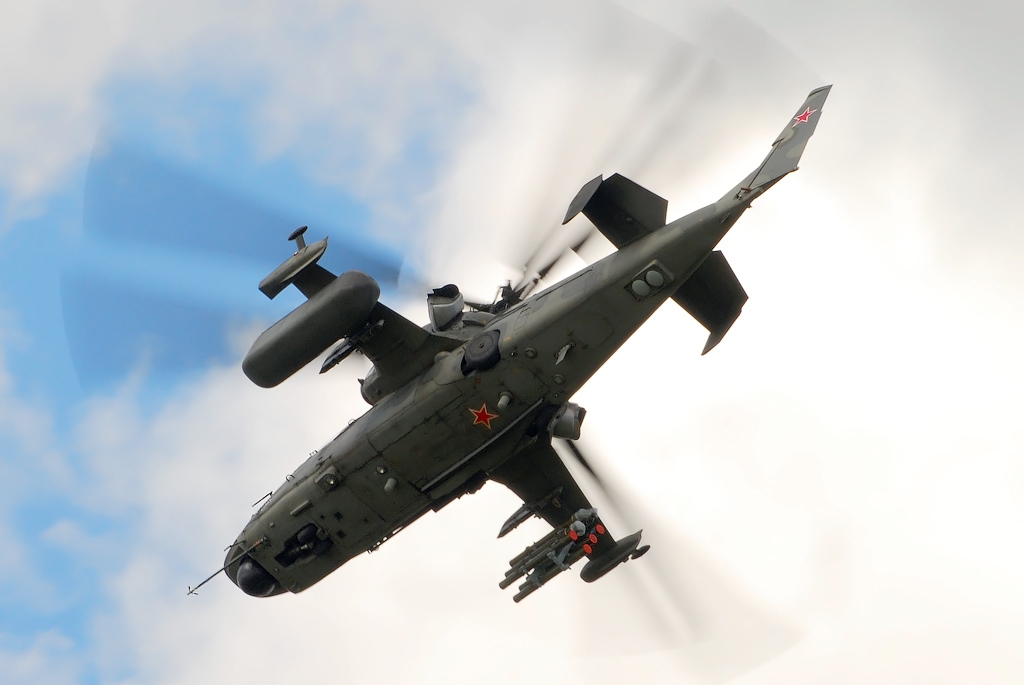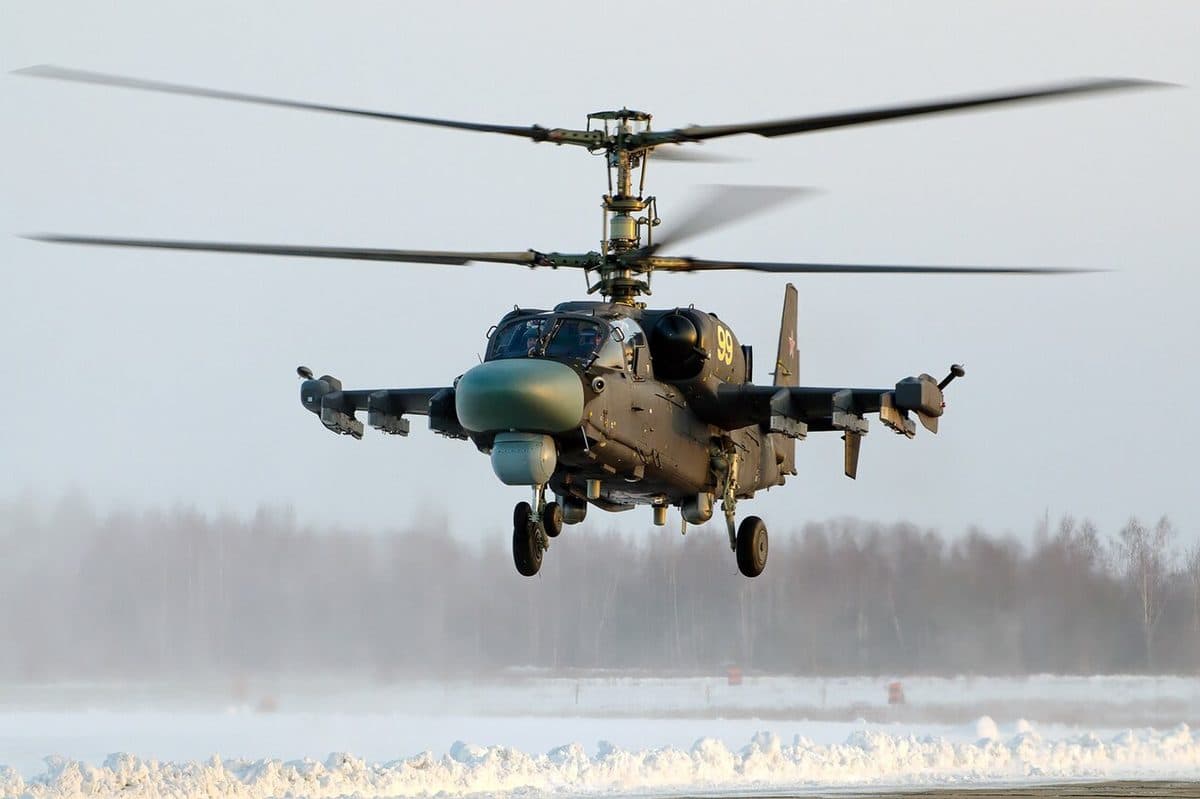

The Kamov Ka-52 Alligator breaks nearly every convention of attack helicopter design. Where every Western attack helicopter uses a conventional main rotor and tail rotor, the Ka-52 uses coaxial counter-rotating rotors, two rotors stacked on the same shaft, spinning in opposite directions, with no tail rotor at all. Where every other attack helicopter seats its crew in tandem, one behind the other, the Ka-52 puts them side by side, like the cockpit of a light aircraft. And where no other helicopter in the world can save its crew through ejection, the Ka-52 has explosive bolts that blow the rotor blades clear and rocket-powered ejection seats that fire the crew to safety. It is the most unconventional attack helicopter in service anywhere, and the conflict in Ukraine has become the largest test of attack helicopter warfare since the Soviet-Afghan War.
From Black Shark to Alligator
The Ka-52 is a two-seat derivative of the Ka-50 Black Shark, a single-seat attack helicopter that was itself a radical concept. In the 1980s, the Soviet Union held a competition between Kamov and Mil for a new attack helicopter to replace the Mi-24 Hind. Mil offered the Mi-28, a conventional tandem-seat design broadly similar to the American AH-64 Apache. Kamov offered the Ka-50, a single-seat helicopter with coaxial rotors, heavy armor, and an automated weapons system that the single pilot could operate alone.
The Ka-50 won the competition in 1995, but the single-seat concept proved problematic. Operating a helicopter in combat while simultaneously navigating, communicating, identifying targets, and employing weapons overwhelmed a single pilot, particularly in the low-altitude, high-threat environment of modern battlefield operations. The Russian military concluded that two crew members were essential.
Rather than switch to the Mi-28 (which Russia also ordered, hedging its bets), Kamov redesigned the Ka-50 into the Ka-52, widening the forward fuselage to accommodate a side-by-side cockpit for pilot and weapons systems officer while retaining the coaxial rotor system, armament, and most of the Ka-50's systems. The first Ka-52 prototype flew in 1997, and the type entered Russian military service in 2011.