Marcus Webb writes about military ground vehicles, armored platforms, and the logistics of land warfare. His work covers everything from MRAPs and infantry carriers to the training pipelines that keep ground forces operational in contested environments.
On February 26, 1991, Captain H.R. McMaster led nine M1A1 Abrams tanks and twelve Bradley Fighting Vehicles into a sandstorm in the Iraqi desert. On the other side were dug-in elements of the Republican Guard's Tawakalna Division, T-72 tanks, BMPs, and infantry positions prepared for a fight. Twenty-three minutes later, McMaster's Eagle Troop had destroyed over 30 Iraqi tanks, roughly 20 armored personnel carriers, and around 30 other vehicles. American losses: zero. That engagement, the Battle of 73 Easting, became the defining moment of the Abrams' combat legacy. But it was only the beginning. Over the next three decades, the M1 Abrams would fight in every major American conflict, from the open deserts of Kuwait to the streets of Baghdad to the mountains of Afghanistan. Its combat record tells a story that is far more complicated than "invincible tank."
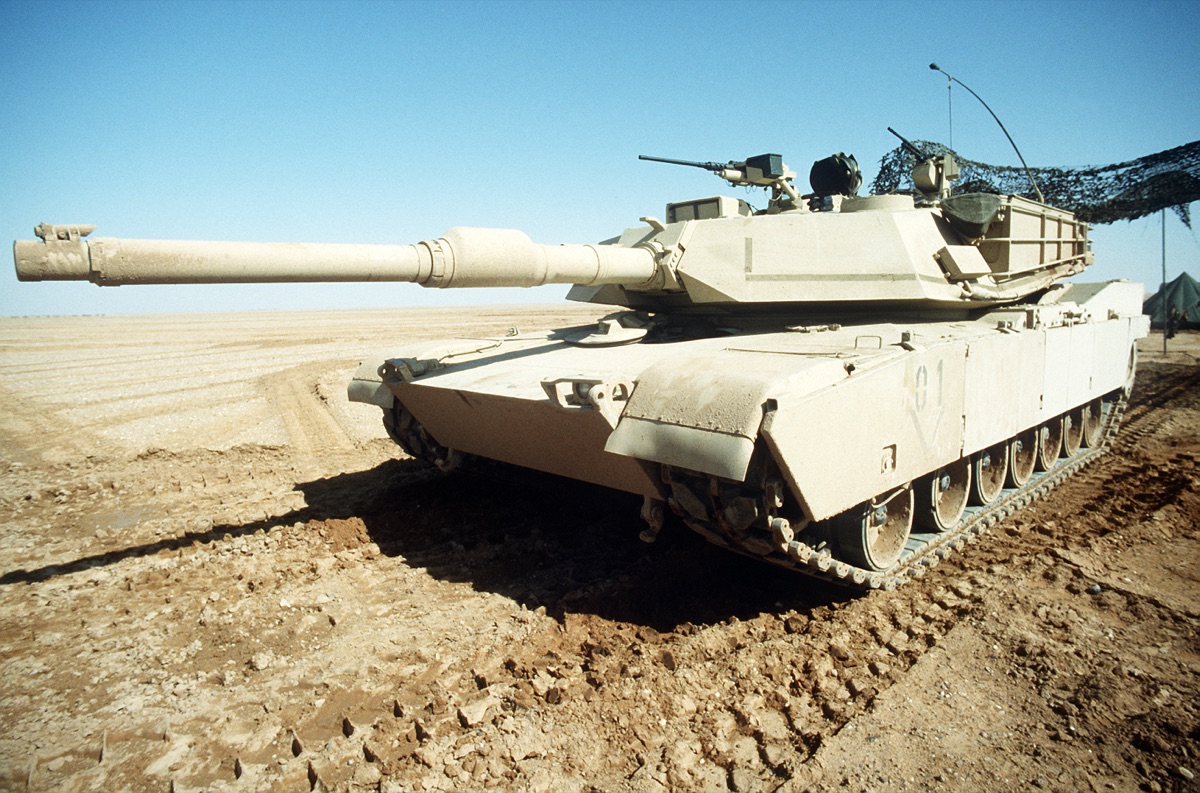
The M1 Abrams entered service in 1980, designed to stop a Soviet armored offensive across the plains of Central Europe. By the time it saw combat in 1991, the enemy was different but the terrain was almost identical: flat, open desert with clear sight lines stretching to the horizon. It was the perfect environment for a tank built to kill other tanks at long range.
The United States deployed approximately 1,900 M1A1 Abrams to the Gulf theater. The ground war lasted 100 hours. Coalition forces destroyed an estimated 3,300 Iraqi tanks, the vast majority of Iraq's armored fleet.
The Battle of 73 Easting on February 26, 1991, saw nine M1A1 Abrams tanks destroy over 30 Iraqi tanks in just 23 minutes, a lopsided engagement that defined the Abrams' reputation for a generation.
The loss figures are where the Abrams legend was born. Out of 1,900 deployed, 23 M1A1s were damaged or destroyed during the entire campaign. Of those, nine were destroyed, but the breakdown matters enormously. Seven were destroyed by friendly fire from other American vehicles. Two were intentionally destroyed by U.S. forces to prevent their capture after becoming disabled. The number of M1A1 Abrams confirmed destroyed by enemy fire in Desert Storm was zero.
Iraqi T-72 tanks fired 125mm rounds directly at M1A1s and the rounds failed to penetrate. There are documented cases of Abrams taking multiple hits from T-72 main guns and continuing to fight. The thermal imaging systems could identify and engage targets at ranges where Iraqi crews could not even see their attackers. With engagement distances of 2,000 to 3,000 meters in open desert, the Abrams' superior optics, fire control, and armor made the outcome almost predetermined.
73 Easting: The Perfect Tank Battle
The Battle of 73 Easting represents the Abrams at its absolute peak. McMaster's Eagle Troop of the 2nd Armored Cavalry Regiment was screening ahead of VII Corps' main advance. They drove through a sandstorm and crested a rise to find an entire Iraqi defensive position laid out in front of them.
The M1A1s opened fire immediately. Their thermal sights cut through the sand and dust, identifying Iraqi vehicles as bright heat signatures. The Iraqi T-72s, relying on older optical sights, struggled to even locate the Americans. Some Iraqi tanks managed to fire back. Their rounds bounced off the Abrams' frontal armor. McMaster's force pushed straight through without stopping, destroying everything in its path. Twenty-three minutes. The most lopsided tank battle in modern history.
Iraqi Freedom 2003: The Abrams Meets Urban Warfare
If Desert Storm was the war the Abrams was designed for, the 2003 invasion of Iraq, and the long insurgency that followed, was the war that exposed its vulnerabilities. The terrain changed. The enemy changed. And for the first time, the Abrams started taking real losses.
During the Thunder Runs of April 5 and 7, 2003, M1 Abrams tanks spearheaded armored columns straight through Baghdad, a bold tactical gamble that accelerated the fall of the Iraqi capital.
The initial invasion went much like Desert Storm. The Thunder Run into Baghdad on April 5, 2003, followed by an even larger one on April 7, became iconic. Abrams tanks led armored columns straight through the Iraqi capital, a move so aggressive that Iraqi information minister Mohammed al-Sahaf was still denying American troops were in the city while M1s were parked at intersections behind him. The Thunder Runs proved the Abrams could operate in dense urban terrain, though the tanks took far more hits in city fighting than they ever had in open desert.
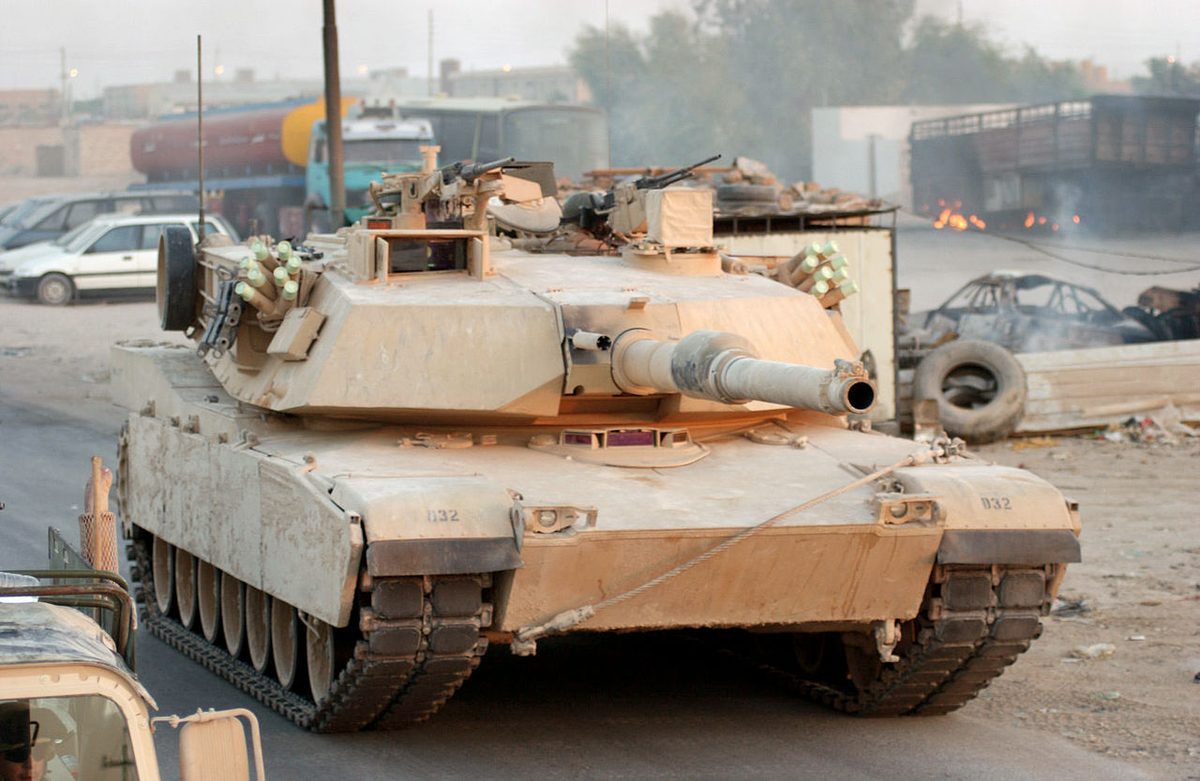
The real problem started after the conventional war ended. Iraqi insurgents attacked with improvised explosive devices, rocket-propelled grenades, and explosively formed penetrators, copper-lined shaped charges, often Iranian-supplied, designed to punch through armored vehicles. The Abrams' composite armor, engineered to stop kinetic penetrators and shaped charges from tank guns, proved less effective against the specific threats of urban insurgency.
One M1A1 was lost during the Thunder Run to an RPG that struck the rear of the tank, penetrating the fuel cell and starting a fire that could not be extinguished. The crew survived but the tank was destroyed. Over the course of the insurgency, the numbers climbed steadily. By March 2005, two years into the conflict, approximately 80 Abrams had been forced out of action by combat damage. Of those, 63 were repaired and returned to service. Seventeen were damaged beyond economical repair. The primary killers were not enemy tanks but IEDs and RPG ambushes in the narrow streets of Iraqi cities, where engagement distances dropped from thousands of meters to dozens.
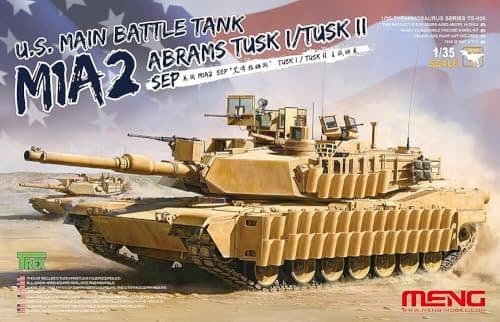
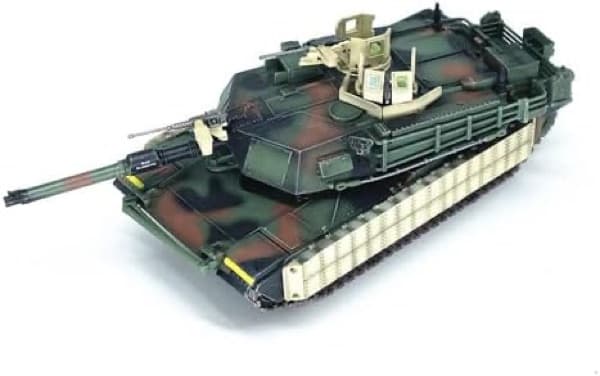
Meng's Abrams includes parts for both TUSK I and TUSK II configurations, which adds explosive reactive armor, a CROWS remote weapon station, and loader's armored gun shield. Sharper detail than Tamiya's version, with workable individual track links.
This is where the Abrams' record becomes more nuanced than the "invincible tank" narrative. In Desert Storm, the threat was other tanks, and the Abrams was genuinely untouchable. In Iraq's urban insurgency, the threat was cheap explosives in roads and RPGs from rooftops at close range. Against those threats, the Abrams was tough but not invulnerable. Seventeen total losses over several years of intense urban combat is still remarkably low. But it shattered the idea that the Abrams simply could not be killed.
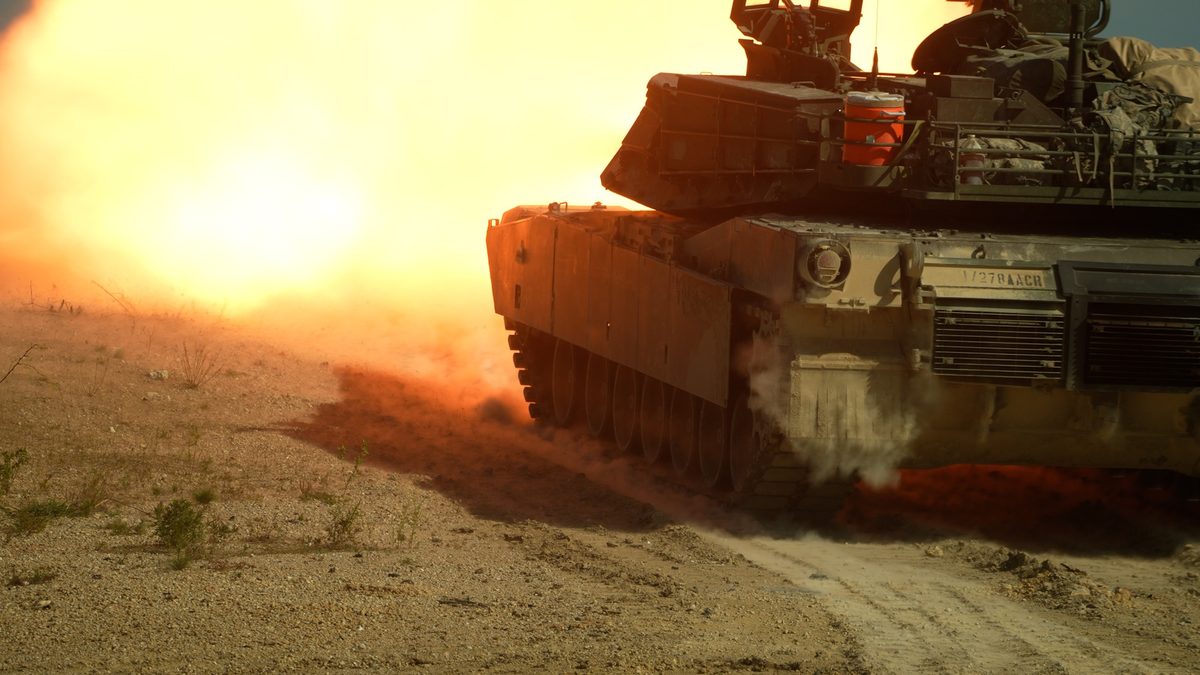
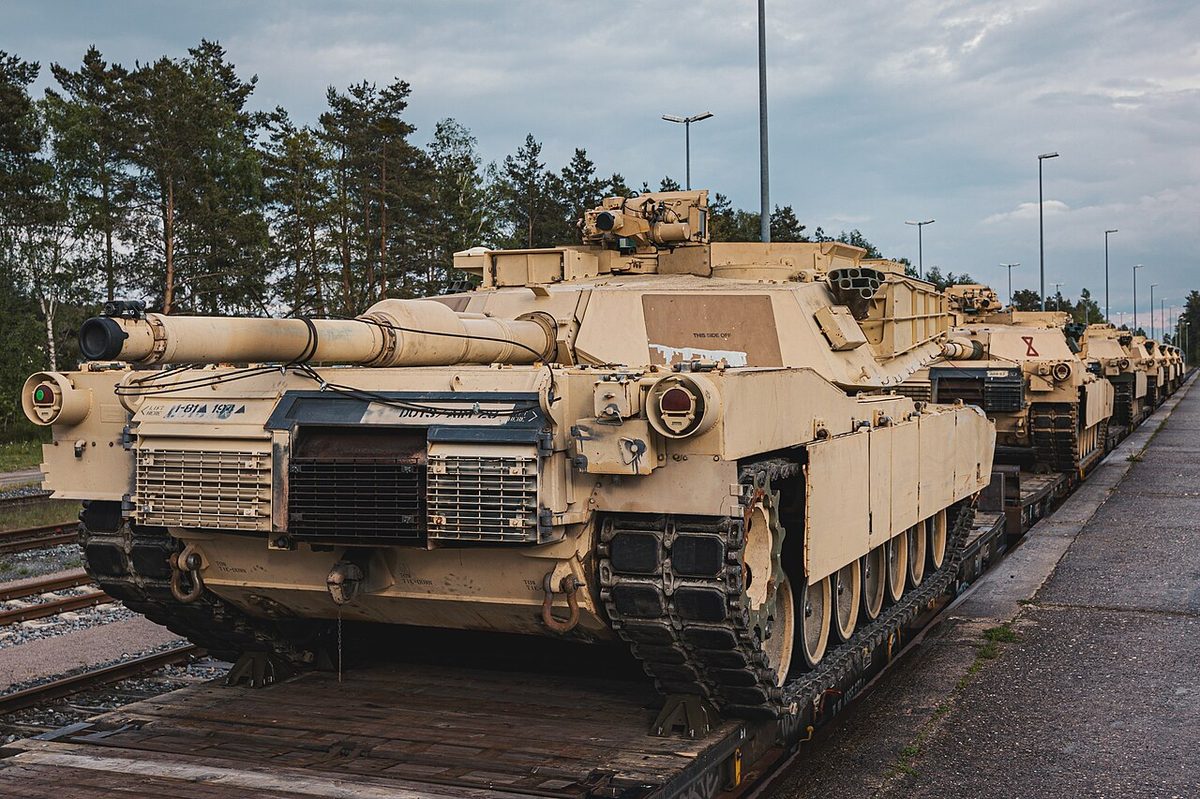
An Abrams fires its 120mm M256 smoothbore gun. The weapon can engage targets at ranges exceeding 3,000 meters, a decisive advantage in open terrain that largely disappears in urban combat.
The military responded with field upgrades: reactive armor tiles, belly armor against IEDs, slat armor cages against RPGs, and the Tank Urban Survival Kit (TUSK) package. The Abrams adapted, as it always has. But the Iraq experience permanently changed how the military thought about armored warfare. The era of tank-on-tank duels was fading. The threats were getting cheaper, more numerous, and harder to stop with heavy armor alone.
Afghanistan 2010–2011: A Tank Where Tanks Don't Belong
The Abrams' deployment to Afghanistan was brief and limited. In late 2010, the Marine Corps sent 16 M1A1 Abrams to Helmand and Kandahar provinces with approximately 115 Marines to crew and support them. Afghanistan's terrain (mountains, narrow valleys, mud-walled compounds, and weak bridges) was about as far from ideal tank country as possible. A 68-ton Abrams could not cross most Afghan bridges and could barely maneuver on rural roads.
The tanks served primarily as fire support platforms. Their 120mm guns could demolish fortified compounds that lighter weapons could not touch, and the psychological impact on Taliban fighters was significant. But logistically, the deployment was a nightmare, with hundreds of gallons of fuel per day, trucked through some of the most dangerous supply routes in the theater. No Abrams was confirmed destroyed in combat in Afghanistan. The deployment was a footnote, but it illustrated an important point: the tank's greatest limitation has never been its armor or firepower. It is its size, weight, and logistical footprint.
Ukraine 2023–Present: The Abrams Meets the Modern Battlefield
Everything discussed so far happened under conditions where the United States had total air superiority, intelligence dominance, and sophisticated combined arms coordination. In Ukraine, the Abrams encountered a fundamentally different battlefield, and the results have forced a serious reassessment of the tank's place in modern warfare.
The M1A1 Abrams in Ukraine faced a threat environment unlike any previous American deployment, contested airspace, guided artillery, and swarms of FPV kamikaze drones that exposed vulnerabilities no amount of armor can solve.
The United States sent approximately 31 M1A1 Abrams to Ukraine, with Australia contributing an additional 59 from its retired fleet, roughly 90 tanks total. These were older M1A1 variants, stripped of classified armor packages before transfer. They arrived in late 2023 with high expectations. Within months, those expectations collided with reality.
Open-source tracking by Oryx has documented at least 22 M1A1 casualties, roughly 10 destroyed, 10 abandoned or captured, and others damaged. The actual total is likely higher. The primary threats were not other tanks. Russian guided artillery could strike the Abrams' thin top armor from above. But the most devastating threat was one that did not exist in any previous Abrams deployment: first-person view kamikaze drones. These small, cheap quadcopters carry shaped-charge warheads and are piloted directly into vulnerable points, the engine deck, turret ring, rear grille, by an operator watching through a camera feed. They cost a few hundred dollars each. An Abrams costs $4.3 million.
The Pentagon's assessment, according to media reports, was blunt. Officials concluded that the Abrams was "not useful" in the Ukrainian theater, not because the tank was poorly designed, but because the battlefield conditions negated its advantages. Without air superiority to suppress enemy drones and artillery observers, without the electronic warfare umbrella that American forces would normally provide, and without the full combined arms package that the U.S. military trains with, the Abrams was an expensive, conspicuous target operating in conditions it was never designed for.
The Drone Problem Is Not Going Away
Ukraine represents the first conflict where cheap drones have consistently killed main battle tanks. This is not Abrams-specific, Russian T-72s, T-80s, and T-90s have been destroyed by Ukrainian drones in far greater numbers. Leopard 2s and Challengers have also taken losses. But the Abrams' losses are significant precisely because the tank's reputation was built on decades of near-invincibility. When the one tank that "couldn't be killed" starts burning, it forces hard questions about heavy armor's future.
The Abrams' composite armor was designed to defeat threats from the front, that is how tank-on-tank engagements work. Drones attack from above, targeting the thinnest armor on any tank. No MBT in any country's inventory was designed with top armor thick enough to stop a shaped charge delivered from directly overhead. Active protection systems like Trophy can intercept some projectiles, but the small size, low cost, and sheer volume of FPV drones overwhelm traditional countermeasures.
The Complete Loss Ledger
Adding up the Abrams' losses across all conflicts gives a picture that is neither the "invincible super-tank" myth nor the "obsolete death trap" counter-narrative. The truth is in the numbers:
Desert Storm (1991): 23 M1A1s damaged or destroyed. Nine total losses, seven to friendly fire, two intentionally destroyed. Zero confirmed losses to enemy fire.
Iraqi Freedom / Insurgency (2003–2011): Approximately 80 Abrams forced out of action by combat damage. Seventeen destroyed beyond repair. Primary threats: IEDs and RPGs. One lost to RPG during the Thunder Run. Zero losses to enemy tanks.
Afghanistan (2010–2011): No Abrams confirmed destroyed in combat. Limited deployment of 16 tanks in a fire support role.
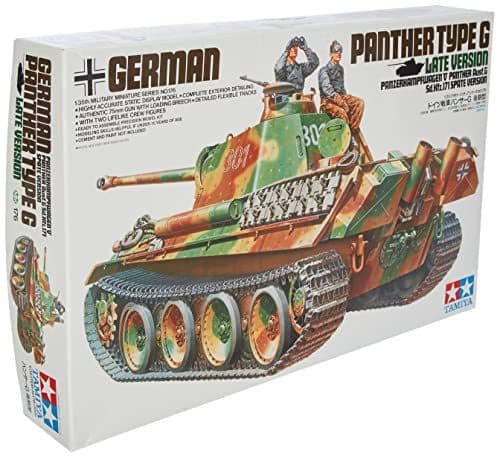
Tamiya's 1/35 Panther Ausf. G is a traditional styrene kit with excellent fit and clear instructions. At this scale, the finished model is roughly 25cm long with good surface detail and working suspension.
Ukraine (2023–present): At least 22 M1A1s confirmed as casualties (destroyed, abandoned, or captured). Primary threats: guided artillery and FPV kamikaze drones.
The pattern is unmistakable. Against other tanks, the Abrams has been essentially untouchable, no confirmed kill by an enemy tank in direct combat across three decades of warfare. Against insurgent weapons (IEDs, RPGs), the Abrams took real but manageable losses. Against the modern combination of precision artillery and cheap autonomous drones, the Abrams has proven genuinely vulnerable.
What the Combat Record Actually Proves
The Abrams' combat history is not a simple story of success or failure. It is a story about how the nature of the threat determines the value of the platform. In 1991, the threat was other tanks, and the Abrams was devastating. In 2003, the threat was insurgents with explosives, the Abrams adapted and took manageable losses. In 2023, the threat was cheap precision munitions delivered by drones, and the Abrams, like every other MBT on the Ukrainian battlefield, struggled.
Roughly 9,000 M1 Abrams have been built since 1979 at an average cost of $4.3 million per tank. Production continues at about 12 per month at the Lima Army Tank Plant in Ohio. The Army is investing in the M1A2 SEPv4 upgrade with Trophy active protection, improved sensors, and better networking. The tank is not going away. But its role is changing.
The honest assessment: the Abrams' record from 1991 to 2011 proved that a well-crewed main battle tank, operating with air superiority and combined arms support, is extraordinarily difficult to kill. Ukraine proved that without those conditions, even the best tank in the world is vulnerable to weapons that cost a fraction of its price. The question facing the U.S. Army is not whether the Abrams is a good tank, it clearly is. The question is whether the battlefield has changed so fundamentally that "good tank" is no longer enough. The Abrams has fought in every American war since 1991. Whether it fights in the next one, and what it looks like if it does, may be the most important armored warfare question of this generation.